Christ, the Word made flesh, is the substance every shadow points to. Creation, Scripture, and ordinary life are not the reality itself. They are the artist’s mark, the bird hovering over the nest, the shade of a great rock in a weary land. To muse on them is to look for Him: the Image of the invisible God, by whom and for whom all things were made. The end of that looking is not a doctrine but a place. Kept as the apple of His eye, hidden under the shadow of His wings, we see ourselves in His gaze, and He sees His Word formed in ours.
Christ in All Things: Jesus is “all and in all” (Colossians 3:11) because He is the Creator. All of creation functions as “shadows,” types, and parables that point to Him as the reality/substance (Colossians 2:17).
Shadows, types, and parables are not the substance. They point to Christ, the Word made flesh, revealed in creation, Scripture, and ordinary life.
All things were made by Him, through Him, and for Him. He is the Image of the invisible God, so the work carries the mark of the Maker (Colossians 1:15–18; Hebrews 1:1–3).
In the beginning the Spirit hovered over the waters as a bird over her nest, then God said, “Let there be light.” From that overshadowing, all creation is a shadow pointing back to Him. Shadows vs. Reality: We live in a 3D world where 4D spiritual realities (God in the heavenly realm) cast 3D shadows. The Spirit hovered over the waters, and “Let there be light” cast Messiah’s shadow over all creation.
The Lord is our shade: a hiding place from the wind, the shadow of a great rock in a weary land, and the wings under which the apple of His eye is kept (Psalm 17:8; 91:1–4; Isaiah 32:1–2).
“Apple of the eye” is the little man or little daughter in the eye. To be kept there is intimate relationship, not a system of doctrine: we see ourselves in His gaze, and He sees His Word in ours.
Jesus is the face, glory, and image of God. The invisible is made visible in Him. Moses saw the Invisible One. The cloud and the glory were the same presence now dwelling in our hearts and opening the door.
The Word through whom creation came forth became flesh and dwelt among us. Logos and the Aramaic miltha name that one Word. The King Messiah is also likened to rain that waters the earth.
Scripture is read in layers — parable, shadow, and the four levels of interpretation — so that exegesis leads to Him, not away from Him.
Science and the study of creation are a path into wisdom when they are musing on His works. Nature was made good, functional, and meant “to see the good.” Christ is the Good Shepherd, and only God is good, because Christ is God.
The same shadows can be turned. Worship of the creature instead of the Creator corrupts the image into a counterfeit mark. What still functions points to the sinless One. Entropy, death, and the groaning of creation point to the Redeemer who overcomes them.
Natural first, then spiritual. DNA is a shadow of the book of life. The generations of heaven and earth lead back to Genesis, and Genesis leads to the genealogy of Jesus Christ.

In the concept of Shadows of Messiah, the idea is that Jesus Christ, the Word made flesh, is revealed everywhere in creation through shadows, types and parables. These are not the ultimate reality but point to and foreshadow the substance, which is Christ Himself.
The purpose of studying shadows of Messiah is to see Christ revealed in His creation. To show that all branches of science point to Him. They should provoke awe, wonder and a deeper relationship with God. They are used to teach Biblical principles through everyday observations and encourage us to constantly muse on His Word, Jesus Christ, through the Bible & creation.
“For even creation reveals Him who formed it, and the very work made suggests Him who made it, and the world manifests Him who ordered it.” (St. Irenaeus of Lyons – Against Heresies, II.9.1)
Creation
All things were created by, through, and for Christ (the Word), who is the exact Image of the invisible God. Creation embeds His image like an artist’s work or an author’s writings, so that studying the universe, nature, science, or everyday experiences reveals Him and draws people into relationship with the Creator.
Col 1:15 Who is the image of the invisible God, the firstborn of every creature:
Col 1:16 For by him were all things created, that are in heaven, and that are in earth, visible and invisible, whether they be thrones, or dominions, or principalities, or powers: all things were created by him, and for him:
Col 1:17 And he is before all things, and by him all things consist.
Col 1:18 And he is the head of the body, the church: who is the beginning, the firstborn from the dead; that in all things he might have the preeminence.
Heb 1:1 God, who at sundry times and in divers manners spake in time past unto the fathers by the prophets,
Heb 1:2 Hath in these last days spoken unto us by his Son, whom he hath appointed heir of all things, by whom also he made the worlds;
Heb 1:3 Who being the brightness of his glory, and the express image of his person, and upholding all things by the word of his power, when he had by himself purged our sins, sat down on the right hand of the Majesty on high;
The Scriptures admonish us to think upon that which is good, and righteous etc.
Php 4:8 For the rest, brothers, whatever is true, whatever honorable, whatever is right, whatever pure, whatever lovely, whatever of good report, if of any virtue, and if of any praise, think on these things.
What is good? His creation
Gen 1:31 And God saw everything that He had made and behold, it was very good. And there was evening, and there was morning the sixth day.
In the beginning, the Spirit hovered over the waters. The word for hover here, רחף ‘rachaph,’ pictures a bird overshadowing her nest. The Almighty then said let there be light. Hence, all of His creation is a shadow pointing back to Him.
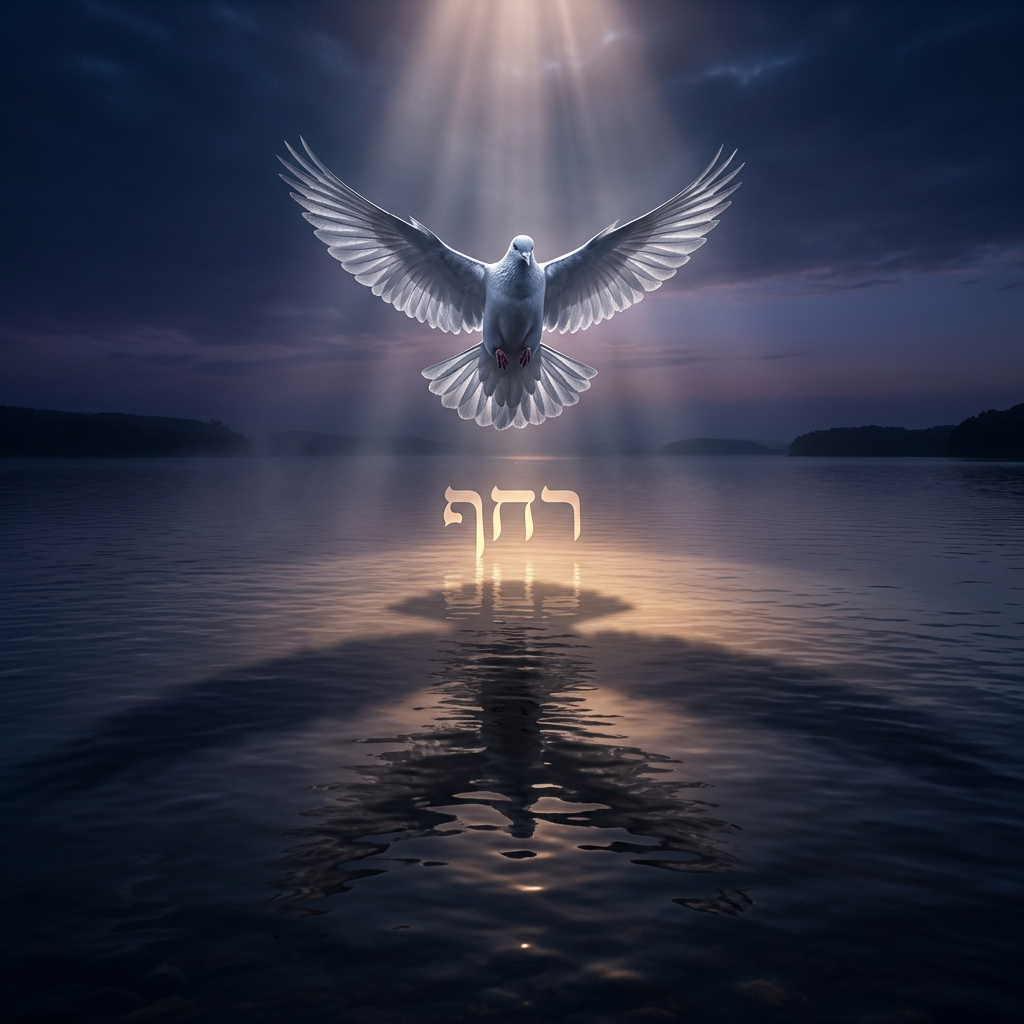
Gen 1:2 And the earth was without form, and void; and darkness was upon the face of the deep. And the Spirit of God moved (רחף ‘rachaph’) upon the face of the waters.
Gen 1:3 And God said, Let there be light: and there was light.
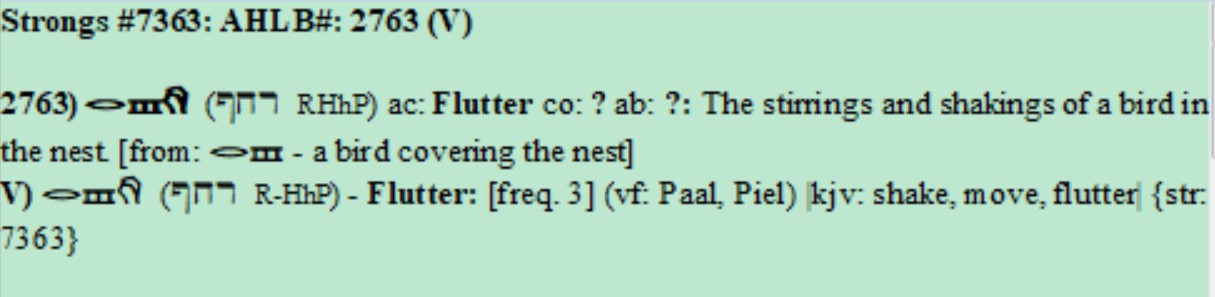
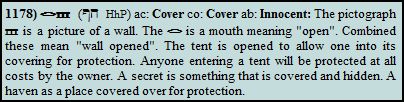
From the root חף ‘chaph.’
The Scriptures speak of musing on His Word, His creation, works, honor, glory, miracles, & the days of old {history}.
His creation
Job 12:8 or speak to the earth, and it will teach you; and the fish of the sea will recount to you;
His works
1Ch 16:9 Sing to Him, sing psalms to Him; tell of all His marvelous works.
Psa 77:12 I will also meditate on all Your works and muse of Your doings.
Psa 143:5 I remember the days of old. I meditate on all Your works; I muse on the work of Your hands.
His wonders
Psa 105:2 Sing to Him; sing praises to Him; tell of all His wonders.
Psa 119:27 Make me understand the way of Your Precepts, and I will meditate on Your wonders.
His honor
Psa 145:5 I will muse on the glorious honor of Your majesty, and the things of Your wonderful works.
The creation teaches of God, and is connected to His Torah/Word as the word סיח ‘siyach’ indicates
Psalm 19:1-6 creation, 19:7-9 Torah
Psa 19:1 To the chief musician. A Psalm of David. The heavens are recounting the glory of God, and the expanse proclaiming His handiwork.
Psa 19:2 Day by day they pour forth speech, and night to night reveals knowledge.
Psa 19:3 There is no speech, nor are there words where their voice is not heard.
Psa 19:4 Their measuring line has gone out through all the earth, and their words to the end of the world; in them He has set up a dwelling-place for the sun,
Psa 19:5 and he comes forth like a bridegroom from his canopy. He rejoices like a hero to run a race;
Psa 19:6 his going forth from the end of the heavens, and his orbit to their ends; and nothing is hidden from his heat.
Psa 19:7 The Law of Jehovah is perfect, converting the soul. The Testimony of Jehovah is sure, making the simple wise.
Psa 19:8 The precepts of Jehovah are right, rejoicing the heart. The commands of Jehovah are pure, giving light to the eyes.
Psa 19:9 The fear of Jehovah is clean, enduring forever. The judgments of Jehovah are true, they are righteous altogether.
See: Daily Tidbits 12/29/11 – Torah & Creation
All in All
Col 3:11 Where there is neither Greek nor Jew, circumcision nor uncircumcision, Barbarian, Scythian, bond nor free: but Christ is all, and in all.
Rom 11:36 For of him, and through him, and to him, are all things: to whom be glory for ever. Amen.
Eph 4:5 One Lord, one faith, one baptism,
Eph 4:6 One God and Father of all, who is above all, and through all, and in you all.
1Co 8:6 But to us there is but one God, the Father, of whom are all things, and we in him; and one Lord Jesus Christ, by whom are all things, and we by him.
Shadows
God is our shadow
Psa 121:5 The LORD is thy keeper: the LORD is thy shade (צל ‘tsel’) upon thy right hand.
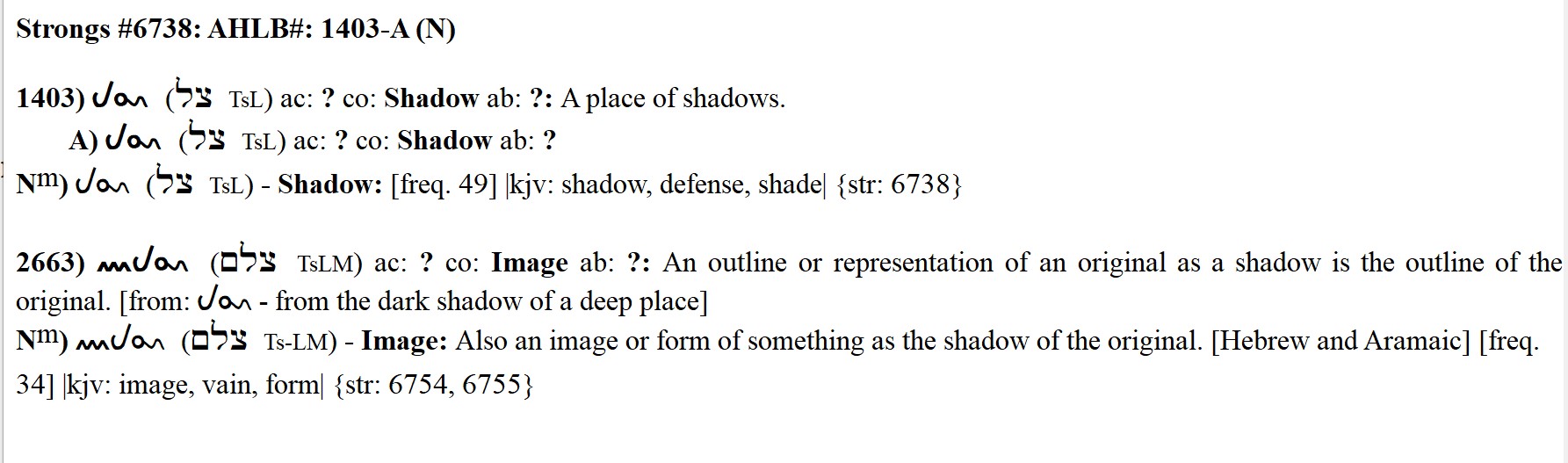
Jesus Christ is the exact Image (εἰκών ‘eikōn’/צלם ‘tselem’) of the invisible God, the brightness of His glory and the express representation of His person. In Him, the face, name, and character of the LORD are fully revealed, for God is love.
Christ, God in the flesh, prophecied to be the King who overshadows us
Isa 32:1 Behold, a king shall reign in righteousness, and princes shall rule in judgment.
Isa 32:2 And a man shall be as an hiding place from the wind, and a covert from the tempest; as rivers of water in a dry place, as the shadow of a great rock in a weary land.
John Gill commentary
Isaiah 32:2
And a man shall be as an hiding place from the wind, and a covert from the tempest,…. Or, “that man”; the King Messiah before mentioned; who had agreed to become man, was promised and prophesied of as such, had often appeared in a human form, was to be incarnate, and now is; though he is not a mere man; were he, he could not be what is here said of him, “as a hiding place, and covert from the wind and tempest”, of his Father’s wrath, raised by sin; and which all men are deserving of, and on whom it must fall, unless secured from it by Christ; who has bore it in the room and stead of his people, has turned it away, and delivered them from it, and all the effects of it, so that nothing of it comes upon them; he has endured the whole force of the storm himself; and his righteousness, blood, sacrifice, and intercession, screen his people from it: he also hides and covers them from Satan’s temptations, the blast of the terrible ones, which is as a storm against the wall, so as they shall not be destroyed by them; by praying for them, succouring of them, supplying them with his grace, and delivering from them in his own time: likewise he protects them from the rage and fury of their persecuting enemies, when they come like a “whirlwind” to “scatter” them; they have rest in him, when troubled by men; and security by him, when these winds and waves beat upon them; and when they are tossed with the tempests of afflictions of various kinds, he bears them up under them, and carries them through them, and delivers out of them, and brings them at last safe to glory:
This shadow imagery points to abiding under the wings of God
Psa 91:1 He that dwelleth in the secret place of the most High shall abide under the shadow of the Almighty.
Psa 91:4 He shall cover thee with his feathers, and under his wings shalt thou trust: his truth shall be thy shield and buckler.
Isa 4:5 And the LORD will create upon every dwelling place of mount Zion, and upon her assemblies, a cloud and smoke by day, and the shining of a flaming fire by night: for upon all the glory shall be a defence.
Isa 4:6 And there shall be a tabernacle for a shadow in the daytime from the heat, and for a place of refuge, and for a covert from storm and from rain.
Isa 25:4 For thou hast been a strength to the poor, a strength to the needy in his distress, a refuge from the storm, a shadow from the heat, when the blast of the terrible ones is as a storm against the wall.
Little Guy in the Eye

Psa 17:8 Keep me as the apple of the eye, hide me under the shadow of thy wings,
The phrase ‘apple of the eye’ is rendered כאישׁון בת־עין ‘k’ishon bat ayin’ in Hebrew. אישון ‘ishon’ means man/ little man, בת ‘bat’ means daughter and עין ‘ayin’ means eye…the little guy/girl in the eye.
Being the little guy/girl in the Eye of God is all about walking in close relationship with God who is love (1 John 4:8) and extending that love to our fellow man (1 John 4:12). Its not about religious doctrine, its about relationship with the Most High. Each one of us must work out our own salvation with fear and trembling as God works through us according to His good pleasure (Philippians 2:12-13). If we keep focused on Him and not on the world He will be able to transform us from glory to glory (2 Corinthians 3:18) until we are formed into the image of His Son (Romans 8:29).
Israel is the apple of God’s eye (The Israel of God are those who are in Messiah Jesus)
Deu 32:9 For the LORD’S portion is his people; Jacob is the lot of his inheritance.
Deu 32:10 He found him in a desert land, and in the waste howling wilderness; he led him about, he instructed him, he kept him as the apple of his eye.
Deu 32:11 As an eagle stirreth up her nest, fluttereth over her young, spreadeth abroad her wings, taketh them, beareth them on her wings:
Zion is the apple of God’s Eye. The Church is Zion (Isaiah 28:16; 1 Peter 2:5-10)
Zec 2:7 Deliver thyself, O Zion, that dwellest with the daughter of Babylon.
Zec 2:8 For thus saith the LORD of hosts; After the glory hath he sent me unto the nations which spoiled you: for he that toucheth you toucheth the apple of his eye.
The Word of God (Jesus Christ) is to be the ‘little guy’ in our eye.
Pro 7:2 Keep my commandments, and live; and my law as the apple of thine eye.
When we look into the “eyes of God” we see ourselves, when He looks into our eyes He sees the Word, Himself. The ultimate goal of walking with the LORD is that at the end we will look into His eyes and see the Word as well, His image being formed in and through us. Our eyes should be on Jesus Christ, the Word made flesh…the Author and Finisher of our faith.
Heb 12:2 Looking {ἀφοράω ‘aphoraō’ – fix eyes upon} unto Jesus the author and finisher of our faith; who for the joy that was set before him endured the cross, despising the shame, and is set down at the right hand of the throne of God.
The Greek word translated as ‘looking’ in Hebrews 12:2 is ἀφοράω ‘aphoraō’ which literally means to turn the eyes away from other things and fix them on a particular object, in this case Jesus. The only way we can walk in God’s love and be formed into His image is to keep our eyes focused on Christ Jesus.
Being the little guy in His eye is associated with dwelling under the shadow of His wings.
Psa 17:8 Keep me as the apple of the eye, hide me under the shadow of thy wings,
Deu 32:10 He found him in a desert land, and in the waste howling wilderness; he led him about, he instructed him, he kept him as the apple of his eye.
Deu 32:11 As an eagle stirreth up her nest, fluttereth over her young, spreadeth abroad her wings, taketh them, beareth them on her wings:
When the Scriptures speak of abiding in the shadow of His wings it is speaking of an intimate relationship were we dwell in His bosom, seeking His face where we see ourselves as a little guy in His eye.
The other portion of Scripture that speaks of the “apple of His eye” is in Zechariah. Zechariah does not speak of eagles wings but the same concept is spoken of as the LORD will be a wall of fire AROUND us. Here it can be seen that the pillar of fire and cloud in the wilderness is associated with Him bearing us up on eagles wings.
Zec 2:5 For I, saith the LORD, will be unto her a wall of fire round about, and will be the glory in the midst of her.
Zec 2:8 For thus saith the LORD of hosts; After the glory hath he sent me unto the nations which spoiled you: for he that toucheth you toucheth the apple of his eye.
Psa 91:1 He that dwelleth in the secret place of the most High shall abide under the shadow of the Almighty.
Psa 91:2 I will say of the LORD, He is my refuge and my fortress: my God; in him will I trust.
Psa 91:3 Surely he shall deliver thee from the snare of the fowler, and from the noisome pestilence.
Psa 91:4 He shall cover thee with his feathers, and under his wings shalt thou trust: his truth shall be thy shield and buckler.
Psa 91:5 Thou shalt not be afraid for the terror by night; nor for the arrow that flieth by day;
Psa 91:6 Nor for the pestilence that walketh in darkness; nor for the destruction that wasteth at noonday.
Psa 91:7 A thousand shall fall at thy side, and ten thousand at thy right hand; but it shall not come nigh thee.
Psa 91:8 Only with thine eyes shalt thou behold and see the reward of the wicked.
Psa 91:9 Because thou hast made the LORD, which is my refuge, even the most High, thy habitation;
Psa 91:10 There shall no evil befall thee, neither shall any plague come nigh thy dwelling.
Psa 91:11 For he shall give his angels charge over thee, to keep thee in all thy ways.
Psa 91:12 They shall bear thee up in their hands, lest thou dash thy foot against a stone.
Psa 91:13 Thou shalt tread upon the lion and adder: the young lion and the dragon shalt thou trample under feet.
Psa 91:14 Because he hath set his love upon me, therefore will I deliver him: I will set him on high, because he hath known my name.
Psa 91:15 He shall call upon me, and I will answer him: I will be with him in trouble; I will deliver him, and honour him.
Psa 91:16 With long life will I satisfy him, and shew him my salvation (Hebrew: ישׁוּעה ‘yeshua’ the source of the name Jesus).
Making the Most High our habitation; Abiding in the Almighty
Psa 91:9 Because thou hast made the LORD, which is my refuge, even the most High, thy habitation (מעון ‘ma`on’).
מעון ‘ma`on’ comes from the root ען ‘an’ which means the eye.
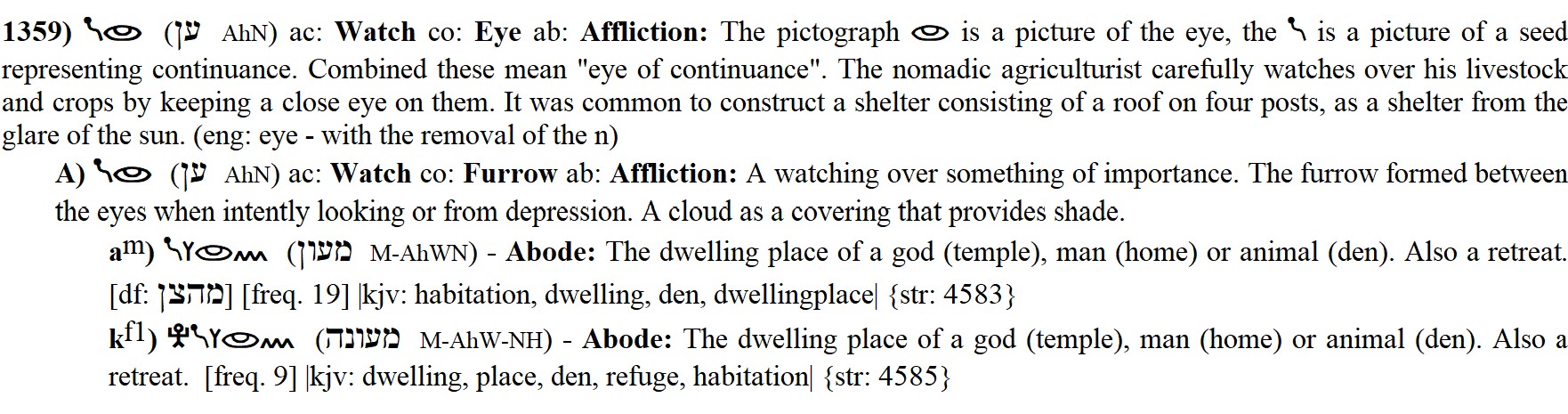
Psa 71:3 Be thou my strong habitation (מעון ‘ma`on’), whereunto I may continually resort: thou hast given commandment to save me; for thou art my rock and my fortress.
Psa 71:4 Deliver me, O my God, out of the hand of the wicked, out of the hand of the unrighteous and cruel man.
Psa 71:5 For thou art my hope, O Lord GOD: thou art my trust from my youth.
Psa 71:6 By thee have I been holden up from the womb: thou art he that took me out of my mother’s bowels: my praise shall be continually of thee.
Psa 71:7 I am as a wonder unto many; but thou art my strong refuge.
From these portions of Scripture in Psalm 71 & 91 we can see that those who abide in the shadow of His wings will be protected from adversity, they will be given eternal life and will see Jesus.
Psa 91:4 He shall cover thee with his feathers, and under his wings shalt thou trust: his truth shall be thy shield and buckler.
Septuagint
Psa 91:4 (90:4) He shall overshadow thee with his shoulders (μεταφρένοις ‘metaphrenois’), and thou shalt trust under his wings: his truth shall cover thee with a shield.
μεταφρένοις ‘metaphrenois’ means the shoulder or back (the area between the shoulder blades).
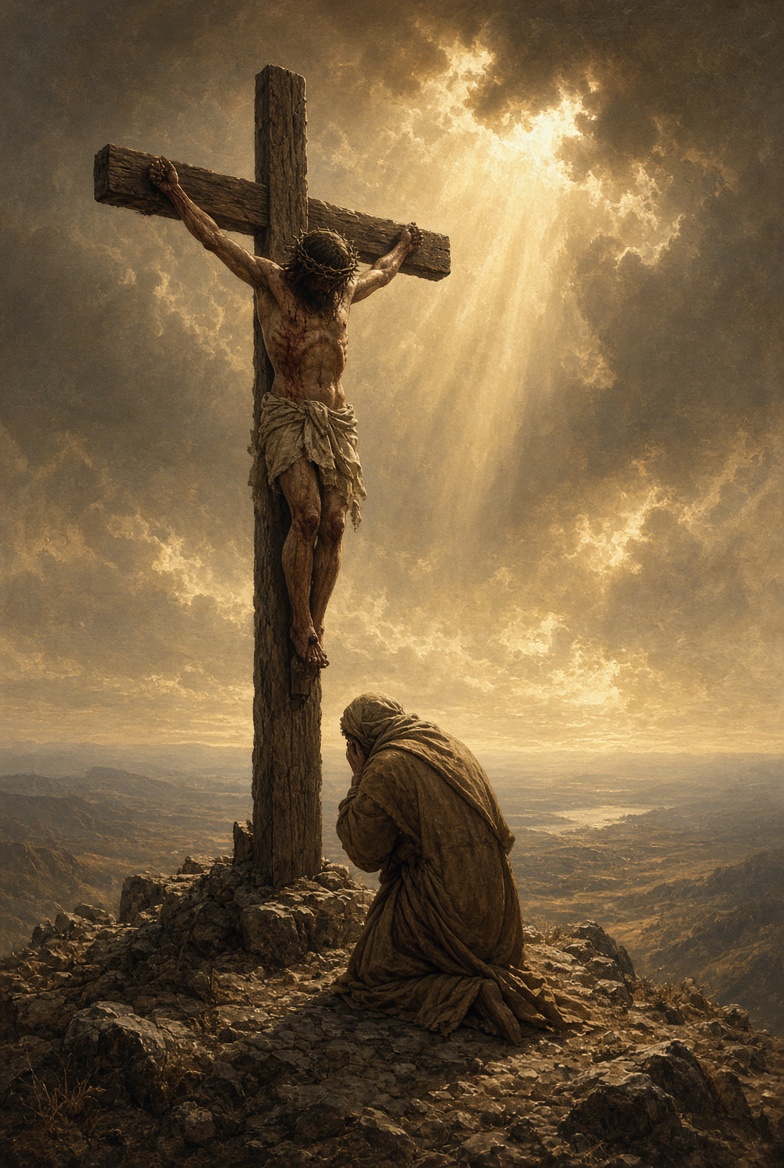
We all walk in a shadow. We can walk in darkness, blinded by Satan or walk in the Shadow of God in His Light.
Psa 39:6 Surely every man walketh in a vain shew (צלם ‘tselem’ – shadow): surely they are disquieted in vain: he heapeth up riches, and knoweth not who shall gather them.
Septuagint Brenton translation
Psa 39:6 (38:6) Surely man walks in a shadow; nay, he is disquieted in vain: he lays up treasures, and knows not for whom he shall gather them.
Psa 39:6 (38:7) μέντοιγε ἐν εἰκόνι διαπορεύεται ἄνθρωπος, πλὴν μάτην ταράσσονται· θησαυρίζει καὶ οὐ γινώσκει τίνι συνάξει αὐτά.
Man goes about in an image or icon – εἰκόνι ‘eikoni’
G1504
εἰκών
eikōn
i-kone’
From G1503; a likeness, that is, (literally) statue, profile, or (figuratively) representation, resemblance: – image.
Therefore does the Psalm remind us how we were made, and to what a state we have come. For it says, “Though a man walk in the image [1] of God.” See, what he was made. Whither hath he come? Hearken to what follows, “Yet will he be disquieted in vain.” Psalms 39:6 He walks in the image of truth, and will be disquieted in the counsel of vanity. Finally, see his disquiet, see it, and as it were in a glass, be displeased with thyself. (St. Augustine – Sermons on Selected Lessons of the New Testament: Matthew 6:19)
Under God’s Shadow
Lam 4:20 The breath of our nostrils, the anointed of the LORD, was taken in their pits, of whom we said, Under his shadow we shall live among the heathen.
“And by shadow he means His body. For just as a shadow is made by a body, so also Christ’s body was made by His Spirit. But, further, the humiliation and contemptibility of His body he indicates by the shadow. For, as the shadow of bodies standing upright is upon the ground and is trodden upon, so also the body of Christ fell upon the ground by His sufferings and was trodden on indeed… And he named Christ’s body a shadow, because the Spirit overshadowed it, as it were, with glory and covered it. Moreover oftentimes when the Lord passed by, they laid those who were held by divers diseases in the way, and on whomsoever His shadow fell, they were healed.” (Irenaeus, Demonstration of the Apostolic Preaching 71)
“But as to the mention of that shadow under which the Church says that she desired to sit, I do not think it inappropriate to adduce in connection with it such passages as we can find in the Divine Scriptures, to help us to a worthier and more godly understanding of what this shadow of the apple tree denotes. Jeremias says in Lamentations: “The breath of our face, Christ the Lord, has been taken with us in our corruptions; to whom we said: ‘Under His shadow we shall live among the Gentiles.’” You see, then, how the prophet, moved by the Holy Spirit, says that life is afforded to the Gentiles by the shadow of Christ; and indeed how should His shadow not afford us life, seeing that even at the conception of His very body it is said to Mary: “The Holy Spirit shall come upon thee, and the power of the Most High shall overshadow thee”? As, therefore, at His body’s conception the overshadowing was that of the Most High, His own shadow will justly give life to the Gentiles. And justly does His Bride the Church desire to sit beneath the shadow of the apple tree, in order, surely, that she may be made partaker of the life that is in His shadow.
Yet, though we are not under that shadow which was cast by the letter of the Law, we are notwithstanding under a better shadow. For we live under the shadow of Christ among the Gentiles. And there is a certain progress in coming from the shadow of the Law to the shadow of Christ; since Christ is the Life and the Truth and the Way, we must first be fashioned in the shadow of the Way and in the shadow of the Life and in the shadow of the Truth, and apprehend in part and in a glass and in a riddle, in order that later on, if we persevere in this Way that is Christ, we may be able to achieve the face-to-face apprehension of those things which formerly we had beheld in the shadow and in a riddle.” (Origen – Commentary on the Song of Songs 3.5)
The Holy Spirit linked the Glory of God with His Salvation
Isa 40:5 And the glory of the LORD shall be revealed, and all flesh shall see it together: for the mouth of the LORD hath spoken it.
Luk 3:6 And all flesh shall see the salvation of God.
God’s glory and His back
Exo 33:18 And he said, I beseech thee, shew me thy glory.
Exo 33:19 And he said, I will make all my goodness pass before thee, and I will proclaim the name of the LORD before thee; and will be gracious to whom I will be gracious, and will shew mercy on whom I will shew mercy.
Exo 33:20 And he said, Thou canst not see my face: for there shall no man see me, and live.
Exo 33:21 And the LORD said, Behold, there is a place by me, and thou shalt stand upon a rock:
Exo 33:22 And it shall come to pass, while my glory passeth by, that I will put thee in a clift of the rock, and will cover thee with my hand while I pass by:
Exo 33:23 And I will take away mine hand, and thou shalt see my back parts: but my face shall not be seen.
In this portion of Scripture, God proclaims to Moses that no man can see His Face and live. Yet, one of the promises to Abraham is that He would be seen (Genesis 22:14).
Messiah Jesus declared that no man has seen or heard God at any time (John 5:37), the presence/face of God is revealed to mankind through Himself (John 14:7-9). In Deuteronomy 34:10 and Exodus 33:11, Moses is described as knowing God face to face and in Numbers 12:8 it is said Moses looked upon the similitude or form/image {תּמנה ‘temunah’} of God. The only way to reconcile these Scriptures with Exodus 33:19-23 is the fact that the Scriptures describe Jesus as the image/similitude of the Father.
2Co 4:6 For God, who commanded the light to shine out of darkness, hath shined in our hearts, to give the light of the knowledge of the glory of God in the face of Jesus Christ.
Jesus is the Presence/Face of God
KJV
Psa 42:5 Why art thou cast down, O my soul? and why art thou disquieted in me? hope thou in God: for I shall yet praise him for the help of his countenance. (ישועות פניו ‘yeshuot panav’)
Psa 42:5 (42:6) מה־תשׁתוחחי נפשׁי ותהמי עלי הוחילי לאלהים כי־עוד אודנו ישׁועות פניו׃
ישועות פניו ‘yeshuot panav’ literally means the Salvation of His Face.
Isa 63:9 In all their affliction, He was not a foe; and the Angel of his Face saved them. In His love and in His pity He redeemed them. And He bore them up, and lifted them up all the days of old.
Heb 1:3 Who being the brightness of his glory, and the express image of his person, and upholding all things by the word of his power, when he had by himself purged our sins, sat down on the right hand of the Majesty on high;
Col 1:12 giving thanks to the Father, who has made us fit for a share of the inheritance of the saints in light,
Col 1:13 who delivered us out of the authority of darkness, and translated us into the kingdom of the Son of His love,
Col 1:14 in whom we have redemption through His blood, the remission of sins;
Col 1:15 who is the image of the invisible God, the First-born of all creation.
Col 1:16 For all things were created in Him, the things in the heavens, and the things on the earth, the visible and the invisible; whether thrones, or lordships, or rulers, or authorities, all things have been created through Him and for Him.
Col 1:17 And He is before all things, and all things have subsisted in Him.
Col 1:18 And He is the Head of the body, the assembly, who is the Beginning, the First-born out of the dead, that He be preeminent in all things;
Col 1:19 because all the fullness was pleased to dwell in Him,
Col 1:20 and through Him making peace by the blood of His cross, to reconcile all things to Himself; through Him, whether the things on the earth, or the things in the heavens.
Exodus 33:22 declares that Moses saw the Glory of God. The Glory of God is Christ Jesus.
Exo 33:22 And it shall come to pass, while my glory passeth by, that I will put thee in a clift of the rock, and will cover thee with my hand while I pass by:
Rev 21:23 And the city had no need of the sun, neither of the moon, to shine in it: for the glory of God did lighten it, and the Lamb is the light thereof.
Isa 40:5 And the glory of the LORD shall be revealed, and all flesh shall see it together: for the mouth of the LORD hath spoken it.
Isa 60:1 Arise, shine; for thy light is come, and the glory of the LORD is risen upon thee.
Isa 60:2 For, behold, the darkness shall cover the earth, and gross darkness the people: but the LORD shall arise upon thee, and his glory shall be seen upon thee.
Isa 60:3 And the Gentiles shall come to thy light, and kings to the brightness of thy rising.
Luk 1:78 Through the tender mercy of our God; whereby the dayspring from on high hath visited us,
Luk 1:79 To give light to them that sit in darkness and in the shadow of death, to guide our feet into the way of peace.
Mat 4:13 And leaving Nazareth, he came and dwelt in Capernaum, which is upon the sea coast, in the borders of Zabulon and Nephthalim:
Mat 4:14 That it might be fulfilled which was spoken by Esaias the prophet, saying,
Mat 4:15 The land of Zabulon, and the land of Nephthalim, by the way of the sea, beyond Jordan, Galilee of the Gentiles;
Mat 4:16 The people which sat in darkness saw great light; and to them which sat in the region and shadow of death light is sprung up.
Joh 1:9 That was the true Light, which lighteth every man that cometh into the world.
Joh 3:19 And this is the condemnation, that light is come into the world, and men loved darkness rather than light, because their deeds were evil.
Glory of God
Isa 6:3 And one cried unto another, and said, Holy, holy, holy, is the LORD of hosts: the whole earth is full of his glory.
1Co 7:31 And they that use this world, as not abusing it: for the fashion (σχῆμα ‘schema’) of this world passeth away.
G4976
σχῆμα
schēma
skhay’-mah
From the alternate of G2192; a figure (as a mode or circumstance), that is, (by implication) external condition: – fashion.
Creation is a temporary shadow of the Eternal God.
1Pe 1:23 Being born again, not of corruptible seed, but of incorruptible, by the word of God, which liveth and abideth for ever.
1Pe 1:24 For all flesh is as grass, and all the glory of man as the flower of grass. The grass withereth, and the flower thereof falleth away:
1Pe 1:25 But the word of the Lord endureth for ever. And this is the word which by the gospel is preached unto you.
Heb 1:10 And, Thou, Lord, in the beginning hast laid the foundation of the earth; and the heavens are the works of thine hands:
Heb 1:11 They shall perish; but thou remainest; and they all shall wax old as doth a garment;
Heb 1:12 And as a vesture shalt thou fold them up, and they shall be changed: but thou art the same, and thy years shall not fail.
Psa 102:25 Of old hast thou laid the foundation of the earth: and the heavens are the work of thy hands.
Psa 102:26 They shall perish, but thou shalt endure: yea, all of them shall wax old like a garment; as a vesture shalt thou change them, and they shall be changed:
Psa 102:27 But thou art the same, and thy years shall have no end.
Psa 102:28 The children of thy servants shall continue, and their seed shall be established before thee.
Isa 51:6 Lift up your eyes to the heavens, and look upon the earth beneath: for the heavens shall vanish away like smoke, and the earth shall wax old like a garment, and they that dwell therein shall die in like manner: but my salvation (ישׁוּעה ‘yeshuah’) shall be for ever, and my righteousness shall not be abolished.
The Eternal God, the Eternal Logos took on the “fashion” of man that He might redeem all things.
Php 2:8 And being found in fashion (σχῆμα ‘schema’) as a man, he humbled himself, and became obedient unto death, even the death of the cross.
Through the cross we can pass from the shadow, to the reality
Isa 66:22 For as the new heavens and the new earth, which I will make, shall remain before me, saith the LORD, so shall your seed and your name remain.
1Pe 1:3 Blessed be the God and Father of our Lord Jesus Christ, which according to his abundant mercy hath begotten us again unto a lively hope by the resurrection of Jesus Christ from the dead,
1Pe 1:4 To an inheritance incorruptible, and undefiled, and that fadeth not away, reserved in heaven for you,
1Pe 1:5 Who are kept by the power of God through faith unto salvation ready to be revealed in the last time.
Rom 8:14 For as many as are led by the Spirit of God, they are the sons of God.
Rom 8:15 For ye have not received the spirit of bondage again to fear; but ye have received the Spirit of adoption, whereby we cry, Abba, Father.
Rom 8:16 The Spirit itself beareth witness with our spirit, that we are the children of God:
Rom 8:17 And if children, then heirs; heirs of God, and joint-heirs with Christ; if so be that we suffer with him, that we may be also glorified together.
Rom 8:18 For I reckon that the sufferings of this present time are not worthy to be compared with the glory which shall be revealed in us.
Rom 8:19 For the earnest expectation of the creature waiteth for the manifestation of the sons of God.
Rom 8:20 For the creature was made subject to vanity, not willingly, but by reason of him who hath subjected the same in hope,
Rom 8:21 Because the creature itself also shall be delivered from the bondage of corruption into the glorious liberty of the children of God.
Rom 8:22 For we know that the whole creation groaneth and travaileth in pain together until now.
Rom 8:23 And not only they, but ourselves also, which have the firstfruits of the Spirit, even we ourselves groan within ourselves, waiting for the adoption, to wit, the redemption of our body.
Image of God
2Co 4:4 In whom the god of this world hath blinded the minds of them which believe not, lest the light of the glorious gospel of Christ, who is the image of God, should shine unto them.
2Co 4:5 For we preach not ourselves, but Christ Jesus the Lord; and ourselves your servants for Jesus’ sake.
2Co 4:6 For God, who commanded the light to shine out of darkness, hath shined in our hearts, to give the light of the knowledge of the glory of God in the face of Jesus Christ.
“Having, then, briefly restated these points regarding the nature of the Trinity, it follows that we notice shortly this statement also, that “by the Son” are said to be created “all things that are in heaven, and that are in earth, visible and invisible, whether they be thrones, or dominions, or principalities, or powers: all things were created by Him, and for Him; and He is before all, and all things consist by Him, who is the Head.” In conformity with which John also in his Gospel says: “All things were created by Him; and without Him was not anything made.” And David, intimating that the mystery of the entire Trinity was (concerned) in the creation of all things, says: “By the Word of the Lord were the heavens made; and all the host of them by the Spirit of His mouth.” (Origen De Principiis. Book IV Chapter I.30)
“He is in all things, and through all things, and above all things” (Origen De Principiis. Book IV Chapter I.31)
“We must say that the distinction and multitude of things come from the intention of the first agent, who is God.“For He brought things into being in order that His goodness might be communicated to creatures, and be represented by them.”
“For goodness, which in God is simple and uniform, in creatures is manifold and divided and hence the whole universe together participates in the divine goodness more perfectly, and represents it better than any single creature whatever.”
“God brought things into being in order that His goodness might be communicated to creatures, and be represented by them. And because His goodness could not be adequately represented by one creature alone, He produced many and diverse creatures, that what was wanting to one in the representation of the divine goodness might be supplied by another. … Hence the whole universe together participates in the divine goodness more perfectly, and represents it better, than any single creature whatever.” (St. Thomas Aquinas – Summa Theologiae I, q. 47, a.1)
The Invisible made visible
Rom 1:19 Because that which may be known of God is manifest in them; for God hath shewed it unto them.
Rom 1:20 For the invisible things of him from the creation of the world are clearly seen, being understood by the things that are made, even his eternal power and Godhead; so that they are without excuse:
1Ti 1:17 Now unto the King eternal, immortal, invisible, the only wise God, be honour and glory for ever and ever. Amen.
Col 1:15 Who is the image of the invisible God, the firstborn of every creature:
Moses saw the Invisible One
Heb 11:27 By faith he forsook Egypt, not fearing the wrath of the king: for he endured, as seeing him who is invisible.
The Holy Spirit had Luke associate the Glory of God with the Salvation of God.
Luk 3:3 And he came into the neighborhood of the Jordan proclaiming a baptism of repentance for remission of sins,
Luk 3:4 as it has been written in the scroll of the Words of Isaiah the prophet, saying: “The voice of one crying in the wilderness, Prepare the way of the Lord, make His paths straight.
Luk 3:5 Every valley shall be filled up, and every mountain and hill shall be made low; and the crooked places shall be made into straight, and the rough into smooth ways;”
Luk 3:6 “and all flesh shall see the salvation of God.” Isaiah 40:3-5
Isa 40:5 And the glory of Jehovah shall be revealed, and all flesh shall see it together, for the mouth of Jehovah has spoken.
His Glory & the Cloud
Eze 10:4 Then the glory of the LORD went up from the cherub, and stood over the threshold of the house; and the house was filled with the cloud, and the court was full of the brightness of the LORD’S glory.
The Cloud “spoke” to Moses
Exo 33:9 And it came to pass, as Moses entered into the tabernacle, the cloudy pillar descended, and stood at the door of the tabernacle, and the LORD talked with Moses.
God descended in the cloud, and then stood to speak with Moses.
Exo 34:5 And Jehovah came down in the cloud. And he placed himself there with Him, and he called on the name of Jehovah.
Christ Jesus declared that no man has seen or heard God at any time (John 5:37), the presence/face of God is revealed to mankind through Himself (John 14:7-9). In Deuteronomy 34:10 and Exodus 33:11, Moses is described as knowing God face to face and in Numbers 12:8 it is said Moses looked upon the similitude or form/image {תּמנה ‘temunah’} of God. The only way to reconcile these Scriptures with Exodus 33:19-23 is the fact that the Scriptures describe Jesus as the image/similitude of the Father.
Exo 33:9 And it came to pass, as Moses entered into the tabernacle, the cloudy (ענן ‘anan) pillar descended, and stood at the door of the tabernacle, and the LORD talked with Moses.
Exo 33:10 And all the people saw the cloudy (ענן ‘anan) pillar stand at the tabernacle door: and all the people rose up and worshipped, every man in his tent door.
Exo 33:11 And the LORD spake unto Moses face to face, as a man speaketh unto his friend. And he turned again into the camp: but his servant Joshua, the son of Nun, a young man, departed not out of the tabernacle.
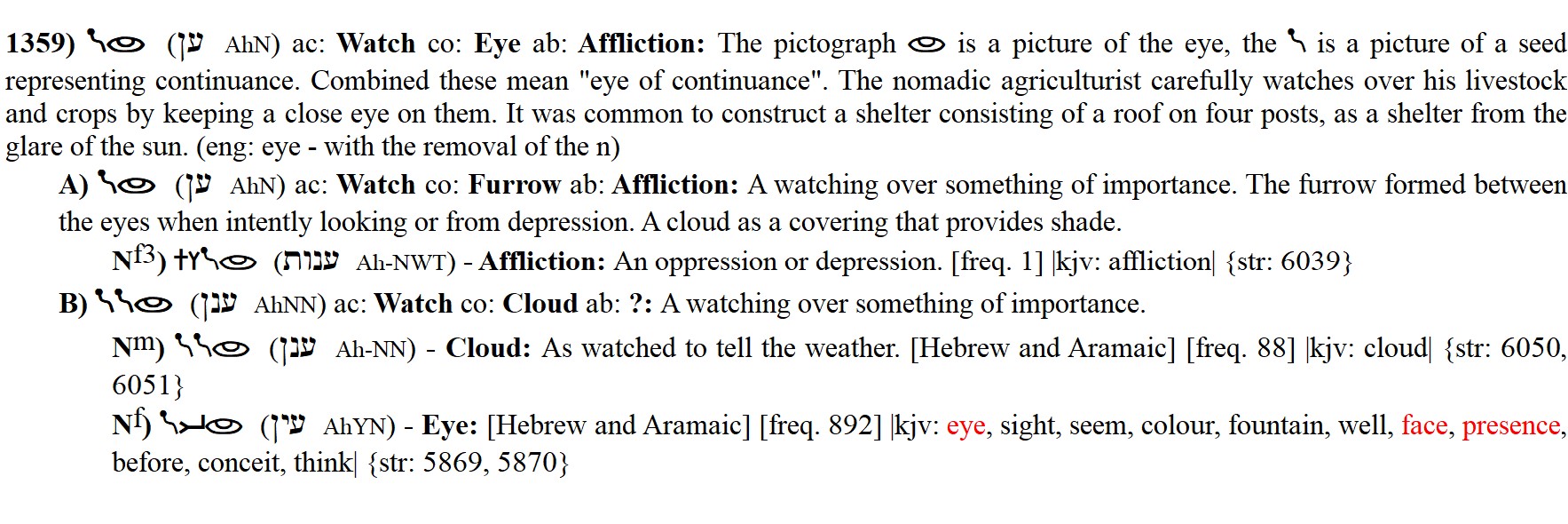
ענן ‘anan,’ the cloud, comes from the root word ען ‘an’ which means the eye, in particular the shepherd watching over his flock.
“When men search for God with their bodily eyes they find Him nowhere, for He is invisible. But for those who ponder in the Spirit He is present everywhere.” (St. Symeon the New Theologian – The Practical and Theological, 1:1. In Cistercian Studies Series, No. 41)
“We see the Creator by analogy. That is, by the greatness and the beauty of His creation.” (St. Symeon the New Theologian – The Practical and Theological chapters 1:33. In Cistercian Studies Series, No. 41)
God is beyond our comprehension (Romans 11:32-36; Job 5:9; Psalm 145:3; Isaiah 40:28) but more importantly, His love for us is incomprehensible (Ephesians 3:8). It is this love that draws us to Him through the Lord Jesus Christ (Romans 8:39; 1 John 4:16) that we might come to know Him (John 17:3; 1 John 5:20). The Word was/is given to us that we might know of this love (John 20:31; Ephesians 3:19), but most importantly the Holy Spirit is sent out to those of us who believe that we might experience this love and share it with others (Romans 5:5; Galatians 4:6; 5:22; 1 Peter 1:22) as we grow in His grace and love (2 Peter 3:18; Philippians 1:9-11; Ephesians 3:16-19), from glory to glory (2 Corinthians 3:18).
God is indescribable, He can’t be expressed by words. Yet, all things were created from His Word.
Psa 33:6 By the word of the LORD were the heavens made; and all the host of them by the breath of his mouth.
Jhn 1:1 In the beginning was the Word, and the Word was with God, and the Word was God.
Jhn 1:2 The same was in the beginning with God.
Jhn 1:3 All things were made by him; and without him was not any thing made that was made.
To reveal His nature or character, the Word became flesh.
Joh 1:14 And the Word was made flesh, and dwelt among us, (and we beheld his glory, the glory as of the only begotten of the Father,) full of grace and truth.
1Jn 1:1 That which was from the beginning, which we have heard, which we have seen with our eyes, which we have looked upon, and our hands have handled, of the Word of life;
1Jn 1:2 (For the life was manifested, and we have seen it, and bear witness, and shew unto you that eternal life, which was with the Father, and was manifested unto us;)
1Jn 1:3 That which we have seen and heard declare we unto you, that ye also may have fellowship with us: and truly our fellowship is with the Father, and with his Son Jesus Christ.
Jesus revealed the name of God which is His character. Jesus is the character, the image of God. His words and his life reveal the indescribable.
Joh 1:18 No man hath seen God at any time; the only begotten Son, which is in the bosom of the Father, he hath declared him.
Joh 6:45 It is written in the prophets, And they shall be all taught of God. Every man therefore that hath heard, and hath learned of the Father, cometh unto me.
Joh 6:46 Not that any man hath seen the Father, save he which is of God, he hath seen the Father.
Joh 14:6 Jesus saith unto him, I am the way, the truth, and the life: no man cometh unto the Father, but by me.
Joh 14:7 If ye had known me, ye should have known my Father also: and from henceforth ye know him, and have seen him.
Joh 14:8 Philip saith unto him, Lord, shew us the Father, and it sufficeth us.
Joh 14:9 Jesus saith unto him, Have I been so long time with you, and yet hast thou not known me, Philip? he that hath seen me hath seen the Father; and how sayest thou then, Shew us the Father?
Joh 14:10 Believest thou not that I am in the Father, and the Father in me? the words that I speak unto you I speak not of myself: but the Father that dwelleth in me, he doeth the works.
Joh 14:11 Believe me that I am in the Father, and the Father in me: or else believe me for the very works’ sake.
Joh 14:12 Verily, verily, I say unto you, He that believeth on me, the works that I do shall he do also; and greater works than these shall he do; because I go unto my Father.
Joh 14:13 And whatsoever ye shall ask in my name, that will I do, that the Father may be glorified in the Son.
Col 1:15 Who is the image of the invisible (ἀόρατος ‘aoratos’) God, the firstborn of every creature:
Col 1:16 For by him were all things created, that are in heaven, and that are in earth, visible and invisible, whether they be thrones, or dominions, or principalities, or powers: all things were created by him, and for him:
Col 1:17 And he is before all things, and by him all things consist.
ἀόρατος
aoratos
ah-or’-at-os
From G1 (as a negative particle) and G3707; invisible: – invisible (thing).
G3707
ὁρατός
horatos
hor-at-os’
From G3708; gazed at, that is, (by implication) capable of being seen: – visible.
G3708
ὁράω
horaō
hor-ah’-o
Properly to stare at (compare G3700), that is, (by implication) to discern clearly (physically or mentally); by extension to attend to; by Hebraism to experience; passively to appear: – behold, perceive, see, take heed.
ἀνεξιχνίαστος ‘anexichniastos’ that which cannot be searched out, that which cannot be comprehended
Job 5:9 Which doeth great things and unsearchable {LXX ἀνεξιχνίαστος ‘anexichniastos’} marvellous things without number:
Job 5:9 עשׂה גדלות ואין חקר נפלאות עד־אין מספר׃
ἀνεξιχνίαστος ‘anexichniastos’ is used to translate the phrase אין חקר ‘ayn cheqar’
Psa 145:3 Great is the LORD, and greatly to be praised; and his greatness is unsearchable {אין חקר ‘ayn cheqar’}.
אין ‘ayn’ means without or the inability to do something. חקר ‘cheqar’ has the meaning of examining, searching or digging.

חקר ‘cheqar’ comes from the root כר ‘kar’ which means the palm of man, the palm as hollowed out. It has the sense of digging as in a farmer or digging into a tablet or stone. It has the sense of looking deeply, examining.

Pro 25:2 The glory of God is to conceal (סתר ‘satar’) a thing, but the glory of kings is to search out (חקר ‘chaqar’) a matter.
God conceals or hides a thing but desires us to search it out.
Pro 8:17 I love them that love me; and those that seek me early shall find me.
Mat 7:7 Ask, and it shall be given you; seek, and ye shall find; knock, and it shall be opened unto you:
Mat 7:8 For every one that asketh receiveth; and he that seeketh findeth; and to him that knocketh it shall be opened.
Mat 7:9 Or what man is there of you, whom if his son ask bread, will he give him a stone?
Mat 7:10 Or if he ask a fish, will he give him a serpent?
Mat 7:11 If ye then, being evil, know how to give good gifts unto your children, how much more shall your Father which is in heaven give good things to them that ask him?
Mat 7:12 Therefore all things whatsoever ye would that men should do to you, do ye even so to them: for this is the law and the prophets.
Act 17:26 And hath made of one blood all nations of men for to dwell on all the face of the earth, and hath determined the times before appointed, and the bounds of their habitation;
Act 17:27 That they should seek the Lord, if haply they might feel after him, and find him, though he be not far from every one of us:
Act 17:28 For in him we live, and move, and have our being; as certain also of your own poets have said, For we are also his offspring.
Col 1:15 Who is the image of the invisible (ἀόρατος ‘aoratos’) God, the firstborn of every creature:
ἀόρατος ‘aoratos’ is used in the Septuagint to translate the Hebrew word סתר ‘satar’ (hidden).

סתר ‘satar’ is the source of the English word mystery, tracing back through the Greek word μυστήριον ‘mysterion.’
G3466 μυστήριον mustērion
Thayer Definition:
1) hidden thing, secret, mystery
1a) generally mysteries, religious secrets, confided only to the initiated and not to ordinary mortals
1b) a hidden or secret thing, not obvious to the understanding
1c) a hidden purpose or counsel
1c1) secret will
1c1a) of men
1c1b) of God: the secret counsels which govern God in dealing with the righteous, which are hidden from ungodly and wicked men but plain to the godly
2) in rabbinic writings, it denotes the mystic or hidden sense (Sod)
2a) of an OT saying
2b) of an image or form seen in a vision
2c) of a dream
It is considered the “sod” level of Biblical interpretation.
H5475 סוד sôd sode
From H3245; a session, that is, company of persons (in close deliberation); by implication intimacy, consultation, a secret: – assembly, counsel, inward, secret (counsel).
The meaning of סוד ‘sod’ indicates intimacy of two friends conversing in a tent, a seed planted in a field.
Job 29:4 As I was in the days of my youth, when the secret (סוד ‘sod’) of God was upon my tabernacle;
Psa 25:14 The secret (סוד ‘sod’) of the LORD is with them that fear him; and he will shew them his covenant.
The example of Abraham, the friend of God (James 2:23).
Gen 18:1 And the LORD appeared unto him in the plains of Mamre: and he sat in the tent door in the heat of the day;
Gen 18:5 And I will fetch a morsel of bread, and comfort ye your hearts; after that ye shall pass on: for therefore are ye come to your servant. And they said, So do, as thou hast said.
Gen 18:17 And the LORD said, Shall I hide from Abraham that thing which I do;
Gen 18:18 Seeing that Abraham shall surely become a great and mighty nation, and all the nations of the earth shall be blessed in him?
Gen 18:19 For I know him, that he will command his children and his household after him, and they shall keep the way of the LORD, to do justice and judgment; that the LORD may bring upon Abraham that which he hath spoken of him.
סוד ‘sod’ is the source of the English word sod, pointing back to the theme of digging for understanding of God.

סוד ‘sod’ also has the sense of counsel as in the assembly of persons who counsel others.
Psa 111:1 Praise ye the LORD. I will praise the LORD with my whole heart, in the assembly (סוד ‘sod’ ) of the upright, and in the congregation (עֵדָה ‘edah’).
Psa 111:2 The works of the LORD are great, sought out of all them that have pleasure therein.
עֵדָה ‘edah’ comes from the root עד ‘ed.’ This word combines the eye and the door meaning “see the door” as coming to a tent of meeting and entering in.

Entrance into God’s tent is only through the door (John 14:6). Christ is that door (John 10:7). Through His sacrifice, Christ has opened up the door to eternity. He has pierced the veil that delivers us from death and allows us to enter in the eternal Kingdom of Light. One of the words for eternity or “everlasting” in Hebrew is this same word עד ‘ed.’
In Christ are hid all the treasures of wisdom and knowledge.
Col 2:2 That their hearts might be comforted, being knit together in love, and unto all riches of the full assurance of understanding, to the acknowledgement of the mystery of God, and of the Father, and of Christ;
Col 2:3 In whom are hid all the treasures of wisdom and knowledge.
To know Christ and to be shown the glory of God in Him is indescribable.
Pro 25:2 The glory of God is to conceal a thing, but the glory of kings is to search out a matter.
Deu 29:29 The secret things belong unto the LORD our God: but those things which are revealed belong unto us and to our children for ever, that we may do all the words of this law.
Mat 13:10 And coming near, the disciples said to Him, Why do You speak to them in parables?
Mat 13:11 And answering, He said to them, Because it has been given to you to know the mysteries of the kingdom of Heaven, but it has not been given to those.
Mat 13:12 For whoever has, to him will be given, and he will have overabundance. But whoever does not have, even what he has will be taken from him.
Mat 13:13 Because of this, I speak to them in parables, because seeing they do not see, and hearing they do not hear, nor do they understand.
Mat 13:14 And the prophecy of Isaiah is fulfilled on them, which says, “In hearing you will hear and in no way understand, and seeing you will see yet in no way perceive.
Mat 13:15 For the heart of this people has grown fat, and they heard heavily with the ears, and they have closed their eyes, that they not see with the eyes, or hear with the ears, and understand with the heart, and be converted, and I heal them.” Isa. 6:9, 10
Mat 13:16 But your eyes are blessed because they see; and your ears because they hear.
Mat 13:17 For truly I tell you that many prophets and righteous ones desired to see what you see and did not see, and to hear what you hear and did not hear.
Luk 8:10 And He said, To you it has been given to know the mysteries of the kingdom of God, but to the rest in parables, that seeing they might not see, and hearing, they might not understand. Isa. 6:9
Mar 4:11 And He said to them, To you it has been given to know the mystery of the kingdom of God. But to these, those outside, all things are being given in parables,
Mar 4:12 that seeing they may see and not perceive; and hearing they may hear, and not understand, lest they should convert, and the sins be forgiven to them.
1Co 2:7 But we speak the wisdom of God in a mystery, having been hidden, which God predetermined before the ages for our glory,
The Holy Spirit reveals that which the prophets and angels desire to know
1Pe 1:8 Whom having not seen, ye love; in whom, though now ye see him not, yet believing, ye rejoice with joy unspeakable and full of glory:
1Pe 1:9 Receiving the end of your faith, even the salvation of your souls.
1Pe 1:10 Of which salvation the prophets have enquired and searched diligently, who prophesied of the grace that should come unto you:
1Pe 1:11 Searching what, or what manner of time the Spirit of Christ which was in them did signify, when it testified beforehand the sufferings of Christ, and the glory that should follow.
1Pe 1:12 Unto whom it was revealed, that not unto themselves, but unto us they did minister the things, which are now reported unto you by them that have preached the gospel unto you with the Holy Ghost sent down from heaven; which things the angels desire to look into.
Christ dwelling in our hearts
Eph 3:9 And to make all men see what is the fellowship of the mystery, which from the beginning of the world hath been hid in God, who created all things by Jesus Christ:
Eph 3:10 To the intent that now unto the principalities and powers in heavenly places might be known by the church the manifold wisdom of God,
Eph 3:11 According to the eternal purpose which he purposed in Christ Jesus our Lord:
Eph 3:12 In whom we have boldness and access with confidence by the faith of him.
Eph 3:13 Wherefore I desire that ye faint not at my tribulations for you, which is your glory.
Eph 3:14 For this cause I bow my knees unto the Father of our Lord Jesus Christ,
Eph 3:15 Of whom the whole family in heaven and earth is named,
Eph 3:16 That he would grant you, according to the riches of his glory, to be strengthened with might by his Spirit in the inner man;
Eph 3:17 That Christ may dwell in your hearts by faith; that ye, being rooted and grounded in love,
Eph 3:18 May be able to comprehend with all saints what is the breadth, and length, and depth, and height;
Eph 3:19 And to know the love of Christ, which passeth knowledge, that ye might be filled with all the fulness of God.
Eph 3:20 Now unto him that is able to do exceeding abundantly above all that we ask or think, according to the power that worketh in us,
Eph 3:21 Unto him be glory in the church by Christ Jesus throughout all ages, world without end. Amen.
This Mystery of Christ is the message of the Gospel. The love of God for ALL mankind. Love that breaks down the barriers and walls which man has set up to divide (Ephesians 2:1-22; 1 Corinthians 12:13). Love that breaks down the wall of sin which has separated man from God (Isaiah 59:2; John 3:16; 12:32; Isaiah 49:6; Revelation 5:9). This love is revealed in our actions towards our fellow man, not in our intellectual proclamations. All of us see through a glass darkly which keeps us from seeing eye to eye (1 Corinthians 13:12). The only remedy for this is love (1 Corinthians 13:1-13; 1 John 4:7-21). Love and patience towards one another until the Lord returns and His salvation is fully revealed (Isaiah 52:7-10). Love allows man to understand that we can have differences of opinions but ultimately if we abide in love we can dwell in peace and unity (Ephesians 4:2-16, 32; 5:1-2; Colossians 3:9-17).
Man was created in God’s image (Genesis 1:26-27) but that image was corrupted when Adam sinned. From there man took up the image of Adam which still pointed back to God, but in a corrupted form (Genesis 5:1; 1 Corinthians 15:45-49). Christ came to earth in the very image of Almighty God (2 Corinthians 4:4; Colossians 1:15; Hebrews 1:3), who is love. His life displayed that love and He calls all those who believe in Him to display that love as well (John 13:32; Galatians 5:13-14; 6:2; 1 John 3:10-11; Ephesians 3:17-19). This is the essence of the concept of ‘Christ in us.’ It is through His love that man is formed into His image (Colossians 3:10; Romans 8:29) where there is no longer Jew or Greek, Barbarian or Scythian but Messiah is all and in all (Colossians 3:11).
Colossians 3:10 And have put on the new man, which is renewed in knowledge after the image of him that created him:
Colossians 3:11 Where there is neither Greek nor Jew, circumcision nor uncircumcision, Barbarian, Scythian, bond nor free: but Christ is all, and in all.
Colossians 3:12 Put on therefore, as the elect of God, holy and beloved, bowels of mercies, kindness, humbleness of mind, meekness, longsuffering;
Colossians 3:13 Forbearing one another, and forgiving one another, if any man have a quarrel against any: even as Christ forgave you, so also do ye.
Colossians 3:14 And above all these things put on charity, which is the bond of perfectness.
Colossians 3:15 And let the peace of God rule in your hearts, to the which also ye are called in one body; and be ye thankful.
Colossians 3:16 Let the word of Christ dwell in you richly in all wisdom; teaching and admonishing one another in psalms and hymns and spiritual songs, singing with grace in your hearts to the Lord.
Colossians 3:17 And whatsoever ye do in word or deed, do all in the name of the Lord Jesus, giving thanks to God and the Father by him.
Col 1:27 To whom God would make known what is the riches of the glory of this mystery among the Gentiles; which is Christ in you, the hope of glory:
Col 1:28 Whom we preach, warning every man, and teaching every man in all wisdom; that we may present every man perfect in Christ Jesus:
Col 1:29 Whereunto I also labour, striving according to his working, which worketh in me mightily.
His ways are beyond search, without number
Job 9:10 Which doeth great things past finding out {חקר ‘cheqar’}; yea, and wonders without number {אין מספר ‘ayn mispar’}.
Psa 40:5 Many, O LORD my God, are thy wonderful works which thou hast done, and thy thoughts which are to us-ward: they cannot be reckoned up in order unto thee: if I would declare and speak of them, they are more than can be numbered.
The word numbered is from the Hebrew in Psalm 40:5 is ספר ‘saphar’ which is also translated as scroll. There are not enough words or numbers to describe God.

Psa 139:1 To the chief Musician, A Psalm of David. O LORD, thou hast searched me, and known me.
Psa 139:2 Thou knowest my downsitting and mine uprising, thou understandest my thought afar off.
Psa 139:3 Thou compassest my path and my lying down, and art acquainted with all my ways.
Psa 139:4 For there is not a word in my tongue, but, lo, O LORD, thou knowest it altogether.
Psa 139:5 Thou hast beset me behind and before, and laid thine hand upon me.
Psa 139:6 Such knowledge is too wonderful for me; it is high, I cannot attain unto it.
Psa 139:7 Whither shall I go from thy spirit? or whither shall I flee from thy presence?
Psa 139:8 If I ascend up into heaven, thou art there: if I make my bed in hell, behold, thou art there.
Psa 139:9 If I take the wings of the morning, and dwell in the uttermost parts of the sea;
Psa 139:10 Even there shall thy hand lead me, and thy right hand shall hold me.
Psa 139:11 If I say, Surely the darkness shall cover me; even the night shall be light about me.
Psa 139:12 Yea, the darkness hideth not from thee; but the night shineth as the day: the darkness and the light are both alike to thee.
Psa 139:13 For thou hast possessed my reins: thou hast covered me in my mother’s womb.
Psa 139:14 I will praise thee; for I am fearfully and wonderfully made: marvellous are thy works; and that my soul knoweth right well.
Psa 139:15 My substance was not hid from thee, when I was made in secret, and curiously wrought in the lowest parts of the earth.
Psa 139:16 Thine eyes did see my substance, yet being unperfect; and in thy book all my members were written, which in continuance were fashioned, when as yet there was none of them.
Psa 139:17 How precious also are thy thoughts unto me, O God! how great is the sum of them!
Psa 139:18 If I should count them, they are more in number than the sand: when I awake, I am still with thee.
The incomprehensible knowledge of the Most High leads us to Jesus Christ
Col 2:2 that their hearts may be comforted, being joined together in love, and to all riches of the full assurance of the understanding, to the full knowledge of the mystery of God, even of the Father and of Christ,
Col 2:3 in whom are hidden all the treasures of wisdom and of knowledge.
Eph 3:8 This grace was given to me, I being less than the least of all the saints, to preach the gospel of the unsearchable riches of Christ among the nations,
Eph 3:9 and to bring to light all, what is the fellowship of the mystery having been hidden from eternity in God, the One creating all things through Jesus Christ,
Eph 3:10 so that now to the rulers and to the authorities in the heavenlies might be made known through the assembly the manifold wisdom of God,
Eph 3:11 according to the eternal purpose which He accomplished in Christ Jesus our Lord,
Eph 3:12 in whom we have boldness and access in confidence through His faith.
Eph 3:13 Therefore, I ask you not to faint at my troubles on your behalf, which is your glory.
Eph 3:14 For this reason I bow my knees to the Father of our Lord Jesus Christ,
Eph 3:15 of whom every family in Heaven and on earth is named,
Eph 3:16 that He may give you, according to the riches of His glory, by His power to become mighty in the inward man through His Spirit,
Eph 3:17 that through faith Christ may dwell in your hearts, having been rooted and founded in love,
Eph 3:18 that you may be given strength to grasp, with all the saints, what is the breadth and length and depth and height,
Eph 3:19 and to know the surpassing knowledge and love of Christ, that you may be filled to all the fullness of God.
Eph 3:20 Now to Him being able to do exceedingly above all that we ask or think, according to the power working in us,
Eph 3:21 to Him be the glory in the assembly in Christ Jesus, to all the generations of the age of the ages. Amen.
Rom 11:33 O the depth of the riches and of the wisdom and the knowledge of God! How unsearchable are His judgments and His ways past finding out!
Rom 11:34 “For who has known the mind of the Lord? Or who became His counselor?” Isa. 40:13
Rom 11:35 “Or who first gave to Him, and it will be repaid to him?” Job 41:11
Rom 11:36 Because of Him, and through Him, and to Him are all things. To Him be the glory forever! Amen.
Psa 33:8 Let all the earth fear the LORD: let all the inhabitants of the world stand in awe of him.
Psa 33:9 For he spake, and it was done; he commanded, and it stood fast.
“Awe is the condition of a man’s spirit realizing Who God is and what He has done for him personally. Our Lord emphasizes the attitude of a child; no attitude can express such solemn awe and familiarity as that of a child.” (Not Knowing Whither, 882 L – Oswald Chambers)
For something that is awe-inspiring the term sublime is often used. Sublime has the meaning of something that goes beyond grandeur to evoke profound awe, often with a sense of vastness, beauty, or transcendence that can feel overwhelming
Sublime comes from the Latin ‘sublimis’ which means “uplifted, high, lofty, exalted, eminent, or distinguished.” It breaks down into ‘sub’ which means “up to” or “under” in the sense of approaching from below as “up toward” and ‘limen’ which means a “lintel,” the horizontal beam or threshold above a door. “Raised up to the threshold.”
The Greek equivalent is ὕψος ‘hypsos’ which has the meaning of height, loftiness, elevation, grandeur or excellence. It describes something exalted, awe-inspiring, or transcendent. This word is often used in the New Testament referring to heaven.
Luk 1:78 Through the tender mercy of our God; whereby the dayspring from on high (ὕψος ‘hypsos’ ) hath visited us,
Luk 24:49 And, behold, I send the promise of my Father upon you: but tarry ye in the city of Jerusalem, until ye be endued with power from on high (ὕψος ‘hypsos’ ).
Eph 4:8 Wherefore he saith, When he ascended up on high (ὕψος ‘hypsos’), he led captivity captive, and gave gifts unto men.
ὕψος ‘hypsos is used to point to the fourth dimension of heaven, revealed in the love of Christ
Eph 3:18 May be able to comprehend with all saints what is the breadth, and length, and depth, and height (ὕψος ‘hypsos’);
Eph 3:19 And to know the love of Christ, which passeth knowledge, that ye might be filled with all the fulness of God.
Christ opens the door
Rev 3:7 And to the angel of the church in Philadelphia write; These things saith he that is holy, he that is true, he that hath the key of David, he that openeth, and no man shutteth; and shutteth, and no man openeth;
Rev 3:8 I know thy works: behold, I have set before thee an open door, and no man can shut it: for thou hast a little strength, and hast kept my word, and hast not denied my name.
Rev 3:20 Behold, I stand at the door, and knock: if any man hear my voice, and open the door, I will come in to him, and will sup with him, and he with me.
For more on this subject see: Daily Tidbits 2/18 – Love & the 4th Dimension
Bible Shadows

Creation came forth from the Word
Joh 1:1 In the beginning was the Word, and the Word was with God, and the Word was God.
Joh 1:2 The same was in the beginning with God.
Joh 1:3 All things were made by him; and without him was not any thing made that was made.
Psa 33:6 By the word of the LORD were the heavens made; and all the host of them by the breath of his mouth.
The Bible, the Word of God, is a shadow/image of the reality – Jesus Christ.
Col 2:16 Let no man therefore judge you in meat, or in drink, or in respect of an holyday, or of the new moon, or of the sabbath days:
Col 2:17 Which are a shadow of things to come; but the body is of Christ.
Heb 10:1 For the law having a shadow of good things to come, and not the very image of the things, can never with those sacrifices which they offered year by year continually make the comers thereunto perfect.
Heb 8:5 Who serve unto the example and shadow of heavenly things, as Moses was admonished of God when he was about to make the tabernacle: for, See, saith he, that thou make all things according to the pattern shewed to thee in the mount.
Heb 9:24 For Christ is not entered into the holy places made with hands, which are the figures of the true; but into heaven itself, now to appear in the presence of God for us:
See: Shadows of Messiah in the Bible
The Word became flesh and dwelt among us
Heb 10:5 Wherefore when he cometh into the world, he saith, Sacrifice and offering thou wouldest not, but a body hast thou prepared me:
Heb 10:6 In burnt offerings and sacrifices for sin thou hast had no pleasure.
Heb 10:7 Then said I, Lo, I come (in the volume of the book it is written of me,) to do thy will, O God.
Joh 1:14 And the Word was made flesh, and dwelt among us, (and we beheld his glory, the glory as of the only begotten of the Father,) full of grace and truth.
1Jn 5:7 For there are three that bear record in heaven, the Father, the Word (λόγος ‘logos’), and the Holy Ghost: and these three are one.
1Jo 1:1 That which was from the beginning, which we have heard, which we have seen with our eyes, which we have looked upon, and our hands have handled, of the Word of life;
1Jo 1:2 (For the life was manifested, and we have seen it, and bear witness, and shew unto you that eternal life, which was with the Father, and was manifested unto us;)
The Scriptures, and ancient belief, indicate that the Word equates with the physical manifestation of the Most High in His creation. The written Word, is His “autobiography”, a physical manifestation of the Eternal. It is a “shadow” pointing to the reality who is Christ Jesus, the Word made flesh. The Word also refers to the voice of God coming to the prophets as it is said numerous times in Scripture “the Word of the Lord” came to such and such a prophet and then they go and proclaim what He told them. Jesus said that no man has seen or heard the Father yet numerous times men and women saw and heard God in the Scriptures. The Word came to them. The Bible that we can open up and read is a gift that is beyond compare. It is the physical manifestation of the Most High…not literally, but the words themselves represent the Eternal heart of the Almighty. Everything in this universe is going to pass away but His Word will last forever. When we pick up a Bible, eternity is in our hands.
JESUS IS THE WORD MADE FLESH
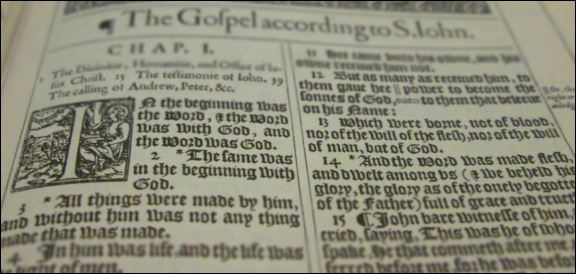
Joh 1:1 In the beginning was the Word, and the Word was with God, and the Word was God.
Joh 1:2 The same was in the beginning with God.
Joh 1:3 All things were made by him; and without him was not any thing made that was made.
Joh 1:14 And the Word was made flesh, and dwelt among us, (and we beheld his glory, the glory as of the only begotten of the Father,) full of grace and truth.
Psa 33:6 By the word of the LORD were the heavens made; and all the host of them by the breathof his mouth.
1Jo 1:1 That which was from the beginning, which we have heard, which we have seen with our eyes, which we have looked upon, and our hands have handled, of the Word of life;
1Jo 1:2 (For the life was manifested, and we have seen it, and bear witness, and shew unto you that eternal life, which was with the Father, and was manifested unto us;)
The Aramaic Targum equates the Word with Yahweh
Psa 84:5 Blessed is the man whose strength is in You; Your ways are in their hearts.
6. Happy the man who has his strength in your word; trust is in their hearts.
Psa 84:12 O Jehovah of Hosts, blessed is the man who trusts in You!
13. O Lord Sabaoth, it is well for the son of man who trusts in your word
Psa 85:6 Will You give us life anew, so that Your people may rejoice in You?
7. Will you not again revive us? And your people will rejoice in your word.
Logos=Memra
The Greek λόγος ‘logos’ is translated as מימרא ‘memra’ in the Aramaic Targums.
Joh 1:1 In the beginning was the Word, and the Word was with God, and the Word was God.
G3056
λόγος
logos
λόγος=Memra in the Targum
מימרא ‘memra’ is used 596 times in reference to God. It is used throughout the TaNaKH when the Scriptures refer to God revealing Himself in His creation or interacting with mankind.
Here are a few examples.
Genesis 1:27
And the Word (מימרא ‘memra’) of the Lord created man in His likeness, in the likeness of the presence of the Lord He created him, the male and his yoke-fellow He created them.
Genesis 7:16
And they coming entered, male and female, of all flesh unto him, as the Lord had instructed him; and the Word (מימרא ‘memra’) of the Lord covered over the door of the ark upon the face thereof
Genesis 17:7…And I will establish my covenant between My Word (מימרא ‘memra’) and between you
Genesis 18:1-2
Therefore was there a word of prophecy from before the Lord unto Abraham the Just, and the Word (מימרא ‘memra’) of the Lord was revealed to him in the valley of vision; and he sat in the door of the tabernacle, comforting himself from his circumcision in the fervour (or strength) of the day.
Genesis 19:23-24
And the Word (מימרא ‘memra’) of God caused to descend upon the peoples of Sodom and Gomorrah, brimstone and fire from the Jehovah in heaven. (Targum Jonathan)
Exodus 3:14…And the Word (מימרא ‘memra’) of Jehovah said to Moses: “I am He who said unto the world ‘Be!’ and it was: and who in the future shall say to it ‘Be!’ and it shall be.” And He said: “Thus you shall say to the children of Israel: ‘I Am’ has sent me to you.” (Jerusalem Targum)
Exodus 20
And the Lord spake all these words, saying: [JERUSALEM. And the Word (מימרא ‘memra’) of the Lord spake all the excellency of these words saying:]
Leviticus 26:12 And I will set the Shekinah of My Glory among you, and my Word (מימרא ‘memra’) shall not abhor you, but the Glory of My Shekinah shall dwell among you, and My Word (מימרא ‘memra’) shall be to you for a redeeming God, and you shall be unto My Name for a holy people (Targum Jonathan)
Numbers 10:35
JERUSALEM. It was when the ark went forward. Mosheh stood, with bands (outstretched) in prayer, and said, Arise now, O Word (מימרא ‘memra’) of the Lord, in the power of Thy might, and let the adversaries of Thy people be scattered, and make Thine enemies flee before Thee. But when the ark rested, Mosheh lifted his hands in prayer, and said, O Word (מימרא ‘memra’) of the Lord, turn from the strength of Thy anger, and return unto us in the goodness of Thy mercy, and bless the myriads and multiply the thousands of the children of Israel.
Isaiah 45:17, 25…But Israel shall be saved by the Word (מימרא ‘memra’) of the Lord with an everlasting salvation. By the Word (מימרא ‘memra’) of the Lord shall all the seed of Israel be justified. (Targum Jonathan)
¶.Hosea 1:7…But I will have mercy upon the house of Judah, and I will save them by the Word (מימרא ‘memra’) of the Lord, their God. (Targum Jonathan)
Jewish teachers of the Apostle John’s era have ascribed six attributes to the מימרא ‘memra’. John assigned every attribute to Jesus in the first chapter of his gospel. The attributes are:
1. The memra is individual and yet the same as God (John 1:1-“and the Word was with God, and the Word was God”).
2. The memra was the instrument of creation (John 1:3-“All things were made by Him” and John 1:10-“the world was made by him”).
3. The memra was the instrument of salvation (John 1:12-“But as many as received him, to them gave he power to become the sons of God, even to them that believe on his name”).
4. The memra was the visible presence of God or Theophany (John 1:14-“And the Word was made flesh and dwelt among us”).
5. The memra was the covenant maker (John 1:17-“For the law was given by Moses, but grace and truth came by Jesus Christ”).
6. The memra was the revealer of God (John 1:18-“No man hath seen God at any time; the only begotten Son, which is in the bosom of the Father, he hath declared him”).
λόγος ‘logos’ = מלתא ‘miltha’
λόγος ‘logos’ is equivalent to the Aramaic מלתא ‘miltha’ in the Aramaic Peshitta
מלתא ‘miltha’ has no direct English equivalent. It can mean ‘Word’, ‘Manifestation’, ‘Instance’ or ‘Substance’, among many other things. In this context, it is best left untranslated.
Andrew Gabriel Roth stated the following about the word Miltha
“Now I suppose many of you reading this expected me to substitute “Word” for miltha in the English portion, even as many laymen and scholars alike have done so with logos in the Greek tradition. However, while miltha does mean “word”, its full depth cannot be adequately translated. As such, miltha is the first of what will be many Aramaic theological terms that can only be discussed through explanation and metaphor, as opposed to being given a strict dictionary definition. For now though, “Word” will do fine as a launching point while we sift through the poetic and grammatical challenges of the Sholiach/Apsotle Yochanan’s first statement. Put simply, every word in Hebrew, or Aramaic must be either masculine, or feminine, and this particular phrase reflects something very unusual that will become clear momentarily.
A last consideration in the mind of Yochanan must have been the depth of meaning in the word itself. Put simply, miltha is a term that has no direct equivalent in any other language, including Hebrew. Like the Tanakh usage of davar in Psalm 33:6 and the frequent targumic allusion to memra to avoid the anthropomorphizing of Deity, miltha has great power as a particle of divine speech. However, miltha has meanings not even hinted at in these other terms, and certainly not in the Greek logos. Over the centuries, miltha has been rendered as “force”, “manifestation”, “emanation”, “substance” as well as “word”, and even all these put together still don’t come close to approaching its totality, which is why its there in the first verse of this esoteric book!
Surely though it was also this very diversity that Yochanan wanted, since only a nearly infinite-meaning word can attempt to do justice to that which is infinite in the first place.”
The word תורה ‘torah’ comes from the root word תר ‘tar’ which means an image or outline. The Torah/Word is the Image of the LORD (Hebrews 1:3; 2 Corinthians 4:4; Colossians 1:15).
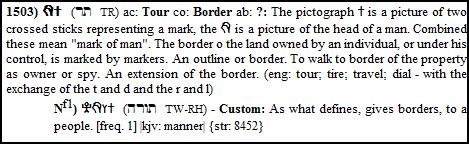
All things in His Word are a shadow pointing back to Messiah (Hebrews 8:5; 9:24; 10:1; Colossians 2:16-17) who is the Image of God (Hebrews 1:3; 2 Corinthians 4:4; Colossians 1:15-16).
The Torah = the Entire Bible. The Scriptures define the Prophets as the Torah (1 Corinthians 14:21) & the Psalms as Torah (John 10:34; 12:34; 15:25). Messiah further elaborates His Word as everything that comes out of His mouth (Matthew 4:4). This includes creation, as creation came forth from His Word (Psalm 33:6; Hebrews 11:3; John 1:1-3) who became flesh and dwelt among us (Colossians 1:12-17; Hebrews 1:1-3, 8-12).
It is interesting to note that the Greek word μορφή ‘morphe’ is used in the Septuagint to translate both the Hebrew words תואר which means image, that comes from the same root תר as תורה ‘torah.’ μορφή ‘morphe’ is also used to translate the Hebrew word צלם ‘tselem’ which means shadow.
Php 2:6 who subsisting in the form (μορφη ‘morphe’) of God, thought it not robbery to be equal with God,
The Hebrew word for word is דבר ‘davar’ which literally means order. This is the definition of ‘cosmos.’
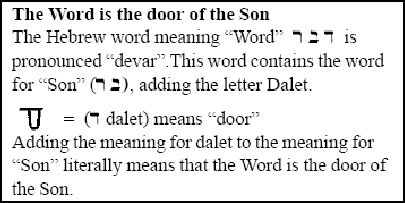
The Torah is an interesting word in that it comes from two roots. One is תר ‘tar,’ mentioned above which means an image or outline, and יר ‘yar’ which means to teach or pointing in the right direction.
Exo 24:12 And Jehovah said to Moses, Come up to Me to the mountain, and be there. And I will give to you the tablets of stone, and the Law, and the commandments which I have written, to teach them.
Both Law and Teach in the above verse come from the same root word יר.
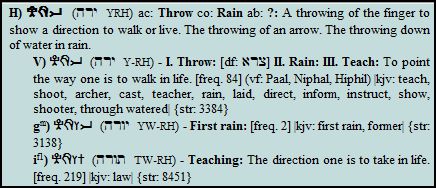
The rain is likened unto the Word.
Deu 32:2 My doctrine shall drop as the rain, my speech shall distil as the dew, as the small rain upon the tender herb, and as the showers upon the grass:
Isa 55:10 For as the rain cometh down, and the snow from heaven, and returneth not thither, but watereth the earth, and maketh it bring forth and bud, that it may give seed to the sower, and bread to the eater:
Isa 55:11 So shall my word be that goeth forth out of my mouth: it shall not return unto me void, but it shall accomplish that which I please, and it shall prosper in the thing whereto I sent it.
Teaching is linked with rain.
1Ki 8:36 then You shall hear in Heaven, and shall forgive the sin of Your servants, and of Your people Israel, for You shall teach (ירה) them the good way in which they shall go, and shall give rain on Your land which You have given to Your people for an inheritance.

Winter is the rainy season of the former rains.
The time of cold when men gather and read the Word. The word for cold in Hebrew is קר which has the meaning of men gathering to the home to escape the cold.
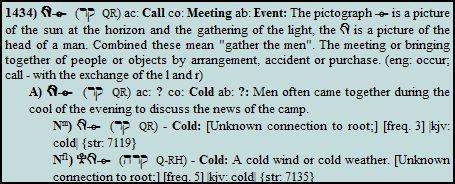
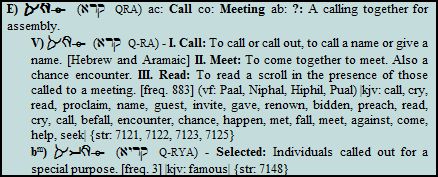
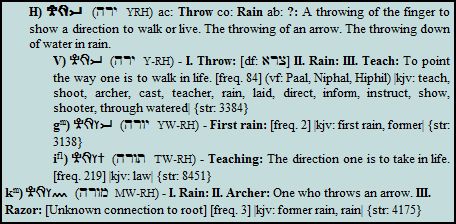
Winter is the time of the early rains in the mideast. This is the time of cold where men gather in homes to קרא ‘qara’ read scrolls and teach חנך ‘chanakh’ – dedicate’ their children. The early rains also mean ‘teaching’ which is fascinating.
Joe 2:23 Then be glad, sons of Zion, and rejoice in Jehovah your God. For He has given to you the early rain (מורה ‘moreh’) according to righteousness, and He will cause the rain to come down for you, the early rain (מורה ‘moreh’) and the latter rain in the first month.
The Targum is, “in the Word of the Lord your God;”
The latter rain and former rain point to the two Advents of Christ.
Hos 6:3 Then shall we know, if we follow on to know the LORD: his going forth is prepared as the morning; and he shall come unto us as the rain, as the latter and former rain unto the earth.
King Messiah likened unto the rain
Psa 72:1 <A Psalm for Solomon.> Give the king thy judgments, O God, and thy righteousness unto the king’s son.
Psa 72:2 He shall judge thy people with righteousness, and thy poor with judgment.
Psa 72:3 The mountains shall bring peace to the people, and the little hills, by righteousness.
Psa 72:4 He shall judge the poor of the people, he shall save the children of the needy, and shall break in pieces the oppressor.
Psa 72:5 They shall fear thee as long as the sun and moon endure, throughout all generations.
Psa 72:6 He shall come down like rain upon the mown grass: as showers that water the earth.
Isa 45:8 Drop down, ye heavens, from above, and let the skies pour down righteousness: let the earth open, and let them bring forth salvation (ישע ‘yesha’ cognate of ישועה ‘yeshuah’ source of the name Jesus), and let righteousness spring up together; I the LORD have created it.
Irenaeus speaks of the Word as the image according to which man is made, and the Word made flesh as the one who shows that image truly.
“And then, again, this Word was manifested when the Word of God was made man, assimilating Himself to man, and man to Himself, so that by means of his resemblance to the Son, man might become precious to the Father. For in times long past, it was said that man was created after the image of God, but it was not [actually] shown; for the Word was as yet invisible, after whose image man was created. Wherefore also he did easily lose the similitude. When, however, the Word of God became flesh, He confirmed both these: for He both showed forth the image truly, since He became Himself what was His image; and He re-established the similitude after a sure manner, by assimilating man to the invisible Father through means of the visible Word.” (Irenaeus – Against Heresies 5.16.2)
Two Books – Bible & Creation

“Every single creature is full of God and is a book about God.” (Meister Eckhart )
“Let the divine page be a book for you, so that you may hear these things; let the whole world be a book for you, so that you may see these things. In those books only those who know letters read; in the whole world even the unlettered may read.” (St. Augustine – Expositions on the Psalms 45.7)
“Some people read books to find God. But there is a great book: the very appearance of created things. Look above you! Look below you! Note it. Read it. God, whom you want to discover, never wrote that book with ink. Instead, He set before your eyes the things that He had made. Can you ask for a louder voice than that?” (The Essential Augustine
-Vernon J. Bourke on Augustine, Sermon 126.6)
“Others, in order to find God, will read a book. Well, as a matter of fact there is a certain great big book, the book of created nature (magnus liber ipsa species creaturae). Look carefully at it top and bottom, observe it, read it. God did not make letters of ink for you to recognize him in; he set before your eyes all these things he has made. Why look for a louder voice? Heaven and earth cries out to you, ‘God made me.’” (St. Augustine – Sermon 68)
“From the creation also, learn to admire your Lord! And if any of the things you see exceed your comprehension, and you are not able to find the reason thereof, yet for this glorify the Creator, that the wisdom of these works surpasses your understanding.” (St. John Chrysostom – Homilies on the Statues 12.7)
St. Maximus the Confessor spoke of God concealing Himself in the Logos of creation.
Or one could say that the Logos “becomes thick” in the sense that for our sake He ineffably concealed Himself in the logoi of beings, and is obliquely signified in proportion to each visible thing, as if through certain letters, being whole in whole things while simultaneously remaining utterly complete and fully present, whole, and without diminishment in each particular thing. Or one could say that the Logos “becomes thick” in the sense that, for the sake of our thick minds, He consented to be both embodied and expressed through letters, syllables, and sounds, so that from all these He might gradually gather those who follow Him to Himself…(St. Maximus the Confessor – Ambigua 33.2)
This “thick” imagery of St. Maximus is interesting to note in light of the Cloud of Glory mentioned previously.
At Mt. Sinai, God spoke to Israel the 10 commandments through the thick darkness.
Exo 19:18 And mount Sinai was altogether on a smoke, because the LORD descended upon it in fire: and the smoke thereof ascended as the smoke of a furnace, and the whole mount quaked greatly.
Exo 19:19 And when the voice of the trumpet sounded long, and waxed louder and louder, Moses spake, and God answered him by a voice.
Exo 19:20 And the LORD came down upon mount Sinai, on the top of the mount: and the LORD called Moses up to the top of the mount; and Moses went up.
Exo 20:21 And the people stood afar off, and Moses drew near unto the thick darkness (ערפל ‘araphel’) where God was.
Deu 4:11 And ye came near and stood under the mountain; and the mountain burned with fire unto the midst of heaven, with darkness, clouds, and thick darkness (ערפל ‘araphel’).
Deu 4:12 And the LORD spake unto you out of the midst of the fire: ye heard the voice of the words, but saw no similitude; only ye heard a voice.

God’s presence was in the thick cloud, the Cloud of Glory.
Exo 19:16 And it came to pass on the third day in the morning, that there were thunders and lightnings, and a thick (כּבד ‘kaved’) cloud upon the mount, and the voice of the trumpet exceeding loud; so that all the people that was in the camp trembled.
Exo 19:9 And the LORD said unto Moses, Lo, I come unto thee in a thick (עב ‘av’) cloud, that the people may hear when I speak with thee, and believe thee for ever. And Moses told the words of the people unto the LORD.

“The invisible things of God have been made visible through images since the creation of the world. We see images in creation which remind us faintly of God, as when, for instance, we speak of the holy and adorable Trinity, imaged by the sun, or light, or burning rays, or by a running fountain, or a full river, or by the mind, speech, or the spirit within us, or by a rose tree, or a sprouting flower, or a sweet fragrance.”
“I do not worship matter; I worship the God of matter, who became matter for my sake, and deigned to inhabit matter, who worked out my salvation through matter. I will not cease from honoring that matter which works my salvation. … Do not despise matter, for it is not despicable. Nothing that God has made is.” (St. John of Damascus – On the Divine Images I.11, 1.16, III.21, )
“Believe one who knows: You will find something greater in woods than in the books. Trees and stones will teach you that which you can never learn from masters.” (St. Bernard of Clairvaux – Letter 106 to Master Henry Murdach: section 2)
“He who is not illuminated by such great splendor of created things, is blind; he who is not awakened by such great clamor is deaf; he who does not praise God because of all these effects is dumb; he who does not note the first principle from such great things is foolish. Open your eyes, therefore, prick your spiritual ears, open your lips and apply your heart, that you may see, hear, praise, love and worship, glorify and honor your God.” (St. Bonaventure – The Journey of the Mind / Soul into God, Chapter 1, paragraph 15)
“He [Jesus] set before me the book of nature; I understood how all the flowers he has created are beautiful, how the splendor of the rose and the whiteness of the lily do not take away the perfume of the little violet or the delightful simplicity of the daisy… So it is in the world of souls, the living garden of the Lord.” (St. Thérèse of Lisieux – Story of a Soul)
“Another way of increasing our sense of the Presence of God, is to perceive Him in all His creatures. St. Therese of the Child Jesus loved to contemplate the image of her Creator in the flowers of the fields and in the stars of the firmament.” (St. Thérèse of Lisieux)
Parables
Jesus taught in parables. The Holy Scriptures themselves are written in parables and “dark sayings” (Psalm 78:1-2). The entire Bible uses shadow pictures and parables to reveal Messiah.
The Parable of the Sower (Mark 4:2-20; Luke 8:4-15) is foundational: “Do you not know this parable? And how will you know all parables?” (Mark 4:13). The seed is the Word of God, and different soils represent responses of the heart.
Mar 4:2 And he taught them many things by parables, and said unto them in his doctrine,
Mar 4:11 And he said unto them, Unto you it is given to know the mystery of the kingdom of God: but unto them that are without, all these things are done in parables:
Mar 4:12 That seeing they may see, and not perceive; and hearing they may hear, and not understand; lest at any time they should be converted, and their sins should be forgiven them.
Mar 4:13 And he said unto them, Know ye not this parable? and how then will ye know all parables?
Mat 13:10 And the disciples came, and said unto him, Why speakest thou unto them in parables?
Mat 13:11 He answered and said unto them, Because it is given unto you to know the mysteries of the kingdom of heaven, but to them it is not given.
Mat 13:12 For whosoever hath, to him shall be given, and he shall have more abundance: but whosoever hath not, from him shall be taken away even that he hath.
Mat 13:13 Therefore speak I to them in parables: because they seeing see not; and hearing they hear not, neither do they understand.
Mat 13:14 And in them is fulfilled the prophecy of Esaias, which saith, By hearing ye shall hear, and shall not understand; and seeing ye shall see, and shall not perceive:
Mat 13:15 For this people’s heart is waxed gross, and their ears are dull of hearing, and their eyes they have closed; lest at any time they should see with their eyes, and hear with their ears, and should understand with their heart, and should be converted, and I should heal them.
Mat 13:16 But blessed are your eyes, for they see: and your ears, for they hear.
Mat 13:17 For verily I say unto you, That many prophets and righteous men have desired to see those things which ye see, and have not seen them; and to hear those things which ye hear, and have not heard them.
2Co 3:13 And not as Moses, which put a vail over his face, that the children of Israel could not stedfastly look to the end of that which is abolished:
2Co 3:14 But their minds were blinded: for until this day remaineth the same vail untaken away in the reading of the old testament; which vail is done away in Christ.
2Co 3:15 But even unto this day, when Moses is read, the vail is upon their heart.
2Co 3:16 Nevertheless when it shall turn to the Lord, the vail shall be taken away.
2Co 3:17 Now the Lord is that Spirit: and where the Spirit of the Lord is, there is liberty.
Parables align with deeper interpretive layers (PaRDeS: literal, allegorical/homiletic, etc.), encompassing anagogical/spiritual meanings. Shadows of Messiah fit into this parable level.
Both Christian and Jewish interpretation proclaims there are four layers of meaning to the Scriptures. In Christian interpretation these are:
Literal (Littera/Pashat)
Typology (Allegoria/Remez)
Moral (Moralis/D’rash)
Anagogical (Anagogia/Sod)
The Gospel reveals the deeper levels of the meaning of Scripture through the working of the Holy Spirit in us.
Rom 16:25 Now to him that is of power to stablish you according to my gospel, and the preaching of Jesus Christ, according to the revelation of the mystery, which was kept secret since the world began,
Eph 3:3 How that by revelation he made known unto me the mystery; (as I wrote afore in few words,
Eph 3:4 Whereby, when ye read, ye may understand my knowledge in the mystery of Christ)
Eph 3:5 Which in other ages was not made known unto the sons of men, as it is now revealed unto his holy apostles and prophets by the Spirit;
Rom 16:26 But now is made manifest, and by the scriptures of the prophets, according to the commandment of the everlasting God, made known to all nations for the obedience of faith:
Rom 16:27 To God only wise, be glory through Jesus Christ for ever. Amen.
1Co 2:5 That your faith should not stand in the wisdom of men, but in the power of God.
1Co 2:6 Howbeit we speak wisdom among them that are perfect: yet not the wisdom of this world, nor of the princes of this world, that come to nought:
1Co 2:7 But we speak the wisdom of God in a mystery, even the hidden wisdom, which God ordained before the world unto our glory:
1Co 2:8 Which none of the princes of this world knew: for had they known it, they would not have crucified the Lord of glory.
1Co 2:9 But as it is written, Eye hath not seen, nor ear heard, neither have entered into the heart of man, the things which God hath prepared for them that love him.
1Co 2:10 But God hath revealed them unto us by his Spirit: for the Spirit searcheth all things, yea, the deep things of God.
Eph 1:9 Having made known unto us the mystery of his will, according to his good pleasure which he hath purposed in himself:
Eph 1:10 That in the dispensation of the fulness of times he might gather together in one all things in Christ, both which are in heaven, and which are on earth; even in him:
Eph 1:11 In whom also we have obtained an inheritance, being predestinated according to the purpose of him who worketh all things after the counsel of his own will:
Eph 1:12 That we should be to the praise of his glory, who first trusted in Christ.
Eph 1:13 In whom ye also trusted, after that ye heard the word of truth, the gospel of your salvation: in whom also after that ye believed, ye were sealed with that holy Spirit of promise,
Eph 1:14 Which is the earnest of our inheritance until the redemption of the purchased possession, unto the praise of his glory.
Eph 1:15 Wherefore I also, after I heard of your faith in the Lord Jesus, and love unto all the saints,
Eph 1:16 Cease not to give thanks for you, making mention of you in my prayers;
Eph 1:17 That the God of our Lord Jesus Christ, the Father of glory, may give unto you the spirit of wisdom and revelation in the knowledge of him:
Eph 1:18 The eyes of your understanding being enlightened; that ye may know what is the hope of his calling, and what the riches of the glory of his inheritance in the saints,
Eph 1:19 And what is the exceeding greatness of his power to us-ward who believe, according to the working of his mighty power,
Eph 1:20 Which he wrought in Christ, when he raised him from the dead, and set him at his own right hand in the heavenly places,
Eph 1:21 Far above all principality, and power, and might, and dominion, and every name that is named, not only in this world, but also in that which is to come:
Eph 1:22 And hath put all things under his feet, and gave him to be the head over all things to the church,
Eph 1:23 Which is his body, the fulness of him that filleth all in all.
Col 1:26 Even the mystery which hath been hid from ages and from generations, but now is made manifest to his saints:
Col 1:27 To whom God would make known what is the riches of the glory of this mystery among the Gentiles; which is Christ in you, the hope of glory:
Four Levels of Biblical Interpretation
St. Augustine is quoted as saying: “The writing which is called the Old Testament lends itself to a four-fold division; namely, according to history, according to etiology, according to analogy, and according to allegory.”
Literal – Pashat
Things revealed:
ἀποκάλυψις ‘apokalupsis’ – used of something hidden or secret made manifest (Romans 16:25; 1 Corinthians 14:6, 26; 2 Corinthians 12:1, 7; Ephesians 1:17; 3:3-4; Revelation 1:1)
Plainly – παῤῥησία ‘parrhēsia’ – open, clear, frank, bold (John 7:26; 10:24; 11:14; 16:25, 29; 18:20; Acts 2:29; 2 Corinthians 3:12; Ephesians 6:19; Colossians 2:15)
Open φανερός ‘phaneros’ – Manifest, evident (Matthew 6:4; Mark 4:22; Luke 8:17; Romans 8:28; 1 Corinthians 14:24-25).
Typology or Analogy – Remez
Allegories ἀλληγορέω ‘allēgoreo’ – figures (Galatians 4:24)
Types τύπος ‘tupos’ – something used to represent something else, figures, forms, examples, pattern, remembrances. Types encompass both the allegoria and moralis levels of understanding. (Acts 7:43-44; Romans 5:14; 1 Corinthians 10:6, 11; Hebrews 8:5; 2 Peter 1:12; Jude 1:5)
1Co 10:6 Now these things were our examples, to the intent we should not lust after evil things, as they also lusted.
1Co 10:11 Now all these things happened unto them for ensamples: and they are written for our admonition, upon whom the ends of the world are come.
Types are given in the Scriptures as a remembrance
Jud 1:5 I will therefore put you in remembrance, though ye once knew this, how that the Lord, having saved the people out of the land of Egypt, afterward destroyed them that believed not.
Rom 5:14 Nevertheless death reigned from Adam to Moses, even over them that had not sinned after the similitude of Adam’s transgression, who is the figure of him that was to come.
Antitypes ἀντίτυπον ‘antitupon’ – something which resembles another thing, figures formed after a pattern, counterparts (Hebrews 9:24; 1 Peter 3:21)
Examples (ὑπόδειγμα ‘hupodeigma’ – sign, representation, figure, thing to be imitated
Examples, like types also encompass the middle two levels of understanding (John 13:15; Hebrews 4:11; 8:5; 9:23; James 5:10; 2 Peter 2:6)
Shadows σκία ‘skia’ – an image cast by an object representing the form of that object, sketch, outline (Colossians 2:17; Hebrews 8:5; 10:1)
Moral – Derash
Parables παραβολή ‘parabolē’ – comparison, likeness, similitude. Parables also encompass the Anagogia/Sod meaning of the text. (Matthew 13:33-34; Mark 4:2-13, 30; Luke 8:11; Hebrews 9:9; 11:19)
Metaphor/Proverb παροιμία ‘paroimia’ – dark saying, symbolic language, figurative language, allegory, similies. (John 16:25, 29)
Anagogical – Sod
Secret κρυπτός ‘kruptos’ – concealed, hidden (Matthew 6:4; 10:26; Mark 4:22; Luke 8:17; 12:2; John 7:4, 18:20; Romans 2:16, 29; 1 Corinthians 4:5; 14:25)
Mysteries μυστήριον ‘mustērion’ – hidden (Matthew 13:10-17; 1 Corinthians 2:7, 10)
Mat 13:10 And coming near, the disciples said to Him, Why do You speak to them in parables?
Mat 13:11 And answering, He said to them, Because it has been given to you to know the mysteries of the kingdom of Heaven, but it has not been given to those.
Mat 13:12 For whoever has, to him will be given, and he will have overabundance. But whoever does not have, even what he has will be taken from him.
Mat 13:13 Because of this, I speak to them in parables, because seeing they do not see, and hearing they do not hear, nor do they understand.
Mat 13:14 And the prophecy of Isaiah is fulfilled on them, which says, “In hearing you will hear and in no way understand, and seeing you will see yet in no way perceive.
Mat 13:15 For the heart of this people has grown fat, and they heard heavily with the ears, and they have closed their eyes, that they not see with the eyes, or hear with the ears, and understand with the heart, and be converted, and I heal them.” Isa. 6:9, 10
Mat 13:16 But your eyes are blessed because they see; and your ears because they hear.
Mat 13:17 For truly I tell you that many prophets and righteous ones desired to see what you see and did not see, and to hear what you hear and did not hear.
1Co 2:7 But we speak the wisdom of God in a mystery, having been hidden, which God predetermined before the ages for our glory,
Deep things βάθος ‘bathos’
(Mark 4:5, 14; Romans 11:33; Ephesians 3:18)
1Co 2:10 But God hath revealed them unto us by his Spirit: for the Spirit searcheth all things, yea, the deep things of God.
Rom 11:33 O the depth of the riches both of the wisdom and knowledge of God! how unsearchable are his judgments, and his ways past finding out!
Exegesis
Exegesis (from the Greek ἐξήγησις from ἐξηγεῖσθαι ‘to lead out’) is a critical explanation or interpretation of a text, especially a religious text. Traditionally the term was used primarily for exegesis of the Bible; however, in contemporary usage it has broadened to mean a critical explanation of any text, and the term “Biblical exegesis” is used for greater specificity.
In Biblical exegesis, the opposite of exegesis (to draw out) is eisegesis (to draw in), in the sense of an eisegetic commentator “importing” or “drawing in” his or her own purely subjective interpretations in to the text, unsupported by the text itself. Eisegesis is often used as a derogatory term.
Revealed exegesis considers that the Holy Spirit inspired the authors of the scriptural texts, and so the words of those texts convey a divine revelation. In this view of exegesis, because of its divine authorship, the Bible has a “fuller meaning” than its human authors intended or could have foreseen.
Jesus declares (leads before) the knowledge of God.
Joh 1:18 No man hath seen God at any time; the only begotten Son, which is in the bosom of the Father, he hath declared (ἐξηγέομαι ‘exegeomai’) him.
G1834
ἐξηγέομαι
exēgeomai
Thayer Definition:
- to lead out, be leader, go before
- metaphorically, to draw out in narrative, unfold a teaching
2a) to recount, rehearse
2b) to unfold, declare
2b1) the things relating to God
2b2) used in Greek writing of the interpretation of things sacred and divine, oracles, dreams, etc.
Part of Speech: verb
A Related Word by Thayer’s/Strong’s Number: from G1537 and G2233
Col 2:2 That their hearts might be comforted, being knit together in love, and unto all riches of the full assurance of understanding, to the acknowledgement of the mystery of God, and of the Father, and of Christ;
Col 2:3 In whom are hid all the treasures of wisdom and knowledge.
The Body is Christ, the Image is Christ
“The whole earth is a living icon of the face of God.” – St. John of Damascus
“We must thank God for all created things, and show Him perpetual worship, as from Him and through Him all creation takes its being and subsists.” (St. John of Damascus – Three Treatises on the Divine Images: Apologia Against Those Who Decry Holy Images)
All that we experience in this life was created to lead us to our Creator (Romans 1:19-20; Psalm 33:6-9; 150:6; Isaiah 40:26; 41:20; 45:5-8). All that we see, hear, touch, taste and feel was created so that we might see the Most High and be drawn to Him. Just as the personality of an artist can be see through his paintings or the heart of an author can be seen through his writings, so too the creation allows us to see the Creator. All of His works are embedded with His image.
Jesus is THE image of God (Hebrews 1:3; 2 Corinthians 4:4-6; Colossians 1:15-16), who is displayed in shadows or parables throughout creation.
The Holy Scriptures state that Christ is all and in all (Colossians 3:11), this is because He is the Creator (Ephesians 3:9; 1 Corinthians 8:6; John 1:1-3; Colossians 1:12-17; Hebrews 1:1-12).
The purpose of “Shadows of Messiah” is to reveal Messiah in His creation, to establish the foundation that all branches of science point to Him. In Hebrew, צל ‘tsel’ means shadow. צ ‘tsadi’ is a picture of a man on his side and ל ‘lamed’ is a picture of a shepherd’s staff. The picture here is a man’s shadow being cast to his side when standing with the shepherd’s staff representing authority, as the man is the ‘authority’ or body of the shadow. The shepherd’s staff also gives the sense of walking towards something. If one walks towards the direction of a shadow, one will end up at the source.
The purpose of Shadows of Messiah is to lead one to Messiah, the body or reality.
Col 2:9 For in him dwelleth all the fulness of the Godhead bodily.
Col 2:17 Which are a shadow of things to come; but the body is of Christ.
Not only did the Creator give His Word to mankind to lead them to the knowledge of salvation found in the Messiah, so too, He gave them shadows and parables in all of nature that lead them to Him as well.
Colossians 3:11 states that Christ Jesus is all and in all.
Col 3:11 Where there is neither Greek nor Jew, circumcision nor uncircumcision, Barbarian, Scythian, bond nor free: but Christ is all, and in all.
In creation, this concept is seen in shadow picture or parable form. All things are a shadow pointing back to Messiah (Hebrews 8:5; 9:24; 10:1; Colossians 2:16-17) who is the Image of God (Hebrews 1:3; 2 Corinthians 4:4; Colossians 1:15-16).
As mentioned before, all that we experience in this life was created to lead us to our Creator (Romans 1:19-20; Psalm 33:6-9; 150:6; Isaiah 40:26; 41:20; 45:5-8). All that we see, hear, touch, taste and feel was created so that we might see the Most High and be drawn to Him. Creation allows us to “see” the invisible Creator (Romans 1:19-20).
He is the Great Artist, the Maker of all things. The English word ‘artist’ comes form the Hebrew word יצר ‘yatsar’ which means to create or form, as a potter molding clay. The Lord is the former {יצר ‘yatsar’} of all things (Jeremiah 10:16; 51:19). As a result, all of His works are embedded with His image.
In the beginning, the Spirit of God hovered over the waters (Genesis 1:2). The word for hover in this verse is רחף ‘rachaph’ which pictures a bird overshadowing her nest. The Almighty then said “let there be light” from whence all matter came forth, creating a shadow of His image over all of creation.
All things are a shadow pointing back to Messiah (Hebrews 8:5; 9:24; 10:1; Colossians 2:16-17) who is the Image of God (Hebrews 1:3; 2 Corinthians 4:4; Colossians 1:15-16). In our 3 dimensional world we are familiar with 2 dimensional shadows that are cast by 3 dimensional objects. Scripture, and even science speaks of a 4th dimensional spirit realm. A 4th dimensional object will cast a 3 dimensional shadow. The Almighty, who dwells in this 4th dimension casts a 3 dimensional shadow which is seen in all His handiwork of this creation. In the beginning, the Spirit hovered over the waters (Genesis 1:2). The word for hover here (רחף ‘rachaph’) links to a bird overshadowing her nest. The Almighty then said let there be light which cast a shadow over the entire universe. Hence, all of His creation is a shadow pointing back to Him.
Science
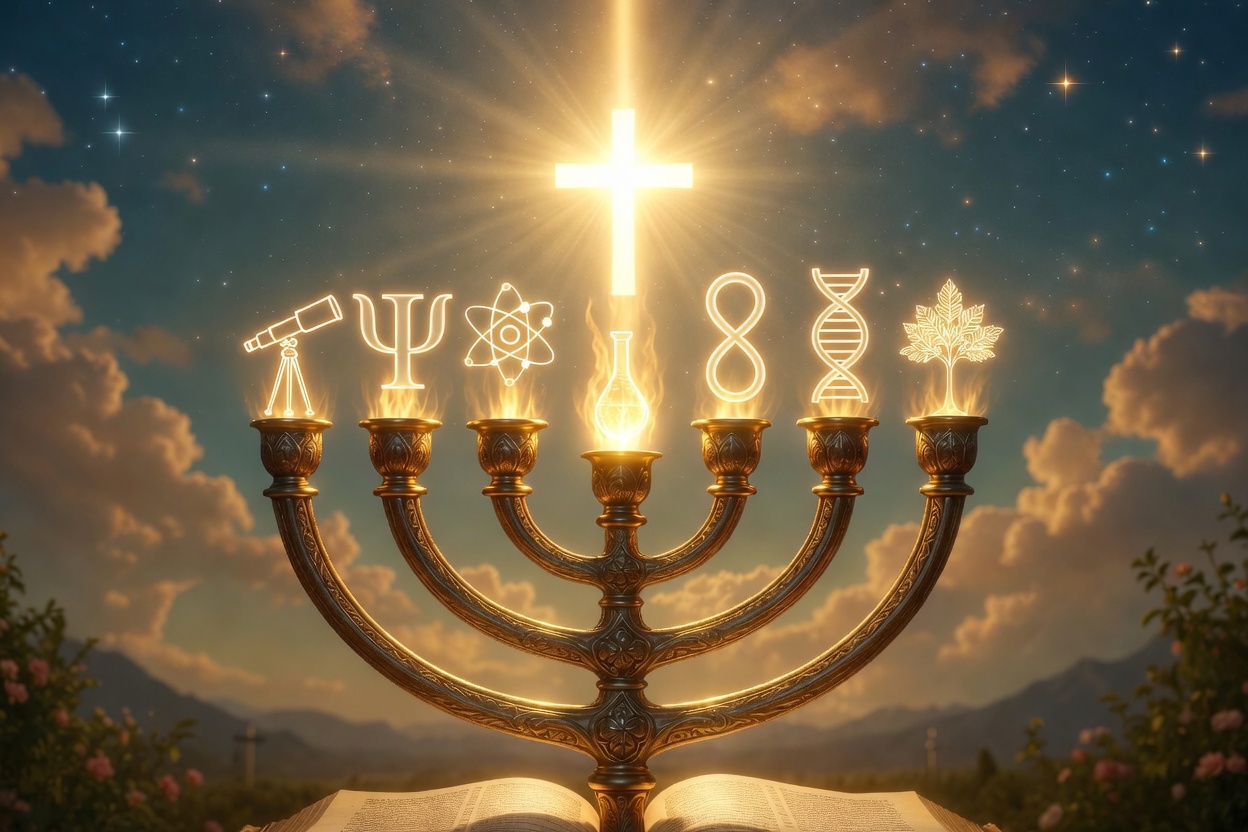
Today, the study of creation/nature is considered science. The English word science comes from the Latin word ‘scientia’ which means “to know”. This corresponds to דע ‘dah,’ from whence both ידע ‘yada’ and דעת ‘daat’ come, both of which mean knowledge.
In Hebrew, knowledge literally means the door of the eye, or to “see the door”. Who is the Door? The Messiah.
Joh 10:7 Then Jesus again said to them, Truly, truly, I say to you that I am the door of the sheep.
The shadows of the Word and His Creation are there to lead us to the Door/His Eye, that we might know Him intimately, as the little guy in His Eye, abiding under the SHADOW of His Wings (Psalm 17:8; 36:7-9; 63:7; 91:5; Deuteronomy 32:10-11).
When we seek His Face, who is Messiah (Hebrews 1:3; 2 Corinthians 4:4; Colossians 1:15), we will find Him.
Jer 29:13 And you shall seek and find Me when you search for Me with all your heart.
Notice that Messiah Jesus links seeking Him with knocking on a door. Studying science is a form of that knocking, whether one knows it or not.
Mat 7:7 Ask, and it will be given to you; seek, and you will find; knock, and it will be opened to you.
Mat 7:8 For each one that asks receives, and the one that seeks finds; and to the one knocking, it will be opened.
All the treasures of science (knowledge) are in Messiah:
Col 2:3 in whom are hidden all the treasures of wisdom and of knowledge.
Jesus is the Wisdom of God.
1Co 1:24 But unto them which are called, both Jews and Greeks, Christ the power of God, and the wisdom of God.
1Co 1:30 But of him are ye in Christ Jesus, who of God is made unto us wisdom, and righteousness, and sanctification, and redemption:
The universe was created through Wisdom
Pro 3:19 The LORD by wisdom hath founded the earth; by understanding hath he established the heavens.
Jer 10:12 He hath made the earth by his power, he hath established the world by his wisdom, and hath stretched out the heavens by his discretion.
Jer 51:15 He hath made the earth by his power, he hath established the world by his wisdom, and hath stretched out the heaven by his understanding.
The universe was created through the Word
Psa 33:6 By the word of the LORD were the heavens made; and all the host of them by the breath of his mouth.
Heb 11:3 By faith we understand the ages to have been framed by the Word of God, so that the things seen should not come into being out of things that appear.
2Pe 3:5 For this is hidden from them by their willing it so, that heavens were of old, and earth by water, and through water, having subsisted by the Word of God,
Joh 1:1 In the beginning was the Word, and the Word was with God, and the Word was God.
Joh 1:2 He was in the beginning with God.
Joh 1:3 All things came into being through Him, and without Him not even one thing came into being that has come into being.
The universe was created through Messiah Jesus who is the Word/Wisdom of God.
Col 1:15 Who is the image of the invisible God, the firstborn of every creature:
Col 1:16 For by him were all things created, that are in heaven, and that are in earth, visible and invisible, whether they be thrones, or dominions, or principalities, or powers: all things were created by him, and for him:
Col 1:17 And he is before all things, and by him all things consist.
Pro 16:4 The LORD hath made all things for himself: yea, even the wicked for the day of evil.
All that we see points to Him. All that we see with our natural eyes, all that we see with our ‘spiritual eyes.’
The Eye is the doorway to His ‘soul’. The shadows of the Word and His Creation are there to lead us to the door/His eye. To know Him intimately, as the little guy in His Eye, abiding under the SHADOW of His Wings.
Psa 17:8 Keep me as the apple of the eye, hide me under the shadow of thy wings,
Jer 29:13 And you shall seek and find Me when you search for Me with all your heart.
Notice that Messiah Jesus links seeking Him with knocking on a door.
Mat 7:7 Ask, and it will be given to you; seek, and you will find; knock, and it will be opened to you.
Mat 7:8 For each one that asks receives, and the one that seeks finds; and to the one knocking, it will be opened.
Studying His creation to grow in Wisdom
Wis 7:14 For she {Wisdom} is a treasure unto men that never faileth: which they that use become the friends of God, being commended for the gifts that come from learning.
Wis 7:15 God hath granted me to speak as I would, and to conceive as is meet for the things that are given me: because it is he that leadeth unto wisdom, and directeth the wise.
Wis 7:16 For in his hand are both we and our words; all wisdom also, and knowledge of workmanship.
Wis 7:17 For he hath given me certain knowledge of the things that are, namely, to know how the world was made {Cosmology}, and the operation of the elements: {Chemistry}
Wis 7:18 The beginning, ending, and midst of the times {Mathematics}: the alterations of the turning of the sun {Physics}, and the change of seasons:
Wis 7:19 The circuits of years, and the positions of stars: {Astronomy}
Wis 7:20 The natures of living creatures {Biology}, and the furies of wild beasts: the violence of winds, and the reasonings of men {Psychology}: the diversities of plants and the virtues of roots {Geology}:
Wis 7:21 And all such things as are either secret or manifest, them I know.
Wis 7:22 For wisdom, which is the worker of all things, taught me: for in her is an understanding spirit holy, one only, manifold, subtil, lively, clear, undefiled, plain, not subject to hurt, loving the thing that is good quick, which cannot be letted, ready to do good,
Wis 7:23 Kind to man, steadfast, sure, free from care, having all power, overseeing all things, and going through all understanding, pure, and most subtil, spirits.
Wis 7:24 For wisdom is more moving than any motion: she passeth and goeth through all things by reason of her pureness.
Wis 7:25 For she is the breath of the power of God, and a pure influence flowing from the glory of the Almighty: therefore can no defiled thing fall into her.
Wis 7:26 For she is the brightness of the everlasting light, the unspotted mirror of the power of God, and the image of his goodness.
Wis 7:27 And being but one, she can do all things: and remaining in herself, she maketh all things new: and in all ages entering into holy souls, she maketh them friends of God, and prophets.
Wis 7:28 For God loveth none but him that dwelleth with wisdom.
Studying His creation to see Christ is also on the ‘Anagogical’/’sod‘ level of Scriptural understanding. The picture formed by the Hebrew word סוד ‘sod‘ is one of intimate friends conversing in a tent, entering the ‘door’, and having a close relationship with the Most High, as the little guy in His Eye.
Seeking His Face, looking into His Eyes
Psa 27:8 My heart said to You, Seek my face; Your face, O Jehovah, I will seek.
Psa 70:4 Let all those who seek You rejoice, and be glad in You; and let those who love Your salvation (ישועה ‘yeshuah’ – source of the name Jesus) forever say, Let God be magnified.
Messiah Jesus is His “Face” or “Presence”
2Co 4:6 For God, who commanded the light to shine out of darkness, hath shined in our hearts, to give the light of the knowledge of the glory of God in the face of Jesus Christ.
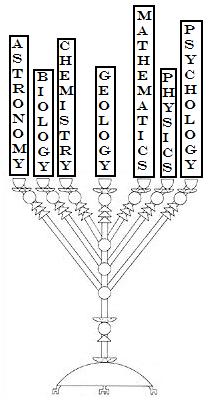
There are 7 Branches of Science corresponding to the Menorah which corresponds to the Tree of Life. What is the Eternal life?
Joh 17:3 And this is everlasting life, that they may know You, the only true God, and Jesus Christ, whom You have sent.
Astronomy -study of celestial objects
Biology – study of living organisms
Chemistry – study of matter and its interactions w/ energy and itself
Geology – study of earth, structure, history
Mathematics – study of logic of quantity and shape and arrangement
Physics – study of the behavior and properties of matter
Psychology – study of behavior of living things
The 7 branches of science correspond to the 7 days of creation.
Day 1 – Physics – Let there be Light
Day 2 – Mathematics – Division of the waters
Day 3 – Geology – Earth & Plants
Day 4 – Astronomy – Sun, Moon & Stars
Day 6 – Psychology – Study of man
Day 7 – Chemistry – Change/Transformation
The natural is given to teach the spiritual
1Co 15:46 But not the spiritual first, but the natural; afterward the spiritual.
Joh 3:12 If I tell you earthly things, and you do not believe, how will you believe if I tell you heavenly things?
Rom 1:20 For the unseen things of Him from the creation of the world are clearly seen, being understood by the things made, both His eternal power and Godhead, for them to be without excuse.
Rom 1:20
Address of Tatian to the Greeks
and of the forms that are in matter; He is invisible, impalpable, being Himself the Father of both sensible and invisible things. Him we know from His creation, and apprehend His invisible power by His works.[10]
Etheridge Aramaic translation:
2Pe 3:18 But increase in grace, and in the knowledge of our Lord and our Saviour Jeshu Meshiha, and (of) Aloha the Father, Whose be glory both now, and in all time, and to the days eternal. Amen.
ALL things point to Him. May He be glorified in all that we think, say and do.
2Co 10:5 Casting down imaginations, and every high thing that exalteth itself against the knowledge of God, and bringing into captivity every thought to the obedience of Christ;
The word translated as obedience in 2 Corinthians 10:5 comes from the Greek word ὑπακοή ‘hupakoe,’ which corresponds to the Hebrew word ענוה ‘anavah.’ ענוה ‘anavah’ means to be humble, low, submissive, meek…to bow down before.
Php 2:10 that at the name of Jesus “every knee should bow,” of heavenly ones, and earthly ones, and ones under the earth,
Php 2:11 and “every tongue should confess” that Jesus Christ is “Lord,” to the glory of God the Father. Isa. 45:23
To confess is also to give thanks.

יהודה ‘yehudah’ (Jew – Romans 2:29) comes from the Hebrew root ידה ‘yadah’ which means to raise the hands in confession, giving thanks or praise.
Rom 2:29 But he is a Jew, which is one inwardly; and circumcision is that of the heart, in the spirit, and not in the letter; whose praise is not of men, but of God.
1Jn 4:2 By this know the Spirit of God: every spirit which confesses that Jesus Christ has come in the flesh is from God.
The Gospel connection
Rom 10:10 For with the heart one believes unto righteousness, and with the mouth one confesses unto salvation.
Rom 10:11 For the Scripture says, “Everyone believing on Him will not be put to shame.” Isa. 28:16
Rom 10:12 For there is no difference both of Jew and of Greek, for the same Lord of all is rich toward all the ones calling on Him.
Rom 10:13 For everyone, “whoever may call on the name of the Lord will be saved.” Joel 2:32
Rom 10:14 How then may they call on One into whom they have not believed? And how may they believe One of whom they have not heard? And how may they hear without preaching?
Rom 10:15 And how may they preach if they are not sent? Even as it has been written, “How beautiful” “the feet of those preaching the gospel of peace, of those preaching the gospel of good things.” Isa. 52:7
Rom 10:16 But not all obeyed the gospel, for Isaiah says, “Lord, who has believed our report?” Isa. 53:1
Rom 10:17 Then faith is of hearing, and hearing through the Word of God.
Isa 40:9 Go up for yourself on the high mountain, one bearing good news to Zion; lift up your voice with strength, one bearing good news to Jerusalem. Lift up, do not fear. Say to the cities of Judah, Behold! Your God!
Isa 40:10 Behold, the Lord Jehovah will come with strength, and His arm rules for Him. Behold, His reward is with Him, and His wage before Him.
Isa 40:11 He shall feed His flock like a shepherd; He shall gather lambs with His arm; and carry them in His bosom; those with young He will lead;
1Jn 4:15 Whoever confesses that Jesus is the Son of God, God abides in him, and he in God.
In Greek ‘confession’ comes from the word ὁμολογέω ‘homologeō’ which literally means ‘joined to the Word.’
The Hebrew word הללויה ‘HalleluYah’, which means praise Yah, is a perfect depiction of this concept of lifting the hands in praise. הללויה ‘halleluYah’ comes from the following root word:

The pictograph meaning of praise means to look toward the North Star.
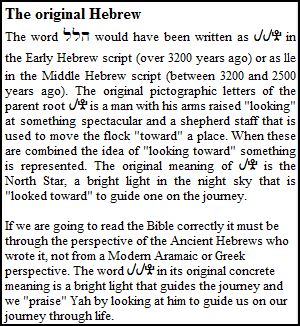
It is interesting to note that in sign language, the way one says ‘hallelujah’ is very similar to this ancient Hebrew concept. In sign language the flat hands come together, then circle around and change to X hands and then back again to flat hands raised in the air.
This is the end result:
This is the formation of the letter ה ‘heh.’

The letter ה ‘heh’ has the numerical value of 5 which is the number of God’s grace. His grace was revealed through the outstretched arms of the Messiah on the cross. The word HalleluYah is used 27 times (23 times in the TaNaKH and 4 times in the New Testament) in the Bible corresponding to the 27 bones in the human hand. The is yet another connection to the meaning of praise being the raising up the hands.
All of His creation is to praise/point to Him.
Psa 148:1 Praise Jehovah! Praise Jehovah from the heavens; praise Him in the heights.
Psa 148:2 Praise Him, all His angels; praise Him, all His hosts.
Psa 148:3 Praise Him, sun and moon; praise Him, all you stars of light.
Psa 148:4 Praise Him, O heavens of heavens; and O waters that are above the heavens.
Psa 148:5 Let them praise the name of Jehovah; for He commanded, and they were created.
Psa 148:6 And He established them forever and ever; He gave a decree that they not pass away.
Psa 148:7 Let the sea-monsters and all deeps praise Jehovah from the earth,
Psa 148:8 fire and hail, snow and smoke, stormy wind fulfilling His Word,
Psa 148:9 mountains and all hills, fruitful trees and all cedars,
Psa 148:10 beasts and all livestock, creeping things and birds of the wing,
Psa 148:11 kings of the earth and all people, princes and all judges of the earth,
Psa 148:12 young men and virgins too, old men and youths:
Psa 148:13 Let them praise the name of Jehovah; for His name alone is exalted; His glory is above the earth and heavens.
Psa 148:14 He also lifts up the horn of His people, the praise of all His saints, of the sons of Israel, a people near to Him, HalleluYah!
Heb 13:15 By Him (Jesus) therefore let us offer the sacrifice of praise to God continually, that is, the fruit of our lips giving thanks to his name.
The Hebrew word for create is ברא ‘bara’ which pictographically points to Messiah Jesus, the Son of God.

He is the Word made flesh (John 1:1).
The Hebrew word for word is דבר ‘davar’ which literally means order. Order is the definition of ‘cosmos’ {κόσμος ‘kosmos’} which is synonymous with the universe. The universe is a “single spoken sentence”. The cosmos/universe points directly the Word who is Messiah.
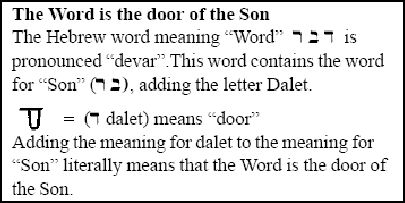
Recall that science means knowledge which in Hebrew literally means to “see the door”.
κόσμος ‘kosmos’ also has the meaning of the “circle of the earth” and was depicted as such by the ancients.
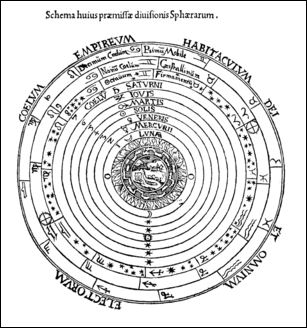
Thayer’s Greek Definitions:
G2889
κόσμος
kosmos
Thayer Definition:
1) an apt and harmonious arrangement or constitution, order, government
2) ornament, decoration, adornment, i.e. the arrangement of the stars, ‘the heavenly hosts’, as the ornament of the heavens. 1Pe_3:3
3) the world, the universe
4) the circle of the earth, the earth
5) the inhabitants of the earth, men, the human family
6) the ungodly multitude; the whole mass of men alienated from God, and therefore hostile to the cause of Christ
7) world affairs, the aggregate of things earthly
7a) the whole circle of earthly goods, endowments riches, advantages, pleasures, etc, which although hollow and frail and fleeting, stir desire, seduce from God and are obstacles to the cause of Christ
8) any aggregate or general collection of particulars of any sort
8a) the Gentiles as contrasted to the Jews (Rom_11:12 etc)
8b) of believers only, Joh_1:29; Joh_3:16; Joh_3:17; Joh_6:33; Joh_12:47 1Co_4:9; 2Co_5:19
Part of Speech: noun masculine
A Related Word by Thayer’s/Strong’s Number: probably from the base of G2865
As mentioned before, the root word of דבר ‘davar’ (Word) is דר ‘dar’ which means a circle.
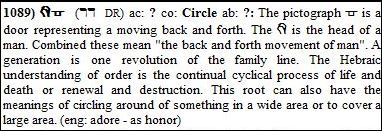
Traditionally, the cosmos has been used synonymously with the Greek word αἰών’aion’which means the world or universe. The equivalent word to αἰών ‘aion’ in Hebrew is עלם ‘olam.’ Pictographically, this word means to see {ע ‘eye’} the shepherd who leads {לם shepherd leading to the waters}. עלם ‘olam’ means the world/universe but also has the meaning of time as in eternity. Today, scientists link space and time are together calling the universe “space-time”. In Mandarin Chinese, cosmos and universe are both translated as 宇宙 (yǔzhòu), which literally translated means space-time (宇 yǔ, “space” and 宙 zhòu “time”).
In 1 Peter 3:3, κόσμος ‘kosmos’ is translated as ‘adorning’ speaking of the dress of a woman. The Psalms alludes to this cosmos-dress assocation as well (Psalm 102:25-26). This link between the cosmos and clothing is further seen in the Septuagint where κόσμος ‘kosmos’ is used to translate the Hebrew word עדי ‘adi’ which means adornment. Etymologists also links this concept.
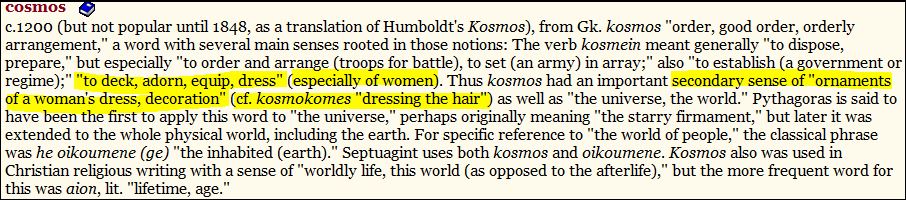
This is noted because space-time is likened to fabric (as in the adornment or dress of a woman). Beginning with Einstein, and now those who teach string theory, it is shown that the universe is actually made up of a ‘fabric.’ The Scriptures also describe the Heavens as a garment/fabric. {Psalm 102:25-26; Isaiah 34:4; 51:6; 64:1}
The translators of the Septuagint also used the word κόσμος ‘kosmos’ to translate the Hebrew word צבא ‘tseva’ which means hosts/stars. The stars are connected to fabric through the goat hair tent. The Hebrew word for star is כוכב ‘kokav’ from the root כב ‘kav’ which means the covering of the tent.

As seen above, κόσμος ‘kosmos’ is associated with the dress of women, in particular the adorning of their hair. This connects to the tent which was made of goat hair. The Hebrew origins of the word κόσμος ‘kosmos’ further links to hair by the concept of rain.
Isaac Mozeson traces κόσμος ‘kosmos’ back to the Hebrew word גשמי ‘geshmiy’ which means the physical or material world. גשמי ‘geshmiy’ comes from גשם ‘geshem’ which means rain but is also translated as body (Daniel 4:33; 5:21; 7:11). Jeff Benner takes the word גשם ‘geshem’ back to the root שם ‘shem’ speaking of the sky from whence rain comes. Recall that the heavens are likened unto fabric called “space-time”.
Further linking all these concepts together is the Hebrew word סער ‘se’ar’ which is commonly translated as hair but also has the meaning of raindrops as “hairs from heaven” (Deuteronomy 32:2). Deuteronomy 32:2 links this rain {סער ‘se’ar’} to His Word.
Deu 32:2 My doctrine shall drop as the rain {סער ‘se’ar’}, my speech shall distil as the dew, as the small rain upon the tender herb, and as the showers upon the grass:
Deu 32:3 Because I will publish the name {שם ‘shem’} of the LORD: ascribe ye greatness unto our God.
The Hebrew word for the Milky Way (our galaxy) is מנזלה ‘manzelah’ from the root נזל ‘nazal’ which has the meaning of flowing waters.

The path of the sun through the constellations comes from this Hebrew word נזל ‘nazal.’ The Hebrew word for the constellations in Hebrew is מזרות ‘mazzaroth’ which traces back to the root word נזר ‘nazar.’ נזר ‘nazar’ means the crown of the head and is translated as hair (Jeremiah 7:29).
What was on the crown {נזר ‘nazar’} of the High Priest? The sacred name {שם ‘shem’} of God (Exodus 29:6; 39:30). According to Josephus (Wars of the Jews – Book 5 Chapter 5 Section 7) the sacred name consisted of 4 vowels which are pronounced with our breath. The Hebrew word for ‘name,’ is שם ‘shem’ which means breath/wind. It is the root for the word שמים ‘shamayim’ which means heaven.
His name {שם ‘shem’} is His character which is His Word.
Rev 19:13 And he was clothed with a vesture dipped in blood: and his name is called The Word of God.
The Word=The Torah. The word תורה ‘torah’ comes from the root word תר ‘tar’ which means an image or outline. The Torah/Word is the Image of God (Hebrews 1:3; 2 Corinthians 4:4; Colossians 1:15). “Torah” means the instructions of God, the Old and New Testament Scriptures. See: Biblical Definitions – Torah
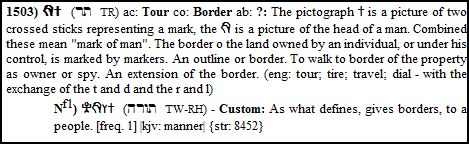
All things in His Word are a shadow pointing back to Messiah (Hebrews 8:5; 9:24; 10:1; Colossians 2:16-17) who is the Image of God (Hebrews 1:3; 2 Corinthians 4:4; Colossians 1:15-16).
The Torah = the Entire Bible. The Scriptures define the Prophets as the Torah (1 Corinthians 14:21) & the Psalms as Torah (John 10:34; 12:34; 15:25). Messiah further elaborates His Word as everything that comes out of His mouth (Matthew 4:4). This includes creation, as creation came forth from His Word (Psalm 33:6; Hebrews 11:3; John 1:1-3) who became flesh and dwelt among us (Colossians 1:12-17; Hebrews 1:1-3, 8-12).
It is interesting to note that the Greek word μορφή ‘morphe’ is used in the Septuagint to translate both the Hebrew words תואר ‘toar’ which means image, that comes from the same root תר, as תורה ‘torah.’ μορφή ‘morphe’ is also used to translate the Hebrew word צלם ‘tselem’ which means shadow.
Php 2:6 who subsisting in the form (μορφη ‘morphe’) of God, thought it not robbery to be equal with God,
The Torah is an interesting word in that it comes from two roots. One is תר ‘tar’ which means an image or outline, and the other is יר ‘yar’ which means to teach or pointing in the right direction.
Nature
“Nature is an unlimited broadcasting station, through which God speaks to us every hour, if we only will tune in.” – George Washington Carver
“Nature to a saint is sacramental. If we are children of God, we have a tremendous treasure in Nature. In every wind that blows, in every night and day of the year, in every sign of the sky, in every blossoming and in every withering of the earth, there is a real coming of God to us if we will simply use our starved imagination to realise it.” –Oswald Chambers, in My Utmost for His Highest
The natural world (nature/creation) points to Messiah. The natural realm is given so that we can understand the spiritual.
1Co 15:46 But not the spiritual first, but the natural; afterward the spiritual.
Nature comes from the Hebrew word:
This word pictographically can represent ‘to see, good’. The letter ע-ayin is a pictograph of the eye which means to see and the letters ט-tet ב-bet spell טב ‘tov’ which means good.
Gen 1:31 And God saw everything that He had made and behold, it was very good. And there was evening, and there was morning the sixth day.
Christ Jesus equates God with ‘good’
Mat 19:17 And He said to him, Why do you call Me good? No one is good except One, God! But if you desire to enter into life, keep the commandments.
Christ is THE GOOD Shepherd
Joh 10:11 I am the Good Shepherd! The Good Shepherd lays down His life on behalf of the sheep.
How can Messiah define Himself as good, and yet say only God is good? It is because Messiah is God. He is our Creator and our Redeemer.
The word for creation, ברא ‘bara’ points directly to Messiah

Good = something that is functional

God is seen through His creation/nature. However, if man begins to worship and serve the creation and not the Creator, then man perverts that which is good (functioning properly) and goes against nature.
Rom 1:20 For the unseen things of Him from the creation of the world are clearly seen, being understood by the things made, both His eternal power and Godhead, for them to be without excuse.
Rom 1:21 Because knowing God, they did not glorify Him as God, nor were thankful. But they became vain in their reasonings, and their undiscerning heart was darkened.
Rom 1:22 Professing to be wise, they became foolish
Rom 1:23 and changed the glory of the incorruptible God into a likeness of an image of corruptible man, and of birds, and four-footed animals, and creeping things.
Rom 1:24 Because of this, God gave them up to impurity in the lusts of their hearts, their bodies to be dishonored among themselves,
Rom 1:25 who changed the truth of God into the lie, and worshiped and served the created thing more than the Creator, who is blessed forever. Amen.
Rom 1:26 Because of this, God gave them up to dishonorable passions, for even their females changed the natural use to that contrary to nature.
Nature is the foundation of all religions. The adversary knows that God has embedded His Image in all of creation. The desire of the adversary is to be like God (Isaiah 14:14) so he takes those shadow pictures and corrupts them, pointing man to him instead of to their Creator.
Albert Pike speaks of Nature being the great Bible ever open before mankind. (Morals & Dogma pg 25, 64, 75, 357-359, 374, 401 etc.) Nature/Creation is at the core of the understanding of the mark. The mark of God which is His Image revealed throughout creation in types and shadows or the mark of the beast which is his image, a counterfeit, corrupted version of the Image of God, hence corrupted shadow pictures in nature.
Nature (טבע ‘teba’) was made to point to Him. It was good (טוב ‘tob’), functional. When sin entered nature was perverted and became dysfunctional (רע ‘rah’ – wicked, evil). The goodness of His creation, and the wickedness that we see as a result of sin both point to Christ Jesus. When we see things in nature functioning as they should, it points to Messiah who was without sin (Hebrew 4:15) and always did that which was pleasing to the Father (John 8:29). When we see entropy, death and sin it also points to Messiah for He is the one through which these things are overcome (John 16:33; Galatians 1:4).
1Jn 5:4 Because everything having been born of God overcomes the world, and this is the victory overcoming the world, our faith.
1Jn 5:5 Who is the one overcoming the world except the one who believes that Jesus is the Son of God?
1Jn 5:6 This is the One coming through water and blood, Jesus Christ; not by the water only, but by the water and the blood. And the Spirit is the One witnessing, because the Spirit is the truth.
“Prior to the invention of the written word and the printing press, the way God made God’s self available was through all of the creatures, seasons, and cycles of life and death. The wondrous nature of the world itself is the universal religion that precedes all later religions. It seems we need nature to smack us upside the head to move us out of head and into experiencing reality. “ – Father Richard Rohr
“And if nature had never awakened certain longings in me, huge areas of what I can now mean by the “love” of God would never, so far as I can see, have existed.” – C.S. Lewis “The Four Loves”
“Late have I loved you, O Beauty so ancient and so new, late have I loved you!
You were within me, but I was outside, and it was there that I searched for you.
In my unloveliness I plunged into the lovely things which you created.
You were with me, but I was not with you.
Created things kept me from you; yet if they had not been in you they would have not been at all.
You called, you shouted, and you broke through my deafness.
You flashed, you shone, and you dispelled my blindness.
You breathed your fragrance on me; I drew in breath and now I pant for you.
I have tasted you, now I hunger and thirst for more.
You touched me, and I burned for your peace.” (Augustine, Confessions 10.27.38)

Nature is related to giving birth/begetting. This traces back to the ‘generations/births’ of the heavens and the earth.
Gen 2:4 These are the generations {תלדות ‘toledot’} of the heavens and of the earth when they were created in the day that Jehovah God was making earth and heavens.
תלדות ‘toledot’ comes from:


This is related to the word ‘genus’
‘Genesis’ comes from this same English word

The study of nature leads us back to Genesis. Back to the beginning. Back to creation. Back to the Creator.
Jas 1:23 Because if anyone is a hearer of the Word, and not a doer, this one is like a man studying his natural (γένεσις ‘genesis’) face in a mirror;
Mat 1:1 The Book of the genealogy (γένεσις ‘genesis’) of Jesus Christ the Son of David, the son of Abraham:
Jas 3:6 And the tongue is a fire, the world of iniquity. So the tongue is set among our members, spotting all the body, and inflaming the course of nature (γένεσις ‘genesis’), and being inflamed by Hell.
Gen 1:1 In the beginning God created the heavens and the earth

The first word of the Scriptures is בראשית ‘bereshiyt’ (In the Beginning). It has the numerical value of 913. God the Father in Greek has an exact numerical equivalent. In Hebrew the first word of the language is father אב ‘av.’

Interestingly, 913 also is associated with His House. The first letter of the Scriptures is an enlarged bet. The bet in Hebrew means the house. As seen above, the definition of good (טוב ‘tob’) is that which surrounds or protects the house. Nature means to see or behold that which is good, He is surrounds/protects/cares for His house.

Messiah Jesus connects the house to His flesh.
Joh 2:19 Jesus said to them, Destroy this sanctuary, and in three days I will raise it up.
Joh 2:20 Then the Jews said, This sanctuary was forty six years being built, and do You raise it up in three days?
Joh 2:21 But He spoke about the sanctuary of His body.
Interestingly, another word in English traces back to Genesis:

DNA is a fascinating shadow of Messiah. It is a picture of the book of Life which is the blueprint of the human body just as the Word of God is the ‘blueprint’ of the Messiah who is the Word made flesh.
DNA and genetics is discussed in more detail in the following study:
1Co 15:46 But not the spiritual first, but the natural (ψυχικός ‘psuchikos’); afterward the spiritual.
*G5591
ψυχικός
psuchikos
ψυχικός ‘psuchikos’ means ‘of or belonging to breath.’ It is that which has been ‘animated’ by the Most High. In the beginning, His Spirit moved upon the waters and brought forth the natural things that we see today. In Hebrew the act of ‘moving/hovering’ over the waters is like unto a bird overshadowing her chicks. It is at this point that God said let there be light and matter came forth into His creation. The overshadowing of His wings and the light that came forth teaches that all of His creation/all of nature is embedded with His Image. All of His creation was made to point to Him.
Even the fallen state of man and creation points to Him, for it is only through Christ Jesus that all things can be restored. When Adam fell, so did His creation (Romans 5:12; 8:19). All of creation groans awaiting the birth of the Sons of God. This points to the new heavens and new earth. First the natural, and then the spiritual. The earth was good, then sin entered which corrupted and brought ‘entropy.’ It is through Messiah Jesus that creation will be renewed. The same can be said for man. Adam was created without sin, he partook of the tree of knowledge and brought death into the world. It is through Messiah Jesus that man will be restored and death will be overcome. This same pattern is seen in Messiah Jesus, Himself. Messiah was in Heaven with the Father, came to earth to take upon our sins, resurrected and will come again without sin.
Rom 8:16 The Spirit Himself witnesses with our spirit that we are children of God.
Rom 8:17 And if children, also heirs; truly heirs of God, and joint-heirs of Christ, if indeed we suffer together, that we may also be glorified together.
Rom 8:18 For I calculate that the sufferings of the present time are not worthy to compare to the coming glory to be revealed in us.
Rom 8:19 For the earnest expectation of the creation eagerly awaits the revelation of the sons of God.
Rom 8:20 For the creation was not willingly subjected to vanity, but through Him subjecting it, on hope;
Rom 8:21 that also the creation will be freed from the slavery of corruption to the freedom of the glory of the children of God.
Rom 8:22 For we know that all the creation groans together and travails together until now.
Rom 8:23 And not only so, but also we ourselves having the firstfruit of the Spirit, also we ourselves groan within ourselves, eagerly expecting adoption, the redemption of our body;
Another Greek word that is translated as ‘nature’ is φύσις ‘phusis’.
G5449
φύσις
phusis
Thayer Definition:
1) nature
1a) the nature of things, the force, laws, order of nature
1a) as opposed to what is monstrous, abnormal, perverse
1b) as opposed what has been produced by the art of man: the natural branches, i.e. branches by the operation of nature
1b) birth, physical origin
1c) a mode of feeling and acting which by long habit has become nature
1d) the sum of innate properties and powers by which one person differs from others, distinctive native peculiarities, natural characteristics: the natural strength, ferocity, and intractability of beasts
Part of Speech: noun feminine
A Related Word by Thayer’s/Strong’s Number: from G5453
This is the word that Peter uses when speaking of redemption through Christ and partaking of His ‘divine nature’.
2Pe 1:4 by which means He has given to us the very great and precious promises, so that through these you might be partakers of the divine nature, escaping from the corruption in the world by lust.
What we see in nature today, death and pain and sin will be gone. That which shall come is personified in the life of Christ Jesus who was sinless, who overcame sin and death.
Jesus is the Word made flesh, when we are recreated in His image we will be living epistles…walking Torah scrolls just as He was
Joh 3:6 That which is born of the flesh is flesh; and that which is born of the Spirit is spirit.
1Co 15:42 So also is the resurrection of the dead. It is sown in corruption; it is raised in incorruption:
1Co 15:43 It is sown in dishonour; it is raised in glory: it is sown in weakness; it is raised in power:
1Co 15:44 It is sown a natural body; it is raised a spiritual body. There is a natural body, and there is a spiritual body.
1Co 15:45 And so it is written, The first man Adam was made a living soul; the last Adam was made a quickening spirit.
1Co 15:46 Howbeit that was not first which is spiritual, but that which is natural; and afterward that which is spiritual.
1Co 15:47 The first man is of the earth, earthy: the second man is the Lord from heaven.
1Co 15:48 As is the earthy, such are they also that are earthy: and as is the heavenly, such are they also that are heavenly.
1Co 15:49 And as we have borne the image of the earthy, we shall also bear the image of the heavenly.
1Jo 3:2 Beloved, now are we the sons of God, and it doth not yet appear what we shall be: but we know that, when he shall appear, we shall be like him; for we shall see him as he is.
Psa 17:15 As for me, I will behold thy face in righteousness: I shall be satisfied, when I awake, with thy likeness.
2Co 3:3 it having been made plain that you are Christ’s letter, served by us, not having been inscribed by ink, but by the Spirit of the living God, not in tablets of stone, but in fleshly tablets of the heart.
Seed of the Word/Logos

Luk 8:11 Now the parable is this: The seed is the word of God.
Justin Martyr, Origen, and Augustine spoke of “seeds of the Word” (λογοὶ σπερματικοί ‘logoi spermatikoi’) already present in pagan cultures.
“The shadow of God is his Logos which He used like an instrument when making the world. And this shadow, and, as it were, model, is the archetype of all things. For, as God is Himself the model…and that Image is the model of all other things…” -Philo of Alexandria
“The Word is living, being, spirit, all verdant greening, all creativity. This Word manifests itself in every creature.” (St. Hildegard of Bingen quoted in Original Blessing – Matthew Fox)
“All of creation is a song of praise to God.” (St. Hildegard of Bingen quoted in Original Blessing – Matthew Fox)
“For the Logos of God (who is God) wills always and in all things to accomplish the mystery of His embodiment.” (St. Maximus the Confessor – Ambigua 7.22.)
“A divine word is every creature because each creature speaks of God. This word the eye sees.” (St. Bonaventure – Commentary on Ecclesiastes 1:8)
“The one Logos is many logoi, and the many are one. The one is many according to the goodly creative and sustaining procession of the one into beings; and the many are one according to the reverting and guiding reference and providence toward the one, as toward an all-ruling principle or a center that has pre-contained the beginnings of the straight lines from it, and as the unifier of all.” (Maximus the Confessor – Ambigua 7)
Ecc 3:11 He hath made every thing beautiful in his time: also he hath set the world (עלם ‘olam’) in their heart, so that no man can find out the work that God maketh from the beginning to the end.
Septuagint
Ecc 3:11 All the things which he has made are beautiful in his time: he has also set the whole world (αἰών ‘aion’) in their heart, that man might not find out the work which God has wrought from the beginning even to the end.
G165
αἰών
aiōn
Thayer Definition:
- for ever, an unbroken age, perpetuity of time, eternity
- the worlds, universe
- period of time, age
Ecc 3:11 He hath made every thing beautiful in his time: also he hath set the world (עלם ‘olam’) in their heart, so that no man can find out the work that God maketh from the beginning to the end.
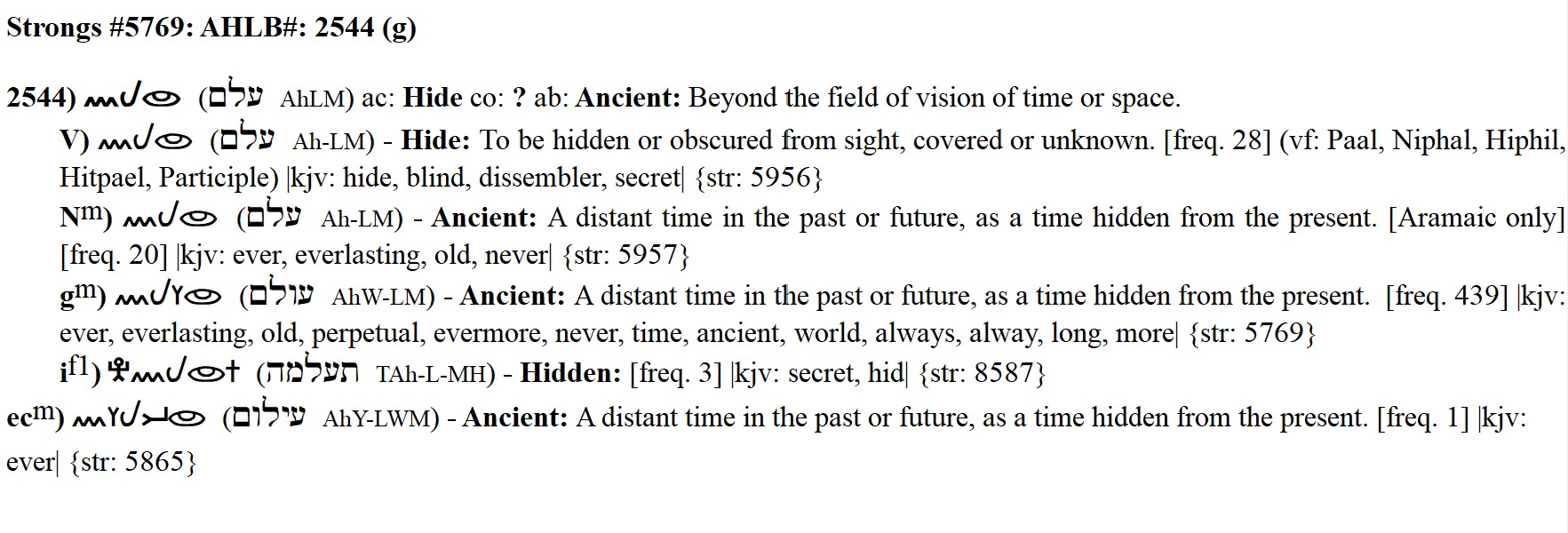
עלם ‘olam’ can be speaking of eternity, the ancient times (Genesis & the Garden) as well as God Himself (Micah 5:2; Psalm 90:2; 1 Timothy 1:17).
Early Church Fathers recognized this eternity in the hearts of men: Justin Martyr, Origen, and Augustine spoke of “seeds of the Word” (λογοὶ σπερματικοί ‘logoi spermatikoi’) already present in pagan cultures.
Joh 1:1 In the beginning was the Word (λόγος ‘logos’), and the Word was with God, and the Word was God.
Joh 1:2 The same was in the beginning with God.
Joh 1:3 All things were made by him; and without him was not any thing made that was made.
Joh 1:4 In him was life; and the life was the light of men.
Creation came forth from the λόγος ‘logos.’ Hence, all of creation is embedded with the λόγος ‘logos.’
Col 1:15 Who is the image of the invisible God, the firstborn of every creature:
Col 1:16 For by him were all things created, that are in heaven, and that are in earth, visible and invisible, whether they be thrones, or dominions, or principalities, or powers: all things were created by him, and for him:
Col 1:17 And he is before all things, and by him all things consist.
The λόγος ‘logos is the visible signature of the invisible.
Rom 1:20 For the invisible things of him from the creation of the world are clearly seen, being understood by the things that are made, even his eternal power and Godhead; so that they are without excuse:
The Church Fathers saw this concept of the seed of the Word planted in man and their cultures.
“For each man spoke well in proportion to the share he had of the spermatic Word {του σπερματικου λόγου ‘tou spermatikou logou’}… For all the writers were able to see realities darkly through the sowing of the implanted word that was in them.” (Justin Martyr – Second Apology, ch. 8, 13)
“For as the sun is one and the same in the whole world, so also the light of the true Sun, the Word of God, who is one and the same with the Father, illuminates all who are able to receive Him… There is one and the same God, who from the beginning even to the end, by means of the various dispensations, gives to mankind the salutary counsel… He sowed the seeds of truth in all, that each one, according to his capacity, might participate in the truth.” (Irenaeus of Lyons – Against Heresies, Book 4, ch. 6)
“The Word of God is the seed of the Father, sown in the world… Philosophy was a schoolmaster to bring the Hellenic mind to Christ… For there is one river of truth, but many streams flow from it. The seeds of truth scattered in all the different philosophical systems are gathered together in the one truth, the Christian philosophy.” (Clement of Alexandria – Stromata (Miscellanies), Book 1, ch. 5 & 7)
“The Lord is the sower who sows the good seeds in all souls… The seminal principles [spermatikoi logoi] are sown by the one Husbandman, the Logos, in different soils.” (Clement of Alexandria – Stromata (Miscellanies), Book 6)
“The Logos is in each creature as its own principle [logos], and yet He is one… There are as many logoi as there are creatures, but all these logoi are contained in the one great Logos… He is the first-born of all creation, containing in Himself the logoi of all things.” (Origen – Commentary on John, Book 1 )
“Just as the one sun sends forth many rays, so the one Logos sends forth many logoi into the world… These seminal reasons [spermatikoi logoi] are the causes and principles according to which each thing exists and develops.”(Origen – De Principiis “On First Principles”)
All the ends of the world shall REMEMBER and turn to Him
Psa 22:27 All the ends of the world shall remember and turn unto the LORD: and all the kindreds of the nations shall worship before thee.
Psa 22:28 For the kingdom is the LORD’S: and he is the governor among the nations.
Anamensis
ἀνά ‘ana’ means “up,” “again,” “back,” “anew,” or “re-” (as in repetition or return). μνήσις ‘mnesis’ from μιμνήσκω ‘mimnesko’ which means to remember,” “to call to mind,” or “to recollect.”
“…something like an original memory of the Good and True (both are identical) has been implanted in us, that there is an inner ontological tendency within man, who is created in the likeness of God, toward the divine.”
….This anamnesis of the origin, which results from the godlike constitution of our being, is not a conceptually articulated knowing…”
“This anamnesis of the origin, which results from the godlike constitution of our being, is not a conceptually articulated knowing, a store of retrievable contents. It is, so to speak, an inner sense, a capacity to recall, so that the one whom it addresses, if he is not turned in on himself, hears its echo from within.”- {Joseph Ratzinger – Conscience and Truth}
Rom 2:14 For when the Gentiles, which have not the law, do by nature the things contained in the law, these, having not the law, are a law unto themselves:
Rom 2:15 Which shew the work of the law written in their hearts, their conscience also bearing witness, and their thoughts the mean while accusing or else excusing one another;)
Consciousness means to know or to be aware. In Christ is all the treasures of knowledge (Colossians 2:3) and the awareness/knowledge of God (2 Corinthians 4:6) and the love that surpasses knowledge/awareness (Ephesians 3:19).
Deep in mankind’s conscious is Eternity.
His book, our thoughts
Psa 139:13 For thou hast possessed my reins: thou hast covered me in my mother’s womb.
Psa 139:14 I will praise thee; for I am fearfully and wonderfully made: marvellous are thy works; and that my soul knoweth right well.
Psa 139:15 My substance was not hid from thee, when I was made in secret, and curiously wrought in the lowest parts of the earth.
Psa 139:16 Thine eyes did see my substance, yet being unperfect; and in thy book all my members were written, which in continuance (יםים ‘yamiym’) were fashioned (יצר ‘yatsar’), when as yet there was none of them.
Psalm 139:16 seems to allude to this “memory” formed in us when we are made in the womb. “Continuance” is translated from the Hebrew יםים ‘yamiym’ which is the plural for days (יום ‘yom’) from the root ים ‘yam’ which means the sea as the sun sets in the West, where the sea is at in Israel.
In Ecclesiastes 3:11 “the world” is עלם ‘olam’ which means beyond the field of vision of time or space. Literally, beyond the horizon pointing to the sea in this context.
“Fashioned” in Psalm 139:16 comes from the word יצר ‘yatsar’ which pictures clay being pressed into shape but is also translated as “imagination” and mind” as in the forming of thought. In the womb, God is fashioning our bodies but also our minds. He is the potter, we are the clay (Isaiah 64:8). In ancient Near Eastern cultures, signatures were impressed into wet clay using stamps or seals.
The word signature comes from the Latin ‘signatura’ which means to mark with a stamp or sign. God makes mankind from the dust/clay (Genesis 2:7), marking Him with His image, His signature/name.
Scripture declares that God has put ‘eternity’ into the hearts of man (Ecclesiastes 3:11). The Sacred Name יהוה ‘Yahweh’ basically means the Eternal One (Psalm 135:13). The Great I AM, who was and is and is to come. What also is eternal? The love of God (John 17:24).
Joh 17:21 That they all may be one; as thou, Father, art in me, and I in thee, that they also may be one in us: that the world may believe that thou hast sent me.
Joh 17:22 And the glory which thou gavest me I have given them; that they may be one, even as we are one:
Joh 17:23 I in them, and thou in me, that they may be made perfect in one; and that the world may know that thou hast sent me, and hast loved them, as thou hast loved me.
Joh 17:24 Father, I will that they also, whom thou hast given me, be with me where I am; that they may behold my glory, which thou hast given me: for thou lovedst me before the foundation of the world.
Joh 17:25 O righteous Father, the world hath not known thee: but I have known thee, and these have known that thou hast sent me.
Joh 17:26 And I have declared unto them thy name, and will declare it: that the love wherewith thou hast loved me may be in them, and I in them.
Joh 13:35 By this shall all men know that ye are my disciples, if ye have love one to another.
The return of mankind to the Father is associated with coming to know and glorify His Name, His Memorial.
Jer 16:19 O LORD, my strength, and my fortress, and my refuge in the day of affliction, the Gentiles shall come unto thee from the ends of the earth, and shall say, Surely our fathers have inherited lies, vanity, and things wherein there is no profit.
Jer 16:20 Shall a man make gods unto himself, and they are no gods?
Jer 16:21 Therefore, behold, I will this once cause them to know, I will cause them to know mine hand and my might; and they shall know that my name is The LORD.
Psa 66:4 All the earth shall worship thee, and shall sing unto thee; they shall sing to thy name. Selah.
Psa 86:9 All nations whom thou hast made shall come and worship before thee, O Lord; and shall glorify thy name.
This will be done through the Christ, the revelation of God’s love.
Isa 49:5 And now, saith the LORD that formed me from the womb to be his servant, to bring Jacob again to him, Though Israel be not gathered, yet shall I be glorious in the eyes of the LORD, and my God shall be my strength.
Isa 49:6 And he said, It is a light thing that thou shouldest be my servant to raise up the tribes of Jacob, and to restore the preserved of Israel: I will also give thee for a light to the Gentiles, that thou mayest be my salvation unto the end of the earth.
Isa 49:6 And he said, It is a light thing that thou shouldest be my servant to raise up the tribes of Jacob, and to restore the preserved of Israel: I will also give thee for a light to the Gentiles, that thou mayest be my salvation unto the end of the earth.
Isa 49:7 Thus saith the LORD, the Redeemer of Israel, and his Holy One, to him whom man despiseth, to him whom the nation abhorreth, to a servant of rulers, Kings shall see and arise, princes also shall worship, because of the LORD that is faithful, and the Holy One of Israel, and he shall choose thee.
Isa 49:8 Thus saith the LORD, In an acceptable time have I heard thee, and in a day of salvation have I helped thee: and I will preserve thee, and give thee for a covenant of the people, to establish the earth, to cause to inherit the desolate heritages;
Isa 49:9 That thou mayest say to the prisoners, Go forth; to them that are in darkness, Shew yourselves. They shall feed in the ways, and their pastures shall be in all high places.
Isa 49:10 They shall not hunger nor thirst; neither shall the heat nor sun smite them: for he that hath mercy on them shall lead them, even by the springs of water shall he guide them.
Isa 49:11 And I will make all my mountains a way, and my highways shall be exalted.
Isa 49:12 Behold, these shall come from far: and, lo, these from the north and from the west; and these from the land of Sinim.
Isa 49:13 Sing, O heavens; and be joyful, O earth; and break forth into singing, O mountains: for the LORD hath comforted his people, and will have mercy upon his afflicted.
ALL nations shall turn to Him and every knee shall bow, confessing that Jesus is Lord (Isaiah 45:22-25; Romans 14:9-13; Philippians 2:1-16). Through Him (Romans 10:9-10), all nations can praise and confess the name of God (Romans 15:8-12) and become His children (Matthew 10:32; 1 John 4:15).
Psa 65:2 O thou that hearest prayer, unto thee shall all flesh come.
Psa 66:4 All the earth shall worship thee, and shall sing unto thee; they shall sing to thy name. Selah.
Psa 86:9 All nations whom thou hast made shall come and worship before thee, O Lord; and shall glorify thy name.
Isa 49:6 And he said, It is a light thing that thou shouldest be my servant to raise up the tribes of Jacob, and to restore the preserved of Israel: I will also give thee for a light to the Gentiles, that thou mayest be my salvation unto the end of the earth.
Joh 12:32 And I, if I be lifted up from the earth, will draw all men unto me.
Isa 45:23 I have sworn by myself, the word is gone out of my mouth in righteousness, and shall not return, That unto me every knee shall bow, every tongue shall swear.
Isa 45:24 Surely, shall one say, in the LORD have I righteousness and strength: even to him shall men come; and all that are incensed against him shall be ashamed.
Isa 45:25 In the LORD shall all the seed of Israel be justified, and shall glory.
Php 2:10 That at the name of Jesus every knee should bow, of things in heaven, and things in earth, and things under the earth;
Php 2:11 And that every tongue should confess that Jesus Christ is Lord, to the glory of God the Father.
Php 2:12 Wherefore, my beloved, as ye have always obeyed, not as in my presence only, but now much more in my absence, work out your own salvation with fear and trembling.
Rom 14:11 For it is written, As I live, saith the Lord, every knee shall bow to me, and every tongue shall confess to God.
Rom 14:12 So then every one of us shall give account of himself to God.
Rom 14:13 Let us not therefore judge one another any more: but judge this rather, that no man put a stumblingblock or an occasion to fall in his brother’s way.
For more on this see: All the Ends of the World Shall Remember
All Cultures contain “seeds” of the Word. Stories of virgin-born redeemers, sacrificial deaths/resurrections, floods, etc., preparing hearts for the full Gospel.
Justin Martyr said that whatever truth man acquires comes from the Logos
“We have been taught that Christ is the first-born of God, and we have declared above that He is the Word of whom every race of men were partakers; and those who lived reasonably are Christians, even though they have been thought atheists; as, among the Greeks, Socrates and Heraclitus, and men like them.” (Justin Martyr – 1 Apology 46)
“For each man spoke well in proportion to the share he had of the spermatic word… For the seed and imitation imparted according to capacity is one thing, and quite another is the thing itself, of which there is the participation and imitation according to the grace which is from Him.” (Justin Martyr – 2 Apology 13)
Everything in creation — land, language, customs, and culture — cast shadows of the Messiah, the perfect Image of the Father. All cultures will “remember” and turn to Him.
Psa 22:27 All the ends of the world shall remember and turn unto the LORD: and all the kindreds of the nations shall worship before thee.
Rev 7:9 After this I beheld, and, lo, a great multitude, which no man could number, of all nations, and kindreds, and people, and tongues, stood before the throne, and before the Lamb, clothed with white robes, and palms in their hands;
Rev 7:10 And cried with a loud voice, saying, Salvation to our God which sitteth upon the throne, and unto the Lamb.
Rev 7:11 And all the angels stood round about the throne, and about the elders and the four beasts, and fell before the throne on their faces, and worshipped God,
Rev 7:12 Saying, Amen: Blessing, and glory, and wisdom, and thanksgiving, and honour, and power, and might, be unto our God for ever and ever. Amen.
God has placed eternity in the heart of every person (Ecclesiastes 3:11). This innate awareness of the Eternal, the Divine, and our origin in Him is a universal “primal memory” or longing that no culture or religion can fully erase. It is the reason why, across religion and throughout history, we find echoes of Biblical truth—stories of a supreme Creator, a lost paradise, a coming Redeemer, sacrifice for peace, and a longing to return to the one true God.
Let us fix our eyes on Him (Hebrews 12:2) and be cultivated into His likeness.
Heb 12:2 Looking unto Jesus the author and finisher of our faith; who for the joy that was set before him endured the cross, despising the shame, and is set down at the right hand of the throne of God.
Culture & Language
Culture and language are inseparable. Culture lives in language. Stories, values, beliefs, history, humor, and social norms are passed down primarily through language (oral traditions, literature, songs, proverbs, idioms). Without language, much of a group’s shared identity would be lost. Children acquire culture while learning their mother tongue. They absorb worldview, politeness rules, gender roles, and taboos through everyday speech.
Agrobiolinguistics
Agrobiolinguistics is a field of study that examines the intersections of agriculture (agro), biology/life sciences (bio), and language (linguistics). It studies how agricultural practices, biological realities, and the natural environment shape language, vocabulary, metaphors, and worldview.
Agrobiolinguistics shows how language encodes and transmits agricultural knowledge, cultural practices, and human relationships with the land. It’s essentially the study of how humans talk about (and through) the cultivated earth.
God has made of one blood all nations, setting the bounds of their habitations (countries/cultures).
Act 17:26 And hath made of one blood all nations of men for to dwell on all the face of the earth, and hath determined the times before appointed, and the bounds of their habitation;
Act 17:27 That they should seek the Lord, if haply they might feel after him, and find him, though he be not far from every one of us:
Act 17:28 For in him we live, and move, and have our being; as certain also of your own poets have said, For we are also his offspring.
Act 17:29 Forasmuch then as we are the offspring of God, we ought not to think that the Godhead is like unto gold, or silver, or stone, graven by art and man’s device.
Act 17:30 And the times of this ignorance God winked at; but now commandeth all men every where to repent:
Act 17:31 Because he hath appointed a day, in the which he will judge the world in righteousness by that man whom he hath ordained; whereof he hath given assurance unto all men, in that he hath raised him from the dead.
Language, Biology, Agriculture are all tied together
Gen 10:5 By these were the isles of the Gentiles divided in their lands (agriculture); every one after his tongue (linguistics), after their families (biology), in their nations.
Mat 4:4 But he answered and said, It is written, Man (biology) shall not live by bread (agriculture) alone, but by every word (linguistics) that proceedeth out of the mouth of God.
The good seed (agriculture), is the Word of God (linguistics), which became flesh (body,biology)
Luk 8:11 And this is the parable: The seed is the Word of God.
Joh 1:1 In the beginning was the Word, and the Word was with God, and the Word was God.
Ethos
Ethos is the character, spirit, or fundamental values that define a person, group, community, culture, or era. It is closely related to culture but emphasizes the inner moral and habitual character rather than external customs.
Ethos comes from the Greek word ἦθος ‘ethos’ or ἔθος ‘ethos’ both of which have the meaning of “character, moral nature, habitual disposition, custom.”
ἔθος ‘ethos’ comes from ἔθω ‘etho’ which means “to be accustomed.” It originally meant a place or habitat but evolved to mean habitual character, moral nature and the customs of a people.
The old ethos
Eph 4:22 That ye put off concerning the former conversation (ἀναστροφή ‘anastrophē’) the old man, which is corrupt according to the deceitful lusts;
The Heavenly Ethos
2Co 1:12 For our rejoicing is this, the testimony of our conscience, that in simplicity and godly sincerity, not with fleshly wisdom, but by the grace of God, we have had our conversation (ἀναστροφή ‘anastrophē’) in the world, and more abundantly to you-ward.
1Pe 1:14 As obedient children, not fashioning yourselves according to the former lusts in your ignorance:
1Pe 1:15 But as he which hath called you is holy, so be ye holy in all manner of conversation (ἀναστροφή ‘anastrophē’);
1Pe 1:16 Because it is written, Be ye holy; for I am holy.
1Pe 3:15 But sanctify the Lord God in your hearts: and be ready always to give an answer to every man that asketh you a reason of the hope that is in you with meekness and fear:
1Pe 3:16 Having a good conscience; that, whereas they speak evil of you, as of evildoers, they may be ashamed that falsely accuse your good conversation (ἀναστροφή ‘anastrophē’) in Christ.
G391
ἀναστροφή
anastrophē
Thayer Definition:
- manner of life, conduct, behaviour, deportment
ἀναστροφή ‘anastrophē’ comes from the Greek word ἀναστρέφω ‘anastrepho’
G390
ἀναστρέφω
anastrepho
an-as-tref’-o
From G303 and G4762; to overturn; also to return; by implication to busy oneself, that is, remain, live: – abide, behave self, have conversation, live, overthrow, pass, return, be used.
Eph 2:2 Wherein in time past ye walked according to the course of this world, according to the prince of the power of the air, the spirit that now worketh in the children of disobedience:
Eph 2:3 Among whom also we all had our conversation (ἀναστρέφω ‘anastrepho’) in times past in the lusts of our flesh, fulfilling the desires of the flesh and of the mind; and were by nature the children of wrath, even as others.
Eph 2:4 But God, who is rich in mercy, for his great love wherewith he loved us,
Eph 2:5 Even when we were dead in sins, hath quickened us together with Christ, (by grace ye are saved;)
Eph 2:6 And hath raised us up together, and made us sit together in heavenly places in Christ Jesus:
See: Daily Tidbits 6/28/26 – Culture
Language
Christ is the Word (λόγος ‘logos’) made flesh (John 1:14)…all words point back to Him. Dictionaries show the meanings of words. Words reveal THE WORD. The study of words and their etymology is a tool for seeing Christ hidden in plain sight across languages and history.
Jesus is not just in the dictionary. He is the “Dictionary.” All things were made through Him, and by Him all things hold together… including language itself (Colossians 1:16-17; Isaiah 57:19).
Christ is the Word, He is the Alpha & Omega (every letter of the Alphabet). Dictionaries show the definitions of words pointing back to the Word made flesh who reveals the true meaning behind all things.
See: Daily Tidbits 6/25/26 – Dictionary
Εtymology comes from the Greek word ἔτυμος ‘etymos’ which means truth, real or actual. Etymology is the study of the origin of words and their true meaning. Ultimately every word in every language traces back via Etymology to the original language of Eden. Ετυμος ‘etymos’ comes from the Hebrew word אמת ‘emet’ which means truth.
Etymology is one of the most powerful lenses for understanding culture as it reveals the “fossil record” of a people’s collective thought, values, history, and worldview embedded in their language. Words are not arbitrary. They are living artifacts shaped by the culture (cultivation) of a people over time. Every root, prefix, and borrowing tells a story of what that culture prioritized, feared, celebrated, or encountered. Language both reflects culture (what people experience) and shapes it (how they perceive and categorize reality).
Christ is the Logos (the Word) through whom all things were made, etymology often uncovers redemptive shadows or echoes of divine truth in all languages and consequently all cultures. Culture itself is a good example as it comes from the Latin ‘cultura’ which points to Adam in the Garden and God as the first farmer.
Etymology is tool for revelation. Language itself is like a field where the good seed and tares have been sown, yet the shadows of truth remain.
Language change reflects cultural change. When a society shifts what it values, its vocabulary and metaphors shift (or new words are borrowed). Etymology is a tool to get back to the original meaning of a word/concept. It strips away the corruptions that have occurred over time to get back to the root.
Etymology is a cultural memory. It lets us see what a people have cultivated (culture), what character (ethos) has grown from their soil. Ultimately, it leads one back to the Sower of the Seed.
For more on this see: Shadows of Messiah – Etymology
God loves the world so much that He has already been at work in every heart and every culture, drawing people to Himself through His Son.
Joh 3:16 For God so loved the world, that he gave his only begotten Son, that whosoever believeth in him should not perish, but have everlasting life.
Joh 3:17 For God sent not his Son into the world to condemn the world; but that the world through him might be saved.
Rev 13:8 And all that dwell upon the earth shall worship him, whose names are not written in the book of life of the Lamb slain from the foundation of the world.
Beauty and Awe
Psa 33:8 Let all the earth fear the LORD: let all the inhabitants of the world stand in awe of him.
Psa 33:9 For he spake, and it was done; he commanded, and it stood fast.
Psa_33:8 Let all the earth fear the LORD: let all the inhabitants of the world stand in awe (גּוּר ‘gur’) of him.
See: Daily Tidbits 6/12/26 – Awe
Beauty and Awe
Psa 96:6 Honour and majesty are before him: strength and beauty are in his sanctuary.
Psa 96:7 Give unto the LORD, O ye kindreds of the people, give unto the LORD glory and strength.
Psa 96:8 Give unto the LORD the glory due unto his name: bring an offering, and come into his courts.
Psa 96:9 O worship the LORD in the beauty of holiness: fear before him, all the earth.
Psa 33:8 Let all the earth fear the LORD: let all the inhabitants of the world stand in awe of him.
Psa 33:9 For he spake, and it was done; he commanded, and it stood fast.
The Beautiful and awe inspiring God
“Through the grandeur and beauty of the creatures, we may by analogy, contemplate their Author.” Richard Rohr
One of the words for beauty in Hebrew is יפה ‘yafah.’ The word pictures something that is breathtaking or perhaps awe-inspiring. יפה ‘yafah’ consists of the letters י ‘yod’ which means a hand, פ ‘peh’ which means the mouth, and ה ‘heh’ which means something revealed. Here in this word is the natural inclination of man to cover his hand with his mouth in amazement at a beautiful or miraculous thing (Job 21:5). Covering the mouth is a sign of silence (Judges 18:19) which occurs when one sees something “breathtaking” or awe-inspiring (Psalm 33:8). This gesture is also used in reference to astonishment.
The beauty of creation should bring forth awe, leading one to God.
“Question the beauty of the earth, question the beauty of the sea, question the beauty of the air amply spread around everywhere, question the beauty of the sky, question the serried ranks of the stars, question the sun making the day glorious with its bright beams, question the moon tempering the darkness of the following night with its shining rays, question the animals that move in the waters, that amble about on dry land, that fly in the air; their souls hidden, their bodies evident… They all answer you, ‘Here we are, look; we’re beautiful.’ Their beauty is their confession. Who made these beautiful changeable things, if not one who is beautiful and unchangeable?” (St. Augustine of Hippo – Sermon 241)
In beautiful things he contemplated the One who is supremely beautiful, and, following the footprints impressed in creatures, he followed the Beloved everywhere, making from all things a ladder by which he might climb up and embrace Him who is utterly desirable. With unheard-of devotion he tasted that fountain-Goodness in each creature as in so many rivulets… (St. Bonaventure – The Major Life of St. Francis – Chapter 9, section 1)
Psa 135:3 Praise the LORD; for the LORD is good: sing praises unto his name; for it is pleasant {נעים ‘naiym’ beautiful}.
נעים ‘naiym’ means sweet, pleasant or beautiful. נעים ‘naiym’ is used in reference to the name of God in Psalm 135:3. In Hebrew, the word for name means one’s character.
Rev 19:13 And he was clothed with a vesture dipped in blood: and his name is called The Word of God.
God (and His Word which reveals His character) is love (1 John 4:8, 16). Creation, which came forth from His Word (Psalm 33:6), is a reflection of God’s Word and His love. The beauty found in nature points to His Word/love. He is the source of all beauty (Psalm 27:4; 90:17; 45:2; Zechariah 9:17).
“As love increases in you, so beauty increases; for love itself is the beauty of the soul.” (St. Augustine of Hippo – Homily on the First Epistle of John Tractate 9, section 9)
Psa 27:4 One thing have I desired of the LORD, that will I seek after; that I may dwell in the house of the LORD all the days of my life, to behold the beauty of the LORD, and to enquire in his temple.
The LORD is the Great Artist, the Maker of all things (Psalm 95:6). The English word ‘artist’ comes form the Hebrew word יצר ‘yatsar’ which means to create or form, as a potter molding clay. God is the former of all things (Jeremiah 10:16; 51:19). In Greek, the word for make or workmanship is ποίημα ‘poiēma’ which is the source of our English word ‘poem’ (Romans 1:20, 23; Ephesians 2:10). God is the Great Artist, He is the Great Poet. He is the source of all beauty (Psalm 27:4; 90:17; 45:2; Zechariah 9:17). He is the Author of beauty (Wisdom 13:3).
Wis_13:3 With whose beauty if they being delighted took them to be gods; let them know how much better the Lord of them is: for the first author (γενεσιάρχης ‘genesiarches’) of beauty hath created them.
γενεσιάρχης ‘genesiarches’ is a combination of γένεσις ‘genesis’ which means origin, beginning and άρχή ‘arche’ which means beginning, ruler, source. God is the source of all beauty.
Wis 13:3 With whose beauty if they being delighted took them to be gods; let them know how much better the Lord of them is: for the first author of beauty hath created them.
Wis 13:4 But if they were astonished at their power and virtue, let them understand by them, how much mightier he is that made them.
Wis 13:5 For by the greatness and beauty of the creatures proportionably the maker of them is seen.
Wis 13:6 But yet for this they are the less to be blamed: for they peradventure err, seeking God, and desirous to find him.
Wis 13:7 For being conversant in his works they search him diligently, and believe their sight: because the things are beautiful that are seen.
“I venture to affirm that, to one who has cleansed all the powers of his being from every form of vice, the Beauty which is essential, the source of every beauty and every good, will become visible… the God of the Universe is the only absolute, and primal, and unrivalled Beauty and Goodness.” (St. Gregory of Nyssa – On Virginity ch 11)
“From this Beautiful comes being to all existing things… and the Beautiful is origin of all things, as a creating Cause… This, the one Good and Beautiful, is uniquely Cause of all the many things beautiful and good.” (Pseudo-Dionysisus the Areopagite – The Divine Names ch 4)
The English word ‘beauty’ traces back to the Latin word bellitātem which means “state of being that is pleasing to the senses.” The five senses in Ancient Greek comes from Aristotle’s in De Anima. The word for sense of perception is αισθησις ‘aisthesis’ (plural αισθήσεις ‘aistheseis’). The English word ‘aesthetics,’ which means the philosophy of beauty, comes from this word αισθησις ‘aisthesis.’ Aesthetics comes from German philosopher Alexander Gottlieb Baumgarten in his work Aesthetica which he taught on the “science of sensory cognition.” Aesthetics soon after passed down with the meaning of judgment on beauty and fine art.
Our senses were given to us to lead us to God. We are called to hear His voice (John 10:16,27; Matthew 4:4), as He touches our hearts (1 Samuel 10:26), tasting and seeing that the Lord is good (Psalm 34:8). His breath (רוח ‘ruach’ – smell) is our life (Genesis 2:7; Acts 17:25), saving our souls through the cross with a sweetsmelling savour (Ephesians 5:2).
As mentioned before, The English word ‘beauty’ traces back to the Latin word bellitātem which means “state of being pleasing to the senses.” Bellitatem derives from the word ‘bellus’ which means beautiful of pretty. It is believed that bellus traces back further to a Proto-Indo-European word ‘deu’ which means “show favor, revere,” Beauty points us to reverence, points us to God.
The English word ‘beauty’ traces back to the Latin word ‘bellus’ which means beautiful or pretty. ‘Bellus’ connects back to two Hebrew words, יפה ‘yafa’ and צבי ‘tsevi,’ both of which means beautiful.
Jesus the Beautiful One
Isa 33:17 Thine eyes shall see the king in his beauty (יפי ‘yofi’): they shall behold the land that is very far off.
Scripture speaks of Christ Jesus as יפה ‘yafah.’
Psa 45:2 Thou art fairer {יפה ‘yafah’} than the children of men: grace is poured into thy lips: therefore God hath blessed thee for ever.
Psa 45:3 Gird thy sword upon thy thigh, O most mighty, with thy glory (הוד ‘hod’) and thy majesty (הדר ‘hadar’).
הוֹד ‘hod’ means splendor, glory, majesty, honor but also beauty.
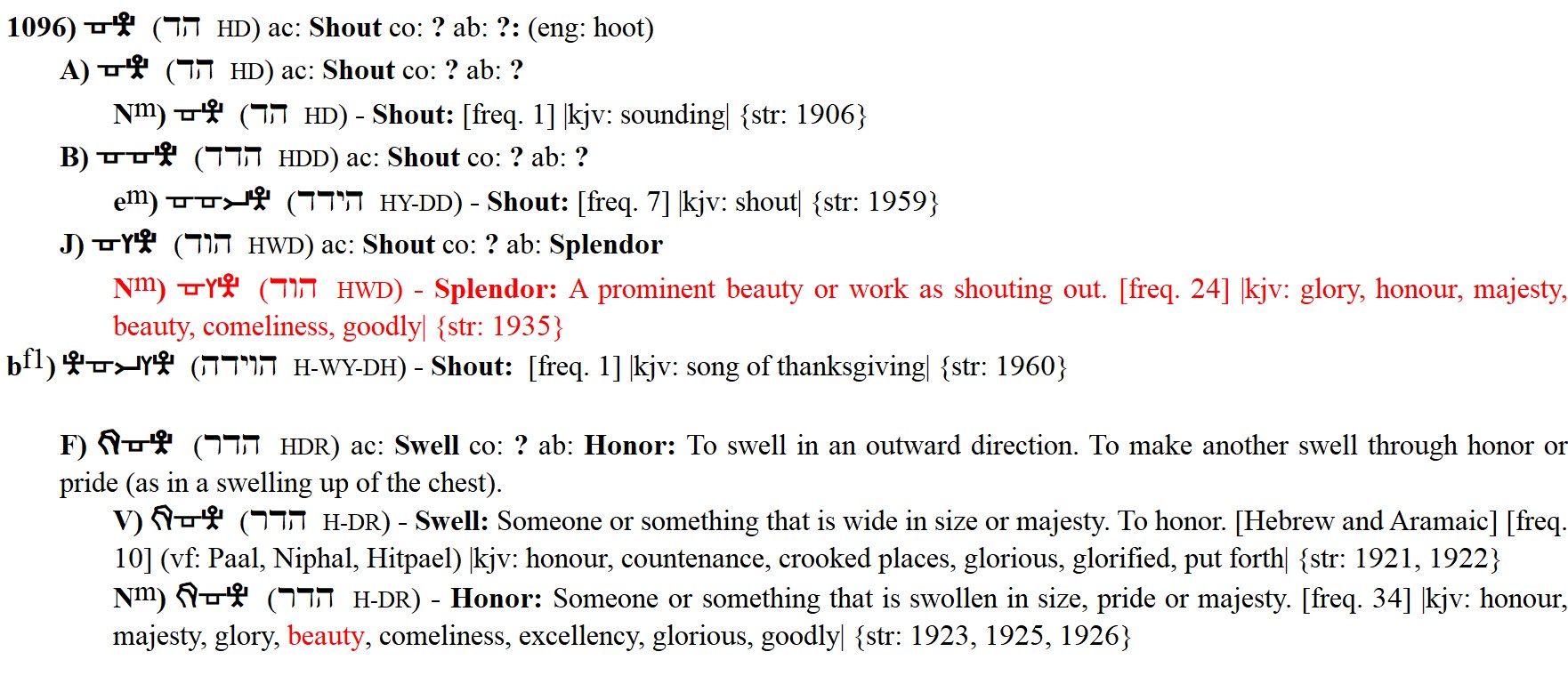
הדר ‘hadar’ means something that grows in majesty, glory, beauty.

We are to grow in the grace of God (2 Peter 3:18). Grace is beauty.
Psa 45:2 Thou art fairer than the children of men: grace (חן ‘chen’) is poured into thy lips: therefore God hath blessed thee for ever.
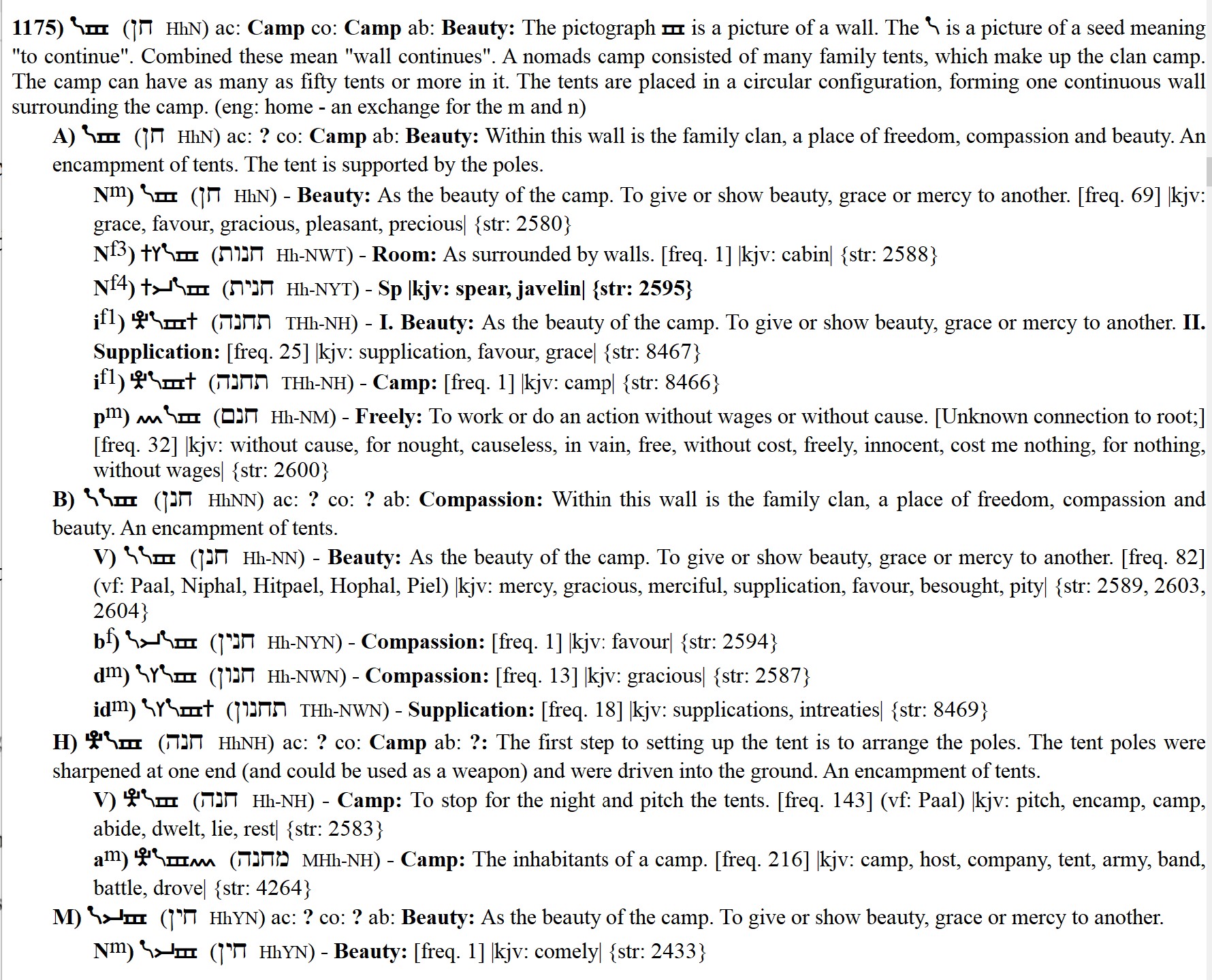
We are saved by Grace
Eph 2:8 For by grace (χάρις ‘cháris’) are ye saved through faith; and that not of yourselves: it is the gift of God:
Recall that χάρις ‘cháris’ has the meaning of grace, favor, goodwill, charm, beauty, kindness, gratitude. The beauty of God brings salvation.
Psa 149:4 For the LORD taketh pleasure in his people: he will beautify the meek with salvation.
The Grace of God is the Gospel
Act_20:24 But none of these things move me, neither count I my life dear unto myself, so that I might finish my course with joy, and the ministry, which I have received of the Lord Jesus, to testify the gospel of the grace of God.
The Grace of God is the Word
Act_20:32 And now, brethren, I commend you to God, and to the word of his grace, which is able to build you up, and to give you an inheritance among all them which are sanctified.
The Grace of God is His Gift
Rom_5:15 But not as the offence, so also is the free gift. For if through the offence of one many be dead, much more the grace of God, and the gift by grace, which is by one man, Jesus Christ, hath abounded unto many.
Eph_2:8 For by grace are ye saved through faith; and that not of yourselves: it is the gift of God:
Jesus is the Gift of God.
Joh 3:16 For God so loved the world, that he gave his only begotten Son, that whosoever believeth in him should not perish, but have everlasting life.
Joh 3:17 For God sent not his Son into the world to condemn the world; but that the world through him might be saved.
The Grace of God comes through Jesus
1Co_1:4 I thank my God always on your behalf, for the grace of God which is given you by Jesus Christ;
2Co_13:14 The grace of the Lord Jesus Christ, and the love of God, and the communion of the Holy Ghost, be with you all. Amen. The second epistle to the Corinthians was written from Philippi, a city of Macedonia, by Titus and Lucas.
Jesus is the Grace of God that brings salvation to the world
Tit_2:11 For the grace of God that bringeth salvation hath appeared to all men,
The Scriptures admonish us to grow in the grace and knowledge of the Lord.
2Pe 3:18 But grow in grace, and in the knowledge of our Lord and Saviour Jesus Christ. To him be glory both now and for ever. Amen.
The word for grace is χάρις ‘charis’ which is used to translate numerous words in the Greek Septuagint. One of the words is גדולה ‘gedulah’ which means to grow in size. We are to grow/mature into the image of Messiah, from glory to glory.
2Co 3:18 But we all, with open face beholding as in a glass the glory of the Lord, are changed into the same image from glory to glory, even as by the Spirit of the Lord.
We are to be molded into the image/character of Messiah. Jesus is THE image of God (Hebrews 1:3; 2 Corinthians 4:4-6; Colossians 1:15-16) who is love (1 John 4:8). He revealed God’s name/character to mankind (John 17:6, 26).
Joh 17:6 I revealed Your name to the men whom You gave to Me out of the world. They were Yours, and You gave them to Me; and they have kept Your Word.
Joh 17:26 And I made known to them Your name, and will make it known, that the love with which You loved Me may be in them, and I in them.
Interestingly, the English word ‘grace‘ traces back to the Hebrew word חרות ‘charot’ which is also the origin of the English word ‘character.’ חרות ‘charot’ means to engrave or chisel, as in the engraving of the Ten Commandments (Exodus 32:16).
Exo 32:16 And the tables were the work of God, and the writing was the writing of God, graven{חרות ‘charot} upon the tables.
In Greek, the word χαρακτήρ ‘charakter’ means to stamp or carve out. This word is used in only one verse of Scripture, translated as ‘express image’ (Hebrews 1:3). The connection to חרות ‘charot’ is easy to see in this case. The connection to grace is a little harder but no less significant. חרות ‘charot’ also has the meaning of freedom in the sense that stone chiseled from the rock is ‘set free.’ Grace and freedom are synonymous. The Hebrew word חנם ‘chinam’ means freedom and comes from the root word חן ‘chen’ which means grace.
We are to grow in His grace and knowledge. We are not called to grow in knowledge about Him, but knowledge of Him.
2Pe 3:18 But grow in grace, and in the knowledge of our Lord and Saviour Jesus Christ. To him be glory both now and for ever. Amen.
Joh 17:3 And this is everlasting life, that they may know You, the only true God, and Jesus Christ, whom You have sent.
Eph 3:17 that through faith Christ may dwell in your hearts, having been rooted and founded in love,
Eph 3:18 that you may be given strength to grasp, with all the saints, what is the breadth and length and depth and height,
Eph 3:19 and to know the surpassing knowledge and love of Christ, that you may be filled to all the fullness of God.
1Jn 5:20 And we know that the Son of God is come, and hath given us an understanding, that we may know him that is true, and we are in him that is true, even in his Son Jesus Christ. This is the true God, and eternal life.
Christ came to earth in the very image of Almighty God (2 Corinthians 4:4; Colossians 1:15; Hebrews 1:3), who is love. His life displayed that love and He calls all those who believe in Him to display that love as well. This is the essence of the concept of ‘Christ in us.’ It is through His love that man is formed into His image (Colossians 3:10; Romans 8:29) where there is no longer Jew or Greek, Barbarian or Scythian but Messiah is all and in all (Colossians 3:11).
This is the message of the Gospel. Love. Love is the foundation of God’s grace (Acts 20:24; John 3:16-17; 2 Corinthians 13:14).
2Co_13:14 The grace of the Lord Jesus Christ, and the love of God, and the communion of the Holy Ghost, be with you all. Amen.
The Oracles/Word of God is to be in our mouth (1 Peter 4:11) which are beautiful (Psalm 19:10; 119:103; 135:3).
Psa 90:17 And let the beauty of the LORD our God be upon us: and establish thou the work of our hands upon us; yea, the work of our hands establish thou it.
God’s beauty on His people
Isa_28:5 In that day shall the LORD of hosts be for a crown of glory, and for a diadem of beauty, unto the residue of his people,
Isa_61:3 To appoint unto them that mourn in Zion, to give unto them beauty for ashes, the oil of joy for mourning, the garment of praise for the spirit of heaviness; that they might be called trees of righteousness, the planting of the LORD, that he might be glorified.
The Beautiful Gospel
Rom 10:15 And how shall they preach, except they be sent? as it is written, How beautiful are the feet of them that preach the gospel of peace, and bring glad tidings of good things!
Isa 52:7 How beautiful upon the mountains are the feet of him that bringeth good tidings, that publisheth peace; that bringeth good tidings of good, that publisheth salvation; that saith unto Zion, Thy God reigneth!
Isa 61:1 The Spirit of the Lord GOD is upon me; because the LORD hath anointed me to preach good tidings unto the meek; he hath sent me to bind up the brokenhearted, to proclaim liberty to the captives, and the opening of the prison to them that are bound;
Isa 61:2 To proclaim the acceptable year of the LORD, and the day of vengeance of our God; to comfort all that mourn;
Isa 61:3 To appoint unto them that mourn in Zion, to give unto them beauty for ashes, the oil of joy for mourning, the garment of praise for the spirit of heaviness; that they might be called trees of righteousness, the planting of the LORD, that he might be glorified.
The Gospel is the promise to Abraham revealed through the Word.
1Pe 1:25 But the word of the Lord endureth for ever. And this is the word which by the gospel is preached unto you.
Psa 68:11 Jehovah gave the Word; the bearers (בסר ‘basar’ – gospel) of it were a great army.
Act 10:34 And opening his mouth, Peter said, Truly I see that God is not a respecter of faces,
Act 10:35 but in every nation the one fearing Him and working righteousness is acceptable to Him.
Act 10:36 The Word which He sent to the sons of Israel, preaching the gospel of peace through Jesus Christ, this One is Lord of all.
Eph 1:13 in whom also you, hearing the Word of Truth, the gospel of your salvation, in whom also believing you were sealed with the Holy Spirit of promise,
The Gospel is the promise to the fathers.
Act 13:32 And we preach the gospel to you, the promise made to the fathers,
Gal 3:8 And the Scripture foreseeing that God would justify the nations by faith, preached the gospel before to Abraham: “All the nations will be blessed” “in you.” Gen. 12:3
The promise to Abraham is the Gospel/good news
Rom 4:13 For the promise was not through Law to Abraham, or to his seed, for him to be the heir of the world, but through a righteousness of faith.
Gal 3:16 Now to Abraham and his seed were the promises made. He saith not, And to seeds, as of many; but as of one, And to thy seed, which is Christ.
The Promise = the Word
Deu 6:3 Hear, then, O Israel, and take heed to do it, that it may be well with you, that you may increase greatly, as Jehovah the God of your fathers has promised {דבר ‘davar’ – Word} you, in the land flowing with milk and honey.
There are different aspects to the promise to Abraham, all of which can be used to display different aspects of the Gospel and shadow pictures of Messiah.
He was promised a Seed (Genesis 15:4). This Seed is referring to Messiah (Galatians 3:17) and is also described as the Word (Luke 8:11). Shadow pictures of Life (Biology)
His seed was to be as the stars (Genesis 15:5; 22:17) – Shadow pictures in the skies (Astronomy)
His seed was to be as the sand/dust (Genesis 13:16; 22:17) – Shadow pictures in the earth (Geology)
His seed was to overcome the gate of their enemies (Genesis 22:17; Matthew 16:18) – Exposing the beast and overcoming it by the blood of the Lamb and the Word of our testimony (Revelation 12:11).
All families were to be blessed in him (Genesis 12:3) – Shadow pictures in people (Psychology)
All nations were to be blessed in him (Genesis 17:4-7; 22:18) – Shadow pictures in nations/history
He was promised the promised land (Genesis 13:14-17; 15:18-21; 17:8) – the Kingdom. (Psalm 145:10-13; Acts 28:23; Matthew 4:23, 9:35; 24:14; Mark 1:1, 14-15; 16:15)
The account of Abraham’s life culminates in Genesis 24 where a wife is found for his son Isaac, a picture of Messiah and His bride being joined together at His return.
The promise is the Word (Psalm 105:42) – Biblical studies & Etymology/Language.
Beautiful – Good Creation

Gen 1:31 And God saw every thing that he had made, and, behold, it was very good (טוב ‘tov’). And the evening and the morning were the sixth day.
Recall that טוב ‘tov’ also has the meaning of beautiful. God saw that everything He made was very beautiful.
The beauty of creation leads one to God but distorted perception leads one to idolatry.
Rom 1:18 For the wrath of God is revealed from heaven against all ungodliness and unrighteousness of men, who hold the truth in unrighteousness;
Rom 1:19 Because that which may be known of God is manifest in them; for God hath shewed it unto them.
Rom 1:20 For the invisible things of him from the creation of the world are clearly seen, being understood by the things that are made, even his eternal power and Godhead; so that they are without excuse:
Rom 1:21 Because that, when they knew God, they glorified him not as God, neither were thankful; but became vain in their imaginations, and their foolish heart was darkened.
Rom 1:22 Professing themselves to be wise, they became fools,
Rom 1:23 And changed the glory of the uncorruptible God into an image made like to corruptible man, and to birds, and fourfooted beasts, and creeping things.
Rom 1:24 Wherefore God also gave them up to uncleanness through the lusts of their own hearts, to dishonour their own bodies between themselves:
Rom 1:25 Who changed the truth of God into a lie, and worshipped and served the creature more than the Creator, who is blessed for ever. Amen.
Rom 1:26 For this cause God gave them up unto vile affections: for even their women did change the natural use into that which is against nature:
Rom 1:27 And likewise also the men, leaving the natural use of the woman, burned in their lust one toward another; men with men working that which is unseemly, and receiving in themselves that recompence of their error which was meet.
Rom 1:28 And even as they did not like to retain God in their knowledge, God gave them over to a reprobate mind, to do those things which are not convenient;
Rom 1:29 Being filled with all unrighteousness, fornication, wickedness, covetousness, maliciousness; full of envy, murder, debate, deceit, malignity; whisperers,
Rom 1:30 Backbiters, haters of God, despiteful, proud, boasters, inventors of evil things, disobedient to parents,
Rom 1:31 Without understanding, covenantbreakers, without natural affection, implacable, unmerciful:
Rom 1:32 Who knowing the judgment of God, that they which commit such things are worthy of death, not only do the same, but have pleasure in them that do them.
Wis 13:1 Surely vain are all men by nature, who are ignorant of God, and could not out of the good things that are seen know him that is: neither by considering the works did they acknowledge the workmaster;
Wis 13:2 But deemed either fire, or wind, or the swift air, or the circle of the stars, or the violent water, or the lights of heaven, to be the gods which govern the world.
Wis 13:3 With whose beauty if they being delighted took them to be gods; let them know how much better the Lord of them is: for the first author of beauty hath created them.
Wis 13:4 But if they were astonished at their power and virtue, let them understand by them, how much mightier he is that made them.
Wis 13:5 For by the greatness and beauty of the creatures proportionably the maker of them is seen.
Wis 13:6 But yet for this they are the less to be blamed: for they peradventure err, seeking God, and desirous to find him.
Wis 13:7 For being conversant in his works they search him diligently, and believe their sight: because the things are beautiful that are seen.
Wis 13:8 Howbeit neither are they to be pardoned.
Wis 13:9 For if they were able to know so much, that they could aim at the world; how did they not sooner find out the Lord thereof?
Wis 13:10 But miserable are they, and in dead things is their hope, who call them gods, which are the works of men’s hands, gold and silver, to shew art in, and resemblances of beasts, or a stone good for nothing, the work of an ancient hand.
Isa 40:25 To whom then will ye liken me, or shall I be equal? saith the Holy One.
Isa 40:26 Lift up your eyes on high, and behold who hath created these things, that bringeth out their host by number: he calleth them all by names by the greatness of his might, for that he is strong in power; not one faileth.
Jer 10:10 But the LORD is the true God, he is the living God, and an everlasting king: at his wrath the earth shall tremble, and the nations shall not be able to abide his indignation.
Jer 10:11 Thus shall ye say unto them, The gods that have not made the heavens and the earth, even they shall perish from the earth, and from under these heavens.
Jer 10:12 He hath made the earth by his power, he hath established the world by his wisdom, and hath stretched out the heavens by his discretion.
Act 14:12 And they called Barnabas, Jupiter; and Paul, Mercurius, because he was the chief speaker.
Act 14:13 Then the priest of Jupiter, which was before their city, brought oxen and garlands unto the gates, and would have done sacrifice with the people.
Act 14:14 Which when the apostles, Barnabas and Paul, heard of, they rent their clothes, and ran in among the people, crying out,
Act 14:15 And saying, Sirs, why do ye these things? We also are men of like passions with you, and preach unto you that ye should turn from these vanities unto the living God, which made heaven, and earth, and the sea, and all things that are therein:
Act 14:16 Who in times past suffered all nations to walk in their own ways.
Act 14:17 Nevertheless he left not himself without witness, in that he did good, and gave us rain from heaven, and fruitful seasons, filling our hearts with food and gladness.
Act 17:22 Then Paul stood in the midst of Mars’ hill, and said, Ye men of Athens, I perceive that in all things ye are too superstitious.
Act 17:23 For as I passed by, and beheld your devotions, I found an altar with this inscription, TO THE UNKNOWN GOD. Whom therefore ye ignorantly worship, him declare I unto you.
Act 17:24 God that made the world and all things therein, seeing that he is Lord of heaven and earth, dwelleth not in temples made with hands;
Act 17:25 Neither is worshipped with men’s hands, as though he needed any thing, seeing he giveth to all life, and breath, and all things;
Act 17:26 And hath made of one blood all nations of men for to dwell on all the face of the earth, and hath determined the times before appointed, and the bounds of their habitation;
Act 17:27 That they should seek the Lord, if haply they might feel after him, and find him, though he be not far from every one of us:
Act 17:28 For in him we live, and move, and have our being; as certain also of your own poets have said, For we are also his offspring.
Act 17:29 Forasmuch then as we are the offspring of God, we ought not to think that the Godhead is like unto gold, or silver, or stone, graven by art and man’s device.
Act 17:30 And the times of this ignorance God winked at; but now commandeth all men every where to repent:
Act 17:31 Because he hath appointed a day, in the which he will judge the world in righteousness by that man whom he hath ordained; whereof he hath given assurance unto all men, in that he hath raised him from the dead.
God planted “good seed,” an enemy brought in evil. He brought sin into the world with the deception of it being beautiful and delightful to the senses.
Gen 3:1 Now the serpent was more subtil than any beast of the field which the LORD God had made. And he said unto the woman, Yea, hath God said, Ye shall not eat of every tree of the garden?
Gen 3:2 And the woman said unto the serpent, We may eat of the fruit of the trees of the garden:
Gen 3:3 But of the fruit of the tree which is in the midst of the garden, God hath said, Ye shall not eat of it, neither shall ye touch it, lest ye die.
Gen 3:4 And the serpent said unto the woman, Ye shall not surely die:
Gen 3:5 For God doth know that in the day ye eat thereof, then your eyes shall be opened, and ye shall be as gods, knowing good and evil.
Gen 3:6 And when the woman saw that the tree was good for food, and that it was pleasant to the eyes, and a tree to be desired (חמד ‘chamad’) to make one wise, she took of the fruit thereof, and did eat, and gave also unto her husband with her; and he did eat.
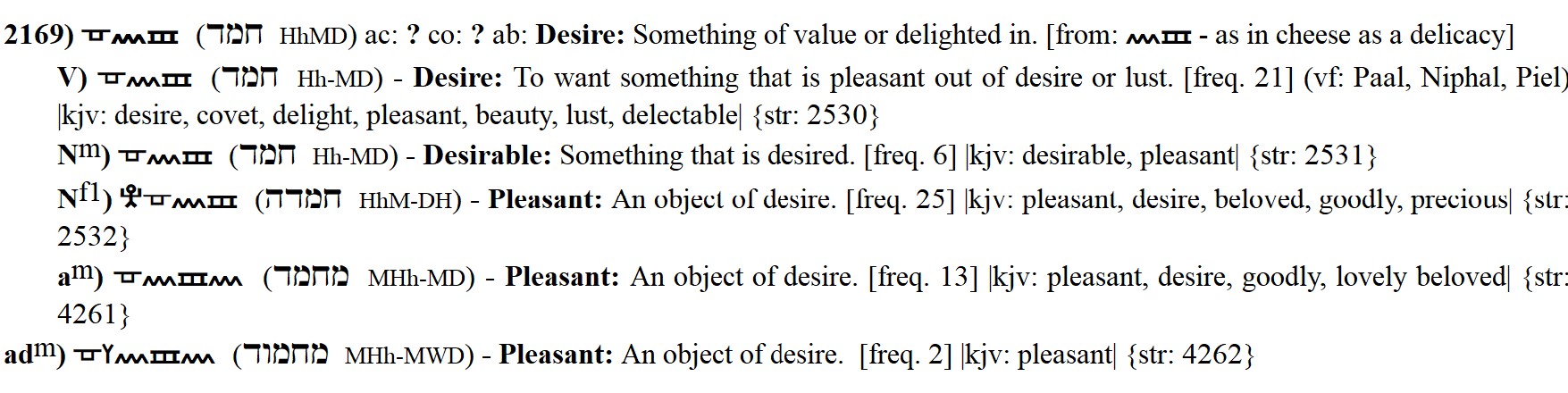
Mat 13:24 Another parable put he forth unto them, saying, The kingdom of heaven is likened unto a man which sowed good seed in his field:
Mat 13:25 But while men slept, his enemy came and sowed tares among the wheat, and went his way.
Mat 13:26 But when the blade was sprung up, and brought forth fruit, then appeared the tares also.
Mat 13:27 So the servants of the householder came and said unto him, Sir, didst not thou sow good seed in thy field? from whence then hath it tares?
Mat 13:28 He said unto them, An enemy hath done this. The servants said unto him, Wilt thou then that we go and gather them up?
Mat 13:29 But he said, Nay; lest while ye gather up the tares, ye root up also the wheat with them.
Mat 13:30 Let both grow together until the harvest: and in the time of harvest I will say to the reapers, Gather ye together first the tares, and bind them in bundles to burn them: but gather the wheat into my barn.
God’s Signature
The English word signature comes from the Latin word ‘signatura’ which means a “signature, a rescript, the matrix of a seal.” Signatura comes from ‘signatus’ which is the past participle of ‘signare’ which means “to mark with a stamp, sign.” Signature is related to the word sign. Sign comes from the Latin ‘signum’ which means an “identifying mark, token, indication, symbol; proof; military standard, ensign; a signal, an omen; sign in the heavens, constellation,” a “standard that one follows.”
In Edenics, sign is believed to trace back to the Hebrew word ציון ‘tsiyon’ (Zion).
Psa 50:2 Out of Zion, the perfection of beauty, God hath shined.
This ציון ‘tsiyon’ beauty connection is further seen in the Arabic word زَيْن ‘zayn’ which means beauty and grace.
Isa 49:14 But Zion said, The LORD hath forsaken me, and my Lord hath forgotten me.
Isa 49:15 Can a woman forget her sucking child, that she should not have compassion on the son of her womb? yea, they may forget, yet will I not forget thee.
Isa 49:16 Behold, I have graven thee upon the palms of my hands; thy walls are continually before me.
Isa 49:17 Thy children shall make haste; thy destroyers and they that made thee waste shall go forth of thee.
Isa 49:18 Lift up thine eyes round about, and behold: all these gather themselves together, and come to thee. As I live, saith the LORD, thou shalt surely clothe thee with them all, as with an ornament, and bind them on thee, as a bride doeth.
Psa 149:4 For the LORD taketh pleasure in his people: he will beautify the meek with salvation (יְשׁוּעָה ‘yeshuah’ – source of the name Jesus).
Psa 90:17 And let the beauty of the LORD our God be upon us: and establish thou the work of our hands upon us; yea, the work of our hands establish thou it.
Isa 61:10 I will greatly rejoice in the LORD, my soul shall be joyful in my God; for he hath clothed me with the garments of salvation, he hath covered me with the robe of righteousness, as a bridegroom decketh himself with ornaments, and as a bride adorneth herself with her jewels.
In Modern Greek, the word for signature is υπογραφή ‘ypografí’ which means “under-writing.” γράφη ‘graphe’ means a writing, drawing or record.
2Ti 3:16 All scripture (γραφή ‘graphe’) is given by inspiration of God, and is profitable for doctrine, for reproof, for correction, for instruction in righteousness:
Psa 33:6 By the word of the LORD were the heavens made; and all the host of them by the breath of his mouth.
In Ancient Greek, artists would use the phrase ἐποίησεν ‘epoisen’ meaning “made it,” or ἔγραψεν ‘egrapsen’ “wrote it.”
Heb 11:3 Through faith we understand that the worlds were framed by the word of God, so that things which are seen were not made of things which do appear.
The formula for providing a signature was typically “[Name] made (ἐποίεσεν and sometimes ἔγραφσεν) [it].” {The Meaning of Ancient Greek and Roman Artisan Signatures}
God created the universe through His Word, embedding His signature in types and shadows.
Signet rings were also used as “signatures”
On of the Hebrew word for signet ring is טבּעת ‘taba`at’ which comes from the root טבע ‘taba.’

The natural world (nature/creation) points to Messiah. The natural realm is given so that we can understand the spiritual.
1Co 15:46 But not the spiritual first, but the natural; afterward the spiritual.
Nature comes from the Hebrew word:
This word pictographically can represent ‘to see, good’. The letter ע-ayin is a pictograph of the eye which means to see and the letters ט-tet ב-bet spell טב ‘tov’ which means good.
Gen 1:31 And God saw everything that He had made and behold, it was very good. And there was evening, and there was morning the sixth day.
The earth’s creation is linked to a seal
Job 38:14 It is turned as clay to the seal; and they stand as a garment.
The Septuagint connects this verse to the creation of mankind
Job 38:14 Or didst thou take clay of the ground, and form a living creature, and set it with the power of speech upon the earth?
Connecting back to “nature” is the word ψυχικός ‘psuchikos’
1Co 15:46 But not the spiritual first, but the natural (ψυχικός ‘psuchikos’); afterward the spiritual.
G5591
ψυχικός
psuchikos
Thayer Definition:
- of or belonging to breath
1a) having the nature and characteristics of the breath
1a1) the principal of animal life, which men have in common with the brutes
1b) governed by breath
1b1) the sensuous nature with its subjection to appetite and passion
Part of Speech: adjective
A Related Word by Thayer’s/Strong’s Number: from G5590
Septuagint
Gen 2:7 καὶ ἔπλασεν ὁ θεὸς τὸν ἄνθρωπον χοῦν ἀπὸ τῆς γῆς καὶ ἐνεφύσησεν εἰς τὸ πρόσωπον αὐτοῦ πνοὴν ζωῆς, καὶ ἐγένετο ὁ ἄνθρωπος εἰς ψυχὴν ζῶσαν.
Gen 2:7 And God formed the man of dust of the earth, and breathed upon his face the breath of life, and the man became a living soul (ψυχὴν ‘psuchen’).
Adam was formed from the clay bearing the seal/image or signature of God.
Gen 1:27 So God created man in his own image, in the image of God created he him; male and female created he them.
Isa 64:8 But now, O LORD, thou art our father; we are the clay, and thou our potter; and we all are the work of thy hand.
There is a fascinating “storyline” in the Scriptures based upon this imagery of God.
One of the roles of the Messiah is to dash the enemies of God in pieces as a potsherd.
Psa 2:9 Thou shalt break them with a rod of iron; thou shalt dash them in pieces like a potter’s vessel.
Rev 2:27 And he shall rule them with a rod of iron; as the vessels of a potter shall they be broken to shivers: even as I received of my Father.
This was the fate of rebellious Israel. Scriptures applies Psalm 2, in part, to rebellious Israel (Acts 4:23-28).
Jer 18:1 The word which came to Jeremiah from the LORD, saying,
Jer 18:2 Arise, and go down to the potter’s house, and there I will cause thee to hear my words.
Jer 18:3 Then I went down to the potter’s house, and, behold, he wrought a work on the wheels.
Jer 18:4 And the vessel that he made of clay was marred in the hand of the potter: so he made it again another vessel, as seemed good to the potter to make it.
Jer 18:5 Then the word of the LORD came to me, saying,
Jer 18:6 O house of Israel, cannot I do with you as this potter? saith the LORD. Behold, as the clay is in the potter’s hand, so are ye in mine hand, O house of Israel.
Messiah came to cause mankind to be “broken” that we might be saved.
Luk 2:34 And Simeon blessed them and said to His mother Mary, Behold, this One is set for the fall and rising up of many in Israel, and for a sign spoken against;
All must be broken as all are enemies of God (Psalm 68:21).
Psa 68:21 But God shall wound the head of his enemies, and the hairy scalp of such an one as goeth on still in his trespasses.
Mat 21:44 And whosoever shall fall on this stone shall be broken: but on whomsoever it shall fall, it will grind him to powder.
To escape destruction, one must be born again.
Joh 3:3 Jesus answered and said unto him, Verily, verily, I say unto thee, Except a man be born again, he cannot see the kingdom of God.
Joh 3:4 Nicodemus saith unto him, How can a man be born when he is old? can he enter the second time into his mother’s womb, and be born?
Joh 3:5 Jesus answered, Verily, verily, I say unto thee, Except a man be born of water and of the Spirit, he cannot enter into the kingdom of God.
Joh 3:6 That which is born of the flesh is flesh; and that which is born of the Spirit is spirit.
We must become a “new lump” (1 Corinthians 5:7) {φύραμα ‘phurama’ mixing of a solid and liquid}
1Co 5:7 Purge out therefore the old leaven, that ye may be a new lump, as ye are unleavened. For even Christ our passover is sacrificed for us:
Jer 18:1 The word which came to Jeremiah from the LORD, saying,
Jer 18:2 Arise, and go down to the potter’s house, and there I will cause thee to hear my words.
Jer 18:3 Then I went down to the potter’s house, and, behold, he wrought a work on the wheels.
Jer 18:4 And the vessel that he made of clay was marred in the hand of the potter: so he made it again another vessel, as seemed good to the potter to make it.
Jer 18:5 Then the word of the LORD came to me, saying,
Jer 18:6 O house of Israel, cannot I do with you as this potter? saith the LORD. Behold, as the clay is in the potter’s hand, so are ye in mine hand, O house of Israel.
1Co 5:7 Purge out therefore the old leaven, that ye may be a new lump, as ye are unleavened. For even Christ our passover is sacrificed for us:
Our broken bodies carry the message of God’s Word/Will. The Hebrew word for “will” is רצון ‘ratson’ which literally pictures broken potsherds which carried written messages (the will/desire of the “sender” Matthew 10:40; Mark 9:37; John 20:21).
2Co 4:6 For God, who commanded the light to shine out of darkness, hath shined in our hearts, to give the light of the knowledge of the glory of God in the face of Jesus Christ.
2Co 4:7 But we have this treasure in earthen vessels, that the excellency of the power may be of God, and not of us.
2Co 4:8 We are troubled on every side, yet not distressed; we are perplexed, but not in despair;
2Co 4:9 Persecuted, but not forsaken; cast down, but not destroyed;
2Co 4:10 Always bearing about in the body the dying of the Lord Jesus, that the life also of Jesus might be made manifest in our body.
2Co 4:11 For we which live are alway delivered unto death for Jesus’ sake, that the life also of Jesus might be made manifest in our mortal flesh.
The beauty of God’s creation was tarnished by sin just as the image of God in man was corrupted by sin. The manifestation of the sons of God reverses the curse revealing the pure beauty of God.
Rom 8:14 For as many as are led by the Spirit of God, they are the sons of God.
Rom 8:15 For ye have not received the spirit of bondage again to fear; but ye have received the Spirit of adoption, whereby we cry, Abba, Father.
Rom 8:16 The Spirit itself beareth witness with our spirit, that we are the children of God:
Rom 8:17 And if children, then heirs; heirs of God, and joint-heirs with Christ; if so be that we suffer with him, that we may be also glorified together.
Rom 8:18 For I reckon that the sufferings of this present time are not worthy to be compared with the glory which shall be revealed in us.
Rom 8:19 For the earnest expectation of the creature waiteth for the manifestation of the sons of God.
Rom 8:20 For the creature was made subject to vanity, not willingly, but by reason of him who hath subjected the same in hope,
Rom 8:21 Because the creature itself also shall be delivered from the bondage of corruption into the glorious liberty of the children of God.
Rom 8:22 For we know that the whole creation groaneth and travaileth in pain together until now.
Rom 8:23 And not only they, but ourselves also, which have the firstfruits of the Spirit, even we ourselves groan within ourselves, waiting for the adoption, to wit, the redemption of our body.
In Greek, the word for workmanship is ποίημα ‘poiēma’ which is the source of our English word ‘poem’ (Romans 1:20, 23; Ephesians 2:10). God is the Great Artist, He is the Great Poet. He created man in His Image (Genesis 1:26-27)…could this be why we see art and poetry as beauty. He is the source of all beauty (Psalm 27:4; 90:17; 45:2; Zechariah 9:17).
He is the Great Artist, creating a beautiful, glorious “sculpture” of His body.
Eph 2:10 For we are his workmanship (ποίημα ‘poiēma’ ), created in Christ Jesus unto good works, which God hath before ordained that we should walk in them.
He desires our beauty
Psa 45:11 So shall the king greatly desire thy beauty: for he is thy Lord; and worship thou him.
Psa 45:6 Thy throne, O God, is for ever and ever: the sceptre of thy kingdom is a right sceptre.
Psa 45:7 Thou lovest righteousness, and hatest wickedness: therefore God, thy God, hath anointed thee with the oil of gladness above thy fellows.
Psa 45:8 All thy garments smell of myrrh, and aloes, and cassia, out of the ivory palaces, whereby they have made thee glad.
Psa 45:9 Kings’ daughters were among thy honourable women: upon thy right hand did stand the queen in gold of Ophir.
Psa 45:10 Hearken, O daughter, and consider, and incline thine ear; forget also thine own people, and thy father’s house;
Psa 45:11 So shall the king greatly desire thy beauty: for he is thy Lord; and worship thou him.
Psa 45:12 And the daughter of Tyre shall be there with a gift; even the rich among the people shall intreat thy favour.
Psa 45:13 The king’s daughter is all glorious within: her clothing is of wrought gold.
Psa 45:14 She shall be brought unto the king in raiment of needlework: the virgins her companions that follow her shall be brought unto thee.
Psa 45:15 With gladness and rejoicing shall they be brought: they shall enter into the king’s palace.
Psa 45:16 Instead of thy fathers shall be thy children, whom thou mayest make princes in all the earth.
Psa 45:17 I will make thy name to be remembered in all generations: therefore shall the people praise thee for ever and ever.
“Stroke” by “stroke” He is forming us into His image.
2Co 3:18 But we all, with open face beholding as in a glass the glory of the Lord, are changed into the same image from glory to glory, even as by the Spirit of the Lord.
Rom 8:1 There is therefore now no condemnation to them which are in Christ Jesus, who walk not after the flesh, but after the Spirit.
Rom 8:2 For the law of the Spirit of life in Christ Jesus hath made me free from the law of sin and death.
Rom 8:3 For what the law could not do, in that it was weak through the flesh, God sending his own Son in the likeness of sinful flesh, and for sin, condemned sin in the flesh:
Rom 8:4 That the righteousness of the law might be fulfilled in us, who walk not after the flesh, but after the Spirit.
Recall, the English word signature comes from this word signum/signare.
Christ the Character of God, the Icon of God
Heb 1:3 Who being the brightness of his glory, and the express image (χαρακτήρ ‘charakter’) of his person, and upholding all things by the word of his power, when he had by himself purged our sins, sat down on the right hand of the Majesty on high;
G5481
χαρακτήρ
charaktēr
khar-ak-tar’
From the same as G5482; a graver (the tool or the person), that is, (by implication) engraving ([“character”], the figure stamped, that is, an exact copy or [figuratively] representation): – express image.
The English word character also has the meaning of a the moral qualities of an individual, the “mark” of a person. χαρακτήρ ‘charakter’ means an “engraved or stamped mark.’ It referred to a distinctive mark left on a coin, seal, or tablet, something that identifies and authenticates the object. One’s moral character is the set of qualities that are “engraved” into a person’s soul through their choices and actions.
2Co 4:4 In whom the god of this world hath blinded the minds of them which believe not, lest the light of the glorious gospel of Christ, who is the image (εἰκών ‘eikon’) of God, should shine unto them.
G1504
εἰκών
eikōn
Thayer Definition:
- an image, figure, likeness
1a) an image of the things (the heavenly things)
1a1) used of the moral likeness of renewed men to God
1a2) the image of the Son of God, into which true Christians are transformed, is likeness not only to the heavenly body, but also to the most holy and blessed state of mind, which Christ possesses
1b) the image of one
1b1) one in whom the likeness of any one is seen
1b2) applied to man on account of his power of command
1b3) to Christ on account of his divine nature and absolute moral excellence
Part of Speech: noun feminine
A Related Word by Thayer’s/Strong’s Number: from G1503
Col 1:15 Who is the image (εἰκών ‘eikon’) of the invisible God, the firstborn of every creature:
Col 1:16 For by him were all things created, that are in heaven, and that are in earth, visible and invisible, whether they be thrones, or dominions, or principalities, or powers: all things were created by him, and for him:
Col 1:17 And he is before all things, and by him all things consist.
Col 1:18 And he is the head of the body, the church: who is the beginning, the firstborn from the dead; that in all things he might have the preeminence.
Col 1:19 For it pleased the Father that in him should all fulness dwell;
Col 1:20 And, having made peace through the blood of his cross, by him to reconcile all things unto himself; by him, I say, whether they be things in earth, or things in heaven.
Rom 8:29 For whom he did foreknow, he also did predestinate to be conformed to the image (εἰκών ‘eikon’) of his Son, that he might be the firstborn among many brethren.
Col 3:10 And have put on the new man, which is renewed in knowledge after the image (εἰκών ‘eikon’) of him that created him:
We are being transformed into His image
2Co 3:18 But we all, with open face beholding as in a glass the glory of the Lord, are changed into the same image (εἰκών ‘eikon’) from glory to glory, even as by the Spirit of the Lord.
“Human nature is also a mirror… it was not beautiful until it drew near to Beauty and was transformed by the image of the divine loveliness… When I look at my beloved’s face, the beauty of his form is reflected in me.” (Gregory of Nyssa – Homilies on the Song of Songs)
We are called to leave the corrupted image and be transformed
Rom 12:2 And be not conformed (συσχηματίζω ‘suschematizo’) to this world: but be ye transformed by the renewing of your mind, that ye may prove what is that good, and acceptable, and perfect, will of God.
G4964
συσχηματίζω
suschēmatizō
soos-khay-mat-id’-zo
From G4862 and a derivative of G4976; to fashion alike, that is, conform to the same pattern (figuratively): – conform to, fashion self according to.
The love of God in Christ makes us beautiful
Eph 5:25 Husbands, love your wives, even as Christ also loved the church, and gave himself for it;
Eph 5:26 That he might sanctify and cleanse it with the washing of water by the word,
Eph 5:27 That he might present it to himself a glorious church, not having spot, or wrinkle, or any such thing; but that it should be holy and without blemish.
“As love increases in you, so beauty increases; for love itself is the beauty of the soul.” (St. Augustine of Hippo – Homily on the First Epistle of John Tractate 9, section 9)
Jesus is THE image of God (Hebrews 1:3; 2 Corinthians 4:4-6; Colossians 1:15-16) who is love (1 John 4:8).
Messiah came to earth in the very image of Almighty God (2 Corinthians 4:4; Colossians 1:15; Hebrews 1:3), who is love. His life displayed that love and He calls all those who believe in Him to display that love as well. This is the essence of the concept of ‘Christ in us.’ It is through His love that man is formed into His image (Colossians 3:10; Romans 8:29) where there is no longer Jew or Greek, Barbarian or Scythian but Messiah is all and in all (Colossians 3:11).
“Hope always draws the soul from the beauty which is seen to what is beyond, always kindles the desire for the hidden through what is constantly perceived. Therefore, the ardent lover of beauty, although receiving what is always visible as an image of what he desires, yet longs to be filled with the very stamp of the archetype.”
““You alone are truly beautiful — not only beautiful, but the very essence of the Beautiful, existing forever as such… you whose name is love of humankind… Since, then, you have risen upon us… you have rightly… been named the kinsman of the one who desires you.”
“Nothing so much as love brings together those who have been sundered and produces in them an effective union of will and purpose… Love is distinguished by the beauty of recognizing the equal value of all men… Love is born in a man when his soul’s powers… are concentrated and unified around the divine. Those who… engrave His beauty on their memory possess an ineradicable longing for divine love, for such love is always imprinting this beauty on their intellect.”
“Ask the beauty of the earth, ask the beauty of the sea, ask the beauty of the air… ask all these things, and they will answer you: ‘Look, and see — we are beautiful.’ Their beauty is their confession. Who made these beautiful changeable things if not the unchanging Beauty?” (St. Augustine)
Love
God is love (1 John 4:8). He loves His creation and draws us to Him through that love.
Wis 11:24 For thou lovest all the things that are, and abhorrest nothing which thou hast made: for never wouldest thou have made any thing, if thou hadst hated it.
Wis 11:25 And how could any thing have endured, if it had not been thy will? or been preserved, if not called by thee?
Wis 11:26 But thou sparest all: for they are thine, O Lord, thou lover of souls.
Psa 145:9 The LORD is good to all: and his tender mercies are over all his works.
Psa 145:10 All thy works shall praise thee, O LORD; and thy saints shall bless thee.
“His love for the creature corresponds to His love for the Son, for when He beholds the creation He delights in seeing the works made after His own Image; even this rejoicing of God is on account of His own Image.” (Athanasius of Alexandria – On the Incarnation)
Rev 4:10 The four and twenty elders fall down before him that sat on the throne, and worship him that liveth for ever and ever, and cast their crowns before the throne, saying,
Rev 4:11 Thou art worthy, O Lord, to receive glory and honour and power: for thou hast created all things, and for thy pleasure (θέλημα ‘thelema’) they are and were created.
G2307
θέλημα
thelēma
Thayer Definition:
- what one wishes or has determined shall be done
1a) of the purpose of God to bless mankind through Christ
1b) of what God wishes to be done by us
1b1) commands, precepts - will, choice, inclination, desire, pleasure
Part of Speech: noun neuter
A Related Word by Thayer’s/Strong’s Number: from the prolonged form of G2309
G2309
θέλω / ἐθέλω
thelō / ethelō
Thayer Definition:
- to will, have in mind, intend
1a) to be resolved or determined, to purpose
1b) to desire, to wish
1c) to love
1c1) to like to do a thing, be fond of doing
1d) to take delight in, have pleasure
Part of Speech: verb
Col 1:15 Who is the image of the invisible God, the firstborn of every creature:
Col 1:16 For by him were all things created, that are in heaven, and that are in earth, visible and invisible, whether they be thrones, or dominions, or principalities, or powers: all things were created by him, and for him:
Heb 2:9 But we see Jesus, who was made a little lower than the angels for the suffering of death, crowned with glory and honour; that he by the grace of God should taste death for every man.
Heb 2:10 For it became him, for whom are all things, and by whom are all things, in bringing many sons unto glory, to make the captain of their salvation perfect through sufferings.
Heb 2:11 For both he that sanctifieth and they who are sanctified are all of one: for which cause he is not ashamed to call them brethren,
Heb 2:12 Saying, I will declare thy name unto my brethren, in the midst of the church will I sing praise unto thee.
Heb 2:13 And again, I will put my trust in him. And again, Behold I and the children which God hath given me.
Rom 11:33 O the depth of the riches both of the wisdom and knowledge of God! how unsearchable are his judgments, and his ways past finding out!
Rom 11:34 For who hath known the mind of the Lord? or who hath been his counsellor?
Rom 11:35 Or who hath first given to him, and it shall be recompensed unto him again?
Rom 11:36 For of him, and through him, and to him, are all things: to whom be glory for ever. Amen.
Irenaeus of Lyons speaks of creation as the work of God that draws us to Christ through His love. We cannot comprehend God in His infinite greatness, but we can know Him through His love, and that love is revealed first in the act of creation itself (through the Word) and then in the Incarnation of the Word, Jesus Christ.
“As regards His greatness, therefore, it is not possible to know God, for it is impossible that the Father can be measured; but as regards His love (for this it is which leads us to God by His Word), when we obey Him, we do always learn that there is so great a God, and that it is He who by Himself has established, and selected, and adorned, and contains all things; and among the all things, both ourselves and this our world.”
“There is therefore one God, who by the Word and Wisdom created and arranged all things; but this is the Creator who has granted this world to the human race, and who, as regards His greatness, is indeed unknown to all who have been made by Him… but as regards His love, He is always known through Him by whose means He ordained all things. Now this is His Word, our Lord Jesus Christ…” (Irenaeus Against Heresies – Book 4 – Chapter XX – That one God formed all things in the world)
Since, then, God, Who is good and more than good, did not find satisfaction in self-contemplation, but in His exceeding goodness wished certain things to come into existence which would enjoy His benefits and share in His goodness, He brought all things out of nothing into being and created them, both what is invisible and what is visible. Yea, even man, who is a compound of the visible and the invisible. And it is by thought that He creates, and thought is the basis of the work, the Word filling it and the Spirit perfecting it. (St. John of Damascus – An Exact Exposition of the Orthodox Faith – Book II, Chapter 2, “Concerning the creation”)
The beauty and order of the world exists so that we may be led to love the One who created it.
For God so loved the world. This includes mankind and creation.
Joh 3:16 For God so loved the world (κόσμος ‘kosmos’), that he gave his only begotten Son, that whosoever believeth in him should not perish, but have everlasting life.
Redemption came to mankind, which will bring redemption to creation
Rom 8:19 For the earnest expectation of the creature waiteth for the manifestation of the sons of God.
Rom 8:20 For the creature was made subject to vanity, not willingly, but by reason of him who hath subjected the same in hope,
Rom 8:21 Because the creature itself also shall be delivered from the bondage of corruption into the glorious liberty of the children of God.
Rom 8:22 For we know that the whole creation groaneth and travaileth in pain together until now.
Rom 8:23 And not only they, but ourselves also, which have the firstfruits of the Spirit, even we ourselves groan within ourselves, waiting for the adoption, to wit, the redemption of our body.
Psa 104:31 The glory of the LORD shall endure for ever: the LORD shall rejoice in his works.
Psa 36:6 Thy righteousness is like the great mountains; thy judgments are a great deep: O LORD, thou preservest (ישׁע ‘yesha’) man and beast.
H3467
ישׁע
yâsha‛
BDB Definition:
- to save, be saved, be delivered
1a) (Niphal)
1a1) to be liberated, be saved, be delivered
1a2) to be saved (in battle), be victorious
1b) (Hiphil)
1b1) to save, deliver
1b2) to save from moral troubles
1b3) to give victory to
Wis 1:13 For God made not death: neither hath he pleasure in the destruction of the living.
Wis 1:14 For he created all things, that they might have their being: and the generations of the world were healthful; and there is no poison of destruction in them, nor the kingdom of death upon the earth:
Wis 1:15 (For righteousness is immortal:)
Wis 1:16 But ungodly men with their works and words called it to them: for when they thought to have it their friend, they consumed to nought, and made a covenant with it, because they are worthy to take part with it.
Wis 2:23 For God created man to be immortal, and made him to be an image of his own eternity.
Wis 2:24 Nevertheless through envy of the devil came death into the world: and they that do hold of his side do find it.
1Co 15:21 For since by man came death, by man came also the resurrection of the dead.
1Co 15:22 For as in Adam all die, even so in Christ shall all be made alive.
1Co 15:23 But every man in his own order: Christ the firstfruits; afterward they that are Christ’s at his coming.
1Co 15:24 Then cometh the end, when he shall have delivered up the kingdom to God, even the Father; when he shall have put down all rule and all authority and power.
1Co 15:25 For he must reign, till he hath put all enemies under his feet.
1Co 15:26 The last enemy that shall be destroyed is death.
1Co 15:27 For he hath put all things under his feet. But when he saith all things are put under him, it is manifest that he is excepted, which did put all things under him.
1Co 15:28 And when all things shall be subdued unto him, then shall the Son also himself be subject unto him that put all things under him, that God may be all in all.
“God wants all to be saved. Thus Solomon says, ‘God did not make death, and he does not delight in the death of the living.’ He made the soul so that it would exist. He created human beings to be incorruptible, making them in his image. But they, straying from their natural duty, have become subject to death.” (Ambrose of Milan – Commentary on Psalm 1 )
2Pe 3:9 The Lord is not slack concerning his promise, as some men count slackness; but is longsuffering to us-ward, not willing that any should perish, but that all should come to repentance.
1Ti 2:4 Who will have all men to be saved, and to come unto the knowledge of the truth.
Rom 2:4 Or despisest thou the riches of his goodness and forbearance and longsuffering; not knowing that the goodness of God leadeth thee to repentance?
He stands at the door and knocks.
Rev 3:20 Behold, I stand at the door, and knock: if any man hear my voice, and open the door, I will come in to him, and will sup with him, and he with me.
Recall that the study of creation/nature is considered science. The English word science comes from the Latin word ‘scientia’ which means “to know”. This corresponds to דע ‘dah,’ from whence both ידע ‘yada’ and דעת ‘daat’ come, both of which mean knowledge.
In Hebrew, knowledge literally means the door of the eye, or to “see the door”. Who is the Door? The Messiah.
Joh 10:7 Then Jesus again said to them, Truly, truly, I say to you that I am the door of the sheep.
Christ is the door that we enter in order to abide in His ‘House’ (John10:7) it is through Him that we are covered/hidden. This is the definition of who the Israel of God is (Galatians 6:16)…His hidden ones (Psalm 83:3). It is by the covenant cut in Messiah (Daniel 9:26; Isaiah 42:6) by His sacrifice on the tree that we are covered (1 John 1:7). It is through His Outstretched Arms (wings) that Messiah is calling us (John 3:14; 12:32) and gathering us together as a Shepherd does His flock (John 10:14-16). This is how we enter the Door into the House, this is how we are declared innocent and pure in His eyes. This is how we become His friends and enter into His tents in an intimate relationship.
The shadows of the Word and His Creation are there to lead us to the Door/His Eye, that we might know Him intimately, as the little guy in His Eye, abiding under the SHADOW of His Wings (Psalm 17:8; 36:7-9; 63:7; 91:5; Deuteronomy 32:10-11).
Isa 45:22 Look unto me, and be ye saved, all the ends of the earth: for I am God, and there is none else.
Joh 6:40 And this is the will of him that sent me, that every one which seeth the Son, and believeth on him, may have everlasting life: and I will raise him up at the last day.
Heb 12:1 Wherefore seeing we also are compassed about with so great a cloud of witnesses, let us lay aside every weight, and the sin which doth so easily beset us, and let us run with patience the race that is set before us,
Heb 12:2 Looking unto Jesus the author and finisher of our faith; who for the joy that was set before him endured the cross, despising the shame, and is set down at the right hand of the throne of God.
Related articles:
Daily Tidbits 7/7/26 – Beauty of the Lord
Daily Tidbits 6/20/26 – Indescribable
Daily Tidbits 6/28/26 – Culture
Daily Tidbits 6/26/26 – Eternity in their Hearts
Daily Tidbits 12/29/11 – Torah & Creation
Shadows of Messiah in the Bible
Daily Tidbits 3/24 – The Cloud of Glory