
“God did not create religion. God created man. Man created religion.” ~ A.D. Williams
1Co 8:5 For though there be that are called gods, whether in heaven or in earth, (as there be gods many, and lords many,)
1Co 8:6 But to us there is but one God, the Father, of whom are all things, and we in him; and one Lord Jesus Christ, by whom are all things, and we by him.
Daily Tidbits 1/8/12 – God of All
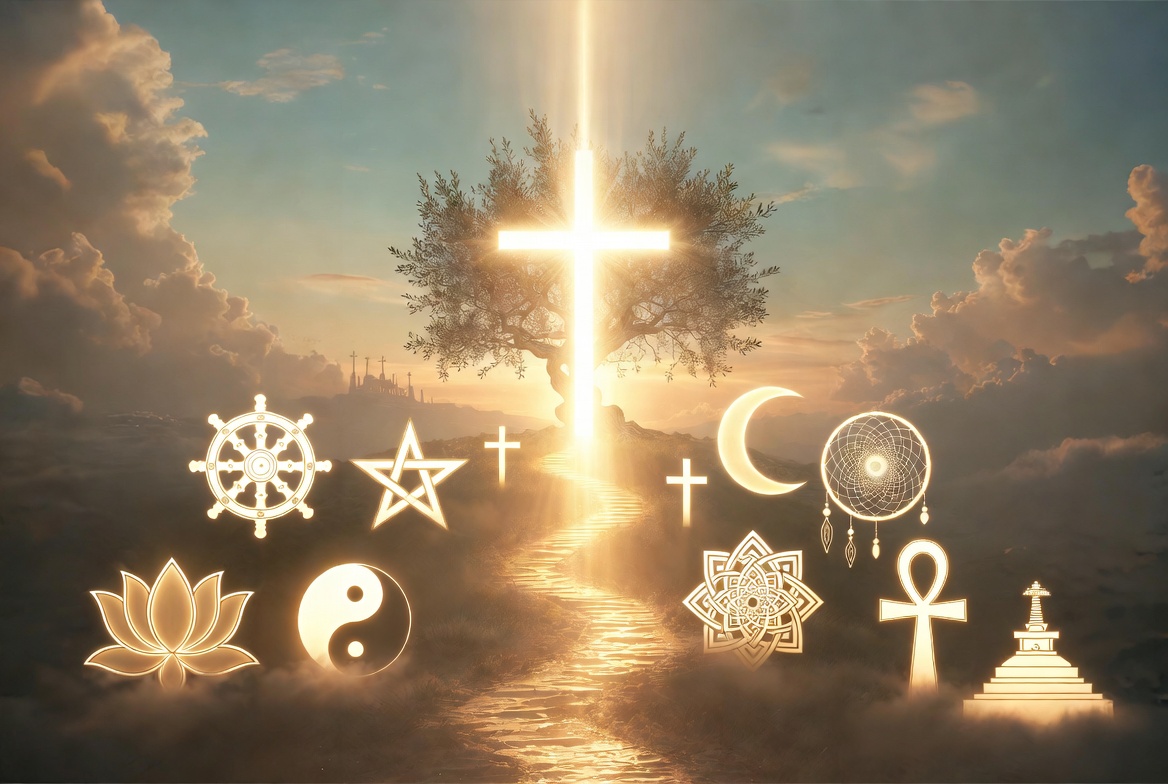
This page is going to examine various religions and the commonalities they have with the Word of God (Jesus). There are many parallels seen in the various religions of the world and the Bible which can be used to show the Gospel of the truth of the character/nature of Jesus Christ.
Shadows of Messiah are seen in all creation which includes man and his holidays. Man was created in the image of God (Genesis 1:26-27). Hence, more than any other part of creation, shadow pictures of Messiah are seen in relation to mankind.
One aspect of man is his religions and religious ceremonies and holidays. As I’ve studied ancient history and religions, a repeating theme is seen. Truth mixed with error. All religions of the world have some truth which traces back to the Holy Scriptures and ultimately the Tree of Life. However, they are mixed with error that reveals that they are producing fruit from the tree of knowledge which is a counterfeit of the Tree of Life. No matter how far removed from the truth a particular religion is, there is still some truth within. A glimmer of light which calls man to His Creator, through Messiah.
“The Savior deals differently with each individual according to his needs…He becomes all things for all people, while always remaining by nature what He is.” Cyril of Jerusalem
All religions have some truth which is a gift of grace to all of mankind to draw us back to the Most High (2 Peter 3:9; 1 Timothy 2:4; 4:10).
The true intent of the law/Word of God is not to make men religious but to reform men into the image of their God who is love (1 John 4:8).
1Jn 4:7 Beloved, let us love one another: for love is of God; and every one that loveth is born of God, and knoweth God.
1Jn 4:8 He that loveth not knoweth not God; for God is love.
Do all of man’s concepts of God point to the Creator? Yes and no. Man has allowed idolatrous ideas of God that get between them and the Creator, yet if one is truly seeking God they are seeking the LORD as there is only one God.
1Ti 2:5 For there is one God, and one mediator between God and men, the man Christ Jesus;
1Co 8:5 For though there be that are called gods, whether in heaven or in earth, (as there be gods many, and lords many,)
1Co 8:6 But to us there is but one God, the Father, of whom are all things, and we in him; and one Lord Jesus Christ, by whom are all things, and we by him.
All religions point to Messiah, albeit they corrupt His Image. Judaism, Islam, Hinduism, Buddhism, the ‘Mythologies’ etc., all have shadows of Messiah. It is not our job to convert one another to each others religions and our conceived perceptions of God (Matthew 23:15). It is our job to seek God’s face and it is through the Holy Spirit that we will be led into truth (John 16:13; 1 John 2:27; 1 Corinthians 2:10). All religions have some truth which is a gift of grace to all of mankind to draw us back to the Most High (2 Peter 3:9; 1 Timothy 2:4; 4:10). As Christians, our job is to walk in truth and be living epistles of the Word (2 Corinthians 3:3). It is through love that mankind will know the truth, not through our doctrine (John 13:35).
The work of the Holy Spirit in the process of purification is to lead us to love (1 Peter 1:22). The goal of the Word of God is to lead us to love (1 Timothy 1:5; Galatians 5:14; 6:2). Love is the fruit which reveals that we are growing in maturity in Messiah (2 Peter 1:5-8). Love is the bond of perfectness (Colossians 3:14). If the writings of other religions have truth and lead the followers thereof into this love then the people of these religions should not be hated but encouraged to continue growing in truth. Ultimately, this will lead them to Jesus as He is the Truth.
Joh 14:6 Jesus saith unto him, I am the way, the truth, and the life: no man cometh unto the Father, but by me.
Eph 4:21 If so be that ye have heard him, and have been taught by him, as the truth is in Jesus:
The Holy Scriptures admonish us to seek the Face of God at all times (1 Chronicles 16:11). Seeking His Face where we appear as a “little guy” in His Eye will cause us to love others as He loves them…
When we look to God, we see what we are. Evil, despicable, unworthy (Romans 3:10-19,23)…but when we look to Him we see His unending love for us in spite of our sinfulness (Ephesians 2:1-7). When we look to our fellow man, our carnal flesh which is full of hate immediately wants to focus on their evils and unworthiness (1 Corinthians 3:1-4; Romans 8:7). However, if we remember that we are just as unworthy of God’s love as them, yet God still grants us His unmerited, unending love, will we not be more likely to do the same to them?
He has forgiven us so let us forgive (Matthew 18:23-35; Ephesians 4:32). He shows us mercy so let us show mercy (2 Samuel 22:36; Luke 6:36). He overlooks our lack of understanding and ignorance so let us do the same with others. Even if the other person accepts not our forgiveness, love and understanding we must remember that we have treated God the same in the past, and even still do today as believers.
In seeking His Face, His Light will shine upon us where we can walk in His name (Numbers 6:24-27). If we seek His face continually (1 Chronicles 16:11), His light will reflect from us to others (2 Corinthians 4:6). Scripture likens seeking the Face of the Lord as looking into a mirror (2 Corinthians 3:18; 1 Corinthians 13:12) in which we now see darkly. As a result, we should abide in faith, hope and love. Most importantly, in love. This love is summed up in the Golden Rule (Matthew 7:12; Luke 6:31).
All religions are based upon this Golden rule of love. Almost everyone in the world follows a religion so why is there so much hate? The problem is that we cannot keep the golden rule by our power or understanding. The Golden rule can only work if we are following by the principle of seeking God’s Face. We can only truly abide by the Golden Rule if we are treating men as we wish God to treat us. We want forgiveness and mercy and grace from God…this then should be given to others. We must love as He loves us (John 13:34; 15:12).
All religions are seeking the Most High. The problem is that religion makes an idol out of the Most High and many times the adversary uses religion to steal worship. This is why all religions have some truth and a lot of their doctrines trace back to the Scriptures (Psalm 22:27). We all came from Adam and then from Noah. Truth permeates through all cultures. Doctrine is not God. God is beyond our attempts to explain Him (Job 11:7; 5:9; 37:23; Psalm 145:3; Isaiah 40:28; Romans 11:33). He is the Word, therefore, the Scriptures are our sole source of ultimate truth, not our our interpretations of the text.
If theology (study of God) & religion leads one to grow in the grace and knowledge of Christ, the image of God who is love, causing one to love God and love their neighbor more then this is great. However, if theology & religion leads one away from love (even in the slightest) then this is at best dung/worthlessness and at worst complete wickedness. If theologians and religious leaders lead us in the former then we should respect and walk with them…if they lead us away from love and teach us to hate others then we should reject them completely.
Christ came to save, not condemn (1 Timothy 1:15; Matthew 9:13; 18:11; Mark 2:17; John 3:17; 12:47). He came to serve in love (John 13:13-17; Ephesians 5:2; 1 Peter 3:18; Philippians 2:5-8), patiently (Romans 15:5; Revelation 1:9) and meekly (Matthew 11:29-30; 2 Corinthians 10:1; 1 Peter 2:23) (not angrily frustratingly forcing His will on others – Matthew 15:14).
In Matthew 15:14, Messiah says to let the Pharisees (representative of believers bound by the religious spirit) alone. In Greek, the word ‘let them alone’ is ἀφίημι ‘aphiēmi’ which also means to forgive (Matthew 6:12, 14-15; 9:6; 18:21 etc). We shouldn’t try to force other believers to see as we see or to follow Messiah as we follow Him. If we can’t come to agreement on an issue, ‘let them alone.’ If they are truly following Him, He will guide them to the truth. If they are walking in blindness they will fall into the ditch where He will be to lift them up (Psalm 37:24; 40:1-2; 50:15; 145:14). He led people to the truth in love, gently and meekly (Ephesians 4:15; Isaiah 42:1-4; Matthew 12:16-20). Hence, we are to work out our own salvation with meekness and fear (Philippians 2:12), preferring others over ourselves (Romans 12:10) and seeking to edify them in love (1 Corinthians 8:1).
The Lord is transforming us from glory to glory by His own power (2 Corinthians 3:18), not by our religious doctrines and movements. It is His job to perfect us and recreate us in His image, not ours (Psalm 57:2; 18:32; 138:8; Ephesians 4:4-13).
Messiah said that the world would know we are His disciples by our love. He did not say they would know us by our understanding of doctrine/theology.
Joh_13:35 By this shall all men know that ye are my disciples, if ye have love one to another.
1Jn 3:10 In this the children of God are manifest, and the children of the devil: whosoever doeth not righteousness is not of God, neither he that loveth not his brother.
1Jn 3:11 For this is the message that ye heard from the beginning, that we should love one another.
When the Lord returns, He will judge us according to our service in love (Matthew 25:31-46). Serving in love is the true path to ‘theology’ or knowing God (Jeremiah 22:16). Scripture declares that love of one’s fellow man is equated with love of God (1 John 4:11-12, 20-21) and is the fulfillment and purpose of His Word (Matthew 22:39-40; Romans 13:8-10; Galatians 6:2). It does not say love of one’s fellow religious counterpart, but of one’s fellow MAN (Galatians 6:10; 1 Thessalonians 5:15; 3 John 1:11), even our enemies (Luke 6:35). This love is manifested in service to one another (Galatians 5:13-14; 6:2; John 13:35; 1 John 3:16-19), in particular the poor and weak amongst us.
Man was created in God’s image (Genesis 1:26-27) but that image was corrupted when Adam sinned. From there man took up the image of Adam which still pointed back to God, but in a corrupted form (Genesis 5:1; 1 Corinthians 15:45-49). Messiah came to earth in the very image of Almighty God (2 Corinthians 4:4; Colossians 1:15; Hebrews 1:3), who is love. His life displayed that love and He calls all those who believe in Him to display that love as well. This is the essence of the concept of ‘Christ in us.’ It is through His love that man is formed into His image (Colossians 3:10; Romans 8:29) where there is no longer Jew or Greek, Barbarian or Scythian but Messiah is all and in all (Colossians 3:11).
This is the message of the Gospel. Love. Love that breaks down the barriers and walls which man has set up to divide (Ephesians 2:1-22; 1 Corinthians 12:13). Love that breaks down the wall of sin which has separated man from God (Isaiah 59:2; John 3:16; 12:32; Isaiah 49:6; Revelation 5:9). This love is revealed in our actions towards our fellow man, not in our intellectual proclamations. All of us see through a glass darkly which keeps us from seeing eye to eye (1 Corinthians 13:12). The only remedy for this is love (1 Corinthians 13:1-13; 1 John 4:7-21). Love and patience towards one another until the Lord returns and His salvation is fully revealed (Isaiah 52:7-10). Love allows man to understand that we can have differences of opinions but ultimately if we abide in love we can dwell in peace and unity (Ephesians 4:2-16, 32; 5:1-2; Colossians 3:9-17).
Eph 4:1 I therefore, the prisoner of the Lord, beseech you that ye walk worthy of the vocation wherewith ye are called,
Eph 4:2 With all lowliness and meekness, with longsuffering, forbearing one another in love;
Eph 4:3 Endeavouring to keep the unity of the Spirit in the bond of peace.
Eph 4:4 There is one body, and one Spirit, even as ye are called in one hope of your calling;
Eph 4:5 One Lord, one faith, one baptism,
Eph 4:6 One God and Father of all, who is above all, and through all, and in you all.
The true intent of the law/Word of God is not to make men religious but to reform men into the image of their God who is love (1 John 4:8). It is this love that unites us and perfects us. It is the bond of perfection (Colossians 3:14) which sets man free (Galatians 5:13-14). This love is not intended only for a certain group of religious people, but for all mankind. Scripture declares that in the Messiah shall the ‘gentiles trust’ (Matthew 12:21; Romans 15:8-12; Isaiah 11:10). For Jesus is the true Light which enlightens every man (John 1:9; 12:44-46; Isaiah 49:6), sent to restore all of mankind back to God (Isaiah 45:22; Romans 3:29; John 1:12; 3:15-17).
The message of Jesus is universal. It transcends religions, ethnic or cultural barriers. It is a message of love and reconciliation back to God. The message of victory over death which entered into the world when Adam and Eve partook of the fruit of the tree of knowledge (Romans 5:12-21; 1 Corinthians 15:45-48; 55-56. This message of forgiveness and restoration is not just for Israel, but whosoever shall believe in the Lord Jesus.
John 3:15 That whosoever believeth in him should not perish, but have eternal life.
John 3:16 For God so loved the world, that he gave his only begotten Son, that whosoever believeth in him should not perish, but have everlasting life.
John 3:17 For God sent not his Son into the world to condemn the world; but that the world through him might be saved.
Jesus did not play religion. He reached out the sick, the blind, the deaf, the adulterer, the sinner and the tax-collector. Those who knew they needed Him (Matthew 9:12; Mark 2:17; Luke 9:11). Those who saw how helpless they were without Him. This is what true religion is (James 1:26-27; Proverbs 21:3; Isaiah 1:17; Hosea 6:6; Micah 6:8; Matthew 9:13; Mark 12:33), not doctrine, but acts of love towards one another (John 13:35; 1 John 3:17; 4:12, 20-21).
This concept of love is found in every religion, it is the commonality which points back to Jesus who is the epitome of God’s love (John 3:16; 1 John 4:8-16). It is not doctrine which leads others to the truth. It is the love of God within us. ‘Christ in you, the hope of glory’ (Colossians 1:27).
Colossians 3:10 And have put on the new man, which is renewed in knowledge after the image of him that created him:
Colossians 3:11 Where there is neither Greek nor Jew, circumcision nor uncircumcision, Barbarian, Scythian, bond nor free: but Christ is all, and in all.
Colossians 3:12 Put on therefore, as the elect of God, holy and beloved, bowels of mercies, kindness, humbleness of mind, meekness, longsuffering;
Colossians 3:13 Forbearing one another, and forgiving one another, if any man have a quarrel against any: even as Christ forgave you, so also do ye.
Colossians 3:14 And above all these things put on charity, which is the bond of perfectness.
Colossians 3:15 And let the peace of God rule in your hearts, to the which also ye are called in one body; and be ye thankful.
Colossians 3:16 Let the word of Christ dwell in you richly in all wisdom; teaching and admonishing one another in psalms and hymns and spiritual songs, singing with grace in your hearts to the Lord.
Colossians 3:17 And whatsoever ye do in word or deed, do all in the name of the Lord Jesus, giving thanks to God and the Father by him.
Scripture declares that love of one’s fellow man is equated with love of God (1 John 4:11-12, 20-21) and is the fulfillment and purpose of His Word (Matthew 22:39-40; Romans 13:8-10; Galatians 6:2). It does not say love of one’s fellow religious counterpart, but of one’s fellow MAN (Galatians 6:10; 1 Thessalonians 5:15; 3 John 1:11), even our enemies (Luke 6:35).
The Scriptures and ancient belief, indicate that the Word equates with the physical manifestation of the Most High in His creation. Whether it be the Word of God, which is His “autobiography”, a physical manifestation of the Eternal or whether it be Jesus who is the Word made flesh.
The Word of God was committed to Israel, who was called to bring forth God’s glory/love to the world. Instead, Israel fell into idolatry and was cast into the nations. Judah was cast into Babylon but by God’s grace was allowed to return to the land with another opportunity to bring forth God’s message of love to the nations. Instead, Judah chose to form a religion which corrupted the message of God’s Word and instead of man being formed into His image, they were to be formed into the image of Judaism.
The fruit which Israel was called to produce was the ‘goodly’ fruit of His Word (Jeremiah 11:16). However, Israel did not produce this fruit but brought forth wicked fruit (Jeremiah 24:2-8). As a result, God brought fire upon this olive tree, breaking the branches thereof (Jeremiah 11:16-17).
The Hebrew word for ‘goodly’ in Jeremiah 11:16 is תאר ‘toar’ which means a shape, form, outline or figure of a thing. תאר ‘toar’ is a cognate of the word תורה ‘torah’ which literally means instruction which defines the border of a people or the ‘image’ of a people. תורה ‘torah’ is most commonly translated as ‘law.’ Here we see that Israel was to produce the fruit of His Law which would bring forth His image to the world. His Image is that of love (1John 4:8, 16; Matthew 22:35-40).
Israel did not bring forth this image of love (Luke 7:36-47; 10:27-37; 18:9-14). Although they were zealous for the law (Acts 21:20; 22:3), in their zealousness they corrupted its true meaning (Romans 10:2). They were outwardly religious, yet inwardly full of wickedness (Luke 11:39; 16:15; 20:47; Matthew 6:2-5, 16; 23:5, 25-27). They separated themselves from the peoples of the world, declaring anyone who didn’t worship God according to their traditions as an unclean heathen (John 4:9; 8:48; Acts 10:28).
By their traditions they had put up a dividing wall between themselves and others (Acts 21:28; Ephesians 2:14-15), preventing them from drawing nearer to God (Luke 11:52) as Israel was the custodians of His Word (Romans 3:2; John 4:22) which reveals His nature to mankind. It was their traditions which corrupted the Word of God (Matthew 15:2-9; Mark 7:3-13; Colossians 2:8) and perverted the message of His love to mankind, which led Jesus Christ to declare them as lawless (Matthew 23:28; John 7:19). It is because of this lack of love (Matthew 5:22; John 15:25) that the Lord was sent to Israel to separate the good trees from the bad (Malachi 3:2-3; 4:1; Matthew 3:10-12; Luke 3:9; John 15:2).
The religion which was set up by the leaders of Israel became known as the tradition of the elders (Matthew 15:3). These traditions were a set of guidelines which the nation was to follow. In and of itself this is not a negative thing but the problem is that the people exalted their traditions above the Word of God. As a result, this religiosity became in reality, lawlessness (John 7:19; Matthew 23:28; Galatians 6:13). The religious leaders of the second Temple were outwardly religious but inwardly were full of lawlessness (Luke 11:39; 16:15; 20:47; Matthew 6:2-5, 16; 23:5, 25-27; John 7:19; Matthew 23:28; Galatians 6:13). Ultimately, this led to their destruction (John 15:25).
Sadly, this same thing religious spirit is seen in many religious believers today. We who have been given a taste of heaven, ought not act in such a manner (Hebrews 6:4). We should be bearing the fruit of love and mercy and forgiveness (John 15:1-10; Galatians 5:22-23; Philippians 1:11), not the thorns and briars of hatred and condemnation (Hebrews 6:8; Luke 13:7-9).
The inheritance was taken away from the bad trees and given to a nation that would produce the fruit of love which the Lord desires (Matthew 21:33-46; Mark 12:1-12; 1 Peter 2:4-9; Galatians 3:1-29). Believers in Christ became a ‘reformed’ Olive tree and were given the call to abide in Him (Hebrews 3:1-6), being formed into His image (Philippians 3:14-15; Ephesians 1:1-6; 1:17-23), bearing forth His fruit (2 Peter 1:5-9), called to bring forth God’s Gospel of love to the world (2 Timothy 1:9-11), revealing His image (2 Thessalonians 1:11-12).
The Greek word for ‘calling is κλῆσις ‘klēsis’ which is used in the Septuagint to translate the Hebrew word קרא ‘qara’ which is associated with manifesting God’s name/image on earth.
Messiah said that the all of the Law and Prophets hang upon the Golden Rule (Matthew 7:12; 22:40). Paul says that the entire law is based upon this principle (Galatians 5:14). By applying the concept of seeking His Face, this is seen. A proper fulfillment of the Golden rule depends upon what man is seeking. God or religion/idols. Idolatry and religion lead to hate (John 15:21-25; Hosea 9:7-8), this is why there is so much hate in the world. If we are not walking in love, we are not walking with God (1 John 4:8).
Hatred for our fellow man is indicative that we are not seeking the Face of God as man was created in God’s image (1 John 4:20-21; James 3:9). Hate is indicative that we are walking in the carnal flesh which is at war with God (Romans 8:7; Galatians 5:19-21). Hate in one’s heart reveals a spiritual blindness (1 John 2:9-11) which is caused in many cases by religion (John 9:41; 15:21-25; 2 Corinthians 4:4; Isaiah 44:18; 6:9-10; Matthew 13:13-15; 15:7-14).
When we seek the Face of God at all times we can overcome the hate for others caused by fear and ignorance (1 John 4:18; Romans 8:15, 31-39; Psalm 118:6; Hebrews 13:6). When we seek the Face of God we can love our enemies and show them mercy as He does (Matthew 5:43-48; Luke 6:27-36; Romans 12:14-21; 1 Peter 3:8-15; Ephesians 2:2-22). When we seek God’s face we can see those of other understandings of God and love them as He does.
This is the essence of being a “little guy in the Eye”. Love. Walking in close relationship with God who is love (1 John 4:8) and extending that love to our fellow man (1 John 4:12). Its not about religion or doctrine, its about relationship with the Most High. Each one of us must work out our own salvation with fear and trembling as God works through us according to His good pleasure (Philippians 2:12-13). If we keep focused on Him and not on religion He will be able to transform us from glory to glory (2 Corinthians 3:18) until we are formed into the image of His Son (Romans 8:29).
Joh 17:21 That they all may be one; as thou, Father, art in me, and I in thee, that they also may be one in us: that the world may believe that thou hast sent me.
Joh 17:22 And the glory which thou gavest me I have given them; that they may be one, even as we are one:
Joh 17:23 I in them, and thou in me, that they may be made perfect in one; and that the world may know that thou hast sent me, and hast loved them, as thou hast loved me.
“The Savior deals differently with each individual according to his needs…He becomes all things for all people, while always remaining by nature what He is.” Cyril of Jerusalem
1Co 9:19 For though I be free from all men, yet have I made myself servant unto all, that I might gain the more.
1Co 9:20 And unto the Jews I became as a Jew, that I might gain the Jews; to them that are under the law, as under the law, that I might gain them that are under the law;
1Co 9:21 To them that are without law, as without law, (being not without law to God, but under the law to Christ,) that I might gain them that are without law.
1Co 9:22 To the weak became I as weak, that I might gain the weak: I am made all things to all men, that I might by all means save some.
1Co 9:23 And this I do for the gospel’s sake, that I might be partaker thereof with you.
1Co 9:24 Know ye not that they which run in a race run all, but one receiveth the prize? So run, that ye may obtain.
1Co 9:25 And every man that striveth for the mastery is temperate in all things. Now they do it to obtain a corruptible crown; but we an incorruptible.
1Co 9:26 I therefore so run, not as uncertainly; so fight I, not as one that beateth the air:
1Co 9:27 But I keep under my body, and bring it into subjection: lest that by any means, when I have preached to others, I myself should be a castaway.
1Co 10:31 Whether therefore ye eat, or drink, or whatsoever ye do, do all to the glory of God.
1Co 10:32 Give none offence, neither to the Jews, nor to the Gentiles, nor to the church of God:
1Co 10:33 Even as I please all men in all things, not seeking mine own profit, but the profit of many, that they may be saved.
Rom 15:2 Let every one of us please his neighbour for his good to edification.
Rom 15:3 For even Christ pleased not himself; but, as it is written, The reproaches of them that reproached thee fell on me.
Christ is the Savior of all
1Ti 4:10 For therefore we both labour and suffer reproach, because we trust in the living God, who is the Saviour of all men, specially of those that believe.
1Ti 2:4 Who will have all men to be saved, and to come unto the knowledge of the truth.
God has put eternity into the hearts of men
Ecc 3:11 He has made everything beautiful in its time. Also, He has set eternity in their heart, without which man cannot find out the work that God makes from the beginning even to the end.
All cultures have stories that trace back to creation, the garden of Eden, the fall of man, the flood and most importantly, redemption and return to the Most High. Many also have stories that trace back to Genesis 6 and the Tower of Babel as well.
ALL flesh seeks God
Psa 65:2 To You who hears prayer, all flesh comes.
Whether is be the ancient Mysteries or Hinduism, Buddhism or the animistic religions…shadows of Messiah are embedded throughout. This displays the wisdom and power of our Creator as well as His unfathomable love for ALL mankind.

Shadows of Messiah (or redemptive analogies) are elements in other religions—concepts, figures, rituals, or longings—that echo or prepare for key Gospel truths like a divine redeemer, sacrifice for sin, restoration, justice, and reconciliation with the Creator. These are known as general revelation plants or “seeds of the Word” (logoi spermatikoi) or cultural tutors leading to Christ (Galatians 3:24), without equating the religions or implying syncretism. The full Gospel remains necessary as special revelation.
These “shadows” illustrate God’s preparatory work across cultures (the “Melchizedek factor”), creating bridges for the Gospel (the “Abraham factor”). They reveal universal human longings for redemption that find their answer in Jesus.
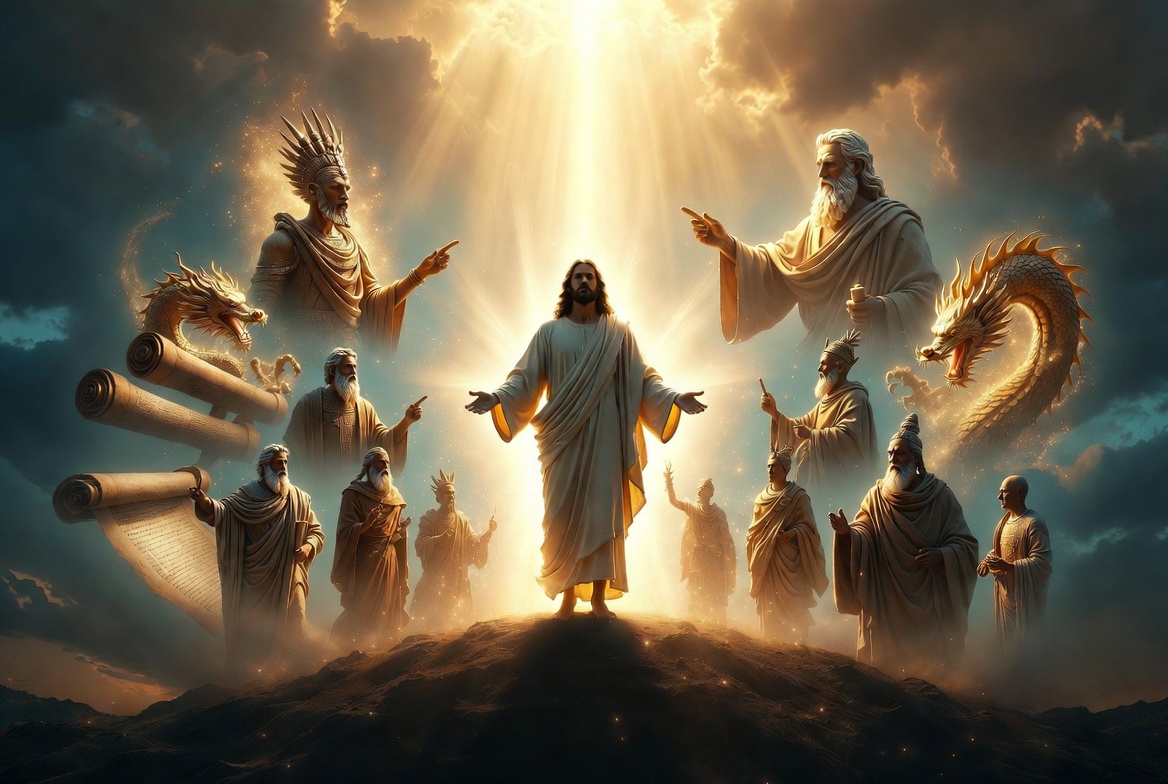
The Gospel is not a foreign import but the universal fulfillment of humanity’s deepest longings and scattered truths. Across cultures and history, God has sown “seeds of the Word” (spermatikos logos)—redemptive analogies, prophetic shadows, and pre-gospel hopes—in religions, philosophies, and moral systems. These traditions act as a “schoolmaster” (pedagogue) leading people to Christ: partial truths, moral yearnings, and messianic expectations that find their completion in Jesus. What began as an “outsider movement” in the Roman Empire resonates globally because it transforms and perfects what every culture already dimly knew, turning anticipation into reality and shadows into substance.
Jesus & Judaism
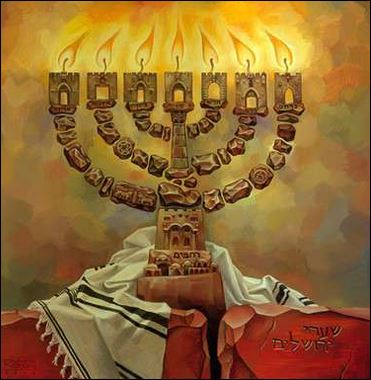
Judaism is based on the TaNaKH (Old Testament Scriptures/Covenant). As such, this religion points repeatedly to Christ who fulfilled the Law (Matthew 5:17-19; Luke 22:37; 24:26-27, 44-45; Acts 3:18; 13:29). The religion was based upon a rejection of Christ but even in the Oral law, Jesus is seen.

Jesus from Rabbinic Sources – Rosh Hashana Machzor
Jesus from Rabbinic Sources – Messiah the LORD
Jesus from Rabbinic Sources – The LORD our Righteousness
Jesus from Rabbinic Sources – The Son of God
Jesus from Rabbinic Sources – Messiah born in Bethlehem
Jesus from Rabbinic Sources – King & Priest
Jesus from Rabbinic Sources – Suffering Servant
Jesus from Rabbinic Sources – Suffering Servant 2
Jesus from Rabbinic Sources – Suffering Servant: The Messiah Texts – Raphael Patai
Jesus from Rabbinic Sources – Suffering Servant: Sanhedrin 98b
Jesus from Rabbinic Sources – Suffering Servant: Midrash Rabbah
Jesus from Rabbinic Sources – Suffering Servant: Jewish Sources
Jesus from Rabbinic Sources – Suffering Servant: Rays of the Messiah’s Glory
Jesus from Rabbinic Sources – Suffering Servant: More Jewish Sources
Jesus from Rabbinic Sources – The Pierced One
Jesus from Rabbinic Sources – The Pierced One: Rabbi Abraham Ben Ezra
Jesus from Rabbinic Sources – Pesikta Rabbati & Psalm 22
Jesus from Rabbinic Sources – Daniel 9
Jesus from Rabbinic Sources – Pidyon haben
Jesus from Rabbinic Sources -Yeshua=Messiah in the Talmud
Jesus from Rabbinic Sources – Son of Joseph, Son of David
Jesus & Greek Philosophy
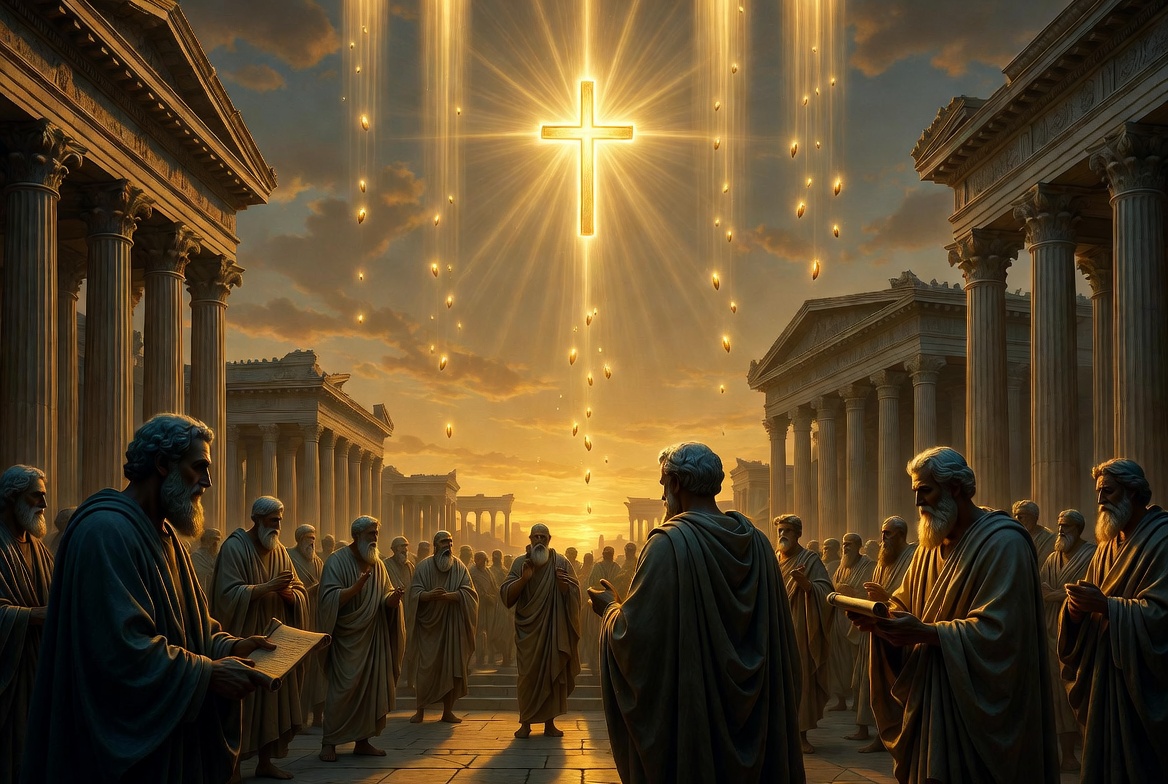
Justin Martyr’s concept of the logos spermatikos (“seminal Word,” “seed of the Logos,” or “spermatic Logos”) teaches that the divine Logos — the eternal Word of God, fully revealed in Jesus Christ (John 1:1-14) has sown “seeds” of truth, reason, and moral insight into every human being since creation. Greek philosophers (especially Socrates, Heraclitus, Plato, and the Stoics) received and expressed these partial truths through the logos spermatikos. They were not fully Christian, but lived “according to the Logos” to the extent they grasped these seeds. Justin portrays Greek philosophy as a pedagogue (schoolmaster/tutor) for the Greeks — preparing their minds for the complete truth of the incarnate Christ, just as the Mosaic Law prepared the Jews (cf. Galatians 3:24). Christianity is thus the fulfillment, not the rejection, of the best in Greek thought.
Jesus & Islam
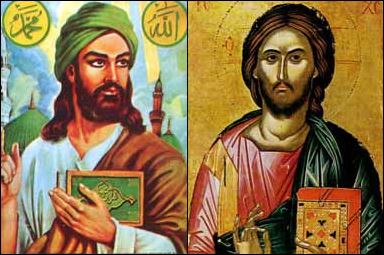
In Islam, Jesus (Isa) is a major prophet, virgin-born, miracle-worker, and Messiah who will return to defeat evil (often with the Mahdi, a guided redeemer figure establishing justice). Islam is monotheistic, calls for moral accountability, teaches the final judgment, and eschatological hope just as the Bible does. Redemptive bridge: Islam’s honor for Jesus as pointing to his unique role as Savior, with the Qur’an’s emphasis on submission (islam) highlighting humanity’s need for grace beyond works.
Jesus & Hinduism
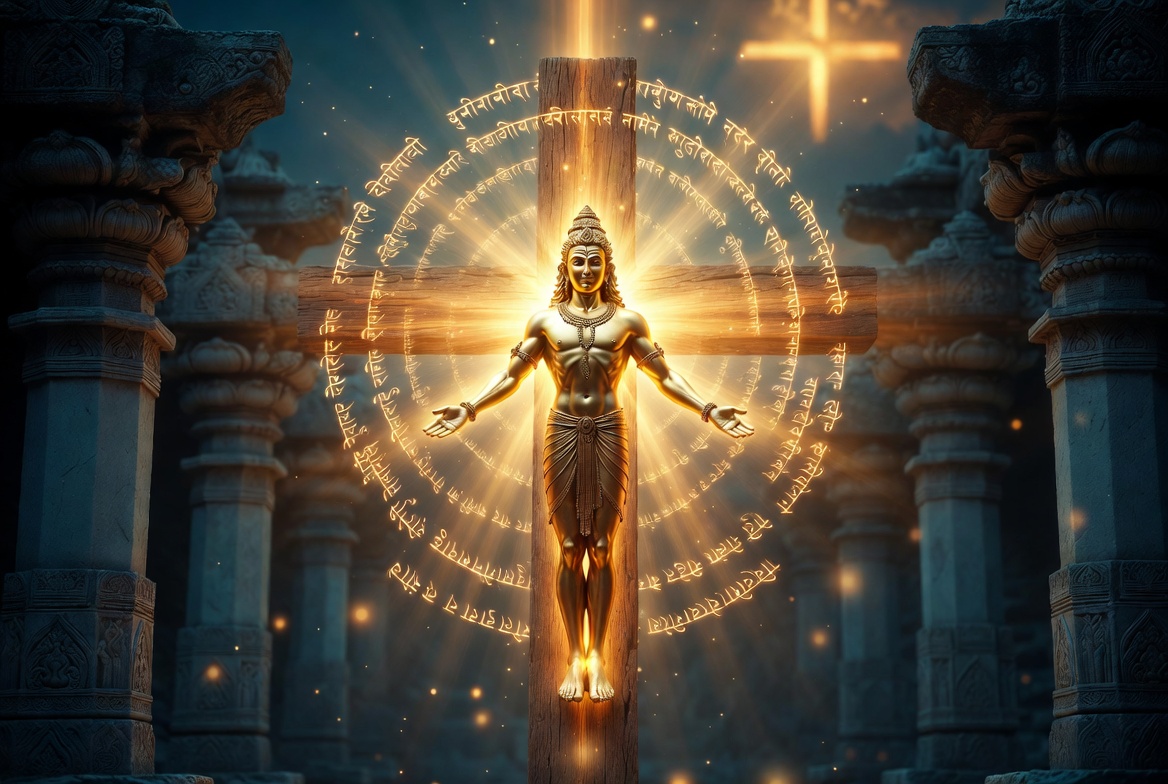
Hinduism teaches Avatars (e.g., Krishna, Rama) as divine descents to restore dharma (righteousness) amid evil. Hindu has themes of sacrifice, self-giving (e.g., in epics), bhakti (devotional love), and moksha (liberation from sin/karma cycle) which echo the incarnation and redemption. Redemptive Bridge: Jesus as the unique, once-for-all incarnation and atonement—fulfilling the longing for a personal God who bears sin rather than multiple descents destroying the wicked.
The ancient Vedas and Upanishads contain powerful redemptive analogies and “seeds of the Word” (logos spermatikos) that unknowingly foreshadow Jesus Christ as the ultimate fulfillment of Hindu longing for salvation.
Central to this is the Vedic figure of Prajapati (Lord of Creation) and Purusha (the Cosmic Man) — the sinless, self-sacrificing victim who offers himself on a pillar, whose blood brings life, and through whom alone immortality is attained. These ancient descriptions are presented as divine “shadows of the Messiah” and a cultural “schoolmaster” (like the Old Testament law) preparing the Hindu heart for the Gospel.
Prayers in the Vedas — “Lead me from darkness to light, from death to immortality” — find their complete answer in Jesus, the Lamb of God, the Way, the Truth, and the Life.
These ancient beliefs are seen as divinely ordained “shadows” or types pointing forward to Jesus Christ as the true, once-for-all Sacrifice and Redeemer. Hinduism, through the Vedas, functions as a cultural “schoolmaster” (like the Old Testament law) that prepares hearts for the full gospel. The Vedas do not explicitly name Jesus, but their deepest aspirations find their perfect fulfillment in Him, making Christ the true Prajapati—the divine-human Savior who conquers sin and death.
Chinese Culture

God has left His fingerprints across thousands of years of Chinese culture. Through its ancient worship of a supreme heavenly God (Shang Di), Confucian longing for the perfect Sage-King (Sheng Ren), Taoist pursuit of the mysterious Tao, legends like Guan Yin, imperial rituals at the Altar of Heaven, proverbs, and even the structure of Chinese characters, China received “seeds of the Word” — partial truths, redemptive analogies, and deep longings that prepared the Chinese heart for the full Gospel.
Jesus Christ is the True Son of Heaven: the living embodiment of everything noble that Chinese culture aspired to but could not fully attain. He is the compassionate Savior greater than Guan Yin, the humble and righteous King Confucius pointed toward but never became, the incarnate Tao who resolves Laozi’s paradoxes, and the source of true blessing (fu) and heavenly peace that emperors sought in vain through sacrifice and ritual.
Chinese culture, with all its beauty and wisdom, acts as a schoolmaster leading people to Christ, revealing both humanity’s highest ideals and its inability to achieve them. Jesus does not destroy Chinese identity; He fulfills and redeems it, bringing what was shadowy and incomplete into the clear light of His life, death, and resurrection.
“The God who prepared Israel through the Law also prepared China through its sages, rituals, and longings. Jesus is not a foreign God — He is the One the Chinese people have been unknowingly seeking all along.” – David Marshall
This is fulfillment theology applied beautifully to China: the Gospel arrives not as a stranger, but as the long-awaited Answer.
Daily Tidbits 1/26 – Chinese Language
Daily Tidbits 1/27 – Yin Yang & Oroboros
Jesus & Buddhism
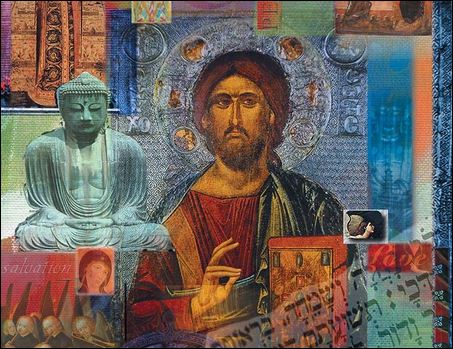
Buddhism teaches the Bodhisattva ideal—postponing nirvana out of compassion to help all beings escape suffering (dukkha). Concepts of self-sacrifice, enlightenment as light overcoming darkness, and ethical purity parallel Christ’s compassion and victory over sin/death. Redemptive Bridge: Jesus as the ultimate compassionate Savior who actually removes sin’s root (not just karma/illusion) through his cross and resurrection.
Buddhism (suffering, compassion, enlightenment), Confucianism (moral order, virtue, Heaven/Tian), and Daoism (the Dao/Way) contain preparatory elements—redemptive analogies, “seeds of the Word” (logos spermatikos), and cultural “schoolmasters” (echoing Galatians 3:24)—that point toward Christ as their fulfillment. Effective evangelism discerns these “shadows of the Messiah” (e.g., the Dao as bridge to the Logos, Confucian ethics as tutor to grace, Buddhist compassion as longing for a Savior).
Jesus & Confucianism
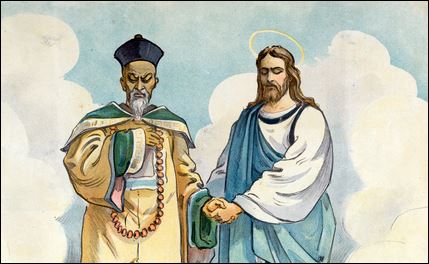
Confucianism emphasizes on ren (benevolence/humaneness), righteousness, harmony in relationships, and the ideal of the noble/sage ruler who models virtue and restores social order. Redemptive Bridge: Points to Christ as the perfect fulfillment of moral law and relational restoration—humanity’s true “superior man” who enables inner transformation beyond education or ritual.
Ancient Chinese civilization originally knew and worshiped the one true God (ShangDi / Tian), whose knowledge was carried from the post-Flood dispersion at Babel. This monotheistic faith was preserved in the Chinese classics, pictographic characters, and imperial rituals (especially the annual Temple of Heaven sacrifice).
The sages (Confucius, Mencius, and others) taught moral truths, prophesied a coming “Holy Man” (a suffering servant who would bring salvation), and encoded the plan of redemption in writings such as the I Ching (Book of Changes). These elements—along with the triune nature of God, the concepts of sin, sacrifice, and restoration—are striking “shadows” or redemptive analogies pointing to Jesus Christ. Over time this original “Dao” (Way) was largely lost or corrupted, but it served as a divine schoolmaster preparing the Chinese people for the full gospel.
In essence: The God of the Bible was the God of ancient China, and Chinese culture contains beautiful, God-planted pointers that lead straight to Jesus.
Jesus & Taoism

Taoism teaches the Tao (Way) as the harmonious, underlying principle of the universe; wu wei (effortless action), balance (yin-yang), and return to simplicity/natural order. Redemptive Bridge: Echoes the Logos (Christ as the eternal Way—John 14:6) who reconciles creation to God, restoring cosmic harmony broken by sin through grace rather than self-effort.
Ancient Taoism is a divine preparation for the fulfillment in the Gospel of Christ Jesus. The eternal Tao (道) that Lao Tzu taught points back to the divine Logos (the Word) of the Bible, Jesus Christ. Six centuries before Jesus, God sovereignly revealed glimpses of His own nature and redemptive plan to the ancient Chinese sage. The Tao is portrayed as the Creator, the Source of life, the Holy One, the humble Servant, and the coming Savior — truths that parallel Scripture and function as a “schoolmaster to Christ” for Chinese culture (echoing Galatians 3:24).
These are redemptive analogies, seeds of the Logos (sperma logos), and shadows of the Messiah planted by the same God who spoke to the Hebrews. Lao Tzu’s Tao is therefore a genuine pre-gospel — not the full revelation, but a preparatory light that finds its perfect fulfillment when “the Tao became flesh” in Jesus Christ (John 1:1–14).
Jesus & the Samurai

Samurai and warrior culture functioned as a schoolmaster to Christ (Galatians 3:24), with its Bushido ideals of honor, self-sacrifice, obedience, and dying to self mirroring and pointing toward the fuller revelation of Christ. The faith flourished among millions, including samurai, until brutal persecution drove it underground.
God sovereignly uses every culture’s highest aspirations and virtues as a bridge to the Gospel, fulfilling what was dimly foreshadowed in their stories, ethics, and longings.
Jesus & Shinto

Shinto teaches Kami (spirits/divine essences) in nature and ancestors; purity rituals, harmony with the divine in everyday life, and a high god(ess) like Amaterasu. Redemptive Bridge: Longing for purity and connection to the sacred points to Christ’s cleansing blood and incarnation, making all creation point to the one true Creator worthy of worship.
Shinto religion heavily shaped Bushido (the warrior code of honor, self-sacrifice, loyalty, courage, and duty). Shinto’s emphasis on loyalty, honor, ritual purity, and a sense of the divine in the world can be seen as praeparatio evangelica—cultural longings or “shadows” that prepared hearts for fuller revelation in Christ.
Japanese Christian thinkers (Kanzo Uchimura, Inazo Nitobe) explicitly viewed Bushido (with its Shinto roots) as a providential tutor pointing toward Christianity—loyalty to a lord mirroring devotion to Christ, self-sacrifice echoing the cross, etc.
Jesus & Sikhism
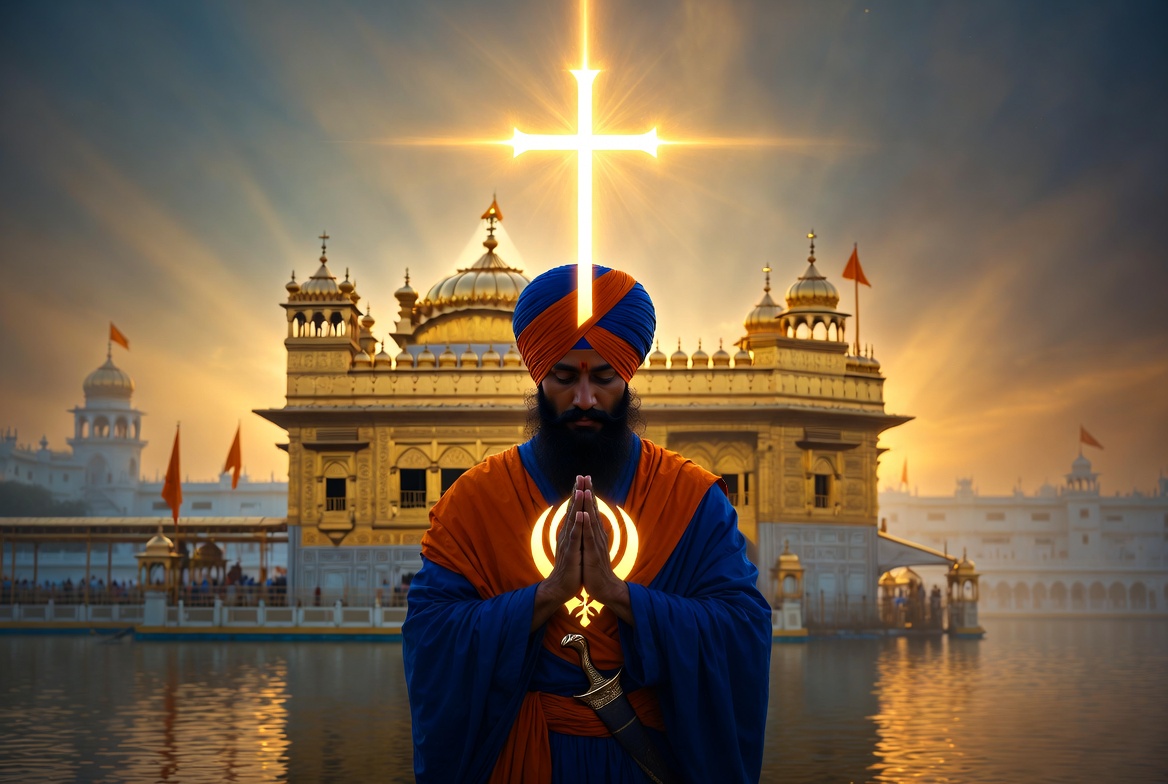
Sikhism teaches One formless God (Ik Onkar), devotion, equality, service (seva), and the Guru as divine teacher/revealer. Rejection of caste and idolatry aligns with monotheism. Redemptive Bridge: The Guru Granth Sahib’s emphasis on grace and the divine Word echoes Christ as the living Guru/Word who liberates through sacrificial love.
Sikhs revere the Guru as the perfect divine Teacher and the Guru Granth Sahib as the eternal living Guru. Missiologists present Jesus as the ultimate Satguru (True Guru)—the living Word who guides, transforms, and liberates. This directly echoes the (seed of the Word) idea: the Sikh longing for a true spiritual Master is a seed of the Logos (John 1:1-14) fulfilled in Christ.
Sikhism emphasizes on one formless God (Waheguru) and meditating on the Divine Name is viewed as preparatory longing for intimate relationship with the personal God revealed in Jesus. Jesus reveals the name of God (John 17:26).
Jesus & Bahá’í

Bahá’í teaches progressive revelation through Manifestations of God (including Abraham, Krishna, Buddha, Jesus, Muhammad, Bahá’u’lláh). Bahá’í teaches affirmation of Jesus’ divinity, virgin birth, and spiritual mission. Redemptive Bridge: Jesus as a central Manifestation; his uniqueness as the eternal Son points beyond progressive unfoldings to the decisive atonement and resurrection.
Jesus & Jainism
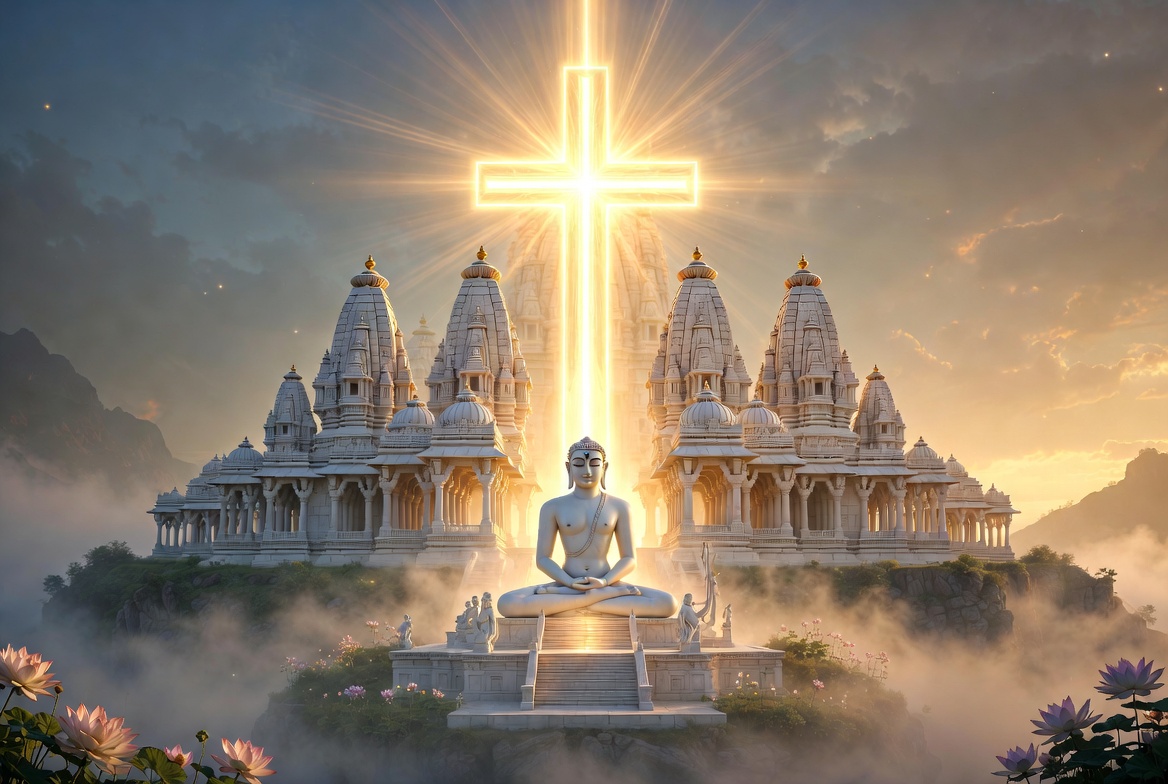
Jainism teaches extreme non-violence (ahimsa), ascetic self-denial to purify the soul from karma, and liberation (moksha) through right knowledge/conduct. Redemptive Bridge: Highlights the cost of sin and need for purity—fulfilled in Christ’s once-for-all sacrifice that achieves liberation as a gift, not endless self-effort.
Jainism’s emphasis on non-harm known as ‘ahisma’ (extending to all living beings, including insects and microscopic life) is seen as a profound cultural “seed of the Logos” — a deep longing for purity, compassion, and harmony that finds its ultimate fulfillment in Christ’s self-sacrificial love on the cross (the ultimate act of non-violence and love for enemies). Christian thinkers highlight how Jain ahimsa prepares the heart for the Gospel’s command to love even persecutors.
Jains’ rigorous fasting, renunciation, and soul-cleansing practices mirror the call to “deny oneself, take up the cross” (Matthew 16:24). These are viewed as praeparatio evangelica, shadows or tutors that highlight human inability to achieve perfect purity through effort alone, pointing to grace and Christ’s finished work for true moksha/liberation.
Jain emphasis on universal compassion and the interconnectedness of souls can be bridged to the Gospel’s care for the marginalized and the doctrine of creation (all life reflecting God’s image in a broader sense). Some dialogues present Jesus as the perfect Tirthankara (ford-maker/liberator) who achieves what strict self-effort cannot.
Jain reliance on personal karma accumulation is contrasted with (and seen as preparatory for) the Christian message of unmerited grace — the law as a “schoolmaster” showing the need for a Savior who breaks the cycle of works-righteousness.
Jesus & Zoroastrianism

Zoroastrianism teaches dualism of good (Ahura Mazda) vs. evil; Saoshyant as virgin-born savior(s) who brings final judgment, resurrection, renewal (Frashokereti), and defeat of evil. Zoroastrianism also has strong connections with later Jewish/Christian eschatology. Redemptive Bridge: Clear shadow of the Messiah—Christ as the true Saoshyant who conquers death and renews all things.
Zoroastrian prophecy foretells a virgin-born savior figure (Saoshyant) who defeats evil, raises the dead, renews the world (Frashokereti), and brings final victory of light over darkness. The Magi (Zoroastrian priests/astrologers) in Matthew 2 are often interpreted as recognizing Jesus as the fulfillment of their own Saoshyant expectation.
Jesus & The Mysteries
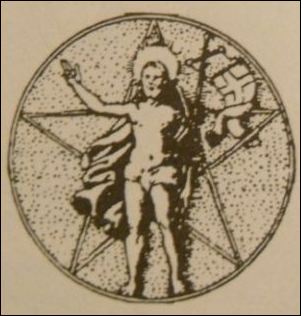
The Sumerian, Egyptian, Greek and Norse myths all have echoes of the Gospel embedded. There are varying versions of the same message of the Holy Scriptures. The Garden of Eden, the fall of man, the promise of a redeemer. Redemptive bridge: Sacrificial substitution and victory over death, pointing to a once-for-all Redeemer who defeats death permanently.
Daily Tidbits 1/1/12 – January
Daily Tidbits 1/4/12 – Cassiopeia
Daily Tidbits 1/27 – Yin Yang & Oroboros
Daily Tidbits 2/17 – Cupid & the Heart
Daily Tidbits 5/2 – May Day/Beltane
Daily Tidbits 5/16 – The Queen of Heaven – Counterfeit Virgin & the True Branch
Jesus & Tribal Indigenous religions
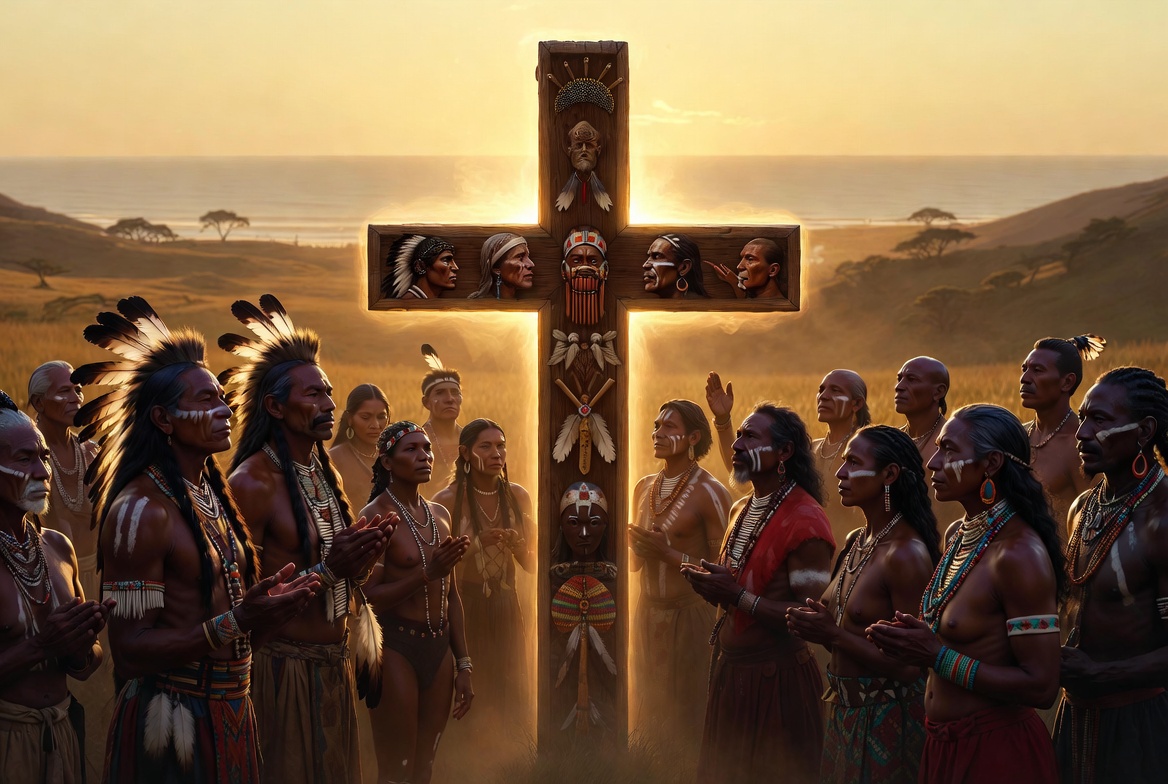
Native Tribal religions are similar to the myths in their echoes of the Garden, the Flood and a desire to be restored to right relationship with Creator. Redemptive bridge: Supreme Creator, human separation from God, need for mediators/sacrifices, and hope of restoration. Indigenous cultures contain redemptive seeds (echoing the logos spermatikos concept) — stories, ceremonies, values, and worldviews that act as a “schoolmaster” pointing to Christ.

