

The name June comes from the Latin Iunius, meaning youth and vital force — linked to youthful vigor, renewal, and the protective themes of Juno. In Scripture we see this in the Hebrew לח ‘leach’ — the natural force and freshness that does not abate, even in old age (Deut 34:7).
This vital force points to the Word written on our hearts, being born again from above by the incorruptible Seed, and the renewal that comes as we wait on the LORD — mounting up with wings as eagles.
From the innocence of the suckling babe (יונק ‘yonaq’), to chicks abiding under the shadow of wings, to the apple of His eye and the marriage canopy (חופה ‘chuppah’), all these threads beautifully shadow Messiah — who covers us, writes His Word on our hearts, and calls us into intimate covenant relationship as the true Israel of God, hidden in Him.

The name June comes from the Latin word ‘Iunius’ which means youth, seen in Romans 16:7 {Ἰουνίας ‘Iounias’}. Iunius is related to the name Juno, the pagan goddess of marriage and women and the defender/protector of the community.
Etymologists trace ‘Iunius’ back to a Proto-Indo-European root word ‘yeu’ which means “vital force, youthful vigor.” ‘Iuvenis’ is one who has the “fullness of vital force”. In the Scriptures, this “vital vorce” is seen in the word לח ‘leach.’
Deu 34:7 And Moses was an hundred and twenty years old when he died: his eye was not dim, nor his natural force {לח ‘leach} abated.
לח ‘leach’ means anything that is moist, fresh or new as green grass that springs from the earth in Spring. These are the themes of Iunius mentioned above.
לח ‘leach’ is the root of the word לוח ‘luach’ which means a writing tablet, as in the tables of stone which Moses received from God (Exodus 24:12; 31:18; 32:15-16, 19; 34:1, 4, 28-29).

Those who are reborn in Messiah are to have His Word written on their hearts, born again from above. This is interesting to note as the month of June is when Shavuot/Pentecost is celebrated. In the first Shavuot, the Torah was written in stone (Exodus 19-20). In the first Shavuot/Pentecost of the New Covenant, the Holy Spirit was sent (Acts 2), writing the Torah on the hearts of believers (2 Corinthians 1:22; Jeremiah 31:31-34; Ezekiel 11:19; 36:25-27; 2 Corinthians 3:3).
Joh 3:3 Jesus answered and said unto him, Verily, verily, I say unto thee, Except a man be born {γεννάω ‘gennaō’ bear, born, conceived} again {ἄνωθεν ‘anōthen’ from above, a new}, he cannot see the kingdom of God.
One who is ‘born again‘ is born again from above or conceived from above. The Seed of the Word has been planted into his/her heart.
Tit 3:5 Not by works of righteousness which we have done, but according to his mercy he saved us, by the washing of regeneration, and renewing of the Holy Ghost;
1Pe 1:23 Being born again, not of corruptible seed, but of incorruptible, by the word of God, which liveth and abideth for ever.
Jam 1:18 Of his own will begat he us with the word of truth, that we should be a kind of firstfruits of his creatures.
Jas 1:21 On account of this, putting away all filthiness and overflowing of evil, in meekness receive the implanted Word being able to save your souls.
It is interesting to note that in early 2014 scientists discovered the protein that binds sperm with eggs in order for conception to occur. They named this molecule Juno. Juno is the ‘namesake’ of June.
Isaac Mozeson traces the English word ‘youth/young’ back to the Hebrew word יונק ‘yonaq’ which means a youth as in one who gives suck.

יונק ‘yonaq’ comes from the root word נק ‘naq’ which literally means a “child drawn in” as in the bringing in and holding of an infant to the breast to suckle, the picture of innocence. One of the Hebrew words for innocence is נקי ‘naqi’ which comes from this root word.
Another Hebrew word which has the meaning of innocence is חף ‘chaph’ which pictures chicks abiding under the shadow of the wings of their mother. Again, the “little guy in the eye” imagery is seen.
The LORD Jesus is described in this same imagery.
Deu 32:10 He found him in a desert land, and in the waste howling wilderness; he led him about, he instructed him, he kept him as the apple of his eye.
Deu 32:11 As an eagle stirreth up her nest, fluttereth over her young, spreadeth abroad her wings, taketh them, beareth them on her wings:
Mat 23:37 Jerusalem, Jerusalem, the one killing the prophets and stoning those sent to her. How often I desired to gather your children in the way a bird gathers her chicks under her wings! And you did not desire it.
רחף ‘rachaph’ comes from the root חף ‘chaph.’

Christ is the door that we enter in order to abide in His ‘House’ (John10:7) it is through Him that we are covered/hidden. This is the definition of who the Israel of God is (Galatians 6:16)…His hidden ones (Psalm 83:3). It is by the covenant cut in Messiah (Daniel 9:26; Isaiah 42:6) by His sacrifice on the tree that we are covered (1 John 1:7). It is through His Outstretched Arms (wings) that Messiah is calling us (John 3:14; 12:32) and gathering us together as a Shepherd does His flock (John 10:14-16). This is how we enter the Door into the House, this is how we are declared innocent and pure in His eyes. This is how we become His friends and enter into His tents in an intimate relationship.
חף ‘chaph’ is the root for the word חופה ‘chuppah’ which is speaking of a wedding canopy. חופה ‘chuppah’ also has the meaning of defense which is another theme of Juno.

Recall that Juno was the goddess of marriage. Abiding under the shadow of His wings and being in ‘marriage covenant’ with Him through Messiah is one and the same thing.
The canopy as a covering is connected with being the ‘little guy in His eye.’
Zec 2:5 For I, saith the LORD, will be unto her a wall {חומה ‘chomah’} of fire round about, and will be the glory in the midst of her.
Zec 2:8 For thus saith the LORD of hosts; After the glory hath he sent me unto the nations which spoiled you: for he that toucheth you toucheth the apple of his eye.
This word חומה ‘chomah’ displays a fascinating connection to the themes of June/Juno. חומה ‘chomah’ comes from the root חם ‘cham’ which means the sun as in hot. One enters into his house in which a wall {חומה ‘chomah’} protects him from the heat of the sun {חם ‘cham’}. June is the time in which summer begins, when the heat of the sun is at its greatest.
חם ‘cham’ is also the root of one of the Hebrew words for conception which is יחם ‘yacham’ linking to the heat/passion of the process. Recall that the molecule which is responsible for conception is named Juno.
The Hebrew word for mother-in-law is חמות ‘chamot’ which also comes from the root חם ‘cham.’ חם ‘cham’ also pictures a skin bag which was hung outside of the tent in ancient times filled with milk to make cheese. Milk comes forth from the bosom of a mother.
יונק ‘yonaq’ (youth) comes from the root word נק ‘naq.’ נק ‘naq’ is also the source of the word נקיק ‘naqiyq’ which means a cleft in the rocks, as in the cleavage of the breast {נקק ‘naqaq’}. The imagery of the cleft of the rock is used in the Scriptures as depicting an intimate relationship with the Almighty (Exodus 33:18-23).
Rock of Etam

Samson dwelt in the cleft of the Rock (Messiah) at Etam (Eagles wings).
Jdg 15:8 And he struck them hip on thigh, a great slaughter, and went down and lived in the cleft of the rock Etam {עיטם ‘eytam’}.
עיטם ‘eytam’ comes from the word עיט ‘ayit’ which means a bird of prey, as the eagle or hawk. The root word of עיטם ‘Etam’ is עט ‘et.’ עט ‘et’ literally means to “see and contain” picturing a bird of prey swooping down and surrounding its prey or covering its chicks under its wings. Here the imagery of the “little guy in the eye” abiding under the shadow of His wings is seen.
It is also interesting that the word for pen/stylus comes from this same root word and is associated with the eagle’s/bird of prey’s talons. This connects hiding under the eagles wing’s with the Word. More on this below.

Some associate Juno’s name with the word ‘iuvenescendo’ which means to “rejuvenate”. Scripture links this rejuvenation with the eagle.
Isa 40:28 Hast thou not known? hast thou not heard, that the everlasting God, the LORD, the Creator of the ends of the earth, fainteth not, neither is weary? there is no searching of his understanding.
Isa 40:29 He giveth power to the faint; and to them that have no might he increaseth strength.
Isa 40:30 Even the youths shall faint and be weary, and the young men shall utterly fall:
Isa 40:31 But they that wait upon the LORD shall renew their strength; they shall mount up with wings as eagles; they shall run, and not be weary; and they shall walk, and not faint.
Psa 103:5 Who satisfieth thy mouth with good things; so that thy youth is renewed {חדש ‘chadash’} like the eagle’s.
The word ‘renewed’ in Psalm 103:5 is חדש ‘chadash’ which also means new moon. ‘Iuvenescendo’ is sometimes used in association with the renewal of the moon as Juno was a moon goddess. חדש ‘chadash’ comes from the root word חד ‘chad’ which means to unite, as in the joining of man and woman in marriage and conception, another theme of Juno.
The Greek equivalent of Juno was Hera (Ἥρα ‘Hera’/Ἥρη ‘Here’). Hera’s common epithet was βοῶπις ‘boōpis’ which means “cow-eyed” and is seen in one story breast feeding the baby Heracles and was used to explain the formation of the Milky Way. Juno is also linked to the cow as ‘Iuno’ traces back to the word ‘iun’ which is the source of the word ‘iunix’ which means heifer.
The cow is linked to the aforementioned imagery of the bosom as one of the primary functions of the cow is to bring forth milk.
Peter admonishes believers to desire the milk of the Word as newborn babes that we may grow thereby.
1Pe_2:2 As newborn babes, desire the sincere milk of the word, that ye may grow thereby:
The Greek word here translated as milk is γάλα ‘gala.’ The word galaxy comes from this Greek word. γάλα ‘gala traces back to the Hebrew word עול ‘ghool’ which means to give milk. עול ‘ghool’ is comes from the root word גל ‘gal’ which means round, connecting back to the word עגל ‘agal’ which means cow and also comes from this root word גל ‘gal.’ The Hebrew word for a suckling infant {גול ‘gul’} also comes from this root word. The Hebrew word for a scroll {מגילה ‘megillah’} (Word), made of leather (cow skin), also comes from this root word גל ‘gal.’

Some trace the nameof Hera back to ἥρως ‘heros’ which means a hero. גבור ‘giybor’ means one of great strength, a valiant one, a hero. The Hebrew word אראל ‘er`el’ has an identical meaning.
אראל
‘er’êl
BDB Definition:
1) (CLBL) hero, valiant one
2) (BDB) form and meaning dubious
3) (TWOT) Ariel or hearth
Part of Speech: noun masculine
A Related Word by BDB/Strong’s Number: probably for H739
Isa 33:7 Behold, their valiant {אראל ‘er`el} ones shall cry without: the ambassadors of peace shall weep bitterly.
אריה ‘aryeh/aryah’ is the Hebrew word for lion, it is a combination of the words אר ‘ar’ which means light or order and יה ‘Yah’ which is the name of God. This points directly to Christ Jesus.
Messiah Jesus is the Light which brings life.
Isa 9:2 The people that walked in darkness have seen a great light: they that dwell in the land of the shadow of death, upon them hath the light shined.
Joh 1:9 That was the true Light, which lighteth every man that cometh into the world.
Joh 8:12 Then spake Jesus again unto them, saying, I am the light of the world: he that followeth me shall not walk in darkness, but shall have the light of life.
Joh 9:5 As long as I am in the world, I am the light of the world.
Joh 12:46 I am come a light into the world, that whosoever believeth on me should not abide in darkness.
Scripture speaks of the entering of His Words as giving light (Psalm 119:130). Messiah Jesus is the name/character of God. His Name is the Word (Revelation 19:13; Matthew 12:18-21 – Isaiah 42:1-4)…Jesus is the Word (John 1:14). Our hearts are circumcised when His Word/Light enters into our hearts causing us to be born again from above.
Psa 119:130 The entrance of thy words giveth light; it giveth understanding unto the simple.
2Co 4:6 For God, who commanded the light to shine out of darkness, hath shined in our hearts, to give the light of the knowledge of the glory of God in the face of Jesus Christ.
Further connecting גבור ‘gibor’ with the lion is the number 211. גבור ‘gibor’ has the numerical value of 211 as does the word ארי ‘ariy’ (lion). Interestingly, the word הדבר ‘ha`davar’ which means “the Word” also has the numerical value of 211. Messiah Jesus, of course, is the Word of God made flesh (John 1:1-14).
The word ‘hero’ comes from the Greek word ἥρως ‘heros’ which means hero, warrior or more literally a brave protector and defender. The corresponding word in Hebrew is ישועה ‘yeshuah’ which pictures a shepherd protecting and defending his sheep from their enemies.

ישועה ‘yeshuah’ also has the meaning of salvation and victory which came from Christ Jesus whose name comes from this Hebrew word. He is the ‘hero’ who overcame the world to be enthroned as King of Kings and Lord of Lords. Interestingly, Herod, the false king of Israel got his name from the Greek word ἥρως ‘heros.’
Isaac Mozeson traces Juno back to the Hebrew word גן ‘gan’ which means garden but also a protected/guarded place.

The Hebrew word for shield or defense is מגן ‘magen’ which comes from the root גן ‘gan.’
Gen 15:1 After these things the word of the LORD came unto Abram in a vision, saying, Fear not, Abram: I am thy shield {מגן ‘magen’}, and thy exceeding great reward.
Deu 33:29 Blessed are you, O Israel! Who is like you? A people saved by Jehovah, the Shield {מגן ‘magen’} of your help, and He who is the Sword of your excellency! And your enemies shall be found liars before you, and you shall tread on their high places.
Psa 3:3 But You, O Jehovah, are a shield {מגן ‘magen’} around me; my glory, and He who lifts up my head.
Psa 18:2 The LORD is my rock, and my fortress, and my deliverer; my God, my strength, in whom I will trust; my buckler {מגן ‘magen’}, and the horn of my salvation, and my high tower.
Psa 18:30 As for God, his way is perfect: the word of the LORD is tried: he is a buckler {מגן ‘magen’} to all those that trust in him.
Psa 7:10 My defence {מגן ‘magen’} is of God, which saveth the upright in heart.
Psa 89:18 For the LORD is our defence {מגן ‘magen’}; and the Holy One of Israel is our king.
Psa 18:35 You have also given me the shield {מגן ‘magen’} of Your salvation; and Your right hand holds me up; and Your condescension has made me great.
Psa 28:7 Jehovah is my strength and my shield {מגן ‘magen’}; my heart trusted in Him, and I am helped; yea, my heart greatly rejoices; and I will thank Him with my song.
Psa 59:11 Do not kill them, lest my people forget; scatter them by Your power and bring them down, O Jehovah our shield {מגן ‘magen’}.
He is our shield, our hiding place.
Psa_119:114 Thou art my hiding place {סתר ‘seter’} and my shield {מגן ‘magen’}: I hope in thy word.
This hiding place imagery connects to the concept of abiding in His bosom as an innocent youth. Further connecting this hiding place – under the shadow of His wings imagery is Psalm 91.
Psa 91:1 He that dwelleth in the secret place {סתר ‘seter’} of the most High shall abide under the shadow of the Almighty.
Psa 91:2 I will say of the LORD, He is my refuge and my fortress: my God; in him will I trust.
Psa 91:3 Surely he shall deliver thee from the snare of the fowler, and from the noisome pestilence.
Psa 91:4 He shall cover thee with his feathers, and under his wings shalt thou trust: his truth shall be thy shield and buckler.
Psa_32:7 Thou art my hiding place {סתר ‘seter’}; thou shalt preserve me from trouble; thou shalt compass me about with songs of deliverance. Selah.
Interestingly, the other word in Hebrew which displays the concept of a hiding place is חב ‘chav’ which also means the bosom.

Psa 84:11 For Jehovah God is a sun and shield {מגן ‘magen’}; Jehovah will give grace and glory; He will withhold nothing good from those who walk in integrity.
Notice the connection between the sun and the shield. This is interesting to note as June is the month in which the summer solstice occurs. The theme of summer is the sun.
6th Month
June is the sixth month of the year in the Gregorian calendar. June being the sixth month is significant in light of the shadow picture discussed above.
The Hebrew word for six is שש ‘shesh’ and is seen in nature in hexagonal forms. Marble (שש ‘shesh’) is made up of minute calcite crystals which are hexagonal. The lily (שושן ‘shoshan’) is hexagonal as well as snow and water. This is mentioned as the hexagram is a symbol used in the Mysteries in relation to Juno. In some Mysteries Juno was born of Saturn, others speak of her as the paredra (spouts) of Ba’al who is equivalent with Saturn.
The symbol of Saturn was the hexagram. Interestingly, the name Saturn traces back to the Hebrew word סתר ‘seter’ which means the hiding place or secret place mentioned above.
Recall that the Hebrew origin of the word ‘June’ is גן ‘gan’ which means garden or protected place. In Chinese, the word ‘gan’ has the meaning of shield or defense. ‘Gan’ is pictured as thus in Chinese:

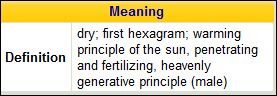
This figure means to defend, to oppose and dried. The traditional form of this character has the following meaning:
littleguyintheeye@gmail.com

 Little Guy in the Eye