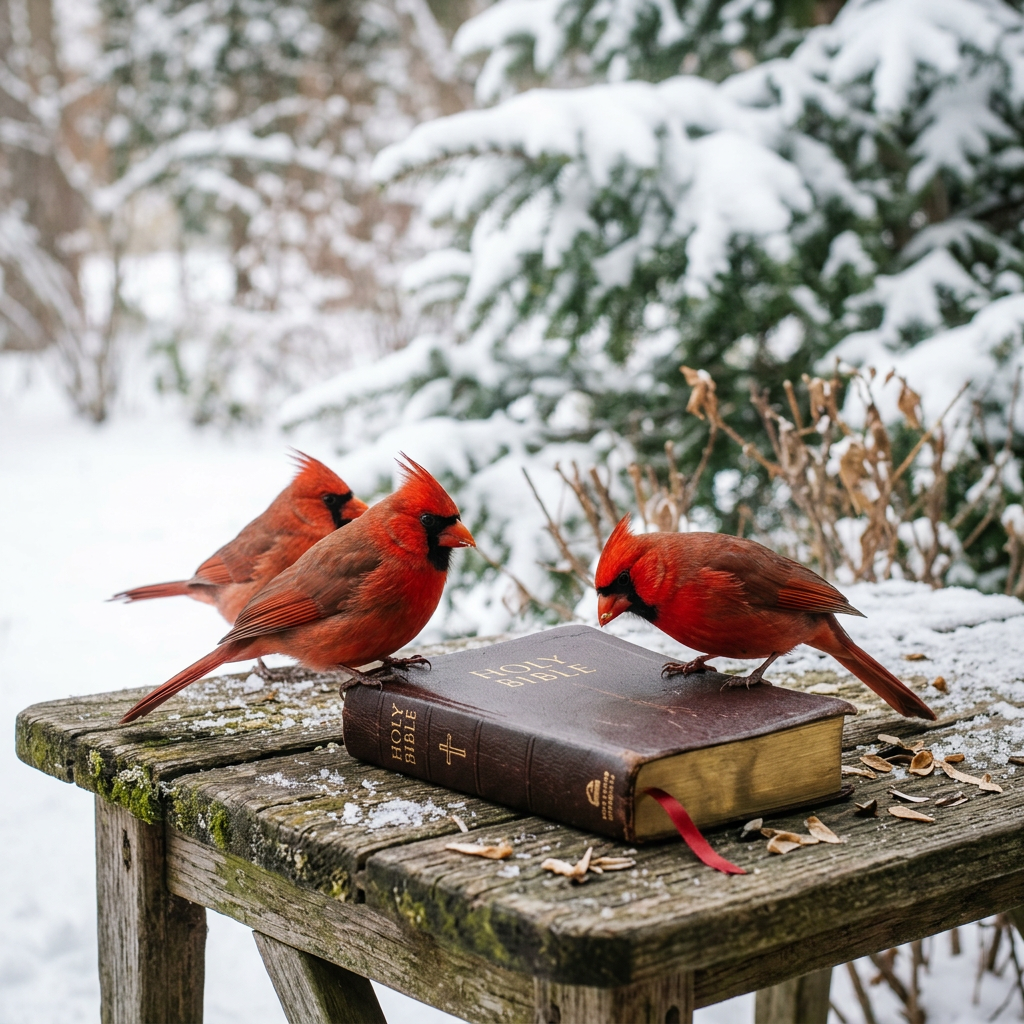

The word “cardinal” comes from the Latin cardo – a hinge, a pivot point, that upon which everything turns. From this root we get cardinal directions, cardinal virtues, and the chief ministers of the Church. In the natural world, the bright red cardinal carries the same parable: a living picture of the Head, the Blood, the Fruit, and the Hope that hinges our entire faith.
From the red that comes from the fruit it eats (pointing to the blood of the True Vine), to its lifelong faithfulness, its cheerful “cheer-cheer-cheer” song, and its role as a pivotal witness in creation — this little bird declares that everything turns on Christ, the true Cardinalis, the Head of the Body, the Door, the Pole, and the Hope of Glory.
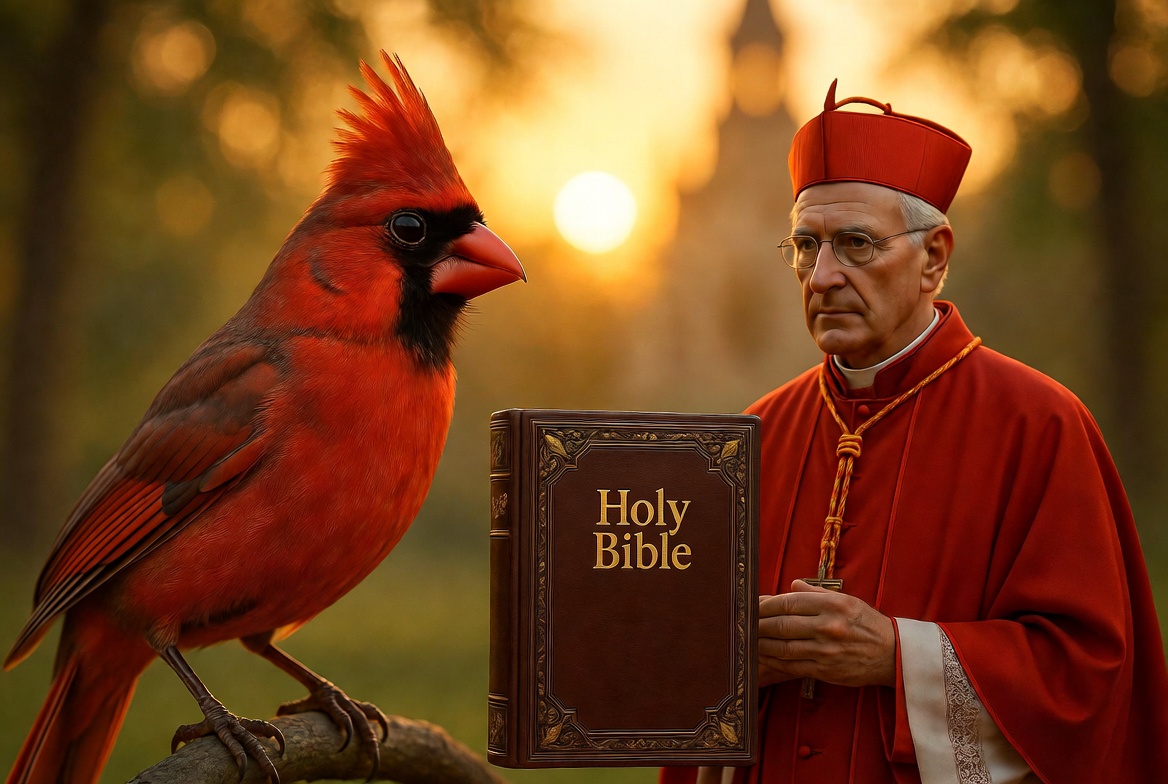
Birds display beautiful shadows of Messiah. One of my favorites is the cardinal which brings forth a fascinating parable.
The word cardinal comes from the Latin ‘cardinalis’ which means “serving as a hinge,” “pivotal,” “principal,” or “chief.” ‘Cardinalis’ comes from ‘cardo’ which means a “door hinge” or “pivot.” It meant that on which something turns or depends. This figuratively meant something essential or “most important.”
The Hebrew word רֹאשׁ ‘rosh’ displays both the principal and head aspect of ‘cardinalis.’
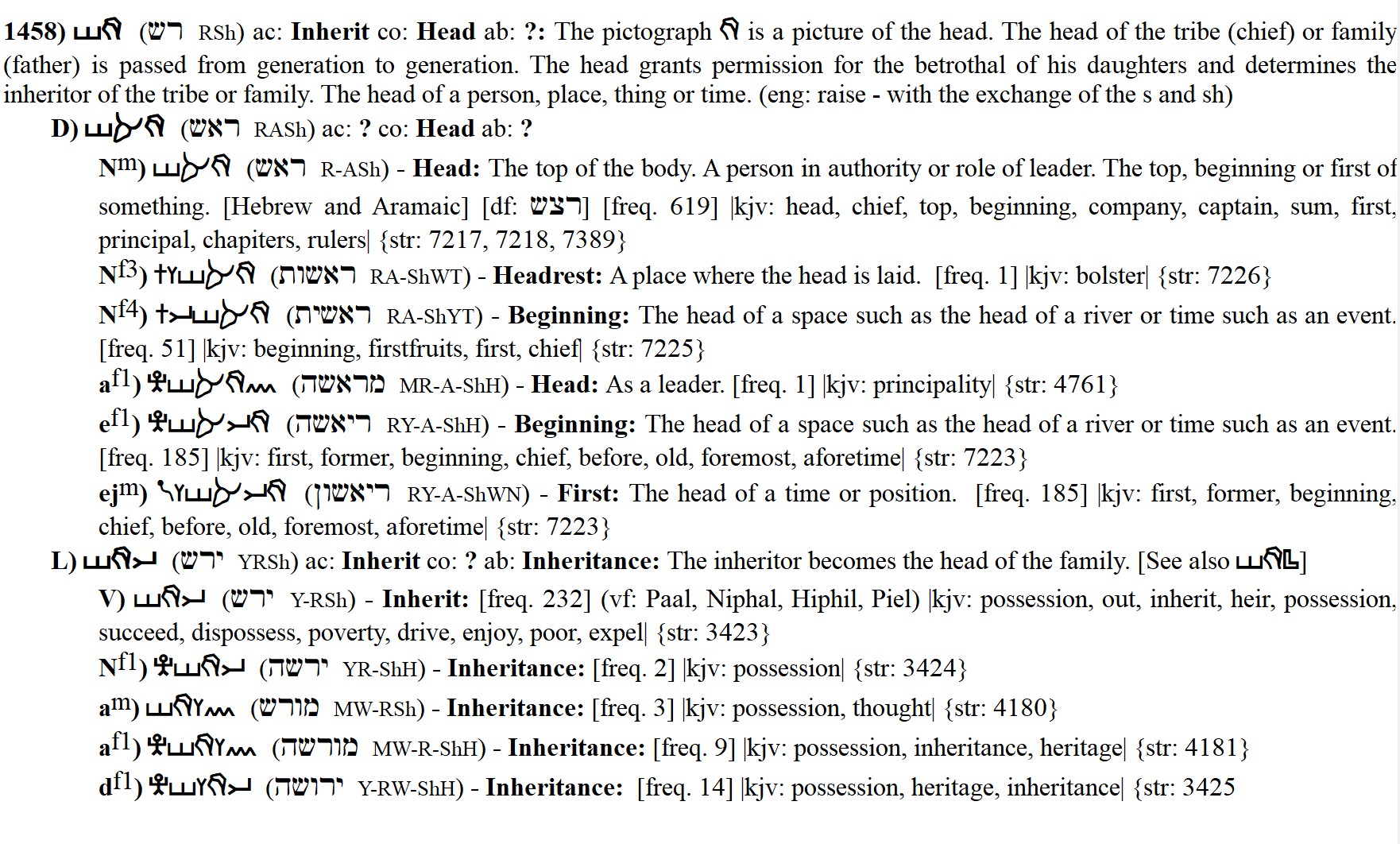
The Scriptures define the LORD Jesus as our Head
Eph 5:23 For the husband is the head of the wife, even as Christ is the head of the church: and he is the saviour of the body.
1Ch 29:11 Thine, O LORD, is the greatness, and the power, and the glory, and the victory, and the majesty: for all that is in the heaven and in the earth is thine; thine is the kingdom, O LORD, and thou art exalted as head above all.
1Co 11:3 But I would have you know, that the head of every man is Christ; and the head of the woman is the man; and the head of Christ is God.
Eph 1:22 And hath put all things under his feet, and gave him to be the head over all things to the church,
Eph 4:15 But speaking the truth in love, may grow up into him in all things, which is the head, even Christ:
Eph 5:23 For the husband is the head of the wife, even as Christ is the head of the church: and he is the saviour of the body.
Col 1:18 And he is the head of the body, the church: who is the beginning, the firstborn from the dead; that in all things he might have the preeminence.
Col 1:19 For it pleased the Father that in him should all fulness dwell;
Red Cardinals

Cardinals get their red color from their diet, in particular the carotenoids in fruit. Folk Legends link cardinals to the blood of Christ.
The Hebrew word for red is אדום “adom” which comes from the root דם “dam” which mean blood. This points to the blood of Christ which is seen in the wine of the Eucharist, the blood of the grape (fruit) (Deuteronomy 32:14; Matthew 26:29). We are to abide in Him (the vine – John 15:1), producing His fruit (Romans 6:22; 7:4; 2 Corinthians 9:10; Colossians 1:6).
Joh 15:1 I am the true vine, and my Father is the husbandman.
Joh 15:2 Every branch in me that beareth not fruit he taketh away: and every branch that beareth fruit, he purgeth it, that it may bring forth more fruit.
Joh 15:3 Now ye are clean through the word which I have spoken unto you.
Joh 15:4 Abide in me, and I in you. As the branch cannot bear fruit of itself, except it abide in the vine; no more can ye, except ye abide in me.
Joh 15:5 I am the vine, ye are the branches: He that abideth in me, and I in him, the same bringeth forth much fruit: for without me ye can do nothing.
Joh 15:6 If a man abide not in me, he is cast forth as a branch, and is withered; and men gather them, and cast them into the fire, and they are burned.
Joh 15:7 If ye abide in me, and my words abide in you, ye shall ask what ye will, and it shall be done unto you.
Joh 15:8 Herein is my Father glorified, that ye bear much fruit; so shall ye be my disciples.
Joh 15:9 As the Father hath loved me, so have I loved you: continue ye in my love.
Joh 15:10 If ye keep my commandments, ye shall abide in my love; even as I have kept my Father’s commandments, and abide in his love.
Joh 15:11 These things have I spoken unto you, that my joy might remain in you, and that your joy might be full.
Joh 15:12 This is my commandment, That ye love one another, as I have loved you.
Joh 15:13 Greater love hath no man than this, that a man lay down his life for his friends.
Joh 15:14 Ye are my friends, if ye do whatsoever I command you.
Col 1:10 That ye might walk worthy of the Lord unto all pleasing, being fruitful in every good work, and increasing in the knowledge of God;
The English word fruit traces back to the Hebrew word for fruit which is פרות ‘parot’ from the root פר ‘par.’ All fruit comes forth from a flower. The Hebrew word for flower is פרח ‘parach’ which is a combination of the words פר ‘par’ which means fruit and רח ‘rach’ which means scent or aroma. The fruit that smells…this describes perfectly the flower. רח is also the root of the word רוח ‘ruach’ which means wind or spirit in Hebrew.
God gives us the gift of the Spirit (Ephesians 4:8-11) to bear fruit (Galatians 5:22; Philippians 1:11).
1Co 12:4 Now there are diversities of gifts, but the same Spirit.
Our fruits comes from the Father of Lights
Jas 1:17 Every good gift and every perfect gift is from above, and cometh down from the Father of lights, with whom is no variableness, neither shadow of turning.
Cardinals are known for the “cheer cheer cheer” calls. Good cheer is associated with forgiveness of sins which occurs through the blood of Christ.
Mat 9:2 And, behold, they brought to him a man sick of the palsy, lying on a bed: and Jesus seeing their faith said unto the sick of the palsy; Son, be of good cheer; thy sins be forgiven thee.
Good cheer comes from the Greek word θαρσέω ‘tharseo’ which means to have courage.
G2293
θαρσέω
tharseō
thar-seh’-o
From G2294; to have courage: – be of good cheer (comfort). Compare G2292.
The word courage comes from the Latin word ‘cor’ which means “heart.” The red blood of the heart…the throne of God. See: Daily Tidbits 5/24 – Human Heart
θαρσέω ‘tharseo’ is used to translate three Hebrew words. All three tie into the cardinal parable. אמר ’emer’ means saying, speech or word, ירא ‘yare’ means fear and reverence.
Isa 66:2 For all those things hath mine hand made, and all those things have been, saith the LORD: but to this man will I look, even to him that is poor and of a contrite spirit, and trembleth at my word.
The third word that θαρσέω ‘tharseo’ was used to translate was בטח ‘batach’ which means security or hope or to cling as a fruit clings to the vine.
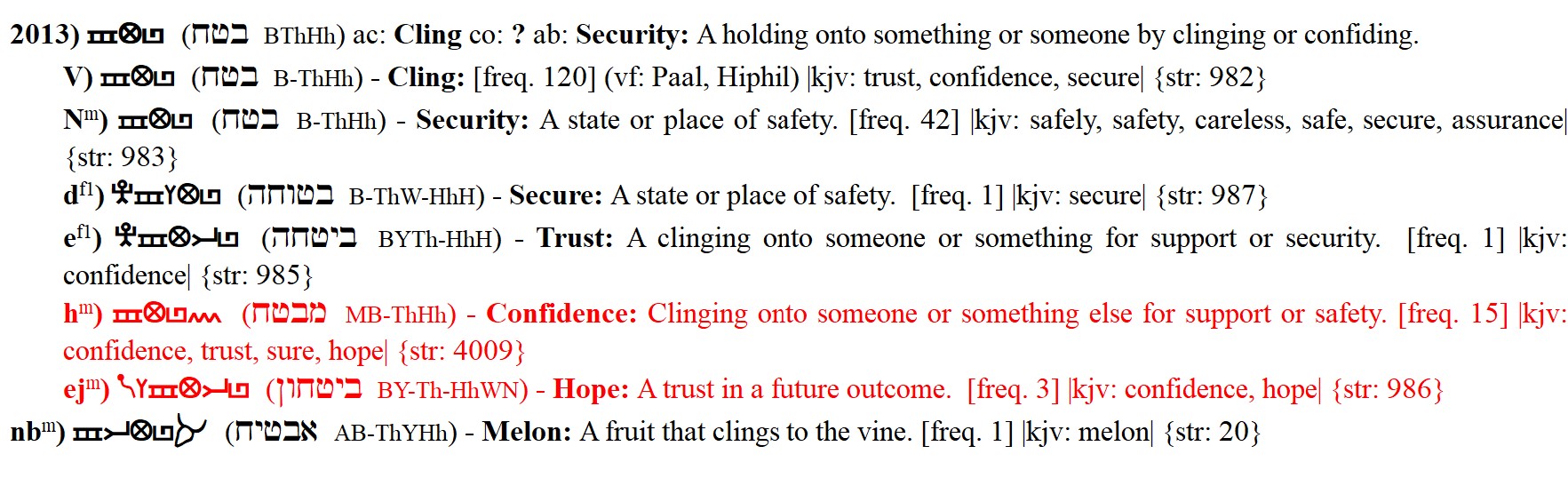
We are saved by hope
Rom 8:24 For we are saved by hope: but hope that is seen is not hope: for what a man seeth, why doth he yet hope for?
Our hope is in Christ. Christ in us, the Hope of Glory.
Col 1:27 to whom God willed to make known what are the riches of the glory of this mystery among the nations, who is Christ in you, the hope of glory;
1Ti 1:1 Paul an apostle of Jesus Christ according to a command of God our Savior, even the Lord Jesus Christ, our Hope,
Rom 15:12 And again Isaiah says, “The Root of Jesse shall be, and He rising up to rule the nations; on Him nations will hope (ἐλπίζω ‘elpizō’ – trust, hope, expectation, joyful waiting)
Rom 15:13 And may the God of hope fill you with all joy and peace in believing, for you to abound in hope, in power of the Holy Spirit.
Psa 16:9 Therefore my heart is glad, and my glory rejoiceth: my flesh also shall rest in hope (בטח ‘batach’).
Psa 16:10 For thou wilt not leave my soul in hell; neither wilt thou suffer thine Holy One to see corruption.
Psa 16:11 Thou wilt shew me the path of life: in thy presence (פנים ‘paniym’ – face) is fulness of joy; at thy right hand there are pleasures for evermore.
The English word cheer comes from the Old French ‘chere’ which means the face from the Latin word ‘cara’ which means face. The sense was ‘cheer’ meant expressing emotion revealed in the expressions of the face. Later, around the 14th century, this word came to give the meaning of happiness which is the usage today.
The face of God, His presence (פנים ‘paniym’) is revealed in Christ (2 Corinthians 4:6). Scripture speaks of Jesus as the “Face” of God, His Image (Psalm 44:3; 42:5; Hebrews 1:1-3; John 14:7-9; 2 Corinthians 4:4-6; Colossians 1:12-20; John 17:21-23).
Psa 42:11 Why art thou cast down, O my soul? and why art thou disquieted within me? hope thou in God: for I shall yet praise him, who is the health of my countenance, and my God.
Psa 43:5 Why art thou cast down, O my soul? and why art thou disquieted within me? hope in God: for I shall yet praise him, who is the health of my countenance, and my God.
The phrase “health of my countenance” in Hebrew is ישועת פני ‘yeshuot panay’ which literally means the salvation of my presence/face. ישועת ‘yeshuot’ is from ישועה ‘yeshuah’ the source of the name Jesus.
Psa 16:11 Thou wilt shew me the path of life: in thy presence (פנים ‘paniym’ – face) is fulness of joy; at thy right hand there are pleasures for evermore.
Act 2:27 Because thou wilt not leave my soul in hell, neither wilt thou suffer thine Holy One to see corruption.
Act 2:28 Thou hast made known to me the ways of life; thou shalt make me full of joy with thy countenance.
Hope is also associated with the going down of the sun.
Another Hebrew word for hope is יחר ‘yachar’ which comes from the root חר ‘char’ which is speaking of the heat of the sun. Here the meaning is one who waits until the cool of the day to leave the tent in order to avoid the intense heat of the sun.
It is interesting to note that the ‘cool’ of the day (Genesis 3:8) is the word רוח ‘ruach’ which means spirit. The English word ‘aspire’ which means to hope, traces back to this concept.

The morning and evening are the times when birds come out to sing their songs.
Psa 65:8 They also that dwell in the uttermost parts are afraid at thy tokens: thou makest the outgoings of the morning and evening to rejoice.
It is also interesting to note that the English word ‘spirit’ traces back to the Hebrew word צפר ‘tsaphar’ which means bird but also to whistle as in the whistling/chirping sound of birds.
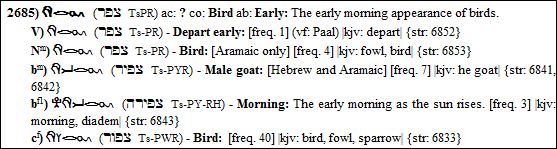
Shadows of Messiah – Bird Songs
Giving of thanks – Eucharist
Col 1:12 Giving thanks (εὐχαριστέω ‘eucharisteo’) unto the Father, which hath made us meet to be partakers of the inheritance of the saints in light:
Col 1:13 Who hath delivered us from the power of darkness, and hath translated us into the kingdom of his dear Son:
Col 1:14 In whom we have redemption through his blood, even the forgiveness of sins:
Col 1:15 Who is the image of the invisible God, the firstborn of every creature:
Col 1:16 For by him were all things created, that are in heaven, and that are in earth, visible and invisible, whether they be thrones, or dominions, or principalities, or powers: all things were created by him, and for him:
Col 1:17 And he is before all things, and by him all things consist.
Col 1:18 And he is the head of the body, the church: who is the beginning, the firstborn from the dead; that in all things he might have the preeminence.
The Hebrew word for father, אב ‘av,’ has fascinating connections to this tidbit. One of which is the English word father tracing back to the Hebrew word פטר ‘patar’ which comes from the root פר ‘par’ which means fruit.
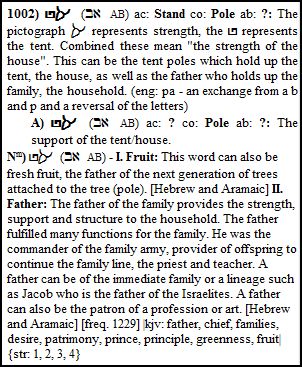
The very first word in the Hebrew dictionary, אב ‘av’, is loaded with pictures of Messiah. It means Father, but also fruit (that which is attached to the tree/pole) and the pole/pillar that holds up the tent/house. The pole which holds up the tent is a meaning of ‘cardinalis.’
Num 21:8 And the LORD said unto Moses, Make thee a fiery serpent, and set it upon a pole: and it shall come to pass, that every one that is bitten, when he looketh upon it, shall live.
Num 21:9 And Moses made a serpent of brass, and put it upon a pole, and it came to pass, that if a serpent had bitten any man, when he beheld the serpent of brass, he lived.
Joh 3:14 And as Moses lifted up the serpent in the wilderness, even so must the Son of man be lifted up:
Joh 3:15 That whosoever believeth in him should not perish, but have eternal life.
The Greek for the cross, σταυρός ‘stauros’ means a pole.
G4716
σταυρός
stauros
stow-ros’
From the base of G2476; a stake or post (as set upright), that is, (specifically) a pole or cross (as an instrument of capital punishment); figuratively exposure to death, that is, self denial; by implication the atonement of Christ: – cross.
The Hebrew word אב ‘av’points straight to the cross — the stake/pole where the New Covenant was cut in the blood of Christ — restoring us to the Father. He is the Pillar of the House of God (Bethel), the Root and the Vine, the Everlasting Father, and the Source of all things. From the bosom of the Father to the branches that must abide in the Vine and bear fruit, אב ‘av’ declares that Jesus is the true Pole, the true Fruit, and the way back to Abba.
Christ in the Hebrew Dictionary – אב ‘av’ – Father, fruit, pole
The English word ‘father’ comes from the Greek word ‘pater.’ This word comes from the Hebrew word פטר ‘patar’ which has the meaning of something breaking forth, pictured by the birth of a child. The source of this word is פר ‘par’ which means fruit. The connection to the word ‘av’ through the concepts of fruit and the source of a thing.
The English word ‘father’ comes from the Greek word ‘pater.’ This word comes from the Hebrew word פטר ‘patar’ which has the meaning of something breaking forth, pictured by the birth of a child. The source of this word is פר ‘par’ which means fruit. The connection to the word ‘av’ through the concepts of fruit and the source of a thing.



If dad was rendered into Hebrew letters it would be דד (dalet dalet). This word means the bosom.
Joh 1:18 No one has seen God at any time; the only begotten Son, who is in the bosom of the Father, that One declares Him.
Daily Tidbits 5/17 – The Bosom
Interestingly, the word ‘Bible’ in English comes from the Hebrew word אבוב ‘avoov’ which means a pipe and is also the source of the word papyrus which ancient Bibles were written upon. The word for booby and baba comes from אבוב ‘avoov’ as well. Again this traces back to אב ‘av’ who is the source of the milk of the Word (1Peter 2:2). Peter was quoting from Psalm 34:8 which speaks of ‘tasting’ and seeing that the Lord is good and blessed are those who ‘trust’ in Him. The word ‘trust’ comes from חסה ‘chasah’ which means a firm support, again tracing back to the meaning of אב ‘av’ father.
Cardinals & Cardinals – Birds & Priests


The cardinal bird got its name from its red color, resembling the Cardinals of the Roman Catholic Church. Cardinal birds can also be found with a yellow color which connects back to Cardinal priests who wear yellow gold as well. Cardinal priests got their name from their rank as senior bishops, “chiefs” of churches in Rome. Leaders are referred to as heads and chiefs (Exodus 18:25; Deuteronomy 1:15), which ‘cardinalis’ displays.
Exo 18:25 And Moses chose able men out of all Israel, and made them heads over the people, rulers of thousands, rulers of hundreds, rulers of fifties, and rulers of tens.
Deu 1:15 So I took the chief of your tribes, wise men, and known, and made them heads over you, captains over thousands, and captains over hundreds, and captains over fifties, and captains over tens, and officers among your tribes.
The Father of Lights sends the Holy Spirit through Christ (John 15:26) who sets up the church structure
1Co 12:27 Now ye are the body of Christ, and members in particular.
1Co 12:28 And God hath set some in the church, first apostles, secondarily prophets, thirdly teachers, after that miracles, then gifts of healings, helps, governments, diversities of tongues.
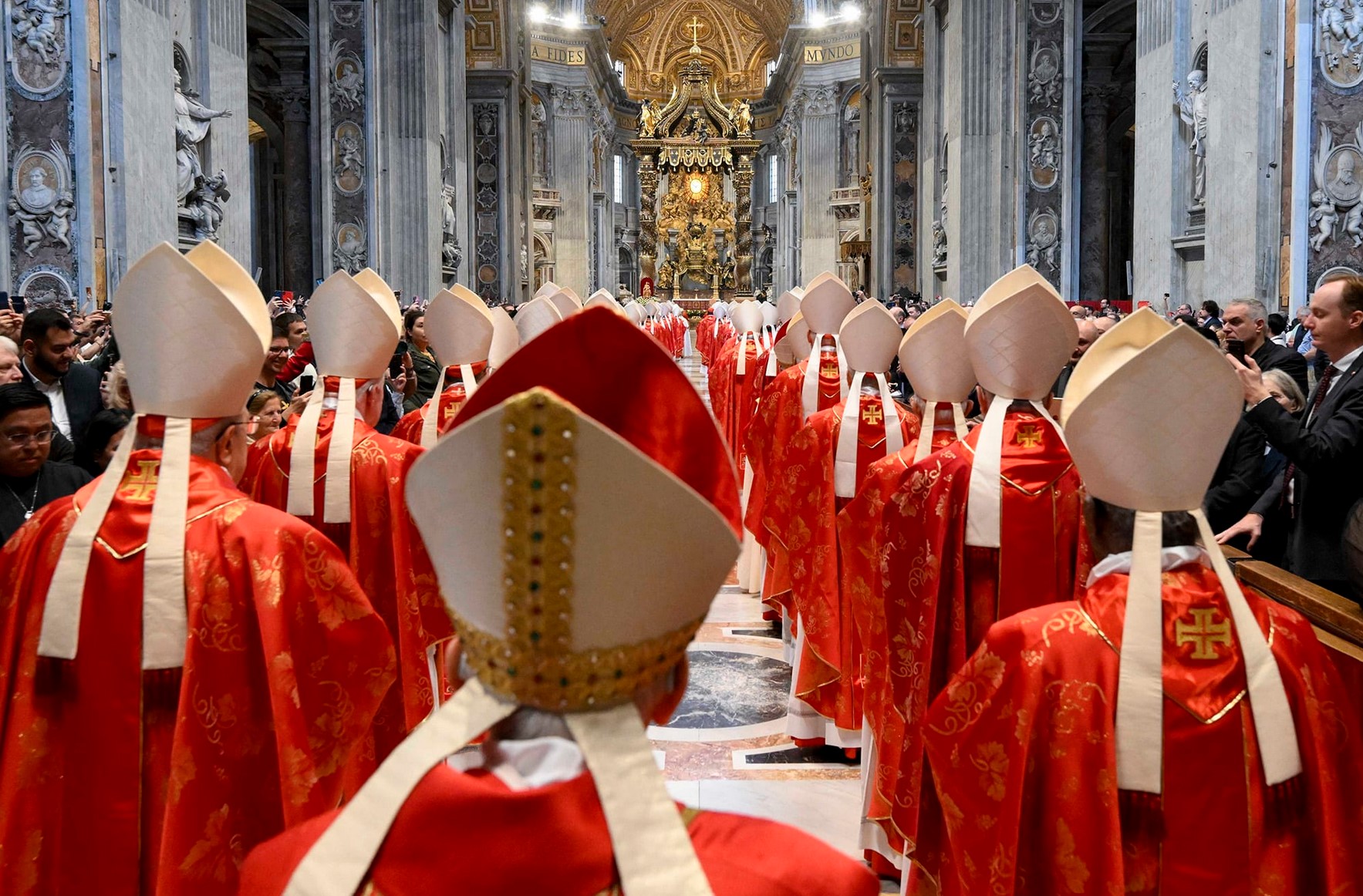
Cardinal priests are clothed in red as they are to be willing to shed their blood for the faith, dying in defense of the Church.
The word martyr comes from the Greek μάρτυς ‘martus’ which means witness, report. The Apostles were the witnesses (μάρτυς ‘martus’) of Christ who gave their lives for the Gospel. This is why the English word martyr has the meaning of giving one’s life for Christ. Tertullian wrote of the concept of “the blood of the martyrs is the seed of the Church.” (Apologeticus Chapter 50, section 13).
Act 2:32 This Jesus hath God raised up, whereof we all are witnesses.
Act 5:30 The God of our fathers raised up Jesus, whom ye slew and hanged on a tree.
Act 5:31 Him hath God exalted with his right hand to be a Prince and a Saviour, for to give repentance to Israel, and forgiveness of sins.
Act 5:32 And we are his witnesses of these things; and so is also the Holy Ghost, whom God hath given to them that obey him.
Christ gave His life at Golgotha, the place of the skull (head), again connecting back to the meaning of ‘cardinalis.’
Joh 19:17 And He went out bearing His cross, to the place called Of a Skull (which is called in Hebrew, Golgotha),
Every head has seven “gates,” two eyes, two ears, two nostrils and the mouth. The early church, like Moses (Exodus 18:25; Numbers 1:16), set up seven “ministers” to distribute the daily ministration.
Act 6:1 And in those days, when the number of the disciples was multiplied, there arose a murmuring of the Grecians against the Hebrews, because their widows were neglected in the daily ministration.
Act 6:2 Then the twelve called the multitude of the disciples unto them, and said, It is not reason that we should leave the word of God, and serve tables.
Act 6:3 Wherefore, brethren, look ye out among you seven men of honest report (μαρτυρέω ‘martureō’ from μάρτυς ‘martus’), full of the Holy Ghost and wisdom, whom we may appoint over this business.
The ministration mentioned in Acts 6:1 is the Greek word διακονία ‘diakonia.’ διακονία ‘diakonia’ comes from the word διάκονος ‘diakonos’
G1249
διάκονος
diakonos
dee-ak’-on-os
Probably from διάκω diakō (obsolete, to run on errands; compare G1377); an attendant, that is, (generally) a waiter (at table or in other menial duties); specifically a Christian teacher and pastor (technically a deacon or deaconess): – deacon, minister, servant.
From G1249; attendance (as a servant, etc.); figuratively (eleemosynary) aid, (official) service (especially of the Christian teacher, or technically of the diaconate): – (ad-) minister (-ing, -tration, -try), office, relief, service (-ing).
In the Catholic church, the Diaconate (deacons) are ordained “not unto the priesthood, but unto the ministry.” The Presbyterate (priests) are ordained to act in persona Christi capitis (in the person of Christ the Head). The Episcopate (bishops) are considered successors of the Apostles under the Chief Bishop, Christ.
1Pe 2:25 For ye were as sheep going astray; but are now returned unto the Shepherd and Bishop of your souls.
Heb 13:20 Now the God of peace, that brought again from the dead our Lord Jesus, that great shepherd of the sheep, through the blood of the everlasting covenant,
Heb 13:21 Make you perfect in every good work to do his will, working in you that which is wellpleasing in his sight, through Jesus Christ; to whom be glory for ever and ever. Amen.
Cardinalis – Hinge, Pivot

‘Cardinalis’ comes from ‘cardo’ which means a “door hinge” or “pivot.” It has the meaning of “that on which something turns or depends.” This figuratively meant something essential or “most important.”
The blood of Christ is the hinge or pivot upon which the Christian faith resides.
Heb 9:22 And almost all things are by the law purged with blood; and without shedding of blood is no remission.
Col 1:20 And, having made peace through the blood of his cross, by him to reconcile all things unto himself; by him, I say, whether they be things in earth, or things in heaven.
It is through the blood of Christ, the hinge that opens the “door” to heaven.
Daily Tidbits 2/18 – Love & the 4th Dimension
Joh 10:1 Verily, verily, I say unto you, He that entereth not by the door into the sheepfold, but climbeth up some other way, the same is a thief and a robber.
Joh 10:2 But he that entereth in by the door is the shepherd of the sheep.
Joh 10:3 To him the porter openeth; and the sheep hear his voice: and he calleth his own sheep by name, and leadeth them out.
Joh 10:4 And when he putteth forth his own sheep, he goeth before them, and the sheep follow him: for they know his voice.
Joh 10:5 And a stranger will they not follow, but will flee from him: for they know not the voice of strangers.
Joh 10:6 This parable spake Jesus unto them: but they understood not what things they were which he spake unto them.
Joh 10:7 Then said Jesus unto them again, Verily, verily, I say unto you, I am the door of the sheep.
Joh 10:8 All that ever came before me are thieves and robbers: but the sheep did not hear them.
Joh 10:9 I am the door: by me if any man enter in, he shall be saved, and shall go in and out, and find pasture.
Joh 10:10 The thief cometh not, but for to steal, and to kill, and to destroy: I am come that they might have life, and that they might have it more abundantly.
Joh 10:11 I am the good shepherd: the good shepherd giveth his life for the sheep.
Joh 10:12 But he that is an hireling, and not the shepherd, whose own the sheep are not, seeth the wolf coming, and leaveth the sheep, and fleeth: and the wolf catcheth them, and scattereth the sheep.
Joh 10:13 The hireling fleeth, because he is an hireling, and careth not for the sheep.
Joh 10:14 I am the good shepherd, and know my sheep, and am known of mine.
Joh 10:15 As the Father knoweth me, even so know I the Father: and I lay down my life for the sheep.
Joh 10:16 And other sheep I have, which are not of this fold: them also I must bring, and they shall hear my voice; and there shall be one fold, and one shepherd.
Joh 10:17 Therefore doth my Father love me, because I lay down my life, that I might take it again.
Joh 10:18 No man taketh it from me, but I lay it down of myself. I have power to lay it down, and I have power to take it again. This commandment have I received of my Father.
Eph 2:13 But now in Christ Jesus ye who sometimes were far off are made nigh by the blood of Christ.
Eph 2:14 For he is our peace, who hath made both one, and hath broken down the middle wall of partition between us;
Eph 2:15 Having abolished in his flesh the enmity, even the law of commandments contained in ordinances; for to make in himself of twain one new man, so making peace;
Eph 2:16 And that he might reconcile both unto God in one body by the cross, having slain the enmity thereby:
Eph 2:17 And came and preached peace to you which were afar off, and to them that were nigh.
Eph 2:18 For through him we both have access by one Spirit unto the Father.
Eph 2:19 Now therefore ye are no more strangers and foreigners, but fellowcitizens with the saints, and of the household of God;
Eph 2:20 And are built upon the foundation of the apostles and prophets, Jesus Christ himself being the chief corner stone;
Eph 2:21 In whom all the building fitly framed together groweth unto an holy temple in the Lord:
Eph 2:22 In whom ye also are builded together for an habitation of God through the Spirit.
One of the words for hinge in Hebrew is פות ‘put.’ It means a hole into which a pole was placed. It is used in specific to the setting up of a tent. The pole points to the Hebrew word for father (אב ‘av’).
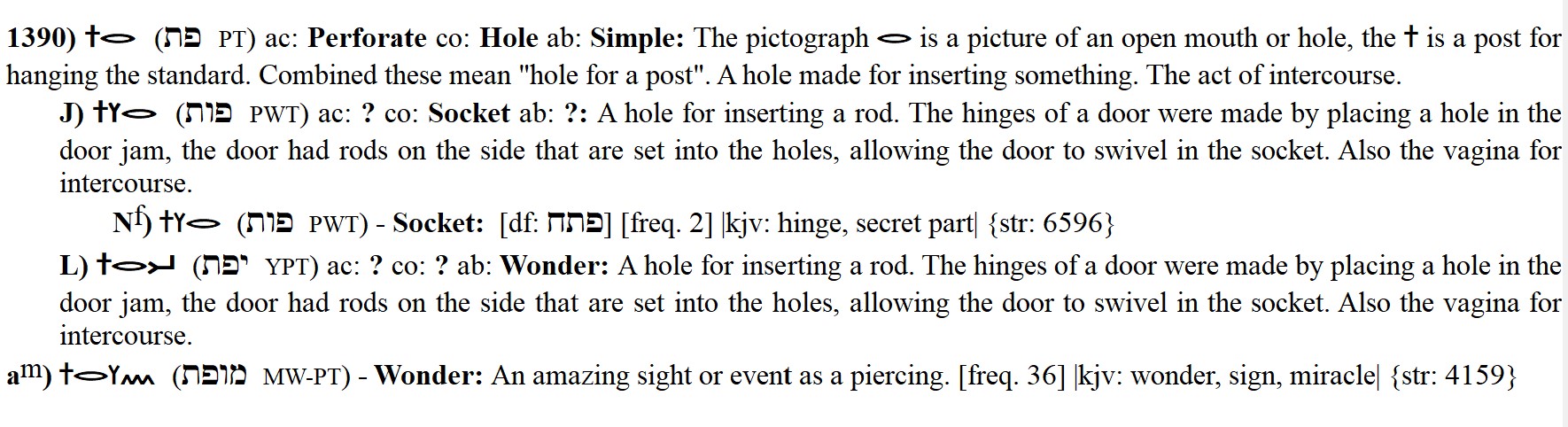
Isa 8:18 Behold, I and the children whom the LORD hath given me are for signs and for wonders in Israel from the LORD of hosts, which dwelleth in mount Zion.
The primary Hebrew word for hinge (Proverbs 26:14) is (ציר ‘tsiyr’) which also means ambassador.

Cardinals – Presbyters – Ambassadors
This word חַשְׁמַן ‘chashman’ plays an interesting part in the cardinal parable as this word has/is used by some for the cardinal bird. It is only used one time in Scripture.
Psa 68:31 Princes (חַשְׁמַנִּים ‘chasmannim’) shall come out of Egypt; Ethiopia shall soon stretch out her hands unto God.
Psa 68:32 Sing unto God, ye kingdoms of the earth; O sing praises unto the Lord; Selah:
Benson Commentary
Psalm 68:31. Princes shall come out of Egypt — The word חשׁמנים, chashmannim, here rendered princes, is not found elsewhere in the Scriptures, and therefore its precise meaning is not certainly known. Elias, a Jewish rabbi, observes that the Jews call cardinals by this name in Italy: and the term is thought to signify a princely person accompanied by a numerous attendance. The Seventy render it πρεσβεις, elders, senators, or ambassadors.
The Septuagint further links this cardinal link translating חַשְׁמַנִּים ‘chasmannim’ with πρέσβεις ‘presbeis’ from πρεσβυτέριον ‘presbuterion’ meaning an order of elders.
Psa 68:31 (67:31) Ambassadors shall arrive out of Egypt; Ethiopia shall hasten to stretch out her hand readily to God.
Psa 68:31 (67:32) ἥξουσιν πρέσβεις ἐξ Αἰγύπτου, Αἰθιοπία προφθάσει χεῖρα αὐτῆς τῷ θεῷ.
G4244
πρεσβυτέριον
presbuterion
pres-boo-ter’-ee-on
Neuter of a presumed derivative of G4245; the order of elders, that is, (specifically) Israelite Sanhedrim or Christian “presbytery”: – (estate of) elder (-s), presbytery.
חַשְׁמַן ‘chashman’ is related to Hasmoneans. “‘חַשְׁמוֹנָאִים chashmonaim” comes from Hashmon, an ancestor of Mattathias (Maccabees). The Hasmoneans were the dominant High Priests of the Second Temple period until the rise of King Herod.
G4245
πρεσβύτερος
presbuteros
Thayer Definition:
1) elder, of age
1a) the elder of two people
1b) advanced in life, an elder, a senior
1b1) forefathers
2) a term of rank or office
2a) among the Jews
2a1) members of the great council or Sanhedrin (because in early times the rulers of the people, judges, etc., were selected from elderly men)
2a2) of those who in separate cities managed public affairs and administered justice
2b) among the Christians, those who presided over the assemblies (or churches) The NT uses the term bishop, elders, and presbyters interchangeably
2c) the twenty four members of the heavenly Sanhedrin or court seated on thrones around the throne of God
Part of Speech: adjective
A Related Word by Thayer’s/Strong’s Number: comparative of presbus (elderly)
Christians are to be ambassadors for Christ.
2Co 5:19 as, that God was in Christ reconciling the world to Himself, not charging their deviations to them, and having put the Word of reconciliation in us.
2Co 5:20 Now then we are ambassadors (πρεσβεύω ‘presbeuō’) for Christ, as though God did beseech you by us: we pray you in Christ’s stead, be ye reconciled to God.
2Co 5:21 For He made the One who knew no sin to be sin for us, that we might become the righteousness of God in Him.
πρεσβεύω
presbeuō
Thayer Definition:
1) to be older, prior by birth or in age
Cardinals & Folklore

In Native American folklore, cardinals are messengers (ambassadors) between the spiritual and natural worlds.
Many Native American tribes (such as Cherokee, Ojibwe, Lakota, and others) have long regarded cardinals (often called “redbirds”) as messengers from the spirit world.

In folklore, their red color links them to vitality, the sun, life force, energy, and renewal. In some Cherokee stories, the cardinal is associated with the Sun’s daughter.
This shadows the Sun of Righteousness (Malachi 4:2) and His bride (Song of Songs).
Psa 45:6 Thy throne, O God, is for ever and ever: the sceptre of thy kingdom is a right sceptre.
Psa 45:7 Thou lovest righteousness, and hatest wickedness: therefore God, thy God, hath anointed thee with the oil of gladness above thy fellows.
Psa 45:8 All thy garments smell of myrrh, and aloes, and cassia, out of the ivory palaces, whereby they have made thee glad.
Psa 45:9 Kings’ daughters were among thy honourable women: upon thy right hand did stand the queen in gold of Ophir.
Psa 45:10 Hearken, O daughter, and consider, and incline thine ear; forget also thine own people, and thy father’s house;
Psa 45:11 So shall the king greatly desire thy beauty: for he is thy Lord; and worship thou him.
Psa 45:12 And the daughter of Tyre shall be there with a gift; even the rich among the people shall intreat thy favour.
Psa 45:13 The king’s daughter is all glorious within: her clothing is of wrought gold.
Psa 45:14 She shall be brought unto the king in raiment of needlework: the virgins her companions that follow her shall be brought unto thee.
Psa 45:15 With gladness and rejoicing shall they be brought: they shall enter into the king’s palace.
Psa 45:16 Instead of thy fathers shall be thy children, whom thou mayest make princes in all the earth.
Psa 45:17 I will make thy name to be remembered in all generations: therefore shall the people praise thee for ever and ever.
Cardinal birds are known to mate for life, stay together year-round, share nesting and parenting duties, and remain devoted even in harsh conditions pointing to Christ and His bride, the Church.
Eph 5:31 For this cause shall a man leave his father and mother, and shall be joined unto his wife, and they two shall be one flesh.
Eph 5:32 This is a great mystery: but I speak concerning Christ and the church.
Eph 5:33 Nevertheless let every one of you in particular so love his wife even as himself; and the wife see that she reverence her husband.
The kings daughter are clothed with His garments…the garments of Salvation, shouting for joy (“cheer cheer cheer”).
Psa 132:16 And I will clothe her priests with salvation (יֶשַׁע ‘yesha’); and her saints shall surely shout.
Psa 132:9 Let thy priests be clothed with righteousness; and let thy saints shout for joy.
Isa 61:10 I will greatly rejoice in the LORD, my soul shall be joyful in my God; for he hath clothed me with the garments of salvation (יֶשַׁע ‘yesha’), he hath covered me with the robe of righteousness, as a bridegroom decketh himself with ornaments, and as a bride adorneth herself with her jewels.
Rom 13:14 But put ye on the Lord Jesus Christ, and make not provision for the flesh, to fulfil the lusts thereof.
Gal 3:27 For as many of you as have been baptized into Christ have put on Christ.
Resurrected into His image
Rom 1:1 Paul, a servant of Jesus Christ, called to be an apostle, separated unto the gospel of God,
Rom 1:2 (Which he had promised afore by his prophets in the holy scriptures,)
Rom 1:3 Concerning his Son Jesus Christ our Lord, which was made of the seed of David according to the flesh;
Rom 1:4 And declared (ὁρίζω ‘horizō’) to be the Son of God with power, according to the spirit of holiness, by the resurrection from the dead:
G3724
ὁρίζω
horizō
Thayer Definition:
1) to define
1a) to mark out the boundaries or limits (of any place or thing)
1b1) that which has been determined, acc. to appointment, decree
1b2) to ordain, determine, appoint
Part of Speech: verb
A Related Word by Thayer’s/Strong’s Number: from G3725
Recall that the horizon and the rising and setting of the sun is linked to birds.
The meaning of ὁρίζω ‘horizō’ corresponds to the Hebrew word תור ‘tor.’ It is through the resurrection that we will be formed into His image.
1Jn 3:1 See what manner of love the Father has given us, that we may be called children of God. For this reason the world does not know us, because it did not know Him.
1Jn 3:2 Beloved, now we are the children of God, and it was not yet revealed what we shall be. But we know that if He is revealed, we shall be like Him, because we shall see Him as He is.
Psa 17:15 As for me, I will behold thy face in righteousness: I shall be satisfied, when I awake, with thy likeness.
Chip off the old block
The cardinal is known for its sharp “chip” sound it makes. The word chip comes from chippen which means to break off into small pieces or fragments. It traces back farther to the Proto-Indo-European ‘keipo’ which means a sharp post, stake or peg. This is seen in the Latin word ‘cippus’ which means a post, stake or beam.
When one cuts or chisels a large block of wood or stone, the small chip (fragment) that breaks off will be made of the exact same material and share the same qualities as the original block. Thus, the chip is essentially “of” (or “off”) the old block. The meaning of the saying “chip off the old block” is associated with one being in the same image.
We are to take up our crosses and follow Him, being transformed from glory to glory into His image.
Heb 1:3 Who being the brightness of his glory, and the express image of his person, and upholding all things by the word of his power, when he had by himself purged our sins, sat down on the right hand of the Majesty on high;
Col 1:12 giving thanks to the Father, who has made us fit for a share of the inheritance of the saints in light,
Col 1:13 who delivered us out of the authority of darkness, and translated us into the kingdom of the Son of His love,
Col 1:14 in whom we have redemption through His blood, the remission of sins;
Col 1:15 who is the image of the invisible God, the First-born of all creation.
Col 1:16 For all things were created in Him, the things in the heavens, and the things on the earth, the visible and the invisible; whether thrones, or lordships, or rulers, or authorities, all things have been created through Him and for Him.
Col 1:17 And He is before all things, and all things have subsisted in Him.
Col 1:18 And He is the Head of the body, the assembly, who is the Beginning, the First-born out of the dead, that He be preeminent in all things;
Col 1:19 because all the fullness was pleased to dwell in Him,
Col 1:20 and through Him making peace by the blood of His cross, to reconcile all things to Himself; through Him, whether the things on the earth, or the things in the heavens.
Man was created in God’s image (Genesis 1:26-27) but that image was corrupted when Adam sinned. From there man took up the image of Adam which still pointed back to God, but in a corrupted form (Genesis 5:1; 1 Corinthians 15:45-49). Messiah came to earth in the very image of Almighty God (2 Corinthians 4:4; Colossians 1:15; Hebrews 1:3), who is love. His life displayed that love and He calls all those who believe in Him to display that love as well. This is the essence of the concept of ‘Christ in us.’ It is through His love that man is formed into His image (Colossians 3:10; Romans 8:29) where there is no longer Jew or Greek, Barbarian or Scythian but Messiah is all and in all (Colossians 3:11).
This is the message of the Gospel. Love. Love that breaks down the barriers and walls which man has set up to divide (Ephesians 2:1-22; 1 Corinthians 12:13). Love that breaks down the wall of sin which has separated man from God (Isaiah 59:2; John 3:16; 12:32; Isaiah 49:6; Revelation 5:9). This love is revealed in our actions towards our fellow man, not in our intellectual proclamations. All of us see through a glass darkly which keeps us from seeing eye to eye (1 Corinthians 13:12). The only remedy for this is love (1 Corinthians 13:1-13; 1 John 4:7-21). Love and patience towards one another until the Lord returns and His salvation is fully revealed (Isaiah 52:7-10). Love allows man to understand that we can have differences of opinions but ultimately if we abide in love we can dwell in peace and unity (Ephesians 4:2-16, 32; 5:1-2; Colossians 3:9-17).
Eph 4:1 I therefore, the prisoner of the Lord, beseech you that ye walk worthy of the vocation wherewith ye are called,
Eph 4:2 With all lowliness and meekness, with longsuffering, forbearing one another in love;
Eph 4:3 Endeavouring to keep the unity of the Spirit in the bond of peace.
Eph 4:4 There is one body, and one Spirit, even as ye are called in one hope of your calling;
Eph 4:5 One Lord, one faith, one baptism,
Eph 4:6 One God and Father of all, who is above all, and through all, and in you all.
The true intent of the law/Word of God is not to make men religious but to reform men into the image of their God who is love (1 John 4:8). It is this love that unites us and perfects us. It is the bond of perfection (Colossians 3:14) which sets man free (Galatians 5:13-14). This love is not intended only for a certain group of religious people, but for all mankind. Scripture declares that in the Messiah shall the ‘gentiles trust’ (Matthew 12:21; Romans 15:8-12; Isaiah 11:10). For Jesus is the true Light which enlightens every man (John 1:9; 12:44-46; Isaiah 49:6), sent to restore all of mankind back to God (Isaiah 45:22; Romans 3:29; John 1:12; 3:15-17).
The message of Jesus is universal. It transcends religions, ethnic or cultural barriers. It is a message of love and reconciliation back to God. The message of victory over death which entered into the world when Adam and Eve partook of the fruit of the tree of knowledge (Romans 5:12-21; 1 Corinthians 15:45-48; 55-56. This message of forgiveness and restoration is not just for Israel, but whosoever shall believe in the Lord Jesus.
John 3:15 That whosoever believeth in him should not perish, but have eternal life.
John 3:16 For God so loved the world, that he gave his only begotten Son, that whosoever believeth in him should not perish, but have everlasting life.
John 3:17 For God sent not his Son into the world to condemn the world; but that the world through him might be saved.
The Gospel is all about dying to our carnal natures that we might be reformed into His Image.
Gal 4:19 My little children, of whom I travail in birth again until Christ be formed in you,
Rom 8:29 For whom he did foreknow, he also did predestinate to be conformed to the image of his Son, that he might be the firstborn among many brethren.
Rom 13:14 But put ye on the Lord Jesus Christ, and make not provision for the flesh, to fulfil the lusts thereof.
Eph 4:24 And that ye put on the new man, which after God is created in righteousness and true holiness.
Php 2:5 Let this mind be in you, which was also in Christ Jesus:
Col 1:27 To whom God would make known what is the riches of the glory of this mystery among the Gentiles; which is Christ in you, the hope of glory:
Col 3:10 And have put on the new man, which is renewed in knowledge after the image of him that created him:
1Jn 3:1 Behold, what manner of love the Father hath bestowed upon us, that we should be called the sons of God: therefore the world knoweth us not, because it knew him not.
1Jn 3:2 Beloved, now are we the sons of God, and it doth not yet appear what we shall be: but we know that, when he shall appear, we shall be like him; for we shall see him as he is.
1Jn 3:3 And every man that hath this hope in him purifieth himself, even as he is pure.
Cardinal directions
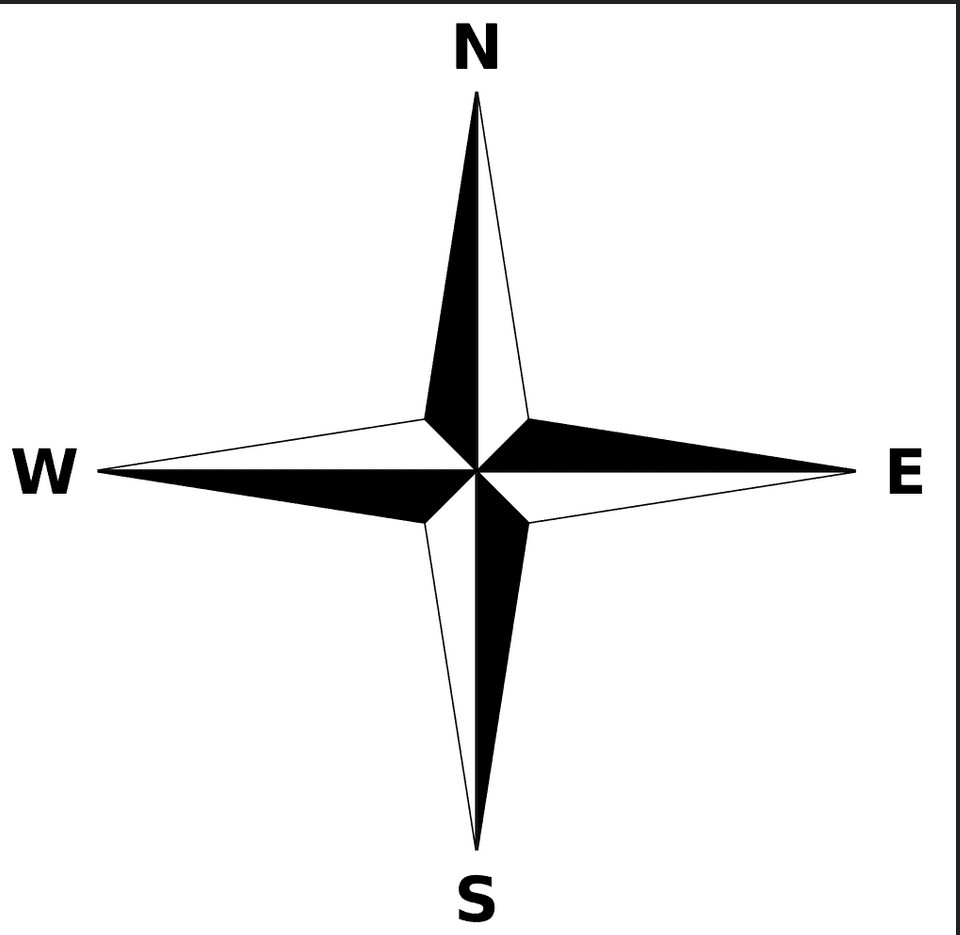
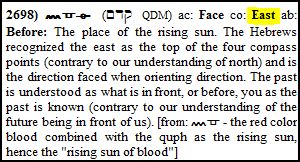
Cardinalis means principal or chief, the hinge or pivot point around which everything turns. It is used to refer the four directions (East, West, North, South). The four directions are tied to the movement of the sun.
East comes from the Germanic word ‘aus’ which means the dawn. West is the direction that the sun sets. North comes from the Proto-Indo-European word ‘ner’ which means left or below as when you face the rising sun (east), the north is on your left. South comes from the Old English sūþ ‘suth’ and Germanic sunþaz ‘sunthaz’ which trace back to ‘sunto’ which means the sun as South is the direction of the mid-day sun. When you face east at sunrise, south is where the sun reaches its peak intensity.
This English etymology of the directions corresponds exactly with the ancient Hebrew meanings:
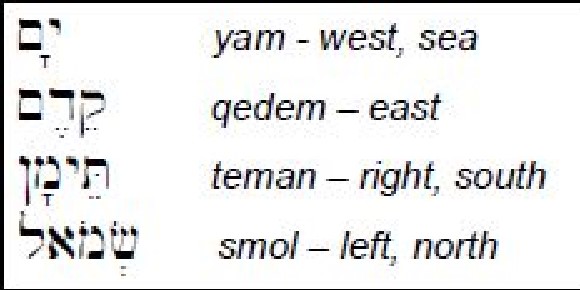
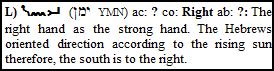
South:
West:
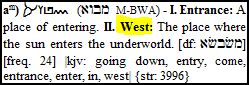
Another word for west is ‘sea’, because the rising of the sun is to the east in the land of Israel, so the direction of west is where the Mediterranean Sea is.
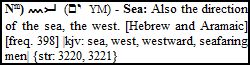
This is also the root of the word יום ‘yom,’ which means day.
North:
שׂמאל / שׂמאול
śemô’l / śem’ôl
BDB Definition:
1) the left, the left hand, the left side
1a) left
1b) left hand
1c) north (as one faces east)
East:
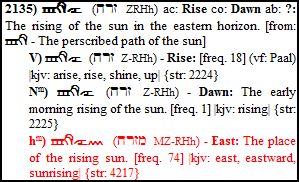
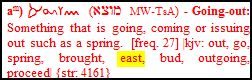
The are multiple words for time in Hebrew, the most used is עת ‘et’ which pictographically means to ‘see the cross’, and in ancient Hebrew thinking meant to ‘see the mark.’ What is this ‘mark’? It is the sun setting (death) and rising (resurrection) above the horizon.
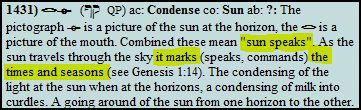
עת corresponds to the Greek word καιρός (kairos) through comparing Daniel 7:25 & Revelation 12:6, 14.
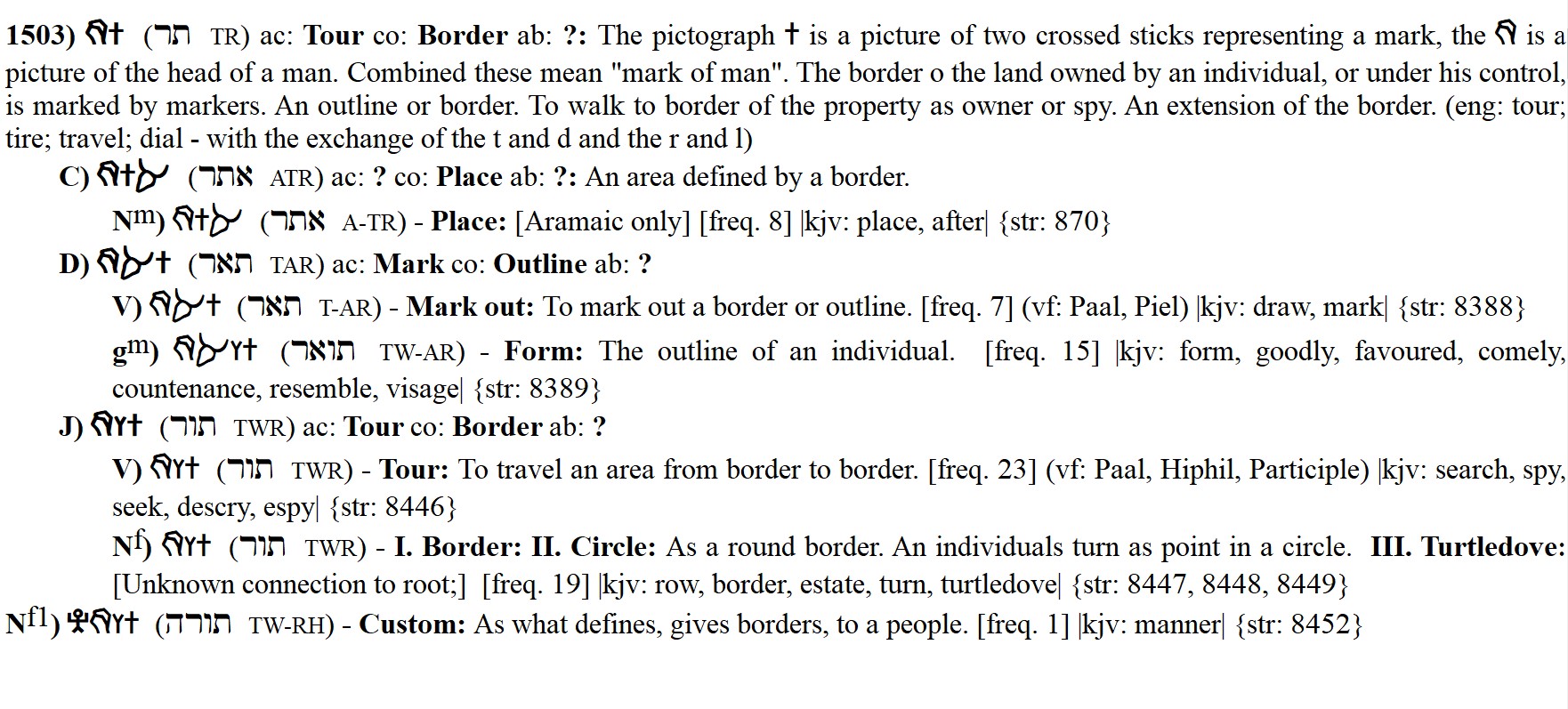
In the Septuagint, kairos is used to translate numerous words but one of which is very interesting. The word תר ‘tor’ due to its relation to the concept of ‘the mark.’
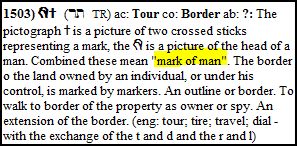
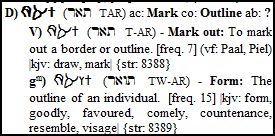
From this root we get תאר ta’ar andתואר to’ar. These words mean form, outline or border.
The word for hour is related to the sun

This comes from the root ‘שע’ which is a picture of a shepherd watching over his flock. שע ‘sha’ is also the root of the word Yeshua (Jesus).
Cross & 4
Interestingly, the motion of making the sign of the cross makes an upside down 4. The Hebrew letter ד ‘dalet’ is the fourth letter of the Hebrew alphabet. It has the meaning of a door.
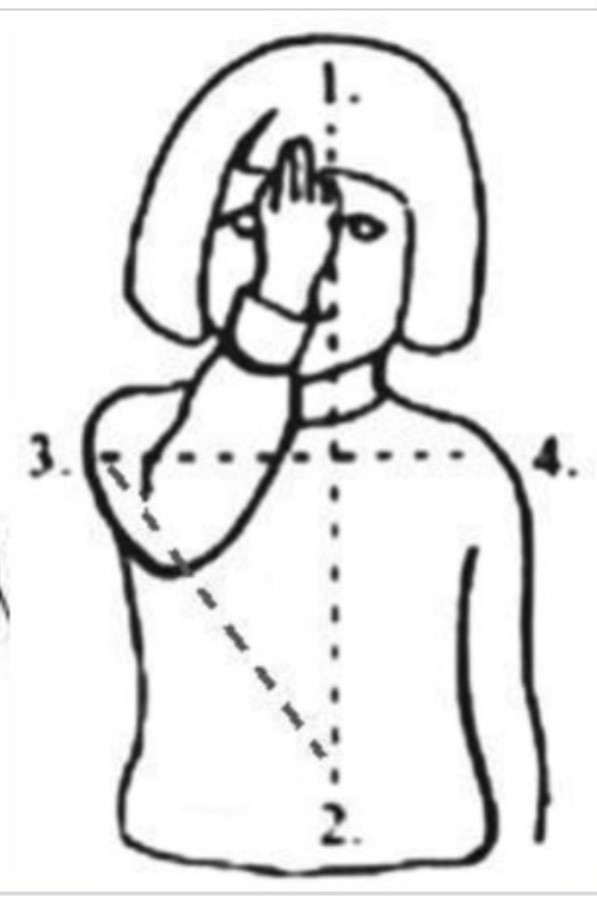
Christ is the door
Joh 10:1 Verily, verily, I say unto you, He that entereth not by the door into the sheepfold, but climbeth up some other way, the same is a thief and a robber.
Joh 10:2 But he that entereth in by the door is the shepherd of the sheep.
Joh 10:7 Then said Jesus unto them again, Verily, verily, I say unto you, I am the door of the sheep.
Joh 10:8 All that ever came before me are thieves and robbers: but the sheep did not hear them.
Joh 10:9 I am the door: by me if any man enter in, he shall be saved, and shall go in and out, and find pasture.
Joh 10:10 The thief cometh not, but for to steal, and to kill, and to destroy: I am come that they might have life, and that they might have it more abundantly.
Joh 10:11 I am the good shepherd: the good shepherd giveth his life for the sheep.
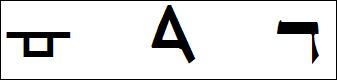
The Hebrew letter ד ‘dalet’ {spelled דלת} is a picture of a tent door. The word is translated as door or gate in the Scriptures. Messiah Jesus is the door/gate from whence man can enter into the garden of the Lord (John 10:7-14). This entrance was made available through His death on the cross (John 10:15-18; Hebrews 10:20). דלת ‘dalet’ comes from the root דל ‘dal’ which means to be poor or low as in the tent door which hung down as a curtain.
Php 2:5 Let this mind be in you, which was also in Christ Jesus:
Php 2:6 Who, being in the form of God, thought it not robbery to be equal with God:
Php 2:7 But made himself of no reputation, and took upon him the form of a servant, and was made in the likeness of men:
Php 2:8 And being found in fashion as a man, he humbled himself, and became obedient unto death, even the death of the cross.
Php 2:9 Wherefore God also hath highly exalted him, and given him a name which is above every name:
Php 2:10 That at the name of Jesus every knee should bow, of things in heaven, and things in earth, and things under the earth;
Php 2:11 And that every tongue should confess that Jesus Christ is Lord, to the glory of God the Father.
Further displaying this connection between דלת ‘dalet’ and Messiah’s sacrifice is the meaning of the letters which spell דלת ‘dalet.’ ד ‘dalet’ is a door, ל ‘lamed’ displays the shepherd and ת ‘tav’ is a picture of a cross. The Good Shepherd died on a cross that the door to heaven might be opened to whosoever would believe in Him.
This cross, four, door connection is seen in more detail in:
Daily Tidbits 2/18 – Love & the 4th Dimension
Shadows of Messiah – Shadows & the 4th Dimension
Related Studies:
Shadows of Messiah – Bird Songs
Daily Tidbits 6/10/26 – Sign of the Cross
Daily Tidbits 2/28 – Sun & Time
Christ in the Hebrew Dictionary – אב ‘av’ – Father, fruit, pole
Shadows of Messiah – Bird Songs
Daily Tidbits 2/19 – The Human Head
littleguyintheeye@gmail.com


