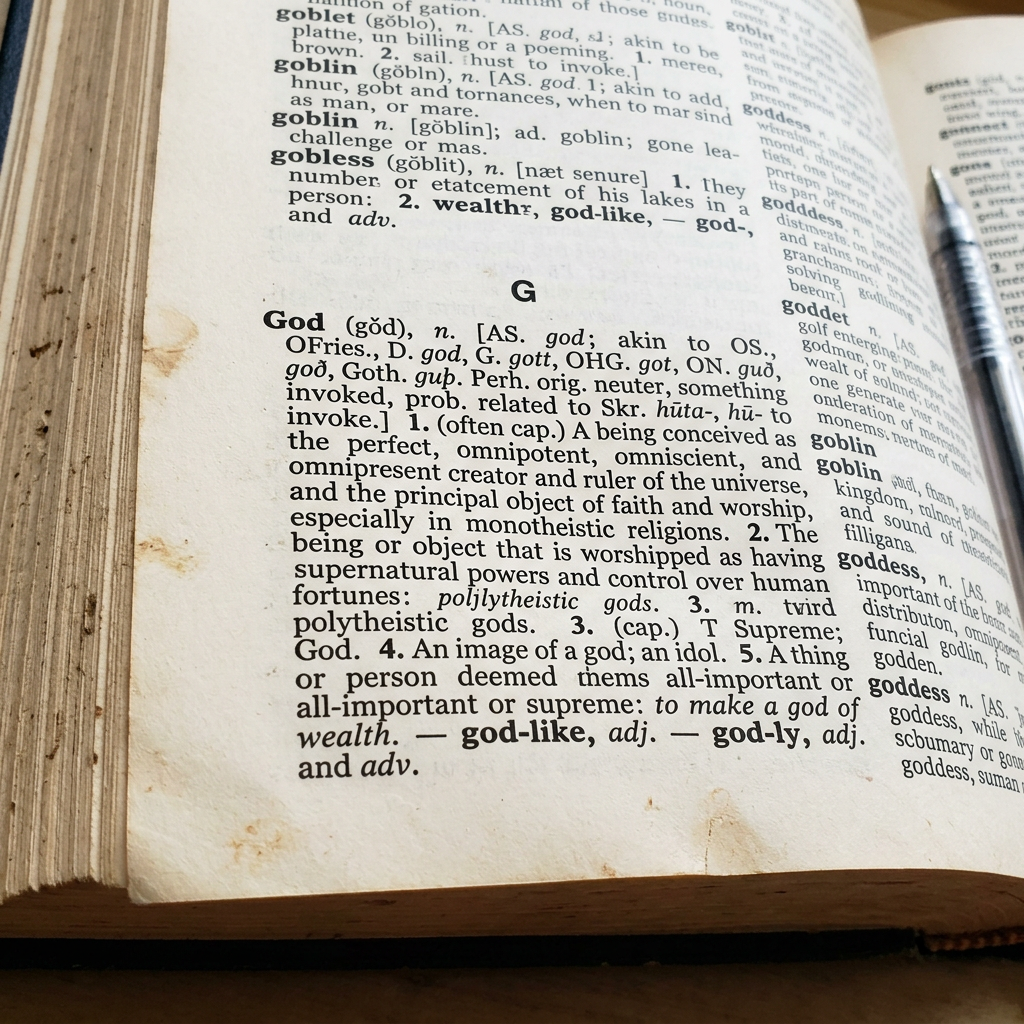

The etymology of God is has two primary themes. Sacrifice or oblation given to a deity and the concept of goodness/gathering. In the end, both these streams of thought lead to one place…the throne of God.
Most trace the word God back to the Indo-European ‘ghut’ which means the one who is invoked or called upon. The being to whom one gives sacrifices, offerings and libations.
Psa 65:2 To You who hears prayer, all flesh comes.
The Proto-Indo-European word ‘ghuto’ means to pour out from the root ‘gheu’ which means to pour a libation, or also to pour out in the sense of forming an idol.
ALL flesh seeks God as can be seen in the above verse (Psalm 65:2). The problem is that man has been deceived by the adversary to make idols that are put in the front of the face of the Father. Everyone who seeks “God” is seeking the true and Living God of Heaven for there is only One True God (John 17:3; Romans 3:29; Jeremiah 32:27; John 1:9; Numbers 27:16) see Shadows of Messiah – Psychology. Sadly, most have been deceived into worshiping an Image of who they think He is, not the Truth. Instead of pouring a libation or giving an offering to the True One, mankind has been deceived into making images and idols of Him which become more and more corrupted over time leading them astray ever more. For more detail on this see Mark of the Beast – the Great Counterfeit.
Etymologists further link ‘ghut’ to the Indo-Germanic root ‘div’ meaning to shine or give light and ‘thes’ meaning to implore or call upon. From hence comes the Indo-Iranian deva, Sanskrit dyaus (gen. divas), Latin deus, Greek theos, Irish and Gaelic dia, all of which are generic names; also the Greek Zeus.
The Letter of Aristeas written in the 2nd century BC has the author saying the following to Ptolemy in reference to the translating of the Torah into Greek {Septuagint}: “Since the law which we wish not only to transcribe but also to translate belongs to the whole Jewish race, what justification shall we be able to find for our embassy while such vast numbers of them remain in a state of slavery in your kingdom? In the perfection and wealth of your clemency release those who are held in such miserable bondage, since as I have been at pains to discover, the God who gave them their law is the God who maintains your kingdom. They worship the same God – the Lord and Creator of the Universe, as all other men, as we ourselves, O king, though we call him by different names, such as Zeus or Dis. This name was very appropriately bestowed upon him by our first ancestors, in order to signify that He through whom all things are endowed with life and come into being, is necessarily the ruler and lord of the Universe. Set all mankind an example of magnanimity by releasing those who are held in bondage.” {Letter of Aristeas 15-16}
Aristeas is deriving the above meaning of Ζευς ‘Zeus’ from ζην ‘zen’ meaning to live and Δια ‘Dia’ from δυι ‘dui’ meaning through. To live through.
Act 17:28 For in him we live, and move, and have our being; as certain also of your own poets have said, For we are also his offspring.
Notice the connection that ‘ghut’ has between sacrifice/worship and light and to ‘live through.’
Joh 1:1 In the beginning was the Word, and the Word was with God, and the Word was God.
Joh 1:2 He was in the beginning with God.
Joh 1:3 All things came into being through Him, and without Him not even one thing came into being that has come into being.
Joh 1:4 In Him was life, and the life was the light of men;
Joh 1:9 He was the true Light; He enlightens every man coming into the world.
In Hebrew, the word for light is אור ‘or’ which is the origin of the Egyptian gods ‘Ra’ and ‘Horus.’ In Maori the word for sun is ‘ra’ while in Chinese sun is ‘ri’ and light is ‘ruo’ both tracing back to אור ‘or.’ In Irish ‘or’ means god.
Many reading this may cringe that Zeus branches out from the same word that God does but this is a perfect example of the above statements about the worship of the true God being perverted over time by the nations. The word Zeus comes from ‘zen’ mentioned above in Greek but traces even further back to the Hebrew word טוב ‘tov’ meaning good {E-Word – Isaac Mozeson pg 247}.
Isaac Mozeson’s research on the origin of the English word ‘divine‘ further illustrates this concept. Mozeson traces ‘divine’ back to טוב ‘tov’ which is commonly translated as good. Other words that trace back to טוב ‘tov’ are the Latin word ‘divus’ which means divine or god as well as the Latin word ‘deus’ which means god or diety. The Germanic god ‘tiwaz’ or ‘tiw’ traces back to טוב ‘tov’ as well. The Assyrian deity טבת ‘tevet’ is an even more clear connection.
The Hindu god, or good spirit ‘deva’ is a derivative of טוב ‘tov’ through a reversal of the letters. The same thing can be said for ‘buddha’ which means the ‘enlightened one.’
Morgan Peter Kavenaugh in his book, “The Origin of Language and Myths” came to the same conclusion. “I have shown elsewhere that the English word God, the German Gott, the Persian Bhoda and the Hindustani Khuda are all derived from the same root as that which appears in Celtic Aeddon or Guydion, the Germanin Odin, Woden or Goutan and the Indian Buddha or Gotama””
Psa 106:1 Praise ye the LORD. O give thanks unto the LORD; for he is good: for his mercy endureth for ever.
Psa 106:1 הללויה הודו ליהוה כי־טוב כי לעולם חסדו׃
“GOD – The English word God is identical with the Anglo-Saxon word for “good,” and therefore it is believed that the name God refers to the divine goodness.” {New Unger’s Bible Dictionary}
The English word God continues from the Old English God (guþ, gudis in Gothic, gud in modern Scandinavian, God in Dutch, and Gott in modern German), which is thought to derive from Proto-Germanic *ǥuđán.
The earliest uses of the word God in Germanic writing is often cited to be in the Gothic Bible or Wulfila Bible, which is the Christian Bible as translated by Wulfila (a.k.a. Bishop Ulfilas) into the Gothic language spoken by the Eastern Germanic, or Gothic Tribes. The oldest parts of the Gothic Bible, contained in the Codex Argenteus, is estimated to be from the fourth century. During the fourth century, the Goths were converted to Christianity, largely through the efforts of Bishop Ulfilas, who translated the Bible into the Gothic language in Nicopolis ad Istrum in today’s northern Bulgaria. The words guda and guþ were used for God in the Gothic Bible.
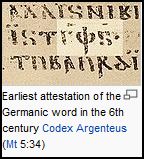
The Codex Argenteus, “Silver Book”, is a 6th century manuscript, originally containing bishop Ulfilas’s 4th century translation of the Bible into the Gothic language. The highlighted section is the Gothic cognate of “God.”
גד עד עת
God has a strong etymological connection the Hebrew words עד ‘ad,’ עת ‘et’ and גד ‘gad.’ All three of these words can be pronounced as ‘god’ or ‘got’ in Hebrew as the ע ‘ayin’ can have the ‘gh’ sound. A good example is the word עמרה ‘gomorrah’ which has passed down to us today with the G sound but is spelled in Hebrew with the ‘ע ‘ayin.’
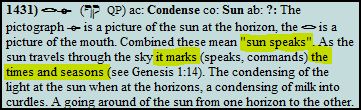
עת ‘et’ is the Hebrew word for time. Literally עת ‘et’ pictographically means to ‘see the cross’, and in ancient Hebrew thinking meant to ‘see the mark.’ What is this ‘mark’? It is the sun setting (death) and rising (resurrection) above the horizon. This is further seen in the definition of the Hebrew word קף ‘qof.’
In Hebrew, words that are associated with time are usually linked to the sun.
The word for hour שעה ‘sha`ah’ is related to the sun

This comes from the root ‘שע’ which is a picture of a shepherd watching over his flock. שע is also the root of the word ישועה ‘yeshuah,’ the source of the name Jesus.

The word for day is associated with the sun:
The English word day comes from the Latin word ‘die’ or ‘dies’ which is also the source of the Spanish word for day ‘dia.’ ‘Die’ is a reversal of the Hebrew word עת ‘et.’ ‘Die’ or ‘dies’ in Latin meaning ‘day’ traces back to ‘Dyēus’ which means ‘god’ or ‘daytime sky.’ ‘Dyeus’ traces back to ‘ghut’ as mentioned above. עת ‘et’ may have passed down in some cultures as ‘gut’ or ‘got’ as can be seen in the Arabic word for tomorrow ‘ghadan.’ The German word for day ‘tag’ is a reversal of עת ‘et.’ For more on the connection between the Sun & the Son see Shadows of Messiah – Astronomy
As seen above, עת ‘et’ means to ‘see the mark or cross.’ This literally means to see the sun at the horizon (cross). Further displaying this concept is קף ‘qof’ which means ‘the sun speaks’ as it travels through the sky ‘marking or speaking/commanding’ the times and seasons.
עת ‘et’ is also related to speaking.

This word is only used one time in Scripture.
Isa 50:4 The Lord GOD hath given me the tongue of the learned, that I should know how to speak (עות ‘oht’) a word in season to him that is weary: he wakeneth morning by morning, he wakeneth mine ear to hear as the learned.
The word ‘learned’ here is the Hebrew word לימוד ‘limmud’ which is the Hebrew word for a disciple. A disciple is one who is yoked to His Master and walking with Him. This is the meaning of the word ‘signs’ in Genesis 1:14.

‘He wakeneth morning by morning’. This is pointing to the rising of the sun each day which is a picture of the resurrection. ‘He wakeneth/opens mine ear’ is also a link to this. Psalm 40:6 speaks of the Messiah as having His ears opened but then in Hebrews 10:5 this verse is quoted speaking of Him being given a body. The body of Messiah is made up of many different parts connected by ‘sinews’ (Ezekiel 37:6, 8; Ephesians 4:16). What is the Hebrew word for sinew? גיד ‘giyd’ from the root גד ‘gad’ which is pronounced ‘god.’ More on this below.
The Hebrew word for ‘god’ is אל ‘el’ which has an identical meaning to the above word עת ‘et.’
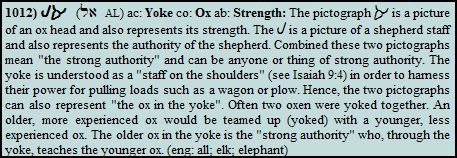
Being yoked to the ‘older ox’ is the definition of discipleship mentioned above in Isaiah 50:4.
Mat 11:29 Take My yoke upon you and learn from Me, because I am meek and lowly in heart, “and you will find rest to your souls.”
Mat 11:30 For My yoke is easy, and My burden is light.
Going back to the עת ‘et’ time connection…
The English word ‘eternal,’ which is often used as a title of the Most High, traces back to עת ‘et’ and further displays the god-time connection. In Hebrew the word for ‘eternity’ is עד ‘ad.’

עד ‘ad’ pictographically means to see the door, a gathering of people to a tent of meeting to worship the Most High. As seen above, secular etymologists trace the English word ‘god’ back to the Indo-European word ‘ghut’ which means to invoke a deity. This is clearly seen in the Hebrew word עד ‘ad’ which is pronounced ‘ahd’ but could have been passed down as ‘gad’ or ‘god’ as the above example of Gomorrah shows.
One of the Hebrew words for a congregation of people who are gathered together is עדה ‘edah’ which comes from the above root עד ‘ad.’ This is seen in Isaiah 43:12, translated as witnesses. This theme of a body of people being gathered together will be discussed in more detail in the next section.
Isa 43:12 I declared, and I saved, and I proclaimed; and there is not an alien god among you. And you are My witnesses, says Jehovah, and I am God.
Good & God
“The English word God is identical with the Anglo-Saxon word for “good,” and therefore it is believed that the name God refers to the divine goodness.” {New Unger’s Bible Dictionary}
“Good has transparent etymology: gather and -gether are related to it. Their root means “fit, suitable.” This circumstance is borne out by numerous cognates in and outside Germanic. That is “good” which has been “fixed,” “assembled,” “put together” in a proper way.” {Good God and Etymology – By Anatoly Liberman}
The English word ‘good’ traces back to the Hebrew גד ‘gad’ which is pronounced ‘gad’ or ‘god’ and has the meaning of gathering together or a troop. There was a pagan god named ‘god’ but is this the origin or, like Zeus, Adonis and Baal, did this become a proper name after the nations corrupted the faith of the One True God?
Isa 65:11 But you are those who forsake Jehovah, who forget My holy mountain; who array a table for Fortune {גד ‘gad’}, and who fill mixed wine for Fate.
גד ‘gad’ has the following meaning:
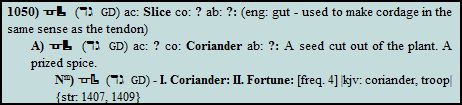
The pictographic meaning is ג ‘gimmel’ which means a foot, as in traveling and the ד which means a door. Traveling to the door…notice the connection to the above word עד ‘ad.’ A cognate of גד ‘gad’ is גדד ‘gadad’ which further displays this concept of a gathering or troop.
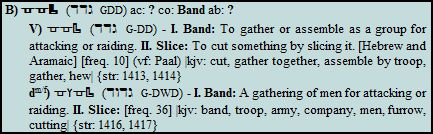
The English word gathering traces back to גדר ‘gadad’ which also comes from the root גד ‘gad.’
2Th 2:1 And, brothers, we entreat you, by the coming of our Lord Jesus Christ, and of our gathering together to Him,
How does Messiah gather mankind unto Himself?
Joh 12:32 And I, if I be lifted up from the earth, will draw all men unto me.
Is it any surprise that the word goat in English traces back to גדי ‘gediy’ in Hebrew which means a kid of the flock (Genesis 38:17). גדי ‘gediy’ is related to the Hebrew word סה ‘seh’ which is usually translated as lamb but literally means one of the flock. What is the root of גדי ‘gediy’?

Isaac Mozeson says that the Hebrew word for wood/tree עץ ‘ets’ branches from עד ‘ad.’ This is seen in the German word ‘outh’ meaning wood. ‘Utan’ which means forest in Malay, ‘a-ta’ which means wood in Cherokee {E-Word pg 446}. Wood…tree…sacrifice of the flock…gathering together…
Further linking this concept of wood and gathering (גדד ‘gadad’/עד ‘ad’) is the 2 sticks mentioned in Ezekiel 37. They are gathered together by the Shepherd (Ezekiel 37:24)…
Again, עד ‘ad’ means to see the door. Who is the door?
Joh 10:9 I am the door. If anyone enters through Me, he will be saved, and will go in, and will go out, and will find pasture.
Joh 10:11 I am the Good Shepherd! The Good Shepherd lays down His life on behalf of the sheep.
Joh 10:14 I am the Good Shepherd, and I know those that are Mine, and I am known by the ones that are Mine.
Joh 10:15 Even as the Father knows Me, I also know the Father; and I lay down My life for the sheep.
Joh 10:16 And I have other sheep which are not of this fold. I must also lead those, and they will hear My voice; and there will be one flock, one Shepherd.
Recall that סה ‘seh’ in Hebrew can mean lamb, goat or cattle.
Joh 1:29 On the morrow, John sees Jesus coming toward him and said, Behold! The Lamb of God, taking away the sin of the world!
Joh 1:36 And looking at Jesus walking, he said, Behold, the Lamb of God!
1Co 5:7 Then purge out the old leaven so that you may be a new lump, even as you are unleavened. For also Christ our Passover was sacrificed for us.
Deu 16:2 And you shall sacrifice a Passover to Jehovah your God of the flock, and of the herd (בקר ‘baqar’ – cattle), in the place which He shall choose to cause His name to dwell there.
Lamb…goat…cattle
Recall that the word for ‘god’ in Hebrew is אל ‘el’ which literally means the strong ox (cattle). Literally, looking up on Messiah on the cross was equivalent to seeing God אל ‘el.’
The Cross teaches Jesus is the LORD
Gen 22:11 And the Angel of Jehovah called to him from the heavens and said, Abraham! Abraham! And he said, Behold me.
Gen 22:12 And He said, Do not lay your hand on the boy, nor do anything to him. For now I know that you are a God-fearer, and you have not withheld your son, your only one, from Me.
Gen 22:13 And Abraham lifted up his eyes and looked. And behold! A ram behind him was entangled in a thicket by its horns. And Abraham went and took the ram and offered it for a burnt offering instead of his son.
Gen 22:14 And Abraham called the name of that place Jehovah Will See; so that it is said until this day, In the mount of Jehovah it will be seen.
Gen 22:14 ויקרא אברהם שׁם־המקום ההוא יהוה יראה אשׁר יאמר היום בהר יהוה יראה׃

Literally, in/on the mountain the LORD will be seen.

Abraham calls the place Jehovah Jireh (Jehovah will be seen) יראה ‘yireh’ is in the Kal stem, 3rd person masculine singular future tense.
Joh 8:56 Your father Abraham leaped for joy that he should see My day, and he saw, and rejoiced.
Joh 8:57 Then the Jews said to Him, You do not yet have fifty years, and have You seen Abraham?
Joh 8:58 Jesus said to them, Truly, truly, I say to you, Before Abraham came to be, I AM!
On the mountain the LORD will be seen. יראה ‘yayrah’eh’ is in the Niphal stem 3rd person masculine singular future tense. Truly God will provide HIMSELF as a lamb in the place of Isaac (mankind).
Gen 22:7 And Isaac spoke to his father Abraham and said, My father. And he said, Behold me. And he said, Behold, the fire and the wood! But where is the lamb for a burnt offering?
Gen 22:8 And Abraham said, My son, God will see to the lamb for Himself, for a burnt offering. And the two of them went together.
Joh 8:28 Then Jesus said to them, When you lift up the Son of Man, then you will know that I AM; and from Myself I do nothing; but as My Father taught Me, these things I speak.

Joh 19:19 And Pilate also wrote a title and put it on the cross. And having been written, it was: JESUS THE NAZARENE, THE KING OF THE JEWS.
Joh 12:32 And I, if I be lifted up from the earth, I will draw all to Myself (John 8:28 Messiah states this is how they will know He is ‘I AM’).
Joh 12:33 But He said this, signifying by what kind of death He was about to die.
Joh 12:34 The crowd answered Him, We heard out of the Law that The Christ remains to the age. And how do You say that the Son of Man must be lifted up? Who is this Son of Man?
Joh 12:35 Then Jesus said to them, Yet a little while the Light is with you. Walk while you have the Light, that darkness not overtake you. And the one walking in the darkness does not know where he is going.
Joh 12:36 While you have the Light, believe into the Light, that you may become sons of Light. Jesus spoke these things, and going away He was hidden from them.
Joh 12:37 But though He had done so many miraculous signs before them, they did not believe into Him,
Joh 12:38 so that the Word of Isaiah the prophet might be fulfilled, which he said, “Lord, who has believed our report? And the arm of the Lord, to whom was it revealed?” Isa. 53:1 (the Arm of the LORD = the Angel of the LORD…more on this below)
Joh 12:39 Because of this they could not believe, because Isaiah said again,
Joh 12:40 “He has blinded their eyes” and “has hardened their heart,” “that they might not see with the eyes” and “understand with the heart,” “and be converted,” “and I should heal them.” Isa. 6:10
Joh 12:41 Isaiah said these things when he saw His glory, and spoke about Him.
Albert Barnes commentary Joh 12:41 –
When he saw his glory – Isa_6:1-10. Isaiah saw the Lord (in Hebrew, יהוה Yahweh) sitting on a throne and surrounded with the seraphim. This is perhaps the only instance in the Bible in which Yahweh is said to have been seen by man, and for this the Jews affirm that Isaiah was put to death. God had said Exo_33:20, “No man shall see me and live;” and as Isaiah affirmed that he had seen Yahweh, the Jews, for that and other reasons, put him to death by sawing him asunder. See Introduction to Isaiah, Section 2.
By his glory is meant the manifestation of him – the Shechinah, or visible cloud that was a representation of God, and that rested over the mercy-seat. This was regarded as equivalent to seeing God, and John here expressly applies this to the Lord Jesus Christ
John affirms that it was the glory of the Messiah that Isaiah saw, and yet Isaiah affirms that it was Yahweh; and from this the inference is irresistible that John regarded Jesus as the Yahweh whom Isaiah saw.
The pictographs of יהוה ‘Yahweh’ speak of Him being revealed through the nails in His Hands.

Joh 20:27 Then He said to Thomas, Bring your finger here and see My hands, and bring your hand and thrust into My side, and be not unbelieving, but believing.
Joh 20:28 And Thomas answered and said to Him, My Lord and my God!
The Blood of bulls and goats can’t take away sins, they were shadows pictures pointing to Messiah.
Heb 10:4 For it is not possible that the blood of bulls and of goats should take away sins.
Only the blood of Jesus can atone for & take away our sins
Joh 1:29 The next day John seeth Jesus coming unto him, and saith, Behold the Lamb of God, which taketh away the sin of the world.
Rom 11:27 For this is my covenant unto them, when I shall take away their sins.
Isa 43:25 I, even I, am he that blotteth out thy transgressions for mine own sake, and will not remember thy sins.
The Covenant was cut in Messiah.
Isa 42:6 I the LORD have called thee in righteousness, and will hold thine hand, and will keep thee, and give thee for a covenant of the people, for a light of the Gentiles;
Isa 49:5 And now, saith the LORD that formed me from the womb to be his servant, to bring Jacob again to him, Though Israel be not gathered, yet shall I be glorious in the eyes of the LORD, and my God shall be my strength.
Isa 49:6 And he said, It is a light thing that thou shouldest be my servant to raise up the tribes of Jacob, and to restore the preserved of Israel: I will also give thee for a light to the Gentiles, that thou mayest be my salvation unto the end of the earth.
Isa 49:8 Thus saith the LORD, In an acceptable time have I heard thee, and in a day of salvation have I helped thee: and I will preserve thee, and give thee for a covenant of the people, to establish the earth, to cause to inherit the desolate heritages;
Going back to the description of the GOOD Shepherd in John 10, it is seen that through His death He gathers His sheep unto Himself through a door/gate. This is seen in the Hebrew word גדר ‘gadad’ which means a gate or to fence in and gather a herd.
Gathering together is linked with Etymology, for more on this see the section on gathering in Shadows of Messiah – Etymology. This is mentioned because גד ‘god’ is also the word for coriander seed. Manna was likened unto coriander seed (Exodus 16:31; Numbers 11:7). מן ‘man’ is the Hebrew word for ‘manna’ which Messiah defined as Himself (John 6:30-63). This manna was described as the Word in Exodus 16:4.
The matter of a day in its day {דבר יום ביומו ‘davar-yom b’yomo’}
Exo 16:4 ויאמר יהוה אל־משׁה הנני ממטיר לכם לחם מן־השׁמים ויצא העם ולקטו דבר־יום ביומו למען אנסנו הילך בתורתי אם־לא׃
גדר ‘gadad’ is also the source of the English word ‘garden.’ The Good Shepherd leads us to this ‘garden’ (Psalm 23:2). גד ‘gad’ has the pictographic meaning of the foot and the door.
The letter ג ‘gimmel/gam’ has the meaning of gathering. Literally, it is a picture of the foot walking towards water. The imagery of the Shepherd leading His sheep to the still waters (Psalm 23:2) is seen here. The word in Psalm 23:2 for ‘still’ displays this concept.


The word in Hebrew for pool, or collection/gathering of waters is אגם ‘agam’ which comes from this root גם ‘gam.’ As seen in Genesis 1:9-13, this collection of waters is a picture of the body of Messiah being gathered together. This study has numerous connections and goes into much more depth pertaining to the concept of gathering at the waters and the Word.
The word in Hebrew for light אר ‘or’ has the meaning of order. It also means to gather, as in the gathering of things together and placing them orderly in a box. Or it could be said, gathering together His people and placing them in the Garden where the still waters are located. Recall that the etymology of god is associated with light…
Psa 43:3 O send out Your light and Your truth; let them lead me and bring me to the mount of Your holiness and to Your tabernacles.
As mentioned above, Messiah is this Light…the life of men (John 1:4).
Lev 17:11 For the life of the flesh is in the blood*, and I have given it to you on the altar, to atone for your souls; for it is the blood which makes atonement for the soul.
*בדם הוא ‘b’dam he’…literally in His blood. This phrase = 58
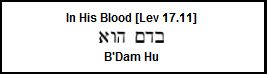
It is through the blood of the Lamb of God that we enter into covenant with the Most High and are brought into the camp of the righteous. The gates of the righteous are opened (Psalm 118:20) so that we can enter in through the door of the sheepfold who is the Messiah (John 10:7).
The name Noah = 58

Noah comes from the word נוח ‘nuach’ meaning rest.

נוח ‘nuach’ comes from the root:
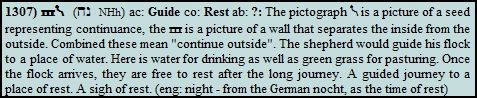
נוח ‘nuach’ is first used in reference to the Garden of Eden.
Gen 2:15 And Jehovah God took the man and put (נוח ‘nuach’) him into the Garden of Eden, to work it and to keep it.
This is the picture that Psalm 23 paints. The end of the exile where the Good Shepherd leads us to the still waters. The pictograph meaning of this word (נוח ‘nuach’) also can mean the seed inside the walls as in His people in the camp.
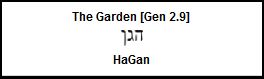
The garden = 58
The kingdom, His rest, His נוח ‘nuach,’ is the garden of Eden restored.
Where does Life or blood pump from? The heart. Blood pumping through the heart is pictographically displaying the letter dalet. גד ‘god’ walking or gathering to the heart…the life…the blood of Messiah…
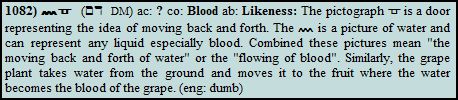
The blood pumping through the 4 chambers of the human heart display this idea of the door moving back and forth…The 4 valves represent the 4 living creatures which are surrounding the throne of God, pictured in our bodies by the heart. In Revelation 4-5, John describes this throne and links the crucifixion to this…
Amazingly, the word crucifixion comes from the Hebrew ספח ‘saphach’ which means to gather and bloodshed.
Rev 5:6 And I saw, and behold, in the midst of the throne, and of the four living creatures, and in the midst of the elders, was a Lamb standing, as having been slain, having seven horns and seven eyes, which are the seven Spirits of God, having been sent out into all the earth.
Rev 5:7 And He came and took the scroll out of the right hand of Him sitting on the throne.
Rev 5:8 And when He took the scroll, the four living creatures and the twenty four elders fell down before the Lamb, each one having harps, and golden bowls full of incenses, which are the prayers of the saints.
Rev 5:9 And they sing a new song, saying, Worthy are You to receive the scroll, and to open its seals, because You were slain, and by Your blood purchased us to God out of every tribe and tongue and people and nation,
Rev 5:10 and made us kings and priests to our God; and we shall reign over the earth.
Rev 5:11 And I saw, and I heard a sound of many angels around the throne, and the living creatures, and the elders, and their number was myriads of myriads, and thousands of thousands,
Rev 5:12 saying with a great voice, Worthy is the Lamb having been slain to receive the power and riches and wisdom and strength and honor and glory and blessing.
Rev 5:13 And every creature which is in Heaven, and in the earth, and underneath the earth, and the things that are on the sea, and the things in all of them, I heard saying: To Him sitting on the throne, and to the Lamb be the blessing and the honor and the glory and the might forever and ever.