
The Lord is the most frequently used title in the Bible. From the sacred Name Yahweh to Adonai, Kurios, and others, the word “Lord” reveals the Master, Guardian, and Bread-keeper of His people. He is the One who walks among us, the Living Bread who gives life, and the faithful Husband and Ruler. This study traces the biblical, linguistic, and Messianic meaning of “Lord,” showing how it all points to Jesus the Messiah, the Word made flesh, our Redeemer and King.
The word ‘Lord’ is the most used word in the English Bible (Authorized 1611 version). {Excluding words like ‘and’, ‘the’, ‘of’, ‘to’, ‘for’ etc.}. This list was compiled from the following site Popular Bible Words . This is entirely appropriate as He is the Word.
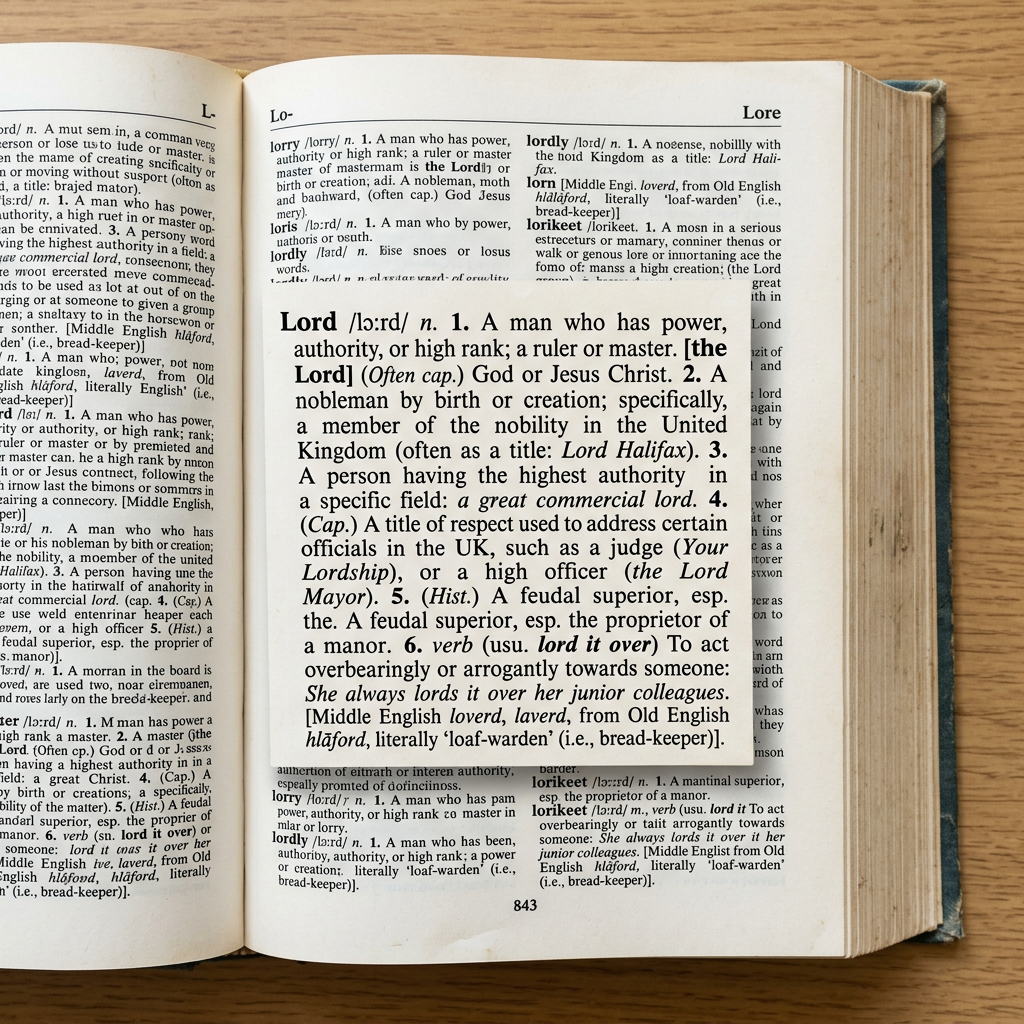
The word ‘lord’ comes from the Old English ‘hlafweard’ which means a guardian, or master of a house. Literally, ‘hlaf’ means bread, loaf and ‘weard’ means keeper or guardian.
From the Old English to Middle English ‘hlafweard’ had shortened to ‘lafweard’ or ‘lafford’ and from there to ‘lord.’
“There was a word in the Old English, hlafweard, which translated as “warden (or keeper)” of the loaf. At one time in English history, the “Lord” of the castle had the power of life and death. That is, he could order a man killed and it happened. It was one of the responsibilities of the “Lord” to determine how much bread was alloted to each household. Thus, the translation of hlafweard meant “the one who deals out the daily bread.”
“When Jesus declared Himself the “bread of life (John 6:32-35),” He, in effect, declared Himself the hlafweard. We have no eternal “bread of life” except that given by Jesus. We have no life except that He gives it.”
“Just as the Englishman of 1066 did not eat except by the grace of the hlafweard, even so we today do not eat of the eternal bread of life except through the grace of our Lord Jesus Christ.” {The Meaning of “LORD”}
What is our daily bread? The Word.
The Scriptures liken the Word to bread/food.
Deu 8:3 And He has humbled you, and caused you to hunger, and caused you to eat the manna, which you had not known, and your fathers had not known, in order to cause you to know that man shall not live by bread alone, but man shall live by every Word that proceeds from the mouth of Jehovah.
Psa 102:4 My heart is stricken and dried like grass, so that I forget to eat my bread.
TARGUM
5. My heart is smitten like grass and will dry up; for I have forgotten the Torah of my instruction.
Messiah is the bread from Heaven that gives Life (John 6:30-63)
Joh 6:33 For the bread of God is He coming down out of Heaven and giving life to the world.
Joh 6:48 I am the Bread of life.
Keep in mind that Messiah is the Word/Bread that COMES DOWN from heaven. This will make a strong connection to the etymology of Lord after looking at the Hebrew origin…
Manna is likened unto the Word
Exo 16:4 And Jehovah said to Moses, Behold, I AM! Bread will rain from the heavens for you. And the people shall go out and gather the matter of a day in its day, so that I may test them, whether they will walk in My Law or not.
The matter of a day in its day ‘davar-yom b’yom’…davar=word
Exo 16:4 ויאמר יהוה אל־משׁה הנני ממטיר לכם לחם מן־השׁמים ויצא העם ולקטו דבר־יום ביומו למען אנסנו הילך
בתורתי אם־לא׃
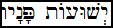
Table of Showbread (לחם פנים ‘lechem paniym’)
Jesus is His פנים ‘paniym’ (presence, face)
Psa 42:5 O my soul, why are you cast down and moan within me? Hope in God, for I shall yet thank Him for the salvation of His presence.
Psa 44:3 For they did not inherit the land with their own sword; yea, their own arm did not save them. But it was Your right hand (Messiah Exo 15) and Your arm (Messiah – Isaiah 53) and the light of Your face, because You favored them.
Heb 1:3 who being the shining splendor of His glory, and the express image of His essence, and upholding all things by the Word of His power, having made purification of our sins through Himself, He sat down on the right of the Majesty on high, Psa. 110:1
The bread of the Presence sat upon a table. The Hebrew word for table is שלחן ‘shulchan.’ which come from the root שלח ‘shalach’ meaning to send out. Apostle (שוליח ‘sholiach’) comes from this word שלח ‘shalach.’
Apostles take for the Bread of Life to the world
Isa 52:7 How beautiful on the mountains are the feet of him proclaiming good news, making peace heard, bearing tidings of good, making heard salvation (ישועה ‘yeshua’), saying to Zion, Your God reigns.
Joh 4:32 But He said to them, I have food to eat which you do not know.
Joh 4:33 Then the disciples said to one another, No one brought Him food to eat?
Joh 4:34 Jesus said to them, My food is that I should do the will of Him who sent Me, and that I may finish His work.
Joh 6:51 I am the Living Bread that came down from Heaven. If anyone eats of this Bread, he will live forever. And indeed the bread which I will give is My flesh, which I will give for the life of the world.
For more on the Bread-Word connection see Shadows of Messiah – Biology & Shadows of Messiah – Alphabet
Isaac Mozeson traces ‘laford’ back to the Hebrew word רד ‘rad’ which has the meaning of a ruler who walks among the people.
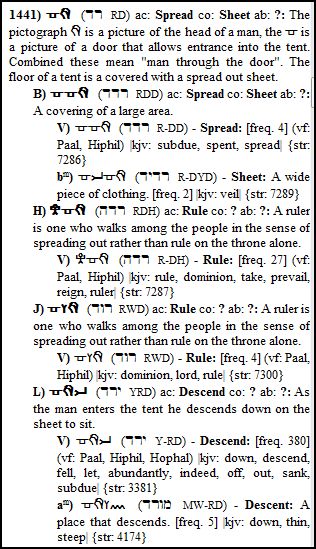
This word is fascinating in connection with the Most High. As seen in, Shadows of Messiah – 4th dimension, the heavens are likened to a veil. The Man who came through the door (or came from the 4th dimension/heaven) is Messiah who ‘descended’ to earth to walk amongst men as their Lord (Ephesians 4:8; Philippians 2:5-11).
Reading and talking trace back to this same concept. In Hebrew the word for calling out/reading is קרא ‘qara.’ God proclaimed (קרא ‘qara’) the name of Yahweh whenever He physically manifested Himself to Israel (Exodus 33:17-23; 34:5-8).
קרא ‘qara’ is the word for read, the Torah is the “physical” manifestation of the Lord on the earth. When God “qara’d” He physically manifested Himself, and proclaimed who/what He is. This is what the reading of the Torah does. The Torah proclaims the Name of the Holy One, as it is said in Revelation 19, His Name (שם ‘shem’- character) is the Word.
The Word is read (קרא ‘qara’) at meetings (מיקרא ‘miqra’) (Exodus 24:7-8; Deuteronomy 17:19; 31:11-12; Joshua 8:34-35; Nehemiah 8:8, 18; 9:3; Luke 4:16; Acts 15:21).
Calling on His Name brings salvation and is associated with the physical manifestation of the Most High (Matthew 26:53; Jeremiah 29:10-14; Psalm 91:14-16; 86:7-9; 50:15, 23; 18:3; 55:6, Romans 10:13; Acts 2:21; 22:14-16; Joel 2:32; 1 Corinthians 1:2)….For more on the concept of ‘qara’ see Call on the Name of God.
There are 12 Hebrew and Greek words translated as ‘Lord’ in the Bible. How many loaves of bread where in the Tabernacle?
Lev 24:5 And you shall take flour, and shall bake twelve cakes with it; two tenths shall be in the one cake.
The most used word in the Bible is the Hebrew word יהוה ‘Yahweh’, the Sacred Name of the Most High. This is translated as LORD 6884 times in the Scriptures. There is much controversy on whether or not this Name should be spoken out loud, and if so what the pronunciation is. It is not the purpose of this study to go into depth on this subject. I find it entirely appropriate that the most used word in the Word is the Name of the Most High for His Word is His Name (Revelation 19:13).
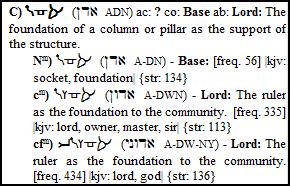
אדון ‘Adon’ and אדוני ‘Adonai’ are translated as Lord and come from the same root in Hebrew דן ‘dan.’

Notice the similarity in meaning between דן ‘dan’ and רד ‘rad’ which both mean lord or ruler and are associated with doors (John 10:9).
2 times in Scripture, the word גביר ‘gabbiyr’ is translated as Lord. גיבור ‘gibbor’ has the meaning of a warrior or might man.

Notice that גבר ‘gavar’ comes from the root בר ‘bar.’ This is the word used in reference to Messiah as the King in Psalm 2.
Psa 2:12 Kiss the Son (בר ‘bar’), lest He be angry, and you perish from the way, when His wrath is kindled but a little. Oh the blessings of all those who flee to Him for refuge!
This Son is the Lord
Psa 110:1 A Psalm of David. A declaration of Jehovah to my Lord: Sit at My right hand, until I place Your enemies as Your footstool.
Psa 45:3 Gird Your sword on Your thigh, Mighty One (גיבור ‘gibbor’); with Your glory and Your majesty.
Psa 45:4 And ride prosperously in Your majesty, on the matter of truth and meekness and right, and Your right hand shall teach You fearful things.
Psa 45:5 Your arrows are sharp in the heart of the King’s enemies; peoples fall under You.
Psa 45:6 Your throne, O God, is forever and ever; the scepter of Your kingdom is a scepter of uprightness.
Another word translated as Lord in the Bible is from the Aramaic word מרא ‘mare.’
Dan 2:47 The king answered Daniel and said, Your God truly is a God of gods and a Lord of kings, and a Revealer of secrets, since you could reveal this secret.
The parent root of מרא ‘mare’ is :

Who is the Word? Messiah. The Lord.
Luk 2:11 because today a Savior, who is Christ the Lord, was born to you in the city of David.
1Co 15:23 But each in his own order: Christ, the firstfruit; afterward those of Christ at His coming.
1Co 15:24 Then is the end, when He delivers the kingdom to God, even the Father, when He makes to cease all rule and all authority and power.
Paul associates Messiah as the firstfruits with Him being the Lord in the next verse:
1Co 15:25 For it is right for Him to reign until He puts all the hostile ones under His feet;
This is a quote from Psalm 110 mentioned above.
The number 3 is associated with the Lord. שליש ‘shaliysh’ is translated as the Lord and literally means 3.
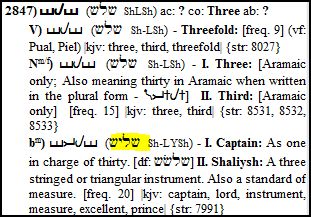
This word is usually referring to captains but the following verse is extremely interesting in light of the current study. Notice the imagery to the Tabernacle/Temple with the Light of His Face represented as the Menorah, and the feeding of ‘bread.’
Psa 80:3 O God, turn us again, and make Your face shine, and we will be saved!
Psa 80:4 O Jehovah God of Hosts, until when will You smoke against the prayer of Your people?
Psa 80:5 You made them eat with the bread of tears; yea, You made them drink with tears a third time (KJV measure).
Psa 80:6 You make us a strife for our neighbors, and our enemies laugh to themselves.
Psa 80:7 O God of Hosts, turn us again, and cause Your face to shine, and we will be saved.
This word שליש ‘shaliysh’ is also translated as ‘measure’ in the following verse in reference to the creation.
Isa 40:12 He who has measured in His hand the waters and the heavens by a span meted out; and enclosed in the measure (שליש ‘shaliysh’) the dust of the earth, and weighed in the balance the mountains, and the hills in the scales,
The interesting thing about this verse is that His Hand is used to measure out creation. It is through His Hand that His people are redeemed. The Sabbath links these themes of the work of His Hands together. The 10 commandments are recorded in Exodus 20 & Deuteronomy 5. Exodus 20 says we are to keep the sabbath as a remembrance of creation, Deuteronomy 5 says it is because we are to remember He is our Redeemer (Exodus 20:8-11 & Deuteronomy 5:12-15). Interestingly, the bread of presence was changed every Sabbath day (Leviticus 247-8). A remembrance of the Lord, the guardian of the loaves (Matthew 12:8; Mark 2:28; Luke 6:5).
The number 3 is intimately linked with the Lord
1Jn 5:5 Who is he that overcometh the world, but he that believeth that Jesus is the Son of God? {The Lord – Psalm 2:7, 12; 110:1}
1Jn 5:6 This is he that came by water and blood, even Jesus Christ; not by water only, but by water and blood. And it is the Spirit that beareth witness, because the Spirit is truth.
1Jn 5:7 For there are three that bear record in heaven, the Father, the Word, and the Holy Ghost: and these three are one.
1Jn 5:8 And there are three that bear witness in earth, the Spirit, and the water, and the blood: and these three agree in one.
1Jn 5:9 If we receive the witness of men, the witness of God is greater: for this is the witness of God which he hath testified of his Son.
1Jn 5:10 He that believeth on the Son of God hath the witness in himself: he that believeth not God hath made him a liar; because he believeth not the record that God gave of his Son.
1Jn 5:11 And this is the record, that God hath given to us eternal life, and this life is in his Son. {For more on the link between bread & life see Shadows of Messiah – Biology}
Pro 22:19 That thy trust may be in the LORD {Psalm 2:12}, I have made known to thee this day, even to thee.
Pro 22:20 Have not I written to thee excellent things (שליש ‘shalyish’) in counsels and knowledge,
Pro 22:21 That I might make thee know the certainty of the words of truth; that thou mightest answer the words of truth to them that send unto thee?
The word κύριος ‘kurios’ in Greek is translated as Lord.
Kurios probably traces back to the Hebrew word קרן’qeran.’ The horn was associated with power and dominion in Biblical times.
1Sa 2:10 They who strive with Jehovah will be smashed; He thunders in the heavens against him. Jehovah judges the ends of the earth and gives strength to His king; and He exalts the horn of His anointed.
Psa 89:24 But My faithfulness and My mercy is with him; and his horn shall be exalted in My name.
Luk 1:68 Blessed be the Lord, the God of Israel, because He visited and worked redemption for His people.
Luk 1:69 And He raised up a Horn of salvation for us in the house of His servant David;
Luk 1:70 even as He spoke through the mouth of His holy prophets from the age before:
Luk 1:71 Salvation from ones hostile to us, and from the hand of all the ones hostile to us,
Luk 1:72 to execute mercy with our fathers, and to remember His holy covenant,
Luk 1:73 the oath which He swore to our father Abraham,
Luk 1:74 to give to us, that we being delivered out of the hand of those hostile to us, in order to serve Him without fear,
Luk 1:75 in consecration and righteousness before Him all the days of our life.
The horn/shofar is also linked with the Word.

The Voice of Messiah is likened to a shofar…
Rev 1:10 I came to be in the Spirit on the Lord’s day, and I heard behind me a great voice, as of a trumpet,
Rev 1:11 saying, I am the Alpha and the Omega, the First and the Last; also, What you see, write in a scroll, and send to the seven assemblies of Asia: to Ephesus, and to Smyrna, and to Pergamos, and to Thyatira, and to Sardis, and to Philadelphia, and to Laodicea.
The Greek word δεσπότης ‘despotēs’ is translated as Lord. Despotes means a master or Lord in Greek. It is a combination of δέω ‘deō’ which means to bind or fasten and ‘posis’ which means a husband.
Isaac Mozeson traces this word back to the Hebrew תם ‘tam’ which means completeness or the taming of an animal. This is what ‘housebroken’ comes from. This was the command to Adam in the beginning to be Lord over the earth, to have dominion (רדה ‘radah’) seen in Genesis 1:26.
Gen 1:26 And God said, let Us make man in Our image, according to Our likeness; and let them rule over the fish of the sea, and over the birds of the heavens, and over the cattle, and over all the earth, and over all the creepers creeping on the earth.
Ultimately this is fulfilled in Messiah Jesus, the Last Adam.
1Co 15:45 So also it has been written, “The” first “man”, Adam, “became a living soul;” the last Adam a life-giving Spirit. Gen. 2:7
1Co 15:46 But not the spiritual first, but the natural; afterward the spiritual.
1Co 15:47 The first man was out of earth, earthy. The second Man was the Lord out of Heaven. Gen. 2:7
In Genesis 25:27 Jacob is described as a ‘plain’ man, one who dwells in tents. This word ‘plain’ comes from תם ‘tam.’ Again, notice the link to the meaning of Lord. The master of the house.
Finally, the word ῥαββονί ‘rhabboni’ in Greek is translated as Lord. ‘Rhabboni’ comes from the Hebrew word:

‘Rabbi’ comes from this word.
Mat 23:7 And greetings in the markets, and to be called of men, Rabbi, Rabbi.
Mat 23:8 But be not ye called Rabbi: for one is your Master, even Christ; and all ye are brethren.