

The origins of Christianity and the original customs thereof come not from pagans. They come from the Holy Bible and ancient Hebrew thought.

This is a controversial subject so I will begin this study with the reminder that the Bible says we are not to “bite and devour one another” (Galatians 5:15) and we are to avoid carnal disputings (Philippians 2:14) bearing one another in love (Ephesians 4:1). Getting involved in controversies can be uncomfortable but it is important not to shrink away from controversial issues of the Word (Jude 1:3; 1 Timothy 3:16).
“If I profess with the loudest voice and clearest exposition every portion of the truth of God except precisely that little point which the world and the Devil are at that moment attacking, I am not confessing Christ, however boldly I may be professing Christ. Where the battle rages, there the loyalty of the soldier is proved, and to be steady on all the battlefield besides, is mere flight and disgrace.” – Martin Luther
This article is going to be an examination of the idea that the holidays celebrated by Christians and the customs attached to these holidays are rooted in the customs and beliefs of paganism (heathens/Mystery Babylon etc.).
This area of study and focus is very dangerous to the spiritual condition of believers and needs to be addressed. I myself fell into this trap many years ago and it has taken me a long time to wake up to the errors and falsehood I was believing and teaching.
In recent years I have been in the process of re-examining (testing, proving) the “pagan origin” claims in regards to Christian holidays such as Christmas, Easter etc. I have found that in many ways, I was in error in my understanding. Through this time of examining and reflection I have grown much, finding out that I was not walking in God’s will in so many ways because of this subject.
I’ve debated on when and if I should share this information due to the possible negative “fall-out” I will receive but, I believe, the Lord has laid it heavily upon my heart to share this page at this season.
The Holy Scriptures admonish believers to examine themselves to consider if they are “in the faith” (2 Corinthians 13:5), to “hold fast that which is good” (1 Thessalonians 5:21), “prove what is that good, and acceptable, and perfect, will of God (Romans 12:2), that we “may be sincere and without offense till the day of Christ, being filled with the fruits of righteousness, which are by Jesus Christ, unto the glory and praise of God” (Philippians 2:10) for we were once in darkness, but now children of light, called to “prove” what is acceptable to the Lord (Ephesians 5:10). We are not to believe every spirit but are to try or examine them (1 John 4:1) as there are “many false prophets” that have gone out in the world.
2Co 13:5 Examine yourselves {πειράζω ‘peirazō’ – put yourself on trial, examine and test yourself}, whether ye be in the faith; prove your own selves {δοκιμάζω ‘dokimazō’ – scrutinize yourself and recognize the judgment}. Know ye not your own selves, how that Jesus Christ is in you, except ye be reprobates?
1Th 5:21 Prove {δοκιμάζω ‘dokimazō’} all things; hold fast that which is good.
Rom 12:2 And be not conformed to this world: but be ye transformed by the renewing of your mind, that ye may prove {δοκιμάζω ‘dokimazō’} what is that good, and acceptable, and perfect, will of God.
Php 1:9 And this I pray, that your love may abound yet more and more in knowledge and in all judgment;
Php 1:10 That ye may approve {δοκιμάζω ‘dokimazō’} things that are excellent; that ye may be sincere and without offence till the day of Christ;
Php 1:11 Being filled with the fruits of righteousness, which are by Jesus Christ, unto the glory and praise of God.
1Jn 4:1 Beloved, believe not every spirit, but try {δοκιμάζω ‘dokimazō’} the spirits whether they are of God: because many false prophets are gone out into the world.
Rom 14:22 Hast thou faith? have it to thyself before God. Happy is he that condemneth not himself in that thing which he alloweth {δοκιμάζω ‘dokimazō’}.
Eph 5:8 For ye were sometimes darkness, but now are ye light in the Lord: walk as children of light:
Eph 5:9 (For the fruit of the Spirit is in all goodness and righteousness and truth;)
Eph 5:10 Proving {δοκιμάζω ‘dokimazō’} what is acceptable unto the Lord.
Summary:
Due to the size of this article (350+ pages) I’m going to summarize here and let the reader decide whether or not they want to read the entire study.
1) Many, if not most, of the claims of those who say “Christian holidays are pagan” are erroneous. Some are outright lies, some are half-truths but the result of bearing false witness is still the result. These lies are dividing the body of Christ and are abominable in the eyes of God (Proverbs 6:16-19). I believe most who believe and teach these things, like myself in the past, are sincere people seeking the truth who have been misled by men of cunning craftiness (Ephesians 4:14). I hope to share some things in this article which I’ve learned which have helped me see more clearly the errors of the “Christianity is pagan” camp and hopefully edify the body of Christ in so doing.
2) We are not to worship the LORD as the heathen worship their gods (Jeremiah 10:2; Leviticus 18:3; 20:23; Deuteronomy 12:30-32; 13:1-5; 18:9; Ezekiel 20:32; 2 Corinthians 6:14-18; 1 Corinthians 10:6-7; Ephesians 4:17-18), however discernment and wisdom must be applied to this principle lest we become enchained by our perverse hearts (Titus 1:14-16).
3) Many of the beliefs of the “Christian holidays are pagan” camp come forth from the teaching of a man named Alexander Hislop. I have found that Hislop made numerous mistakes and brought forth many half-truths and outright fantasies in his book Two Babylons. Those who are seeking to worship God in Spirit & Truth (John 4:24) cannot use Hislop’s writings as a source of truth as it is full of errors.
Hislop formed his own mythology, a mixture of various stories from paganism to form an entirely new “religion”. Many who focus on the need to “come out of Babylon” have entered into just another “Babylon” (mixture) of Hislop’s mind.
4) Some claim that early Christians were heavily influenced by pagan culture and adopted many of their customs. These claims could not be further from the truth. In fact, early Christians were so opposed to paganism that many of them were martyred because of it.
Contrary to the claims of many, Constantine did not form the Catholic Church. Constantine was not the first pope. Constantine did not make Christianity the state religion of Rome. There is little evidence that Constantine is the “evil emperor” that corrupted the original faith of Christianity that many wish to portray him as.
Constantine did not “institute Christmas and Easter” and “change the sabbath to Sunday”.
5) The origin of Christianity and the original customs thereof come not from pagans. They come from the Holy Bible and ancient Hebrew thought. There is a growing movement of Christians who have stopped celebrating Christian holidays because they believe they originated in paganism and have gone on to “embrace” their Hebrew roots. The reality is that Christian holidays are based upon “Hebrew roots”. The same can’t be said of some aspects/traditions which were later incorporated into these holidays but this doesn’t corrupt the holiday itself.
I have come to find that the customs of Christianity which have been deemed “pagan,” in reality trace back to the Bible and Hebrew thought of the 2nd Temple period (530 BC – 70 AD, in particular the 1st Century AD).
The true root of the Christian faith that we are to seek is the Lord Jesus Christ. Messiah is the Root that we are to seek in love (Colossians 2:6-8; Ephesians 3:17-21), not Judaism. Many in the body of Messiah are seeking their “Hebrew roots” and seeking to apply the Law of Moses to their lives. Sadly, however, the pride, arrogance and condemnation which is coming forth from many of those in this movement reveals that their hearts are still uncircumcised and they are still walking in the carnal flesh (1 Corinthians 3:3-4; Galatians 5:19-20; James 3:14-18). Those who speak against their brethren (calling Christians pagans) are not doers of the law (James 4:11-17) but judges of the law.
Zealousness for God’s truth is great (Revelation 3:19; Titus 2:14), but we must be careful that this zealousness does not turn into carnal envy/zealousness (1 Corinthians 3:3) and become like Paul who killed Christians in his zealousness before coming to the faith (Philippians 3:6). Although we have been given God’s Spirit, we still have sin dwelling in our carnal flesh (Romans 7:11, 17-18).
Carnality is carnality whether or not it is disguised as religion or not. Sadly, many times our zealousness for God can be used by Satan to lead us into persecution of one another in the guise of religious zeal (Acts 22:3-4; Philippians 3:6; Romans 10:2-4). This religious ‘passion’ does not bring forth the righteousness of God (James 1:20). It is ‘devilish’ (James 3:13-18). The love of God does not behave in this manner for love ‘envies’ not (1 Corinthians 13:4).
6) Christmas & Easter come not from pagan worship but from ancient Jewish thought and interpretation of the Holy Scriptures by the early Church. The claims that Christmas & Easter are founded in paganism are based upon either outright lies or applying pagan parallels which can be done to virtually everything in the Scriptures, including the Old Testament. Many are well-meaning in their desire to discard “pagan” elements of Christianity but in so doing are inadvertently attacking the entire Christian faith and the Holy Bible at the same time.
On one side, Christmas trees, Easter eggs and bunnies etc. can all be linked to pagans as these things (trees, rabbits, eggs) were symbolically used in various ways by various cultures but on the other side they can be traced back to the Bible and shadows of Messiah embedded in nature. In order to see how these things became incorporated into ancient celebrations such as Christmas and Easter one must look at the writings (source documents) of the Church. We cannot assume that these customs were adopted by Christians from their pagan neighbors if there is not legitimate evidence (multiple witnesses – Deuteronomy 17:6; 19:15; Matthew 18:16; 2 Corinthians 13:1; 1 Timothy 5:19) of this.
Part Two:
7) Some believe that Christians are in error for not celebrating the Biblical Feasts and even going so far as to call them “lawless” because they don’t believe the law of Moses applies to them as New Covenant believers. However, it can be shown that this belief does not come from “Western Gentiles” who “corrupted” the faith once delivered to the saints. This belief comes from ancient Jewish thought. Ancient Jews believed the Torah would be changed by the Messiah. The purpose of sharing this aspect of the subject is not to “strive about the law” but display early Christian interpretation and how it is based upon the Bible and “Hebraic thought”, not paganism.
Early Christians did not see the institution of holidays like Christmas (Feast of Nativity) and Easter (Pascha) as a negation of God’s law. They saw these as traditions instituted by the Apostles (1 Corinthians 11:2; 1 Thessalonians 4:1-2; 2 Thessalonians 2:15; 3:6) who were believed to have authority to institute such celebrations (Matthew 16:16-19; 18:17-20).
8) If we are convicted not to celebrate Christian holidays or participate in customs such as Christmas trees or Easter eggs we shouldn’t condemn our brothers in Messiah who do so as “pagans” when there isn’t good evidence that the origin of these customs come from paganism. We should receive them as brothers as God does as Romans 14 talks about. If they are doing it unto the Lord then they are glorifying Him and we shouldn’t speak against them and slander them (Psalm 59:19-23).
We are not to condemn our brothers because we are not the judge of their thoughts or hearts, God is (Acts 15:8; Proverbs 24:12; James 2:4, 8-9). When we condemn our brothers, in whom God is working, we are in reality condemning Him (Philippians 2:13; Romans 14:4).
It’s up to each one of us to work out our own salvation with fear and trembling (Philippians 2:12), being fully persuaded in our own minds (Romans 14:5-6), seeking to not put a stumbling block before our brothers (Romans 14:13-14). We are all going to stand before the judgment seat of Christ and He will judge whether or not someone was doing a custom unto Him or not (Romans 14:10).
Let each person be convinced in his or her own mind and follow the Lord wholeheartedly in that conviction (Romans 14:5-6). We all have to work out our own salvation with fear and trembling so we ought not to point the finger of condemnation at others as each one of us falls or stands according to the Lord, not man (Romans 14:4). Regardless of what ‘side’ one chooses, we are to receive each other as the Lord has received us (Romans 14:1-4), bearing one another in love (Romans 15:1-3; 1 Corinthians 13:7).
Pagan Christianity?

Many, if not most, of the claims of those who say “Christians are pagan” are erroneous. Some are outright lies, some are half-truths but the result of bearing false witness is still seen. These lies are dividing the body of Christ and are abominable in the eyes of God.
I believe most who believe and teach these things, like myself in the past, are sincere people seeking the truth who have been misled by men of cunning craftiness (Ephesians 4:14). I hope to share some things in this article which I’ve learned which have helped me see more clearly the errors of the “Christians are pagan”camp and hopefully edify the body of Christ in so doing.
Pro 6:16 These six things doth the LORD hate: yea, seven are an abomination unto him:
Pro 6:17 A proud look, a lying tongue, and hands that shed innocent blood,
Pro 6:18 An heart that deviseth wicked imaginations, feet that be swift in running to mischief,
Pro 6:19 A false witness that speaketh lies, and he that soweth discord among brethren.
I have found that these seven things which are abominations to God are prevalent in the “Christians are pagan” movement. The Lord has greatly rebuked me, showing that in my zeal for truth I had fallen into an abominable state. I was deceived into thinking that my Christian brothers were committing “abominations” in their traditions when in reality I was the one walking in an abominable way.
In my zeal I thought I was pleasing God, I thought I was “altogether like Him”…
Psa 50:19 Thou givest thy mouth to evil, and thy tongue frameth deceit.
Psa 50:20 Thou sittest and speakest against thy brother; thou slanderest thine own mother’s son.
Psa 50:21 These things hast thou done, and I kept silence; thou thoughtest that I was altogether such an one as thyself: but I will reprove thee, and set them in order before thine eyes.
Psa 50:22 Now consider this, ye that forget God, lest I tear you in pieces, and there be none to deliver.
Psa 50:23 Whoso offereth praise glorifieth me: and to him that ordereth his conversation aright will I shew the salvation of God.
The knowledge I was sharing was not the peaceable fruit of the Spirit…it was poison of the adversary
Jas 3:9 Therewith bless we God, even the Father; and therewith curse we men, which are made after the similitude of God.
Jas 3:10 Out of the same mouth proceedeth blessing and cursing. My brethren, these things ought not so to be.
Jas 3:11 Doth a fountain send forth at the same place sweet water and bitter?
Jas 3:12 Can the fig tree, my brethren, bear olive berries? either a vine, figs? so can no fountain both yield salt water and fresh.
Jas 3:13 Who is a wise man and endued with knowledge among you? let him shew out of a good conversation his works with meekness of wisdom.
Jas 3:14 But if ye have bitter envying and strife in your hearts, glory not, and lie not against the truth.
Jas 3:15 This wisdom descendeth not from above, but is earthly, sensual, devilish.
Jas 3:16 For where envying and strife is, there is confusion and every evil work.
Jas 3:17 But the wisdom that is from above is first pure, then peaceable, gentle, and easy to be intreated, full of mercy and good fruits, without partiality, and without hypocrisy.
Jas 3:18 And the fruit of righteousness is sown in peace of them that make peace.
I was spreading knowledge, not truth. I was dividing the body of Christ, the pillar and ground of truth (1 Timothy 3:15), and in my zeal to serve Him, I was actually persecuting Christ, THE truth (John 1:14, 17; 14:6). Just like Paul I zealously persecuted the church but came to find in reality it was Jesus I was attacking (Acts 9:4-5; 22:5-8; 26:13-18; 1 Timothy 1:4-16).
But (like Paul)…He has shown me mercy.
1Ti 1:13 Who was before a blasphemer, and a persecutor, and injurious: but I obtained mercy, because I did it ignorantly in unbelief.
1Ti 1:14 And the grace of our Lord was exceeding abundant with faith and love which is in Christ Jesus.
1Ti 1:15 This is a faithful saying, and worthy of all acceptation, that Christ Jesus came into the world to save sinners; of whom I am chief.
1Ti 1:16 Howbeit for this cause I obtained mercy, that in me first Jesus Christ might shew forth all longsuffering, for a pattern to them which should hereafter believe on him to life everlasting.
Even though the Lord has “shed abroad” His Spirit in my heart (Romans 5:5), I am still a man who is walking in carnality and as a result can go astray (Romans 7:1-25), corrupting the image of the God of love (1 John 4:7-21) who dwells in my heart (Ephesians 3:17; 2 Corinthians 4:6; John 14:17, 23; Romans 8:9-11; Colossians 1:27; Galatians 2:20; 1 John 4:4,16; Romans 10:8).
The zealousness I had to worship God in Spirit and truth (John 4:24) was corrupted into carnal envy. The Spirit of truth (John 14:17; 15:26; 16:13) will cause us to bear fruit of “goodness and righteousness and truth” (Ephesians 5:19) unto unfeigned love of the brethren (1 Peter 1:22). If we aren’t bearing this fruit, we are more than likely walking in carnal envy.
1Co 1:12 Now this I say, that every one of you saith, I am of Paul; and I of Apollos; and I of Cephas; and I of Christ.
1Co 1:13 Is Christ divided? was Paul crucified for you? or were ye baptized in the name of Paul?
1Co 3:3 For ye are yet carnal: for whereas there is among you envying {ζῆλος ‘zēlos’}, and strife, and divisions, are ye not carnal, and walk as men?
1Co 3:4 For while one saith, I am of Paul; and another, I am of Apollos; are ye not carnal?
The word for “envying” in 1 Corinthians 3:3 is ζῆλος ‘zēlos’ which also means zealousness. Zealousness for God’s truth is great (Revelation 3:19; Titus 2:14), but we must be careful that this zealousness does not turn into carnal envy. Although we have been given God’s Spirit, we still have sin dwelling in our carnal flesh (Romans 7:11, 17-18). Carnality is carnality whether or not it is disguised as religion or not. Sadly, many times our zealousness for God can be used by Satan to lead us into persecution of one another in the guise of religious zeal (Acts 22:3-4; Philippians 3:6; Romans 10:2-4).
This religious ‘passion’ does not bring forth the righteousness of God (James 1:20). It is ‘devilish’ (James 3:13-18).
Jas 1:20 For the wrath of man worketh not the righteousness of God.
Jas 3:13 Who is a wise man and endued with knowledge among you? let him shew out of a good conversation his works with meekness of wisdom.
Jas 3:14 But if ye have bitter envying {ζῆλος ‘zēlos’} and strife in your hearts, glory not, and lie not against the truth.
Jas 3:15 This wisdom descendeth not from above, but is earthly, sensual, devilish.
Jas 3:16 For where envying and strife is, there is confusion and every evil work.
Jas 3:17 But the wisdom that is from above is first pure, then peaceable, gentle, and easy to be intreated, full of mercy and good fruits, without partiality, and without hypocrisy.
Jas 3:18 And the fruit of righteousness is sown in peace of them that make peace.
Love envies not
1Co 13:4 Charity suffereth long, and is kind; charity envieth not; charity vaunteth not itself, is not puffed up,
The love of God does not behave in this manner for love ‘envies’ not (1 Corinthians 13:4).
When we walk in God’s love we realize that we do not have the corner market on truth. As a result we must be patient with one another focusing on faith, hope and love. These three things constitute the armor of God, in specific His breastplate of righteousness (1 Thessalonians 5:8-9). It is in this love that we can stand (Ephesians 6:11-18; Romans 5:1-2).
Knowledge puffs us up and leads to division. Love does not puff us up, love edifies (1 Corinthians 4:4-7; 13:4; Colossians 2:18-19).
1Co 8:1 Now as touching things offered unto idols, we know that we all have knowledge. Knowledge puffeth up, but charity edifieth.
1Co 8:2 And if any man think that he knoweth any thing, he knoweth nothing yet as he ought to know.
1Co 8:3 But if any man love God, the same is known of him.
Eph 6:23 Peace be to the brethren, and love with faith, from God the Father and the Lord Jesus Christ.
Eph 6:24 Grace be with all them that love our Lord Jesus Christ in sincerity. Amen.
United We Stand Divided We Fall

We are not to worship the LORD as the heathen worship their gods(Jeremiah 10:2; Leviticus 18:3; 20:23; Deuteronomy 12:30-32; 13:1-5; 18:9; Ezekiel 20:32; 2 Corinthians 6:14-18; 1 Corinthians 10:6-7; Ephesians 4:17-18), however discernment and wisdom must be applied to this principle lest we become enchained by our perverse hearts.
Tit 1:14 Not giving heed to Jewish fables, and commandments of men, that turn from the truth.
Tit 1:15 Unto the pure all things are pure: but unto them that are defiled and unbelieving is nothing pure; but even their mind and conscience is defiled.
Tit 1:16 They profess that they know God; but in works they deny him, being abominable, and disobedient, and unto every good work reprobate.
When it comes to “pagan parallels” we must use wisdom and discernment lest our desire to walk in the fear of the LORD ends up being superstition.
“To believe there is connection when there is none, is only superstition…by mixing facts and fables together, nearly anything can be made to appear “pagan.” {Babylon Connection? – Ralph Woodrow pg 109}
Act 17:22 Then Paul stood in the midst of Mars’ hill, and said, Ye men of Athens, I perceive that in all things ye are too superstitious {δεισιδαιμονέστερος ‘deisidaimonesteros’ – literally one who fears gods/devils}.
We need not fear demons for there is only one God…the earth is the Lord’s and the fulness thereof (1 Corinthians 10:26).
“God is the Creator of everything, so any object from nature the pagans may use in their worship is actually a corruption of what God has created. Christians might use an egg to communicate the idea of Christ’s Resurrection without worshipping the egg, expecting increased fertility, or associating it with a pagan god. In fact, we might take the opportunity to explain how Satan has perverted God’s truth and His creation to deceive people through such practices.
Many people use Deuteronomy 12:1–32 to suggest that incorporating various cultural practices into worshipping God is forbidden. It is clear that in some instances the springtime worship rituals were simply adopted by Christians. However, Christians who use eggs in their celebrations today do not do so to honor a fertility goddess or with the impression they are worshipping God through the egg. Those who participate in sunrise services are doing so because that is the approximate time Christ rose from the dead, not because they are unknowingly worshipping the sun.
The Deuteronomy passage must be considered in its context. The commands of chapter 12 are for the conquest of Canaan. In verses 1–4, the Israelites are also called to destroy every altar and idol they encounter. Verses 29–32 are a reiteration of this command. We do not see such a command in the New Testament as the gospel was spreading around the globe. Paul did not topple the statues he found in Athens—he used them as an opportunity to teach about the real God who had created the earth and had risen from the dead.
In general, Christians have used formerly pagan symbols to represent the new life we have in Christ. Celebrating His Resurrection is the perfect time to be reminded of the new life each believer has in Christ. The grass and flowers that spring forth as the weather warms are a splendid analogy for the rebirth of the Christian. We should be constantly reminded of God’s active role in sustaining the earth He has given us to live on. Springtime offers a time to remember that it is God who causes the grass to grow (Psalm 147:8), just as He causes new birth for those who turn to the resurrected Lord Jesus in repentance and faith (1 Peter 1:3–5). We should acknowledge this wonderful truth every day, not just on Easter, as we praise God for His goodness and mercy.
As you consider how best to acknowledge the Resurrection, take time to make sure your practices help you bring honor and glory to Christ. Christians should take care to be separate from the influences of worldliness and live as a people called out of the world by God. Certainly, some will say Scripture does not command the celebration, and so it should be avoided. Others will say there are no commands against it and no shame in participating in cultural activities that are not sinful (1 Corinthians 8; Romans 14). Others will insist that we keep only the feasts given to the Israelites and that to do anything else is a perverted form of worship.
Remember that those brothers and sisters with whom you disagree have also been bought with Christ’s blood and have His Spirit living in them. Share your understanding of Scripture with love knowing that it is the role of the Holy Spirit to bring conviction of sin. If your convictions lead you to avoid the common customs, do so, and do not violate your conscience on these matters. Regardless, make sure Christ is the focus of your worship not only during the celebration of the Resurrection, but every day of your life. Paul reminded his readers of the attitude believers should have toward each other.” {Can Christians Celebrate the Resurrection Using Pagan Symbols?}
“A person who is a good and true Christian should realize that truth belongs to his Lord. Wherever it is found, gathering and acknowledging it even in pagan literature, but rejecting superstitious vanities and deploring and avoiding those who ‘though they knew God did not glorify Him as God’”. {Augustine – On Christian Teaching II.75}

Psa 24:1 A Psalm of David. The earth is the LORD’S, and the fulness thereof; the world, and they that dwell therein.
1Co 10:26 For the earth is the Lord’s, and the fulness thereof.
1Co 10:19 What say I then? that the idol is any thing, or that which is offered in sacrifice to idols is any thing?
1Co 10:20 But I say, that the things which the Gentiles sacrifice, they sacrifice to devils, and not to God: and I would not that ye should have fellowship with devils.
1Co 10:21 Ye cannot drink the cup of the Lord, and the cup of devils: ye cannot be partakers of the Lord’s table, and of the table of devils.
1Co 10:22 Do we provoke the Lord to jealousy? are we stronger than he?
1Co 10:23 All things are lawful for me, but all things are not expedient: all things are lawful for me, but all things edify not.
1Co 10:24 Let no man seek his own, but every man another’s wealth.
1Co 10:25 Whatsoever is sold in the shambles, that eat, asking no question for conscience sake:
1Co 10:26 For the earth is the Lord’s, and the fulness thereof.
1Co 10:27 If any of them that believe not bid you to a feast, and ye be disposed to go; whatsoever is set before you, eat, asking no question for conscience sake.
1Co 10:28 But if any man say unto you, This is offered in sacrifice unto idols, eat not for his sake that shewed it, and for conscience sake: for the earth is the Lord’s, and the fulness thereof:
1Co 10:29 Conscience, I say, not thine own, but of the other: for why is my liberty judged of another man’s conscience?
1Co 10:30 For if I by grace be a partaker, why am I evil spoken of for that for which I give thanks?
1Co 10:31 Whether therefore ye eat, or drink, or whatsoever ye do, do all to the glory of God.
1Co 10:32 Give none offence, neither to the Jews, nor to the Gentiles, nor to the church of God:
1Co 10:33 Even as I please all men in all things, not seeking mine own profit, but the profit of many, that they may be saved.
“To all my brothers and sisters in Christ who feel that finding Babylonian origins for present-day customs or practices is of great importance, my advice is to move cautiously in this area, lest we major on minors. If there are things in our lives or churches that are indeed pagan or displeasing to the Lord, they should be dealt with, of course. But in attempting to defuse the confusion of Babylon, we must guard against creating a new “Babylon” of our own making.” {Babylon Connection – Ralph Woodrow pg 32}
“Within the framework of Christian “liberty,” the attitude of the heart is more important than details that divide and distract (1 Cor. 8:9; Gal. 5:1, Rom. 14:14-17).” {Babylon Connection – Ralph Woodrow pg 61}
Alexander Hislop

Many of the beliefs of the “Christians are pagans” camp come forth from the teaching of a man named Alexander Hislop. I have found that Hislop made numerous mistakes and brought forth many many half-truths and outright fantasies in his book Two Babylons. Those who are seeking to worship God in Spirit & Truth (John 4:24) should discard Hislop’s claims as they are, in essence, a fantasy.
Hislop formed his own mythology, a mixture of various stories from paganism to form an entirely new “religion”. Many who focus on the need to “come out of Babylon” have entered into just another “Babylon” (mixture) of Hislop’s mind. This is not to condemn Hislop as I believe he was sincere in his beliefs, but this does not mean his findings are factual. I’m not saying Hislop was a complete fraud but I don’t believe his research can be used as a legitimate source to form a theory condemning Christian holidays as pagans.
Much of Hislop’s theories are based on poor etymology. Scripture warns us of this (1 Timothy 6:4; 2 Timothy 2:14). Another aspect that Hislop relies on are fables, in particular Jewish fables to prove his theory which Scripture also warns about (1 Timothy 1:4; 4:7; 2 Timothy 4:4; Titus 1:14; 2 Peter 1:16).
“…Mr. Hislop’s reasoning would make anything of anything. By the aid of obscure passages in third-rate historians, groundless assumptions of identity, and etymological torturing of roots, all that we know, and all that we believe, may be converted … into something totally different.” {The Two Babylons – Hislop’s hypothesis debunked}
2Ti 2:14 Of these things put them in remembrance, charging them before the Lord that they strive not about words to no profit, but to the subverting of the hearers.
2Ti 2:15 Study to shew thyself approved unto God, a workman that needeth not to be ashamed, rightly dividing the word of truth.
2Ti 2:16 But shun profane and vain babblings: for they will increase unto more ungodliness.
2Ti 2:23 But foolish and unlearned questions avoid, knowing that they do gender strifes.
2Ti 2:24 And the servant of the Lord must not strive; but be gentle unto all men, apt to teach, patient,
2Ti 2:25 In meekness instructing those that oppose themselves; if God peradventure will give them repentance to the acknowledging of the truth;
2Ti 2:26 And that they may recover themselves out of the snare of the devil, who are taken captive by him at his will.
1Ti 6:3 If any man teach otherwise, and consent not to wholesome words, even the words of our Lord Jesus Christ, and to the doctrine which is according to godliness;
1Ti 6:4 He is proud, knowing nothing, but doting about questions and strifes of words, whereof cometh envy, strife, railings, evil surmisings,
1Ti 6:5 Perverse disputings of men of corrupt minds, and destitute of the truth, supposing that gain is godliness: from such withdraw thyself.
Another aspect that Hislop relies on are fables, in particular Jewish fables, to prove his theory. The Holy Scriptures warn us not to fall into this trap.
1Ti 1:4 Neither give heed to fables and endless genealogies, which minister questions, rather than godly edifying which is in faith: so do.
1Ti 1:5 Now the end of the commandment is charity out of a pure heart, and of a good conscience, and of faith unfeigned:
1Ti 1:6 From which some having swerved have turned aside unto vain jangling;
1Ti 1:7 Desiring to be teachers of the law; understanding neither what they say, nor whereof they affirm.
1Ti 1:8 But we know that the law is good, if a man use it lawfully;
1Ti 1:9 Knowing this, that the law is not made for a righteous man, but for the lawless and disobedient, for the ungodly and for sinners, for unholy and profane, for murderers of fathers and murderers of mothers, for manslayers,
1Ti 1:10 For whoremongers, for them that defile themselves with mankind, for menstealers, for liars, for perjured persons, and if there be any other thing that is contrary to sound doctrine;
1Ti 1:11 According to the glorious gospel of the blessed God, which was committed to my trust.
1Ti 4:7 But refuse profane and old wives’ fables, and exercise thyself rather unto godliness.
2Ti 4:1 I charge thee therefore before God, and the Lord Jesus Christ, who shall judge the quick and the dead at his appearing and his kingdom;
2Ti 4:2 Preach the word; be instant in season, out of season; reprove, rebuke, exhort with all longsuffering and doctrine.
2Ti 4:3 For the time will come when they will not endure sound doctrine; but after their own lusts shall they heap to themselves teachers, having itching ears;
2Ti 4:4 And they shall turn away their ears from the truth, and shall be turned unto fables.
Tit 1:9 Holding fast the faithful word as he hath been taught, that he may be able by sound doctrine both to exhort and to convince the gainsayers.
Tit 1:10 For there are many unruly and vain talkers and deceivers, specially they of the circumcision:
Tit 1:11 Whose mouths must be stopped, who subvert whole houses, teaching things which they ought not, for filthy lucre’s sake.
Tit 1:12 One of themselves, even a prophet of their own, said, The Cretians are alway liars, evil beasts, slow bellies.
Tit 1:13 This witness is true. Wherefore rebuke them sharply, that they may be sound in the faith;
Tit 1:14 Not giving heed to Jewish fables, and commandments of men, that turn from the truth.
Tit 1:15 Unto the pure all things are pure: but unto them that are defiled and unbelieving is nothing pure; but even their mind and conscience is defiled.
Tit 1:16 They profess that they know God; but in works they deny him, being abominable, and disobedient, and unto every good work reprobate.
Hislop’s teaching is vain jangling which Paul warned Timothy of.
1Ti 1:4 Neither give heed to fables and endless genealogies, which minister questions, rather than godly edifying which is in faith: so do.
1Ti 1:5 Now the end of the commandment is charity out of a pure heart, and of a good conscience, and of faith unfeigned:
1Ti 1:6 From which some having swerved have turned aside unto vain jangling;
1Ti 1:7 Desiring to be teachers of the law; understanding neither what they say, nor whereof they affirm.
1Ti 1:8 But we know that the law is good, if a man use it lawfully;
1Ti 1:9 Knowing this, that the law is not made for a righteous man, but for the lawless and disobedient, for the ungodly and for sinners, for unholy and profane, for murderers of fathers and murderers of mothers, for manslayers,
1Ti 1:10 For whoremongers, for them that defile themselves with mankind, for menstealers, for liars, for perjured persons, and if there be any other thing that is contrary to sound doctrine;
1Ti 1:11 According to the glorious gospel of the blessed God, which was committed to my trust.
Vincent Word Studies
N.T.o. olxx. oClass. The word illustrates the writer’s fondness for unusual compounds. Jangling is an early English word from the old French jangler, comp. jongleur a teller of tales. Hence jangling is empty chatter.
Hislop’s ‘Babylonian Mystery Religion’ Teaching Exposed and Overturned.
In 1858 a Scottish minister called Alexander Hislop published a book called ‘The Two Babylons’. The book’s basic teaching is that modern Christianity, in its more ritualistic form (as evidenced within Roman Catholicism and Eastern Orthodoxy), is entirely pagan and can be traced back to the worship of Nimrod and Semiramis and to the very worst of ancient pagan practises. I myself read this book when it was loaned to me by a friend around 1981. The book was certainly fascinating but I recall being disturbed that almost none of Hislop’s claims could really be substantiated by any reputable source, although it was certainly ‘meat and drink’ to the gullible. I did not entirely reject Hislop’s thesis but put in on the back burner for a few years with the feeling that Hislop’s points were not backed up with conclusive evidence (something which Hislop himself was apparently blind to). Basically, I came to the conclusion that outrageous accusation is not the same thing as carefully compiled and decisive evidence.
Today, of course, the book is soundly rejected because of the flawed and mostly unsubstantiated mish-mash which it is. Note, for instance, what the Wikipedia Encyclopedia says about this book,
The book has been severely criticized for its lack of evidence, and in many cases its contradiction of the existing evidence: for instance, the Roman state religion before Christianity did not worship a central Mother Goddess, and Jupiter was never called “Jupiter-Puer.” Likewise, Semiramis lived centuries after Nimrod, and could neither have been his mother, nor married him. Hislop also makes unacceptable linguistic connections and fanciful word plays, e.g. the letters IHS on Catholic Holy Communion wafers are alleged to stand for Egyptian deities Isis, Horus and Seth, but in reality they are an abbreviation for Ihsous, the Latin spelling of Jesus’s name in Greek (Ιησους), although popularly, they stand for the Latin Iesus Hominum Salvator meaning Jesus, Savior of Mankind (which also fits the teaching of Transubstantiation, where the wafer and wine are said to become the body and blood of Christ).” (Source: Wikipedia article, Alexander Hislop)
I believed that – as late as 1998 – no self-respecting evangelical would wish to touch this book; imagine my astonishment, then, when one day – circa 1998 – I found this book still for sale in a highly reputable evangelical book shop! Actually, perhaps naively, even now many still cling to every (usually erroneous) word of Hislop.
Originally influenced by this error-strewn book, Ralph Woodrow wrote Babylon Mystery Religion. But this honest man has since withdrawn this book (an action which has caused him much financial loss) because of his later honest acceptance of Hislop’s flaws. See Woodrow’s frank and honest admission about his Hislop-inspired book and about the errors of Hislop HERE.
Here is just one brief quote from Woodrow’s article to help us to note the flawed reasoning which Hislop so often used and which spread to the cults and sects:
“Some claim that round objects, such as round communion wafers, are symbols of the Sun-god. But they fail to mention that the very manna given by God was round! (Exod. 16:14). Some are ready to condemn all pillars and historical monuments as pagan. But they fail to take into account that the Lord himself appeared as a pillar of fire; and, in front of his temple, there were two large pillars (Exod. 13:21,22; 2 Chron. 3:17).”
I am not going to go further into the errors of Hislop here but would commend Woodrow’s article to all, plus the book which he has now written, The Babylon Connection?, to help put right freely-admitted earlier errors (see the earlier link).
How worrying then, that even now in November 2005, when I did a Google search for ‘The Two Babylons’ and ‘Alexander Hislop’, the first 15 pages which came up were overwhelmingly in support of Hislop’s position (most of these pages were from the websites of the cults and sects but some extreme fundamentalists were also represented). I finally only found about 3 references out of a few hundred which Google produced which understood that Hislop’s arguments are now discredited!
Please be aware that in rejecting Hislop’s wild claims about Roman Catholicism I am in no way defending error where it is present within Romanist doctrine, indeed, my whole internet ministry is based on exposing theological error (wherever it may be found), but I believe that it is vital for Christian Apologetics and Countercult ministries to ensure that they carefully substantiate all claims.
See also:
The Two Babylons – Hislop’s hypothesis debunked
On September 17, 1859, The Saturday Review openly castigated Hislop in a stinging rebuttal of his arbitrary hypothesis:
In the first place, his whole superstructure is raised upon nothing.
Our earliest authority for the history of Semiramis wrote about the commencement of the Christian era, and the historian from whom he drew his information lived from fifteen hundred to two thousand years after the date which Mr. Hislop assigns to the great Assyrian Queen.
The most lying legend which the Vatican has ever endorsed stands on better authority than the history which is now made the ground of a charge against it.
Secondly, the whole argument proceeds upon the assumption that all heathenism has a common origin. Accidental resemblance in mythological details are taken as evidence of this, and nothing is allowed for the natural working of the human mind.
Thirdly, Mr. Hislop’s reasoning would make anything of anything. By the aid of obscure passages in third-rate historians, groundless assumptions of identity, and etymological torturing of roots, all that we know, and all that we believe, may be converted … into something totally different.
Fourthly, Mr. Hislop’s argument proves too much. He finds not only the corruptions of Popery, but the fundamental articles of the Christian Faith, in his hypothetical Babylonian system…
We take leave of Mr. Hislop and his work with the remark that we never before quite knew the folly of which ignorant or half-learned bigotry is capable.
The Two Babylons: A Case Study in Poor Methodology
While seeking to condemn the paganism of Roman Catholicism, Hislop produced his own myths. By so doing, he theorized that Nimrod, Adonis, Apollo, Attes, Baal-zebub, Bacchus, Cupid, Dagon, Hercules, Januis, Linus, Lucifer, Mars, Merodach, Mithra, Moloch, Narcissus, Oannes, Odin, Orion, Osiris, Pluto,
Saturn, Teitan, Typhon, Vulcan, Wodan, and Zoroaster were all one and the same.
By mixing myths, Hislop supposed that Semiramis was the wife of Nimrod and was the same as Aphrodite, Artemis, Astarte, Aurora, Bellona, Ceres, Diana, Easter, Irene, Iris, Juno, Mylitta, Proserpine, Rhea, Venus, and Vesta.
Take enough names, enough stories, and enough centuries; translate from one language to another; and a careless writer of the future might pass on all kinds of misinformation. Gerald Ford, an American president, might be confused with Henry Ford, the car manufacturer . Abraham Lincoln might end up as the inventor of the automobile, the proof being that many cars had the name “Lincoln.” The maiden name of Billy Graham’s wife is Bell. She has sometimes gone by the name Ruth Bell Graham. The inventor of the telephone was Alexander Graham Bell. By mixing up names, someone might end up saying Billy Graham was the inventor of the telephone; or that he invented Graham Crackers. In fact, the inventor of Graham Crackers was Sylvester Graham. Again, similarities could be pointed out. Both men were named Graham. Both men were ministers. But the differences make a real difference: Sylvester was a Presbyterian and Billy a Baptist, and they were from different generations.
Building on similarities while ignoring differences is an unsound practice. Atheists have long used this method in an attempt to discredit Christianity altogether, citing examples of pagans who had similar beliefs about universal floods, slain and risen saviors, virgin mothers, heavenly ascensions, holy books, and so on. As Christians, we don’t reject prayer just because pagans pray to their gods. We don’t reject water baptism just because ancient tribes plunged into water as a religious ritual. We don’t reject the Bible just because pagans believe their writings are holy or sacred. The Bible mentions things like kneeling in prayer, raising hands, takin g off shoes on holy ground, a holy mountain, a holy place in the temple, pillars in front of the temple, offering sacrifices without blemish, a sacred ark, cities of refuge, bringing forth water from a rock, laws written on stone, fire appearing on a person’s head, horses of fire, and the offering of first fruits.
Yet, at one time or another, similar things were known among pagans. Does this make the Bible pagan? Of course not!
If finding a pagan parallel provides proof of paganism, the Lord Himself would be pagan. The woman called Mystery Babylon had a cup in her hand; the Lord has a cup in His hand (Ps. 75:8). Pagan kings sat on thrones and wore crowns; the Lord sits on a throne and wears a crown (Rev. 1:4; 14:14). Pagans worshiped the sun; the Lord is the “Sun of righteousness” (Mal. 4:2).
Pagan gods were likened to stars; the Lord is called “the bright and Morning star” (Rev. 22:16). Pagan gods had temples dedicated to them; the Lord has a temple (Rev. 7:15). Pagans built a high tower in Babylon; the Lord is a high tower (2 Sam. 22:3). Pagans worshiped idolatrous pillars; the Lord appeared as a pillar of fire (Exod. 13:21).
Ralph Woodrow

Ralph Woodrow, was considered the “modern day Alexander Hislop” due to his book “Babylon Mystery Religion” which was based upon Alexander Hislop’s research. I know of numerous believers (formerly myself) who believe that Christian holidays are “pagan” based primarily on Woodrow’s book.
Ralph Woodrow later came out with a book called “The Babylon Connection?” which refutes Hislop’s theory after Woodrow dug deeper into the claims of Hislop and found out they were false. In essence, Hislop formed his own mythology based upon connecting various myths from around the world and attributing them to Nimrod, Semiramis and Tammuz. The problem is that there is no historical evidence that Nimrod ever knew anyone by the name of Semiramis. There’s really no evidence that a person named Tammuz ever lived either…Tammuz was a vegetation god but there’s no evidence he was ever a real person.
Message from Ralph Woodrow regarding the book BABYLON MYSTERY RELIGION
For a number of years my book BABYLON MYSTERY RELIGION was very popular, enjoyed a wide circulation, and was translated into various languages. To this day, we do not cease to receive orders and inquiries about it. Despite its popularity, several years ago we pulled it out of print and now offer a replacement book THE BABYLON CONNECTION?
Because misinformation about this decision persists on the Internet, and in other ways, the aim of this article is to set the record straight.
According to one rumor, “the Catholics” put so much pressure on me, I had a heart attack and almost died! Consequently, I “recanted” and wrote the other book. There is no truth to this!
Another rumor is that my motives were financial—my desire was to be popular and make more money. To the contrary, BABYLON MYSTERY RELIGION was extremely popular and provided more income to our ministry than all other books and offerings put together! We have faced much financial loss because of the decision to pull the book out of print.
Some letters we have received have been very warm, commending me for honesty and integrity, expressing appreciation for the clarification provided by the replacement book THE BABYLON CONNECTION? But other letters have been mean-spirited—that I am “stupid,” “scum,” “scared of the truth,” a “low down coward,” a “traitor to Christ,” following “a false god,” and am an “undercover Jesuit”! One even said, “I hope you die soon, I want you dead!”
It puzzles me how some can be so fanatical against one set of errors—or what they perceive to be errors—only to develop greater errors: becoming judgmental, hateful, and dishonest.
My original book had some valuable information in it. But it also contained certain teachings that were made popular in a book many years ago, THE TWO BABYLONS, by Alexander Hislop. This book claims that the very religion of ancient Babylon, under the leadership of Nimrod and his wife, was later disguised with Christian-sounding names, becoming the Roman Catholic Church. Thus, two “Babylons”—one ancient and one modern. Proof for this is sought by citing numerous similarities in paganism. The problem with this method is this: in many cases there is no connection.
Let’s suppose that on May 10th a man was stabbed to death in Seattle. There were strong reasons for believing a certain person did it. He had motive. He was physically strong. He owned a large knife. He had a criminal record. He was known to have a violent temper and had threatened the victim in the past. All of these things would point to him as the murderer, except for one thing: on May 10th he was not in Seattle—he was in Florida!
So is it with the claims about pagan origins. What may seem to have a connection, upon further investigation, has no connection at all!
By this method, one could take virtually anything and do the same—even the “golden arches” at McDonald’s! The Encyclopedia Americana (article: “Arch”) says the use of arches was known in Babylon as early as 2020 B.C. Since Babylon was called “the golden city” (Isa. 14:4), can there be any doubt about the origin of the golden arches? As silly as this is, this is the type of proof that has been offered over and over about pagan origins.
By this method, atheists have long sought to discredit the Bible and Christianity altogether—not just the Roman Catholic Church.
By this method, one could condemn Protestant and evangelical denominations like the Assemblies of God, Baptist, Church of Christ, Lutheran, Methodist, Nazarene, etc. Basic things like prayer, and kneeling in prayer, would have to be rejected, because pagans knelt and prayed to their gods. Water baptism would have to be rejected, for pagans had numerous rites involving water, etc.
By this method, the BIBLE itself would need to be rejected as pagan. All of the following practices or beliefs mentioned in the Bible, were also known among pagans—raising hands in worship, taking off shoes on holy ground, a holy mountain, a holy place in a temple, offering sacrifices without blemish, a sacred ark, city of refuge, bringing forth water from a rock, laws written on stone, fire appearing on a person’s head, horses of fire, the offering of first fruits, tithes, etc.
By this method, the LORD himself would be pagan. The woman called Mystery Babylon had a cup in her hand; the Lord has a cup in his hand (Psa. 75:8). Pagan kings sat on thrones and wore crowns; the Lord sits on a throne and wears a crown (Rev. 1:4; 14:14). Pagans worshipped the sun; the Lord is the “Sun of righteousness” (Mal. 4:2). Pagan gods were likened to stars; the Lord is called “the bright and morning star” (Rev. 22:16). Pagan gods had temples dedicated to them; the Lord has a temple (Rev. 7:15). Pagan gods were pictured with wings; the Lord is pictured with wings (Psa. 91:4).
Here is a list of the some of the unsubstantiated claims that are made about the religion of ancient Babylon:
• The Babylonians went to a confessional and confessed sins to priests who wore black clergy garments.
• Their king, Nimrod, was born on December 25. Round decorations on Christmas trees and round communion wafers honored him as the Sun-god.
• Sun-worshippers went to their temples weekly, on Sunday, to worship the Sun-god.
• Nimrod’s wife was Semiramis, who claimed to be the Virgin Queen of Heaven, and was the mother of Tammuz.
• Tammuz was killed by a wild boar when he was age 40; so 40 days of Lent were set aside to honor his death.
• The Babylonians wept for him on “Good Friday.” They worshipped a cross-the initial letter of his name.
It is amazing how unsubstantiated teachings like these circulate—and are believed. One can go to any library, check any history book about ancient Babylon, none of these things will be found. They are not historically accurate, but are based on an arbitrary piecing together of bits and pieces of mythology.
Hislop, for example, taught that mythological persons like Adonis, Apollo, Bacchus, Cupid, Dagon, Hercules, Janus, Mars, Mithra, Moloch, Orion, Osiris, Pluto, Saturn, Vulcan, Zoraster, and many more, were all Nimrod! He then formed his own “history” of Nimrod! He did the same thing with Nimrod’s wife. So, according to his theory, Nimrod was a big, ugly, deformed black man. His wife, Semiramis—also known as Easter, he says—was a most beautiful white woman with blond hair and blue eyes, a backslider, inventor of soprano singing, the originator of priestly celibacy, the first to whom the unbloody mass was offered! This is not factual history—it is more in the category of tabloid sensationalism.
Some claim that round objects, such as round communion wafers, are symbols of the Sun-god. But they fail to mention that the very manna given by God was round! (Exod. 16:14). Some are ready to condemn all pillars and historical monuments as pagan. But they fail to take into account that the Lord himself appeared as a pillar of fire; and, in front of his temple, there were two large pillars (Exod. 13:21,22; 2 Chron. 3:17).
Because Babylon had a tower (Gen. 11:4), some suppose this must be why there are church buildings with towers or steeples: they are copying Babylon! A newspaper reporter in Columbus, Ohio, wrote to me about this. In that city, and numerous other places, this claim has been made. Let me say it quite clearly: No church ever included a steeple or tower on their house of worship to copy the tower of Babel! Why discredit thousands of born-again Christians by promoting ideas that have no connection? If a tower in itself is pagan, God would be pagan, for David described him as “my high tower” (2 Sam. 22:3; cf. Prov. 18:10).
No Christian who puts a bumper sticker with a fish symbol on the back of his car has ever done so to honor the fish-god Dagon. No congregation has ever put a cross on a church building for the purpose of honoring Tammuz. No Christian has ever gone to an Easter sunrise service to worship Baal. No Christian has ever worshipped a Christmas tree as an idol. Claims that imply “all these things started in Babylon,” are not only divisive and fruitless, they are untrue.
The concern about not wanting anything pagan in our lives can be likened to a ship crossing a vast ocean. This concern has taken us in the right direction, but as we come to a better understanding as to what is actually pagan and what is not, a correction of the course is necessary in our journey. This is not a going back, but a correction of the course as we follow “the shining light, that shines more and more unto the perfect day” (Prov. 4:18).
The Two Babylons – Hislop’s hypothesis debunked
20th Century historians have since reconsidered Hislop’s thesis and found it wanting – but for those who had rashly nailed the Hislopean flag to their masts, it was far too late. In a series of embarrassing retractions, Woodrow abandoned his original views and wrote a second book – The Babylon Connection? – in which he confessed that his previous studies had been shallow and unprofessional:
As time went on, however, I began to hear rumblings that Hislop was not a reliable historian, I heard this from a history teacher and in letters from people who heard this perspective expressed on the Bible Answer Man radio program. Even the Worldwide Church of God began to take a second look at the subject. As a result, I realized I needed to go back through Hislop’s work, my basic source, and prayerfully check it out.
As I did this, it became clear: Hislop’s “history” was often only an arbitrary piecing together of ancient myths. He claimed Nimrod was a big, ugly, deformed black man. His wife, Semiramis, was a beautiful white woman with blond hair and blue eyes. But she was a backslider known for her immoral lifestyle, the inventor of soprano singing and the originator of priestly celibacy.
He said that the Babylonians baptized in water, believing it had virtue because Nimrod and Semiramis suffered for them in water; that Noah’s son Shem killed Nimrod; that Semiramis was killed when one of her sons cut off her head, and so on. I realized that no recognized history book substantiated these and many other claims.
The subtitle for Hislop’s book is “The Papal Worship Proved to Be the Worship of Nimrod and His Wife.” Yet when I went to reference works such as the Encyclopædia Britannica, The Americana, The Jewish Encyclopædia, The Catholic Encyclopædia, The Worldbook Encyclopædia – carefully reading their articles on “Nimrod” and “Semiramis” – not one said anything about Nimrod and Semiramis being husband and wife. They did not even live in the same century. Nor is there any basis for Semiramis being the mother of Tammuz.
I realized these ideas were all Hislop’s inventions.
After considerable work in finding old reference books to which Hislop referred, it was not uncommon to find things taken out of context. He sought to link the round communion wafers of the Roman Catholic Church with paganism, for example, by citing Wilkinson’s ANCIENT EGYPTIANS.
But Wilkinson also said the Egyptians used oval and triangular cakes, folded cakes, cakes shaped like leaves, animals, a crocodile’s head, etc. But Hislop did not mention this. His claims about the cross symbol, the letters I.H.S., candles, and halos were also in error.
Because many of these teachings were interwoven in my book, it could not simply be a case of producing a revised edition. Honesty, despite the financial loss to our ministry, demanded a correction of this teaching. For this reason, we now publish a 128-page book “THE BABYLON CONNECTION?” which explains all that is involved in this, and includes 60 illustrations and 400 footnote references.
We believe the best way to combat errors in the Roman Catholic Church (or any other group) is by the Scriptures themselves – not by trying to find pagan parallels in ancient mythology. Things that are indeed pagan should be rejected, of course; but we should not brand things as being pagan when this is really not the case.
In my earlier Christian experience, certain literature fell into my hands which claimed paganism had been mixed into Christianity. While the Roman Catholic Church was usually the target, it seemed other churches had also been contaminated by customs and beliefs for which pagan parallels could be found.
“The Two Babylons” by Alexander Hislop (1807-1862), with its alarming subtitle, “the papal worship proved to be the worship of Nimrod and his wife,” was THE textbook on which much of this teaching was based. Over the years, this book has impacted the thinking of many people-ranging all the way from those in radical cults to very dedicated Christians who hunger for a move of God and are concerned about anything that might hinder that flow. Its basic premise is that the pagan religion of ancient Babylon has continued to our day, in disguise, as the Roman Catholic Church and is described in the book of Revelation as “Mystery Babylon the Great”-thus, the idea of TWO Babylons, one ancient, and on modern. Because Hislop’s book is very detailed, having a multitude of notes and references, I assumed, as did many others, it was factual. We quoted “Hislop” as an authority on paganism, jut like “Webster” might be quoted on word definitions.
As a young evangelist I began to share a sermon on the mixture of paganism into Christianity, and eventually wrote a book based on Hislop-“Babylon Mystery Religion.” In time, my book became quite popular, went through many printings, and was translated into Korean, German, Spanish, Portuguese, and several other languages. I came to be regarded by some as an authority on the subject of pagan mixture. Even a noted Roman Catholic writer, Karl Keating, said: “Its best-known proponent is Ralph Woodrow, author of ‘Babylon Mystery Religion’.”
Many preferred my book over “The Two Babylons” because it was easier to read and follow. Sometimes the two books were confused with each other. Letters in a steady flow were received praising my book. Only occasionally would there be a dissenting voice. ONE WHO DISAGREED was Scott Klemm, a high school history teacher in southern California. Being a Christian, and appreciating other things I had written, he began to show me EVIDENCE THAT HISLOP WAS NOT A RELIABLE HISTORIAN. As a result, I realized that I needed to go back through Hislop’s work, my basic source, and prayerfully check it out!
As I did this, it became clear-Hislop’s “history” was often only mythology. Even though myths may sometimes reflect events that actually happened, an arbitrary piecing together of ancient myths can not provide a sound basis for history. Take enough tribes, enough tales, enough time, jump from one time to another, from one country to another, pick and choose similarities-why anything could be “proved”!
The concern about not having anything pagan in our lives can be likened to a ship crossing a vast ocean. This concern has taken us in the right direction, but as we come to a better understanding as to what is actually pagan and what is not, a correction of the course is necessary in our journey. This is not a going back, but a correction of the course as we follow “the shining light, that shines more and more unto the perfect day” (Prov. 4:18).
Although we challenge some of Hislop’s claims in THE BABYLON CONNECTION?-this is not intended as an attack against him personally. As far as we know, he was a dedicated Christian, a brother in Christ. Nor is it our goal in writing this book to merely discredit another book. Instead, it is our desire that this effort will help us understand “the way of God more perfectly” (cf. Acts 18:26), find a biblical balance, and glorify Him who said: “I am the way, the truth, and the life: no man cometh unto the Father, but by me” (John 14:6). {From Woodrow’s own Website: http://www.ralphwoodrow.org/}
“Though many of Hislop’s claims about pagan origins cannot be confirmed by any reliable history book, he repeatedly gives impression his arguments are based on recognized facts!” {Babylon Connection – Ralph Woodrow pg 86}
“Another thing that seems to give a lot of credibility to Hislop’s work is the use of many footnote references – “over 260 original sources of facts,” a publisher’s note says! But having put forth considerable effort to find many of the old books to which he refers, I have discovered that the references often do not match his claims.” {Babylon Connection – Ralph Woodrow pg 88}
“If the teaching about pagan origins has a positive side, it would be that it forms a consciousness that there can be things in our lives and churches that do not please the Lord and hinder the flow of the Holy Spirit. but, if the anti-pagan teaching is carried too far, it can have a negative and fruitless effect. Pretty soon virtually all churches are wrong – not just the Roman Catholic Church – so that one might suppose he is doing God’s work by condemning churches and fellow Christians as pagans. His message to others may become “I have no need of you” (1 Cor. 12:21). So who does he align with? Himself?
Too long it has been said: “We saw one over here ministering in the name of Jesus, but we rejected him because he did not belong to our group.” But Jesus says: “Do not reject him, he who is not against us is for us” (cf. Lk. 9:49, 50)- emphasizing the principle of inclusion, not exclusion.”
“This is not compromise, but compassion, as we become “all things to all men” that we “might by all means save some” (1 Cor. 9:22, 23) {Babylon Connection – Ralph Woodrow pg 118-119}
“Some have quoted the statement of Moses, “You shall not add unto the word which I command you” (Deut. 4:2) as though it meant that only those things actually spelled out in the Bible are valid. On this basis, one group refused to eat potatoes or tomatoes – because they are not mentioned in the Bible!
When Moses told the Israelites not to add to the word he commanded them, it must be understood in context. It cannot mean God had no further revelation to his people – beyond what Moses said – for then Deuteronomy would have been the last book in the Bible! Indeed, this is the error the Samaritans fell into, believing no books added after Deuteronomy were authoritative. Consequently, they taught that Mount Ebal was where men should worship God (Deut. 27:4); while the Jews, accepting the later books of the Bible, placed their focus on Jerusalem (2 Chron. 7:12). This difference prompted the Samaritan woman at the well to say to Jesus: “Our fathers worshipped in this mountain; and you say that in Jerusalem is the place where men ought to worship” (John 4:20). The reply of Jesus, surpassing details about a geographical location, pointed out that God is a Spirit and those who worship him must do so in spirit and in truth.” {Babylon Connection – Ralph Woodrow pg 99}
“If a pastor could add nothing to the Bible, his sermons would consist only of reading or reciting the Bible. He could not give his personal testimony of what God has done in his life, yet – in the Bible – Paul repeatedly did this! The pastor’s sermons could not give any contemporary illustrations, yet Jesus and the apostles – in the Bible – commonly did this: a farmer sowing seed, shepherds tending sheep, men who run in a race, soldiers preparing for battle, a wayward son, the rudder on a ship, etc. It is strange to say, but there is a danger for some, like the Pharisees of old, of becoming so strict about always being Biblical, they become un-biblical.
Make no mistake about it, nothing can be added as far as salvation is concerned; clearly this is found in Christ (Acts 4:12). “For other foundation can no man lay that that is laid which is Jesus Christ (1 Cor. 3:11), yet on this foundation, we do build. The wrong is not that we build, but how we build, as Paul explains (verses 10-15). Following the Day of Pentecost, things were added, a notable example being the missionary outreach to Gentiles that developed (Acts 11:18). Even that portion of the Bible that we call the New Testament was added after Pentecost!”
“Rather than hastily condemning a practice as wrong because it is not spelled out in the Bible, it would be better to ask: Is it spiritually fruitful? Does it glorify Christ? Is it in harmony with the Bible? If not, then of course it should be discarded along with anything that is truly pagan.” {Babylon Connection – Ralph Woodrow pg 99}
“By citing pagan similarities, the Bible itself could be condemned as being “pagan.” { Babylon Connection – Ralph Woodrow pg 100}
The word Bible itself can be condemned as “pagan”
“The word ‘Bible’ did not appear as a title for the complete Christian Scriptures until the 5th century. According to Harper’s Bible Dictionary, “Byblos (the Phoenician city from which the word ‘Bible’ is derived) was for centuries a center of Adonis worship similar to that of Tammuz” So, what are we to do? Waste time preaching against the word ‘Bible’”? {The Babylon Connection – Ralph Woodrow pg 98}
“If we build on similarities, ignoring differences, nearly anything can be made out to be pagan. Atheists have used the same method, rejecting the Bible altogether, supposing its writers borrowed their ideas from paganism. But in many cases, it was the other way around. Adam Clarke, from whom many of the references mentioned here were gleaned, says pagans often borrowed from events and practices recorded in the Bible. This point was emphasized by Tertullian.” {Babylon Connection – Ralph Woodrow pg 105}
Towards a Legitimate Methodology
“Whenever one encounters a proposed example of pagan influence, one should demand that its existence be properly documented, not just asserted. The danger of accepting an inaccurate claim is too great. The amount of misinformation in this area is great enough that it is advisable never to accept a reported parallel as true unless it can be demonstrated from primary source documents or through reliable, scholarly secondary sources.
After receiving documentation supporting the claim of a pagan parallel, one should ask a number of questions:
1. Is there a parallel?
Frequently, there is not. The claim of a parallel may be erroneous, especially when the documentation provided is based on an old or undisclosed source.
For example: “The Egyptians had a trinity. They worshiped Osiris, Isis, and Horus, thousands of years before the Father, Son, and Holy Ghost were known” (Robert Ingersoll, Why I Am an Agnostic).
This is not true. The Egyptians had an Ennead—a pantheon of nine major gods and goddesses. Osiris, Isis, and Horus were simply three divinities in the pantheon who were closely related by marriage and blood (not surprising, since the Ennead itself was an extended family) and who figured in the same myth cycle.
They did not represent the three persons of a single divine being (the Christian understanding of the Trinity). The claim of an Egyptian trinity is simply wrong. There is no parallel.
2. Is the parallel dependent or independent?
Even if there is a pagan parallel, that does not mean that there is a causal relationship involved. Two groups may develop similar beliefs, practices, and artifacts totally independently of each other.
The idea that similar forms are always the result of diffusion from a common source has long been rejected by archaeology and anthropology, and for very good reason: humans are similar to each other and live in similar (i.e., terrestrial) environments, leading them to have similar cultural artifacts and views.
For example, Fundamentalists have made much of the fact that Catholic art includes Madonna and Child images and that non-Christian art, all over the world, also frequently includes mother and child images. There is nothing sinister in this. The fact is that, in every culture, there are mothers who hold their children!
Sometimes this gets represented in art, including religious art, and it especially is used when a work of art is being done to show the motherhood of an individual. Mother-with child-images do not need to be explained by a theory of diffusion from a common, pagan religious source (such as Hislop’s suggestion that such images stem from representations of Semiramis holding Tammuz).
One need look no further than the fact that mothers holding children is a universal feature of human experience and a convenient way for artists to represent motherhood.
3. Is the parallel antecedent or consequent?
Even if there is a pagan parallel that is causally related to a non-pagan counterpart, this does not establish which gave rise to the other. It may be that the pagan parallel is a late borrowing from a non-pagan source.
Frequently, the pagan sources we have are so late that they have been shaped in reaction to Jewish and Christian ideas. Sometimes it is possible to tell that pagans have been borrowing from non-pagans. Other times, it cannot be discerned who is borrowing from whom (or, indeed, if anyone is borrowing from anyone).
For example: the ideas expressed in the Norse Elder Edda about the end and regeneration of the world were probably influenced by the teachings of Christians with whom the Norse had been in contact for centuries (H. A. Guerber, The Norsemen, 339f).
4. Is the parallel treated positively, neutrally, or negatively?
Even if there is a pagan parallel to a non-pagan counterpart, that does not mean that the item or concept was enthusiastically or uncritically accepted by non-pagans. One must ask how they regarded it. Did they regard it as something positive, neutral, or negative?
For example: circumcision and the symbol of the cross might be termed “neutral” Jewish and Christian counterparts to pagan parallels. It is quite likely that the early Hebrews first encountered the idea of circumcision among neighboring non-Jewish peoples, but that does not mean they regarded it as a religiously good thing for non-Jews to do.
Circumcision was regarded as a religiously good thing only for Jews because for them it symbolized a special covenant with the one true God (Gen. 17). The Hebrew scriptures are silent in a religious appraisal of non-Jewish circumcision; they seemed indifferent to the fact that some pagans circumcised.
Source.
We would do well to follow such a methodology. It is logical, rational, objective – and above all, intelligent. It is just the sort of methodology that we would wish others to employ when examining our own faith.
Conclusion
The evidence presented in Leeming’s book (combined with my time at university and my personal studies in Greek, Norse, Celtic, Anglo-Saxon, Arabian, Christian and Jewish mythology) has led me to believe that there are common sources for many of the primal myths found throughout history. The first of these (naturally enough) is history itself, while the second is the predisposition of the human psyche.
To argue (as Hislop does) that the sole source is a shared religious tradition, is to ignore the plain facts of history and invite any amateur scholar to deconstruct the entire Christian faith on the basis of a few coincidental similarities.
A foolish mistake indeed.”
Pagan Parallels

“Critics typically “cherry pick” from the mythological attributes of a variety of pagan gods and exaggerate the supposed similarities to construct a profile that is even vaguely similar to Jesus. Skeptics search for singular similarities to the Christ of the Bible and then assemble these similarities from a variety of gods spanning the centuries and originating in geographically diverse regions. Given this strategy, nearly any person from history can be said to be a recreation of preceding characters, either fictitious or historical. There is no single prior mythology that is significantly similar to Jesus.”
“Given this strategy, nearly any person from history can be said to be a recreation of preceding characters, either fictitious or historical.” {J. Warner Wallace, a ‘cold case Christianity investigator’}
Did you know John F. Kennedy was a character made up and based upon Abraham Lincoln? This, of course, is absurd, but what if this claim is made 200 years from now or 500 years? People 500 years from now could say that Americans were so intrigued with Abraham Lincoln that they made a character up named John F. Kennedy to ‘mirror’ Lincoln. When you compare the similarities, they are actually much stronger than the claims of those who say that Jesus was a made up character based upon previous sun-gods.
Abraham Lincoln was elected to Congress in 1846.
John F. Kennedy was elected to Congress in 1946.
Abraham Lincoln was elected President in 1860.
John F. Kennedy was elected President in 1960.
The names Lincoln and Kennedy each contain seven letters.
Both were particularly concerned with civil rights.
Both Presidents’ wives lost a child while living in the White House.
Both Presidents were shot while seated next to their wife. Both Presidents were shot on a Friday.
Both were shot in the head.
Lincoln’s personal secretary, whose name was John (Nicolay), advised him not to go to the theater.
Kennedy’s personal secretary, whose name was (Evelyn) Lincoln, advised him not to go to Dallas.
Both were assassinated by Southerners. Both were succeeded by Southerners. Both successors were named Johnson.
Andrew Johnson, who succeeded Lincoln, was born in 1808.
Lyndon Johnson, who succeeded Kennedy, was born in 1908.
John Wilkes Booth, who assassinated Lincoln was born in 1839.
Lee Harvey Oswald, who assassinated Kennedy was born in 1939.
Both assassins were known by their three names.
Both names are comprised of fifteen letters.
Booth ran from the theater and was caught in a warehouse.
Oswald ran from a warehouse and was caught in a theater. Booth and Oswald were assassinated before their trials.
Lincoln was shot in the Ford Theatre and Kennedy was shot while in a Ford Lincoln.
For those who are convinced that the New Testament was written in a way to mix the sun-god worship beliefs in regards to the pagan christs with the historical facts of Jesus, the same case can be made for virtually every important person/story in the TaNaKH (Old Testament). There are pagan “counterparts” to the Garden of Eden, Adam & Eve, the serpent & the tree of knowledge, Noah and the Flood, the Tower of Babel, Abraham, Moses, David etc. So if one wants to proclaim the New Testament writings are full of pagan sun-god doctrine, then one must throw out the whole Bible because the same claim can be made against the TaNaKH (Old Testament).
If one wants to throw out Christian holidays such as Christmas & Easter because they supposedly look like pagan festivals then one would need to do the same to the Feast of Tabernacles. The Greek historian Plutarch supposed that the Jews worshipped Bacchus “because he had a feast of exactly the same kind called the feast of tabernacles, which they celebrated in the time of vintage, bringing tables out into the open air furnished with all kinds of fruit, and sitting under tents made of vine branches and ivy”.
The Roman author Pliny spoke of the Romans always giving their firstfruits to the priests to offer to the gods, in the same manner that Israel offered their first-fruits to God (Lev. 23:10). We need to really examine what we accept as truth in order not to walk in hypocrisy (1 Timothy 4:1-2).

“My original book had some valuable information in it. But it also contained certain teachings that were made popular in a book many years ago, THE TWO BABYLONS, by Alexander Hislop. This book claims that the very religion of ancient Babylon, under the leadership of Nimrod and his wife, was later disguised with Christian-sounding names, becoming the Roman Catholic Church. Thus, two “Babylons”—one ancient and one modern. Proof for this is sought by citing numerous similarities in paganism. The problem with this method is this: in many cases there is no connection.
So is it with the claims about pagan origins. What may seem to have a connection, upon further investigation, has no connection at all!
By this method, one could take virtually anything and do the same—even the “golden arches” at McDonald’s! The Encyclopedia Americana (article: “Arch”) says the use of arches was known in Babylon as early as 2020 B.C. Since Babylon was called “the golden city” (Isa. 14:4), can there be any doubt about the origin of the golden arches? As silly as this is, this is the type of proof that has been offered over and over about pagan origins.
By this method, atheists have long sought to discredit the Bible and Christianity altogether—not just the Roman Catholic Church.
By this method, one could condemn Protestant and evangelical denominations like the Assemblies of God, Baptist, Church of Christ, Lutheran, Methodist, Nazarene, etc. Basic things like prayer, and kneeling in prayer, would have to be rejected, because pagans knelt and prayed to their gods. Water baptism would have to be rejected, for pagans had numerous rites involving water, etc.
By this method, the BIBLE itself would need to be rejected as pagan. All of the following practices or beliefs mentioned in the Bible, were also known among pagans—raising hands in worship, taking off shoes on holy ground, a holy mountain, a holy place in a temple, offering sacrifices without blemish, a sacred ark, city of refuge, bringing forth water from a rock, laws written on stone, fire appearing on a person’s head, horses of fire, the offering of first fruits, tithes, etc.
By this method, the LORD himself would be pagan. The woman called Mystery Babylon had a cup in her hand; the Lord has a cup in his hand (Psa. 75:8). Pagan kings sat on thrones and wore crowns; the Lord sits on a throne and wears a crown (Rev. 1:4; 14:14). Pagans worshipped the sun; the Lord is the “Sun of righteousness” (Mal. 4:2). Pagan gods were likened to stars; the Lord is called “the bright and morning star” (Rev. 22:16). Pagan gods had temples dedicated to them; the Lord has a temple (Rev. 7:15). Pagan gods were pictured with wings; the Lord is pictured with wings (Psa. 91:4).
Here is a list of the some of the unsubstantiated claims that are made about the religion of ancient Babylon:
• The Babylonians went to a confessional and confessed sins to priests who wore black clergy garments.
• Their king, Nimrod, was born on December 25. Round decorations on Christmas trees and round communion wafers honored him as the Sun-god.
• Sun-worshippers went to their temples weekly, on Sunday, to worship the Sun-god.
• Nimrod’s wife was Semiramis, who claimed to be the Virgin Queen of Heaven, and was the mother of Tammuz.
• Tammuz was killed by a wild boar when he was age 40; so 40 days of Lent were set aside to honor his death.
• The Babylonians wept for him on “Good Friday.” They worshipped a cross-the initial letter of his name.
Hislop, for example, taught that mythological persons like Adonis, Apollo, Bacchus, Cupid, Dagon, Hercules, Janus, Mars, Mithra, Moloch, Orion, Osiris, Pluto, Saturn, Vulcan, Zoraster, and many more, were all Nimrod! He then formed his own “history” of Nimrod! He did the same thing with Nimrod’s wife. So, according to his theory, Nimrod was a big, ugly, deformed black man. His wife, Semiramis—also known as Easter, he says—was a most beautiful white woman with blond hair and blue eyes, a backslider, inventor of soprano singing, the originator of priestly celibacy, the first to whom the unbloody mass was offered! This is not factual history—it is more in the category of tabloid sensationalism.
Some claim that round objects, such as round communion wafers, are symbols of the Sun-god. But they fail to mention that the very manna given by God was round! (Exod. 16:14). Some are ready to condemn all pillars and historical monuments as pagan. But they fail to take into account that the Lord himself appeared as a pillar of fire; and, in front of his temple, there were two large pillars (Exod. 13:21,22; 2 Chron. 3:17).
Because Babylon had a tower (Gen. 11:4), some suppose this must be why there are church buildings with towers or steeples: they are copying Babylon! A newspaper reporter in Columbus, Ohio, wrote to me about this. In that city, and numerous other places, this claim has been made. Let me say it quite clearly: No church ever included a steeple or tower on their house of worship to copy the tower of Babel! Why discredit thousands of born-again Christians by promoting ideas that have no connection? If a tower in itself is pagan, God would be pagan, for David described him as “my high tower” (2 Sam. 22:3; cf. Prov. 18:10).
No Christian who puts a bumper sticker with a fish symbol on the back of his car has ever done so to honor the fish-god Dagon. No congregation has ever put a cross on a church building for the purpose of honoring Tammuz. No Christian has ever gone to an Easter sunrise service to worship Baal. No Christian has ever worshipped a Christmas tree as an idol. Claims that imply “all these things started in Babylon,” are not only divisive and fruitless, they are untrue.
The concern about not wanting anything pagan in our lives can be likened to a ship crossing a vast ocean. This concern has taken us in the right direction, but as we come to a better understanding as to what is actually pagan and what is not, a correction of the course is necessary in our journey. This is not a going back, but a correction of the course as we follow “the shining light, that shines more and more unto the perfect day” (Prov. 4:18).” Ralph Woodrow
“To all my brothers and sisters in Christ who feel that finding Babylonian origins for present-day customs or practices is of great importance, my advice is to move cautiously in this area, lest we major on minors. If there are things in our lives or churches that are indeed pagan or displeasing to the Lord, they should be dealt with, of course. But in attempting to defuse the confusion of Babylon, we must guard against creating a new “Babylon” of our own making.” {Babylon Connection – Ralph Woodrow pg 32}
“If the teaching about pagan origins has a positive side, it would be that it forms a consciousness that there can be things in our lives and churches that do not please the Lord and hinder the flow of the Holy Spirit. but, if the anti-pagan teaching is carried too far, it can have a negative and fruitless effect. Pretty soon virtually all churches are wrong – not just the Roman Catholic Church – so that one might suppose he is doing God’s work by condemning churches and fellow Christians as pagans. His message to others may become “I have no need of you” (1 Cor. 12:21). So who does he align with? Himself?
Too long it has been said: “We saw one over here ministering in the name of Jesus, but we rejected him because he did not belong to our group.” But Jesus says: “Do not reject him, he who is not against us is for us” (cf. Lk. 9:49, 50)- emphasizing the principle of inclusion, not exclusion.”
“This is not compromise, but compassion, as we become “all things to all men” that we “might by all means save some” (1 Cor. 9:22, 23) {Babylon Connection – Ralph Woodrow pg 118-119}
“By citing pagan similarities, the Bible itself could be condemned as being “pagan.”
“If we build on similarities, ignoring differences, nearly anything can be made out to be pagan. Atheists have used the same method, rejecting the Bible altogether, supposing its writers borrowed their ideas from paganism. But in many cases, it was the other way around. Adam Clarke, from whom many of the references mentioned here were gleaned, says pagans often borrowed from events and practices recorded in the Bible. This point was emphasized by Tertullian.”
“If we base conclusions on similarities alone, not only the Bible, but the Lord himself would be pagan!
The pagan “woman” called “Mystery Babylon” had a cup in her hand; the Lord has a cup in his hand (Psa. 75:8).
Pagan kings sat on thrones and wore crowns; the Lord sits on a throne and wears a crown (Rev. 1:4; 14:14).
Pagans worshipped the sun; the Lord is the “Sun of righteousness” (Mal. 4:2).
Pagan gods were likened to stars; the Lord is called “the bright morning star” (Rev. 22:16).
Pagan gods had temples dedicated to them; the Lord has a temple (Rev. 17:15).
Pagans built a high tower in Babylon; the Lord is a high tower (2 Sam. 22:3).
Pagan gods were pictured with wings; the Lord is pictured with wings (Psa. 91:4).
Janus, “the god of doors and hinges,” was represented with a “key,” and called Patulcius and Clusius, “the opener and shutter.” But the Lord Jesus, speaking to the church at Philadelphia in Asia Minor – as though to counter this – says He has a “key” and that He “opens, and no man shuts, and shuts, and no man opens” (Rev. 3:7). Pagan may have regarded Janus as their opener and shutter, but to Christians, the true opener and shutter is Jesus Christ!
In each of these examples there is a similarity – but the differences are AWESOME! Primitive men may have worshipped a rock, but as a Biblical writer put it, “Their rock is not as our Rock!” (Deu. 32:31).” Babylon Connection – Ralph Woodrow pg 105-106
Following are a couple examples of “pagan parallels” in the feasts celebrated by Israel.


Church Fathers & Paganism

“Some skeptics claim that the early Christian community was heavily influenced by the surrounding pagan culture of the Roman Empire—that the entire Christian system of belief was cobbled together by cherry-picking teachings from the “competing religions” of the time. A variant of this claim popular among non-Catholic Christians is that the Church started by Jesus Christ remained pure at first, but then slowly adopted pagan beliefs, especially during and after the time of the Emperor Constantine in the early fourth century.
These claims could not be further from the truth. The predominant pagan belief in the Roman Empire ran contrary to the Christian message, and this is evidenced by both the writings of the early Christians demonstrating an almost contemptuous view of pagan polytheism and idolatry, as well as the historical fact that the Romans outlawed Christianity to varying degrees all the way up to the time of Constantine.
The Early Christians’ Disdain for Pagan Beliefs
One reason we know that the early Christians had no interest in emulating the beliefs of the surrounding religions of the time can be found in the way they wrote about them. From these writings it becomes abundantly clear that they found the practices of these religions to be abhorrent. While there are mountains of examples that can be given to illustrate this point, we’ll concentrate on just a few.
Other than the name attributed to The Epsitle of Mathetes to Diognetus, not much is known about the author. The earliest estimate of the date of composition based on textual evidence places it some time in the first half of the second century. On the usefulness of pagan worship, Mathetes has this to say:
[T]ake a good look—with your intelligence, not just with your eyes—at the forms and substances of those objects which you call gods and hold to be divine. . . Was not one made by a stonecutter, another by a brass founder, a third by a silversmith, a fourth by a potter? And up to the present moment when the skill of those craftsmen gave them their present forms, was it not just as practicable—indeed, is it not just as practicable even now—for every one of them to have been made into something quite different? Moreover, supposing that ordinary pots and pans of similar material were put into the hands of those craftsmen, could they not be turned into gods like these? …Do you really call these things god, and really do service to them? Yes, indeed you do; you worship them—and you end up becoming like them. Is it not because we Christians refuse to acknowledge their divinity that you dislike us so?
This argument—that the pagans worshiped lifeless works of art—was common among the earliest Christian apologists. St. Athanasius, in his refutation of pagan beliefs entitled Against the Heathen, criticizes the pagans for not considering that what they were worshiping were not actually gods, but “the carver’s art.”
The refusal on the part of Christians to accept the beliefs and mode of worship of the Roman pagans led to another charge against them: atheism. In his second-cenury work First Apology, St. Justin Martyr explains:
So we are called atheists. Well, we do indeed proclaim ourselves atheists in regard to the Most True God, the Father of righteousness and temperance and other virtues, who is without admixture of evil.
St. Justin admits that the Christians refuse to acknowledge the very existence of pagan gods, but his refutation of paganism does not end there. He goes on to distance the beliefs of Christians even further:
[W]e do not reverence the same gods as you do, nor offer to the dead libations and the savour of fat, and crowns for their statues, and sacrifices. For you very well know that the same animals are with some esteemed gods, with others wild beasts, and with others sacrificial victims. And, secondly, because we— who, out of every race of men, used to worship Bacchus the son of Semele, and Apollo the son of Latona…or some one or other of those who are called gods— have now, through Jesus Christ, learned to despise these, though we be threatened with death for it, and have dedicated ourselves to the unbegotten and impossible God; of whom we are persuaded that never was he goaded by lust of Antiope, or such other women, or of Ganymede, nor was rescued by that hundred-handed giant whose aid was obtained through Thetis, nor was anxious on this account that her son Achilles should destroy many of the Greeks because of his concubine Briseis. Those who believe these things we pity, and those who invented them we know to be devils.
Skeptics claim that other chapters of Justin’s First Apology admit to similarities between Christian and pagan beliefs, but this interpretation demonstrates a misunderstanding of the point he is trying to make. His argument hinges on the idea that there are elements of truth in the philosophies of the pagans, but the fullness of the truth is not contained in any one of them. This fullness can only be found, as Justin asserts, in the Christian faith.
Roman Persecution and the Early Church Fathers
One of the tactical positions of Justin’s First Apology is to point out the inconsistency of the Roman rule of law regarding the Christians. For example, in Chapter 21, Justin points out that the pagans believe Jupiter had many sons whereas the Christians believe Jesus was the son of the one true God, yet only the Christians were persecuted for their beliefs.
Upon closer inspection of the historical record, I have found Justin’s parallels to be rather far-reaching. The story of Jesus has nothing in common with the stories of the so-called “sons of Jupiter,” for example. But the most important thing we can take away from the writings of Justin and other Early Church Fathers is that the Christians believed pagan worship was demonic in nature, and not to be emulated—even though it might have eased the Roman persecutions.
Post-Constantine Adoption of Paganism?
While atheist skeptics claim that paganism was part of Christianity from the beginning, some Christians will claim that the real corruption began with the Emperor Constantine around the year 325. But even though Christians of that era were more concerned with refuting heresies, in their writings we can find the same attitude toward pagan beliefs and practices that had been common among them in earlier centuries.
After Emperor Theodosius I had done away with paganism, the Visigoths seized Rome in the year A.D. 410. An idea began to circulate among the people that the old gods had taken better care of them than the Christian God. This inspired St. Augustine to pen his classic The City of God against the pagans. This is perhaps the best example of an all-out refutation from this time period.
Conclusion
All of this evidence taken together presents a strong case. If we are to believe that paganism had as great an influence on Christianity as some will claim, then we must also believe that the early Church Fathers—all of who faced the possibility of capital punishment for their beliefs—spoke out against the Roman cults while at the same time being secretly devoted to them.” {The Early Church Fathers and Paganism}
This is what Origen, who lived around 184-254 AD says in regards to the celebration of the heathens
“It would follow as a consequence that we might take part in public feasts, if it were proved that the public feasts had nothing wrong in them, and were grounded upon true views of the character of God, so that they resulted naturally from a devout service of God. If, however, the so-called public festivals can in no way be shown to accord with the service of God, but may on the contrary be proved to have been devised by men when occasion offered to commemorate some human events, or to set forth certain qualities of water or earth, or the fruits of the earth,- in that case, it is clear that those who wish to offer an enlightened worship to the Divine Being will act according to sound reason, and not take part in the public feasts.” {Origen (A.D. 248) Ante-Nicene Fathers vol.4 pg. 647}
Constantine

Contrary to the claims of many, Constantine did not form the Catholic Church. Constantine was not the first pope. Constantine did not make Christianity the state religion of Rome. There is little evidence that Constantine is the “evil emperor” that corrupted the original faith of Christianity that many wish to portray him as.
Constantine ended Christian persecution with the decree of the Edict of Milan of 313 and established tolerance for Christianity without placing it above other religions. It was Theodosius the Great or Theodosius I who issued the decree that named orthodox Nicene Christianity the official state church of the Roman Empire in 380 AD.
The idea that Constantine was a villain who corrupted the church has not been the testimony of Christians in the past. The following comes from John Foxe’s Book of Martyrs written in 1563.
“Foxe based his accounts of martyrs before the early modern period on previous writers, including Eusebius, Bede, Matthew Paris, and many others.” {John Foxe – Wikipedia.org}
“Thus having at large discoursed these horrible persecutions past, and heavy afflictions of Christian martyrs; now, by the grace of God, coming out of this Red Sea of bloody persecution, leaving Pharaoh and his host behind, let us sing gloriously to the worthy name of our God, who, through the blood of the Lamb, after long and tedious afflictions, at length hath visited his people with comfort, hath tied up Satan short, hath sent his meek Moses, (gentle Constantine I mean,) by whom it hath so pleased the Lord to work deliverance to his captive people, to set his servants at liberty, to turn their mourning into joy, to magnify the church of his Son, to destroy the idols of all the world, to grant life and liberty (and would God also not so much riches) unto them which before were the abjects of all the world; and all by the means of godly Constantine, the meek and most Christian emperor, of whose divine victories against so many tyrants and emperors, persecutors of Christ’s people, and, lastly, against Licinius, in the year of our Lord three hundred twenty and four, of whose other noble acts and prowesses, of whose blessed virtues and his happy birth and progeny, part we have comprehended before, part now remaineth (Christ willing) to be declared.
This Constantine was the son of Constantius the emperor, a good and virtuous child of a good and virtuous father, born in Britain, (as saith Eutro pius,) whose mother was named Helena, daughter indeed of King Coilus; although Ambrosius, in his funeral oration of the death of Theodosius, saith she was an inn-holder’s daughter. He was a most bountiful and gracious prince, having a desire to nourish learning and good arts, and did oftentimes use to read, write, and study himself. He had marvellous good success and prosperous achieving of all things he took in hand, which then was (and truly) supposed to proceed of this, for that he was so great a favourer of the Christian faith; which faith, when he had once embraced, he did ever after most devoutly and religiously reverence, and commanded by especial commission and proclamation, that every man should profess the same religion throughout all the Roman monarchy. The worshipping of idols, (whereunto he was addict by the allurement of Fausta his wife, insomuch that he did sacrifice to them,) after the discomfiture of Maxentius in battle, he utterly abjured; but his baptism he deferred even unto his old age, because he had determined a journey into Persia, and thought in Jordan to have been baptized…
He first entered into the empire by the mercifulness of God, minding, after long waves of doleful persecution, to restore unto his church peace and tranquillity, in the year of our Lord three hundred and eleven, as Eusebius accounteth in his chronicle. His reign continued, as Eutropius affirmeth, thirty years, Letus saith thirty and two years, lacking two months. Great peace and tranquillity enjoyed the church under the reign of this good emperor, which took great pain and travail for the preservation thereof…
Such was the goodness of this emperor Constantine, or rather such was the providence of Almighty God toward his church in stirring him up, that all his care and study of mind was set upon nothing else but only how to benefit and enlarge the commodities of the same. Neither was it to him enough to deliver the church and people of God from outward vexation of foreign tyrants and persecutors. No less beneficial was his godly care also in quieting the inward dissensions and disturbance within the church, among the Christian bishops themselves; according as we read of Moses, the deliverer of the Israelites, in agreeing the brethren together when he saw them at variance, Exod. ii. No less also did his vigilant study extend in erecting, restoring, and enriching the churches of God in all cities, and in providing for the ministers of the same…
First, he commanded all them to be set free whosoever, for the confession of Christ, had been condemned to banishment, or to the mines of metal, or to any public or private labour to them inflicted. Such as were put to any infamy or shame among the multitude, he willed them to be discharged from all such blemish of ignominy. Soldiers, which before were deprived either of their place, or put out of their wages, were put to their liberty, either to serve again in their place, or quietly to live at home. Whatsoever honour, place, or dignity had been taken away from any man should be restored to them again. The goods and possessions of them that had suffered death for Christ, howsoever they were alienated, should return to their heirs or next of kin, or, for lack of them, should be given to the church. He commanded, moreover, that only Christians should bear office; the other he charged and restrained, that neither they should sacrifice, nor exercise any more divinations and ceremonies of the Gentiles, nor set up any images, nor keep any feasts of the heathen idolaters. He corrected, moreover, and abolished all such unlawful manners and dishonest usages in the cities as might be hurtful any ways to the church; as the custom that the Egyptians had in the flowing of Nilus, at what time the people used to run together like brute beasts, both men and women, and with all kind of filthiness and sodomitery to pollute their cities in celebrating the increase of that river. This abomination Constantine extinguished, causing that wicked order called Androgyne to be killed; by reason whereof the river afterward (through the benefit of God) yielded more increase in his flowing, to the greater fertility of the ground, than it did before.
The armour of his soldiers which were newly come from the Gentiles he garnished with the arms of the cross, whereby they might learn the sooner to forget their old superstitious idolatry. Moreover, like a worthy emperor, he prescribed a certain form of prayer, instead of a catechism, for every man to have, and to learn how to pray and to invocate God. The which form of prayer is recited in the fourth book of Eusebius.
“We acknowledge thee only to be our God, we confess thee to be our King, we invocate and call upon thee, our only helper; by thee we obtain our victories, by thee we vanquish and subdue our enemies, to thee we attribute whatsoever present commodities we enjoy, and by thee we hope for good things to come: unto thee we direct all our suits and petitions, most humbly beseeching thee to conserve Constantine our emperor and his noble children in long life to continue, and to give them victory over all their enemies, through Christ our Lord. Amen.”
In his own palace he set up a house peculiar for prayer and doctrine, using also to pray and sing with his people. Also in his wars he went not without his tabernacle appointed for the same. The Sunday he commanded to be kept holy of all men, and free from all judiciary causes, from markets, marts, fairs, and all other manual labours, only husbandry excepted; especially charging that no images or monuments of idolatry should be set up.
Men of the clergy and of the ministry in all places he endued with special privileges and immunities; so that if any were brought before the civil magistrate, and listed to appeal to the sentence of his bishop, it should be lawful for him so to do, and that the sentence of the bishop should stand in as great force as if the magistrate or the emperor himself had pronounced it.
But here is to be observed and noted, by the way, that the clerks and ministers, then newly creeping out of persecution, were in those days neither in number so great, nor in order of life of the like disposition to these in our days now living.
No less care and provision the said Constantine also had for the maintenance of schools pertaining to the church, and to the nourishing of good arts and liberal sciences, especially of divinity; not only with stipends and subsidies furnishing them, but also with large privileges and exemptions defending the same, as by the words of his own law is to be seen and read as followeth: “Physicians, grammarians, and other professors of liberal arts, and doctors of the law, with their wives and children, and all other their possessions which they have in cities, we command to be freed from all civil charges and functions, neither to receive foreign strangers in provinces, nor to be burdened with any public administration, nor to be cited up to civil judgment, nor to be drawn out or oppressed with any injury. And if any man shall vex them, he shall incur such punishment as the judge at his discretion shall award him. Their stipends moreover and salaries we command truly to be paid them, whereby they may more freely instruct others in arts and sciences,” &c.
Over and besides this, so far did his godly zeal and princely care and provision extend to the church of Christ, that he commanded and provided books and volumes of the Scripture diligently and plainly to be written and copied out, to remain in public churches to the use of posterity. Whereupon, writing to Eusebius, bishop of Nicomedia, in a special letter, he willeth him with all diligence to procure fifty volumes of parchment well bound and compacted, wherein he should cause to be written out of the Scripture, in a fair legible hand, such things as he thought necessary and profitable for the instruction of the church, and alloweth him for that business two public ministers: he also writeth concerning the same to the general of his army, to support and further him with such necessaries as thereunto should appertain, &c.
In viewing, perusing, and writing this story, and in considering the Christian zeal of this emperor, I wish that either this our printing and plenty of books had been in his days, or that this so heroical heart toward Christian religion, as was in this so excellent monarch, might something appear in inferior princes reigning in these our printing days, &c.
The liberal hand of this emperor, born to do all men good, was no less also open and ready toward the needy poverty of such which either by loss of parents or other occasions were not able to help themselves; to whom he commanded and provided due supplies both of corn and raiment to be ministered out if his own coffers, to the necessary relief of the poor men, women, children, orphans, and widows.” {Foxe’s Book of Martyrs – Constantine the Great}
Constantine’s Influence; Exaggerated?
“Many have claimed that the 4th century AD Roman emperor Constantine was responsible for the teaching that Sunday should be ‘The new sabbath’ but this simply is not correct. Constantine had no tradition of any kind of ‘sabbath’ – new or old! However, he did encourage Sunday to be looked upon as a rest day in the Roman Empire, but to what degree this was carefully observed none of us can say. Most likely observance of this principle was very patchy – after all, slave labour was the ‘norm’ in that society and can we really see all those affluent and spoiled Romans giving their slaves the Sunday off every single week?? I don’t think so! More likely, Constantine simply got the ball rolling in the right direction and provided a law which Christians who wanted to assemble with other believers on the Lord’s Day could point to.
Through the Edict of Toleration, (313 A.D), Constantine granted to “Christians and to all others full liberty of following that religion which each may freely choose.” This has been described as the ‘first act of Christian ecumenism’ but I think that is more than a little harsh. Constantine was strongly attracted to Christianity but did not finally fully commit himself to it until his deathbed, yet despite this man’s flaws the Lord undoubtedly started working through him to relieve the pressure of the continual persecution of Christians in the 4th century.
So in 321 AD Constantine introduced the first legislation concerning Sunday: “Let all the judges and town people, and the occupation of all trades rest on the venerable day of the sun.” In 325 A.D., Constantine issued a general exhortation to all his subjects to embrace Christianity. He ordered 50 Bibles to be prepared under the direction of Eusebius, on the finest vellum and by skillful artists. So Sunday became a rest day which was there for the early Christians to use. From that point, people who practiced their trade on the First Day probably risked becoming very unpopular yet there is no reason to assume blanket observance of Sunday right across every Roman province and, as we have already suggested, probably few indeed would have allowed their slaves to observe this one day rest. Yet if Christians were determined to assemble on the First Day, the legislation was now in place to allow them to do so, for who would dare contradict Constantine?
In his zeal to institute a universal creed in order to fight Christianic heresies (which very soon arose), he presided over the Council of Nicaea in 325 AD. By the way, these early heresies included Arianism (which stated that Jesus was not God but the highest creation of God) and Arianism is still ‘alive and kicking’ in the teachings of Jehovah’s Witnesses.
Constantine died in 337 after being baptized as a final act. But nothing here suggests that Constantine brought in a new sabbath legalism.
Did the “Catholic Church” Change the Sabbath Day?
There is much needless confusion around on this point. On one website I read the following,
“It is true that the Catholic Church through the authority of Christ replaced the Hebrew Sabbath (Saturday) with the Lord’s Day (Sunday); however, this occurred very early – well before the time of Emperor Constantine in the fourth century..
There is a sense in which that statement is perfectly correct – however, we must understand that the term ‘Catholic Church’ refers there simply to the early Church! This is the organised form of the very Church which Jesus founded! This is not (I repeat NOT) a reference to what we all know now as the ‘Roman Catholic Church’, sometimes known as the ‘Church of Rome’ with headquarters based in that city. Seventh Day people are especially prone to misunderstanding on this point but extremist Protestants (especially those influenced by the writings of Alexander Hislop) also frequently slip into error here. Truth is, the ‘Roman Catholic Church’ did not even exist in the third, fourth or fifth centuries! Writers used the term ‘catholic’ (meaning universal) to separate the early, organized church from heretical groups including the Arianists, Donatists and so on.
The Church Fathers
A very careful study of the ‘church fathers’ will reveal that, almost to a man, they also did not support any sort of legalistic approach to “Sabbath” or Lord’s Day observance.
The Testimony of Ignatius is typical here:
The Epistle of Ignatius to the Magnesians 8-10 (c. 110 A.D.):
“Do not be deceived by strange doctrines or antiquated myths, since they are worthless. For if we continue to live accordance with Judaism, we admit that we have not received grace. For the most godly prophets lived in accordance with Christ Jesus. This is why they were persecuted, being inspired as they were by His grace in order that those who are disobedient might be fully convinced that there is one God who revealed Himself through Jesus Christ His Son, who is His Word which came forth from silence, who in every respect pleased Him who sent Him. If, then, those who had lived in antiquated practices came to newness of hope, no longer keeping the Sabbath but living in accordance with the Lord’s day,…”
Eusebius Ecclesiastical History, Book 1, Chapter 5 (c. 315 A.D.):
“For as the name Christians is intended to indicate this very idea, that a man, by the knowledge and doctrine of Christ, is distinguished by modesty and justice, by patience and a virtuous fortitude, and by a profession of piety towards the one and only true and supreme God; all this no less studiously cultivated by them than by us. They did not, therefore, regard circumcision, nor observe the Sabbath, neither do we; neither do we abstain from certain foods, nor regard other injunctions, which Moses subsequently delivered to be observed in types and symbols, because such things as these do not belong to Christians.” (13)
In the same work, Eusebius’ criticism of the heretical legalist sect of the Ebionites also shows us that he was commited to the Lord’s Day – but not to the Sabbath and he had no doubt that the Sabbath and the Lord’s Day were two entirely separate matters:
Eusebius Ecclesiastical History, Book 3, Chapter 27 (c. 315 A.D.):
“The Ebionites cherished low and mean opinions of Christ. For they considered Him a plain and common man, and justified only by His advances in virtue, and that He was born of the Virgin Mary, by natural generation. With them the observance of the law was altogether necessary, as if they could not be saved, only by faith in Christ and a corresponding life. These, indeed, thought on the one hand that all of the epistles of the apostles ought to be rejected, calling him an apostate from the law, but on the other, only using the gospel according to the Hebrews, they esteem the others as of little value. They also observe the Sabbath and other disciplines of the Jews, just like them, but on the other hand, they also celebrate the Lord’s days very much like us, in commemoration of His resurrection.” (14)
Philip Schaff writes in the Schaff-Herzog Encyclopedia of Religious Knowledge 1891 Ed., vol.4 article on Sunday,
“Sunday… was adopted by the early Christians as a day of worship.. . Sunday was emphatically the weekly feast of the resurrection of Christ, as the Jewish Sabbath was the feast of creation. It was called the Lord’s day, and upon it the primitive church assembled to break bread. No regulations for its observance are laid down in the New Testament nor, indeed, is its observance even enjoined. Yet Christian feeling led to the universal adoption of the day, in imitation of the apostolic precedence. In the second century its observance was universal…”
One may search the ‘church fathers’ and note how widespread is this view that legalism should be kept away from the observance of the Lord’s Day.” {Constantine’s Influence; Exaggerated?}
“Thus, there is no evidence that the “pagan” Constantine was somehow responsible for combining the celebration of Christ’s birth with paganism by moving it to Dec. 25. If anything, the evidence shows a Constantine who became so committed to the Christian faith that he was steadily moving toward disallowing all paganism.
It is also an anachronism that during the time of Constantine, that the “Church became the Roman Catholic Church,” or that “Catholicism was made the state religion by Constantine in the 4th Century.” Actually it was Theodosius I who decreed that Christianity was the official religion of the empire in 379. There was no “Roman Catholic Church” in the Fourth Century. That name only came into existence after the Sixteenth Century Reformation. It is true that Theodosius made “Catholicism” the state religion, if by “Catholicism” one means true Christians over against heretics. The see of Rome was highly honored, but held no special position of superiority at that time.
Thirdly, while it is true that Christmas (the birth of Christ) was not listed as one of the chief Christian festivals in the first two centuries of the Church’s existence, it is not exactly true that the first Christians never observed the birth of Christ until the time of Constantine. Actually there is evidence of the feast being celebrated in Egypt prior to 200 A.D. The Church father Clement of Alexandria tells us that certain theologians had claimed to have determined not only the year of the Lord’s birth but also the day; that it took place in the 28th year of Augustus and on the 25th day of Pachon (May 20) (Stromata, I, 21). He also added that others said that he was born on the 24th or 25th of Pharmuthi (April 19 or 20). Another piece of evidence is De Paschae Computus of 243, which states that Christ was born on March 28, because, it says, this was the day that the sun was created. Clement also tells us that other Christians were in the custom of celebrating the Baptism of Christ (his Epiphany) on the 15th day of Tubi and others on the 11th of the same month (Jan. 10 or 6). This is significant because it became customary in many places for Christians to celebrate both Christ’s epiphany and his birth at the same – a practice of the Armenian Church to this day.” {Christmas is Not Pagan – Part III}
“You may have heard the story of how Constantine changed the Sabbath to Sunday. According to the story, the early churches kept the Sabbath until Constantine, who was the high priest of paganism and who honored the sun god, changed the Sabbath, the 7th day, to the day of the sun, the 1st day.
The story isn’t true. (How do we know?)
If you came to this page from my Sabbath page, then you know that the churches prior to Constantine didn’t keep the Jewish Sabbath. They did not refrain from work on the seventh day of the week (or on the 1st day, either), so there was no Sabbath-keeping for Constantine to put an end to.
There was an issue that Constantine and the Council of Nicea did have to address that concerned Sunday. That issue had been debated for at least two centuries prior to Constantine’s day …
The Quartodeciman Controversy
The early churches observed passover each year, which they called pascha in Greek, a word meaning suffering and referring to Christ’s suffering before and upon the cross.
There was a question as to whether it was best to observe Passover on Nisan 14, the day the Jews celebrated it, no matter which day of the week it fell on, or whether to observe it on the Sunday nearest Nisan 14. The early church made a special day of Sunday, but not because it was a day consecrated to the sun god, as is often suggested by Sabbath-keepers. Instead, they consecrated Sunday as the Lord’s Day, the day on which Jesus rose from the dead.
The Lord’s day was not a day of rest but a day of rejoicing. It was a tradition with the early churches not to kneel on Sunday because it was the day on which Jesus rose from the dead. Thus, it was to be a day of celebration, and they did not kneel or fast (De Corona 3).
It was very difficult to settle the Passover question.
The early churches had two ways of settling controversies. One was to resort to the Scriptures. The other was to consult the tradition the apostles had given to the churches.
Paul assigns great importance to such tradition, telling both the Corinthians (1 Cor. 11:2) and the Thessalonians (2 Thess. 2:15) to hold fast to his traditions. He specifically told the Thessalonians that they were to do so whether the traditions were written or verbal.
In this case, however, the Scriptures had nothing to say, and the traditions handed down to the various churches differed:
Anicetus [bishop of Rome] could not persuade Polycarp [bishop of Smyrna, an eastern church] to forego the observance [of Nisan 14], since these things had always been observed by John the disciple of the Lord and by the other apostles with whom [Polycarp] had been conversant. On the other hand, Polycarp couldn’t persuade Anicetus to keep [Nisan 14] either. For [Anicetus] maintained that he was bound to adhere to the usage of the elders who preceded him. In this state of affairs they held fellowship with each other. (“Fragments from the Lost Writings of Irenaeus” from The Ante-Nicene Fathers, vol. I)
When the Council of Nicea met in A.D. 325, the controversy had never been settled. The west still held to one practice, and the east another.
The Council of Nicea Chooses Sunday
The Council of Nicea—a council attended and somewhat led by Constantine—did make a decision for Sunday, but not to change the Sabbath to Sunday. Instead, they ruled only on the question of the celebration of Passover. The church had been meeting on Sunday for centuries.
A.D. 110:
If, therefore, those who were brought up in the ancient order of things [i.e., the Jews] have come to the possession of a new hope, no longer observing the Sabbath, but living in the observance of the Lord’s Day, on which also our life has sprung up again by Him and by His death … (Ignatius, Letter to the Magnesians 9)
It should be obvious that the Lord’s Day is the first day of the week, but people have argued and written books to the effect that the Lord’s day is the Sabbath. These are the same people who have produced the myths about Constantine changing the Sabbath to Sunday and the fabricated history about the early Church keeping the Sabbath.
As you can see, Ignatius contrasts the Lord’s day with the Sabbath, and he tells us that it is the day “on which also our life has sprung up again by him.” He is referring to the first day of the week, which we now call Sunday.
A.D. 150:
Justin doesn’t bother referring to the Lord’s day or the first day of the week. A Roman living in Rome and writing to a Roman emperor, he is content to refer to the day in Roman terminology: the day of the sun, or Sunday.
And on the day called Sunday, all who live in cities or in the country gather together in one place, and the memoirs of the apostles or the writings of the prophets are read, as long as time permits; then, when the reader has ceased, the president verbally instructs, and exhorts to the imitation of these good things. … [then a description of communion given as well] (Justin Martyr, First Apology 67)
As you can see, Christians had been meeting on Sunday since the first century.
So here is what the Council of Nicea did decree. This is from the synodal letter sent out after the council:
Did the Council of Nicea call Passover Easter?
Since the synodal letter of the Council of Nicea was originally written in Greek, it would have used the Greek term Pascha, meaning Passover not Easter. The same is true of Acts 12:4, which should be rendered Passover, but the King James Version gives as Easter.
The word Easter is only used in German and English, which derived from German. Spanish, for example, still uses Pascua, corresponding to the Greek Pascha, the word for Passover.
Easter comes from the German calendar month Eostur, named after the Anglo-Saxon goddess Eostre. Eostur-monath corresponded to our April, and the Germanic tribes of the first millennium after Christ named their festivals after the month. When Christianity replaced the German festivals with Passover, they left the term Eostur intact. (Ref: Wikipedia, which cites the eighth-century history of the Venerable Bede.)
We further proclaim to you the good news of the agreement concerning the holy Easter, that this particular also has through your prayers been rightly settled; so that all our brethren in the East who formerly followed the custom of the Jews are henceforth to celebrate the said most sacred feast of Easter at the same time with the Romans and yourselves and all those who have observed Easter from the beginning. (“The Synodal Letter” from Nicene and Post-Nicene Fathers, series 2, vol. XIV)
Conclusion
As you can see, The only decision the Council of Nicea made about Sunday was that Passover would be celebrated on the Sunday nearest Nisan 14, rather than on Nisan 14 itself. The idea that Constantine and the Council of Nicea changed the Sabbath to Sunday from Saturday is simply a myth.
It is important to point out that Constantine did make an edict, in 324, the year before the Council of Nicea, mandating worship of the Supreme God on Sunday (Gonzalez, Justo, The Story of Christianity, p. 123). This could be seen as honoring Christians, for whom Sunday was the Lord’s day, but it could also be seen as honoring the sun god as well.
Either way, the idea that Constantine or the Council of Nicea changed the Sabbath to Sunday from Saturday is simply false. The Christian Sabbath was never Saturday or any other day of the week, so there was nothing for Constantine to change.” {Sabbath to Sunday: What Really Happened Under Constantine?}
“It amazes me how many Nicea myths exist on the internet today.
What and How We know About the Council of Nicea
There is a lot of primary material (see sidebar below) left from the Council of Nicea:
A letter from Eusebius back to his church at Caesarea, preserved in The Ecclesiastical History of Socrates Scholasticus and in Athanasius’ Defense of the Nicene Definition.
A description of the proceedings by Eusebius (who was there) in his Life of Constantine
Letters from Constantine and from the council passing on its decisions to the churches.
The 20 “canons” [this just means “rules”] passed by the council.
Some references to the council by Athanasius, who attended as a deacon before he was bishop; however, his only description of the council is a copy of Eusebius’ letter to Caesarea.
Primary Materials
Almost everyone learns about events from “secondary,” “tertiary,” or even further removed sources.
Those terms mean that you’re hearing about something second or thirdhand rather than from an eyewitness. “Primary material” means something written by an eyewitness.
The only way to separate false histories from true ones—and Nicea myths from fact—is to look at primary sources. One secondhand source does not negate another secondhand source.
This page gives you access to firsthand sources on the Council of Nicea. You can read all of them for free at for free at ccel.org. They will let you download .pdf’s for a small contribution. The cheapest way to purchase the Nicene and Post-Nicene Fathers series is the link I just gave you, and that will support my site, too.
In other words, we know exactly what the council addressed.
They did not address the following Nicea Myths.
Nicea Myths #1: Did Constantine and the Council of Nicea change the Bible?
The Council of Nicea never addressed the books of the Bible (and thus could not have changed them).
It’s just not there.
Proving something negative is always tricky. I can’t show you a quote where someone from the 4th century said, “Oh, by the way, we didn’t talk about the books of the Bible.” You’ll have to take my word—and the word of every reputable historian in history—that it’s never mentioned.
Or you can go through all the sources listed above, as I did. That they threw out or even talked about the canon is one of many Nicea myths.
Of course, they really didn’t have a “Bible” yet, anyway. Their Scriptures were a collection of books, and which books were accepted varied from church to church, though only over a few books, none of them gnostic (like the Gospel of Thomas or the Pistis Sophia).
The Real History of the Bible
We can tell what books were used as Scripture by the early churches.
We have letters and books dating all the way back to A.D. 96, just 60 years after Jesus died and over two centuries before the Council if Nicea. Those letters quote certain books as Scripture.
There are lists of the books constituting Scripture dating back to around A.D. 160 (the Muratorian Fragment, for example, but there are several before Nicea).
What you find from these sources is that the Bible has always been basically what it is today.
If your concern is a particular book or version (did the 2nd century Bible match the King James Version?), then the differences are significant. Up to four books of the Maccabees, the Book of Wisdom, the Shepherd of Hermas, and others are sometimes included in the 2nd century canon. Books like James and 2 Peter are often left out. Hebrews is questioned on into the 4th century.
However, if your concern is whether gnostic books like the Gospel of Thomas are included, they weren’t.
Never mentioned. Gnostic gospels didn’t disappear in the 4th century; they disappeared from the day they were written. They were never used by the church.
Nicea Myths #2: Did Constantine
or the Council of Nicea
Change the Sabbath to Sunday?
This fable stems from the fact that there was a controversy over the celebration of Passover in the early church.
The early church celebrated the Jewish Passover, which occurred on Nisan 14 by their calendar. Nisan 14 could fall on any day of the week, so some churches liked to celebrate Passover on the Sunday nearest Nisan 14.
That “Quartodeciman Controversy,” as it was called, hit some high points in the 2nd century. Around A.D. 150, when Polycarp, the venerable bishop of Smyrna, was quite old, he went to Rome to discuss this issue with Anicetus. They decided that each church would continue to celebrate Passover according to their own traditions, as each had received different traditions from their respective apostles (from a letter from Irenaeus, bishop of Lyons, to Victor, bishop of Rome, preserved in Eusebius’ Ecclesiastical History V:24, A.D. 323).
A generation later, Victor, the bishop of Rome, decided to excommunicate any church that did not celebrate Passover on Sunday. Irenaeus and another bishop, Polycrates, wrote Victor to help him recover from this insanity. Once again, the issue was settled with each church continuing their respective tradition.
The Quartodeciman Controversy
and
the Council of Nicea
The practice of each church doing its own thing—as long as it adhered to the rule of faith—could (unfortunately) not last.
At the Council of Nicea it was finally decided that Passover would be celebrated on the Sunday nearest Nisan 14, not on Nisan 14 itself.
This is the only way in which the council addressed the issue of Sunday, the 1st day of the week.
Thus, anything found outside the creed and the canons of Nicea, both available on this site (links in the last paragraph), is just another of the many Nicea myths.
Constantine and the Venerable Day of the Sun
One thing among Nicea myths is that Constantine remained the high priest of the pagan religion until his deathbed (Re: Philip Schaff’s History of the Christian Church). At that time, he retired from being emperor, renounced his position as leader of the pagan religion, and was baptized as a Christian.
So it is true that Constantine had reason to honor the 1st day of the week as the day of the sun.
However, Christians had already been celebrating the first day of the week as the Lord’s day since apostolic times:
In A.D. 110, Ignatius wrote a letter to the church in Magnesia mentioning that even the Jews who had become Christians no longer observed the Sabbath but were living in observance of the Lord’s day (ch. 9).
In A.D. 130 or earlier, the Letter of Barnabas explains that Christians observe the eighth day, the day of new beginnings, and the day on which the Lord rose.
In A.D. 150, Justin Martyr says that on “the day called that of the sun,” Christians come together out of the cities and countryside to study the Scriptures and have communion.
In A.D. 200 (or so), Tertullian says that the practice of not kneeling or fasting on the first day of the week is a long standing practice with Christians, possibly going back to the apostles (De Corona 3).
So you see it is apparent that Constantine did not need to change the Sabbath to Sunday. In fact, Christians had a quite different view of the role of the Sabbath in the Christian life.
Nicea Myths: Conclusion
I hope that whenever someone tells you something about what happened at Nicea that you will look at the creed and canons of the Council of Nicea and set them straight. Together we can spread the truth and end the fables.” {Nicea Myths: Common Fables About the Council of Nicea and Constantine}
Origins of Christian Holidays

The origin of Christianity and the original customs thereof come not from pagans. They come from the Holy Bible and ancient Hebrew thought.
There is a growing movement of Christians who have stopped celebrating Christians holidays because they believe they originated in paganism and have gone on to “embrace” their Hebrew roots. The reality is that Christian holidays are based upon “Hebrew roots”.
“The premise of the Hebrew Roots movement is the belief that the Church has veered far from the true teachings and Hebrew concepts of the Bible. The movement maintains that Christianity has been indoctrinated with the culture and beliefs of Greek and Roman philosophy and that ultimately biblical Christianity, taught in churches today, has been corrupted with a pagan imitation of the New Testament gospels.”
“Although there are many different and diverse Hebrew Roots assemblies with variations in their teachings, they all adhere to a common emphasis on recovering the “original” Jewishness of Christianity. Their assumption is that the Church has lost its Jewish roots and is unaware that Jesus and His disciples were Jews living in obedience to the Torah. For the most part, those involved advocate the need for every believer to walk a Torah-observant life. This means that the ordinances of the Mosaic Covenant must be a central focus in the lifestyle of believers today as it was with the Old Testament Jews of Israel. Keeping the Torah includes keeping the Sabbath on the seventh day of the week (Saturday), celebrating the Jewish feasts and festivals, keeping the dietary laws, avoiding the “paganism” of Christianity (Christmas, Easter, etc.), and learning to understand the Scriptures from a Hebrew mindset.” {Question: “What is the Hebrew Roots movement?” – got Questions?org}
I used to agree with this theology but have come to find it has serious flaws and is very dangerous to the walk of believers. I thought that I was walking in truth, in reality I had turned aside to “vain jangling”.
1Ti 1:3 As I besought thee to abide still at Ephesus, when I went into Macedonia, that thou mightest charge some that they teach no other doctrine,
1Ti 1:4 Neither give heed to fables and endless genealogies, which minister questions, rather than godly edifying which is in faith: so do.
1Ti 1:5 Now the end of the commandment is charity out of a pure heart, and of a good conscience, and of faith unfeigned:
1Ti 1:6 From which some having swerved have turned aside unto vain jangling;
1Ti 1:7 Desiring to be teachers of the law; understanding neither what they say, nor whereof they affirm.
1Ti 1:8 But we know that the law is good, if a man use it lawfully;
1Ti 1:9 Knowing this, that the law is not made for a righteous man, but for the lawless and disobedient, for the ungodly and for sinners, for unholy and profane, for murderers of fathers and murderers of mothers, for manslayers,
1Ti 1:10 For whoremongers, for them that defile themselves with mankind, for menstealers, for liars, for perjured persons, and if there be any other thing that is contrary to sound doctrine;
1Ti 1:11 According to the glorious gospel of the blessed God, which was committed to my trust.
The true root of the Christian faith that we are to seek is the Lord Jesus Christ.
Col 2:6 Therefore, as you received Christ Jesus the Lord, walk in Him,
Col 2:7 being rooted and being built up in Him, and being confirmed in the faith, even as you were taught, abounding in it with thanksgiving.
Col 2:8 Watch that there not be one robbing you through philosophy and empty deceit, according to the tradition of men, according to the elements of the world, and not according to Christ.
Eph 3:17 That Christ may dwell in your hearts by faith; that ye, being rooted and grounded in love,
Eph 3:18 May be able to comprehend with all saints what is the breadth, and length, and depth, and height;
Eph 3:19 And to know the love of Christ, which passeth knowledge, that ye might be filled with all the fulness of God.
Eph 3:20 Now unto him that is able to do exceeding abundantly above all that we ask or think, according to the power that worketh in us,
Eph 3:21 Unto him be glory in the church by Christ Jesus throughout all ages, world without end. Amen.
Messiah is the Root that we are to seek in love (Colossians 2:6-8; Ephesians 3:17-21). A growing number in the body of Messiah are seeking their “Hebrew roots” and seeking to apply the Law of Moses to their lives… Sadly, however, the pride, arrogance and condemnation which is coming forth from those in this movement reveals that the hearts of many in this movement are still uncircumcised and they are still walking in the carnal flesh (1 Corinthians 3:3-4; Galatians 5:19-20; James 3:14-18). Those who speak against their brethren (calling Christians pagans) are not doers of the law (James 4:11-17).
SEE Author & Finisher of Our Faith
Heb 12:2 Looking unto Jesus the author {ἀρχηγός ‘archēgos”} and finisher {τελειωτής ‘teleiōtēs’} of our faith; who for the joy that was set before him endured the cross, despising the shame, and is set down at the right hand of the throne of God.
We are not to look to Abraham, Isaac or Jacob, we are not to look to Moses, David, or Elijah, we are not to look to first century Judaism to earnestly contend for the faith once delivered (Jude 1:3)…we are to look to Messiah Jesus, the Word of God made flesh. The root of which we are to seek is not Hebrew, it is Jesus, the Word of God made flesh, the manifestation of God’s love.
Col 2:6 Therefore, as you received Christ Jesus the Lord, walk in Him,
Col 2:7 being rooted and being built up in Him, and being confirmed in the faith, even as you were taught, abounding in it with thanksgiving.
Col 2:8 Watch that there not be one robbing you through philosophy and empty deceit, according to the tradition of men, according to the elements of the world, and not according to Christ.
Eph 3:17 That Christ may dwell in your hearts by faith; that ye, being rooted and grounded in love,
Eph 3:18 May be able to comprehend with all saints what is the breadth, and length, and depth, and height;
Eph 3:19 And to know the love of Christ, which passeth knowledge, that ye might be filled with all the fulness of God.
Eph 3:20 Now unto him that is able to do exceeding abundantly above all that we ask or think, according to the power that worketh in us,
Eph 3:21 Unto him be glory in the church by Christ Jesus throughout all ages, world without end. Amen.
Knowledge of the way in which believers worshiped in the 1st century is not as important as knowledge God (2 Peter 1:2), and the love of Messiah (Ephesians 3:19; 2 Peter 3:18) by His Spirit (2 Corinthians 3:6; Romans 5:5; 8:2-4). Messiah did not come to make mankind into 1st century Jews. He came to redeem mankind (2 Corinthians 5:19) and remake them into His image (Romans 8:29; 1 John 3:1-3). Jesus is THE image of God (Hebrews 1:3; 2 Corinthians 4:4-6; Colossians 1:15-16) who is love (1 John 4:8).
Much edification can be gained by studying believers of the 1st century (Job 8:8; 12:12; Deuteronomy 32:7; Romans 15:4; 1 Corinthians 10:11), but one cannot come to the fullness of God’s will (Ephesians 3:19; 4:13; Colossians 2:9-10) by following man’s understanding of His will at that time.
Paul, who had great understanding of religion during the 1st century, did not even claim to have attained the full knowledge of Messiah/the Word (Philippians 3:8-14). Peter admonishes us to continue to grow in His grace and knowledge (2 Peter 3:18). Scripture declares that God has given various gifts and services to the body of Messiah that we might grow unto perfection (Ephesians 4:11-13). If 1st century believers had attained unto God’s perfect will, there would be no need to grow. James also said that we all stumble in many things (James 3:2). This is not the language of one who believes that perfection had been attained.
It is not walking as 1st century Jews which is God’s will for us. It is walking in His love by His Spirit (1 John 4:12-17) as it is done in heaven (Matthew 6:10). It is God working in us, through His Son (Philippians 2:13; Hebrews 13:21).
We are called to be unified in Messiah who is love (Colossians 3:14; 1 Corinthians 13:9-13; Romans 13:10; 1 John 4:10, 12, 16; 5:3) not divided into carnal cliques based upon one’s ability to conform to doctrine (1 Corinthians 3:3-4; Jude 1:19; Philippians 2:3; Galatians 5:19-20). Those who walk in this manner cannot please God (Romans 8:6-8). Messiah is not divided (1 Corinthians 1:12-13), His body is to be unified (John 17:11, 21-22; Romans 12:5; 1 Corinthians 6:15-17; Galatians 3:28; Ephesians 4:5; Philippians 1:27; 2:2).
Zealousness for God’s truth is great (Revelation 3:19; Titus 2:14), but we must be careful that this zealousness does not turn into carnal envy (1 Corinthians 3:3). Although we have been given God’s Spirit, we still have sin dwelling in our carnal flesh (Romans 7:11, 17-18). Carnality is carnality whether or not it is disguised as religion or not. Sadly, many times our zealousness for God can be used by satan to lead us into persecution of one another in the guise of religious zeal (Acts 22:3-4; Philippians 3:6; Romans 10:2-4). This religious ‘passion’ does not bring forth the righteousness of God (James 1:20). It is ‘devilish’ (James 3:13-18). The love of God does not behave in this manner for love ‘envies’ not (1 Corinthians 13:4).
The religion which was set up by the leaders of Israel during 2nd Temple times became known as the tradition of the elders (Matthew 15:3), a set of guidelines which the nation was to follow. In and of itself this is not a negative thing but the problem is that the people exalted their traditions above the Word of God. As a result, this religiosity became in reality, lawlessness (John 7:19; Matthew 23:28; Galatians 6:13). The religious leaders of the second Temple were outwardly religious but inwardly were full of lawlessness (Luke 11:39; 16:15; 20:47; Matthew 6:2-5, 16; 23:5, 25-27; John 7:19; Matthew 23:28; Galatians 6:13). Ultimately, this led to their destruction (John 15:25).
Sadly, this same thing religious spirit is seen in many religious believers today. We who have been given a taste of heaven, ought not act in such a manner (Hebrews 6:4). We should be bearing the fruit of love and mercy and forgiveness (John 15:1-10; Galatians 5:22-23; Philippians 1:11), not the thorns and briars of hatred and condemnation (Hebrews 6:8; Luke 13:7-9). The LORD is the God of all, who loves all (John 3:16) and desires that all come to salvation (2 Peter 3:9; 1 Timothy 2:4) through Jesus who is the revelation of His name/memorial/character/image.
“There are aspects of the Hebrew Roots teachings that certainly can be beneficial. Seeking to explore the Jewish culture and perspective, within which most of the Bible was written, opens and enriches our understanding of the Scriptures, adding insight and depth to many of the passages, parables and idioms.” {Question: “What is the Hebrew Roots movement?” – got Questions?org}
I have come to find that the customs of Christianity which have been deemed “pagan,” in reality trace back to the Bible and Hebrew thought of the 2nd Temple period.
Christmas, Lent & Easter were all celebrated by the early Church, whose claim was that the Apostles instituted these celebrations.
Apostolic Constitutions
Section 3. On Feast Days and Fast Days
A Catalogue of the Feasts of the Lord Which are to Be Kept, and When Each of Them Ought to Be Observed.
XIII. Brethren, observe the festival days; and first of all the birthday which you are to celebrate on the twenty-fifth of the ninth month; after which let the Epiphany be to you the most honoured, in which the Lord made to you a display of His own Godhead, and let it take place on the sixth of the tenth month; after which the fast of Lent is to be observed by you as containing a memorial of our Lord’s mode of life and legislation. But let this solemnity be observed before the fast of the passover, beginning from the second day of the week, and ending at the day of the preparation. After which solemnities, breaking off your fast, begin the holy week of the passover, fasting in the same all of you with fear and trembling, praying in them for those that are about to perish.
XIV. For they began to hold a council against the Lord on the second day of the week, in the first month, which is Xanthicus; and the deliberation continued on the third day of the week; but on the fourth day they determined to take away His life by crucifixion… And on the fifth day of the week, when we had eaten the passover with Him, and when Judas had dipped his hand into the dish, and received the sop, and had gone out by night, the Lord said to us: “The hour has come that you shall be dispersed, and shall leave me alone;” John 16:32; Matthew 26:31 and every one vehemently affirming that they would not forsake Him, I Peter adding this promise, that I would even die with Him, He said, “Verily I say unto you, Before the cock crows, you shall thrice deny that you know me.” Luke 22:34 And when He had delivered to us the representative mysteries of His precious body and blood, Judas not being present with us, He went out to the Mount of Olives, near the brook Cedron, where there was a garden; John 18:1 and we were with Him, and sang an hymn according to the custom. Matthew 26:30 And being separated not far from us, He prayed to His Father, saying: “Father, remove this cup away from me; yet not my will, but Yours be done.” And when He had done this thrice, while we out of despondency of mind were fallen asleep, He came and said: “The hour has come, and the Son of man is betrayed into the hands of sinners. And behold Judas, and with him a multitude of ungodly men,” Luke 22:47; Matthew 26:47 to whom he shows the signal by which he was to betray Him— a deceitful kiss…
But when the first day of the week dawned He arose from the dead, and fulfilled those things which before His passion He foretold to us, saying: “The Son of man must continue in the heart of the earth three days and three nights.” And when He was risen from the dead, He appeared first to Mary Magdalene, and Mary the mother of James, then to Cleopas in the way, and after that to us His disciples, who had fled away for fear of the Jews, but privately were very inquisitive about Him. But these things are also written in the Gospel.
XV. He therefore charged us Himself to fast these six days on account of the impiety and transgression of the Jews, commanding us withal to bewail over them, and lament for their perdition. For even He Himself “wept over them, because they knew not the time of their visitation.” But He commanded us to fast on the fourth and sixth days of the week; the former on account of His being betrayed, and the latter on account of His passion. But He appointed us to break our fast on the seventh day at the cock-crowing, but to fast on the Sabbath day. Not that the Sabbath day is a day of fasting, being the rest from the creation, but because we ought to fast on this one Sabbath only, while on this day the Creator was under the earth. For on their very feast-day they apprehended the Lord, that oracle might be fulfilled which says: “They placed their signs in the middle of their feast, and knew them not.” You ought therefore to bewail over them, because when the Lord came they did not believe in Him, but rejected His doctrine, judging themselves unworthy of salvation.
You therefore are happy who once were not a people, but are now an holy nation, delivered from the deceit of idols, from ignorance, from impiety, who once had not obtained mercy, but now have obtained mercy through your hearty obedience: for to you, the converted Gentiles, is opened the gate of life, who formerly were not beloved, but are now beloved; a people ordained for the possession of God, to show forth His virtues, concerning whom our Saviour said, “I was found of them that sought me not; I was made manifest to them that asked not after me. I said, Behold me, to a nation which did not call upon my name.” For when you did not seek after Him, then were you sought for by Him; and you who have believed in Him have hearkened to His call, and have left the madness of polytheism, and have fled to the true monarchy, to Almighty God, through Christ Jesus, and have become the completion of the number of the saved— “ten thousand times ten thousand, and thousands of thousands;” Daniel 7:10 as it is written in David, “A thousand shall fall beside you, and ten thousand at your right hand;” and again, “The chariots of God are by tens of thousands, and thousands of the prosperous.” But unto unbelieving Israel He says: “All the day long have I stretched out mine hands to a disobedient and gainsaying people, which go in a way that is not good, but after their own sins, a people provoking me before my face.” Isaiah 65:2
XVII. It is therefore your duty, brethren, who are redeemed by the precious blood of Christ, to observe the days of the passover exactly, with all care, after the vernal equinox, lest you be obliged to keep the memorial of the one passion twice in a year. Keep it once only in a year for Him that died but once.
Do not you yourselves compute, but keep it when your brethren of the circumcision do so: keep it together with them; and if they err in their computation, be not you concerned. Keep your nights of watching in the middle of the days of unleavened bread. And when the Jews are feasting, do you fast and wail over them, because on the day of their feast they crucified Christ; and while they are lamenting and eating unleavened bread in bitterness, do you feast. But no longer be careful to keep the feast with the Jews, for we have now no communion with them; for they have been led astray in regard to the calculation itself, which they think they accomplish perfectly, that they may be led astray on every hand, and be fenced off from the truth. But do you observe carefully the vernal equinox, which occurs on the twenty-second of the twelfth month, which is Dystros (March), observing carefully until the twenty-first of the moon, lest the fourteenth of the moon shall fall on another week, and an error being committed, you should through ignorance celebrate the passover twice in the year, or celebrate the day of the resurrection of our Lord on any other day than a Sunday.
XVIII. Do you therefore fast on the days of the passover, beginning from the second day of the week until the preparation, and the Sabbath, six days, making use of only bread, and salt, and herbs, and water for your drink; but do you abstain on these days from wine and flesh, for they are days of lamentation and not of feasting. Do ye who are able fast the day of the preparation and the Sabbath day entirely, tasting nothing till the cock-crowing of the night; but if any one is not able to join them both together, at least let him observe the Sabbath day; for the Lord says somewhere, speaking of Himself: “When the bridegroom shall be taken away from them, in those days shall they fast.” In these days, therefore, He was taken from us by the Jews, falsely so named, and fastened to the cross, and “was numbered among the transgressors.” Isaiah 53:12
XIX. Wherefore we exhort you to fast on those days, as we also fasted till the evening, when He was taken away from us; but on the rest of the days, before the day of the preparation, let every one eat at the ninth hour, or at the evening, or as every one is able. But from the even of the fifth day till cock-crowing break your fast when it is daybreak of the first day of the week, which is the Lord’s day. From the even till cock-crowing keep awake, and assemble together in the church, watch and pray, and entreat God; reading, when you sit up all night, the Law, the Prophets, and the Psalms, until cock-crowing, and baptizing your catechumens, and reading the Gospel with fear and trembling, and speaking to the people such things as tend to their salvation: put an end to your sorrow, and beseech God that Israel may be converted, and that He will allow them place of repentance, and the remission of their impiety; for the judge, who was a stranger, “washed his hands, and said, I am innocent of the blood of this just person: see to it. But Israel cried out, His blood be on us, and on our children.” Matthew 27:24-25 And when Pilate said, “Shall I crucify your king? They cried out, We have no king but Cæsar: crucify Him, crucify Him; for every, one that makes himself a king speaks against Cæsar.” And, “If you let this man go, you are not Cæsar’s friend.”
And Pilate the governor and Herod the king commanded Him to be crucified; and that oracle was fulfilled which says, “Why did the Gentiles rage, and the people imagine vain things? The kings of the earth set themselves, and the rulers were gathered together against the Lord, and against His Christ;” and, “They cast away the Beloved, as a dead man, who is abominable.” Isaiah 14:19 And since He was crucified on the day of the Preparation, and rose again at break of day on the Lord’s day, the scripture was fulfilled which says, “Arise, O God; judge the earth: for You shall have an inheritance in all the nations;” and again, “I will arise, says the Lord; I will put Him in safety, I will wax bold through Him;” and, “But You, Lord, have mercy upon me, and raise me up again, and I shall requite them.” For this reason do you also, now the Lord is risen, offer your sacrifice, concerning which He made a constitution by us, saying, “Do this for a remembrance of me;” Luke 22:19 and thenceforward leave off your fasting, and rejoice, and keep a festival, because Jesus Christ, the pledge of our resurrection, is risen from the dead.
And let this be an everlasting ordinance till the consummation of the world, until the Lord come. For to Jews the Lord is still dead, but to Christians He is risen: to the former, by their unbelief; to the latter, by their full assurance of faith. For the hope in Him is immortal and eternal life. After eight days let there be another feast observed with honour, the eighth day itself, on which He gave me Thomas, who was hard of belief, full assurance, by showing me the print of the nails, and the wound made in His side by the spear. John 20:25 And again, from the first Lord’s day count forty days, from the Lord’s day till the fifth day of the week, and celebrate the feast of the ascension of the Lord, whereon He finished all His dispensation and constitution, and returned to that God and Father that sent Him, and sat down at the right hand of power, and remains there until His enemies are put under His feet; who also will come at the consummation of the world with power and great glory, to judge the quick and the dead, and to recompense to every one according to his works. And then shall they see the beloved Son of God whom they pierced; Zechariah 12:10; John 19:37 and when they know Him, they shall mourn for themselves, tribe by tribe, and their wives apart.
Do you therefore fast, and ask your petitions of God. We enjoin you to fast every fourth day of the week, and every day of the preparation, and the surplusage of your fast bestow upon the needy; every Sabbath day excepting one, and every Lord’s day, hold your solemn assemblies, and rejoice: for he will be guilty of sin who fasts on the Lord’s day, being the day of the resurrection, or during the time of Pentecost, or, in general, who is sad on a festival day to the Lord. For on them we ought to rejoice, and not to mourn.”
“If it be objected to us on this subject that we ourselves are accustomed to observe certain days, as for example the Lord’s day, the Preparation, the Passover, or Pentecost, I have to answer, that to the perfect Christian, who is ever in his thoughts, words, and deeds serving his natural Lord, God the Word, all his days are the Lord’s, and he is always keeping the Lord’s day. He also who is unceasingly preparing himself for the true life, and abstaining from the pleasures of this life which lead astray so many,–who is not indulging the lust of the flesh, but “keeping under his body, and bringing it into subjection,”–such a one is always keeping Preparation-day. Again, he who considers that “Christ our Passover was sacrificed for us,” and that it is his duty to keep the feast by eating of the flesh of the Word, never ceases to keep the paschal feast; for the pascha means a “passover,” and he is ever striving in all his thoughts, words, and deeds, to pass over from the things of this life to God, and is hastening towards the city of God. And, finally, he who can truly say, “We are risen with Christ,” and “He hath exalted us, and made us to sit with Him in heavenly places in Christ,” is always living in the season of Pentecost.” {Origen Against Celsus book 8 ch 22 (185- 254 ad)}

Historians trace the origin of the date of December 25th, not to pagan sun god worship, but to ancient Jewish belief that the Redeemer would be conceived and die in the month of Nisan/Aviv. The Church Fathers record that the year Jesus died and resurrected, the 14th of Nisan occurred on March 25th. If on counts 9 months (conception to birth) from March 25th, one comes to the date of December 25th.
“This idea appears in an anonymous Christian treatise titled On Solstices and Equinoxes, which appears to come from fourth-century North Africa. The treatise states: “Therefore our Lord was conceived on the eighth of the kalends of April in the month of March [March 25], which is the day of the passion of the Lord and of his conception. For on that day he was conceived on the same he suffered.” {How December 25 Became Christmas}
“Augustine, too, was familiar with this association. In On the Trinity (c. 399–419) he writes: “For he [Jesus] is believed to have been conceived on the 25th of March, upon which day also he suffered; so the womb of the Virgin, in which he was conceived, where no one of mortals was begotten, corresponds to the new grave in which he was buried, wherein was never man laid, neither before him nor since. But he was born, according to tradition, upon December the 25th.” {How December 25 Became Christmas}
“The notion that creation and redemption should occur at the same time of year is also reflected in ancient Jewish tradition, recorded in the Talmud. The Babylonian Talmud preserves a dispute between two early-second-century C.E. rabbis who share this view, but disagree on the date: Rabbi Eliezer states: “In Nisan the world was created; in Nisan the Patriarchs were born; on Passover Isaac was born … and in Nisan they [our ancestors] will be redeemed in time to come.” (The other rabbi, Joshua, dates these same events to the following month, Tishri.) Thus, the dates of Christmas and Epiphany may well have resulted from Christian theological reflection on such chronologies: Jesus would have been conceived on the same date he died, and born nine months later. “ {How December 25 Became Christmas referring to Rosh Hashanah 10b-11a}
Christmas Pagan? No! It’s time to learn some real history….
“There is another dimension we must add to this here. It is called the ‘integral age.’ Here we have yet another example of ancient Jewish influence on early Christianity. While such a belief is found nowhere in the Scriptures, it was widely held by ancient Jews that great prophets died on the same date as either their birth or conception. So according to this extra-biblical JEWISH TRADITION, which was accepted by early Christians (though it was never required as an article of faith), Jesus being the greatest of all Jewish prophets, must have died on the same date on which he was originally conceived in the womb of his mother — Mary. So March 25th came to be assigned not only as Good Friday (which rarely fell on a Friday actually) but also the date of the Annunciation, when the angel Gabriel announced the coming of Christ to the Virgin Mary, wherein she accepted her destiny and conceived Jesus Christ by the power of the Holy Spirit. March 25th is to this day marked as the Feast of the Annunciation in the liturgical calendar of the Roman Catholic Church. Even though this date was determined by flawed calendar calculations coupled with extra-biblical Jewish traditions, it should be taken as the historical reason for the selection of this date as the Feast of the Annunciation. It should not be taken as the literal date in which it actually happened. There is no way we can know the actual literal date of Christ’s conception. Every theory out there is just speculation. Still, the early Christians in and around Rome were satisfied with this date, and there is evidence that many Christians accepted it as both the Annunciation and Good Friday throughout various regions of the Roman Empire.
Okay, so now we have the date of Christ’s conception and death, which was accepted by many early Christians from the 2nd to 3rd centuries. The actual date of Christ’s death would be recalculated in later centuries much more accurately, but March 25th would remain as the accepted date of Christ’s conception in later centuries, as by that time the Jewish tradition of the “integral age” had fallen into obscurity. To this day, March 25th remains the commonly accepted date of Christ’s conception, if for no other reason than tradition’s sake, and that is why we celebrate the birth of Christ on December 25th. Just count exactly nine months from the traditional date observed as Christ’s conception (March 25th) and you land on the 25th day of December, which from the fourth century (AD 300s) onward was marked as the traditional date observed as Christ’s birth — the Feast of the Nativity. Of course, this worked out quite well for the Jewish Christians, particularly those living in Rome, because that date happened to coincide exactly (coincidence or providence?) with the beginning of the Jewish Christian observance of Hanukkah they had been celebrating on December 25th for a couple hundred years already. Now the Jewish Christians living in Rome were not only celebrating the coming of the Light of God (Jesus Christ) into the Second Temple (John 10:22-23) along with remembrance of the light that entered during the Maccabean Revolution, but December 25th now marked the coming of the Light of God into the whole world at his birth! Naturally, this added significance for this date to Gentile Christians as well, who were keen on celebrating birthdays, and in all likelihood the growing observance of December 25th among Christians in Rome was enough for the Pagan Caesar Aurelian to take notice of it in AD 274. Thus, seeing how closely this celebration was in proximity to the winter solstice, he tried to trump it with his Pagan Feast of Sol Invictus. The observance of December 25th was not a Pagan celebration hijacked by Christians as theorised by Jablonski and Hardouin in the 18th century, but rather the other way around. It was a growing Christian celebration that the Pagan Emperor attempted to hijack instead, in his vain attempt to reunify the crumbling Pagan religions of Rome. His attempted Feast of Sol Invictus (the Unconquered Sun), which marked the close of a winter solstice that Roman sun worshippers never cared about prior to his decree, was a miserable failure. Basically, it was a flop! The cult (and the empire) went extinct sometime in the 5th century. By that time Christianity had spread throughout all the known world, and would soon come to power as Christendom, the prevailing governance of all Europe during the Middle Ages.
“Around 200 A.D., Tertullian of Carthage reported the calculation that the 14th of Nisan in the year Jesus died was the equivalent to March 25 in the Roman calendar,” said Andrew McGowan last year at the Biblical Archaeology Society. That would be the day of Crucifixion. The math from there is rather simple. Nine months later would be Dec. 25. Early church history held as fact that the prophets and martyrs of the church were conceived on the day they died. So if Christ died on March 25, it was also the anniversary of his conception.”
Saint Augustine confirms this tradition of March 25 as the Messianic conception and December 25 as His birth:
“For Christ is believed to have been conceived on the 25th of March, upon which day also he suffered; so the womb of the Virgin, in which he was conceived, where no one of mortals was begotten, corresponds to the new grave in which he was buried, wherein was never man laid, neither before him nor since. But he was born, according to tradition, upon December the 25th.”
Shortly thereafter in the second century, Saint Hippolytus (A.D. 170-240) wrote in passing that the birth of Christ occurred on December 25:
“The First Advent of our Lord in the flesh occurred when He was born in Bethlehem, was December 25th, a Wednesday, while Augustus was in his forty-second year, which is five thousand and five hundred years from Adam. He suffered in the thirty-third year, March 25th, Friday, the eighteenth year of Tiberius Caesar, while Rufus and Roubellion were Consuls.”
Also note in the quote above the special significance of March 25, which marks the death of Christ (March 25 was assumed to corresponded to the Hebrew month Nisan 14 – the traditional date of crucifixion).[viii] Christ, as the perfect man, was believed to have been conceived and died on the same day—March 25. In his Chronicon, Saint Hippolytus states that the earth was created on March 25, 5500 B.C. Thus, March 25 was identified by the Church Fathers as the Creation date of the universe, as the date of the Annunciation and Incarnation of Christ, and also as the date of the Death of Christ our Savior.
In the Syrian Church, March 25 or the Feast of the Annunciation was seen as one of the most important feasts of the entire year. It denoted the day that God took up his abode in the womb of the Virgin. In fact, if the Annunciation and Good Friday came into conflict on the calendar, the Annunciation trumped it, so important was the day in Syrian tradition. It goes without saying that the Syrian Church preserved some of the most ancient Christian traditions and had a sweet and profound devotion for Mary and the Incarnation of Christ.”
“Now then, March 25 was enshrined in the early Christian tradition, and from this date it is easy to discern the date of Christ’s birth. March 25 (Christ conceived by the Holy Ghost) plus nine months brings us to December 25 (the birth of Christ at Bethlehem).” {How December 25 Became Christmas}

Lent is of “Hebrew” origin
“It was traditional even in the Apostle’s day to fast before Passover. (Technically, this is a holdover from an ancient Hebrew tradition where the first-born male would fast before Passover.) So Lent, regardless of tales told on the Internet and in Adventist circles, is not of pagan origin either. It was adopted from the Jews.” {Easter History – part II}

ORIGINAL NAMING OF EASTER
“When Jesus and the Apostles ate the Last Supper early on the 14th, they used all new symbols that were a remembrance of Him. This broke the remembrance away from the Passover Seder which is held early on the 15th with old symbols that were a remembrance of the Exodus. The name Passover remained.
Easter is an English word; and not by any means the original name of the feast. Passover is an English word too. Anyone who wants to make a huge deal about calling something by a different name should remember that the name of the celebration isn’t Passover. In Hebrew and Aramaic the name is Pesach. In Greek and Latin the name is Pascha. “Nisan”, as in the month of Nisan, is also a pagan name. It’s Babylonian. The Hebrews adopted it during the Exile. If names is your sticking point, then definitely you should avoid celebrating Passover on the 14th of Nissan.
BTW.. switch to “Abib” all you like; that’s a Canaanite name. (Pagan!)
When the New Testament was being formed, the name of the Last Supper was “Pascha.” Pascha is used 29 times in the New Testament. When the KJV translates Acts 12: 4 into Easter, the original word is Pascha. When the Quartodecimans and the church in the West argued over timing, they argued over one and the same feast, which was Pascha. When we read the ancient histories, particularly by Eusebius who wrote about the infamous Council of Nicea, the word he used was Pascha. This is the name that was used for hundreds of years before English even became a language or the word Easter was ever uttered. To this very day the name of the Easter celebration throughout most of Christendom is Pascha (or some very similar derivitive), as it always had been.
The Catholic Encyclopedia lists a great number of the Paschal names:
“The Greek term for Easter, pascha, has nothing in common with the verb paschein, “to suffer,” although by the later symbolic writers it was connected with it; it is the Aramaic form of the Hebrew pesach (transitus, passover). The Greeks called Easter the pascha anastasimon; Good Friday the pascha staurosimon. The respective terms used by the Latins are Pascha resurrectionis and Pascha crucifixionis. In the Roman and Monastic Breviaries the feast bears the title Dominica Resurrectionis; in the Mozarabic Breviary, In Lætatione Diei Pasch Resurrectionis; in the Ambrosian Breviary, In Die Sancto Paschæ. The Romance languages have adopted the Hebrew-Greek term: Latin, Pascha; Italian, Pasqua; Spanish, Pascua; French, Pâques. Also some Celtic and Teutonic nations use it: Scottish, Pask; Dutch, Paschen; The correct word in Dutch is actually Pasen; Danish, Paaske; Swedish, Pask; even in the German provinces of the Lower Rhine the people call the feast Paisken not Ostern. The word is, principally in Spain and Italy, identified with the word “solemnity” and extended to other feasts, e.g. Sp., Pascua florida, Palm Sunday; Pascua de Pentecostes, Pentecost; Pascua de la Natividad, Christmas; Pascua de Epifania, Epiphany. In some parts of France also First Communion is called Pâques, whatever time of the year administered.”
-Holweck, Frederick. “Easter.” The Catholic Encyclopedia. Vol. 5. New York: Robert Appleton Company, 1909. 19 Apr. 2010.
So, the origin of the Easter celebration is indeed the Jewish Passover; particularly the Last Supper which Jesus ate with His Apostles. As the article demonstrates, the celebration is still called Passover in all non-Germanic languages throughout Europe and west Asia. We can definitively conclude that the origin of Easter is not pagan, as some claim. Regardless of what it’s called.” {Easter History – part II}
Easter & Paganism?

“Perhaps the most misinformed theory that rolls around the internet this time of year is that Easter was originally a celebration of the ancient Near Eastern fertility goddess…Ishtar…There’s no linguistic connection, however. Ishtar is Akkadian and Easter is likely to be Anglo-Saxon…Just because words in different languages sound the same doesn’t mean they are related. In Swedish, the word “kiss” means urine.” {Did Christians really steal Easter – Dr. Candida Moss}
“Ishtar the goddess was worshipped a long, long, long time ago, in Babylon and Assyria. We’re talking about the 600s BC here. The word “Easter” is from the English language, which only started to develop, as such, around the fifth or seventh century AD.”
“That’s a gap of over a thousand years. So don’t you suppose anyone who claims a connection needs to provide a little more documentation? I mean, besides, “One sure sounds like the other to me?” There are even some who claim that “Ishtar” is pronounced like “Easter,” though I have yet to hear a “sh” sound in “Easter.” Nor do any of these people tell us how they got hold of Ancient Near Eastern pronunciation manuals.”
“We have no record of any pagan worshipping “Ostara/Eostre.” We have no record of any rituals associated with her, and that includes no rituals that make use of rabbits and eggs, contrary to what some of the anti-Easter crowd say. Because of this, some scholars think Bede just made this story up. Others think Bede had some real goods, but we just don’t know (e.g., comments by Frank Stenton, Anglo-Saxon England, 98).
What we do know is that there’s some sort of etymological connection between the German language and English when it comes to the word “Easter.” The word “Easter” in German is “Ostern.” The word “east” in German is “Osten.” If you’re inclined to be charitable, you may think this has something to do with Jesus rising from the dead before sunrise (in the east). If you’re inclined to be suspicious, you’ll lean towards the theory that Ostara was a real pagan goddess from back in Bede’s time, but that’s something you’d have a hard time proving.
Given the etymology, it’s also possible that both ideas are true, in a way. It may be that both Easter and Ostara were named based on connections to the sunrise in the east, although for different reasons.
The bottom line is, we just don’t know. But it may not matter anyway. As we indicated earlier, Easter was originally observed under the name “Pascha,” hearkening back to the Passover. So, if “Easter” does come from the name of a pagan goddess, it’s a latecomer to the scene – and you also may as well be upset that people drive Saturn automobiles, eat Athena brand goat cheese, and drive with Midas mufflers. It’s just not that meaningful.” {Easter is Pagan And Other Fables – J.P. Holding: Tekton Apologetics Ministries}
“Easter is an English word; and not by any means the original name of the feast. Passover is an English word too. Anyone who wants to make a huge deal about calling something by a different name should remember that the name of the celebration isn’t Passover. In Hebrew and Aramaic the name is Pesach. In Greek and Latin the name is Pascha. “Nisan”, as in the month of Nisan, is also a pagan name. It’s Babylonian. The Hebrews adopted it during the Exile. If names is your sticking point, then definitely you should avoid celebrating Passover on the 14th of Nissan.
BTW.. switch to “Abib” all you like; that’s a Canaanite name. (Pagan!)”
When the New Testament was being formed, the name of the Last Supper was “Pascha.” Pascha is used 29 times in the New Testament. When the KJV translates Acts 12: 4 into Easter, the original word is Pascha. When the Quartodecimans and the church in the West argued over timing, they argued over one and the same feast, which was Pascha. When we read the ancient histories, particularly by Eusebius who wrote about the infamous Council of Nicea, the word he used was Pascha. This is the name that was used for hundreds of years before English even became a language or the word Easter was ever uttered. To this very day the name of the Easter celebration throughout most of Christendom is Pascha (or some very similar derivitive), as it always had been.
The Catholic Encyclopedia lists a great number of the Paschal names:
“The Greek term for Easter, pascha, has nothing in common with the verb paschein, “to suffer,” although by the later symbolic writers it was connected with it; it is the Aramaic form of the Hebrew pesach (transitus, passover). The Greeks called Easter the pascha anastasimon; Good Friday the pascha staurosimon. The respective terms used by the Latins are Pascha resurrectionis and Pascha crucifixionis. In the Roman and Monastic Breviaries the feast bears the title Dominica Resurrectionis; in the Mozarabic Breviary, In Lætatione Diei Pasch Resurrectionis; in the Ambrosian Breviary, In Die Sancto Paschæ. The Romance languages have adopted the Hebrew-Greek term: Latin, Pascha; Italian, Pasqua; Spanish, Pascua; French, Pâques. Also some Celtic and Teutonic nations use it: Scottish, Pask; Dutch, Paschen; The correct word in Dutch is actually Pasen; Danish, Paaske; Swedish, Pask; even in the German provinces of the Lower Rhine the people call the feast Paisken not Ostern. The word is, principally in Spain and Italy, identified with the word “solemnity” and extended to other feasts, e.g. Sp., Pascua florida, Palm Sunday; Pascua de Pentecostes, Pentecost; Pascua de la Natividad, Christmas; Pascua de Epifania, Epiphany. In some parts of France also First Communion is called Pâques, whatever time of the year administered.”
-Holweck, Frederick. “Easter.” The Catholic Encyclopedia. Vol. 5. New York: Robert Appleton Company, 1909. 19 Apr. 2010.
So, the origin of the Easter celebration is indeed the Jewish Passover; particularly the Last Supper which Jesus ate with His Apostles. As the article demonstrates, the celebration is still called Passover in all non-Germanic languages throughout Europe and west Asia. We can definitively conclude that the origin of Easter is not pagan, as some claim. Regardless of what it’s called.”
Summary:
“From the evidence we have, we can be confident that the word Easter comes from the name of the month in which it fell, not from the name of a goddess. Eaosturmonath was likely shortened in the translation, as is common with long names, and eventually we get the English word Easter.”
Easter is Pascha. Pascha is Easter.
Easter is an English word that comes from the High German name for the month of April, Ostarmonath. It does not come from the name of a goddess.
Easter is not pagan in origin, but began as a matter of desiring a reliable, set timing for the Lord’s Supper and the end of the Lenten fast that went with it – that doesn’t rely on the Jews to determine the timing.
Eggs were traditions among the Orthodox since who knows when and weren’t introduced in the Latin west perhaps until after 1,000 A.D. They don’t even factor in. Even if they were pagan fertility symbols to remote cultures, we have no evidence these things came from the Germans, or that they were adopted into Christianity from pagans. They could have been innocent Spring symbols.”
“I am shocked at the statements being passed off as truth on the Internet these days. Here is very short a list of the some of the unsubstantiated claims that are out there:
• Sun-worshippers went to their temples weekly, on Sunday, to worship the Sun-god.
• Nimrod’s wife was Semiramis, who claimed to be the Virgin Queen of Heaven, and was the mother of Tammuz.
• Tammuz was killed by a wild boar when he was age 40; so 40 days of Lent were set aside to honor his death.
• The Babylonians wept for him on “Good Friday.” They worshipped a cross-the initial letter of his name.
These and similar claims, popular as they may be on the Internet, are patently ridiculous. They are unfounded and unverifiable. People who pass on these lies all claim to love the truth. I shudder for the truth! Just try to find proof for these claims in ancient documents and you cannot. Drill down and you will come to a dead end. Why? Because they’re made up! Wouldn’t you expect to be able to provide solid evidence for something if it’s is true? Yet well-intentioned people propagate these tales regardless.”
For more on this subject see:
Is the Name “Easter” of Pagan Origin?
Some studies for further research for those interested:
A look at the “pagan roots” of Easter – Are They Breaking God’s Law?
“It occurred to me that the “Christians” and HRM followers who make these claims are not adhering to what the Bible says. This is especially hypocritical of the HRM because by claiming that Christmas and Easter are pagan, they are breaking the Law that they claim to follow:
Matthew 18:15-17: 15 “If your brother sins [against you], go and tell him his fault between you and him alone. If he listens to you, you have won over your brother. 16 If he does not listen, take one or two others along with you, so that ‘every fact may be established on the testimony of two or three witnesses.’ 17 If he refuses to listen to them, tell the church. If he refuses to listen even to the church, then treat him as you would a Gentile or a tax collector.”
John 8:17: Even in your law it is written that the testimony of two men can be verified.
2 Corinthians 13:1: This third time I am coming to you. “On the testimony of two or three witnesses a fact shall be established.”
1 Timothy 5:19: Do not accept an accusation against a presbyter unless it is supported by two or three witnesses.
Therefore, those who claim that Easter is the festival of an ancient goddess base this claim on myth and only one historical witness in the writings of an 8th century Monk. This clearly goes against the Biblical prescription of having two or three witnesses on a matter.
It seems that anyone who observes the Law, as well as those who follow the New Testament would not make fictitious claims against other Christians without the witnesses as prescribed by the Bible to back their claims. Not only are they disregarding the Biblical instructions on such accusations, but they are breaking a commandment in bearing false witness against their neighbor/fellow believers in Jesus.”
“There’s no historical evidence that coloring Easter eggs comes from the blood of sacrificed infants, that is a “myth” of Alexander Hislop. However, there is ancient tradition as to how this custom originated.”
“Many popular Easter customs originated in the Christian East.
The coloring of “Easter eggs” originated from the pious legend that Mary Magdala was bringing cooked eggs to share with the other women at the tomb of Christ – This remains the tradition among observant Jews even in our own time – When Mary Magdala saw the Lord, the eggs in her basket turned brilliant red. Thus, the true meaning of dyeing Easter eggs is to show forth the miraculous transformation and re-creation of the whole world by the victorious resurrection of Christ.
The origin of the “Easter basket” The faithful, having fasted and abstained from meats, eggs, and dairy products throughout all of Great Lent, would bring baskets of these festive foods to church on Easter Sunday. There the priests would bless the baskets after Divine liturgy and the people would share their foods with one another and the poor in a true “break-fast.”
Even Spring cleaning is found in the tradition of the Eastern Churches. During the great week before Pascha the faithful would clean their homes with special care and attention so that no imperfection however slight would mar the purity of the Resurrection. In Eastern Europe all the contents of the house would be brought outside and the building would be scrubbed from top to bottom inside and out.”
The Orthodox Christian Tradition of Exchanging Red Eggs at Pascha
“It is an ancient Orthodox Christian tradition to have red eggs at Pascha. Many people are surprised to find out that this tradition dates to the Apostolic era. The custom of presenting each other with a red egg at Pascha reflects an interchange between Mary Magdalene and Tiberius Caesar.
After the resurrection, Mary Magdalene became a strong witness and traveling preacher of the Gospel, and for this she is referred to as an “equal to the Apostles.”
Her travels eventually took Mary Magdalene to Rome, where because of her family’s standing she was able to obtain an audience with the Roman Emperor, Tiberius Caesar. Her purpose was to protest to him that his governor in Judea, Pontius Pilate, and the two high priests, Annas and Caiaphas, had conspired and executed an innocent man, namely our Lord Jesus Christ.
She presented him with a red egg (representing the stone which had been rolled away), saying: “Christ is risen!” She told Caesar of Pilate’s injustice toward Jesus. He responded by moving Pilate to Gaul, where he died under imperial displeasure after a prolonged illness. She then assisted St. John the Theologian in Ephesus. She preached boldly the gospel of the Risen Lord whom she loved.
According to the tradition, everyone visiting the Emperor was supposed to bring him a gift. Rich and influential people, of course, brought expensive gifts whereas the poor offered whatever they could afford. Mary Magdalene took an egg to the Emperor’s palace and handed it to Tiberius Caesar with the greeting: “Christ is risen!”
Tiberius Caesar, naturally, could not believe what he heard and responded to her: “How could anyone ever rise from the dead? It is as impossible as that white egg to turn red.” While Tiberius was speaking these words, the egg in the hand of Mary Magdalene began changing color until it finally became bright red.
Thus the Pascha greeting — in universal Christendom, both East and West — has ever since remained “Christ is risen!” and it became traditional for Christians throughout the world to color eggs in red.
Mary Magdalene then went on to explain to Tiberius Caesar that the now-red egg symbolized life rising from a sealed chamber, a symbol that would have been understandable to a pagan Roman.”
Easter, Ishtar and Tammuz – Examining the Sources of the United Church of God
Ishtar and Eostre- The True Origins of the Easter Connection
Was Easter Borrowed from a Pagan Holiday?
Easter was NOT based on a pagan holiday
Eostre: The Making of a Myth Part 2
Hunting the spurious Eostre Hare
Why we should not Passover Easter
Are the Symbols and Customs of Easter of Pagan Origin?
Is the Date of Easter of Pagan Origin?
The modern myth of the Easter bunny
Easter & Passover
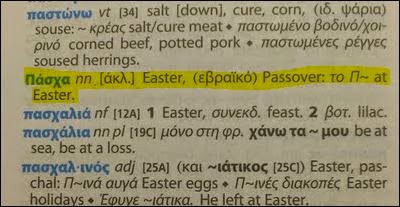
Easter comes forth from Passover which is פסח ‘pesach’ in Hebrew and Πάσχα ‘Pascha’ in Greek. The Holy Scriptures declare that Jesus Christ is our Passover.
1Co 5:7 Purge out therefore the old leaven, that ye may be a new lump, as ye are unleavened. For even Christ our passover {πασχα ‘pascha’} is sacrificed for us:
1Co 5:7 εκκαθαρατε ουν την παλαιαν ζυμην ινα ητε νεον φυραμα καθως εστε αζυμοι και γαρ το πασχα ημων υπερ ημων εθυθη χριστος
Latin Vulgate
1Co 5:7 expurgate vetus fermentum ut sitis nova consparsio sicut estis azymi etenim pascha nostrum immolatus est Christus
Wycliffe
1Co 5:7 Clense ye out the old sourdow, that ye be new sprengyng togidere, as ye ben therf. For Crist offrid is oure pask.
Tyndale
1Co 5:6 Pourge therfore the olde leven that ye maye be newe dowe as ye are swete breed. For Christ oure esterlambe {πάσχα ‘pascha’} is offered vp for vs.
In many languages of the world today, the Easter – Pascha connection is still seen. In Spanish, Easter is Pascua, in Italian and Catalan Pasqua, in Portuguese Páscoa and in Romanian Paşti.
The names for Easter in various languages
In most of the remaining languages in countries with a Christian heritage, the name for Easter is derived from “Pesach” (“פסחא” in Hebrew) the name for Passover: These include:
Afrikaans: Paasfees
Albanian: Pashkët
Amharic: (Fasika)
Arabic: عيد الفصح (Aīd ul-Figh)
Azeri Pasxa: Fish (pronounced fis`h)
Berber: tafaska (nowadays it is the name of the Muslim “Festival of sacrifice”)
Catalan: Pasqua
Danish: Pهke
Dutch: Pasen or paasfeest
Esperanto: Pasko
Faroese: Pلkir (plural, no singular exists)
Finnish: Pننsiنnen
French: Pâues
Greek: ذـَ÷ل (Pascha)
Hebrew: פסחא (Pascha)
Icelandic: Pلkar
Indonesian: Paskah
Irish: Cلisc
Italian: Pasqua
Japanese: Seidai Pasuha, “Holy and Great Pascha”, used by Eastern Orthodox members
Latin: Pascha or Festa Paschalia
Lower Rhine: German Paisken
Malayalam: പെശഹ (Pæsacha/Pæsaha)
Northern Ndebele: Pasika
Norwegian: Påske
Persian: Pas`h
Polish: Pascha
Portuguese: Páscoa
Romanian: Pa؛te
Russian: Пасха (Paskha)
Scottish Gaelic: Casca
Spanish: Pascua
Swedish: Pهsk
Tagalog: (Philippines) Pasko ng Muling Pagkabuhay (literally “the Pasch of the Resurrection”)
Turkish Paskalya
Welsh: Pasg
Based on “Great Day” or “Great Night:” This is used in most Slavic languages:
Bulgarian: Великден (Vىlikdىn’)
Czech: Velikonoce
Latvian Lieldienas (Plural; no singular exists)
Lithuanian Velykos (Plural; no singular exists)
Polish: Wielkanoc
Slovak: Ve¾kل Noc
Slovenian: Velika no
Ukrainian: Вялікдзень (Vjalikdzىn’)
Based on “Resurrection”
Bosnian: Uskrs or Vaskrs (literally “resurrection”)
Chinese: Fùhuَ Jié (literally “Resurrection Festival”)
Croatian: “Uskrs,” meaning ‘Resurrection’.”
Korean: Buhwalchol, literally “Resurrection Festival”
Lakota Woekicetuanpetu (literally “Resurrection Day”)
Serbian Ускрс (Uskrs) or Васкрс (Vaskrs, literally “resurrection”)
Vietnamese Lễ Phục Sinh (literally, “Festival of Resurrection”)
Based on multiple names:
Armenian: Զատիկ (Zatik or Zadik, literally “separation”) or Սուրբ Հարություն (Sourb Haroutiwn, literally “holy resurrection”)
Belarusian: Вялікдзень or (Vialikdzen’, literally “the Great Day”)
Bulgarian: Великден (Velikden, literally “the Great Day”) or Възкресение Христово (Vazkresenie Hristovo, literally “Resurrection of Christ”)
Japanese: Iisutaa, pronunciation of Easter in Japanese katakana or Fukkatsusai, literally “Resurrection Festival”
Macedonian Велигден (Veligden, literally “the Great Day”) or, rarely Воскрес (Voskres, literally “resurrection”)
Ukrainian: Великдень (Velykden) or Паска (Paska)
Other bases:
Estonian: Lihavُtted (literally “meat taking”)
Georgian: აღდგომა (Aĝdgoma, literally “rising”)
Hungarian Hْsvét: (literally “taking, or buying meat”)
Maltese L-Għid il-Kbir (means, “the Great Feast”)
Ossetic куадзوh, means “end of fasting”
Persian عيد پاك (literally “Chaste Feast”)
Tongan (South-pacific) Pekia (literally “death (of a lord)”)
Scripture declares that the person that thinks he stands needs to take heed lest he fall (1 Corinthians 10:12). I take this warning seriously so I am constantly re-examining my understanding of the Word/God’s will. In recent years I have been applying this re-examining process to my understanding of holidays such as Easter. In the past I had researched and found many “pagan-connections” to the holiday and as a result left off celebrating and consequently ‘condemned’ the holiday as an abomination to the Lord. However, in recent years I have found that in my zeal I had thrown out the proverbial ‘baby with the bathwater.’
Many, if not most, of the claims of Easter having “pagan origins” are erroneous. Some are outright lies, some are half-truths but the result of bearing false witness is a result. These lies are dividing the body of Christ and are abominable in the eyes of God (Proverbs 6:16-19).
Zeal is linked to leaven….In Greek, the word for leaven is ζυμόω ‘zumoō’ which comes from the root word ζέω ‘zeo’ which means to boil with heat, fervency in the spirit or zeal. For those who celebrate the Feast of Unleavened Bread, this is important to note. In my zeal to celebrate the Feast of Unleavened Bread and get rid of the leaven in my life (which I associated with Easter), I was in reality adding more ‘leaven‘ to my life.
We don’t stand by our works or knowledge, we stand only by faith (2 Corinthians 1:24) in the Gospel (1 Corinthians 15:1) which is given by the grace of God (Romans 5:2). As a result, we are not to judge each other and the perceived failings of each other as we are all servants of God and He is the Master who makes us stand or fall (Romans 14:4). We are called to bear the infirmities (weakness of mind) of our brothers, edifying them in love as Messiah did (Romans 15:1-7).
If we think we are standing by our works or knowledge and that we are somehow better than our fellow believer because we do something or think something that they don’t, we are walking in pride and we will fall and be humbled (Proverbs 16:18).
A lot of believers in Christ Jesus believe in keeping the Biblical feasts which is great….but, if these feasts are being done in a prideful way and the finger of condemnation is being pointed at other believers who don’t keep them because they are not convicted to do so, then these “works” of holy day keeping are an abomination to the Lord because they are being done by one with a prideful heart (Proverbs 16:5; Isaiah 1:14; Amos 5:21) and not out of love for which these feasts/holydays were designed.
Those of who have quit celebrating Easter because they believe they are following God’s will in celebrating Passover/Unleavened Bread must remember that part of getting rid of the leaven in our lives is humbling ourselves and getting rid of the pride in our hearts.
To humble oneself before the Lord is to put on the mind of Messiah, allowing God to work through you according to His will, working out one’s own salvation with fear and trembling (Philippians 2:1-16). Humbling oneself before the Lord is bowing the knee before Him and seeking His will in our lives, not standing over others and demanding they bow the knee to us, submitting to our will (Romans 14:11-13).
Humbling oneself before the Lord leads one to subject oneself to others (1 Peter 5:5-6), seeking to serve them in love (Galatians 5:13-14). At the Last Supper, Christ said that the world would know we are His disciples by our love (John 13:35). He did not say they would know us by our understanding of doctrine or celebrating of the feasts/holydays.
When the Lord returns, He will separate the goats and the sheep according to our service in love (Matthew 25:31-46), not on whether or not we celebrated Passover or Easter. Serving in love is the true path to ‘theology’ or knowing God (Jeremiah 22:16). Scripture declares that love of one’s fellow man is equated with love of God (1 John 4:11-12, 20-21) and is the fulfillment and purpose of His Word (Matthew 22:39-40; Romans 13:8-10; Galatians 6:2). It does not say love of one’s fellow religious counterpart, but of one’s fellow MAN (Galatians 6:10; 1 Thessalonians 5:15; 3 John 1:11), even our enemies (Luke 6:35). This love is manifested in service to one another (Galatians 5:13-14; 6:2; John 13:35; 1 John 3:16-19), in particular the poor and weak amongst us.
The Biblical feasts were designed to be shadow pictures of the Messiah (Colossians 2:17) who is the manifestation of God’s love (John 3:16). They were yearly rehearsals for God’s people to keep them walking in His cycles of righteousness. The feasts were designed to be outward signs of His Word to the world. The Word of God became flesh and dwelt among us, He is the fulfillment/purpose of these sabbaths and feasts.
The Word is the character/name of God (Revelation 19:13; Matthew 12:18-21 – Isaiah 42:1-4; Revelation 14:1; 22:4; Deuteronomy 6:6-8), which is love (1 John 4:8). Built into the feasts/sabbaths is the will of God, the plan of salvation for mankind, not their condemnation (2 Peter 3:9; 1 Timothy 2:4). The message of these feasts/holydays is God’s love, forgiveness and plan of redemption. They are not designed to portray righteousness of God’s people, they are meant to portray God’s righteousness which comes only through Christ Jesus. In other words, the feasts were not designed to make believers righteous. They were designed to be shadows of Christ, who alone is our righteousness.
Rom 3:21 But now the righteousness of God without the law is manifested, being witnessed by the law and the prophets;
Rom 3:22 Even the righteousness of God which is by faith of Jesus Christ unto all and upon all them that believe: for there is no difference:
Musings – Saved by Grace Through Faith
Again, the Biblical Feasts are shadow pictures which are designed to reveal Jesus Christ (Colossians 2:16-17; Hebrews 10:1-17). He is the Image of God (Hebrews 1:3; 2 Corinthians 4:4-6; Colossians 1:15-16) who is love (1 John 4:8). Therefore all of the feasts are designed to reveal the love of God. From the Spring feasts which reveal the sacrifice of the Lord to redeem mankind to the Fall feasts which reveal the future gathering of the redeemed. They are all about the love of God for mankind and despite of our wickedness, He still offers the path of reconciliation. It doesn’t come by our religious works (Ephesians 2:1-10) or our understanding of His will (1 Corinthians 2:16), it comes by our faith in the work of Messiah (Romans 3:25-31; 8:3-3; 10:3-13; Colossians 2:16-17; Matthew 10:32-33; 1 Peter 1:21).
Passover & the Feast of Unleavened Bread is all about this love as they point to the death and resurrection of Messiah Jesus, the manifestation of God’s love (John 3:16).
A lot of religious denominations/movements go down the wrong path when they take their eyes off of Jesus and get focused on other things (even if they are Biblically based). The focus of celebrating Passover & Unleavened Bread should be on the Messiah (His death and resurrection), the manifestation of God’s love. The focus shouldn’t be on why those who don’t celebrate Passover/Unleavened Bread are “wicked” as most of these believers are celebrating Easter which is also a proclamation of Messiah’s death and resurrection, revealing the love of God for mankind.
Our celebrations should help the Seed/Word (who is Messiah) grow in our hearts otherwise they are worthless/dung. The purpose of celebrating the Biblical feasts is all about proclaiming the Name/Character of God to the world. The purpose is not to puff up those who celebrate those feasts and make them ‘better’ than their brothers who aren’t convicted to do so.
The Hebrew word for dung is פרש ‘parash’ which is the root of the word פרשה ‘parsha’ (as in the Torah parshot/portions) as a פרשה ‘parsha’ is a “spreading” out of an event/Scripture portion as dung is spread in a field. Scripture alludes to the meeting together of believers whose focus is not on Messiah {ie. the Name/Character of God} (Malachi 2:3) and calls these feasts dung. The purpose of the feasts/sabbaths is to reveal Messiah (Colossians 2:17), if He is not the focus then these celebrations are dung which He won’t “smell” (Amos 5:21; Isaiah 1:13-14).
If our meetings on the feasts/sabbaths are not done bringing forth God’s image of love…they are worthless, they are dung (Malachi 2:2-3). If our interpretations and discussions of the Word don’t draw one closer to Messiah (the Word made flesh) then they are fruit from the tree of knowledge of good and evil which is the origin of idolatry. Interestingly, in Deuteronomy 29:17, the word idol has a footnote in the 1611 Authorized Versions (KJV) of “dungy gods”. This is because the word in Hebrew is גללול ‘gillul’ which is speaking of dung. Perhaps this is why in 2 Kings 10:27 we see the house of Baal being made into a “draught house” by Jehu.
Further connecting this dung-idolatry-tree of knowledge concept is the Hebrew word צפוע ‘tsephua’ which means dung. The root of this word is צפע ‘tsepha’ which is translated as ‘cockatrice/adder’ in Scripture as the tongue “issues” out of the mouth of a serpent as dung “issues” out via excretion. In the beginning the “issue” out of the mouth of the serpent was to lead man away from their Creator, who is Messiah (Ephesians 3:9; 1 Corinthians 8:6; John 1:1-3; Colossians 1:12-17; Hebrews 1:1-12). When we meet to celebrate are we bringing forth the poison of the serpent (Psalm 58:3-4; 140:3; Romans 3:13; James 3:8) or are we issuing forth the life giving oracles of God (1 Peter 4:11)?
1Pe 4:11 If any man speak, let him speak as the oracles of God; if any man minister, let him do it as of the ability which God giveth: that God in all things may be glorified through Jesus Christ, to whom be praise and dominion for ever and ever. Amen.
When we meet to discuss the Scriptures are we using the Word to bring forth accusations and condemnations of our fellow man or are we using the Word to edify one another, speaking the truth in love? Are we meeting together to divide His house or are we meeting together to stand in His grace, mercy and forgiveness?
Musings – United We Stand Divided We Fall
The Lord Jesus warned believers of those who did not bring forth fruit after their “field” was given dung that their “tree” would be cut down (Luke 13:8-9). The “vineyard” that rejects Messiah Jesus and does not bring forth the fruit of His Word/Spirit will be destroyed (Matthew 21:33-43). This was also the warning of John the Baptist (Luke 3:8-9) {“Elijah message“}. Yet, if we seek His Face at all times (1 Chronicles 16:11) we will see Jesus (Hebrews 1:3; 2 Corinthians 4:4-6) and we will not be unfruitful (2 Peter 1:4-9).
Musings – Seek His Face & The Golden Rule
When we gather together in holy convocations {קדשׁ מקראי ‘miqrey qodesh}, the purpose is to declare His Word (Messiah Jesus) to the world. The word מקראי ‘miqrey’ comes from the root קרא ‘qara’ which means to call out or proclaim the Word….to bring forth His image of love to the world. These concepts are linked together as the name of God is His Word (Revelation 19:13; Matthew 12:18-21 – Isaiah 42:1-4; Revelation 14:1; 22:4; Deuteronomy 6:6-8).

The Word of God is His “physical manifestation” on earth. When God “qara’d” He physically manifested Himself, and proclaimed who/what He is. This is what the reading of the Word does. The Word proclaims the Name of the Holy One, as it is said in Revelation 19:13, His Name (שם ‘shem’- character) is the Word. This is what the purpose of the feasts is, to proclaim the name of the Most High.
Calling on His Name brings salvation and is associated with the physical manifestation of the Most High (Matthew 26:53; Jeremiah 29:10-14; Psalm 91:14-16; 86:7-9; 50:15, 23; 18:3; 55:16; Romans 10:12; Acts 2:21; 22:14-16; Joel 2:32; 1 Corinthians 1:2). Jesus is THE image of God (Hebrews 1:3; 2 Corinthians 4:4-6; Colossians 1:15-16) who is love (1 John 4:8). He revealed God’s name/character to mankind (John 17:6).
Joh 17:6 I revealed Your name to the men whom You gave to Me out of the world. They were Yours, and You gave them to Me; and they have kept Your Word.
Both Passover & Easter are designed to proclaim the name of God. This is not to say that all of the customs associated with these celebrations are holy and pure but the message of the death and resurrection of Messiah is.
The Word of God was committed to Israel, who was called to bring forth God’s glory/love to the world. Instead, Israel fell into idolatry and was cast into the nations. Judah was cast into Babylon but by God’s grace was allowed to return to the land with another opportunity to bring forth God’s message of love to the nations. Instead, Judah chose to form a religion which corrupted the message of God’s Word and instead of man being formed into His image, they were to be formed into the image of Judaism.
Today, most Christians celebrate Easter but have mixed in some customs which are similar in nature to the idolatry which ancient Israel fell into. Today, more and more Christians are returning to keeping Passover, but sadly, are falling into the same trap of ‘Phariseeism’ that Judah did in 2nd Temple times. Both sides need to repent and seek to glorify God in their celebrations, not continue to feed their carnal natures whether that be chocolate Easter bunnies or pride and elitism.
The fruit which Israel was called to produce was the ‘goodly’ fruit of His Word (Jeremiah 11:16). However, Israel did not produce this fruit but brought forth wicked fruit (Jeremiah 24:2-8). As a result, God brought fire upon this olive tree, breaking the branches thereof (Jeremiah 11:16-17).
The Hebrew word for ‘goodly’ in Jeremiah 11:16 is תאר ‘toar’ which means a shape, form, outline or figure of a thing. תאר ‘toar’ is a cognate of the word תורה ‘torah’ which literally means instruction which defines the border of a people or the ‘image’ of a people. תורה ‘torah’ is most commonly translated as ‘law.’ Here we see that Israel was to produce the fruit of His Law which would bring forth His image to the world. His Image is that of love (1John 4:8, 16; Matthew 22:35-40).
Israel did not bring forth this image of love (Luke 7:36-47; 10:27-37; 18:9-14). Although they were zealous for the law (Acts 21:20; 22:3), in their zealousness they corrupted its true meaning (Romans 10:2). They were outwardly religious, yet inwardly full of wickedness (Luke 11:39; 16:15; 20:47; Matthew 6:2-5, 16; 23:5, 25-27). They separated themselves from the peoples of the world, declaring anyone who didn’t worship God according to their traditions was an unclean heathen (John 4:9; 8:48; Acts 10:28). Recall that zealousness is linked to leaven.
By their traditions they had put up a dividing wall between themselves and others (Acts 21:28; Ephesians 2:14-15), preventing them from drawing nearer to God (Luke 11:52) as Israel was the custodians of His Word (Romans 3:2; John 4:22) which reveals His nature to mankind. It was their traditions which corrupted the Word of God (Matthew 15:2-9; Mark 7:3-13; Colossians 2:8) and perverted the message of His love to mankind, which led Jesus Christ to declare them as lawless (Matthew 23:28; John 7:19). It is because of this lack of love (Matthew 5:22; John 15:25) that the Lord was sent to Israel to separate the good trees from the bad (Malachi 3:2-3; 4:1; Matthew 3:10-12; Luke 3:9; John 15:2).
The inheritance was taken away from the bad trees and given to a nation that would produce the fruit of love which the Lord desires (Matthew 21:33-46; Mark 12:1-12; 1 Peter 2:4-9; Galatians 3:1-29). Believers in Messiah became a ‘reformed’ Olive tree and were given the call to abide in Him (Hebrews 3:1-6), being formed into His image (Philippians 3:14-15; Ephesians 1:1-6; 1:17-23), bearing forth His fruit (2 Peter 1:5-9), called to bring forth God’s Gospel of love to the world (2 Timothy 1:9-11), revealing His image (2 Thessalonians 1:11-12).
The Greek word for ‘calling is κλῆσις ‘klēsis’ which is used in the Septuagint to translate the Hebrew word קרא ‘qara’ which, as mentioned above, is associated with manifesting God’s name/image on earth.
Will we fall into the same trap of 2nd Temple Jews and become fruitless/barren, walking in the letter of the law that brings death to the world, or will we walk in the Name/character of Messiah…bringing forth His love and salvation to the world?

Just as with Christmas and New Years, Easter has some customs which we are similar to customs of the heathen which Scripture warns us not to partake of (Jeremiah 10:2). However, tracing these customs back to their source reveals they are founded upon the Truth of the Word, albeit some in a corrupted form. In this study, I hope to share how the numerous “non-Biblical” elements of Easter are shadows which point to Christ Jesus.
Shadows of Messiah are seen in all creation which includes man and his holidays. Man was created in the image of God (Genesis 1:26-27). Hence, more than any other part of creation, shadow pictures of Messiah are seen in relation to mankind. One aspect of man is his religions and religious ceremonies and holidays.
All holidays have some truth which is a gift of grace to all of mankind to draw us back to the Most High (2 Peter 3:9; 1 Timothy 2:4; 4:10), for He is the God of all.
The LORD our God uses the natural world to teach us spiritual principles. This is why Passover & Easter are celebrated in the Spring where the earth comes back to life after the ‘death’ of winter. The heathens perverted this truth, just as they have perverted many truths of Scripture.
If one takes a cursory glance of the myths of the heathen it appears as if the ancient pagans believed in fairy tales and were simpletons whom modern man can scoff and mock. However, the more one looks into their beliefs the more one sees that their religion was based on the truth that the Holy Scriptures teach but became perverted throughout time and by the carnal mind. The perversions of the truth seen in the mystery religions trace back to the Truth of the Word. Whether you were born in modern times with the celebration of Easter being celebrated throughout the world or in ancient times where spring fertility rites and myths of dying and rising savior figures, all mankind has had the opportunity to see the concept of the death and resurrection of Messiah Jesus.
The LORD our God allowed this so that people would be able to come to the truth no matter what culture they grew up in {Deuteronomy 4:10}. It is written in the heavens, it is seen in the cycles of the earth, it is written in the cellular structure of our bodies…all things point to the Messiah.
Just as with Christmas and New Years, Easter has some customs which we are similar to customs of the heathen we Scripture warns us not to partake of (Jeremiah 10:2). However, tracing these customs back to their source reveals they are founded upon the Truth of the Word found in nature.

In Catholic belief, the mass originates from the Last Supper held between Messiah and His disciples which is said to have occurred on Good Friday. In reality, this was a Passover meal but it is interesting to note that the word ‘mass’ traces back to the Hebrew word מצה ‘matsa’ which means unleavened bread.
The mass is called the Eucharist which comes from the Greek word εὐχαριστία ‘eucharistia’ which means to give thanks. This is linked to the Lamb.
Rev 7:9 After these things I saw, and behold, a great crowd which no one was able to number them, out of every nation, even tribes and peoples and tongues, standing in front of the throne, and before the Lamb, having been clothed with white robes, and in their hands palm branches.
Rev 7:10 And they cry with a great voice, saying, Salvation to our God sitting on the throne, and to the Lamb.
Rev 7:11 And all the angels and of the elders and of the four living creatures stood around the throne. And they fell before the throne on their faces, and worshiped God,
Rev 7:12 saying, Amen. Blessing and glory and wisdom and thanksgiving and honor and power and strength to our God forever and ever. Amen.
The word ἀρνίον ‘arnion’ (lamb) is used 30 times in Scripture. This corresponds to the letter ל ‘lamed’ in Hebrew which speaking of the goad or staff of the Shepherd. ל ‘lamed’ is also the 12th letter of the Hebrew alphabet, linking to the twelve tribes of Israel, His flock.
It is interesting to note that the original name of the letter was לם ‘lam’ which is also speaking of the relationship between a Shepherd and His sheep. It is no surprise that the origin of the English word ‘lamb’ would then come from this Hebrew word. The word למד ‘lamed’ comes from this root and means to teach or make disciples.
The Hebrew word יהודה ‘yehudah’ or Jew also has the numerical value of 30.
Rom 2:28 For he is not a Jew that is one outwardly, nor is circumcision that outwardly in flesh;
Rom 2:29 but he is a Jew that is one inwardly, and circumcision is of heart, in spirit, not in letter; of whom the praise is not from men, but from God.
יהודה ‘yehudah’ comes from the Hebrew root ידה ‘yadah’ which means to raise the hands in confession, giving thanks or praise.
1Jn 4:2 By this know the Spirit of God: every spirit which confesses that Jesus Christ has come in the flesh is from God.
1Jn 4:15 Whoever confesses that Jesus is the Son of God, God abides in him, and he in God.
In Greek ‘confession’ comes from the word means ὁμολογέω ‘homologeō’ which literally means ‘joined to the Word.’ To ‘cleave’ to Him. One of the Hebrew words for flock is דבר ‘davar’ which also means ‘word’ in Hebrew. This is speaking of the ordering of the sheep by the Shepherd (Micah 2:12).
Going back to the mass, מצה ‘matsa’ connection. Recall, the mass is called the Eucharist. The eucharist is also known as ‘communion.’ The word communion in Greek is κοινωνία ‘koinōnia’ which means fellowship or union. Unity comes only through Christ and the New Covenant in Him (Psalm 50:5; Isaiah 49:3-9; Hebrews 2:11; 13:20-21; Jeremiah 50:5; Ephesians 2:15; Colossians 1:20; 2:1-11) and walking with Him (1 John 1:3-7).
1Co 10:16 The cup of blessing which we bless, is it not the communion {κοινωνία ‘koinōnia’} of the blood of Christ? The bread which we break, is it not the communion of the body of Christ?
1Co 10:17 For we being many are one bread, and one body: for we are all partakers of that one bread.
The Hebrew counterpart of κοινωνία ‘koinonia’ is the word חבר ‘chabar’ which is the word used for the joining together of the Tabernacle. Communion then is the fellowship that believers have which makes them one. חבר ‘chabar’ has the meaning of something that is bound together. Even more interesting is that the word for stripes is חבורה ‘chaburah,’ as in the stripes on מצה ‘matsa’ and on back of Messiah comes from this root חבר ‘chabar.’
Isa 53:5 But he was wounded for our transgressions, he was bruised for our iniquities: the chastisement of our peace was upon him; and with his stripes {חבורה ‘chaburah’} we are healed.
Php 2:1 If there be therefore any consolation in Christ, if any comfort of love, if any fellowship {κοινωνία ‘koinōnia’} of the Spirit, if any bowels and mercies,
Php 2:2 Fulfil ye my joy, that ye be likeminded, having the same love, being of one accord, of one mind.
Luk 24:30 And it came to pass, as he sat at meat with them, he took bread, and blessed it, and brake, and gave to them.
Luk 24:35 And they told what things were done in the way, and how he was known of them in breaking of bread.
Joh 17:21 That they all may be one; as thou, Father, art in me, and I in thee, that they also may be one in us: that the world may believe that thou hast sent me.
Joh 17:22 And the glory which thou gavest me I have given them; that they may be one, even as we are one:
Joh 17:23 I in them, and thou in me, that they may be made perfect in one; and that the world may know that thou hast sent me, and hast loved them, as thou hast loved me.
Communion/unity comes through the New Covenant in Messiah and unites those who celebrate Passover with those who celebrate Easter if both sides are doing these things in ‘remembrance’ of Him (Luke 22:19; 1 Corinthians 11:24-25).
As believers, the main objective in our walks is to grow in maturity as a body until the days that we meet the Lord at His return. This maturation or perfecting process is intimately linked to unity. In fact, the main goal of unity is the preparation unto perfection of the bride of Christ to meet the Bridegroom (Matthew 5:48; Romans 12:2; 1 Corinthians 13:9-13; Ephesians 4:11-13; Philippians 3:14-15; Colossians 1:28; 3:14; 4:12; Romans 10:4; Psalm 119:1; Luke 1:17; Revelation 19:7-8; Ephesians 5:25-27). This is done through love (Colossians 3:14; 1 Corinthians 13:9-13; Romans 13:10; 1 John 4:10, 12, 16; 5:3).
The primary theme of Easter is resurrection and life which point to Christ. This is seen in the etymology and symbology of Easter, easter eggs and rabbits etc.
The East

Some believe Easter comes from the word ‘Eostre’ which is believed to have been the name of the goddess of the rising sun in the Spring. This claim has very little legitimacy but the connection between “Easter” and the “east” is valid.
The etymology of the word Easter points to the sun rising in the East which is a picture of the resurrection of Christ.
Easter has connections to the German language. Some even call German the “Mother Tongue” of English. The German word for “Easter” is “Ostern” which goes back to the German words ‘Osten’/’Ost’ which mean “east”. ‘Oster’ comes from the old Teutonic form of ‘auferstehen/auferstehung,’ which mean resurrection, which in the older Teutonic form comes from two words, ‘Ester’ meaning first, and ‘stehen’ meaning to stand. These two words combine to form ‘erstehen’ which is an old German form of ‘auferstehen,’ the modern day German word for resurrection.
Douglas Harper (The Online Etymology Dictionary) connects Easter to the Proto-Germanic word is ‘austron’ which means the dawn or to shine. The root of ‘austron’ is ‘aust’ which means East. The English word ‘east’ connects back to this same word ‘aust.’ Going back further is the Latin word for dawn which is ‘aurora’ and the Greek word αὔριον ‘aurion’ which means morning. All of these words trace back to the Hebrew word אור ‘ohr’ which means light.
The English word ‘east’ also traces back to the Hebrew word אש ‘esh’ which means fire or a strong pressing. It is in the East that the sun (fire) rises each day which is a picture of the resurrection.
Others believe Easter traces back to the goddess Ishtar. This claim has even less legitimacy but for the purpose of understanding we will look at the name Ishtar.
Ishtar comes from the Hebrew word עשתרת ‘ashtaroth’ which means a star from the word עשתרה ‘ashterah’ which means a flock. These two concepts are connected. If one looks at the names of the pagan gods one will find they almost always connect back to concrete meanings found in the Hebrew language.
Psa 8:1 To the chief musician, on the harp. A Psalm of David. O Jehovah, our Lord, how majestic is Your name in all the earth; You have set Your glory above (על ‘al’ – above/on/upon) the heavens!
His Glory is seen in the heavens…What is the Glory of the LORD? The Lamb of God (Revelation 21:23). The Hebrew word for Glory is כבוד ‘kavod’ which comes from the root כב ‘kab’ which means a star:

עשתרה ‘ashterah’ also traces back to the root אש ‘esh’ which means fire as mentioned above and is the source of the English word East.
The entire month of April was formerly called “easter-monadh.” The English word ‘April’ comes from the Latin ‘mensis Aprilis’ which means month of Venus. In Old English the month was called ‘Eastermonao’ which means Easter month. From the Old French ‘avril’ which traces back to the Latin ‘Aprilis’ which means Venus.
The Hebrew word for Venus is נגה ‘nagah ‘which means to shine and is the source of the Latin word ‘ignis’ which means to ignite or fire, which connects to the East. The word ‘East’ comes from the Hebrew word אש ‘esh’ which means fire. Venus is known as the morning star from its appearing in the eastern sky just before sunrise.
Each day when the sun rises it is a picture of the resurrection (Malachi 4:2). In Hebrew the word for dawn is שחר ‘shachar’ from the root שח ‘shach’ which means the pit. When the sun sets it is a picture of death/going into the pit, when it arises it is a picture of resurrection.

Venus is the bright and morning star.
Isaac Mozeson traces the Etymology of Venus back to the Hebrew word לבן ‘lavan’ which means white or shining. White is associated with beauty and pureness as well as the resurrection of the righteous. לבן ‘lavan’ is also the Hebrew word for the moon. It is no surprise then that Venus is pictured with moon iconography.
Who is the true bright and morning star? Christ Jesus.
Rev 22:16 I, Jesus, sent My angel to testify these things to you over the assemblies. I am the Root and Offspring of David, the bright and morning Star.
The Greek word for morning is ὀρθρινός ‘orthrinos’ which is used in the Septuagint to translate the Hebrew word שכם ‘shakam’ which means the shoulder, but also to arise early (Genesis 22:3). This word is linked to the resurrection.
The Hebrew word for shoulder is שכם ‘shekhem’ is linked to the resurrection as the word literally means to rise early and place a load on the shoulders in order to depart.
Isa 22:22 And the key of the house of David I will lay on his shoulder, so that he opens, and no one shuts; and he shuts, and no one opens.
Rev 3:7 And to the angel of the assembly in Philadelphia, write: These things says the Holy One, the True One, the One having “the key of David,” “the One opening, and no one shuts; and shuts, and no one opens:” Isa. 22:22
Luk 1:78 Through the tender mercy of our God; whereby the dayspring from on high hath visited us,
Luk 1:79 To give light to them that sit in darkness and in the shadow of death, to guide our feet into the way of peace.
Luk 1:80 And the child grew, and waxed strong in spirit, and was in the deserts till the day of his shewing unto Israel.
In Luke 1:78 the dayspring/daystar is translated from the Greek word ἀνατολή ‘anatolē’which also is translated as East (Matthew 2:1-2,9; 8:11; 24:24; Luke 13:29; Revelation 7:2; 21:12-13).
ἀνατολή ‘anatolē’ is also used in the Septuagint to translate the Hebrew words מזרח ‘mizrach’ and קדם ‘qedem’ which mean the rising sun in the East as well as נגה ‘nogah’ which means shining and also is the Hebrew word for Venus. Interestingly, ἀνατολή is also used to translate the Hebrew word צמח ‘tsemach’ which means a branch, used specifically in reference to Messiah.
It is interesting to note that the BRANCH is used 5 times in Scripture {Isaiah 4:2; Jeremiah 23:5-6; 33:15-16; Zechariah 3:8-10; 6:12-13}. Venus is linked to the number five as its rotation through the skies makes a pentagon shape. From a fixed location over an eight year period (8 is the number of resurrection), the planet Venus travels a unique celestial pathway that exactly portrays a pentagram.
“As the orbi of Venus is closer to the sun than the earth’s position, she is never seen more than 48 degrees from the sun. During a period of 247 days, Venus is visible as the Evening star that is, withing 48 degrees or less of the sun after the sun has set. Then Venus comes too close to the sun for us to see her. She remains invisible for 14 days, then reappears as the Morning star (or Eastern star) immediately before the sun rises in the east….Only Venus possesses the five-pointed star sign.” {Carl Ljungman- Dictionary of Symbols}

The pentagram mathematically depicts the Fibonacci pattern which is intimately linked with life.
The Greek word for five is πέντε ‘pente’ from whence comes the word pentagram. The pentagram mathematically depicts the Fibonacci pattern.

Take a pentagon with 5 equal sides and connect all the points to form a 5-pointed star. The ratios of the lengths of the resulting line segments are all based on phi.

5 is the 5th Fibonacci number
5 is also the 5th of the Fibonacci numbers, including 0, 1, 2, 3, and 5.
5 appears in the human body, which has proportions based on phi
Another interesting aspect of phi and five is in relation to the design of the human body, which in addition to being based on phi relationships in its proportions, has:
* 5 appendages from the torso, in the two arms, two legs and a head,
* 5 appendages on each of legs and arms in the five fingers and five toes,
* 5 openings on the face, and
* 5 senses in sight, sound, touch, taste and smell.
The Gospel is connected with flesh. Where is the first reference to flesh? The union of Adam and Eve…a picture of Jesus and His Bride becoming one is the fulfillment of the Good News.
Gen 2:21 And Jehovah God caused a deep sleep to fall on the man, and he slept. And He took one of his ribs, and closed up the flesh underneath.
Gen 2:22 And Jehovah God formed the rib which He had taken from the man into a woman, and brought her to the man.
Gen 2:23 And the man said, This now at last is bone from my bones, and flesh from my flesh. For this shall be called Woman, because this has been taken out of man.
Gen 2:24 Therefore, a man shall leave his father and his mother, and shall cleave to his wife and they shall become one flesh
Eph 5:30 For we are members of His body, of His flesh, and of His bones.
Eph 5:31 “For this, a man shall leave his father and mother, and shall be joined to his wife, and the two shall be one flesh.” Gen. 2:24
Eph 5:32 The mystery is great, but I speak as to Christ and as to the assembly.
The rib of Adam from whence his bride came out is linked to the number 5 which connects to the 5th day of creation and life.
חמשׁ ‘chamesh’ is used to translate multiple terms in Hebrew. It is used for the number five/fifty, the hand, to be armed and the side of the body (fifth rib).
The ‘fifth rib’
H2570
חמשׁ
chômesh
This word is used in the following verses: 2Samuel 2:23; 3:27; 4:6; 20:10
Messiah was wounded in the side (‘the fifth rib’).
Joh 19:34 But one of the soldiers pierced His side with a lance, and at once blood and water came out.
Adam’s bride came forth from his rib/side (Genesis 2:22) which is a picture of Messiah’s bride ‘coming forth’ when He offered Himself as an atonement to bring us back to God. Interestingly, the year of Jubilee, which occurs every 50 (חמשים ‘chamashim’) years (Leviticus 25:10-13) began on the Day of Atonement. The great trumpet (Isaiah 27:13) will be blown and those resurrected in the 1st resurrection will receive their inheritance in the land. This is interesting because the shofar is in the Fibonacci sequence which the pattern the Most High uses in His creation of life. The Fibonacci sequence is encoded with the number 5.
“For millennia, people have enjoyed the sight of the “evening star” shining brightly in the western sky shortly after sunset. Outshining all other stars, this remarkable beacon seems to brighten to unbelievable glory as twilight fades to night. It rises higher night after night and then stops and begins to sink lower each evening until it vanishes below the horizon. Sometime later, it reappears just before sunrise in the eastern sky as the bright “morning star.” {The Solar System: Venus – Jason Lisle}
The word for ‘spiral’ (as in Fibonacci spiral) traces back to the Latin word ‘spira’ which means a spiral or coil which comes from the Greek word ‘speira’ which traces further back to the Hebrew word צפירה ‘tsephiyrah’ which has the meaning of the morning sunrise as well as the turning of a wreath. צפירה ‘tsephiyrah’ comes from the root word צפר ‘tsaphar’ which means a bird, in particular the song of the birds in the morning.
There are numerous words in Hebrew for birds and the different types thereof, the most common is צפר ‘tsaphar’ which is referring to the early morning appearance of birds.

Morning is a time of praise (הלל ‘halel’). This is interesting to note as Scripture speaks of Venus as Helel {הילל ‘Heylel’} the “son of the morning” {שחר ‘shachar’}.
This word הילל ‘Heylel’ is translated as ‘lucifer’ in the Latin Vulgate. The only other place ‘lucifer’ is seen in the Vulgate is in 2 Peter 1:19, speaking of the day star, the Messiah. Lucifer has become synonymous with satan as a counterfeiter which is seen in the Mystery religion symbology of the planet Venus and pentagram symbol.
2Pe_1:19 et habemus firmiorem propheticum sermonem cui bene facitis adtendentes quasi lucernae lucenti in caliginoso loco donec dies inlucescat et lucifer oriatur in cordibus vestris
בן שחר ‘ben shachar’ – son of the morning
Psa 108:2 Awake, harp and lyre! I will awake early {שחר ‘shachar’– dawn}
This is the period of time that the sun is at the horizon, the time when birds sing their songs of praise to their Creator. At evening, when the sun is at the horizon again, the birds sing their songs as well.
Psa 65:8 They also that dwell in the uttermost parts are afraid at thy tokens: thou makest the outgoings of the morning and evening to rejoice.
The morning and evening is a period of time when light and darkness are separating. This points back to Genesis 1:2-5. It is no surprise then that birds are intimately linked to this time. The Spirit of God hovering over the waters in the beginning is likened to a bird hovering over her brood. The Spirit of God hovering over the waters is also connected to the Voice of God over the waters which brought forth light from darkness. It is interesting to note that the numerical value of “voice of God” {קול יהוה ‘qol Yahweh’} is 182, which is the mathematical value of the Fibonacci pattern.
The English word ‘sound,’ which began at this time, comes from the Old English word ‘swan’ meaning a sounding bird.
Morning and evening our Creator is calling us to Him. Calling us to the shadow of His wings. Calling us back to Him through the Messiah under His outstretched arms.
The meaning of ὁρίζω ‘horizo’ is linked with the above definition of ‘mark.’ It means to mark out a boundary. The English word horizon comes from this Greek word.

This word obviously links to the sun as it is the horizon where the sun rises and sets. It further linked to ‘predestination’ as we are chosen before the foundation of the world (Ephesians 1:4). In Hebrew this is the concept of עלם ‘olam’ which is usually translated as forever or eternity but in concrete thought means ‘beyond the horizon.’
The word for time in Hebrew, עת ‘et,’ means to ‘see the mark.’
What is this ‘mark’? It is the sun setting (death) and rising (resurrection) above the horizon.
It is no surprise then that the pentagram symbol is linked to the mark of the beast.
Eggs

The Hebrew word for egg is ביצה ‘beytsah’ which comes from the root בץ ‘bets’ meaning mud.
Mud is mixture of water and earth, pointing back to Genesis 1:9-13 and the earth ‘rising’ out of the waters which is a picture of the resurrection.
The dividing of water and dirt and it’s connection to the resurrection is also seen in mud.

Deliverance is linked to being pulled up out of the mire.
Psa 40:2 And He drew me up from the pit of tumult, out of the miry clay; He lifted my feet on a rock; He directed my steps.
Interestingly, one of the Hebrew words for fine linen (Revelation 19:8, 14) comes from this root.

White/resurrection connection

Job 6:6 Can that which is unsavoury be eaten without salt? or is there any taste in the white of an egg?
The word here for white is ריר ‘riyr’ which means the flowing of a liquid as in the yolk of an egg.
The word for egg in Job 6:6 is חלמות ‘chalamut’ which comes from the root חלם ‘chalam’ which means to dream from the parent root חל ‘chal’ which means to pass through or change. This is what the purpose of the egg is, a transitional home for the chick.
White is the color of resurrection
The garments designed for the priests were a shadow picture of the resurrected believers who are clothed in white, likened unto snow. Being clothed with His righteousness is linked with the earth springing forth plants.
Isa 61:10 Rejoicing I will rejoice in Jehovah. My soul shall be joyful in my God. For He clothed me with garments of salvation; He put on me the robe of righteousness, even as a bridegroom dons as a priest his head-dress, and as a bride wears her ornaments.
Isa 61:11 For as the earth comes out with her buds, and as a garden causes that which is sown to grow, so the Lord Jehovah will make righteousness and praise to grow before all the nations.
Psa 132:9 Let Your priests be clothed with righteousness, and let Your saints shout for joy.
Psa 132:16 And I will clothe her priests with salvation; and her saints shall surely shout.
The fine linen that the priests wore (Exodus 28:5, 8, 15 etc.) is from the following Hebrew word {שש ‘shesh’} which means white & the number 6:

The garments of the priest were worn to display that iniquity was not upon them (Exodus 28:43). The white linen is the righteousness of the saints (Revelation 19:7-9). What is Righteousness? It is the Word/Messiah.
It is interesting to note that the Hebrew word for winter, חרף ‘charaph,’ comes from the same root as egg (חלמות ‘chalamut’), חל ‘chal.’ The egg is linked to Spring, which is a picture of passing from death to life. Winter is a picture of death, Spring a picture of life & resurrection.

Coloring an egg is a picture of death & resurrection. Baptism is a picture of a woman taking linen and dipping it into a colored dye where the linen or cloth becomes that new color after being dipped into the water. Baptism is the act of dipping something into water so that it becomes new.
H2881
טבל
ṭâbal
BDB Definition:
1) to dip, dip into, plunge
1a) (Qal)
1a1) to dip in or into
1a2) to dip oneself
1b) (Niphal) to be dipped
Part of Speech: verb
A Related Word by BDB/Strong’s Number: a primitive root

Interestingly, the word for color in Hebrew is צבע ‘tseva,’ which has a similar meaning as טבל ‘tebel.’ צבע ‘tseva’ means to dip the finger (especially in blood) to color something.

צבע ‘tseva’ (color) and טבל ‘tebel’ (baptism/dipping) are connected through the idea of “dyeing” something as both have this meaning. It is interesting to note that חמץ ‘chamets’ is translated as “dye” in the Scriptures. חמץ ‘chamets’ is also translated as leaven. As mentioned before, Easter came forth from the Feast of Unleaveaned Bread when leaven was to be removed from our dwellings (Exodus 12:15). The custom of hiding and retrieving Easter eggs has parallels in Judaism with the אפיקומן ‘afikoman’ tradition and dipping of the unleavened bread into the חֲרֽוֹסֶת ‘charoset’ done during Passover seders. Some believe that the Last Supper was a Passover Seder due to a number of parallels and is remembered by Christians on “Maundy Thursday” or “Covenant Thursday”.

חרוסת ‘charoset’ is a symbol of Israel’s slavery in Egypt, building bricks of clay/mud (חרס ‘cheres’) for Pharaoh. As mentioned before, the Hebrew word for egg is ביצה ‘beytsah’ which comes from the root בץ ‘bets’ meaning mud. Israel’s slavery to Pharaoh in Egypt was a picture of mankind’s slavery to sin (John 8:34). When we are slaves to sin, we are “free from righteousness” (Romans 6:19-20). We can only become righteous through faith in Christ where we die to ourselves that we might live unto Christ (Galatians 2:19-21). It is only then that we can become free from sin (Romans 6:6). It is then that we are born again from above (1 Peter 1:23; James 1:18-21) as a chick inside of a shell waiting to break forth into new life (Romans 8:21).
Coloring of the egg is linked to leaven {חמץ ‘chamets’} and the filthy righteousness we cover ourselves in which must be broken in order for true life to spring forth. Jesus said the leaven of the Pharisees was hypocrisy (Luke 12:1). ὑποκρισις ‘hupokrisis’ (hypocrite) is a an actor, one who hides the their true self with a false exterior. Whitewashed tombs (Matthew 23:27-28). ὑποκρισις ‘hupokrisis’ is used in the Septuagint to translate the Hebrew word חנף ‘chaneph’ which means filthy, as in our righteousness with are filthy rags (Isaiah 64:6).
The Hebrew word for unleavened bread is מצצה ‘matsah’ which is related to the word מצא ‘matsa’ which means to find, “in the sense of squeezing out of a hidden place”.
The Hebrew word for unleavened bread is מצצה ‘matsah’ which is related to the word מצא ‘matsa’ which means to find, “in the sense of squeezing out of a hidden place”.

The chick coming forth out of an egg is a perfect depiction of “squeezing out” of a hidden place. The root of מצצה ‘matsah’ (unleaved bread) and מצא ‘matsa’ is מץ ‘mats’ which means a strong internal pressure. Again, this points to the chick inside of the egg. Further connecting the chick and egg to Easter is the word פרח ‘parach’ which means “spring” and the blossoming and budding of flowers and trees. The Hebrew word for chick is אפר ‘ephroach’ which comes from this word פרח ‘parach’ as the chick bursts forth from the egg in the same way that buds and blossoms spring forth from plants during the Spring season. Passover/Easter, of course, are celebrated during the season of Spring.

Another connection to Easter eggs and the Passover Seder are the roasted eggs which are a part of the Passover seder meal. These eggs are said to symbolize the passover sacrifice that was offered in the Temple in Jerusalem. In other words, after the Temple was destroyed, Jews replaced the lamb with an egg. Jesus was THE passover lamb who took away the sins of the world on the cross (John 1:29, 36; 1 Corinthians 5:7). This further connects the aforementioned symbolism of the Easter egg.

The custom of hiding the אפיקומן ‘afikoman’ during the Passover seder points to the burial of Christ in the tomb and parallels the hiding of Easter eggs done by Christians today. The retrieval of the אפיקומן ‘afikoman’ and the finding of Easter eggs pictures Christ rising from the dead, leaving an empty tomb.
One of the traditions of the Eastern Orthodox church is that of Mary Magdalene bringing cooked eggs to share with the other women who would be at the tomb of Jesus. It is said that the eggs miraculously turned red when she saw the empty tomb.

Coloring Easter eggs pictures the sin or “leaven” which was put upon Christ on the cross resulting in His death (2 Corinthians 5:21). In Christian tradition, Easter eggs are used to picture the death and resurrection of Jesus. The egg symbolizes the tomb of Jesus as it looks like a “white sepulchre”. As the bird hatches from the egg leaving an empty shell so too did Jesus resurrect from the dead and left an empty tomb. Orthodox Christians have long dyed eggs red to represent the blood of Christ which was shed for the sins of the world.
Baptism (dipping into water) is a symbol that Christians have “died and risen” with Jesus. This is pictured by the egg being dipped and colored.Rom 6:3 Know ye not, that so many of us as were baptized into Jesus Christ were baptized into his death?
Rom 6:4 Therefore we are buried with him by baptism into death: that like as Christ was raised up from the dead by the glory of the Father, even so we also should walk in newness of life.
It is through baptism that we are given the garments of salvation, we put on Christ.
Gal 3:27 For as many of you as have been baptized into Christ have put on Christ.
Isa 61:10 I will greatly rejoice in the LORD, my soul shall be joyful in my God; for he hath clothed me with the garments of salvation {ישע ‘yesha’ – source of the name Jesus}, he hath covered me with the robe of righteousness, as a bridegroom decketh himself with ornaments, and as a bride adorneth herself with her jewels.
Isa 61:11 For as the earth bringeth forth her bud, and as the garden causeth the things that are sown in it to spring forth; so the Lord GOD will cause righteousness and praise to spring forth before all the nations.
As mentioned before, these garments are white as in the color of an egg and point to the “fine linen” of the saints.
Psa 132:9 Let Your priests be clothed with righteousness, and let Your saints shout for joy.
Psa 132:16 And I will clothe her priests with salvation; and her saints shall surely shout.
The fine linen that the priests wore (Exodus 28:5, 8, 15 etc.) is from the following Hebrew word which means white & the number 6:

Christians are His priesthood, clothed in the garments of salvation {ישועה ‘yeshuah’ – source of the name Jesus}/His righteousness (Psalm 132:16; Isaiah 61:10; Romans 13:14; Galatians 3:27))
This word שש ‘shesh’ (white, linen, six) is the root of the word שושן ‘shoshan’ which means lily, another Easter symbol. More on the lily below.Great Lent and Holy Week“There’s no historical evidence that coloring Easter eggs comes from the blood of sacrificed infants, that is a “myth” of Alexander Hislop. However, there is ancient tradition as to how this custom originated.”“Many popular Easter customs originated in the Christian East.The coloring of “Easter eggs” originated from the pious legend that Mary Magdala was bringing cooked eggs to share with the other women at the tomb of Christ – This remains the tradition among observant Jews even in our own time – When Mary Magdala saw the Lord, the eggs in her basket turned brilliant red. Thus, the true meaning of dyeing Easter eggs is to show forth the miraculous transformation and re-creation of the whole world by the victorious resurrection of Christ.The origin of the “Easter basket” The faithful, having fasted and abstained from meats, eggs, and dairy products throughout all of Great Lent, would bring baskets of these festive foods to church on Easter Sunday. There the priests would bless the baskets after Divine liturgy and the people would share their foods with one another and the poor in a true “break-fast.”Even Spring cleaning is found in the tradition of the Eastern Churches. During the great week before Pascha the faithful would clean their homes with special care and attention so that no imperfection however slight would mar the purity of the Resurrection. In Eastern Europe all the contents of the house would be brought outside and the building would be scrubbed from top to bottom inside and out.”Easter basketThe blessing upon Easter eggs brought to the priest in a basket traces back to the bringing forth of one’s firstfruits to the priest in a basket. Easter (resurrection) comes forth from the feast of firstfruits (1 Corinthians 15:20-23; Leviticus 23:10-11). More on this below.Deu 26:2 That thou shalt take of the first of all the fruit of the earth, which thou shalt bring of thy land that the LORD thy God giveth thee, and shalt put it in a basket, and shalt go unto the place which the LORD thy God shall choose to place his name there.
Deu 26:3 And thou shalt go unto the priest that shall be in those days, and say unto him, I profess this day unto the LORD thy God, that I am come unto the country which the LORD sware unto our fathers for to give us.
Deu 26:4 And the priest shall take the basket out of thine hand, and set it down before the altar of the LORD thy God.
Deu 26:5 And thou shalt speak and say before the LORD thy God, A Syrian ready to perish was my father, and he went down into Egypt, and sojourned there with a few, and became there a nation, great, mighty, and populous:
Deu 26:6 And the Egyptians evil entreated us, and afflicted us, and laid upon us hard bondage:
Deu 26:7 And when we cried unto the LORD God of our fathers, the LORD heard our voice, and looked on our affliction, and our labour, and our oppression:
Deu 26:8 And the LORD brought us forth out of Egypt with a mighty hand, and with an outstretched arm, and with great terribleness, and with signs, and with wonders:
Deu 26:9 And he hath brought us into this place, and hath given us this land, even a land that floweth with milk and honey.
Deu 26:10 And now, behold, I have brought the firstfruits of the land, which thou, O LORD, hast given me. And thou shalt set it before the LORD thy God, and worship before the LORD thy God: The Orthodox Christian Tradition of Exchanging Red Eggs at Pascha“It is an ancient Orthodox Christian tradition to have red eggs at Pascha. Many people are surprised to find out that this tradition dates to the Apostolic era. The custom of presenting each other with a red egg at Pascha reflects an interchange between Mary Magdalene and Tiberius Caesar.After the resurrection, Mary Magdalene became a strong witness and traveling preacher of the Gospel, and for this she is referred to as an “equal to the Apostles.”Her travels eventually took Mary Magdalene to Rome, where because of her family’s standing she was able to obtain an audience with the Roman Emperor, Tiberius Caesar. Her purpose was to protest to him that his governor in Judea, Pontius Pilate, and the two high priests, Annas and Caiaphas, had conspired and executed an innocent man, namely our Lord Jesus Christ.She presented him with a red egg (representing the stone which had been rolled away), saying: “Christ is risen!” She told Caesar of Pilate’s injustice toward Jesus. He responded by moving Pilate to Gaul, where he died under imperial displeasure after a prolonged illness. She then assisted St. John the Theologian in Ephesus. She preached boldly the gospel of the Risen Lord whom she loved.According to the tradition, everyone visiting the Emperor was supposed to bring him a gift. Rich and influential people, of course, brought expensive gifts whereas the poor offered whatever they could afford. Mary Magdalene took an egg to the Emperor’s palace and handed it to Tiberius Caesar with the greeting: “Christ is risen!”Tiberius Caesar, naturally, could not believe what he heard and responded to her: “How could anyone ever rise from the dead? It is as impossible as that white egg to turn red.” While Tiberius was speaking these words, the egg in the hand of Mary Magdalene began changing color until it finally became bright red.Thus the Pascha greeting — in universal Christendom, both East and West — has ever since remained “Christ is risen!” and it became traditional for Christians throughout the world to color eggs in red.Mary Magdalene then went on to explain to Tiberius Caesar that the now-red egg symbolized life rising from a sealed chamber, a symbol that would have been understandable to a pagan Roman.”

Easter Lily

The lily points to Messiah Jesus and His love for His bride.
Son 2:1 I am the rose of Sharon, and the lily of the valleys.
Son 2:2 As the lily among thorns, so is my love among the daughters.
Son 2:3 As the apple tree among the trees of the wood, so is my beloved among the sons. I sat down under his shadow with great delight, and his fruit was sweet to my taste.
Son 2:4 He brought me to the banqueting house, and his banner over me was love.
Son 2:5 Stay me with flagons, comfort me with apples: for I am sick of love.
Son 2:6 His left hand is under my head, and his right hand doth embrace me.
The Hebrew word for lily is שושן ‘shoshan’ as it has six petals. The root of שושן ‘shoshan’ is שש ‘shesh’ which means six. שש ‘shesh’ also means white as in linen and marble. Lilies come in numerous colors but the word lily points to the white variety.
Lily comes from the Latin word ‘lilium’ which comes from the Greek word λείριον ‘leírion’ which is used in reference to white lilies, such as the “Madonna Lily” and “Easter Lily”. The Greek word for non-white lilies is κρῖνον ‘krīnon.’

There are four Psalms in the Scriptures which are entitled “lilies” (Psalm 45; ; 60; 69; 80). All four Psalms point strongly to Messiah Jesus. Psalm 45 pictures King Messiah, the Beloved.
Psa 45:1 To the Chief Musician, Concerning the Lilies. For the sons of Korah. A Poem; a Song of the Beloved. My heart is overflowing with a good matter. I am speaking of my works to the King; my tongue is the pen of a rapid writer.
Psa 45:2 You are the fairest of the sons of man; grace has poured into Your lips; on this account God has blessed You forever.
Psa 45:3 Gird Your sword on Your thigh, Mighty One; with Your glory and Your majesty.
Psa 45:4 And ride prosperously in Your majesty, on the matter of truth and meekness and right, and Your right hand shall teach You fearful things.
Psa 45:5 Your arrows are sharp in the heart of the King’s enemies; peoples fall under You.
Psa 45:6 Your throne, O God, is forever and ever; the scepter of Your kingdom is a scepter of uprightness.
Psa 45:7 You love righteousness and hate wickedness; on account of this God, Your God, has anointed You with the oil of gladness more than Your fellows.
Psa 45:8 All Your garments smell of myrrh and aloes and cassia out of ivory palaces; by strings of a harp they make You glad.
Psa 45:9 King’s daughters are among Your precious ones; the queen stands at Your right hand in gold of Ophir.
Psa 45:10 Listen, O daughter, and look, and incline your ear, and forget your people and your father’s house.
Psa 45:11 And the King will desire your beauty, for He is your Lord, and you shall worship Him.
Psa 45:12 And the daughter of Tyre will stroke Your face with a gift, the rich among the peoples.
Psa 45:13 The king’s daughter is all glorious within, her clothing braided gold.
Psa 45:14 She shall be led to the King in embroidered work; her companions, the virgins, shall be brought to You after her.
Psa 45:15 They shall be led with gladness and rejoicing; they shall go in to the King’s palace.
Psa 45:16 Your sons shall be in the place of your fathers; You will make them for rulers in all the earth.
Psa 45:17 I will make remembered Your name in every generation and generation; on this account people shall thank You forever and ever.
Psalm 60 points to Messiah Jesus, the Right Arm of God who saves His people.
Psa 60:1 To the chief musician. On the Lily of Testimony. A secret treasure of David, to teach; when he struggled with Aram-naharaim, and with Aram-zobah; when Joab returned, and struck twelve thousand of Edom in the Valley of Salt. O God! You cast us off; You broke us; You who were angry; take us back.
Psa 60:2 You made the earth tremble; You tore it; heal its breaks, for it is shaking.
Psa 60:3 You have shown Your people hardship; You made us drink the wine of trembling.
Psa 60:4 You have given a banner to those who fear You, to lift it up because of the truth. Selah.
Psa 60:5 Save with Your right hand and answer me, that Your beloved may be delivered.
Psa 60:6 God has spoken in His holiness; I will rejoice, I will divide Shechem, and measure out the valley of Succoth.
Psa 60:7 Gilead is Mine, and Manasseh is Mine; Ephraim is the strength of My head; Judah is My lawgiver;
Psa 60:8 Moab is My washpot; over Edom I will cast out My shoe; Philistia, shout in triumph.
Psa 60:9 Who will bring me into the strong city? Who will lead me into Edom?
Psa 60:10 Have not You, O God, cast us aside? And will You not go forth with our armies, O God?
Psa 60:11 Give us help against our oppressor, for vain is the deliverance of man.
Psa 60:12 Through God we shall do mighty things; for He shall tread on our oppressors.
Psalm 69 also points to Messiah Jesus as the Deliverer, with numerous references to the crucifixion, the means by which He delivers.
Psa 69:1 To the chief musician. Concerning the Lilies. Of David. Save me, O God, for the waters have come in to my soul.
Psa 69:2 I sink in deep mire, and there is no standing; I have come into deep waters where the floods overflow me.
Psa 69:3 I am weary from my crying, my throat is scorched; my eyes fail while I wait for my God.
Psa 69:4 They who hate me without a cause are more than the hairs of my head; they who would destroy me are mighty, my lying enemies; then I give back what I did not take away.
Psa 69:5 O God, You know my foolishness, and my guiltiness is not hidden from You.
Psa 69:6 O Jehovah of Hosts, do not let those who wait on You be ashamed for my sake; let not the ones who seek You be ashamed for my sake, O God of Israel.
Psa 69:7 Because I suffered reproach for Your sake, shame has covered My face.
Psa 69:8 I have become a stranger to My brothers and a foreigner to My mother’s children.
Psa 69:9 For the zeal of Your house has consumed Me; and the reproaches of the ones who reproach You have fallen on Me.
Psa 69:10 When I humbled my soul with fasting, it also was to my reproach;
Psa 69:11 I also made sackcloth my clothing, and I became a mockery to them.
Psa 69:12 They who sit in the gate spoke of me; and I was the song of drunkards.
Psa 69:13 But as for me, my prayer is to You, O Jehovah, at a time of favor, O God! in the plentitude of Your mercy answer me, in the truth of Your salvation.
Psa 69:14 Deliver me out of the mire, that I may not sink; let me be delivered from those who hate me, and out of the deep waters.
Psa 69:15 Let not the flood waters overflow me, nor let the deep swallow me up; and let not the pit shut its mouth on me.
Psa 69:16 Hear me, O Jehovah, for Your mercy is good; in the plentitude of Your tender mercies, turn toward me.
Psa 69:17 And do not hide Your face from Your servant; for it is distressing to Me; answer Me quickly;
Psa 69:18 draw near My soul; redeem it; ransom Me because of My enemies.
Psa 69:19 You have known My reproach, and My shame, and My dishonor; those vexing Me are all before You.
Psa 69:20 Reproach has broken My heart, and I am faint; and I waited for one to show pity, but there was none; and for comforters, but I found none.
Psa 69:21 They also gave Me gall in My food; and in My thirst they gave Me vinegar to drink.
Psa 69:22 Let their table be a trap before them, and to those at ease a snare.
Psa 69:23 Let their eyes be darkened from seeing, and cause their loins to quiver continually.
Psa 69:24 Pour out Your wrath on them; and let the glow of Your anger overtake them.
Psa 69:25 Let their home be made desolate; let no one dwell in their tents.
Psa 69:26 For whom You have stricken, they have persecuted; and they gossip to the pain of those You pierced.
Psa 69:27 Put iniquity to their iniquity, and do not let them enter into Your righteousness.
Psa 69:28 Blot them out from the Book of Life; yea, let them not be written with the righteous.
Psa 69:29 But I am poor and in pain; O God, Your salvation shall set me on high.
Psa 69:30 I will praise God’s name in a song; and I will magnify Him with thanks.
Psa 69:31 And it shall please Jehovah more than an ox, horned or hoofed bull.
Psa 69:32 The humble have seen and are glad; you who seek God, your heart shall live.
Psa 69:33 For Jehovah hears the needy, and He does not despise His prisoners.
Psa 69:34 Let the heavens and the earth praise Him, the seas, and everything that moves in them.
Psa 69:35 For God will save Zion; and He will build the cities of Judah, and they shall live there and possess it.
Psa 69:36 And His servants’ seed shall inherit; and they who love His name shall live in it.
Psalm 80 pictures King Jesus, the Deliverer who shall return to earth shining like the sun in glory.
Psa 80:1 To the chief musician. A Testimony. Concerning the Lilies. A Psalm of Asaph. Give ear, O Shepherd of Israel, You leading Joseph like a flock; shine forth, You dwelling between the cherubs.
Psa 80:2 Stir up Your might before Ephraim, and Benjamin, and Manasseh, and come for salvation.
Psa 80:3 O God, turn us again, and make Your face shine, and we will be saved!
Psa 80:4 O Jehovah God of Hosts, until when will You smoke against the prayer of Your people?
Psa 80:5 You made them eat with the bread of tears; yea, You made them drink with tears a third time.
Psa 80:6 You make us a strife for our neighbors, and our enemies laugh to themselves.
Psa 80:7 O God of Hosts, turn us again, and cause Your face to shine, and we will be saved.
Psa 80:8 You have led a vine out of Egypt; You have cast out the nations, and have planted it.
Psa 80:9 You cleared before it, and You have rooted its roots, and it has filled the land.
Psa 80:10 The hills were covered with its shadow, and its boughs were as the cedars of God.
Psa 80:11 It was sending its boughs out to the sea, and its branches to the River.
Psa 80:12 Why have You broken down its walls, so that it is plucked by all who pass by the way?
Psa 80:13 A boar out of the forest wastes it, and the beast of the field feeds on it.
Psa 80:14 O God of Hosts, we beg You, return! Look down from Heaven and see and visit this vine,
Psa 80:15 and the vineyard which Your right hand has planted, and on the son You made strong for Yourself.
Psa 80:16 It is burned with fire, cut down; they perish at the rebuke of Your face.
Psa 80:17 Let Your hand be on the man of Your right hand; on the son of man whom You have made strong for Yourself.
Psa 80:18 So we will not backslide from You; make us live, and we will call on Your name.
Psa 80:19 O Jehovah, God of Hosts, turn us again! Cause Your face to shine, and we will be saved.

In the book Song of Songs, the lily is used to represent the love of Solomon and the Shulamite, a picture of Messiah and His bride (Song of Songs 2:1, 16; 4:5; 5:13; 6:3).
Son_2:2 As the lily among thorns, so is my love {רעיה ‘ra‛yâh’} among the daughters.
Son 2:16 My beloved is mine, and I am his: he feedeth {רעה ‘ra`ah’} among the lilies.
Both רעיה ‘ra‛yâh’ (love) and רעה ‘ra`ah’ (feedeth) come from the same Hebrew root word רע ‘rah’ which pictures a shepherd watching over his flock.
Messiah Jesus is the Good Shepherd who loves His sheep and gave His life for them.
Joh 10:1 Verily, verily, I say unto you, He that entereth not by the door into the sheepfold, but climbeth up some other way, the same is a thief and a robber.
Joh 10:2 But he that entereth in by the door is the shepherd of the sheep.
Joh 10:3 To him the porter openeth; and the sheep hear his voice: and he calleth his own sheep by name, and leadeth them out.
Joh 10:4 And when he putteth forth his own sheep, he goeth before them, and the sheep follow him: for they know his voice.
Joh 10:5 And a stranger will they not follow, but will flee from him: for they know not the voice of strangers.
Joh 10:6 This parable spake Jesus unto them: but they understood not what things they were which he spake unto them.
Joh 10:7 Then said Jesus unto them again, Verily, verily, I say unto you, I am the door of the sheep.
Joh 10:8 All that ever came before me are thieves and robbers: but the sheep did not hear them.
Joh 10:9 I am the door: by me if any man enter in, he shall be saved, and shall go in and out, and find pasture.
Joh 10:10 The thief cometh not, but for to steal, and to kill, and to destroy: I am come that they might have life, and that they might have it more abundantly.
Joh 10:11 I am the good shepherd: the good shepherd giveth his life for the sheep.
Joh 10:12 But he that is an hireling, and not the shepherd, whose own the sheep are not, seeth the wolf coming, and leaveth the sheep, and fleeth: and the wolf catcheth them, and scattereth the sheep.
Joh 10:13 The hireling fleeth, because he is an hireling, and careth not for the sheep.
Joh 10:14 I am the good shepherd, and know my sheep, and am known of mine.
Joh 10:15 As the Father knoweth me, even so know I the Father: and I lay down my life for the sheep.
Joh 10:16 And other sheep I have, which are not of this fold: them also I must bring, and they shall hear my voice; and there shall be one fold, and one shepherd.
Joh 10:17 Therefore doth my Father love me, because I lay down my life, that I might take it again.
Joh 10:18 No man taketh it from me, but I lay it down of myself. I have power to lay it down, and I have power to take it again. This commandment have I received of my Father.
The love of God was revealed through the sacrifice of Jesus on the cross.
The Hebrew word for love is אהב ‘ahav’ which is consists of the letters אב ‘av’ which means father and the middle letter ה ‘heh’ which has the meaning of revelation. The Father revealed. In ancient Hebrew, the letter ה ‘heh’ was depicted as a man with outstretched arms, like unto Messiah on the cross. How was the love of the Father revealed? Through the giving of His only begotten Son on the cross as an atonement for the sins of mankind (John 3:16).

The Easter Lily displays the love of God as it gets its name from the holiday of Easter which remembers the death and resurrection of Messiah.
The six white petals of the Easter lily point to the resurrection.
White is the color of resurrection. Recall that שש ‘shesh’ means the number six as well as the color white and is the root of the Hebrew word for lily, שושן ‘shoshan.’
The linen garments {שש ‘shesh’} designed for the priests were a shadow picture of the resurrected believers who are clothed in white, likened unto snow (hexagonal formation). Being clothed with His righteousness is linked with the earth springing forth plants.
Isa 61:10 Rejoicing I will rejoice in Jehovah. My soul shall be joyful in my God. For He clothed me with garments of salvation; He put on me the robe of righteousness, even as a bridegroom dons as a priest his head-dress, and as a bride wears her ornaments.
Isa 61:11 For as the earth comes out with her buds, and as a garden causes that which is sown to grow, so the Lord Jehovah will make righteousness and praise to grow before all the nations.
Psa 132:9 Let Your priests be clothed with righteousness, and let Your saints shout for joy.
Psa 132:16 And I will clothe her priests with salvation; and her saints shall surely shout.
The Hebrew word for fine linen that the priests wore (Exodus 28:5, 8, 15 etc.) is שש ‘shesh’ which also means six and white.
The garments of the priest were worn to display that iniquity was not upon them (Exodus 28:43). The white linen is the righteousness of the saints (Revelation 19:7-9). What is Righteousness? It is the Word/Messiah. Righteousness came forth from Messiah’s work on the cross (Daniel 9:24; Romans 5:19; 1 Corinthians 1:30; 2 Corinthians 5:21).
Rom 5:17 For if by one man’s offence death reigned by one; much more they which receive abundance of grace and of the gift of righteousness shall reign in life by one, Jesus Christ.)
Rom 5:18 Therefore as by the offence of one judgment came upon all men to condemnation; even so by the righteousness of one the free gift came upon all men unto justification of life.
Rom 5:19 For as by one man’s disobedience many were made sinners, so by the obedience of one shall many be made righteous.
2Co 5:21 For he hath made him to be sin for us, who knew no sin; that we might be made the righteousness of God in him.
His body is clothed in garments of righteousness
Isa 61:10 I will greatly rejoice in the LORD, my soul shall be joyful in my God; for he hath clothed me with the garments of salvation, he hath covered me with the robe of righteousness, as a bridegroom decketh himself with ornaments, and as a bride adorneth herself with her jewels.
Rom 13:14 But put ye on the Lord Jesus Christ, and make not provision for the flesh, to fulfil the lusts thereof.
Gal 3:27 For as many of you as have been baptized into Christ have put on Christ.
Rev 19:8 And to her was granted that she should be arrayed in fine linen, clean and white: for the fine linen is the righteousness of saints.
Messiah connects righteousness to the lily.
Mat 6:28 And why take ye thought for raiment? Consider the lilies of the field, how they grow; they toil not, neither do they spin:
Mat 6:29 And yet I say unto you, That even Solomon in all his glory was not arrayed like one of these.
Mat 6:30 Wherefore, if God so clothe the grass of the field, which to day is, and to morrow is cast into the oven, shall he not much more clothe you, O ye of little faith?
Mat 6:31 Therefore take no thought, saying, What shall we eat? or, What shall we drink? or, Wherewithal shall we be clothed?
Mat 6:32 (For after all these things do the Gentiles seek:) for your heavenly Father knoweth that ye have need of all these things.
Mat 6:33 But seek ye first the kingdom of God, and his righteousness; and all these things shall be added unto you.

Hos 14:4 I will heal their backsliding, I will love them freely: for mine anger is turned away from him.
Hos 14:5 I will be as the dew unto Israel: he shall grow {פּרח ‘parach’} as the lily, and cast forth his roots as Lebanon.
Hos 14:6 His branches shall spread, and his beauty shall be as the olive tree, and his smell as Lebanon.
Hos 14:7 They that dwell under his shadow shall return; they shall revive as the corn, and grow as the vine: the scent thereof shall be as the wine of Lebanon.
פרח ‘parach’ pictures the blooming of a flower as well as the bursting of a bud or the breaking out of a chick from the egg. These all picture the resurrection, or being raised up.
The English word Spring comes from the Old English ‘springan’ which means to leap, burst forth of fly up, speaking of the time when plants spring up. This traces back to the Hebrew word פרח ‘parach.’ פרח ‘parach’ means the bursting of a bud as in a flower or tree and is linked to the resurrection of the dead, a primary theme associated with Spring.
Isa 27:6 Those coming in shall take root; Jacob shall blossom (צוץ ‘tsuts’) and Israel shall bud (פרח ‘parach’), and they will fill the face of the world with fruit.
Isaiah 27:6 is an amazing prophecy of Israel coming together as one in the Messiah when He comes to earth to judge the wicked.
Scripture likens the coming of Messiah, which is the time of the resurrection of the dead, to dew and rain falling upon the earth.
Hos 14:5 I will be as the dew to Israel; he shall blossom (פרח ‘parach) as the lily and cast out his roots like Lebanon.
Psa 72:6 He shall descend like rain on the mown grass, like showers that water the earth.
Psa 72:7 In His days the righteous shall flourish (פרח ‘parach), and plenty of peace, till the moon is not.
Literally “when there is no moon”, this is speaking of the new moon, the twinkling of an eye. The twinkling of an eye points to the resurrection.
1Co 15:52 In a moment, in a glance of an eye, at the last trumpet; for a trumpet will sound, and the dead will be raised incorruptible, and we shall all be changed.

One of the Hebrew words for joy is ששון ‘sason’ which is a cognate of שושן ‘shoshan’ (lily).
Being clothed with His righteousness is linked with the earth springing forth plants.
Isa 61:10 Rejoicing {שוש ‘sus’} I will rejoice {שוש ‘sus’} in Jehovah. My soul shall be joyful in my God. For He clothed me with garments of salvation; He put on me the robe of righteousness, even as a bridegroom dons as a priest his head-dress, and as a bride wears her ornaments.
Isa 61:11 For as the earth comes out with her buds, and as a garden causes that which is sown to grow, so the Lord Jehovah will make righteousness and praise to grow before all the nations.
Psa 132:9 Let Your priests be clothed with righteousness, and let Your saints shout for joy.
Psa 132:16 And I will clothe her priests with salvation; and her saints shall surely shout.
Spring is a time of joy. The earth comes alive with birds and frogs singing their songs of joyful praise and life springs forth from the earth. These joyful things in the natural point to the joy of life in the Messiah in the spiritual. The Scriptures link the joy of the resurrection with the time of Spring.
Isa 61:10 Rejoicing I will rejoice in Jehovah. My soul shall be joyful in my God. For He clothed me with garments of salvation; He put on me the robe of righteousness, even as a bridegroom dons as a priest his head-dress, and as a bride wears her ornaments.
Isa 61:11 For as the earth comes out with her buds, and as a garden causes that which is sown to grow, so the Lord Jehovah will make righteousness and praise to grow before all the nations.
Scripture declares that believers find pleasure/joy in their King, the Son.
Psa 149:2 Let Israel rejoice in him that made him: let the children of Zion be joyful in their King.
Zec 9:9 Rejoice greatly, O daughter of Zion; shout, O daughter of Jerusalem: behold, thy King cometh unto thee: he is just, and having salvation; lowly, and riding upon an ass, and upon a colt the foal of an ass.
Isa 12:3 Therefore with joy shall ye draw water out of the wells of salvation.
Isa 25:9 And it shall be said in that day, Lo, this is our God; we have waited for him, and he will save us: this is the LORD; we have waited for him, we will be glad and rejoice in his salvation {ישׁוּעה ‘yeshuah’}
Psa 21:1 <To the chief Musician, A Psalm of David.> The king shall joy in thy strength, O LORD; and in thy salvation {ישׁוּעה ‘yeshuah’} how greatly shall he rejoice!
Psa 51:12 Restore unto me the joy of thy salvation {ישׁוּעה ‘yeshuah’}; and uphold me with thy free spirit.
1Jo 1:1 That which was from the beginning, which we have heard, which we have seen with our eyes, which we have looked upon, and our hands have handled, of the Word of life;
1Jo 1:2 (For the life was manifested, and we have seen it, and bear witness, and shew unto you that eternal life, which was with the Father, and was manifested unto us;)
1Jo 1:3 That which we have seen and heard declare we unto you, that ye also may have fellowship with us: and truly our fellowship is with the Father, and with his Son Jesus Christ.
1Jo 1:4 And these things write we unto you, that your joy may be full.
1Jo 1:5 This then is the message which we have heard of him, and declare unto you, that God is light, and in him is no darkness at all.
1Jo 1:6 If we say that we have fellowship with him, and walk in darkness, we lie, and do not the truth:
1Jo 1:7 But if we walk in the light, as he is in the light, we have fellowship one with another, and the blood of Jesus Christ his Son cleanseth us from all sin.
Isa 12:2 Behold, God is my salvation; I will trust, and not be afraid: for the Jah Jehovah is my strength and my song; he also is become my salvation.
Isa 12:3 Therefore with joy {שׂשׂון ‘sason’} shall ye draw water out of the wells of salvation.

Pomegranates and lilies, both symbols of Easter, were carved on the pillars of the Temple which faced East (1 Kings 7:15-22). The name ‘Ishtar’ which some associate with Easter comes from אשרה ‘asherah’ which means upright as a pillar. אשרה ‘asherah’ is a cognate of אשׁר ‘esher’ which means blessed or happy as in an upright person.
Psa 1:1 Blessed {אשׁר ‘esher’} is the man that walketh not in the counsel of the ungodly, nor standeth in the way of sinners, nor sitteth in the seat of the scornful.
Psa 119:1 ALEPH. Blessed {אשׁר ‘esher’} are the undefiled in the way, who walk in the law of the LORD.
Psa 119:2 Blessed {אשׁר ‘esher’} are they that keep his testimonies, and that seek him with the whole heart.
Psa 119:3 They also do no iniquity: they walk in his ways.
Psa 2:12 Kiss the Son, lest he be angry, and ye perish from the way, when his wrath is kindled but a little. Blessed {אשׁר ‘esher’} are all they that put their trust in him.
Psa 32:1 A Psalm of David, Maschil. Blessed {אשׁר ‘esher’} is he whose transgression is forgiven, whose sin is covered.
Psa 32:2 Blessed {אשׁר ‘esher’} is the man unto whom the LORD imputeth not iniquity, and in whose spirit there is no guile.
Rom 4:5 But to him that worketh not, but believeth on him that justifieth the ungodly, his faith is counted for righteousness.
Rom 4:6 Even as David also describeth the blessedness of the man, unto whom God imputeth righteousness without works,
Rom 4:7 Saying, Blessed are they whose iniquities are forgiven, and whose sins are covered.
Rom 4:8 Blessed is the man to whom the Lord will not impute sin.
Psa 89:15 Blessed {אשׁר ‘esher’} is the people that know the joyful sound: they shall walk, O LORD, in the light of thy countenance.
Psa 89:16 In thy name shall they rejoice all the day: and in thy righteousness shall they be exalted.
Psa 89:17 For thou art the glory of their strength: and in thy favour our horn shall be exalted.
Psa 89:18 For the LORD is our defence; and the Holy One of Israel is our king.
The joyful sound in Hebrew is תּרוּעה ‘teru`ah’ which points to the sounding of the shofars on the Feast of Trumpets, a foreshadowing of the resurrection of the dead.
Psa 98:5 Sing praise to Jehovah with the lyre; with the lyre and the voice of a song.
Psa 98:6 With trumpets and the sound of a horn, make a joyful noise before Jehovah the King.
Psa 84:11 For the LORD God is a sun and shield: the LORD will give grace and glory: no good thing will he withhold from them that walk uprightly.
Psa 84:12 O LORD of hosts, blessed {אשׁר ‘esher’} is the man that trusteth in thee.
Deu 33:29 Happy {אשׁר ‘esher’} art thou, O Israel: who is like unto thee, O people saved by the LORD, the shield of thy help, and who is the sword of thy excellency! and thine enemies shall be found liars unto thee; and thou shalt tread upon their high places.
The Hebrew word for shield or defense is מגן ‘magen’ which comes from the root גן ‘gan.’

Gen 15:1 After these things the word of the LORD came unto Abram in a vision, saying, Fear not, Abram: I am thy shield {מגן ‘magen’}, and thy exceeding great reward.
Deu 33:29 Blessed are you, O Israel! Who is like you? A people saved by Jehovah, the Shield {מגן ‘magen’} of your help, and He who is the Sword of your excellency! And your enemies shall be found liars before you, and you shall tread on their high places.
Psa 3:3 But You, O Jehovah, are a shield {מגן ‘magen’} around me; my glory, and He who lifts up my head.
Psa 18:2 The Jehovah is my rock, and my fortress, and my deliverer; my God, my strength, in whom I will trust; my buckler {מגן ‘magen’}, and the horn of my salvation, and my high tower.
Psa 18:30 As for God, his way is perfect: the word of the LORD is tried: he is a buckler {מגן ‘magen’} to all those that trust in him.
Psa 7:10 My defence {מגן ‘magen’} is of God, which saveth the upright in heart.
Psa 89:18 For the LORD is our defence {מגן ‘magen’}; and the Holy One of Israel is our king.
Psa 18:35 You have also given me the shield {מגן ‘magen’} of Your salvation; and Your right hand holds me up; and Your condescension has made me great.
Psa 28:7 Jehovah is my strength and my shield {מגן ‘magen’}; my heart trusted in Him, and I am helped; yea, my heart greatly rejoices; and I will thank Him with my song.
Psa 59:11 Do not kill them, lest my people forget; scatter them by Your power and bring them down, O Jehovah our shield {מגן ‘magen’}.
As mentioned before, Pomegranates and lilies, both symbols of Easter, were carved on the pillars of the Temple which faced East.

1Ki 7:15 And he formed the two pillars of bronze; eighteen cubits was the height of the one pillar, and a line of twelve cubits went around the second pillar.
1Ki 7:16 And he made two capitals to put on the tops of the pillars, cast in bronze; five cubits was the height of the one capital, and five cubits the height of the second capital.
1Ki 7:17 He made gratings of network with twisted threads of chain-work, for the capitals on the top of the pillars; seven for the one capital, and seven for the other capital.
1Ki 7:18 And he made the pillars. And two rows were all around on the one grating, to cover the capitals on the top with the pomegranates. And so he did for the other capital.
1Ki 7:19 And the capitals on the top of the pillars in the porch were lily-work, four cubits.
1Ki 7:20 And the capitals were on the two pillars, also above, over against the belly which was by the grating; and the pomegranates were two hundred in rows all around on the other capital.
1Ki 7:21 And he set up the pillars in the porch of the temple. And he set up the right pillar and called its name Jachin. And he set up the left pillar, and called its name of Boaz.
1Ki 7:22 And on the top of the pillars was lily-work. So the work of the pillars was finished.
The Hebrew word for lily is שושן ‘shoshan’ which is referring to its white color, as well as 6 petals. Pomegranates also have a six sided ‘crown.’ As seen above, this word שש ‘shesh (6), is linked to the resurrection.

The lily is a picture of Messiah & His body/house
Son 2:1 I am a rose of Sharon, a lily of the valleys.
Hos 14:4 I will heal their backslidings; I will love them freely; for My anger has turned away from him.
Hos 14:5 I will be as the dew to Israel; he shall blossom as the lily and cast out his roots like Lebanon.
Hos 14:6 His branches shall go out, and his beauty shall be like the olive tree, and his scent as Lebanon to him.
Hos 14:7 They who live under his shadow shall return; they shall live like the grain, and blossom like the vine; their memorial shall be as the wine of Lebanon.
Exo 23:24 You shall not bow down to their gods, and you shall not serve them. And you shall not do according to their works. But tearing you shall tear them down, and smashing you shall smash their pillars.
The word for pillar in Exodus 23:24 is מצבה ‘matsevah’ which can mean a pillar, monument or stock/stump of a tree. This is the word used in Genesis referring to the stone that Jacob anointed and proclaimed as Bethel.
Gen 28:18 And Jacob rose up early in the morning, and took the stone that he had put for his pillows, and set it up for a pillar{מצבה ‘matsevah’}, and poured oil upon the top of it.
Gen 28:19 And he called the name of that place Bethel:: but the name of that city was called Luz at the first.
Gen 35:14 And Jacob set up a pillar (מצבה ‘matsevah’) in the place where he talked with him, even a pillar of stone: and he poured a drink offering thereon, and he poured oil thereon {This is a strong reference to the Messiah, which means anointed one.}.
Gen 35:15 And Jacob called the name of the place where God spake with him, Bethel {בּית־אל ‘beytḣ’el’ – house of God}
Messiah is the image of God
2Co 4:4 in whom the god of this age has blinded the thoughts of the unbelieving, so that the brightness of the gospel of the glory of Christ who is the image of God, should not dawn on them.
The congregation of believers are to be the “image” of Messiah
Rom 8:29 because whom He foreknew, He also predestinated to be conformed to the image of His Son, for Him to be the First-born among many brothers.
2Co 3:18 But we all with our face having been unveiled, having beheld the glory of the Lord in a mirror, are being changed into the same image from glory to glory, as from the Lord Spirit.
His body = the Temple
Joh 2:19 Jesus said to them, Destroy this sanctuary, and in three days I will raise it up.
Joh 2:20 Then the Jews said, This sanctuary was forty six years being built, and do You raise it up in three days?
Joh 2:21 But He spoke about the sanctuary of His body.
The Temple/Tabernacle = the Body
Exo 25:8 And let them make a sanctuary for Me, that I may dwell in their midst.
2Co 6:16 And what agreement hath the temple of God with idols? for ye are the temple of the living God; as God hath said, I will dwell in them, and walk in them; and I will be their God, and they shall be my people.
1Co 3:16 Know ye not that ye are the temple of God, and that the Spirit of God dwelleth in you?
The Holy of Holies contained the ark of the covenant which had the Word within. Our cells contain our DNA which is a physical picture of that Word.
The Olive tree = His Body = the Pillar/Bethel
Romans 11:16 the Root of the Olive Tree = Messiah
Rom 11:16 Now if the firstfruit is holy, so also the lump. And if the root is holy, so also the branches.
Isa 6:13 But yet in it shall be a tenth, and it shall return, and shall be eaten: as a teil tree, and as an oak, whose substance{מצבת ‘matstsebeth’ – a monumental stone; also the stock of a tree: – pillar, substance.} is in them, when they cast their leaves: so the holy seed(Gal 3:16) shall be the substance (מצבת ‘matstsebeth’) thereof.
ROOT = מצבת ‘matstsebeth’ = PILLAR
Gen 28:10 And Jacob went out from Beersheba, and went toward Haran.
Gen 28:11 And he lighted upon a certain place, and tarried there all night, because the sun was set; and he took of the stones of that place, and put them for his pillows, and lay down in that place to sleep.
Gen 28:12 And he dreamed, and behold a ladder set up on the earth, and the top of it reached to heaven: and behold the angels of God ascending and descending on it.
Gen 28:16 And Jacob awaked out of his sleep, and he said, Surely the LORD is in this place; and I knew it not.
Gen 28:17 And he was afraid, and said, How dreadful is this place! this is none other but the house of God, and this is the gate of heaven.
Gen 28:18 And Jacob rose up early in the morning, and took the stone that he had put for his pillows, and set it up for a pillar, and poured oil upon the top of it.
Gen 28:19 And he called the name of that place Bethel:: but the name of that city was called Luz at the first.
Gen 28:20 And Jacob vowed a vow, saying, If God will be with me, and will keep me in this way that I go, and will give me bread to eat, and raiment to put on,
Gen 28:21 So that I come again to my father’s house in peace; then shall the LORD be my God:
Gen 28:22 And this stone, which I have set for a pillar, shall be God’s house: and of all that thou shalt give me I will surely give the tenth {Isaiah 6:13} unto thee.
Gen 35:14 And Jacob set up a pillar in the place where he talked with him, even a pillar of stone: and he poured a drink offering thereon, and he poured oil thereon.
Gen 35:15 And Jacob called the name of the place where God spake with him, Bethel.
Mat 16:18 And I say also unto thee, That thou art Peter, and upon this rock I will build my church; and the gates of hell shall not prevail against it.
1Ti 3:15 But if I tarry long, that thou mayest know how thou oughtest to behave thyself in the house of God, which is the church of the living God, the pillar and ground of the truth.
Eph 2:19 Now therefore ye are no more strangers and foreigners, but fellowcitizens with the saints, and of the household of God;
Eph 2:20 And are built upon the foundation of the apostles and prophets, Jesus Christ himself being the chief corner stone;
Eph 2:21 In whom all the building fitly framed together groweth unto an holy temple in the Lord:
Eph 2:22 In whom ye also are builded together for an habitation of God through the Spirit.
This is interesting to note. Jacob’s pillar is connected with the ladder to Heaven. Messiah applies this to Himself. The ladder also points to DNA within our bodies which is the ‘word’ that creates our bodies. Messiah is the Word made flesh who is the olive tree/tree of life which we can be grafted into through faith. He is the body, we are members of that body through faith. He is the Temple, we are the stones of the building by faith.
Here we see that the pillar that Jacob anointed is to be the house of God . His house are His people (Hebrews 3:6). His body, the Church.
1Ti 3:15 But if I delay, that you may know how to behave in the house of God, which is the assembly of the living God, the pillar and foundation of the truth.
The Bunny Rabbit

Rabbits are associated with Spring as they are symbols of fertility/life. Rabbits reproduce according to the Fibonacci sequence which is connected with Spring & life.
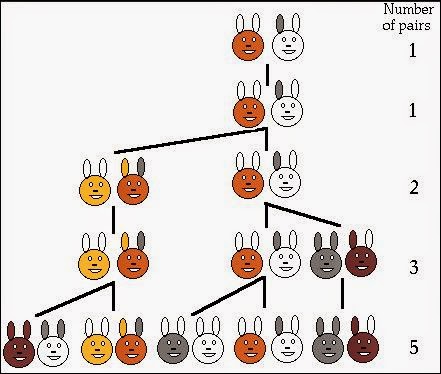
The Hebrew word for rabbit is ארנבת ‘arnevet’ which comes from a combination of ארן ‘aron’ which means a tree of the forest (ash – Isaiah 44:14) and the word ניב ‘niyv’ from whence comes the word ‘nibble.’ Hence, the rabbit is the “forest nibbler”. In Hebrew, ניב ‘niyv’ means fruit/fruitful or to flourish and increase which rabbits are prolific in.
ארן ‘aron’ comes from the root word רן ‘ran’ which has the meaning of joyful rejoicing and singing. Spring is the time of joyful rejoicing (Isaiah 61:10-11), when the rabbit is seen again ‘nibbling’ on the plants which have come back to life.
ארן ‘aron’ also has the meaning of an ark or box (from the root אר meaning light/order). ארן ‘aron’ (ark) is from the root אר which is also the root of the word מאורה ‘me`orah’ which means a den, or literally a “lighted hole when viewed from inside”. This also connects to the rabbit as they dwell in holes in the ground.
ניב ‘niyv’ comes from the root נב which means the ‘seed inside.’ This points to believers who are born again from above with the Seed of the Word of God.
Jas 1:18 Of his own will begat he us with the word of truth, that we should be a kind of firstfruits of his creatures.
Jas 1:21 Wherefore lay apart all filthiness and superfluity of naughtiness, and receive with meekness the engrafted word, which is able to save your souls.
1Jn 3:9 Whosoever is born of God doth not commit sin; for his seed remaineth in him: and he cannot sin, because he is born of God.
1Pe 1:23 Being born again, not of corruptible seed, but of incorruptible, by the word of God, which liveth and abideth for ever.
1Pe 1:24 For all flesh is as grass, and all the glory of man as the flower of grass. The grass withereth, and the flower thereof falleth away:
1Pe 1:25 But the word of the Lord endureth for ever. And this is the word which by the gospel is preached unto you.
On a deeper level this “seed inside” concept pictures the Tabernacle/Temple where the seed/Word/Light dwelt inside the ark of the covenant.
Ark of the Covenant – DNA – Jacob’s Pillar
There are interesting connections between the ark of the covenant and Jacob’s pillar & DNA .
The ladder
Gen 28:11 And he came on a place and stayed the night there, for the sun had gone. And he took stones of the place and placed them at his head; and he lay down in that place.
Gen 28:12 And he dreamed. And, behold, a ladder was placed on the earth, its top reaching to the heavens. And, behold, the angels of God were going up and going down on it!
Gen 28:17 And he was afraid, and said, How fearful is this place! This is nothing except the house of God, and this is the door to Heaven.
Gen 28:18 And Jacob started up early in the morning and took the stone which he had placed at his head, and he placed it as a pillar; and he poured oil on the top of it.
Gen 28:19 And he called the name of that place, The House of God {Bethel}. And yet the name of the city was at first Luz.
The ladder = Messiah
Joh 1:51 And He says to him, Truly, truly, I say to you, From now on you will see Heaven opened, and “the angels of God ascending and descending” on the Son of Man.
Messiah Jesus = the Word
Joh 1:1 In the beginning was the Word, and the Word was with God, and the Word was God.

Nucleotide Character (Letter)
Codon Letter
Gene Word
Operon Sentence
Regulon Paragraph
DNA Book
Simplified it could be said
Nucleotide bases Letters
Codons Words
Genes Sentences
Book DNA
DNA is a message from God. The DNA molecule is just the carrier. Similar to the Torah. The Torah is the heart of God, His character/Image…the scrolls and books on which it is written is the carrier.
Speaking the Language of Recombinant DNA
As George Williams puts it: “The gene is a package of information, not an object. The pattern of base pairs in a DNA molecule specifies the gene. But the DNA molecule is the medium, it’s not the message”
The DNA molecule is the instruction manual for the forming of amino acids which are made are the structural elements of proteins that turn into the biochemical units that drive all biological processes. There are only 22 amino acids found in proteins. Certain proteins are called enzymes. They are catalysts (agents that are necessary for a reaction to occur but are not themselves changed in the process); others are called structural proteins which help to build cells and tissues.
If DNA can be thought of as the language of life, then the four bases can be seen as letters and the codons as arrangements of letters, or words. But like English, DNA’s language is more than words. Some codons function as punctuation marks, containing instructions to stop or start manufacturing a protein. This chemically simple yet stunningly complex DNA molecule dictates not only what proteins the organism will be made of, but how these proteins are to be arranged.
We have seen that one codon contains the instructions for one amino acid, and that sequences of codons specify the production of proteins. Groups of codons that have been arranged in “grammatically” correct sentences to form specific proteins are called “genes”.
DNA contains all the information needed to perpetuate life. This information builds in complexity from nucleotides to codons to genes, ultimately giving the complete text to form the body.
His body = the Temple
Joh 2:19 Jesus said to them, Destroy this sanctuary, and in three days I will raise it up.
Joh 2:20 Then the Jews said, This sanctuary was forty six years being built, and do You raise it up in three days?
Joh 2:21 But He spoke about the sanctuary of His body.
The Temple/Tabernacle = the Body
Exo 25:8 And let them make a sanctuary for Me, that I may dwell in their midst.
2Co 6:16 And what agreement hath the temple of God with idols? for ye are the temple of the living God; as God hath said, I will dwell in them, and walk in them; and I will be their God, and they shall be my people.
1Co 3:16 Know ye not that ye are the temple of God, and that the Spirit of God dwelleth in you?
Easter Bunny

Many believe that the Easter Bunny/Easter Hare came forth from Ishtar or Ostara/Eostra. The problem is that this claim is not backed up with fact.
“There is no definitive historical evidence that a goddess named Eostre and her hare companion was part of pagan folklore”. {The modern myth of the Easter bunny}
Redeeming Holy Days from Pagan Lies-Easter 2
“…Ostara/Eostra didn’t really exist. And since she didn’t exist she couldn’t have had a bunny as a consort….”
“The modern ‘histories” of Easter tend to claim 1) that Easter was originally a pagan fertility holiday 2) of devotion to the goddess Ostara (Eastre, however spelled), 3) she used eggs as a symbol of fertility, and 4) she always carried a pet bunny because it was so fertile. Now, all of these 4 claims are fiction.”
“In the ancient eastern Church the rabbit was used on tombstones and as a symbol of Christ. One author points out that some early Christians viewed the rabbit’s hole as a symbol of the tomb of Christ.”
“Christian art has several examples from the early times through the renaissance of rabbits as a symbol of Christ.”
Titian’s Madonna and Child
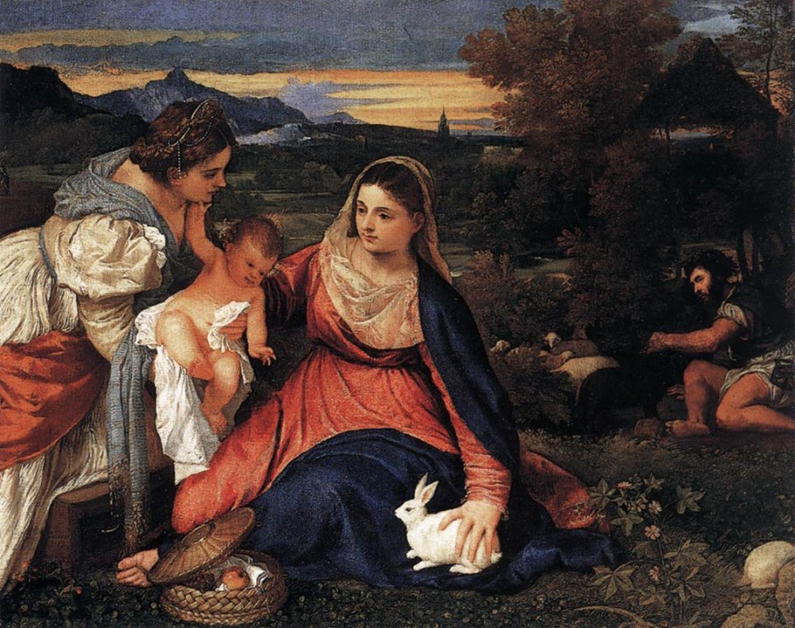
Titian’s Madonna and Child
“The idea of rabbits as a symbol of vitality, rebirth and resurrection derives from antiquity. This explains their role in connection with Easter, the resurrection of Christ. The unusual presentation in Christian iconography of a Madonna with the Infant Jesus playing with a white rabbit in Titian’s Parisian painting, can thus be interpreted christologically. Together with the basket of bread and wine, a symbol of the sacrificial death of Christ, the picture may be interpreted as the resurrection of Christ after death.”
“The phenomenon of superfetation, where embryos from different menstrual cycles are present in the uterus, results in hares and rabbits being able to give birth seemingly without having been impregnated, which caused them to be seen as symbols of virginity. Rabbits also live underground, an echo of the tomb of Christ.” {Rabbits and hares in art}
Just as with the Easter egg, the Easter Bunny has connections back to Judaism.
“16th century German scholar Rabbi Yosef Hayim Yerushalmi, saw the rabbits as a symbol of the Diaspora. The replica of the Chodorow Synagogue from Poland (on display at the Museum of the Jewish Diaspora in Tel Aviv) has a ceiling with a large central painting which depicts a double headed eagle holds two brown rabbits in its claws without harming them. The painting is surrounded by a citation from the end of Deuteronomy:
.כנשר יעיר קינו על גוזליו ירחף. יפרוש כנפיו יקחהו ישאהו על אברתו
—Deuteronomy 32:11, The Song of Moses
This may be translated: “As an eagle that stirreth up her nest, hovereth over her young, spreadeth abroad her wings, taketh them, beareth them on her pinions (…thus is G’d to the Jewish people).” {Three Hares in Judaism}
Deu 32:11 As an eagle stirreth up her nest, fluttereth over her young, spreadeth abroad her wings, taketh them, beareth them on her wings:
Deu 32:12 So the LORD alone did lead him, and there was no strange god with him.
Medieval artists used the imagery of the rabbit to portray the concept of abiding under the shadow of God’s wings.
“The Physiologus, an inexhaustible resource for medieval artists, states that when in danger the rabbit seeks safety by climbing high up rocky cliffs, but when running back down, because of its short front legs, it is quickly caught by its predators. Likewise, according to the teaching of St. Basil, men should seek his salvation in the rock of Christ, rather than descending to seek worldly things and falling into the hands of the devil.” {Rabbits and hares in art}
The concept of hiding in the cleft of the rock is linked to abiding under the shadow of God’s wings. See Little Guy in the Eye study.
Abiding in the cleft of the rock = abiding under the shelter of His wings
Psa 61:4 I will dwell in Your tabernacle forever; I will trust in the shelter of Your wings. Selah.
Abiding in the Tabernacle = abiding in the shelter of His wings
Rev 7:15 Because of this they are before the throne of God, and serve Him day and night in His sanctuary. And He sitting on the throne will spread His tabernacle over them.
Psa 27:5 For in the day of evil He shall hide me in His shelter; in the secrecy of His tabernacle He shall hide me; He shall set me up on a rock.
Rock of Etam
Jdg 15:8 And he struck them hip on thigh, a great slaughter, and went down and lived in the cleft of the rock Etam.
H5862
עיטם
‛êyṭâm
BDB Definition:
Etam = “lair of wild beasts”
A Related Word by BDB/Strong’s Number: from H5861
H5861
עיט
‛ayiṭ
BDB Definition:
1) bird of prey, a swooper
Part of Speech: noun masculine
A Related Word by BDB/Strong’s Number: from H5860
Samson dwelling in the cleft of the Rock (Messiah) at Etam (Eagles wings).
The root word of עיטם ‘Etam’ is עט.

Here we see that the word Etam means an eagle’s wings in the sense of wrapping. Samson dwelt in the cleft of the Rock (Rock = Messiah 1 Corinthians 10:4) in the city of Etam (wrapped in eagles wings).
It is also interesting that the word for pen/stylus comes from this same root word and is associated with the eagle’s/bird of prey’s talons. This is yet another association of the eagles wing’s with the Word.

Abiding under the shadow of His wings = abiding in the Word/Messiah.
Dwelling in the cleft of the Rock is also teaching about intimate relationship with the Almighty.
Exo 33:18 And he said, I pray, let me see Your glory.
Exo 33:19 And He said, I will cause all My goodness to pass before your face. And I will call out the name of Jehovah (calling upon/calling out the name of the LORD is associated with the physical manifestation of the LORD on the earth) before your face. And I will be gracious to whom I will be gracious, and I will have mercy on whom I will have mercy.
Exo 33:20 And He said, You are not able to see My face; for no man can see Me and live.
Exo 33:21 And Jehovah said, Behold, a place by Me! And you shall stand on a rock.
Exo 33:22 And as My glory is passing it will be that I will put you in a cleft of the rock; and I will cover My hand over you during My passing.
Exo 33:23 And I will remove My hand, and you shall see My back; but My face cannot be seen.
The chicken and her chicks (easter egg connection) also displays this “shadow of the wings” imagery.
Originally, the word “chicken” referred to chicks and not the species itself as it does today. The chicken as a species was simply called the fowl. The word ‘chicken’ further displays this as the etymology traces back to the Old English ‘cicen’ which meant “young fowl”. The picture displayed in this aspect of the chicken shadow picture is that of chicks abiding under the wings of their mother, of being born again and converted as children (Matthew 18:3-4) abiding under the wings of Messiah as the “little guy in His Eye” (Psalm 17:8).

Mat_23:37 O Jerusalem, Jerusalem, thou that killest the prophets, and stonest them which are sent unto thee, how often would I have gathered thy children together, even as a hen gathereth her chickens under her wings, and ye would not!
The word for chickens in Matthew 23:37 is νοσσίον ‘nossion’ which comes from the root νεοσσός ‘neossos’ which means a “young creature”. νοσσίον ‘nossion’ is used in the Septuagint to translate the Hebrew word אפרה ‘ephroach’ which means both chicken and young/youth.

The word for fowl in Hebrew is עוף ‘oph’ which means a winged creature from the root עף ‘aph’ which literally means the covering of the wings.

The hen is known for its incredible motherly instincts, known to sacrifice its life for the sake of its chicks.
The Sacrifice of the White Hen
These stories of hens sacrificing their lives for the sake of the brood are excellent examples of the love of God for mankind.
The Hebrew word for כיפור ‘kippur,’ as in atonement (Romans 5:11), comes from the root word חף ‘chaph’ which means to cover.
Rom 5:8 But God commendeth his love toward us, in that, while we were yet sinners, Christ died for us.
Rom 5:9 Much more then, being now justified by his blood, we shall be saved from wrath through him.
Rom 5:10 For if, when we were enemies, we were reconciled to God by the death of his Son, much more, being reconciled, we shall be saved by his life.
Rom 5:11 And not only so, but we also joy in God through our Lord Jesus Christ, by whom we have now received the atonement.

חף ‘chaph’ – ‘one who enters a tent and is protected by the owner.’ A place of protection. One who is innocent, as in one whose actions are covered.
Messiah is the Door that we enter in order to abide in His ‘House’ (John 10:7) it is through Him that we are covered/hidden. This is the definition of who the Israel of God is (Galatians 6:16)…His hidden ones (Psalm 83:3). It is by the covenant cut in Messiah (Daniel 9:26; Isaiah 42:6), by His sacrifice on the cross that we are covered (1 John 1:7).
On the cross, Messiah gathered all mankind unto Him under His outstretched Arms as a hen gathers her chicks (John 12:32; Matthew 23:37). Amazingly, the Hebrew word for this spreading forth of the wings of a hen to gather her chicks or an eagle gathering her chicks under her wings is רחף ‘rachaph’ which also comes form the root word חף ‘chaph.’
It is through His Outstretched Arms (wings) that Messiah is calling us (John 3:14; 12:32) and gathering us together as a Shepherd does His flock (John 10:14-16). This is how we enter the Door into the House, this is how we are declared innocent and pure in His eyes. This is how we become His friends and enter into His tents in an intimate relationship.
When one has an intimate relationship with another, they appear as a ‘little guy in the eye‘ or as the ‘apple of the eye.’
Deu 32:10 He found him in a desert land, and in the waste howling wilderness; he led him about, he instructed him, he kept him as the apple of his eye.
Deu 32:11 As an eagle stirreth up her nest, fluttereth over her young, spreadeth abroad her wings, taketh them, beareth them on her wings:
Abiding in the Shadow of His wings means we are protected from adversity.
Psa 91:1 He that dwelleth in the secret place of the most High shall abide under the shadow of the Almighty.
Psa 91:2 I will say of the LORD, He is my refuge and my fortress: my God; in him will I trust.
Psa 91:3 Surely he shall deliver thee from the snare of the fowler, and from the noisome pestilence.
Psa 91:4 He shall cover thee with his feathers, and under his wings shalt thou trust: his truth shall be thy shield and buckler.
Psa 91:14 Because he hath set his love upon me, therefore will I deliver him: I will set him on high, because he hath known my name.
Psa 91:15 He shall call upon me, and I will answer him: I will be with him in trouble; I will deliver him, and honour him.
Psa 91:16 With long life will I satisfy him, and shew him my salvation.
The Hebrew word for salvation in Psalm 91:16 is ישועה ‘yeshuah’ from whence comes the Jesus.
This intimate relationship of appearing as a little guy in the Eye of the Creator, and abiding under the shadow of His Wings is accomplished in the work of Messiah on the cross.
John Gill commentary on Matthew 23:37
How often would I have gathered thy children together, as a hen gathereth her chickens under her wings, and ye would not! Christ here speaks as a man, and the minister of the circumcision, and expresses an human affection for the inhabitants of Jerusalem, and an human wish, and will for their temporal good; which he very aptly signifies by the hen, which is a very affectionate creature to its young, and which it endeavours to screen from danger, by covering with its wings. So the “Shekinah” with the Jews is called, צפרא קדישא, “the holy bird” (m); and that phrase, לחסות תחת כנפי השכינח, “to betake one’s self, or to come to trust under the wings of the Shekinah”, is often used (n) for to become a proselyte to the true religion, and worship of God, as Jethro, and Ruth the Moabitess did. An expression much like to this here is used by an apocryphal writer of 2 Esdras:
“I gathered you together, as a hen gathereth her chickens under her wings: but now, what shall I do unto you? I will cast you out from my face.” (2 Esdras 1:30).
Luk 13:34 O Jerusalem, Jerusalem, which killest the prophets, and stonest them that are sent unto thee; how often would I have gathered thy children together, as a hen doth gather her brood {νοσσιά ‘nossia’} under her wings, and ye would not!
The Greek word for brood in Luke 13:34 is νοσσιά ‘nossia’ which means a nest or brood of birds. The Hebrew equivalent is קן ‘qen.’ This word pictures the nest of a bird where the eggs are gathered and protected by the hen.

The Hebrew word for zeal displays a beautiful picture of the Most High, who is zealous over His people (Zion…His House). The Hebrew word for zealous is קנא ‘qana’ which is pictured in the natural in a parent bird guarding and protecting its nest and eggs from predators. A bird protecting, overshadowing, its brood is one of the most beautiful pictures of God’s love for His people.
Mankind is at enmity with God, we can only enter His ‘nest’ through the sacrifice of Messiah (Ephesians 2:1-22). It was the zealous love of God for mankind that He sent His only begotten Son (John 3:16).
Isa 9:6 For unto us a child is born, unto us a son is given: and the government shall be upon his shoulder: and his name shall be called Wonderful, Counsellor, The mighty God, The everlasting Father, The Prince of Peace.
Isa 9:7 Of the increase of his government and peace there shall be no end, upon the throne of David, and upon his kingdom, to order it, and to establish it with judgment and with justice from henceforth even for ever. The zeal of the LORD of hosts will perform this.
Isa 59:16 And he saw that there was no man, and wondered that there was no intercessor: therefore his arm brought salvation unto him; and his righteousness, it sustained him.
Isa 59:17 For he put on righteousness as a breastplate, and an helmet of salvation upon his head; and he put on the garments of vengeance for clothing, and was clad with zeal as a cloke.
Zeal for His house sent Messiah to the cross to bear the sins/reproaches of mankind.
Psa 69:9 For the zeal of thine house hath eaten me up; and the reproaches of them that reproached thee are fallen upon me.
Psa 89:50 Remember, Lord, the reproach of thy servants; how I do bear in my bosom the reproach of all the mighty people;
Psa 89:51 Wherewith thine enemies have reproached, O LORD; wherewith they have reproached the footsteps of thine anointed.
Rom 15:3 For even Christ pleased not himself; but, as it is written, The reproaches of them that reproached thee fell on me.
Three Hares

“Christian art has several examples from the early times through the renaissance of rabbits as a symbol of Christ.”
“To name just a few The three hare window in Paderborn, Germany and also in the monastery Muottatal in Switzerland, where three rabbits are together in a triangle with only one ear each showing, symbolizing the Trinity.” {Three Hares}
Three hares in Judaism

Three Hares motif in the replica of the Gwozdziec synagogue ceiling.
“Not only do they appear among floral and animal ornaments, but they are often in a distinguished location, directly above the Torah ark, the place where the holy scriptures repose.”
“Some Jewish thinkers, such as 16th century German scholar Rabbi Yosef Hayim Yerushalmi, saw the rabbits as a symbol for Jews in the Diaspora. 1 In an Augsburg Haggadah dated from 1534, he described an illustration of dogs hunting hares as the hares escaping as follows: “The hare is representative of the Jewish people and the dogs their enemies and … (they are) an allegory of the persecution and salvation of the Jewish people.”
“Indeed, depictions of hare hunts are found in numerous Passover prayer books. One example can be found in the Prague Haggadah of 1526.”
Intriguingly, the hare hunt depictions in Hagadot also provide as a mnemonic tools. The Yiddish expression “YakNeHaz” – literally “hunt a hare”, is an abbreviation meant to help remember the complicated order of blessings when the Pessach Seder and Motzei Shabbat coincide, as it is the case this year (2008): Y = Yain (wine) K= kidush (blessing), N= ner (candlelight) H = havdalah (Shabbat ceremony) Z = zeman (blessing related to time).” {How do the rabbits get into the synagogue?}
“There is a mnemonic to help remember the sequence of events when the Pesach Seder is held on Saturday night: YaKNeHaZ
Yayin (wine)
Kiddush (sanctification)
Ner (light the candles by transferring from an existing flame, such as from a yahrzeit candle, and say l’hadlik ner shel yom tov)
Havdalah (In this case, one does not repeat the blessing over wine, which was said in Kiddush, nor the blessing over spices, because the chag continues, but only over the fire. There is a special version of the Havdalah berachah, which ends ha-mavdil bein kodesh l’kodesh.)
Z’man (Shehecheyanu)
The mnemonic YaKNeHaZ sounds somewhat similar to a German expression (jag den Has) which means “hunt the hare” and for this reason, some medieval haggadot were decorated with a picture of a rabbit-hunting scene.
Here is an example from a haggadah published in Prague in 1526:”

Lepus

This imagery of the hounds and rabbits in connection with redemption traces back to the constellation of Gemini and its three decan constellations, Canis Major & Canis Minor (dogs) and Lepus (rabbit).

Lepus is located beneath the head of Orion who pictures “light breaking forth in the Redeemer”. The picture is that of the ancient prophecy in the Garden where God promises that the Seed of the woman would crush the head of the enemy. Gemini depicts the Messiah as the ruler or judge who comes to suffer in order to defeat His enemy, harkening back to this ancient prophecy as well.
Gen 3:15 And I will put enmity between thee and the woman, and between thy seed and her seed; it shall bruise thy head, and thou shalt bruise his heel.
Canis Major depics the “coming glorious Prince of Princes”, Canis Minor the “exalted Redeemer”. It is interesting to note that in the Egyptian Denderah zodiac, Canis Major is depicted as a hawk and Canis Minor as a man with a staff (a shepherd). Could this be where the connection between eagles and rabbits comes from in Jewish tradition? The Shepherd pictures salvation and defeat of one’s enemies. The word salvation, ישועה ‘yeshuah’ (the source of the name Jesus) comes from the Hebrew word שע ‘sha’ which has the meaning of a shepherd who watches over his sheep, destroying any enemy of the flock.
The stars in the constellation of Lepus tell the story of the enemy who is defeated by the Redeemer. Arnebo comes from the Hebrew word ער ‘ar’ which means enemy (Psalm 139:20). Nibal means “mad” or “foolish” from the Hebrew word נבל ‘nabal’ (1 Samuel 25:25). This word is also translated as “viol” as in the noise of Lucifer (Isaiah 14:11). Rakis means to bind with a chain from the Hebrew word רכס ‘rakas’ (Exodus 28:28) pointing to the binding of the devil (Revelation 20:2). רכס ‘rakas’ also has the meaning of “pride” (Psalm 31:20), one of the character traits of the adversary (Ezekiel 28:5). Sugia means the deceiver (Revelation 12:9) from the Hebrew word שגה ‘shagah’ which also means to “wander” (Job 1:7; 2:2). Arnebeth means an hare but also to pluck, as in the plucking of those who persecute God’s people (Psalm 80:12).
Resurrection Celebration
Easter is a celebration of the resurrection of Messiah. There are certainly some concern with some of the aforementioned traditions associated with the holiday which have turned people away from Christ, but the primary message of the celebration is the resurrection of Messiah Jesus which is beyond reproach. Whether one celebrates Easter or Passover is a matter of conviction. The important matter is that the resurrection of Messiah, the most important aspect of our faith (1 Corinthians 15:13-20), is being proclaimed yearly by His people.
Let each believer be convinced in his or her own mind and follow the Lord wholeheartedly in that conviction (Romans 14:5-6). We all have to work out our own salvation with fear and trembling so we ought not to point the finger of condemnation at others as each one of us falls or stands according to the Lord, not man (Romans 14:4). Regardless of what ‘side’ one chooses, we are to receive each other (προσλαμβάνω ‘proslambanō’ – take by the hand) as the Lord has received us (Romans 14:1-4), bearing one another in love (Romans 15:1-3; 1 Corinthians 13:7).
Is the Date of Easter of Pagan Origin?
The above link is to a good article for the “pro-Easter” side. In the past I saw Easter as having “pagan” origins but the more I’ve studied the more I found that to be false. Pagan accoutrements may have been added later but the origin was a celebration of the resurrection of Christ.
“Pascha is the feast of universal redemption. Our earliest sources for the annual celebration of the Christian Pascha come to us from the second century…The feast, however, must have originated in the apostolic period…According to the earliest documents, Pascha is described as a nocturnal celebration…” {The Origins of Pascha and Great Week – Part I}
“Direct evidence for the Easter festival begins to appear in the mid-2nd century. Perhaps the earliest extant primary source referencing Easter is a mid-2nd-century Paschal homily attributed to Melito of Sardis, which characterizes the celebration as a well-established one.” {wikipedia.org}
The Quartodeciman controversy displays that Pascha (the remembrance of the death & resurrection of Christ) was being celebrated by the early Church.
Melito was a Quartodeciman, celebrating ‘Pascha’ on the 14th of Nisan/Aviv, in other words he celebrated Passover but did so in remembrance of the resurrection of Messiah. Pascha later ‘evolved’ into Easter.
Is the Name “Easter” of Pagan Origin?
Why We Should Not Passover Easter
The confusion and arguments over dates comes from the differences in calendars. Part of the body of Messiah came from a background of following the Biblical calendar, part of the body came from a background of following the Julian calendar. Today, the same dynamic is seen. This difference became known as the ‘Quartodeciman Controversy’ which was spoken of by the Church Father Irenaeus.
“For the controversy is not merely as regards the day, but also as regards the form itself of the fast. For some consider themselves bound to fast one day, others two days, others still more, while others [do so during] forty: the diurnal and the nocturnal hours they measure out together as their [fasting] day. And this variety among the observers [of the fasts] had not its origin in our time, but long before in that of our predecessors. . . . And yet nevertheless all these lived in peace one with another, and we also keep peace together. . . . For neither could Anicetus persuade Polycarp to forego the observance [in his own way], inasmuch as these things had been always [so] observed by John the disciple of our Lord, and by other apostles with whom he had been conversant; nor, on the other hand, could Polycarp succeed in persuading Anicetus to keep [the observance in his way], for he maintained that he was bound to adhere to the usage of the presbyters who preceded him. And in this state of affairs they held fellowship with each other.” {Irenaeus of Lyons, from a letter to Bishop Victor of Rome, in Ante-Nicene Fathers, vol. 1}
This quote of Irenaeus is a great example of believers who have differences, yet still abiding in unity/fellowship through the Love of God. There is no need to point the finger in condemnation at a fellow believer because their convictions are different than yours. If they have been convicted by the Most High then our fingers of condemnation point not at the person, but at the Convictor (James 4:11). Personally, I’d rather be on my face before Him as opposed to pointing my finger at Him…
The Father is over all (the Head of all), the authority of all (John 14:28). The Head of the Messiah is the Father, the Messiah is the Head of mankind (1 Corinthians 11:3; 15:24-28). The Holy Spirit guides believers into walking according to the will of God (John 14:16, 24-26; 15:26; 16:13; 1 Peter 1:2; Ezekiel 11:19-20; 36:26-28; 1 John 2:20, 27). Therefore, if by the Holy Spirit a believer is convicted of a doctrine, that believer should follow this.
As believers we are all brethren, our only Head is Messiah (Matthew 23:8-10; 2 Corinthians 4:5; Galatians 5:13-14; Philippians 2:3). Binding and loosing (interpretation and application of Scripture) applies to all believers (Matthew 16:19; 18:18). This is a part of working out one’s own salvation with fear and trembling (Philippians 2:12-13).
Elders/church leaders are not the head or authority of the body of Messiah (Matthew 20:25-28; 23:8-12; Mark 10:42-45). They are servants who oversee groups of believers (Acts 20:28; Luke 22:26; 1 Thessalonians 5:12-13), laboring in the Word (1 Timothy 5:17) to feed the flock but are not the Chief Shepherd (1 Peter 5:1-6). If a group agrees on a doctrine, believers in that group should respect that agreement but do not have to follow if convicted otherwise by the Lord. In other words, whether one celebrates Easter or Passover is an individual choice based upon their understanding of God’s will. We should follow our convictions but at the same time respect the understanding of our brethren.
Unity comes only through Messiah, the New Covenant in Him (Psalm 50:5; Isaiah 49:3-9; Hebrews 2:11; 13:20-21; Jeremiah 50:5; Ephesians 2:15; Colossians 1:20; 2:1-11) and walking with Him (1John 1:3-7).
“Unity in the body of Christ does not rest on uniformity, but on our common ‘blood,’ which is the blood of Christ. We are now members of one family, and that identity cannot be taken from us, no matter how much we disagree or quarrel.” (The Gospel in Human Contexts – Paul Hiebert pg 193)
So while we may have disagreements about doctrine such as the celebration of Easter or Passover, this ought not to be a source of division amongst His people (Philippians 2:3; James 3:16). Whether you celebrate Easter or Passover or are under the conviction that the feasts don’t apply today we can all be in agreement that we are still in unity through Him, not our agreements on doctrine. Let each person be convinced in his or her own mind and follow the Lord wholeheartedly in that conviction (Romans 14:5-6). We all have to work out our own salvation with fear and trembling so we ought not to point the finger of condemnation at others as each one of us falls or stands according to the Lord, not man (Romans 14:4).
We should put our focus on working out our own salvation with fear and trembling (Philippians 2:12) for it is He that is working in us according to His own pleasure (Philippians 2:13). We should focus on obeying the voice of the Lord (John 10:16, 27) and being faithful to that which His Holy Spirit has convicted us of (John 16:8). We should be prepared to give an answer for this hope in us in meekness and fear (1 Peter 3:15), not in condemning and finger pointing which comes not from the spirit of meekness but of pride .
Conviction (in Greek {ἐλέγχω ‘elegchō’} is following the guidance of the Holy Spirit (John 16:8), the rebuke/correction of Messiah (Revelation 3:19; Hebrews 12:5) not following one’s own heart. Those who have not the light (Messiah) love the darkness and do not come to the light lest their deeds be ‘reproved’ (convicted) {ἐλέγχω ‘elegchō’}. Following the conviction of the Lord is humbling oneself before Him, subjecting oneself to Him…the opposite of pride. One who consents not to the words of Messiah is in the state of pride (1 Timothy 6:3-4), not one who submits to the convictions of the Holy Spirit (Philippians 2:5-16). One who has their hearts circumcised by Messiah are in a state of humbleness (Leviticus 26:41; Deuteronomy 10:12-16; Colossians 2:10-12) and are not be judged in respect of the calendar (Colossians 2:16-17). It is those who have an uncircumcised heart that are considered prideful (Psalm 119:69-70; 17:8-12; Zechariah 7:12; Acts 28:27; Matthew 13:15; John 8:43-44; Luke 18:9-14).
Christ in us is our hope of glory (Colossians 1:27; 1 Timothy 1:1; 1 Peter 1:3), not our works or knowledge (1 Peter 1:18-21). Christ in us (Colossians 1:27) is His Word in us (Psalm 119:49-50, 81, 144; 52:9; Colossians 3:16; 1 John 2:14; Hebrews 8:10), His Spirit in us (Ezekiel 36:26; Romans 8:9-11; John 15:26; 14:16-18). It is Christ dwelling in us that gives us hope, it is this hope that purifies us (1 John 3:2-3), and saves us (Romans 8:24) not our works or knowledge (Psalm 143:2; 146:3; Jeremiah 17:5; Romans 3:20, 28; Titus 3:5; Acts 13:39; Galatians 2:16; 3:10-11). Good works are the effect of salvation (Christ/Word dwelling in us), Him dwelling in us is the cause (John 15:1-10; 1 John 3:9-10; Hosea 14:8; Galatians 2:20; Philippians 1:11). Why then do we judge and condemn others who are standing in the same hope?
It is God working through us, according to His will that brings us to where we are (Philippians 2:13). If we judge our fellow believer in whom God is working through, we are judging Him (James 4:11-12). Rebuke/correction/admonishment should be done to edify in peace (Romans 14:19) and love (1 Corinthians 8:1), not condemn and cut off others (James 3:14-18). We are to be faithful to Him, following what the Spirit has taught us and convicted us of (John 16:8). We can’t force our convictions on others but must be tolerant of their understanding (1 Corinthians 13:7) as the Lord has been patient and tolerant with us.
Toleration is from the Latin ‘tolerationem’ which is a “noun of action from past participle stem of tolerare” which means forbearance. We must recall that while we were yet sinners and enemies of God (Romans 5:8-10; Ephesians 2:1-6; Colossians 1:20-21) He showed us His great forbearance in sending His Son to bring reconciliation between Himself and us (Romans 2:4; 3:25). As a result, we are also to be “tolerant” to others who are overtaken in sin and extend His goodness to them (Romans 2:1-4). We are to seek to restore one overtaken in a fault, bearing one another’s burdens and so fulfilling the law of Christ (Galatians 6:1-3).
We must never tolerate sin (Psalm 97:10; Proverbs 8:13; Amos 5:15), yet we must never be intolerant to the sinner (Leviticus 19:17; 1 John 2:9-29). Tolerance comes from the Latin word ‘tolerantia’ which means to “bear” which compares with the Greek word στέγω ‘stego’ (bears) of which love performs (1 Corinthians 13:7). Love “beareth” all things, yet love does not rejoice in iniquity (1 Corinthians 13:6).
‘Tolerantia’ traces back to the Hebrew word תלה ‘talah’ which means to lift up and hang as in the Messiah being lifted up (Deuteronomy 21:23; Galatians 3:13) that mankind might be reconciled to the Father while we were yet in our sins (Romans 5:8). Messiah is the epitome of toleration. He who was without sin (Hebrews 4:15; 1 Peter 2:22; 1 John 3:5) tolerated the presence of sinners and bear our burdens/sins that we might become the righteousness of God in Him (2 Corinthians 5:18-21). As a result, we are to carry this same “toleration”, the ministry of reconciliation , hating the sin of the world, yet never hating the sinner (1 John 2:9-29).
We are saved by His grace through faith where we become His workmanship that He can work through us performing good works (Ephesians 2:8-10). These good works are light (Matthew 5:16), His Word (Psalm 119:105), the Spirit of His Torah (Proverbs 6:23; Isaiah 8:20) shining through us (Psalm 27:1; John 8:12; Isaiah 60:1-2). These good works are performed by Him, through us (Philippians 2:13). We are to work out our own salvation with fear and trembling (Philippians 2:12) as He works through us, convicting us by His Spirit (John 16:8) on how we are to walk in His Word. It is The Most High who works through us, causing us to grow in maturity in His Word (Psalm 57:2; 18:32; 138:8). As a result, we are not to judge one another on how we walk, for we are all His servants and stand by His power, not our knowledge or works (Romans 14:4-5). We must remember that if a believer is sincerely following the Lord, it is He that is guiding them. This is true regardless of the failings we perceive in them.
Php 2:13 For it is God which worketh in you both to will and to do of his good pleasure.
We have all fallen short (Romans 3:23; 1 John 1:8-10) and see through a glass darkly (1 Corinthians 13:12) so we can’t judge fellow believers for their shortcomings (James 4:11-12; Romans 14:4, 13). Our understanding of the Word and our success in following this understanding is not what makes us His people, it is our faith in the Messiah (Romans 5:2; 2 Thessalonians 2:14). What justifies us and saves us before the Father is faith in Messiah, not “obedience” to the Torah (Galatians 2:16; 3:11; Romans 3:28; 5:1). We receive the Spirit, who guides us on how we are to walk, by faith not works of the law (Galatians 3:2, 5).
When asked why we do what we do, we should be prepared to give an answer for the hope in us in meekness and fear (1 Peter 3:15), not in condemning and finger pointing which comes not from the spirit of meekness but of pride. Each of us should be fully persuaded in our minds as to how we are to walk with the Lord (Romans 14:5), letting His Spirit guide (John 16:13), convict (John 16:8) and teach us (1 John 2:20, 27).
If we can remember that we are all saved by His grace through faith and stand therein (Romans 5:1-2; 2 Corinthians 1:24), we will be able to better abide in His “first love” (Revelation 2:4) and extend His mercy and grace to others even when we disagree with them. If we remember that we all see through a glass darkly (1 Corinthians 13:12) we can better abide in His faith, hope and love.
The Lord is transforming us from glory to glory by His own power (2 Corinthians 3:18), not by our religious doctrines and movements. It is His job to perfect us and recreate us in His image, not ours (Psalm 57:2; 18:32; 138:8; Ephesians 4:4-13). It is not our job to overcome the flesh by our own power. Our job is to yield unto Him that He might work through us (Romans 6:7-19). Hence, all praise and glory and honor belongs unto Him (Romans 6:17; Revelation 5:12-13; 7:12; Isaiah 42:8).
When we come to faith, our job is to yield ourselves to the Lord that He might work through us (Romans 6:13-19; Philippians 3:21). We are to present ourselves as living sacrifices unto Him (Romans 12:1) that the body of sin might be destroyed (Romans 6:6-12). Sin is the transgression of the law (1 John 3:4), dying to the sinful flesh that we might walk by faith does not nullify the law, it establishes it (Romans 3:31). We must put the law in its proper perspective. It is not our means to salvation and righteousness (Romans 10:3-4), if we walk according to this we frustrate the grace of God and demean Christ’s sacrifice (Galatians 2:21). The law convicts us as sinners (Galatians 3:22) that we might come to faith in Messiah (Galatians 3:24-25) as new creatures in Him (Galatians 3:26-29). He is the Word/Torah made flesh (John 1:1, 14) and is forming us into His image (1 John 3:1-5) from glory to glory by His Spirit (2 Corinthians 3:18).
We can yield/submit to Him that we might become His righteousness (2 Corinthians 5:21; Romans 10:3-4; Philippians 3:9) or we can attempt to establish our own righteousness by our own power (works of the law/religion) and fall into condemnation (Isaiah 64:6; 57:12; Galatians 2:16; 3:10).
If a fellow believer has a different understanding of doctrine or is even clearly walking in error, this doesn’t mean they aren’t our brethren or that they are worshiping a different Jesus. This doesn’t mean they have a different Spirit. This doesn’t mean they believe in a different Gospel. This means they, like all of us, still have a carnal nature which prevents them from walking in the fullness of His Truth (Romans 7:14-25). They, like all of us, fall short of perfection (James 3:1-2). They, like all of us, see through a glass darkly (1 Corinthians 13:12). Our only hope of defeating this carnal nature is Him (Romans 7:24-24), not ourselves.
Works of the law/religion does not bring Messiah into our hearts (Galatians 3:2-5), faith does (Galatians 2:16). The law was designed to lead us to Him (Hebrews 10:1), revealing our sins (Romans 7:7) and condemning us (Romans 7:5-23; 1 Corinthians 15:56) that we might turn to Him by faith and receive His gift of grace unto salvation (Romans 5:20; 7:24-25; 1 Corinthians 15:57). Through faith in Him, we receive His Spirit (Galatians 3:5, 14) to work through us (Philippians 2:13; Ephesians 3:20; Hebrews 13:21) and guide us (John 16:13; 14:26; 1 Corinthians 2:10-13) that we might walk by the Spirit of the law unto life, becoming His righteousness (2 Corinthians 5:21; Philippians 3:9). If we walk in the letter of the law by our own power (works of the law) we will die (Galatians 3:10; 2:16).
Our understanding of Jesus is a gift from above, it is not given to us that we might point the finger at those who haven’t come to the same understanding (Matthew 11:27; Luke 10:22). If we abide in His doctrine, we abide in Him (2 John 1:9; Hebrews 6:1). Hebrews 6:1 declares the foundational doctrine of Messiah is repentance, faith towards God, baptism, laying on of hands, the resurrection and eternal judgment. Hebrews 6 does not say the doctrine of Christ is pronunciation of His name, holiday beliefs, sabbaths, kosher etc.
Messiah declared if we continue in His Word then we are His disciples (John 8:31-32). He did not say if we understand His Word perfectly and walk in perfection we would be His disciples. If a believer is seeking to walk in His Word, regardless of their understanding or misunderstanding they are His disciples. If a believer eats unclean food and celebrates some unbiblical customs associated with Easter [add any other pet doctrine] this does not mean they are following another Jesus. This means they have errors in understanding, this doesn’t mean they have errors in faith (Romans 3:1-7).
His desire is for us to abide in Him and bear fruit (John 15:1-8) continuing in His love (John 15:1-17). Bearing fruit doesn’t mean one has to have perfect knowledge of His Word. Bearing fruit is done by abiding in Messiah (Philippians 1:11; 1 Corinthians 3:7; 2 Corinthians 9:10; Ephesians 5:9), Him working through us by His Spirit and growing us unto maturity (2 Peter 1:5-8; Colossians 1:10; Galatians 5:22-23). We abide in Him by faith, not by our works. It is the fruit that is being produced which will display if one is abiding in Messiah or not (Matthew 7:16-20). The greatest fruit that will display one’s abiding in Messiah is love (John 15:9-12). Love defends, love doesn’t condemn (Proverbs 10:12; 17:9; 1 Corinthians 13:4; 1 Peter 4:8). Love does not seek to cut off other believers because they don’t measure up to our expectations and deem them as idolaters worshiping another Jesus (Galatians 5:14-15).
If knowledge causes contention and strife and leads us to point the finger of accusation and condemnation at our fellow man, we better examine ourselves because this is more than likely devilish knowledge (James 3:14-16). Knowledge or doctrine should not cause us to divide from our brethren, this is carnal (1 Corinthians 3:3-4; Jude 1:19; Philippians 2:3; Galatians 5:19-20). Those who walk in this manner cannot please God (Romans 8:6-8). Messiah is not divided (1 Corinthians 1:12-13), His body is to be unified (John 17:11, 21-22; Romans 12:5; 1 Corinthians 6:15-17; Galatians 3:28; Ephesians 4:5; Philippians 1:27; 2:2) not divided into carnal cliques.
Division comes as a result of man’s carnal nature inherited from the first Adam when he partook of the tree of knowledge of good and evil. Adam was given dominion over the earth, or headship (Genesis 1:26) but when he allowed the serpent to creep into the garden and partook of the fruit of which he was commanded not to, he forfeited this dominion (Luke 4:6). Messiah Jesus overcame the dominion of the enemy (Colossians 2:15; Acts 2:23-36) and is now the only Head on this earth (Colossians 1:18; Ephesians 5:23; Psalm 18:43). Today we see division amongst men because they put other men as their heads. We must not submit to other men as Jesus alone is our head and we are all brethren (Matthew 23:8) called to serve one another in love (Galatians 5:13).
We must stop appointing men as our heads and dividing into little cliques based upon the knowledge and doctrine of men. We must stop accusing one another over doctrine and cutting off other members of the body of Messiah because they don’t agree with us in every doctrine. We must stop accusing other members of the body of Messiah of worshiping a different Yeshua/Jesus because they don’t agree with us in doctrine. For those who celebrate Passover and the Feast of Unleavened Bread, this is a part of getting rid of the leaven in our lives.
1Co 1:12 Now this I say, that every one of you saith, I am of Paul; and I of Apollos; and I of Cephas; and I of Christ.
1Co 1:13 Is Christ divided? was Paul crucified for you? or were ye baptized in the name of Paul?
1Co 3:3 For ye are yet carnal: for whereas there is among you envying, and strife, and divisions, are ye not carnal, and walk as men?
1Co 3:4 For while one saith, I am of Paul; and another, I am of Apollos; are ye not carnal?
The word for “envying” in 1 Corinthians 3:3 is ζῆλος ‘zēlos’ which also means zealousness. Zealousness for God’s truth is great (Revelation 3:19; Titus 2:14), but we must be careful that this zealousness does not turn into carnal envy. Although we have been given God’s Spirit, we still have sin dwelling in our carnal flesh (Romans 7:11, 17-18). Carnality is carnality whether or not it is disguised as religion or not. Sadly, many times our zealousness for God can be used by satan to lead us into persecution of one another in the guise of religious zeal (Acts 22:3-4; Philippians 3:6; Romans 10:2-4).
Jas 3:13 Who is a wise man and endued with knowledge among you? let him shew out of a good conversation his works with meekness of wisdom.
Jas 3:14 But if ye have bitter envying {ζῆλος ‘zēlos’} and strife in your hearts, glory not, and lie not against the truth.
Jas 3:15 This wisdom descendeth not from above, but is earthly, sensual, devilish.
Jas 3:16 For where envying and strife is, there is confusion and every evil work.
Jas 3:17 But the wisdom that is from above is first pure, then peaceable, gentle, and easy to be intreated, full of mercy and good fruits, without partiality, and without hypocrisy.
Jas 3:18 And the fruit of righteousness is sown in peace of them that make peace.
Love envies not
1Co 13:4 Charity suffereth long, and is kind; charity envieth not; charity vaunteth not itself, is not puffed up,
When we walk in God’s love we realize that we do not have the corner market on truth. As a result we must be patient with one another focusing on faith, hope and love. Recall that these three things constitute the armor of God, in specific His breastplate of righteousness (1 Thessalonians 5:8-9). It is in this love that we can stand (Ephesians 6:11-18; Romans 5:1-2).
Knowledge puffs us up and leads to division. Love does not puff us up, love edifies (1 Corinthians 4:4-7; 13:4; Colossians 2:18-19). Love bears up the weak, not seeking to please the self but seeking to edify the other (Romans 15:1-3; 1 Corinthians 13:7).
1Co 8:1 Now as touching things offered unto idols, we know that we all have knowledge. Knowledge puffeth up, but charity edifieth.
1Co 8:2 And if any man think that he knoweth any thing, he knoweth nothing yet as he ought to know.
1Co 8:3 But if any man love God, the same is known of him.
Eph 6:23 Peace be to the brethren, and love with faith, from God the Father and the Lord Jesus Christ.
Eph 6:24 Grace be with all them that love our Lord Jesus Christ in sincerity. Amen.
1Co 10:12 Wherefore let him that thinketh he standeth take heed lest he fall.
Scripture declares that he that thinks he stands needs to take heed lest he fall. We don’t stand by our works or knowledge, we stand only by faith (2 Corinthians 1:24) in the Gospel (1 Corinthians 15:1) which is given by the grace of God (Romans 5:2). As a result, we are not to judge each other and the perceived failings of each other as we are all servants of God and He is the Master who makes us stand or fall (Romans 14:4).
What do we stand in?
Rom 5:1 Therefore being justified by faith, we have peace with God through our Lord Jesus Christ:
Rom 5:2 By whom also we have access by faith into this grace wherein we stand, and rejoice in hope of the glory of God.
Rom 14:4 Who art thou that judgest another man’s servant? to his own master he standeth or falleth. Yea, he shall be holden up: for God is able to make him stand.
1Co 15:1 Moreover, brethren, I declare unto you the gospel which I preached unto you, which also ye have received, and wherein ye stand;
2Co 1:24 Not for that we have dominion over your faith, but are helpers of your joy: for by faith ye stand.
We are unified by our hope in Him (Ephesians 4:4-6), regardless of our differences (denominations, movements etc). We are unified by His Spirit (1 Corinthians 12:4), Christ dwelling in us (Romans 8:9). The saved are unified by the Savior (Hebrews 2:11), not by their works or their perceived superiority to others.
When it comes to doctrines, Biblical controversies and the like, we are to be faithful to the guidance of His Spirit (John 16:8, 13), but are not to condemn and cut off those who do not see as we do (Romans 8:1; Luke 6:37). We are to edify in love (Romans 14:19; 1 Corinthians 8:1) and accept when another does not want that edification. Messiah came as a Physician to those who knew they were sick but did not force His healing upon those who thought they were well (Matthew 9:12; Mark 2:17; John 9:39-41).
We perform His will by Him working through us, not by our power/works (Philippians 2:13; Hebrews 13:21; Mark 16:20; Ephesians 1:11; 2:9-10; 3:20; Hebrews 13:21; 1 Corinthians 12:6). Did we receive His Spirit by faith or by works (Galatians 3:2-7)? Through faith we have an unction/anointing of His Spirit (1 John 2:20), Christ’s Spirit dwells in us (Romans 8:9-10) and we are guided by Him (John 16:13). If we don’t have His Spirit then we don’t belong to Him (Romans 8:9). If we are not doing our works by His Spirit, then we are doing them by our own power (Galatians 3:5) and we are walking in the works of the law, we are denying Him (Romans 9:32-33; 10:3-10; Galatians 2:16-21) and going down the path of destruction (Galatians 3:10).
We are to take up our crosses (Mark 10:21; Luke 14:26-33), dying to the self (Philippians 3:10; Romans 6:4; 1 Corinthians 15:31; Galatians 2:20; 5:24; 6:14-15) that He might live through us (John 11:25; Romans 6:7-18). If we refuse to die to ourselves and continue to walk by our own power, we will die (Romans 8:13). If Christ dwells in us, sin is dead and we are new creatures (Romans 6:7-18; Galatians 6:14-15). Sin is the transgression of the law/Word (1 John 3:4), hence if we walk in Him (the Word made flesh) we will not walk in sin (1 John 3:9-10; 5:18; 2 Timothy 2:19). If we do sin, it is sin dwelling in us (Romans 7:17-25), not Him. It is the old man which has already died with Him (Romans 6:6; Ephesians 4:22; Colossians 3:9). If we do sin, we have and Advocate with God (1 John 2:1). As believers, we should be walking in the footsteps of this Advocate (1 John 2:2-6), helping others out of sin while considering our own weakness in the flesh (Galatians 6:1-3).
As believers, our job is to walk with the Defender of the brethren, Messiah Jesus (Luke 22:31-32; Romans 8:31-34; Hebrews 2:14-18; 4:15-16; 1 John 2:2-2), not the accuser (Revelation 12:11). Those who accuse others and slander others are walking in the footsteps of the adversary. In the New Testament, the word for devils is διάβολος ‘diabolos’ which is translated as false accusers (2 Timothy 3:3) and slanderers (1 Timothy 3:11).
Believers are called to walk in the footsteps of Messiah (1 John 2:6; Ephesians 5:1-2). Putting on the breastplate of righteousness that we might stand together against the devil. Defending one another, loving one another as love covers all sins (Proverbs 10:12; 17:9; 1 Corinthians 13:4; 1 Peter 4:8).
A breastplate is a tool of defense. The breastplate of God is righteousness, faith and love (Ephesians 6:14; 1 Thessalonians 5:18). We are children of light (1 Thessalonians 5:5), called to stand in His love, wearing His breastplate of love (1 Thessalonians 5:8). We are not appointed to wrath (1 Thessalonians 5:9) for Messiah took our sins upon us that we might live together with Him (1 Thessalonians 5:10). The accusations of the devil are powerless against us (Romans 8:1, 33-39). As a result, we are to edify one another in love (1 Thessalonians 5:11; Romans 14:19), not tear down each other in condemnation (Ephesians 4:1-32). We are called to forgive one another in love, that the adversary not get an advantage on us (2 Corinthians 2:10-11).
The Lord is transforming us from glory to glory by His own power (2 Corinthians 3:18), not by our religious doctrines and movements. It is His job to perfect us and recreate us in His image, not ours (Psalm 57:2; 18:32; 138:8; Ephesians 4:4-13). It is not our job to overcome the flesh by our own power. Our job is to yield unto Him that He might work through us (Romans 6:7-19). Hence, all praise and glory and honor belongs unto Him (Romans 6:17; Revelation 5:12-13; 7:12; Isaiah 42:8).
Did Christmas derive from paganism?

“Nativity tree2011” by Jeff Weese – Flickr: Nativity. Licensed under CC BY 2.0 via Wikimedia Commons
Christmas/Feast of Nativity is not derived from paganism. The early church celebrated the birth of Christ and chose the date based upon their understanding of the Bible and Hebrew thought of the time.
“The Hebrew Roots Movement insists that Christians are committing an abomination by observing Jesus’ birth since they assert that it is pagan. However, where is their proof that it was a pagan date and we are committing a crime as required by the Bible?
Deuteronomy 19:15 One witness shall not stand to testify against a man for any iniquity, or for any fault, or for any sin which he may commit; by the mouth of two witnesses, or by the mouth of three witnesses, shall every word be established.
1 Timothy 5:19: Do not receive an accusation against an elder unless on [the basis of] two or three witnesses.
Going completely against the very Law they claim to follow, the Hebrew Roots Movement bases their claim that observing Jesus’ birth on December 25th originated in paganism on the testimony of only ONE semi-ancient witness in a vague mention to Sol in the Chronography of 354, which states that:
“…on December 25 “N·INVICTI·CM·XXX” = “Birthday of the unconquered, games ordered, thirty races” -Chronography of 345 Part 6 via Tertullian.org
This is the OLDEST reference to the birth of Sol on December 25th. There is absolutely nothing else in history before 354 which links Sol or even Mithras to December 25th.
Aurelian in 274 is often pointed to however, those games where in August, October and on December 11th.
So going back to the sole source using the December 25th date, there are several problems with this citation as “proof” that the December 25th date is pagan. First, Scholars do not even know for a fact IF this was in reference to Sol or to Christ as Jesus was called the unconquered sun or Invicti by some Roman Christians:
“The latter celebration attributed to Sol in the calendar of 354 could well mean Jesus as His birth is listed and the Bible along with the early Church did in fact consider Christ to be the Sun:
By “the sun of righteousness” in Malachi 4:2 “the fathers, from Justin downward, and nearly all the earlier commentators understand Christ, who is supposed to be described as the rising sun”.[65] -Carl Friedrich Keil, Biblical Commentary on the Old Testament (Eerdmans 1969), vol. 25, p. 468;
The New Testament itself contains a hymn fragment: “Awake, O sleeper, and arise from the dead, and Christ will shine on you.”[66] -Ephesians 5:14
Clement of Alexandria wrote of “the Sun of the Resurrection, he who was born before the dawn, whose beams give light”. (Clement of Alexandria, Protreptius 9:84)” {The Hebrew Roots Movement, the Law and Christmas}
“Bottom line, NOTHING in history predates the Christian application of the date to Christ, as the earliest witnesses to the December 25th date for Jesus’ birth come from the 2nd and early 3rd century A.D. In all there are at least five witness, Clement of Alexandria (196 A.D), Hippolytus of Rome (200 A.D. and 234 A.D), Tertullian, Julianus Africanus (221 A.D) and The Constitutions of the Holy Apostles (unknown to 250 A.D).
But this is not the only that December 25th was not observed by pagans before the early Church. There are multiple Modern Scholars who have debunked the myth of pagan origins as well:
In point of fact, the evidence for a religious festival of any kind for the sun god on December 25 is not only meager but also exceptionally late, as it dates to the second half of the fourth century AD. In fact, it postdates our earliest evidence for the celebration of Christmas.- Prof. Steven Hijmans,
‘There is quite simply not one iota of explicit evidence for a major festival of Sol on December 25th prior to the establishment of Christmas, nor is there any circumstantial evidence that there was likely to have been one.’,- Prof Steven Hijmans,
It should be noted that Professor Hijmans is a notable Scholar and Professor of Roman History, Art and Archaeology.
‘There is no evidence of any kind, not even a hint,from within the cult that this, or any other winter day, was important in the Mithraic calendar. Although three seasonal zodiacal signs are singled out in the iconography (Taurus, Leo and Scorpius), Aquarius, the sign that would correspond to notional mid-winter, being diametrically opposite to Leo, is never paid special attention. No Mithraic votive is dated 25th December (VIII A.D. KAL. IAN.). -Jaime Alvar Ezquerra {2}, ‘Romanising oriental Gods: myth, salvation, and ethics in the cults of Cybele, Isis and Mithras’, in Gordon (ed. trans.), Religions in the Graeco-Roman World, p. 410 (2008).
Jaime Alvar Ezquerra is a Spanish historian, author and professor at the Charles III University of Madrid, specializing in ancient history.
There is no evidence of any kind, not even a hint, from within the cult that this, or any other winter day, was important in the Mithraic calendar. – Dr. Alvar, 410
‘Of the mystery cult of Sol Invictus Mithras we know little with certainty, and even if we leave aside the problem of the relationship between the Mithraic mysteries and the public cult of Sol, the notion that Mithraists celebrated December 25th in some fashion is a modern invention for which there is simply no evidence.‘, – Prof, Steven Hijmans
Polemicists (and The Da Vinci Code) frequently state that 25 December was Mithras’ birthday, yet the renowned Mithraic scholar, Dr Richard Gordon has corresponded to me that he is unaware of ‘a single date on a Mithraic inscription that falls in the winter, let alone late in December… We know NOTHING about the cycle of rituals in the cult…’ So, Christmas owes nothing to Mithraism. – Quote from Dr. Richard Gordon from answering-islam. org
Dr. Richard L. Gordon was honorary professor of Religionsgeschichte der Antike at the University of Erfurt, Thuringen.
Many Christians think that Christians celebrate Christ’s birth on December 25th because the church fathers appropriated the date of a pagan festival. Almost no one minds, except for a few groups on the fringes of American Evangelicalism, who seem to think that this makes Christmas itself a pagan festival. But it is perhaps interesting to know that the choice of December 25th is the result of attempts among the earliest Christians to figure out the date of Jesus’ birth based on calendrical calculations that had nothing to do with pagan festivals.
Rather, the pagan festival of the “Birth of the Unconquered Son” instituted by the Roman Emperor Aurelian on 25 December 274, was almost certainly an attempt to create a pagan alternative to a date that was already of some significance to Roman Christians. Thus the “pagan origins of Christmas” is a myth without historical substance. -Dr. William Tighe, Touchstone Magazine, Professor of History at Muhlenburg College
Add to this list, Anglican Scholar Andrew McGowan, French scholar Louis Duchesne and Thomas Talley among many others and that is well beyond the two or three witnesses prescribed by the Bible to establish a matter versus ONE witness from 354 A.D that could have been a reference to Christ anyway.
Plus there is not even one witness that pre-dates Christians in the establishment of the December 25th date for Jesus’ birth date. You see the problem is that Authors and Scholars from the 18th and 19th century made a crass presumption. The presumed that December 25th was kept for Mithras, Tammuz and so on dating back to Ancient Babylon based solely on the Chronography of 354. It was presumed that Sol was Mithras therefore this link was made backwards through history without any proof text aside from the Chronography. Scholars have never found ANY ancient references to December 25th to prove this presumption.
Many modern encyclopedias, including the Encyclopedia Britannica, reflect this fact in their updated works:
This view presumes—as does the view associating the origin of Christmas on December 25 with pagan celebrations of the winter equinox—that Christians appropriated pagan names and holidays for their highest festivals. Given the determination with which Christians combated all forms of paganism, this appears a rather dubious presumption. -Encyclopedia Britannica Online, Easter
Conclusion
Based on the abundance of actual evidence and not presumption and the complete lack of evidence from any ancient source to prove the December 25th was ever kept as anything but Jesus’ birth date before the 2nd century, the Hebrew Roots Movement sadly appears to be breaking God’s Law, even though they claim to follow it, and as usual have very little shame in dong so.” {Timeline Summary of the Historical Evidence for Christmas}
God’s Law, the Hebrew Roots Movement and December 25th
“All the available information supports a birth date for Jesus of Nazareth on about December 25/January 6th, 3/2BC, with the beginning of His ministry when He was thirty years old in 28AD and His death during the Passover of 30AD.” {DATING THE BIRTH OF JESUS OF NAZARETH}
“For Clement, a glorious Martyr of Christ Jesus, (whom S. Paul reckons amongst his fellow laborers in the Gospel, whose names are in the book of life Phillipians 4:3) writes thus unto the Christian Church; Brethren, keep diligently Feast days, and truly in the FIRST place the day of Christ’s birth. Clement Constitutions Apostolic lib. 5 ch. 10.12 {Feasts of Feasts pg 11-12 Edward Fisher A.D. 1644}
“Brethren, observe the festival days; and first of all the birthday which you are to celebrate on the twenty-fifth of the ninth month. {Apostolic Constitutions}
The ninth month counting from Nisan (April) is Casleu in the Jewish calendar. Transferred to our Roman calendar, the ninth month answers to December. {Apostolic Constitutions}
“Theophilus, Bishop of Caesarea (A.D. 115-181) – Theophilus lived in the time of Emperor Commodus; he lived within 100 years of the apostles, and was bishop of Caesarea in Palestine, the very fount whence sprang our faith.
We ought to celebrate the birth-day of our Lord on what day soever the 25th of December shall happen.” (Magdeburgenses, Cent. 2. c. 6. Hospinian, de orign Festorum Chirstianorum)
St. Augustine – A.D. 354-430
Augustine was bishop of Hippo and one of the most influential writers of the early church; his imprint remains even to this day. Augustine is not the earliest source for the Dec. 25th birth of Christ, but he announces a principle regarding the universal practice of the church that is important at the outset, so we will take his evidence first. In his 118 Epistle to Jannuarius, speaking of the yearly feasts then observed, Augustine states:
“Those feasts concerning which we have no express scripture, but only traditions, which are now observed all the world over; we ought to know that the keeping of them was commended unto us, and instituted (or commanded) either by the apostles themselves, or general councils, of which there is a most wholesome use in the church of God; such are the feast of our Lord’s Passion, Resurrection and Ascension into heaven, and the coming down of the Holy Ghost, which are now kept holy with a yearly solemnity.”
In the following epistle (119), Augustine then says:
“It chiefly behooves us that upon the day of our Lord’s nativity, we should receive the sacrament in remembrance of him that was born upon it, and upon the return of the year to celebrate the very day with a feasting devotion.”
“The return of the year” appears to signify the winter solstice, when the days begin to grow longer. However, the point we should consider here is Augustine’s statement that whatever was practiced universally throughout the church in the whole world was presumably set in place by the apostles or by a general church council. But as no council established the Feast of the Nativity, it exists by tradition, and this presumably from either “word or epistle” (II Thess. 2:15; 3:6; I Cor. 11:2, 23) handed down from the time of the apostles. Although ordaining no set form of commemoration for the Nativity, yet certainly the apostles would have known the date of Christ’s birth, as would his mother and brethren, all of whom were active in the primitive church. Therefore it should not stretch our credulity to believe that the Dec.25th birth of our Lord was set in the church by those early sources and has been handed down without interruption ever since. Concerning the date of Christ’s birth, Augustine states:
“He was born, according to tradition, upon December the twenty-fifth.” (On the Trinity, 4.5, Post Nicene Fathers 3.74)
Regarding the Baptist’s June birth, Augustine said:
“John came into this world at the season of the year when the length of the day decreases; Jesus was born in the season when the length of the day increases.” (Sermon In Natali Domini xi).
Thus, Augustine places John’s birth at the summer solstice and Jesus’ birth upon Dec. 25th, at the season of the winter solstice.
Hippolytus of Rome – A.D. 170-240
Hippolytus of Rome provides one of the earliest known references to the December 25 birth of Christ in his commentary on Daniel. Chrysostom says that the Feast of the Nativity was kept “from the beginning” by those in the west, and we find corroboration of this in Hippolytus:
“The first coming of our Lord, that in the flesh, in which he was born at Bethlehem, took place eight days before the calends of January, a Wednesday, in the forty-second year of the reign of Augustus, 5500 years from Adam.” (Commentary on Daniel 4:23)[26]
The eighth before the calends of January is the twenty-fifth day of December, and the forty-second year of Augustus was 3/2 BC.
Apostolic Constitutions – Circa A.D. 70-250
The Apostolic Constitutions are a compilation, whose material is derived from sources differing in age. Early writers were inclined to assign them to the apostolic age, and to Clement Romanus (A.D. 70), but they are now generally assigned to the second or third century. In the Fifth book, Sec. III, we find:
“Brethren, observe the festival days; and first of all the birthday which you are to celebrate on the twenty-fifth of the ninth month.
The ninth month counting from Nisan (April) is Casleu in the Jewish calendar, which answers to December in our own.
Diocletian A.D. 244-311
Nicephorus wrote an ecclesiastical history in which he reports Diocletian’s destruction of a church on Dec. 25th, filled with worshippers celebrating the Lord’s Nativity:
“At Nicomedia (a city of Bethenia) when the festival of Christ’s birth-day came, and a multitude of Christians in all ages had assembled together in the temple to celebrate that birth-day. Diocletian the tyrant, having gotten an advantageous occasion whereby he might accomplish his madness and fury, sent men thither to enclose the temple, and to set it on fire round about, and so consumed them all to ashes, even twenty thousand persons.”
This event is usually dated to A.D. 302. Selden (Theanthropos, pp. 33, 34) confirms Nicephorus’ report, saying that in ancient Greek and Roman martyrologies this event is dated to Dec. 25th.”
Objections to Christmas and the Dec. 25th Birth of Christ Answered}
In this article, we answer common objections to the celebration of Christmas and the Dec. 25th birth of Christ, including allegations it was
Invented by the Catholic Church,
Is of pagan origin,
Takes its date from the Saturnalia, Sol Invictus, and solstice,
The shepherds would not have been in the field in December, and that
Jesus was probably born in September.
Objection: The Dec. 25th birth of Christ invented by the Catholic Church in the 4th century.
Answer: There is no evidence supporting any part of this allegation. The Nativity has been celebrated from at least as early as the second century, hundreds of years before the Catholic Church even existed.
The Catholic Church and Papacy as we know them today did not grow up until the 6th and 7th centuries. Boniface III, in 607, was the first Bishop to actually use the term Pope. Prior to this, there was no centralized authority in the church to institute observance of the Nativity. Not even the emperor Constantine (AD 242-337), who is sometimes associated with the beginnings of Catholicism and a centralized power in the church, ever addressed the issue of the Nativity.
Objection: If there was no Catholic Church or Papacy prior to the 6th or 7th centuries responsible for instituting celebration of Christ’s birth Dec. 25th, what about an ecumenical council?
Answer: Here again there is no evidence supporting this supposition.
The first ecumenical council was the Council of Nicea in AD 325, long after the Nativity was already being celebrated. This council took up the question of the uniform celebration of the Pasche (Easter), but history is silent about it or any other council instituting the Feast of the Nativity. So far as may be authoritatively shown, if not set in the church by the apostles, celebration of the Nativity grew up spontaneously as a way of commemorating important events in sacred history, like the miracle at Cana, the Passion, Resurrection, and Ascension. In the East, January 6th (Epiphany) was kept as the date of Christ’s birth until late in the fourth century, (though the same date was supposed by others to commemorate Jesus’ baptism, the arrival of the Magi, or the miracle at Cana). In the West, the Nativity was celebrated Dec. 25th for as long as history remembers. The fact that the Nativity was celebrated differently in differnt places proves that no pope or council established the Feast of the Nativity, for if that were the case there would be no place for this difference to have grown up. Among the earliest testimonies to celebration the Nativity include the following:
Theophilus, Bishop of Caesarea (A.D. 115-181) – Theophilus lived in the time of Emperor Commodus; he lived within 100 years of the apostles, and was bishop of Caesarea in Palestine, the very fount whence sprang our faith.
We ought to celebrate the birth-day of our Lord on what day soever the 25th of December shall happen.” (Magdeburgenses, Cent. 2. c. 6. Hospinian, de orign Festorum Chirstianorum)
Clement of Alexandria (AD 153-217) – In the second century, Alexandria became the intellectual center of Christianity, beginning with Clement, followed by his student, Origen.
“And there are those who have determined not only the year of our Lord’s birth, but also the day; and they say that it took place in the twenty-eighth year of Augustus, and in the twenty-fifth day of Pachon.” (Stromata, I, xxi)
Counting from the death of Antony in 30 B.C., the 28th year of Augustus would have been 2 B.C. The first month of the Egyptian calendar was Thoth, answering to late August (Thoth 1 = August 29). The ninth month was Pachon. The 25th of Pachon answers to the 20th of May. However, this is usually explained by the fact that the months originally took their names from where they occurred in the year. Hence, October, November and December were the eighth, ninth, and tenth months counting from March in the original Roman calendar, which had only ten months. But the Greek Fathers frequently took April, instead of March, for the first month of the year, as we see expressly in St. Chrysostom, in Anastasius Patriarch of Antioch, the Apostolic Constitutions, in Macarius, Stephanus, Gobarus, and other of the ancients. This would make December the ninth counting from April. Supposing therefore that some were informed Christ was born the 25th day of ninth month, who then transferred it to the Egyptian calendar, the 25th of Pachon would be the result. This is the belief of John Selden and Johannes Keppler.
Hippolytus of Rome (A.D. 170-240) – Hippolytus of Rome provides one of the earliest known references to the December 25 birth of Christ in his commentary on Daniel. Chrysostom says that the Feast of the Nativity was kept “from the beginning” by those in the west, and we find corroboration of this in Hippolytus:
“The first coming of our Lord, that in the flesh, in which he was born at Bethlehem, took place eight days before the calends of January, a Wednesday, in the forty-second year of the reign of Augustus, 5500 years from Adam.” (Commentary on Daniel 4:23)
The eighth before the calends of January is the twenty-fifth day of December, and the forty-second year of Augustus counting from the death of Julius Caesar was 2 BC.
Apostolic Constitutions (circa A.D. 70-250) – The Apostolic Constitutions are a compilation, whose material is derived from sources differing in age. Early writers were inclined to assign them to the apostolic age and to Clement Romanus (A.D. 70), but they are now generally assigned to the second or third century. In the Fifth book, Sec. III, we find:
“Brethren, observe the festival days; and first of all the birthday which you are to celebrate on the twenty-fifth of the ninth month.
The ninth month counting from Nisan (April) is Casleu in the Jewish calendar. Transferred to our Roman calendar, the ninth month answers to December.
Diocletian (A.D. 303-304) – Nicephorus wrote an ecclesiastical history in which he reports Diocletian’s destruction of a church on Dec. 25th, filled with worshippers celebrating the Lord’s Nativity:
“At Nicomedia (a city of Bithynia) when the festival of Christ’s birth-day came, and a multitude of Christians in all ages had assembled together in the temple to celebrate that birth-day. Diocletian the tyrant, having gotten an advantageous occasion whereby he might accomplish his madness and fury, sent men thither to enclose the temple, and to set it on fire round about, and so consumed them all to ashes, even twenty thousand persons.”
John Selden in his monumental work, Theanthropos (1661, pp. 33, 34), confirms Nicephorus’ report, saying that ancient Greek and Roman martyrologies date this event to Dec. 25th. It is probable that this occurred in A.D. 303-304.
Objection: Dec. 25th was assigned for celebration of Christ’s birth to Christianize the pagan solstice, Saturnalia, Feast of the Unconquered Sun, and other pagan festivals.
Answer: Not one word from antiquity has ever been produced supporting this assertion. The whole notion is supposition at best, or deliberate slander at worst. The church fathers never spoke of Dec. 25th in connection with Christ’s birth except as the traditional, received date of the Nativity.
Saturnalia – The Saturnalia was originally celebrated on only one day, the fourteenth Kalends of January (Dec. 17). With the Julian reform of the calendar, two days were added to December, causing the festival to fall on the sixteenth Kalends of January. Macrobius reports that the addition of two days to December caused the festival to be celebrated more days than one, which, coupled with the Sigarillaria, came to be celebrated a full week, or Dec. 17-23.
“I judge that I’ve now abundantly demonstrated that the Saturnalia used to be celebrated on one day only, the fourteenth before the Kalends, but that it was later extended to three, first as a result of the days that Caesar added to the month, and then by the edict of Augustus in which he assigned to the Saturnialia a three day holiday. As a result, they begin on the sixteenth day before the Kalends and end on the fourteenth, when the one day observance was formerly held. But the addition of the Sigillaria extends the public bustle and religious celebration to seven days.” Saturnalia I.10.23, 24
Thus, the Saturnalia reached only as far as Dec. 23rd and therefore cannot account for Christmas occurring Dec. 25th.
Solstice – It is true that pagan peoples throughout the ancient world had various celebrations at the major turning points of the calendar, including the winter solstice, and that this anciently fell upon Dec. 25th. However, due to defects in the Roman calendar, by the time of Jesus’ birth the winter solstice anticipated Dec. 25th by about two days. By the Council of Nicea in A.D. 325, the astronomical event anticipated the calendar by four days. Therefore, to correct this deficiency and provide for the uniform observance of the Pasche (Easter), the council set the vernal equinox, which anciently fell on March 25th, to March 21st, moving it four days. But in correcting the civil date of the vernal equinox to correspond with the astronomical event, the winter solstice was also necessarily corrected, for the two stand in fixed relation one to another. Hence, the solstice now falls on Dec. 21st. However, the coincidence that the Nativity is celebrated on the day the solstice anciently occurred in the civil calendar is no more evidence that the date is contrived than the coincidence that Christ’s passion and resurrection occurred near the vernal equinox. Indeed, might not God have chosen man’s salvation to come about precisely this way because of its poetic symbolism and value? Malachi associated Christ with the sun over 400 years before his birth, saying, “the Sun of Righteousness shall arise with healing in his wings” (Mal. 4:2). New Testament writers make similar use of the metaphor (Lk. 1:78; Jn. 1:4, 9; 2 Pet. 1:19). Thus, it is altogether fitting that Christ should come into the world in the dark of winter, bringing spiritual light and salvation, and be raised from the dead in the spring when the earth is reborn after the pall of sin and winter death.
Sol Invictus – This is a facet of the winter solstice, but we treat it here separately. In A.D. 274 following his victories in the east, the emperor Aurelius built a temple and instituted quadrennial games in behalf of Sol Invictus, a pagan sun god to whom he attributed his victories. An illuminated codex manuscript produced for a wealthy Christian named Valentinus contains, in part six, a calendar for the year 354 (the Chronography of 354). (The Codex is available on-line here) This calendar bears the following inscription for Dec. 25th: “N INVICTI CM XXX”. N = Natalis (“birthday/nativity”). INVICTI = “Of the Unconquered one”. CM = Circenses missus (“games ordered”). XXX = 30. Thus, for birthday of the “unconquered one” that year, thirty games were ordered. Many believe this refers to Sol Invictus and the “birthday” of the sun god worshipped by the Roman Emperor Aurelius. Although this has been questioned and others believe the games instituted by Aurelius were kept in October, we may accept as true for present purposes that Sol Invictus was honored Dec. 25th.
The same codex, in part 12, contains reference to the birth of Christ in the first entry under a section devoted to annual commemoration of the martyrs:
ITEM DEPOSITIO MARTIRVM
VIII kal. Ian. natus Christus in Betleem Iudeae
Eight days before the Kalends of January is Dec. 25th. It is generally agreed that the Item Depositio Martirum originally dates to A.D. 336, but was updated to A.D. 354 for inclusion in the codex. (The Codex is available on-line here) Based upon the codex of Valentinus, the following observations are in order:
1) By A.D. 336, the Nativity was already so well established as to obtain a permanent place at the head of the ecclesiastical year. Since this was true at a time when there was neither papacy nor Catholic Church, and no ecumenical council had addressed the issue, we may conclude that it attained its place at the head of the ecclesiastical year by popular assent to received tradition, presumably from the apostles and first disciples.
2) Hippolytus’ commentary on Daniel (A.D. 170-240) and numerous other early witnesses give Dec. 25th as the birth of Christ considerably earlier than Aurelius instituted his games, giving lie to the argument that Sol Invictus was the source of this date.
3) The fact that reference to Sol Invictus and the Nativity occur in the same codex argues against the latter being derived from the former. If the intention was to Christianize the festival Sol Invictus by replacing it with the Nativity, we would not expect both to occur in the same codex; we would expect reference to Sol Invictus to be suppressed. However, that both in fact appear shows that the owner who commissioned the codex felt there was nothing to hide by the coincidence of these occurring on the same day, thus arguing for a separate providence of the Nativity.
4) The erection of a temple and celebration of quadrennial games at Rome cannot account for annual celebration of Christ’s nativity in such diverse and remote places as Egypt, Syria, Bithynia, Cadiz and Thrace.
Other than the mere coincidence that the civil date of the solstice occurred on Dec. 25th, there is no evidence Christians elected to celebrate of the birth of Christ on this date owing to pagan custom.
The Biblical Case for the December 25th Birth of Christ
We often hear it said that Jesus was not “really” born December 25th; that this date is a mere fiction, surreptitiously appropriated by church authorities in an attempt to off-set and Christianize the pagan solstice; that, in fact, Jesus was probably born in September, 6 or 7 B.C. However, such charges are relatively recent. For most of church history, December 25th was received as the actual date of Christ’s birth, handed down from earliest times. Questions regarding Christmas were first raised during the Reformation by Puritans and Scottish Presbyterians, who attempted to outlaw its celebration in England, Scotland the Colonies, and other places where they came into political power. The objections we hear today to Christmas are echoes of these ghosts from the past.
However, the evidence from scripture and sacred history supporting the December 25th, 2 B.C., birth of Christ is actually very substantial. In fact, as we shall see, not just the season but the very month, week, and day of Dec. 25th all freely emerge from the record, by straightforward chronological reconstruction from the gospels and other available sources. The evidence from scripture and sacred history may be summarized as follows:
1) The Presentment f the Christ-child and Chronology of Herod’s Final Illness
2) The Baptism, Wilderness Temptation, and First Disciples of Christ
3) The Priestly Courses and Nativity of John the Baptist
For more on this see: “Unto You Is Born This Day”
I submit to you that everything you’ve heard about the supposed “Pagan origin” of Christmas is false. It is much hyperventilation over nothing really. Not only is it false, but it is based on such poor scholarship that it ought to be embarrassing to anyone who embraces it. Sadly, it would seem the whole modern world has embraced this error, a serious error, which ought to give us some pause.
It’s time to learn some real history….
The idea that the celebration of Christmas originated from Pagan origin comes from two 18th century scholars. The first was a German Protestant named Paul Ernst Jablonski. He was the one who first put forward the notion that the celebration of December 25th was one of the many Pagan influences of the Church of Rome (Catholicism) on Christianity. The second was a Catholic Benedictine monk named Dom Jean Hardouin who, in response to Jablonski, tried to show that while the Church may have adopted a pagan celebration of December 25th, it did so without compromising the integrity of the gospel. Both men were wrong. Jablonski erred in his theory that the Pagan December 25 pre-dated Christian celebrations, and Hardouin erred in assuming Jablonski’s date assumption was correct in the first place. From these two catastrophic errors, the whole modern world has come to believe that Christmas was originally a Pagan celebration co-opted by the medieval Church.
The controversy surrounds an event that happened in the late 3rd century (AD 274) when the Pagan Roman Caesar Aurelian decreed that December 25th would mark the celebration of the ‘Feast of the Unconquered Sun’ god (or ‘Sol Invictus’), noting the rise of the sun’s ecliptic after the winter solstice (December 21 – 23). Now, the sun worshiping cult can be traced in Rome back to about AD 158. However, the marking of the summer and winter solstices had no significant relevance to this Roman cult at that time. Instead, the dates of August 9th and August 28th held more relevance, depending on what clan of the cult one followed. The marking of equinoxes and solstices had little relevance to early Roman sun worship. That was a job for astrologers who operated from a completely different religious perspective that had nothing to do with sun worship. So according to the ancient records anyway, Roman sun worshipers had no particular interest in December 25th, or the winter solstice for that matter, before AD 274.
In contrast however, the date of December 25th did hold some religious significance to Jewish converts to Christianity during antiquity. While it is true that we are currently unable to find evidence of Roman Christians celebrating December 25th as the date of the Lord’s nativity until AD 336, there is some evidence that Jewish Christians in Rome held that date in high significance as far back as the early 2nd century (AD 100’s), and there were some minor celebrations going on for a different reason.
Let’s begin with the ancient Christian community in Rome, which had a fairly sizable Jewish convert population for some time. These Jewish converts to the Christian faith were accustomed to celebrating the Jewish Feast of Dedication (or Hanukkah), which early Gentile Christians certainly would not have had any problem celebrating with them, since the Scriptures record that Jesus himself kept this feast (John 10:22-23). However, in the years following the forced separation of Christianity from Judaism and the fall of the Second Temple (AD 70), Jewish Christians would have found themselves increasingly isolated and alienated from the larger Jewish community, and many of these Jewish Christians were “put out of the synagogues” anyway. Jews used a complicated lunar calendar in which the months never coincided with the civil calendar commonly used in the Roman Empire during that time. So Jewish Christians living outside of the Holy Land, would have found themselves alienated from all Jewish times and seasons once they were “put out of the synagogues” (Jewish excommunication). Thus early Jewish Christians found themselves completely immersed in a civil culture that had no connection to the Jewish calendar whatsoever, and any attempt to calculate the times and seasons among themselves would have resulted in endless debates and disputes between them. So they did what any Jew would do in a similar situation. They assimilated into the prevailing culture, but kept their distinctively Jewish identity and customs. Because they were believers in Jesus Christ however, they did so in a Christian context.
Jews always marked the 25th day of the winter month of Kislev as the start of the eight-day Feast of Hanukkah. Because they no longer had access to the Jewish lunar calendar, having been “put out of the synagogue,” they simply observed the 25th day of the month that most closely aligned with the winter month of Kislev. That month on the Roman (Julian) calendar is December. So for Christians of Jewish ancestry in ancient Rome, December 25th became of significant importance as the beginning of the Festival of Dedication, in which Jews remember the light that came into the Second Temple after the Maccabean Revolution in BC 167 – 160. From a Jewish Christian perspective, this would have taken on even more significance, marking the coming of The Light of God (Jesus Christ) into the Temple as well (John 10:22-23). However, the Jewish Christians were about to get a surprise from the Gentile Christians that would make their celebration even more significant.
The early Church was preoccupied with debates and disputes over the proper time to celebrate not the birth, but the death and resurrection, of Jesus Christ. Again, the problem goes back to the Jewish calendar. Christianity had been forcibly ejected from Judaism. This is not because Christians rejected Jews. Quite the opposite really. It was the Jewish leaders who rejected Christians, telling them that by following Jesus of Nazareth they had apostatized themselves from Judaism. The acceptance of uncircumcised Gentiles into the Christian communities just exacerbated the situation. Essentially, the early Christians were rejected by the larger Jewish population and told they no longer had any connection to the Jewish faith and religion whatsoever. They were all “put out of the synagogue” so to speak, many of which having never been granted admission in the first place, in what amounted to a full scale mass excommunication from Judaism and all things Jewish. It was this ejection from Judaism that led to the Roman persecution of Christians in the first place. So long as Christianity was considered a Jewish sect, Christians were under an accommodation made between the Jewish leaders and the Roman Empire, that exempted them from having to participate in emperor worship. (Jewish leaders had for centuries agreed to make sacrifices to the Jewish God Yahweh on behalf of Caesar, and pray for Yahweh to bless his rule, rather than actually worship Caesar as everyone else was required to. Because such action guaranteed Jewish allegiance to Rome, there was no need to force the emperor worship cult on the Jews.) However, as Christians were ejected from all things Jewish, the Pharisees made arguments before Roman authorities that Christians could no longer enjoy the exemptions afforded to Jews. Thus, when Rome finally agreed that Christians were no longer Jewish (AD 67), the Christians were then required to worship Caesar. When they refused, they were tortured and put to death in the circuses of Rome. This Roman persecution of Christians continued from the late 1st century, until the Edict of Milan in AD 312.
In addition to this ongoing Roman persecution, ancient Christians were confronted with a problem created by no longer having access to the Jewish calendar. The date of the Passover could no longer be accurately projected, thus the dates marking the death and resurrection of Jesus Christ could not longer be accurately projected either. No longer having reliable access to the Jewish calendar, ancient Christians set out to create their own method of calculating the time of the Passover, and thus projecting the dates of Good Friday and Easter (Pasch) Sunday. Naturally there was a significant amount of dispute over this, especially between the Eastern and Western Christians, but in the 2nd to 3rd centuries (AD 100 through 300), there was a consensus among Roman Christians that March 25th marked the actual date of Christ’s crucifixion according to the Roman (Julian) calendar. Later research would reveal this to be impossible, but for those early days of the Church, that was the consensus among Christians living in and around Rome.
There is another dimension we must add to this here. It is called the ‘integral age.’ Here we have yet another example of ancient Jewish influence on early Christianity. While such a belief is found nowhere in the Scriptures, it was widely held by ancient Jews that great prophets died on the same date as either their birth or conception. So according to this extra-biblical JEWISH TRADITION, which was accepted by early Christians (though it was never required as an article of faith), Jesus being the greatest of all Jewish prophets, must have died on the same date on which he was originally conceived in the womb of his mother — Mary. So March 25th came to be assigned not only as Good Friday (which rarely fell on a Friday actually) but also the date of the Annunciation, when the angel Gabriel announced the coming of Christ to the Virgin Mary, wherein she accepted her destiny and conceived Jesus Christ by the power of the Holy Spirit. March 25th is to this day marked as the Feast of the Annunciation in the liturgical calendar of the Roman Catholic Church. Even though this date was determined by flawed calendar calculations coupled with extra-biblical Jewish traditions, it should be taken as the historical reason for the selection of this date as the Feast of the Annunciation. It should not be taken as the literal date in which it actually happened. There is no way we can know the actual literal date of Christ’s conception. Every theory out there is just speculation. Still, the early Christians in and around Rome were satisfied with this date, and there is evidence that many Christians accepted it as both the Annunciation and Good Friday throughout various regions of the Roman Empire.
Okay, so now we have the date of Christ’s conception and death, which was accepted by many early Christians from the 2nd to 3rd centuries. The actual date of Christ’s death would be recalculated in later centuries much more accurately, but March 25th would remain as the accepted date of Christ’s conception in later centuries, as by that time the Jewish tradition of the “integral age” had fallen into obscurity. To this day, March 25th remains the commonly accepted date of Christ’s conception, if for no other reason than tradition’s sake, and that is why we celebrate the birth of Christ on December 25th. Just count exactly nine months from the traditional date observed as Christ’s conception (March 25th) and you land on the 25th day of December, which from the fourth century (AD 300s) onward was marked as the traditional date observed as Christ’s birth — the Feast of the Nativity. Of course, this worked out quite well for the Jewish Christians, particularly those living in Rome, because that date happened to coincide exactly (coincidence or providence?) with the beginning of the Jewish Christian observance of Hanukkah they had been celebrating on December 25th for a couple hundred years already. Now the Jewish Christians living in Rome were not only celebrating the coming of the Light of God (Jesus Christ) into the Second Temple (John 10:22-23) along with remembrance of the light that entered during the Maccabean Revolution, but December 25th now marked the coming of the Light of God into the whole world at his birth! Naturally, this added significance for this date to Gentile Christians as well, who were keen on celebrating birthdays, and in all likelihood the growing observance of December 25th among Christians in Rome was enough for the Pagan Caesar Aurelian to take notice of it in AD 274. Thus, seeing how closely this celebration was in proximity to the winter solstice, he tried to trump it with his Pagan Feast of Sol Invictus. The observance of December 25th was not a Pagan celebration hijacked by Christians as theorised by Jablonski and Hardouin in the 18th century, but rather the other way around. It was a growing Christian celebration that the Pagan Emperor attempted to hijack instead, in his vain attempt to reunify the crumbling Pagan religions of Rome. His attempted Feast of Sol Invictus (the Unconquered Sun), which marked the close of a winter solstice that Roman sun worshippers never cared about prior to his decree, was a miserable failure. Basically, it was a flop! The cult (and the empire) went extinct sometime in the 5th century. By that time Christianity had spread throughout all the known world, and would soon come to power as Christendom, the prevailing governance of all Europe during the Middle Ages.
So that is how the date for Christmas (December 25th) came about. The Octave of Christmas, on the Roman Catholic calendar, which spans from December 25th to January 1st, ends with the beginning of the civil new year, and is a tribute to the contribution made by the eight-day festival by early Jewish Christians. In time the Jewish population of the early Church faded away, and with them the Jewish origins of Christmas fell into obscurity. Hints and clues of this have remained with us to this day, but they are veiled by a general lack of historical knowledge. Later, the Christmas festival was expanded to encompass a full twelve days, which came to be called Christmastide or the ‘Season of Christmas,’ marking the time between the Feast of the Nativity (December 25th) and the Feast of the Epiphany (January 6th), commemorating the visit of the wise men (magi) from the East. In the West, the emphasis for Christmastide has always been on the first day of the twelve-day festival — the Feast of the Nativity (December 25th). While in the East, the emphasis has always been on the last day of the twelve-day festival — the Feast of the Epiphany (January 6th).
In the Western world, other traditions and customs developed over the centuries. Most of them are actually Protestant in origin, but equally enjoyed by Catholics. The Christmas tree comes from Germany, particularly from the Protestant founder Martin Luther. Yule logs and mistletoe likely come from northern European folk customs. Some may perhaps be Pagan in origin, but have since lost their Pagan meaning. These things have little significance in the modern celebration of Christmas anyway. Of course the legends of Santa Claus originated with the Catholic Saint Nicholas, who is the patron saint of sailors and children. The story of his life has been embellished with legends and myths from all over the world, resulting in the Santa Claus traditions we are familiar with today. Much of that was commercialised in the United States in the early 20th century.
So in answer to the above question. No, Christmas is not Pagan. Far from it really, but it seems that some people are hell bent on finding something Pagan about it, regardless if it is true or historically accurate. So have a Happy Advent and a Merry Christmas everyone!
Christmas Was Never a Pagan Holiday
Christmas Was Never a Pagan Holiday (video)
How December 25 Became Christmas
“There are two theories today: one extremely popular, the other less often heard outside scholarly circles (though far more ancient).
The most loudly touted theory about the origins of the Christmas date(s) is that it was borrowed from pagan celebrations. The Romans had their mid-winter Saturnalia festival in late December; barbarian peoples of northern and western Europe kept holidays at similar times. To top it off, in 274 C.E., the Roman emperor Aurelian established a feast of the birth of Sol Invictus (the Unconquered Sun), on December 25. Christmas, the argument goes, is really a spin-off from these pagan solar festivals. According to this theory, early Christians deliberately chose these dates to encourage the spread of Christmas and Christianity throughout the Roman world: If Christmas looked like a pagan holiday, more pagans would be open to both the holiday and the God whose birth it celebrated.
Despite its popularity today, this theory of Christmas’s origins has its problems. It is not found in any ancient Christian writings, for one thing. Christian authors of the time do note a connection between the solstice and Jesus’ birth: The church father Ambrose (c. 339–397), for example, described Christ as the true sun, who outshone the fallen gods of the old order. But early Christian writers never hint at any recent calendrical engineering; they clearly don’t think the date was chosen by the church. Rather they see the coincidence as a providential sign, as natural proof that God had selected Jesus over the false pagan gods.
It’s not until the 12th century that we find the first suggestion that Jesus’ birth celebration was deliberately set at the time of pagan feasts. A marginal note on a manuscript of the writings of the Syriac biblical commentator Dionysius bar-Salibi states that in ancient times the Christmas holiday was actually shifted from January 6 to December 25 so that it fell on the same date as the pagan Sol Invictus holiday.5 In the 18th and 19th centuries, Bible scholars spurred on by the new study of comparative religions latched on to this idea.6 They claimed that because the early Christians didn’t know when Jesus was born, they simply assimilated the pagan solstice festival for their own purposes, claiming it as the time of the Messiah’s birth and celebrating it accordingly.
More recent studies have shown that many of the holiday’s modern trappings do reflect pagan customs borrowed much later, as Christianity expanded into northern and western Europe. The Christmas tree, for example, has been linked with late medieval druidic practices. This has only encouraged modern audiences to assume that the date, too, must be pagan.
There are problems with this popular theory, however, as many scholars recognize. Most significantly, the first mention of a date for Christmas (c. 200) and the earliest celebrations that we know about (c. 250–300) come in a period when Christians were not borrowing heavily from pagan traditions of such an obvious character.
Granted, Christian belief and practice were not formed in isolation. Many early elements of Christian worship—including eucharistic meals, meals honoring martyrs and much early Christian funerary art—would have been quite comprehensible to pagan observers. Yet, in the first few centuries C.E., the persecuted Christian minority was greatly concerned with distancing itself from the larger, public pagan religious observances, such as sacrifices, games and holidays. This was still true as late as the violent persecutions of the Christians conducted by the Roman emperor Diocletian between 303 and 312 C.E.
This would change only after Constantine converted to Christianity. From the mid-fourth century on, we do find Christians deliberately adapting and Christianizing pagan festivals. A famous proponent of this practice was Pope Gregory the Great, who, in a letter written in 601 C.E. to a Christian missionary in Britain, recommended that local pagan temples not be destroyed but be converted into churches, and that pagan festivals be celebrated as feasts of Christian martyrs. At this late point, Christmas may well have acquired some pagan trappings. But we don’t have evidence of Christians adopting pagan festivals in the third century, at which point dates for Christmas were established. Thus, it seems unlikely that the date was simply selected to correspond with pagan solar festivals.
The December 25 feast seems to have existed before 312—before Constantine and his conversion, at least. As we have seen, the Donatist Christians in North Africa seem to have known it from before that time. Furthermore, in the mid- to late fourth century, church leaders in the eastern Empire concerned themselves not with introducing a celebration of Jesus’ birthday, but with the addition of the December date to their traditional celebration on January 6.
There is another way to account for the origins of Christmas on December 25: Strange as it may seem, the key to dating Jesus’ birth may lie in the dating of Jesus’ death at Passover. This view was first suggested to the modern world by French scholar Louis Duchesne in the early 20th century and fully developed by American Thomas Talley in more recent years. But they were certainly not the first to note a connection between the traditional date of Jesus’ death and his birth.
Around 200 C.E. Tertullian of Carthage reported the calculation that the 14th of Nisan (the day of the crucifixion according to the Gospel of John) in the year Jesus diedc was equivalent to March 25 in the Roman (solar) calendar. March 25 is, of course, nine months before December 25; it was later recognized as the Feast of the Annunciation—the commemoration of Jesus’ conception.10 Thus, Jesus was believed to have been conceived and crucified on the same day of the year. Exactly nine months later, Jesus was born, on December 25.
This idea appears in an anonymous Christian treatise titled On Solstices and Equinoxes, which appears to come from fourth-century North Africa. The treatise states: “Therefore our Lord was conceived on the eighth of the kalends of April in the month of March [March 25], which is the day of the passion of the Lord and of his conception. For on that day he was conceived on the same he suffered.” Based on this, the treatise dates Jesus’ birth to the winter solstice.
Augustine, too, was familiar with this association. In On the Trinity (c. 399–419) he writes: “For he [Jesus] is believed to have been conceived on the 25th of March, upon which day also he suffered; so the womb of the Virgin, in which he was conceived, where no one of mortals was begotten, corresponds to the new grave in which he was buried, wherein was never man laid, neither before him nor since. But he was born, according to tradition, upon December the 25th.”
In the East, too, the dates of Jesus’ conception and death were linked. But instead of working from the 14th of Nisan in the Hebrew calendar, the easterners used the 14th of the first spring month (Artemisios) in their local Greek calendar—April 6 to us. April 6 is, of course, exactly nine months before January 6—the eastern date for Christmas. In the East, too, we have evidence that April was associated with Jesus’ conception and crucifixion. Bishop Epiphanius of Salamis writes that on April 6, “The lamb was shut up in the spotless womb of the holy virgin, he who took away and takes away in perpetual sacrifice the sins of the world.” Even today, the Armenian Church celebrates the Annunciation in early April (on the 7th, not the 6th) and Christmas on January 6.e
Thus, we have Christians in two parts of the world calculating Jesus’ birth on the basis that his death and conception took place on the same day (March 25 or April 6) and coming up with two close but different results (December 25 and January 6).
Connecting Jesus’ conception and death in this way will certainly seem odd to modern readers, but it reflects ancient and medieval understandings of the whole of salvation being bound up together. One of the most poignant expressions of this belief is found in Christian art. In numerous paintings of the angel’s Annunciation to Mary—the moment of Jesus’ conception—the baby Jesus is shown gliding down from heaven on or with a small cross (see photo above of detail from Master Bertram’s Annunciation scene); a visual reminder that the conception brings the promise of salvation through Jesus’ death.
The notion that creation and redemption should occur at the same time of year is also reflected in ancient Jewish tradition, recorded in the Talmud. The Babylonian Talmud preserves a dispute between two early-second-century C.E. rabbis who share this view, but disagree on the date: Rabbi Eliezer states: “In Nisan the world was created; in Nisan the Patriarchs were born; on Passover Isaac was born … and in Nisan they [our ancestors] will be redeemed in time to come.” (The other rabbi, Joshua, dates these same events to the following month, Tishri.) Thus, the dates of Christmas and Epiphany may well have resulted from Christian theological reflection on such chronologies: Jesus would have been conceived on the same date he died, and born nine months later.
In the end we are left with a question: How did December 25 become Christmas? We cannot be entirely sure. Elements of the festival that developed from the fourth century until modern times may well derive from pagan traditions. Yet the actual date might really derive more from Judaism—from Jesus’ death at Passover, and from the rabbinic notion that great things might be expected, again and again, at the same time of the year—than from paganism. Then again, in this notion of cycles and the return of God’s redemption, we may perhaps also be touching upon something that the pagan Romans who celebrated Sol Invictus, and many other peoples since, would have understood and claimed for their own, too.”

I’m sharing this picture because I have been greatly convicted in regards to these claims in recent years. This picture personifies the problem with the “pagan Christianity” beliefs of many. On the surface level, those familar with the claims that Christianity “synchretized” paganism will see this picture as truth and move on. The fact of the matter is that this image is full of falsehoods.
Tammuz was not a historical person (historically). His “birth/rebirth” came in the Spring.
There’s no evidence of when Nimrod was born other than speculation.
Horus’ birth was actually celebrated during the month of Khoiak, (October/November). There is no record of this date being significant for Dionysus/Bacchus. Like Attis, Dionysus is associated with the annual return of spring. The festival of Bacchus/Dionysius was celebrated during the time period of December (by some) but not the winter solstice in particular, others celebrated Bacchanalia in March.
The Greeks didn’t celebrate the birthdays of the gods. Zeus for example was said by some to be born on December 25th but history said March 26th in 700 BC.
There is historical evidence that the birthdays of ‘sol invictus’ and Mithras were on ‘December 25th’ but these things came AFTER the days of Jesus Christ. One cannot say that Christians took this date because of the pagan sun gods, it was actually the opposite that occurred.
Many who have gotten involved in the “pagan origins” of Christianity, or certain aspects thereof, have done so because they were led to believe that the Church lied to them yet haven’t examined the claims of the “pagan” origins camp thoroughly enough to see that there are many more falsehoods coming from this side than from the Church. Scripture declares the church (body of Christ) is the “pillar and ground of the truth” (1 Timothy 3:15). When the Church’s teachings are attacked and condemned as deriving from “paganism” it undermines the foundation of truth, Christ Himself (Ephesians 2:20; Acts 9:4-5). If one is going to make these claims, much research and examination must be done to ensure that these claims are fact and not antichrist lies.
I’ve believed, shared and taught many of the “pagan Christianity” claims in the past but I’ve come to find that teaching these things were not building up the body of Messiah as I had hoped but were rather tearing it down. I thought I was serving Christ but in reality I was persecuting Him (Acts 9:5). In some ways I was teaching truth (in varying degrees), but doing so in unrighteousness (Romans 1:18).
I encourage all believers in Messiah to research and study into this subject. Look at the claims and then look at all of the excellent research out there that absolutely refutes these claims. I see many believers innocently/ignorantly repeating the claims made by those in the “Christianity is pagan” movement when they are not based in fact. This is bearing false witness and is especially dangerous as it is false witness about our Lord and Savior.

Christmas trees. Contrary to popular belief, the origins of the Christmas tree are relatively modern and are unrelated to ancient pagan practices. The custom traces back to the Middle Ages and the Paradise plays which were performed on Christmas Eve.
“The Christmas tree does not date from early Germanic times. Its origins are to be found in a tradition that has virtually disappeared from Christianity, the Liturgical Drama. In the Middle Ages liturgical plays or dramas were presented during or sometimes immediately after the services in the churches of Western Europe. The earliest of these plays were associated with the Mysteries of Holy Week and Easter. Initially they were dramatizations of the liturgical texts. The earliest recorded is the Quem quaeritis (“Whom do you seek?”) play of the Easter season. These plays later developed into the Miracle and Morality plays. Some were associated with events in the lives of well-known saints. The plays were presented on the porches of large churches. Although these liturgical dramas have now virtually disappeared, the Passion Play of Oberammergau, Germany is a recent revival of this dramatic form.
One mystery play was presented on Christmas Eve, the day which also commemorated the feast of Adam and Eve in the Western Church. The “Paradise Play” told the well-known story of Adam and Eve in the Garden of Paradise. The central “prop” in the play was the Paradise Tree, or Tree of Knowledge. During the play this tree was brought in laden with apples.
The Paradise Tree became very popular with the German people. They soon began the practice of setting up a fir tree in their homes. Originally, the trees were decorated with bread wafers commemorating the Eucharist. Later, these were replaced with various kinds of sweets. Our Christmas tree is derived, not from the pagan yule tree, but from the paradise tree adorned with apples on December 24 in honor of Adam and Eve. The Christmas tree is completely biblical in origin.
The first Christmas tree dates from 1605 in Strasbourg. By the 1700s the custom of the Christmas tree was widespread among the German people. It was brought to America by early German immigrants, and it became popular in England through the influence of Prince Albert, the German husband of Queen Victoria.
The use of evergreens at Christmas may date from St. Boniface of the eighth century, who dedicated the fir tree to the Holy Child in order to replace the sacred oak tree of Odin; but the Christmas tree as we know it today does not appear to be so ancient a custom. It appears first in the Christian Mystery play commemorating the biblical story of Adam and Eve.
How legitimate is it to use a fir tree in the celebration of Christmas? From the very earliest days of the Church, Christians brought many things of God’s material creation into their life of faith and worship, e.g., water, bread, wine, oil, candles and incense. All these things are part of God’s creation. They are part of the world that Christ came to save. Man cannot reject the material creation without rejecting his own humanity. In Genesis man was given dominion over the material world.
Christmas celebrates the great mystery of the Incarnation. In that mystery God the Word became man. In order to redeem us, God became one of us. He became part of His own creation. The Incarnation affirms the importance of both man and the whole of creation. “For God so loved the world…”
A faith which would seek to divorce itself from all elements of the material world in search for an absolutely spiritual religion overlooks this most central mystery of Christmas, the mystery of God becoming man, the Incarnation. “The Word became flesh and dwelt among us.” Enjoy your Christmas tree.”
The Christmas tree is a representation of the ‘Light of the World’ which traces back to the tree of knowledge and the serpent in the Garden of Eden (in Hebrew the word for serpent is נחש ‘nachash’ which means the shining one, ie. Lucifer the ‘light bringer’). Christ Jesus took upon Himself the ‘serpent on a tree’ imagery to destroy the works of the devil where His death could bring life to the world (John 3:14; Colossians 2:15; 1 John 3:8).
The Christmas tree is a great tool to preach the Gospel. Sin and death (darkness) entered the world through a tree and sin and death was conquered on a tree (light). The Christmas tree points back to the tree of knowledge, as does the cross. Yet, in the cross the Messiah triumphed over His enemies, as the Tree of Life (Colossians 2:14-15).
Col 1:16 For by him were all things created, that are in heaven, and that are in earth, visible and invisible, whether they be thrones, or dominions, or principalities, or powers: all things were created by him, and for him:
The Christmas tree displays the victory of the Seed of the woman over the seed of the serpent prophesied in the beginning. The birth of Christ in winter is appropriate as the winter season pictures this ancient prophecy.
Winter in Hebrew is חרף ‘charaph’ which has the meaning of piercing, as in the piercing cold winds of this time of year. This word is linked to the promise in the Garden of the LORD to Eve that her Seed would defeat the serpent.

The Promised Seed
Gen 3:15 And I will put enmity between thee and the woman, and between thy seed and her seed; it shall bruise thy head, and thou shalt bruise his heel.
Psalm 89 links this prophecy with the Messiah, in specific verse 51.
Psa 89:19 Then You spoke in a vision to Your holy one; and You said, I have laid help on a mighty one. I have exalted a chosen one from the people.
Psa 89:20 I have found My servant David; I have anointed him with My holy oil.
Psa 89:22 An enemy will not exact against him; nor the son of iniquity afflict him.
Psa 89:23 And I will beat down his foes before him, and plague those hating him.
Psa 89:24 But My faithfulness and My mercy is with him; and his horn shall be exalted in My name.
Psa 89:25 And I will set his hand in the sea, and his right hand in the rivers.
Psa 89:26 He shall cry to Me, My Father, You are my God, and the rock of my salvation.
Psa 89:27 And I will make Him My first-born, higher than the kings of the earth.
Psa 89:28 I will keep My mercy for him forever, and My covenant shall hold fast with him.
Psa 89:29 And I have established his Seed forever, and His throne as the days of the heavens.
Psa 89:35 Once I have sworn by My holiness; I will not lie to David.
Psa 89:36 His Seed shall be forever, and his throne as the sun before Me.
Psa 89:37 Like the moon, it shall be forever; and a faithful witness in the sky. Selah.
Psa 89:50 Remember, O Lord, the reproach of Your servants, my bearing in my bosom the insults of the many peoples (This is in reference to Messiah carrying the sins of mankind Isaiah 53; Romans 15:3)
Psa 89:51 with which Your enemies have cursed (חרף ‘charaph’), O Jehovah; with which they have cursed (חרף ‘charaph’- pierced) the footsteps (עקב ‘aqav’ – heel) of Your anointed ( משיח ‘mashiyach’ – Messiah/Christ/Anointed).
The word translated ‘cursed’ above is from the Hebrew חרף ‘charaph’ which means to pierce, referring back to Genesis 3 and the piercing of the heel of the Seed of the woman.
The word חרף ‘charaph’ comes from the root word חל ‘chal’ which means a twisting in pain. This word is used in reference to the piercing of Messiah in Isaiah 53.
Isa 53:5 But He was wounded (חלל ‘chalal’) for our transgressions; He was bruised for our iniquities; the chastisement of our peace was upon Him; and with His wounds we ourselves are healed.
At the last supper Messiah offered the cup of the covenant which was offered to the bride and also spoke of His death (Matthew 26:68; 1 Corinthians 11:25-26). Amazingly, חרף ‘charaph’
‘winter’, the time of darkness and death and a picture of the piercing of Messiah is also the word in Hebrew for betrothal.

Interestingly, the English word ‘hibernate’ comes from חרף ‘charaph’ as well. A time where animals go into their dens for 3 months and sleep until spring. A picture of Messiah in the earth for 3 days and 3 nights where He resurrects during the Spring season. Further linking winter and hibernation is the Latin word for winter which is ‘hiberna’ from whence comes the French word for winter ‘hiver’ and Spanish ‘invierno.’
In English, the word winter traces back to the Celtic word ‘vindo’ which means white. This is linked to the white snow on the ground as snow and winter are related terms in many languages. It is interesting to note that the bride, the betrothed one, is dressed in white (Revelation 19:8). The English word ‘snow’ comes from the Hebrew word צנה ‘tsinah’ which means a piercing thorn translated in Proverbs 25:13 as cold. צנה ‘tsinah’ is also translated as buckler as seen in the following verses.
Psa 5:11 But let all who put their trust in You rejoice; let them shout for joy forever, because You cover them. And let those who love Your name be joyful in You.
Psa 5:12 For You, O Jehovah, will bless the righteous; You will surround him with favor, as with a shield.
His grace/favor is linked with His צנה ‘tsinah’. His grace is linked with salvation through Messiah (Ephesians 2:5-8).
Psa 35:2 Take hold of a shield and buckler (צנה ‘tsinah’), and arise as my help.
Psa 35:3 Draw out the spear (חנית ‘chaniyt’ from the same root as Hanukkah) and close ranks to meet my pursuers; say to my soul, I am your salvation {ישועה yeshuah – source of the name Jesus}.
Psa 91:4 With His feathers He will cover you, and under His wings you shall seek refuge; His truth is a shield and buckler (צנה ‘tsinah’). His truth is linked with His צנה ‘tsinah.’ His truth is His Word.
O Christmas Tree: The Origin and Meaning of the Christmas Tree
“But from where did Christians get the idea of the Christmas tree? Was it a new idea or was there a historical custom upon which they were building?
Karas has amply demonstrated that evergreens have been a symbol of rebirth from ancient times. Bringing greenery into one’s home, often at the time of the winter solstice, symbolized life in the midst of death in many cultures. The Romans decked their homes with evergreens and other greenery during the Kalends of January. Living trees were also brought into homes during the old German feast of Yule, which originally was a two-month feast beginning in November. The Yule tree was planted in a tub and brought into the home. However, the evidence just does not exist which shows that Christians first used trees at Christmas as a symbol of rebirth, nor that the Christmas tree was a direct descendent of the Yule tree. On the contrary, the evidence that we have points in another direction. The Christmas tree appears to be a descendent of the Paradise tree and the Christmas light of the late Middle Ages.
From the eleventh century, religious plays called “mystery plays” became quite popular throughout Europe. These plays were performed outdoors and in churches. One of the most prevalent of these plays was the “Paradise play.” The play depicted the story of the creation of Adam and Eve, their sin, and their banishment from Paradise. The play would end with the promise of the coming Savior and His Incarnation (cf. Gen. 3:15). The Paradise play was simple by today’s standards. The only prop on stage was the “Paradise tree,” a fir tree adorned with apples. From this tree, at the appropriate time in the play, Eve would take the fruit, eat it, and give it to Adam.
Because of abuses that crept into the mystery plays (i.e., immoral behavior), the Church forbade these plays during the fifteenth century. The people had grown so accustomed to the Paradise tree, however, that they began putting their own Paradise tree up in their homes on Dec. 24. They did so on Dec. 24 because this was the feast day of Adam and Eve (at least in the Eastern Church). The Paradise tree, as it had in the Paradise plays, symbolized both a tree of sin and a tree of life. For this reason, the people would decorate these trees with apples (representing the fruit of sin) and homemade wafers (like communion wafers which represented the fruit of life). Later, candy and sweets were added.
Another custom was to be found in the homes of Christians on Dec. 24 since the late Middle Ages. A large candle called the “Christmas light,” symbolizing Christ who is the light of the world, was lit on Christmas Eve. In western Germany, many smaller candles were set upon a wooden pyramid and lit. Besides the candles, other objects such as glass balls, tinsel, and the “star of Bethlehem” were placed on its top.
For many Christians the Christmas tree still retains the symbolism of the Paradise tree. The tree reminds us of the tree in Eden by which Adam and Eve were overcome and which thrust them into sin. But more importantly, the tree reminds us of the tree by which our sin was overcome, namely the tree upon which Christ Jesus was crucified. Is it a stretch to refer to the cross as a tree? Hardly, for this is the language of the New Testament itself! For example, Paul writes in Galatians 3:13, “Christ redeemed us from the curse of the law by becoming a curse for us, for it is written: “Cursed is everyone who is hung on a tree” (quoting Deut. 21:23). And Peter writes, “He himself bore our sins in his body on the tree, so that we might die to sins and live for righteousness; by his wounds you have been healed.” Therefore, the Christmas tree is a wonderful symbol and reminder of our salvation and forgiveness through Jesus Christ!”
THE ORIGIN OF THE CHRISTMAS TREE
Here’s a couple of links from a former “anti-Christmas” follower of “Armstrongism” who inspected the issue further and found Herbert Armstrong’s claims about the “pagan origins” of Christian Holidays to be false.
On Nimrod and Christmas Trees – part I
On Nimrod and Christmas Trees – part II
On Nimrod and Christmas Trees – part III
Jeremiah 10 and Christmas Trees?

Christmas tree in Jeremiah 10? The context of Jeremiah 10 is cutting a tree down and forming it into an idol not bringing a tree into your house and decorating it. If one is convicted that Jeremiah is talking of a Christmas tree then this custom is to be avoided but there is certainly not enough solid Biblical backup for condemning this custom for those who don’t share your conviction.
Jer 10:2 Thus saith the LORD, Learn not the way of the heathen, and be not dismayed at the signs of heaven; for the heathen are dismayed at them.
Jer 10:3 For the customs of the people are vain: for one cutteth a tree out of the forest, the work of the hands of the workman, with the axe.
Jer 10:4 They deck it with silver and with gold; they fasten it with nails and with hammers, that it move not.
Jer 10:5 They are upright as the palm tree, but speak not: they must needs be borne, because they cannot go. Be not afraid of them; for they cannot do evil, neither also is it in them to do good.
Jer 10:6 Forasmuch as there is none like unto thee, O LORD; thou art great, and thy name is great in might.
Jer 10:7 Who would not fear thee, O King of nations? for to thee doth it appertain: forasmuch as among all the wise men of the nations, and in all their kingdoms, there is none like unto thee.
Jer 10:8 But they are altogether brutish and foolish: the stock is a doctrine of vanities.
Jer 10:9 Silver spread into plates is brought from Tarshish, and gold from Uphaz, the work of the workman, and of the hands of the founder: blue and purple is their clothing: they are all the work of cunning men.
Jer 10:10 But the LORD is the true God, he is the living God, and an everlasting king: at his wrath the earth shall tremble, and the nations shall not be able to abide his indignation.
Jer 10:11 Thus shall ye say unto them, The gods that have not made the heavens and the earth, even they shall perish from the earth, and from under these heavens.
Jer 10:12 He hath made the earth by his power, he hath established the world by his wisdom, and hath stretched out the heavens by his discretion.
Jer 10:13 When he uttereth his voice, there is a multitude of waters in the heavens, and he causeth the vapours to ascend from the ends of the earth; he maketh lightnings with rain, and bringeth forth the wind out of his treasures.
Jer 10:14 Every man is brutish in his knowledge: every founder is confounded by the graven image: for his molten image is falsehood, and there is no breath in them.
Jer 10:15 They are vanity, and the work of errors: in the time of their visitation they shall perish.
“The verses that the concerned readers repeatedly cite are 10:2-4: “Do not learn the ways of the nations . . . For the customs of the peoples are worthless; they cut a tree out of the forest, and a craftsman shapes it with his chisel. They adorn it with silver and gold; they fasten it with hammer and nails so it will not totter.” “Aha!” these readers say. “Jeremiah is talking about the Christmas tree!” But closer examination reveals that he certainly is not!
First, there is the immediate context of this passage. The very next verse, 10:5, goes on to say, “Like a scarecrow in a melon patch, their idols cannot speak; they must be carried because they cannot walk. Do not fear them; they can do no harm nor can they do any good.” This passage and the passages that follow make it crystal clear that the “decorated tree” that Jeremiah was talking about in 10:3-4, was a tree that was cut down and made into an idol, a very common custom in the ancient world. 10:8-10 also confirms this, where the wooden idols are contrasted with the LORD, who is the true and living God. Keil and Delitsch, the well-respected Old Testament commentary, confirms this interpretation that the trees in question were idols that were then worshiped (C. F. Keil and F. Delitsch, Commentary on the Old Testament, “Jeremiah, Lamentations,” vol 8 (Grand Rapids: William B. Eeerdmans Publishing Company, 1980), 196-199).
Second, when we search the rest of the Old Testament, we find many other examples of trees being planted, cut down, or carved into idols. One of the most common examples of a tree idol was the Asherah, mentioned often in the Old Testament. Asherah was a pagan goddess that was worshiped throughout the Mediterranean world. She was considered to be the goddess of the sea, the consort of El, and the mother of Baal. She was always represented as a tree or pole, either planted or erected, then decorated. There are many warnings in the Old Testament about the Asherah tree. For example, in Exodus 34:12-14, we read, “Be careful not to make a treaty with those who live in the land where you are going, or they will be a snare among you. 13 Break down their altars, smash their sacred stones and cut down their Asherah poles. 14 Do not worship any other god, for the LORD, whose name is Jealous, is a jealous God.” From a more thorough study we learn that the Asherah idol was sometimes planted (Deut. 16:21; Micah 5:14), sometimes erected at high places (1 Kings 14:23, 2 Kings 17:10), with altars and incense stands next to them where they would be worshiped (In Judges 6:25, Gideon is commanded by God to “Tear down your father’s altar to Baal and cut down the Asherah pole beside it.” See also Isaiah 17:8 and Jeremiah 17:2). The Asherah, along with other man-made idols, were often decorated with various cloth hangings (2 Kings 23:7), as well as gold and silver.
Isaiah 44:14-19 gives a detailed picture of how a tree was cut down and fashioned into an idol – and the absurdity of it all.
He cut down cedars, or perhaps took a cypress or oak. He let it grow among the trees of the forest, or planted a pine, and the rain made it grow. It is man’s fuel for burning; some of it he takes and warms himself, he kindles a fire and bakes bread. But he also fashions a god and worships it; he makes an idol and bows down to it. Half of the wood he burns in the fire; over it he prepares his meal, he roasts his meat and eats his fill. He also warms himself and says, “Ah! I am warm; I see the fire.” From the rest he makes a god, his idol; he bows down to it and worships. He prays to it and says, “Save me; you are my god.” They know nothing, they understand nothing; their eyes are plastered over so they cannot see, and their minds closed so they cannot understand. 19 No one stops to think, no one has the knowledge or understanding to say, “Half of it I used for fuel; I even baked bread over its coals, I roasted meat and I ate. Shall I make a detestable thing from what is left? Shall I bow down to a block of wood?”
From the foregoing, it is abundantly clear that the “decorated tree” to which Jeremiah 10 refers is an idol, very likely the Asherah. Therefore, it is very superficial Bible interpretation and pure silliness to understand this passage as directly referring to the use of a fir tree for Christmas! If, and I repeat, if those who set up a Christmas tree fall down and worship it as a god or goddess, complete with altars and incense stands, then Jeremiah 10 applies here. Or if someone loves their Christmas tree more than God, then such a thing might also be considered spiritual idolatry. But apart from these exceptions, I think it is abundantly clear that Christians who erect Christmas trees are NOT worshiping them as gods or goddesses, nor are they loving them more than their Savior Jesus Christ. They are simply using the Christmas tree as a fun custom, one that can remind them of Jesus who is the branch of David (Jeremiah 23:5; 33:15), the root of Jesse (Isaiah 11:1). One that can remind them of the tree that led Adam and Eve to sin, but more importantly, the tree on which Christ Jesus died to make atonement for the sins of the whole world (Acts 5:30; Gal. 3:13; 1 Peter 2:24).
Christians should know that they can use a Christmas tree with a good conscience. It is unfortunate and wrong when well-meaning Christians call something sin that is not sin, and enslave the consciences of their fellow believers with imaginary sin! Shame on such Christians! Those who continue to believe that the Christmas tree is pagan and sinful, even after having their conscience correctly informed, should not use them. For it is not right to sin against conscience. This is regrettable, however, since there is absolutely nothing wrong with using a Christmas tree.” {Jeremiah 10 and the “Pagan” Christmas Tree}
Is it evil or sinful to bring trees into one’s house as decorations?
The Temple (God’s House) was decorated with trees
Isa 60:13 The glory of Lebanon shall come unto thee, the fir tree, the pine tree, and the box together, to beautify the place of my sanctuary; and I will make the place of my feet glorious.
Isa 61:3 To appoint unto them that mourn in Zion, to give unto them beauty for ashes, the oil of joy for mourning, the garment of praise for the spirit of heaviness; that they might be called trees of righteousness, the planting of the LORD, that he might be glorified.
The menorah is an “almond tree of light” which was placed in God’s House
Exo 25:33 Three bowls made like unto almonds, with a knop and a flower in one branch; and three bowls made like almonds in the other branch, with a knop and a flower: so in the six branches that come out of the candlestick.
Exo 25:34 And in the candlestick shall be four bowls made like unto almonds, with their knops and their flowers.
Exo 25:35 And there shall be a knop under two branches of the same, and a knop under two branches of the same, and a knop under two branches of the same, according to the six branches that proceed out of the candlestick.
Exo 25:36 Their knops and their branches shall be of the same: all it shall be one beaten work of pure gold.
Exo 25:37 And thou shalt make the seven lamps thereof: and they shall light the lamps thereof, that they may give light over against it.
Exo 25:38 And the tongs thereof, and the snuffdishes thereof, shall be of pure gold.
Exo 25:39 Of a talent of pure gold shall he make it, with all these vessels.
Exo 25:40 And look that thou make them after their pattern, which was shewed thee in the mount.
Exo 37:19 Three bowls made after the fashion of almonds in one branch, a knop and a flower; and three bowls made like almonds in another branch, a knop and a flower: so throughout the six branches going out of the candlestick.
Exo 37:20 And in the candlestick were four bowls made like almonds, his knops, and his flowers:
Exo 37:21 And a knop under two branches of the same, and a knop under two branches of the same, and a knop under two branches of the same, according to the six branches going out of it.
Exo 37:22 Their knops and their branches were of the same: all of it was one beaten work of pure gold.
Exo 37:23 And he made his seven lamps, and his snuffers, and his snuffdishes, of pure gold.
Exo 37:24 Of a talent of pure gold made he it, and all the vessels thereof.
Exo 37:25 And he made the incense altar of shittim wood: the length of it was a cubit, and the breadth of it a cubit; it was foursquare; and two cubits was the height of it; the horns thereof were of the same.
Exo 37:26 And he overlaid it with pure gold, both the top of it, and the sides thereof round about, and the horns of it: also he made unto it a crown of gold round about.
Exo 37:27 And he made two rings of gold for it under the crown thereof, by the two corners of it, upon the two sides thereof, to be places for the staves to bear it withal.
Exo 37:28 And he made the staves of shittim wood, and overlaid them with gold.
Exo 37:29 And he made the holy anointing oil, and the pure incense of sweet spices, according to the work of the apothecary.
Gifts and trees? The gift of salvation was given at the base of a tree
The Christmas tree custom can actually be backed up by Scripture. Scripture speaks of the fir & myrtle tree being used as everlasting signs of God’s name.
Isa 55:13 Instead of the thorn shall come up the fir tree, and instead of the brier shall come up the myrtle tree: and it shall be to the LORD for a name, for an everlasting sign that shall not be cut off.
Isaiah 55:13 is a part of a prophecy of the coming of the Messiah.
Isa 55:1 Ho, every one that thirsteth, come ye to the waters, and he that hath no money; come ye, buy, and eat; yea, come, buy wine and milk without money and without price.
Isa 55:2 Wherefore do ye spend money for that which is not bread? and your labour for that which satisfieth not? hearken diligently unto me, and eat ye that which is good, and let your soul delight itself in fatness.
Isa 55:3 Incline your ear, and come unto me: hear, and your soul shall live; and I will make an everlasting covenant with you, even the sure mercies of David.
Isa 55:4 Behold, I have given him for a witness to the people, a leader and commander to the people.
Isa 55:5 Behold, thou shalt call a nation that thou knowest not, and nations that knew not thee shall run unto thee because of the LORD thy God, and for the Holy One of Israel; for he hath glorified thee.
Isa 55:6 Seek ye the LORD while he may be found, call ye upon him while he is near:
Isa 55:7 Let the wicked forsake his way, and the unrighteous man his thoughts: and let him return unto the LORD, and he will have mercy upon him; and to our God, for he will abundantly pardon.
Isa 55:8 For my thoughts are not your thoughts, neither are your ways my ways, saith the LORD.
Isa 55:9 For as the heavens are higher than the earth, so are my ways higher than your ways, and my thoughts than your thoughts.
Isa 55:10 For as the rain cometh down, and the snow from heaven, and returneth not thither, but watereth the earth, and maketh it bring forth and bud, that it may give seed to the sower, and bread to the eater:
Isa 55:11 So shall my word be that goeth forth out of my mouth: it shall not return unto me void, but it shall accomplish that which I please, and it shall prosper in the thing whereto I sent it.
Isa 55:12 For ye shall go out with joy, and be led forth with peace: the mountains and the hills shall break forth before you into singing, and all the trees of the field shall clap their hands.
Isa 55:13 Instead of the thorn shall come up the fir tree, and instead of the brier shall come up the myrtle tree: and it shall be to the LORD for a name, for an everlasting sign that shall not be cut off.
Isaiah 55:13 speaks of the fir tree as an everlasting sign of God’s name. Isaiah chapter 60 connects this imagery with the wise men who came to worship the newborn King.
Isa 60:1 Arise {קום ‘qum’}, shine; for thy light is come, and the glory of the LORD is risen upon thee.
Isa 60:2 For, behold, the darkness shall cover the earth, and gross darkness the people: but the LORD shall arise upon thee, and his glory shall be seen upon thee.
Isa 60:3 And the Gentiles shall come to thy light, and kings to the brightness of thy rising.
Isa 60:4 Lift up thine eyes round about, and see: all they gather themselves together, they come to thee: thy sons shall come from far, and thy daughters shall be nursed at thy side.
Isa 60:5 Then thou shalt see, and flow together, and thine heart shall fear, and be enlarged; because the abundance of the sea shall be converted unto thee, the forces of the Gentiles shall come unto thee.
Isa 60:6 The multitude of camels shall cover thee, the dromedaries of Midian and Ephah; all they from Sheba shall come: they shall bring gold and incense; and they shall shew forth the praises of the LORD.
Isa 60:7 All the flocks of Kedar shall be gathered together unto thee, the rams of Nebaioth shall minister unto thee: they shall come up with acceptance on mine altar, and I will glorify the house of my glory.
Isa 60:8 Who are these that fly as a cloud, and as the doves to their windows?
Isa 60:9 Surely the isles shall wait for me, and the ships of Tarshish first, to bring thy sons from far, their silver and their gold with them, unto the name of the LORD thy God, and to the Holy One of Israel, because he hath glorified thee.
Isa 60:13 The glory of Lebanon shall come unto thee, the fir tree, the pine tree, and the box together, to beautify the place of my sanctuary; and I will make the place of my feet glorious.
Wreath and bulb imagery on pillars at the Temple
2Ch 3:15 Also he made before the house two pillars of thirty and five cubits high, and the chapiter that was on the top of each of them was five cubits.
2Ch 3:16 And he made chains, as in the oracle, and put them on the heads of the pillars; and made an hundred pomegranates, and put them on the chains {שׁרשׁרה ‘sharsherâh’}
H8333
שׁרשׁרה
sharsherâh
shar-sher-aw’
From H8327 (compare H8331); a chain; (architecturally) probably a garland: – chain..
Evergreen Trees

As seen previously, the promise of the Branch coming to defeat the enemy is linked to the time of winter. Evergreens are conspicuous during the winter due to deciduous trees casting forth their leaves and as a result portray life amidst death. The Promised Seed/Branch portrays this same imagery (1 John 3:5,8; Colossians 2:15; Hebrews 2:14) and as a result, evergreen trees have become representatives of the BRANCH, the One who would bring victory over death. The prophecy of Isaiah of the Son being given further connects this tree imagery. The Hebrew word for tree, עצה ‘estah’ is translated as ‘Counselor‘ in this portion of Scripture.
Isa 9:6 For a Child is born; to us a Son is given; and the government is on His shoulder; and His name is called Wonderful, Counselor {עצה ‘etsah’}, The Mighty God, The Everlasting Father, The Prince of Peace.
“Yule Log”
Digging deeper into the etymology of the word ‘yule’ traces to the Old French word ‘jolif’ which means festive, merry, pretty. ‘Jolif’ corresponds to the modern French word ‘joli’ meaning pretty or nice and the English word ‘jolly.’ ‘Jolif’ and jolly trace back further to the Hebrew word גילה ‘geelah’ which means joy and rejoicing, literally dancing in a circle. Recall that dancing in a circle is also associated with carols and the Hebrew word חלל ‘chalal’ which is the root of the Hebrew word for winter, חרף ‘charaph.’
The words ‘jolly’ and especially ‘jovial’ link back to the Latin word ‘Jovis’ (aka Jupiter). Jove was the chief deity of the Indo-European pantheon of the gods. Jove is said to be a combination of ‘dyeh-pater’ which means ‘god-father.’ Jove is a corruption of יהוה ‘Yahweh,’ and in Latin can actually be pronounced as Yahweh. The heathens actually applied the Sacred Name to their idols and gods in numerous situations which I believe the Most High allowed in order to give them that glimmer of light mentioned above.
Yule and jolly trace back to the Hebrew word גילה ‘giylah’ which comes from the root גל ‘gal.’ It is interesting to note that the word for idol גלול ‘galul’, of which this holiday became, is from the same root. Even more interesting is that the words for infant גול ‘gol’ and redeemer גאל ‘goel’and scroll מגילה ‘megilah’ is also from גל ‘gal’ where Messiah, the Word made flesh redeemed man from His sins at a place called גלגלת ‘golgolet’ which too comes from גל ‘gal.’ Recall that גּלה ‘galah’ means to make something bare which is related to the Hebrew word for ice/frost which is קרח ‘qarach.’ גּלה ‘galah’ is translated in the Septuagint as the word φανερόω ‘phaneroo’ which means to make something manifest, as in the coming of the Messiah.
1Jn 3:5 And ye know that he was manifested {φανερόω ‘phaneroo’} to take away our sins; and in him is no sin.
1Jn 3:8 He that committeth sin is of the devil; for the devil sinneth from the beginning. For this purpose the Son of God was manifested {φανερόω ‘phaneroo’}, that he might destroy the works of the devil.
Heb 9:26 since He must often have suffered from the foundation of the world. But now once for all, at the completion of the ages, He has been manifested {φανερόω ‘phaneroo’} for putting away of sin through the sacrifice of Himself.
גל has the numerical equivalent of 33. This number ties into the yule log and Christmas tree customs as they are linked to the belief in the Kundalini spirit rising up the 33 bones of the spine to open up the pineal gland/’third eye’ to bring enlightenment to man and making him a ‘god.’ Interestingly, scientists state that the human spine is made up of 26 bones, which is equivalent to the number of יהוה ‘Yahweh.’ Here we see the two trees in the Garden. The tree of Life represented by 26 vs. the tree of knowledge of good and evil represented by 33. It is no surprise that the Hebrew word for tree עץ ‘ets’ is the root of the Hebrew word for spine עצה ‘etsah.’
The English word spine comes from the Latin word ‘spica.’ Spica points directly to the Messiah as seen in the constellation of Virgo. In the hand of the Virgin is a sheaf of wheat with 5 stars. A virgin (Isaiah 7:14) holding a branch (Jeremiah 23:5-6) and an ear of corn. Corn = seed (Latin Spica, the modern name of this bright star. Old name was Arabic ‘Al Zimach’ which means seed). The star ‘Zavijaveh’ in this constellation means “gloriously beautiful” (Isaiah 4:2). ‘Zimach’ in Arabic refers back to the Hebrew צמח ‘tsemach’, which is used 5 times in Scripture reference to the Messiah (Isaiah 4:2; Jeremiah 23:5; 33:15; Zechariah 3:8; 6:12).
Evergreen trees are linked to Messiah and His coming.
Isa 55:1 Ho, everyone who thirsts, come to the water; and he who has no silver, come buy grain and eat. Yes, come buy grain, wine and milk without silver and with no price.
Isa 55:2 Why do you weigh out silver for that which is not bread, and your labor for what never satisfies? Listen carefully to Me and eat the good; and let your soul delight itself in fatness.
Isa 55:3 Bend your ear and come to Me; hear, and your soul shall live; and I will cut an everlasting covenant with you, the faithful mercies of David.
Isa 55:4 Behold, I gave Him a Witness to peoples, a Leader and Commander of peoples.
Isa 55:10 For as the rain and the snow comes down from the heavens and do not return there, except it waters the earth and make it bring forth and bud, and give seed to the sower and bread to the eater,
Isa 55:11 so shall My Word be, which goes out of My mouth; it shall not return to Me void, but it shall accomplish that which I please, and it shall prosper in what I sent it to do!
Isa 55:12 For you shall go out with joy and be led out with peace. The mountains and the hills shall break out into song before you, and all the trees of the field shall clap the hand.
Isa 55:13 Instead of the thornbush, the fir tree shall come up; instead of the brier, the myrtle shall come up; and it shall be for a name to Jehovah, for an everlasting sign that shall not be cut off. {The fir and myrtle are both evergreen}
The Hebrew word for fir tree is ברוש ‘berosh’ which comes from the root בר ‘bar’ which is the Hebrew word for ‘my son’ (Psalm 2:12).
Hos 14:8 Ephraim shall say, What have I to do any more with idols? I have heard him, and observed him: I am like a green fir tree {ברוש ‘berosh’}. From me is thy fruit found.
The word here for green is רען ‘ra`an’ which means a green flourishing field. רען ‘ra’an’ comes from the root רע ‘ra’ which means shepherd, as one who leads his flock to these green pastures. The link to Messiah here is obvious (John 10:11).
The temple was built from cedars of Lebanon (1Kings 5:5-6; Zechariah 11:1) which is a picture of Messiah (John 2:21). Messiah is likened unto Lebanon which is the land of the evergreen.
Son 5:15 His legs are as pillars of marble, set upon sockets of fine gold: his countenance (מראה ‘mareh’ – appearance) is as Lebanon (white), excellent (בחר ‘bachar’ – chosen) as the cedars.

It is interesting to note that the smell of the garments of Messiah is linked to the smell of the Temple which was built from cedars and the smell linked thereto (Psalm 45:7 – Numbers 24:6).
Hos 14:5 I will be as the dew to Israel; he shall blossom as the lily and cast out his roots like Lebanon.
Hos 14:6 His branches shall go out, and his beauty shall be like the olive tree, and his scent as Lebanon to him.
Son 4:11 Your lips, My spouse, drip like the honeycomb; honey and milk are under your tongue. And the scent of your garments is like the scent of Lebanon.
John Gill commentary
such are Christ’s robe of righteousness, and garments of salvation, which are said to “smell of myrrh, aloes, and cassia”; with which the saints being arrayed, the smell of their raiment is as “the smell of a field the Lord has blessed”, and so like the smell of Lebanon, a mountain abounding with odoriferous trees and plants; see Psa_45:8.
Cold

The word for cold in Hebrew is קר ‘qar’ which has the meaning of men gathering to the home to escape the cold.


Winter is the time of the early rains in the Mideast. This is the time of cold where men gather in homes to קרא ‘qara’ read scrolls and teach ‘dedicate’ their children.
The Hebrew word for “call” is קרא ‘qara’ which is defined as calling out a name or reading a scroll. These concepts are linked together as the name of God is His Word (Revelation 19:13; Matthew 12:18-21 – Isaiah 42:1-4; Revelation 14:1; 22:4; Deuteronomy 6:6-8).

The Word of God is His “physical manifestation” on earth. When God “qara’d” He physically manifested Himself, and proclaimed who/what He is. This is what the reading of the Word does. The Word proclaims the Name of the Holy One, as it is said in Revelation 19, His Name (שם ‘shem’- character) is the Word.
Calling on His Name brings salvation and is associated with the physical manifestation of the Most High (Matthew 25:53; Jeremiah 29:10-14; Psalm 91:14-16; 86:7-9; 50:15,23; 18:3; 55:16; Romans 10:12-13; Acts 2:21; 22:14-16; Joel 2:32; 1 Corinthians 1:2).
Jesus (the physical manifestation of God on the earth, the Word made flesh) came to reveal and make known the name of the LORD.
Joh 17:6 I revealed Your name to the men whom You gave to Me out of the world. They were Yours, and You gave them to Me; and they have kept Your Word.
The Greek word for revealed in John 17:6 is φανερόω ‘phaneroō’ which means to make something manifest, visible or known which had previously been hidden. φανερόω ‘phaneroo’ is used in the Septuagint to translate the Hebrew word גּלה ‘galah’ (Genesis 35:7; Isaiah 40:5; 56:1; 98:2). גּלה ‘galah’ means to make something bare which is related to the Hebrew word for ice/frost which is קרח ‘qarach’ which also means bare or bald. קרח ‘qarach’ comes from the root word קר ‘qar’ which, as seen above, means cold.
Another Greek word which means ‘manifestation’ or appearance is ἐπιφάνεια ‘epiphaneia’ from whence comes the holiday of Epiphany. In classical Greek it was used of the appearance of dawn, of an enemy in war, or of a manifestation of a god. As seen in this study, all of these themes are associated with the shadow pictures embedded in winter. In the Septuagint the word is used for a manifestation of the God of Israel (2 Maccabees 15:27). In the New Testament the word is used in 2 Timothy 1:10 to refer either to the birth of Christ or to his appearance after his resurrection, and five times to refer to the Second Coming.
It is interesting to note that ἐπιφάνεια ‘epiphaneia’ is used in the Septuagint to translate the Hebrew word ירא ‘yare.’ A related Hebrew word is used {יראה} in Genesis 22 speaking of the day when the LORD shall be seen (Genesis 22:11-14). ירא ‘yare’ comes from the root ירה ‘yarah’ which is speaking of rain. The early rains (winter time in the mid-East) also mean ‘teaching’ which is fascinating. As mentioned before, winter time is when men gather in their homes to read and teach their children.

Joe 2:23 Then be glad, sons of Zion, and rejoice in Jehovah your God. For He has given to you the early rain (מורה ‘morah’) according to righteousness, and He will cause the rain to come down for you, the early rain (מורה ‘morah’) and the latter rain in the first month.
The Targum is, “in the Word of the Lord your God;”
Heavy rains in Hebrew is the word סגריר ‘sagriyr’ which comes from the word סגר ‘sagar’ which means to be closed in from the root word סך which is the origin of the word סוכה ‘sukkah.’ Recall that Hanukkah, the midst of which will always occur on the first of Tevet, is just a replay of Sukkot. The word ‘Hanukkah’ in Hebrew means dedication, as in teaching.
Recall that winter is a portrayal of Messiah’s piercing/death on the cross. It is through the cross that all the families of the earth are gathered together.
Messiah triumphed over the adversary by His work on the cross.
Col 2:15 And having spoiled principalities and powers, he made a shew of them openly, triumphing over them in it.
Messiah on the cross is the revelation of God’s love.
The Father revealed what true love is when He gave His only begotten Son, who came from His bosom (John 1:18), as an atonement for the sins of mankind. The most common Hebrew word for love, אהבה ‘ahavah,’ literally means to give.


What is the ultimate definition of love? Giving one’s life for another
Joh 3:16 For God so loved the world that He gave His only begotten Son, that everyone believing into Him should not perish, but have everlasting life.
Joh 15:13 Greater love than this has no one, that anyone should lay down his soul for his friends.
The pictograph meaning of אהב ‘ahav’ displays this concept even further.

The first and last letters spell out the word for Father (אב ‘ab’) and the middle letter is a picture of a man with outstretched arms. The Love of the Father is revealed through the Messiah on the tree, gathering all mankind back to their Creator.
Joh 12:32 And I, if I be lifted up from the earth, I will draw all to Myself.
The word for family in Hebrew is משפחה ‘mishpochah’ which comes from the root word שפח ‘shaphach.’ This word is related to ספח ‘saphach’ which means to gather and bloodshed. The English word ‘crucifixion‘ derives from both these Hebrew words.

Messiah gathers His people through the cross.
Joh 10:11 I am the Good Shepherd! The Good Shepherd lays down His life on behalf of the sheep.
Joh 10:14 I am the Good Shepherd, and I know those that are Mine, and I am known by the ones that are Mine.
Joh 10:15 Even as the Father knows Me, I also know the Father; and I lay down My life for the sheep.
Joh 10:16 And I have other sheep which are not of this fold. I must also lead those, and they will hear My voice; and there will be one flock, one Shepherd.
Joh 10:17 For this reason My Father loves Me, because I lay down My life, that I may take it again.
Eph 2:11 Because of this, remember that you, the nations, were then in the flesh (those having been called Uncircumcision by those having been called Circumcision in the flesh made by hands)
Eph 2:12 that at that time you were without Christ, alienated from the commonwealth of Israel and strangers of the covenants of promise, having no hope and without God in the world.
Eph 2:13 But now, in Christ Jesus you who then were afar off, came to be near by the blood of Christ.
Eph 2:14 For He is our peace, He making us both one, and breaking down the middle wall of partition,
Eph 2:15 in His flesh causing to cease the enmity, the Law of the commandments in decrees, that He might in Himself create the two into one new man, making peace,
Eph 2:16 and might reconcile both in one body to God through the cross, slaying the enmity in Himself.
Eph 2:17 And coming, He proclaimed “peace to you, the ones afar off, and to the ones near.” Isa. 57:19
Eph 2:18 For through Him we both have access by one Spirit to the Father.
Eph 2:19 So, then, you are no longer strangers and tenants, but you are fellow citizens of the saints and of the family of God,
Eph 2:20 being built up on the foundation of the apostles and prophets, Jesus Christ Himself being the cornerstone,
Eph 2:21 in whom all the building being fitted together grows into a holy temple in the Lord,
Eph 2:22 in whom you also are being built together into a dwelling place of God in the Spirit.
Isaiah prophesies of this exact occurrence which comes forth from the crucifixion of Messiah. Amazingly, the word for ‘cleave’ is Isaiah 14 where this is prophesied of is ספח ‘saphach’ which is the origin of the word crucifixion.
Isa 14:1 For the LORD will have mercy on Jacob, and will yet choose Israel, and set them in their own land: and the strangers shall be joined with them, and they shall cleave to the house of Jacob.
The end of the exile is likened to wounds being bound up (scabbing מספחת ‘mispachat’).
Psa 147:2 Jehovah builds up Jerusalem; He gathers the outcasts of Israel.
Psa 147:3 He heals the broken-hearted and binds up their sorrows.
The word for sorrow here is עצבת ‘atsevet’ which is what is used in reference to the punishment of Adam and Eve in Genesis 3. The word for bind is חבש ‘chavash’ which comes from the root חב ‘chav’ which means to bind or join together. It is also the root of the word ‘stripes’ which the Messiah received so that mankind may be healed.
Isa 53:5 But He was wounded for our transgressions; He was bruised for our iniquities; the chastisement of our peace was upon Him; and with His wounds we ourselves are healed.
1Pe 2:24 who “Himself carried up in His body our sins” onto the tree; that dying to sins, we might live to righteousness, of whom “by His wound you were healed.”
1Pe 2:25 For you were “as sheep going astray,” but now you turned back to the Shepherd and Overseer of your souls. Isa. 53:4-6
The Greek word for family is πατρια ‘patria’ which comes from the word πατηρ ‘patēr’ which means father.
Father
אב ‘av’ (father) has the meaning of a pole:
In English, the word ‘pole’ comes from the Old English ‘pal’ which traces back to the Latin ‘palus,’ which literally means a stake. The English word ‘pale’ derives from this word. ‘Pale’ means to fix or fasten and is related to the English word ‘pact.’ A pact is an agreement, treaty, compact which comes from the Latin word ‘pactum’ which means a contract/covenant. A covenant through a pole/stake… Here we see אב ‘av,’ the first word of the Hebrew alphabet pointing to the most important event in human history. The crucifixion of Messiah Jesus, and the New Covenant (Isaiah 42:6; Matthew 26:28) in His blood which restores mankind back to the Father.
The concrete meaning of the word אב ‘av’ is the pole/pillar of the house/tent. This traces back to another Hebrew word for family בת ‘bet.’

Literally, the word בת ‘bet’ means the ‘mark of the house.’ This was seen in ancient times in the flag or banner placed in front of the tent with the name or symbol of the family.
Isa 11:10 And it shall be in that day, the Root of Jesse stands as a banner of peoples; nations shall seek to Him; and His resting place shall be glory.
Psa 20:5 We will rejoice (רנן ‘ranan’ – shout for joy, sing, triumph) in thy salvation(ישׁוּעה ‘yeshu‛ah’ – source of the name Jesus), and in the name of our God we will set up our banner (דּגל ‘dagal’ – raise a flag, conspicuously)
Ps 60:4: “Thou hast given a banner to them that fear thee, that it may be displayed (נוּס nus lift up a standard) because of the truth. Selah.”
Joh 3:14 And even as Moses lifted up the serpent in the wilderness, so must the Son of Man be lifted up,
Joh 3:15 that everyone believing into Him should not perish, but have everlasting life.
Winter Solstice
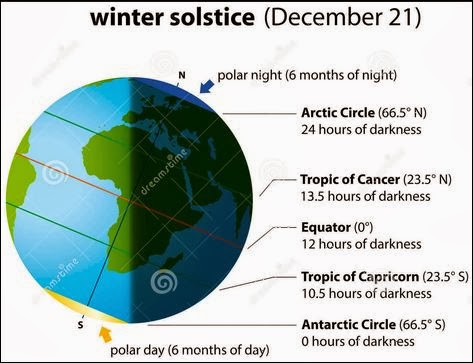
The English word solstice comes from the Hebrew word צהל ‘tsahal’ which means to shine (Psalm 104:15) but also has the meaning of a neighing of a horse (Jeremiah 5:8). This is interesting to note because the winter solstice is linked to pagan gods riding through the skies in chariots carried by horses. This comes from the truth of the Hebrew language. Scripture likens the sun to this same imagery.
Psa 19:5 and he comes forth like a bridegroom from his canopy. He rejoices like a hero to run a race;
The word for ‘rejoices’ in Psalm 19:5 is שוש ‘sus’ which means to rejoice as in turning around in joy, but is also the Hebrew word for a horse as a horse turns around in play.
צהל ‘tsahal’ is also translated as ‘shout’ as in the rejoicing of His people when He comes to save them. This salvation is linked to Him riding upon chariots in the sky.
Deu 33:26 None is like the God of Jeshurun, riding the heavens for your help, and the clouds in His majesty.
Psa 18:10 and He rode on a cherub, and He flew; yea He soared on the wings of the wind;
Psa 68:3 But the righteous are glad; they shout for joy before God; yea, they exult with gladness.
Psa 68:4 Sing to God, sing praise to His name; lift up a song for Him who rides in the deserts, by His name Yah; yea, exult in His presence.
Psa 68:32 Sing to God, kingdoms of the earth, praises to the Lord. Selah.
Psa 68:33 To Him who rides on the heavens of heavens of old; lo, He gives forth His voice, a mighty voice.
Hab 3:8 Did Jehovah burn against rivers? Or was Your anger against the rivers? Or Your fury against the sea? For You ride on horses; Your chariots of salvation.
שוש ‘sus’ and סוס ‘sus’ both mean horse and rejoice in Hebrew. This connection to God riding upon horses and chariot in relation to saving His people can be seen in Isaiah 35:1 where the dry land (dead) rejoices ‘soos’ when the desert blooms (resurrection). שוש ‘soos’ comes from שש which means white, as in the two front teeth. שש ‘sus’ is also the word for linen, as in the white linen garments given to the righteous who are resurrected (Isaiah 61:10-11; Revelation 19:14). Recall the connection to snow and the garments of the Levitical priesthood.
Rev 19:11 And I saw Heaven being opened. And, behold! A white horse, and He sitting on it having been called Faithful and True. And He judges and wars in righteousness.
Rev 19:12 And His eyes were as a flame of fire, and on His head many diadems, having a name that had been written, which no one knows except Himself;
Rev 19:13 and having been clothed in a garment which had been dipped in blood. And His name is called The Word of God.
Rev 19:14 And the armies in Heaven followed Him on white horses, being dressed in fine linen, white and pure.
Rev 19:15 And out of His mouth goes forth a sharp sword, that with it He might smite the nations. And He will shepherd them with an iron rod. And He treads the winepress of the wine of the anger and of the wrath of God Almighty.
Rev 19:16 And He has on His garment and on His thigh a name having been written: KING OF KINGS AND LORD OF LORDS.
Notice in Psalm 68 the association with singing. Is it any surprise that winter time is known for singing/carols?
The word carol traces back to the Latin word ‘choraula’ which means to “dance to the flute”. This word traces even further back to the Hebrew word חלל ‘chalal,’ which as mentioned before is the root of the word חרף ‘charaph’ which means winter.
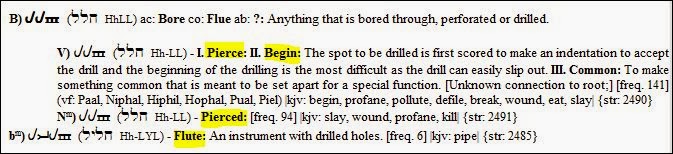
Notice the connections in this word to the prophecy in Genesis 3:15 of which winter portrays. חלל ‘chalal’ is translated as ‘begin’ as in the birth of the Promised Seed but also ‘wound,’ ‘pierced,’ ‘kill,’ referring to the piercing of the heel of the Promised Seed mentioned before. Notice also that חלל ‘chalal’ is translated as ‘profane’ and ‘pollute.’ The time of winter and in particular the winter solstice is a time in which the heathen took the Shadows of Messiah in nature and used it in reference to their sun gods.
The Hebrew word for solstice is היפוך ‘heypook’ which comes from the root word חףך ‘chapakh’ which means to overturn but is also translated as pervert as in an ‘overturning’ of truth. As mentioned previously, the Hebrew word for winter is חרף ‘choreph’ which is translated as reproach, scorn and blaspheme. Winter is a portrayal of the war between the Seed of the woman and the seed of the serpent in Genesis 3:15 which culminated at the cross. It is at the cross that Messiah triumphed over His enemies, those who corrupted/perverted the winter/winter solstice in blasphemy against the Most High.
Col 2:13 And you, being dead in your sins and the uncircumcision of your flesh, hath he quickened together with him, having forgiven you all trespasses;
Col 2:14 Blotting out the handwriting of ordinances that was against us, which was contrary to us, and took it out of the way, nailing it to his cross;
Col 2:15 And having spoiled principalities and powers, he made a shew of them openly, triumphing over them in it.
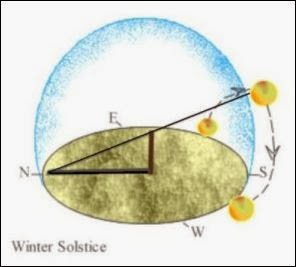
צהל ‘tsahal’ comes from the root word צל ‘tsel’ which means shade or shadow. This also connects to the solstices as in the winter the shadows are the longest, in the summer the shortest.The shadows of the four seasons can be seen in the following image:
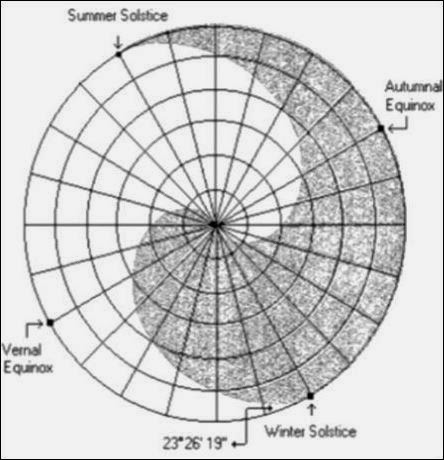
It is from this phenomenon in nature that the ‘Yin Yang‘ symbol was created. The ‘Yin Yang‘ symbol is also portrayed as the ‘Oroboros’ which is a figure of a serpent or dragon eating its own tail which is supposed to represent eternity or infinity. The figure itself is a portrayal of the Hebrew word לויתן ‘leviathan.’ ‘Leviathan’ is a combination of two Hebrew words. לוי ‘leviy’ which means joined together, like a wreath. תן ‘tan’ is the word for dragon or serpent mentioned in a previous study. Below is a jewel of the 25th degree in the Scottish Rite of Freemasonry which displays the concept of Leviathan & the idol נחושתן ‘nechushtan’ which is a picture of sin, the sin which Messiah took upon Himself when He became the serpent on the tree (John 3:14; 2 Corinthians 5:21).

The Oroboros is a corruption of the ‘analemma’ figure which the sun makes as it moves through the sky each year. The ‘analemma’ is a figure eight.
The word for 8 in Hebrew is:

This comes from the root:

The root of 8 comes from שם ‘shem’ (name/character) which is the same root as sun שמש ‘shemesh.’
Further connecting the sun & the number eight is the word oil. The Holy Spirit is likened to oil (1Samuel 16:13; Zechariah 4:2-3; Revelation 4:5).
This connection to the Spirit/wind is interesting as the Hebrew origin of the word ‘winter’ is נפה ‘nafah’ which means to move back and forth as in a fan. נפה ‘nafah’ is related to the Hebrew word נפח ‘naphach’ which means to breath or blow. The Greek word for spirit/wind is πνεῦμα ‘pneuma’ which traces back to both of these Hebrew words.
Interestingly, the Hebrew word כנף ‘kanaf’ is also related to נפה ‘nafah’ and נפח ‘naphach.’ כנף ‘kanaf’ is a consists of two parts. The beginning letter כ ‘kaf’ which has the meaning of ‘like’ and נף ‘naf’ which has the meaning of movement which causes wind. ‘Like the wind.’ כנף ‘kanaf’ has the meaning of a wing, in particular a bird wing, which performs this very action of ‘making wind.’ כנף ‘kanaf’ is also used in reference to the borders/wings of ancient garments such as Messiah, the Sun of Righteousness, wore.
Mal 4:2 But unto you that fear my name shall the Sun of righteousness arise with healing in his wings; and ye shall go forth, and grow up as calves of the stall.
The sun moves upon the spirit/wind (Ecclesiastes 1:5-6).

רח ‘rach’ is the root of the word רוח ‘ruach’, the Spirit. The sun’s cycle makes an interesting form when it moves throughout the sky during the year. This phenomenon is known as the ‘analemma.’ If you photographed the sun once a week at the same time of day for an entire year, you would have a photo of the analemma, the sun’s apparent path on the sky over the course of a year, which looks like a figure-eight.

The Sun is moving in a continual ‘figure eight’ path.

Could this be why the infinity symbol is portrayed as the number 8 on its side? Is this where the image of the ‘Ouroboros’ (serpent eating its tail) comes from? The heathen mystery religions are a counterfeit of the Truth of the Holy Scriptures, perverting the heavenly bodies and their meanings. The Mazzaroth (Constellations) teach of the Gospel of Messiah. His birth, death and resurrection.
So what is seen in the mystery religions? Parallel stories of Christ figures born of “virgin like figures” “dying and resurrecting”. Of course these stories vary greatly and can by no means be said to be a basis for the writings of the New Testament, but at the same time they do display that the heathens had a ‘veiled’ understanding of the promises of the Word, embedded as parables in creation.
The Almighty allowed these religions (Deuteronomy 4:19) in order to give unregenerate man a taste of the Truth so that when the time came for them to return to Him, their minds would already be somewhat prepared and so that no man can have an excuse because He has been calling to us to repent from the beginning (Psalm 19; Rom 1:19; 10:18).

Here we see that אביב ‘aviv’ means something new, which continues the next generation. Aviv comes from root אב ‘av’:


Here again we see that the word אביב ‘aviv’ is tracing back to something new or fresh and something that continues. This is connected to the calendar in that Spring is the new/fresh start of the year, continuing the cycle of the years anew. Just as the word indicates. Interesting, the pictograph means a pole. In order to find the equinoxes in ancient times a pole was used.
The word אביב ‘aviv’ is translated as ‘ear’ in two verses of the Scripture (Exodus 9:31; Leviticus 2:14). This word in English comes from the Old English ‘ear’ which means a ‘spike, ear of grain.’ It traces back to Greek word ‘akoste’ which means barley.
There is another interesting connection between אביב ‘aviv’ on earth and אביב ‘aviv’ in heaven in the star Spica. Spica is a Latin word which means ‘ear of grain’ and corresponds to the Greek word ‘stakhys.’ This is the origin of the English word ‘spike’ which is related to the English word ‘ear’ mentioned above.
Spica is the star in the hand of the constellation Bethulah (Virgo) and corresponds to the Hebrew word צמח ‘tsemach’ (the BRANCH Isaiah 4:2; Jeremiah 23:5,6; Zechariah 3:8; 6:12). צמח ‘tsemach’ has the meaning of a sprouting plant.
The constellation of Virgo (the Virgin) is a picture of the prophecy of the virgin who shall give birth to Emmanuel:
Isa 7:14 Therefore the Lord himself shall give you a sign; Behold, a virgin shall conceive, and bear a son, and shall call his name Immanuel.
Mat 1:23 “Behold! The virgin will conceive in her womb and will bear a son, and they will call His name Emmanuel” (which translated is, God with us).
She holds in her hand an ear of corn, with 5 stars which represents the 5 mentions of THE BRANCH in the Scriptures (Isaiah 4:2; Jeremiah 23:5, 33:15; Zechariah 6:12).
The Branch = the Son
Psa 80:15 And the vineyard which thy right hand hath planted, and the branch (בן ‘ben’ = son) that thou madest strong for thyself.
Psa 80:17 Let thy hand be upon the man of thy right hand, upon the son of man whom thou madest strong for thyself.
The Branch is the LORD our Righteousness (Jeremiah 23:5; 33:15). In Zechariah 3:8, the Branch is Servant from whence iniquity removed in one day. This is speaking of the Servant of Isaiah 53. In Zechariah 6:12 the name of the BRANCH is Jesus who shall be a king & priest (Psalm 110).
Spica is the star in the hand of the constellation Bethulah (Virgo) and corresponds to the Hebrew word צמח ‘tsemach’ (the BRANCH Isaiah 4:2; Jeremiah 23:5,6; Zechariah 3:8; 6:12). צמח ‘tsemach’ has the meaning of a sprouting plant.
The Messiah is likened to a plant rising from the ground.
Isa 11:1 And a Shoot goes out from the stump of Jesse, and a Branch will bear fruit out of his roots.
Isa 11:10 And it shall be in that day, the Root of Jesse stands as a banner of peoples; nations shall seek to Him; and His resting place shall be glory.
Isa 53:1 Who has believed our report? And to whom is the arm of Jehovah revealed?
Isa 53:2 For He comes up before Him as a tender plant, and as a root out of dry ground. He has no form nor magnificence that we should see Him; nor form that we should desire Him.
Zec 6:12 And speak to him, saying, So says Jehovah of Hosts, saying, Behold! The Man {Yehoshua} whose name is THE BRANCH! And He shall spring up out of His place, and He shall build the temple of Jehovah.
“The BRANCH” is capitalized in most English versions of the Scriptures because it is a direct reference to the Messiah. The word used here is צמח ‘tsemach’ and is used 5 times in reference to the Messiah in Scripture.

Isa 4:2 In that day the Branch of Jehovah will be beautiful and glorious, and the fruit of the earth for pride and for glory for the survivors of Israel.
Jer 23:5 Behold, the days come, says Jehovah, that I will raise to David a righteous Branch, and a King shall reign and act wisely, and He shall do justice and righteousness in the earth.
Jer 23:6 In His days Judah shall be saved, and Israel shall dwell safely. And this is His name by which He shall be called, Jehovah our Righteousness.
Jer 33:15 In those days, and at that time, I will cause a Branch of Righteousness to grow up to David. And He shall do judgment and righteousness in the land.
Jer 33:16 In those days Judah shall be saved, and Jerusalem shall dwell in safety. And this is the name that shall be called on her: JEHOVAH OUR RIGHTEOUSNESS.
Zec 3:9 For, behold, I will bring forth My Servant, the BRANCH. For behold, the stone which I have given before Joshua, on the one stone are seven eyes. I will engrave its engraving, says Jehovah of Hosts, and I will remove the iniquity of that land in one day.
The New Testament further links the BRANCH (צמח ‘tsemach’) to the heavenly bodies.
Luk 1:78 through the tender heart of mercy of our God, in which the Dayspring from on high will visit us,
Dayspring is from the Greek word ἀνατολη ‘anatolē’ which is the same word used for BRANCH/צמח ‘tsemach’ in the Septuagint.
Al Mureddin, another star in Virgo, has the meaning of ‘the branch that cometh.’
The first ‘decan’ constellation of Virgo is Coma which is a picture of a woman with a child on her lap. The name coma means the ‘desire of all nations’ (Haggai 2:7).
Hag 2:7 And I will shake all the nations; and the desire of all nations shall come. And I will fill this house with glory, says Jehovah of Hosts.
Albumazer, an Arabic astronomer of the 8th century, said that the Persians, Chaldeans and Egyptians said this was a young woman, which is the same as saying virgin in Hebrew (עלמה ‘alma’) nourishing an infant boy which has a Hebrew name ‘Ihesu” which in Greek is called Christos.
The next decan constellation is the Centaur which is half man and half horse, said to indicate the two natures of Messiah. In Hebrew the name is בזה ‘beza’ which means the despised.
Isa 53:3 He is despised (בזה ‘beza’) and abandoned of men, a Man of pains, and acquainted with sickness. And as it were hiding our faces from Him, He being despised, and we did not value Him.

Here in the Temple of Denderah a picture of a human with the head of a calf and tail is seen. The tail represents the one ‘cometh’ and the head of the calf or lamb of sacrifice. In Egyptian the name was ‘knemu’ which meant the one appointed to die or be bruised.
Gen 3:15 And I will put enmity between you and the woman, and between your seed and her Seed; He will bruise your head, and you shall bruise His heel.
Joh 1:29 On the morrow, John sees Jesus coming toward him and said, Behold! The Lamb of God, taking away the sin of the world!
Joh 1:36 And looking at Jesus walking, he said, Behold, the Lamb of God!
The last decan constellation is Bootes which is a picture of a man with a spear and sickle (Revelation 14:15-16) whose name means ‘the Coming One.’
Psa 96:13 before Jehovah; for He comes; for He comes to judge the earth; He shall judge the world with righteousness, and the people with His faithfulness.
Rev 14:14 And I saw; and behold, a white cloud and on the cloud One sitting like the Son of Man, having on His head a golden crown, and in His hand a sharp sickle.
Rev 14:15 And another angel went forth out of the temple, crying in a great voice to the One sitting on the cloud, Send Your sickle and reap, because Your hour to reap came, because the harvest of the earth was dried.
Rev 14:16 And the One sitting on the cloud thrust His sickle onto the earth, and the earth was reaped.
The Shepherd staff & sickle…Messiah gathers us by His sacrifice
Joh 10:11 I am the Good Shepherd! The Good Shepherd lays down His life on behalf of the sheep.
The Year is measured from Tequfah to Tequfah (Equinox to Equinox… Exodus 12:2). It is a continuous cycle of the sun rising directly over the Eastern horizon at the spring tequfah (‘equinox’) and proceeds to the North till it reaches its farthest point, the summer solstice, then travels back again where it rises again directly East on the fall tequfah and proceeds South to it’s farthest point at the winter solstice and then back again making a ‘figure eight’.
The Spring tequfah occurs when the sun has completed its cycle through the constellations.

תקופה ‘tequfah’ comes from the root קף ‘qaf’ which literally means the ‘sun speaks.’
The Hebrew words used in reference to time further reveal that time is linked to the movement of the heavenly bodies.

עת ‘et’ which pictographically means to ‘see the cross’, and in ancient Hebrew thinking meant to ‘see the mark.’ What is this ‘mark’? It is the sun setting (death) and rising (resurrection) above the horizon.

Psa 19:6 his (the sun) going forth from the end of the heavens, and his orbit (תקופה ‘tequfah’) to their ends; and nothing is hidden from his heat.
Gen 1:14 And God said, Let luminaries be in the expanse of the heavens, to divide between the day and the night. And let them be for signs and for seasons, and for days and years.

The signs of the heavens are a mark/reminder of the covenant with His people.
Jer 33:25 So says Jehovah, If My covenant is not with day and night, and if I have not appointed the ordinances of the heavens and earth,
Jer 33:26 then I also will reject the seed of Jacob, and My servant David, not to take of his seed to be rulers over the seed of Abraham, Isaac and Jacob. For I will bring back their captivity and have pity on them.
Psa 147:4 He appoints the number of the stars; He calls to them all by names. The Hebrew word for number here is מספר ‘mispar’ from the root ספר ‘saphar’ which means a record/scroll. Brown Driver Briggs Hebrew dictionary defines מספר ‘mispar’ as a number or tale. A tale is an account telling a story. This is what the number of the stars does. It tells the story of the Gospel.
Rom 10:17 Then faith is of hearing, and hearing through the Word of God.
Rom 10:18 But I say, Did they not hear? Yes, rather, “into all the earth their voice went out, and to the ends of the world their words.”
In Romans 10, Paul is referring back to Psalm 19 which is speaking of the path of the sun and its orbit {תקופה ‘tequfah’}.
Psa 19:1 To the chief musician. A Psalm of David. The heavens are recounting the glory of God, and the expanse proclaiming His handiwork.
Psa 19:2 Day by day they pour forth speech, and night to night reveals knowledge.
Psa 19:3 There is no speech, nor are there words where their voice is not heard.
Psa 19:4 Their measuring line has gone out through all the earth, and their words to the end of the world; in them He has set up a dwelling-place for the sun,
Psa 19:5 and he comes forth like a bridegroom from his canopy. He rejoices like a hero to run a race;
Psa 19:6 his going forth from the end of the heavens, and his orbit to their ends; and nothing is hidden from his heat.
Recall that the solstice comes from the Hebrew word צהל ‘tsahal’ which means to shine (Psalm 104:15) but also has the meaning of a neighing of a horse (Jeremiah 5:8). The horse is further connected to the sun, time and the תקופה ‘tequfah’ through its hoof.
The word for the galloping of a horse in Hebrew is דהר ‘dahar’ which comes from the root דר ‘dar’ which means the cycles of time and life as a horse galloping makes a rhythmic sound such as the rhythm of time.
Darkness

Winter is a time of darkness. The Hebrew word for darkness is חשך ‘chashakh’ which means a dark place/night from the root word שח ‘shach’ which means a pit. This connects darkness with death, which is equated in Scripture to the pit (Numbers 16:30; Psalm 88:3-12; Job 17:16). Scripture associates the coming of the Messiah as the Dayspring which ‘defeats’ the darkness (Luke 1:78). This keeps in theme with winter and the portrayal of the Seed of the woman defeating the seed of the serpent.
Luk 1:78 Through the tender mercy of our God; whereby the dayspring from on high hath visited us,
Luk 1:79 To give light to them that sit in darkness and in the shadow of death, to guide our feet into the way of peace.
The Greek word for ‘dayspring’ in Luke 1:78 is ἀνατολή ‘anatolē’ which, as mentioned before, is the same word used for BRANCH/צמח in the Septuagint. This points back to the constellation Virgo and the Branch in her hand, the Promised Seed of Genesis 3:15.
Luke 1:78-79 refers back to prophecies of the Messiah spoken of by Isaiah.
Isa 9:2 The people that walked in darkness have seen a great light: they that dwell in the land of the shadow of death, upon them hath the light shined.
Isa 9:6 For unto us a child is born, unto us a son is given: and the government shall be upon his shoulder: and his name shall be called Wonderful, Counsellor, The mighty God, The everlasting Father, The Prince of Peace.
Isa 9:7 Of the increase of his government and peace there shall be no end, upon the throne of David, and upon his kingdom, to order it, and to establish it with judgment and with justice from henceforth even for ever. The zeal of the LORD of hosts will perform this.
Isa 42:1 Behold my servant, whom I uphold; mine elect, in whom my soul delighteth; I have put my spirit upon him: he shall bring forth judgment to the Gentiles.
Isa 42:2 He shall not cry, nor lift up, nor cause his voice to be heard in the street.
Isa 42:3 A bruised reed shall he not break, and the smoking flax shall he not quench: he shall bring forth judgment unto truth.
Isa 42:4 He shall not fail nor be discouraged, till he have set judgment in the earth: and the isles shall wait for his law.
Isa 42:5 Thus saith God the LORD, he that created the heavens, and stretched them out; he that spread forth the earth, and that which cometh out of it; he that giveth breath unto the people upon it, and spirit to them that walk therein:
Isa 42:6 I the LORD have called thee in righteousness, and will hold thine hand, and will keep thee, and give thee for a covenant of the people, for a light of the Gentiles;
Isa 42:7 To open the blind eyes, to bring out the prisoners from the prison, and them that sit in darkness out of the prison house.
Isa 42:8 I am the LORD: that is my name: and my glory will I not give to another, neither my praise to graven images.

Everything we experience in this life is a Shadow picture or parable that points us back to the Word of God, the Image of the Father (Hebrews 1:3; 8:5; 9:24; 10:1; 2 Corinthians 4:4; Colossians 1:15-16; 2:16-17; 3:11).
Heb 1:3 Who being the brightness of his glory, and the express image of his person, and upholding all things by the word of his power, when he had by himself purged our sins, sat down on the right hand of the Majesty on high;
Heb 8:5 Who serve unto the example and shadow of heavenly things, as Moses was admonished of God when he was about to make the tabernacle: for, See, saith he, that thou make all things according to the pattern shewed to thee in the mount.
Heb 9:24 For Christ is not entered into the holy places made with hands, which are the figures of the true; but into heaven itself, now to appear in the presence of God for us:
Heb 10:1 For the law having a shadow of good things to come, and not the very image of the things, can never with those sacrifices which they offered year by year continually make the comers thereunto perfect.
2Co 4:4 In whom the god of this world hath blinded the minds of them which believe not, lest the light of the glorious gospel of Christ, who is the image of God, should shine unto them.
Col 1:15 Who is the image of the invisible God, the firstborn of every creature:
Col 1:16 For by him were all things created, that are in heaven, and that are in earth, visible and invisible, whether they be thrones, or dominions, or principalities, or powers: all things were created by him, and for him:
Col 2:16 Let no man therefore judge you in meat, or in drink, or in respect of an holyday, or of the new moon, or of the sabbath days:
Col 2:17 Which are a shadow of things to come; but the body is of Christ.
Col 3:10 And have put on the new man, which is renewed in knowledge after the image of him that created him:
Col 3:11 Where there is neither Greek nor Jew, circumcision nor uncircumcision, Barbarian, Scythian, bond nor free: but Christ is all, and in all.
He is in control of all things and thus, His Hand is seen in all things. Even the very Word is a shadow pointing to Him (Hebrews 10:1).
Heb 10:1 For the law having a shadow of good things to come, and not the very image of the things, can never with those sacrifices which they offered year by year continually make the comers thereunto perfect.
Thus, we are not to judge one another on how we worship Him (Colossians 2:16-17), we are to work out our salvation with fear and trembling (Philippians 2:12-13).
Col 2:16 Let no man therefore judge you in meat, or in drink, or in respect of an holyday, or of the new moon, or of the sabbath days:
Col 2:17 Which are a shadow of things to come; but the body is of Christ.
Php 2:12 Wherefore, my beloved, as ye have always obeyed, not as in my presence only, but now much more in my absence, work out your own salvation with fear and trembling.
Php 2:13 For it is God which worketh in you both to will and to do of his good pleasure.
There is nothing wrong with admonishing one another and correcting one another in love (2 Timothy 4:2; Ephesians 4:15), but ultimately each person has to find out what His will is by seeking His Face and being transformed from within (Romans 12:2; Hebrews 13:21).
2Ti 4:2 Preach the word; be instant in season, out of season; reprove, rebuke, exhort with all longsuffering and doctrine.
Eph 4:15 But speaking the truth in love, may grow up into him in all things, which is the head, even Christ:
Rom 12:2 And be not conformed to this world: but be ye transformed by the renewing of your mind, that ye may prove what is that good, and acceptable, and perfect, will of God.
Heb 13:20 Now the God of peace, that brought again from the dead our Lord Jesus, that great shepherd of the sheep, through the blood of the everlasting covenant,
Heb 13:21 Make you perfect in every good work to do his will, working in you that which is wellpleasing in his sight, through Jesus Christ; to whom be glory for ever and ever. Amen.
Arguing, fighting, debating, pointing the finger at one another is not going to lead people to truth (Romans 1:29; Isaiah 58:4), it only engenders strife and division (1 Corinthians 1:12-13; 3:3-4; Philippians 2:3).
Rom 1:28 And even as they did not like to retain God in their knowledge, God gave them over to a reprobate mind, to do those things which are not convenient;
Rom 1:29 Being filled with all unrighteousness, fornication, wickedness, covetousness, maliciousness; full of envy, murder, debate, deceit, malignity; whisperers,
Isa 58:4 Behold, ye fast for strife and debate, and to smite with the fist of wickedness: ye shall not fast as ye do this day, to make your voice to be heard on high.
1Co 1:12 Now this I say, that every one of you saith, I am of Paul; and I of Apollos; and I of Cephas; and I of Christ.
1Co 1:13 Is Christ divided? was Paul crucified for you? or were ye baptized in the name of Paul?
1Co 3:3 For ye are yet carnal: for whereas there is among you envying, and strife, and divisions, are ye not carnal, and walk as men?
1Co 3:4 For while one saith, I am of Paul; and another, I am of Apollos; are ye not carnal?
Php 2:3 Let nothing be done through strife or vainglory; but in lowliness of mind let each esteem other better than themselves.
Php 2:4 Look not every man on his own things, but every man also on the things of others.
Unity does not mean that we all have to agree with one another on all doctrine. Unity comes through covenant relationship with God through Messiah (Psalm 50:5; Isaiah 49:3-9; Hebrews 2:11; 13:20-21; Jeremiah 50:5; Ephesians 2:15; Colossians 1:20; 2:1-11).
Psa 50:4 He shall call to the heavens from above, and to the earth, that he may judge his people.
Psa 50:5 Gather my saints together unto me; those that have made a covenant with me by sacrifice.
Psa 50:6 And the heavens shall declare his righteousness: for God is judge himself. Selah.
Isa 49:3 And said unto me, Thou art my servant, O Israel, in whom I will be glorified.
Isa 49:4 Then I said, I have laboured in vain, I have spent my strength for nought, and in vain: yet surely my judgment is with the LORD, and my work with my God.
Isa 49:5 And now, saith the LORD that formed me from the womb to be his servant, to bring Jacob again to him, Though Israel be not gathered, yet shall I be glorious in the eyes of the LORD, and my God shall be my strength.
Isa 49:6 And he said, It is a light thing that thou shouldest be my servant to raise up the tribes of Jacob, and to restore the preserved of Israel: I will also give thee for a light to the Gentiles, that thou mayest be my salvation unto the end of the earth.
Isa 49:7 Thus saith the LORD, the Redeemer of Israel, and his Holy One, to him whom man despiseth, to him whom the nation abhorreth, to a servant of rulers, Kings shall see and arise, princes also shall worship, because of the LORD that is faithful, and the Holy One of Israel, and he shall choose thee.
Isa 49:8 Thus saith the LORD, In an acceptable time have I heard thee, and in a day of salvation have I helped thee: and I will preserve thee, and give thee for a covenant of the people, to establish the earth, to cause to inherit the desolate heritages;
Isa 49:9 That thou mayest say to the prisoners, Go forth; to them that are in darkness, Shew yourselves. They shall feed in the ways, and their pastures shall be in all high places.
Isa 49:10 They shall not hunger nor thirst; neither shall the heat nor sun smite them: for he that hath mercy on them shall lead them, even by the springs of water shall he guide them.
Isa 49:11 And I will make all my mountains a way, and my highways shall be exalted.
Isa 49:12 Behold, these shall come from far: and, lo, these from the north and from the west; and these from the land of Sinim.
Isa 49:13 Sing, O heavens; and be joyful, O earth; and break forth into singing, O mountains: for the LORD hath comforted his people, and will have mercy upon his afflicted.
Heb 2:11 For both he that sanctifieth and they who are sanctified are all of one: for which cause he is not ashamed to call them brethren,
Heb 13:20 Now the God of peace, that brought again from the dead our Lord Jesus, that great shepherd of the sheep, through the blood of the everlasting covenant,
Heb 13:21 Make you perfect in every good work to do his will, working in you that which is wellpleasing in his sight, through Jesus Christ; to whom be glory for ever and ever. Amen.
Jer 50:4 In those days, and in that time, saith the LORD, the children of Israel shall come, they and the children of Judah together, going and weeping: they shall go, and seek the LORD their God.
Jer 50:5 They shall ask the way to Zion with their faces thitherward, saying, Come, and let us join ourselves to the LORD in a perpetual covenant that shall not be forgotten.
Eph 2:13 But now in Christ Jesus ye who sometimes were far off are made nigh by the blood of Christ.
Eph 2:14 For he is our peace, who hath made both one, and hath broken down the middle wall of partition between us;
Eph 2:15 Having abolished in his flesh the enmity, even the law of commandments contained in ordinances; for to make in himself of twain one new man, so making peace;
Eph 2:16 And that he might reconcile both unto God in one body by the cross, having slain the enmity thereby:
Eph 2:17 And came and preached peace to you which were afar off, and to them that were nigh.
Eph 2:18 For through him we both have access by one Spirit unto the Father.
Eph 2:19 Now therefore ye are no more strangers and foreigners, but fellowcitizens with the saints, and of the household of God;
Eph 2:20 And are built upon the foundation of the apostles and prophets, Jesus Christ himself being the chief corner stone;
Eph 2:21 In whom all the building fitly framed together groweth unto an holy temple in the Lord:
Eph 2:22 In whom ye also are builded together for an habitation of God through the Spirit.
Col 1:20 And, having made peace through the blood of his cross, by him to reconcile all things unto himself; by him, I say, whether they be things in earth, or things in heaven.
Col 1:21 And you, that were sometime alienated and enemies in your mind by wicked works, yet now hath he reconciled
Col 1:22 In the body of his flesh through death, to present you holy and unblameable and unreproveable in his sight:
Col 1:23 If ye continue in the faith grounded and settled, and be not moved away from the hope of the gospel, which ye have heard, and which was preached to every creature which is under heaven; whereof I Paul am made a minister;
Col 2:1 For I would that ye knew what great conflict I have for you, and for them at Laodicea, and for as many as have not seen my face in the flesh;
Col 2:2 That their hearts might be comforted, being knit together in love, and unto all riches of the full assurance of understanding, to the acknowledgement of the mystery of God, and of the Father, and of Christ;
Col 2:3 In whom are hid all the treasures of wisdom and knowledge.
Col 2:4 And this I say, lest any man should beguile you with enticing words.
Col 2:5 For though I be absent in the flesh, yet am I with you in the spirit, joying and beholding your order, and the stedfastness of your faith in Christ.
Col 2:6 As ye have therefore received Christ Jesus the Lord, so walk ye in him:
Col 2:7 Rooted and built up in him, and stablished in the faith, as ye have been taught, abounding therein with thanksgiving.
Col 2:8 Beware lest any man spoil you through philosophy and vain deceit, after the tradition of men, after the rudiments of the world, and not after Christ.
Col 2:9 For in him dwelleth all the fulness of the Godhead bodily.
Col 2:10 And ye are complete in him, which is the head of all principality and power:
Col 2:11 In whom also ye are circumcised with the circumcision made without hands, in putting off the body of the sins of the flesh by the circumcision of Christ:
Although all things are shadows, not all things are pleasing to Him as corruption entered creation at the time of the tree of knowledge being eaten by Adam (Romans 5:12; 1 Corinthians 15:22).
Rom 5:12 Wherefore, as by one man sin entered into the world, and death by sin; and so death passed upon all men, for that all have sinned:
1Co 15:22 For as in Adam all die, even so in Christ shall all be made alive.
Thus, all have fallen short of His glory (Romans 3:23) and all have corrupted His image in our actions and in our religious practices.
Rom 3:23 For all have sinned, and come short of the glory of God;
As believers, we are called to ‘come out of’ of the corruptions of this world and walk in the purity of His Word (2 Corinthians 6:17; Revelation 18:4), growing in grace and knowledge (2 Peter 3:18), transforming into His image, from ‘glory to glory’ (2 Corinthians 3:18).
2Co 6:17 Wherefore come out from among them, and be ye separate, saith the Lord, and touch not the unclean thing; and I will receive you,
2Co 6:18 And will be a Father unto you, and ye shall be my sons and daughters, saith the Lord Almighty.
Rev 18:4 And I heard another voice from heaven, saying, Come out of her, my people, that ye be not partakers of her sins, and that ye receive not of her plagues.
2Pe 3:18 But grow in grace, and in the knowledge of our Lord and Saviour Jesus Christ. To him be glory both now and for ever. Amen.
2Co 3:18 But we all, with open face beholding as in a glass the glory of the Lord, are changed into the same image from glory to glory, even as by the Spirit of the Lord.
So while many aspects of religion and customs of the world point us to the Almighty, religion in and of itself is not the path to truth and salvation. The path to truth and salvation is in covenant relationship with the Lord (John 14:6), the Word who was made flesh.
Joh 14:6 Jesus saith unto him, I am the way, the truth, and the life: no man cometh unto the Father, but by me.
As we all see through a glass darkly, we must be patient with one another and walk in His love for this is the essence of the Almighty (1 Corinthians 13:12-13; 1 John 4:7-18).
1Co 13:12 For now we see through a glass, darkly; but then face to face: now I know in part; but then shall I know even as also I am known.
1Co 13:13 And now abideth faith, hope, charity, these three; but the greatest of these is charity.
1Jn 4:7 Beloved, let us love one another: for love is of God; and every one that loveth is born of God, and knoweth God.
1Jn 4:8 He that loveth not knoweth not God; for God is love.
1Jn 4:9 In this was manifested the love of God toward us, because that God sent his only begotten Son into the world, that we might live through him.
1Jn 4:10 Herein is love, not that we loved God, but that he loved us, and sent his Son to be the propitiation for our sins.
1Jn 4:11 Beloved, if God so loved us, we ought also to love one another.
1Jn 4:12 No man hath seen God at any time. If we love one another, God dwelleth in us, and his love is perfected in us.
1Jn 4:13 Hereby know we that we dwell in him, and he in us, because he hath given us of his Spirit.
1Jn 4:14 And we have seen and do testify that the Father sent the Son to be the Saviour of the world.
1Jn 4:15 Whosoever shall confess that Jesus is the Son of God, God dwelleth in him, and he in God.
1Jn 4:16 And we have known and believed the love that God hath to us. God is love; and he that dwelleth in love dwelleth in God, and God in him.
1Jn 4:17 Herein is our love made perfect, that we may have boldness in the day of judgment: because as he is, so are we in this world.
1Jn 4:18 There is no fear in love; but perfect love casteth out fear: because fear hath torment. He that feareth is not made perfect in love.
It is only through the example of God’s patience and forbearance that men can be led to repentance (Romans 2:4).
Rom 2:4 Or despisest thou the riches of his goodness and forbearance and longsuffering; not knowing that the goodness of God leadeth thee to repentance?
People are not led to true repentance through convincing arguments (1 Corinthians 2:1-5), they are led to the truth through the power of God (1 Corinthians 2:5).
1Co 2:1 And I, brethren, when I came to you, came not with excellency of speech or of wisdom, declaring unto you the testimony of God.
1Co 2:2 For I determined not to know any thing among you, save Jesus Christ, and him crucified.
1Co 2:3 And I was with you in weakness, and in fear, and in much trembling.
1Co 2:4 And my speech and my preaching was not with enticing words of man’s wisdom, but in demonstration of the Spirit and of power:
1Co 2:5 That your faith should not stand in the wisdom of men, but in the power of God.
He desires the salvation of man, not their condemnation (Ezekiel 18:23; 2 Peter 3:9; 1 Timothy 2:4).
Eze 18:23 Have I any pleasure at all that the wicked should die? saith the Lord GOD: and not that he should return from his ways, and live?
2Pe 3:9 The Lord is not slack concerning his promise, as some men count slackness; but is longsuffering to us-ward, not willing that any should perish, but that all should come to repentance.
1Ti 2:4 Who will have all men to be saved, and to come unto the knowledge of the truth.
1Ti 2:5 For there is one God, and one mediator between God and men, the man Christ Jesus;
1Ti 2:6 Who gave himself a ransom for all, to be testified in due time.
His power is His love in Messiah (Ephesians 3:16-17) who died for ALL mankind (John 3:16).
Eph 3:16 That he would grant you, according to the riches of his glory, to be strengthened with might by his Spirit in the inner man;
Eph 3:17 That Christ may dwell in your hearts by faith; that ye, being rooted and grounded in love,
Eph 3:18 May be able to comprehend with all saints what is the breadth, and length, and depth, and height;
Eph 3:19 And to know the love of Christ, which passeth knowledge, that ye might be filled with all the fulness of God.
Joh 3:15 That whosoever believeth in him should not perish, but have eternal life.
Joh 3:16 For God so loved the world, that he gave his only begotten Son, that whosoever believeth in him should not perish, but have everlasting life.
Joh 3:17 For God sent not his Son into the world to condemn the world; but that the world through him might be saved.
Joh 3:18 He that believeth on him is not condemned: but he that believeth not is condemned already, because he hath not believed in the name of the only begotten Son of God.
We come to faith in Him, not through doctrine or works, but by His grace (Ephesians 2:8-9).
Eph 2:8 For by grace are ye saved through faith; and that not of yourselves: it is the gift of God:
Eph 2:9 Not of works, lest any man should boast.
If we are to have the mind of Messiah (Philippians 2:5) we need to have His love (Ephesians 5:2).
Php 2:5 Let this mind be in you, which was also in Christ Jesus:
Php 2:6 Who, being in the form of God, thought it not robbery to be equal with God:
Php 2:7 But made himself of no reputation, and took upon him the form of a servant, and was made in the likeness of men:
Php 2:8 And being found in fashion as a man, he humbled himself, and became obedient unto death, even the death of the cross.
Eph 5:1 Be ye therefore followers of God, as dear children;
Eph 5:2 And walk in love, as Christ also hath loved us, and hath given himself for us an offering and a sacrifice to God for a sweetsmelling savour.
Love does not condemn but seeks to cover over sin and lead to truth (Proverbs 10:12; 17:9; 1 Corinthians 13:4; James 5:20; 1 Peter 4:8).
Pro 10:12 Hatred stirreth up strifes: but love covereth all sins.
Pro 17:9 He that covereth a transgression seeketh love; but he that repeateth a matter separateth very friends.
1Co 13:4 Charity suffereth long, and is kind; charity envieth not; charity vaunteth not itself, is not puffed up,
Jas 5:19 Brethren, if any of you do err from the truth, and one convert him;
Jas 5:20 Let him know, that he which converteth the sinner from the error of his way shall save a soul from death, and shall hide a multitude of sins.
1Pe 4:8 And above all things have fervent charity among yourselves: for charity shall cover the multitude of sins.
As a result, we are given the ministry of reconciliation and not of condemnation (2 Corinthians 2:10-11; 5:14-21; Ephesians 4:27).
2Co 2:10 To whom ye forgive any thing, I forgive also: for if I forgave any thing, to whom I forgave it, for your sakes forgave I it in the person of Christ;
2Co 2:11 Lest Satan should get an advantage of us: for we are not ignorant of his devices.
2Co 5:14 For the love of Christ constraineth us; because we thus judge, that if one died for all, then were all dead:
2Co 5:15 And that he died for all, that they which live should not henceforth live unto themselves, but unto him which died for them, and rose again.
2Co 5:16 Wherefore henceforth know we no man after the flesh: yea, though we have known Christ after the flesh, yet now henceforth know we him no more.
2Co 5:17 Therefore if any man be in Christ, he is a new creature: old things are passed away; behold, all things are become new.
2Co 5:18 And all things are of God, who hath reconciled us to himself by Jesus Christ, and hath given to us the ministry of reconciliation;
2Co 5:19 To wit, that God was in Christ, reconciling the world unto himself, not imputing their trespasses unto them; and hath committed unto us the word of reconciliation.
2Co 5:20 Now then we are ambassadors for Christ, as though God did beseech you by us: we pray you in Christ’s stead, be ye reconciled to God.
2Co 5:21 For he hath made him to be sin for us, who knew no sin; that we might be made the righteousness of God in him.
Eph 4:22 That ye put off concerning the former conversation the old man, which is corrupt according to the deceitful lusts;
Eph 4:23 And be renewed in the spirit of your mind;
Eph 4:24 And that ye put on the new man, which after God is created in righteousness and true holiness.
Eph 4:25 Wherefore putting away lying, speak every man truth with his neighbour: for we are members one of another.
Eph 4:26 Be ye angry, and sin not: let not the sun go down upon your wrath:
Eph 4:27 Neither give place to the devil.
As He died for all, we should no longer judge others after the flesh but look upon them as the Lord sees them (2 Corinthians 5:14-21).
He loves all (John 3:16) and desires that all come to salvation (2 Peter 3:9; 1 Timothy 2:4) and uses holidays such as Christmas to draw men unto Himself. It is His love that draws mankind (John 12:32; Isaiah 54:7-13; John 6:44-45) not doctrine, nor our understanding of His Word.
Joh 12:32 And I, if I be lifted up from the earth, will draw all men unto me.
Isa 54:7 For a small moment have I forsaken thee; but with great mercies will I gather thee.
Isa 54:8 In a little wrath I hid my face from thee for a moment; but with everlasting kindness will I have mercy on thee, saith the LORD thy Redeemer.
Isa 54:9 For this is as the waters of Noah unto me: for as I have sworn that the waters of Noah should no more go over the earth; so have I sworn that I would not be wroth with thee, nor rebuke thee.
Isa 54:10 For the mountains shall depart, and the hills be removed; but my kindness shall not depart from thee, neither shall the covenant of my peace be removed, saith the LORD that hath mercy on thee.
Isa 54:11 O thou afflicted, tossed with tempest, and not comforted, behold, I will lay thy stones with fair colours, and lay thy foundations with sapphires.
Isa 54:12 And I will make thy windows of agates, and thy gates of carbuncles, and all thy borders of pleasant stones.
Isa 54:13 And all thy children shall be taught of the LORD; and great shall be the peace of thy children.
Joh 6:44 No man can come to me, except the Father which hath sent me draw him: and I will raise him up at the last day.
Joh 6:45 It is written in the prophets, And they shall be all taught of God. Every man therefore that hath heard, and hath learned of the Father, cometh unto me.
All of creation was corrupted, yet all of creation still points to Jesus, the One who reconciles creation back to the Father (Colossians 1:14-20; Ephesians 2:16; 2 Corinthians 5:18-21; Romans 5:10).
Col 1:14 In whom we have redemption through his blood, even the forgiveness of sins:
Col 1:15 Who is the image of the invisible God, the firstborn of every creature:
Col 1:16 For by him were all things created, that are in heaven, and that are in earth, visible and invisible, whether they be thrones, or dominions, or principalities, or powers: all things were created by him, and for him:
Col 1:17 And he is before all things, and by him all things consist.
Col 1:18 And he is the head of the body, the church: who is the beginning, the firstborn from the dead; that in all things he might have the preeminence.
Col 1:19 For it pleased the Father that in him should all fulness dwell;
Col 1:20 And, having made peace through the blood of his cross, by him to reconcile all things unto himself; by him, I say, whether they be things in earth, or things in heaven.
Eph 2:16 And that he might reconcile both unto God in one body by the cross, having slain the enmity thereby:
2Co 5:18 And all things are of God, who hath reconciled us to himself by Jesus Christ, and hath given to us the ministry of reconciliation;
2Co 5:19 To wit, that God was in Christ, reconciling the world unto himself, not imputing their trespasses unto them; and hath committed unto us the word of reconciliation.
2Co 5:20 Now then we are ambassadors for Christ, as though God did beseech you by us: we pray you in Christ’s stead, be ye reconciled to God.
2Co 5:21 For he hath made him to be sin for us, who knew no sin; that we might be made the righteousness of God in him.
Rom 5:10 For if, when we were enemies, we were reconciled to God by the death of his Son, much more, being reconciled, we shall be saved by his life.
His grace is seen in all things, yet when one receives His forgiveness and grace they are called to ‘go and sin no more’ (John 5:14; 8:11).
Joh 5:14 Afterward Jesus findeth him in the temple, and said unto him, Behold, thou art made whole: sin no more, lest a worse thing come unto thee.
Joh 8:10 When Jesus had lifted up himself, and saw none but the woman, he said unto her, Woman, where are those thine accusers? hath no man condemned thee?
Joh 8:11 She said, No man, Lord. And Jesus said unto her, Neither do I condemn thee: go, and sin no more.
Joh 8:12 Then spake Jesus again unto them, saying, I am the light of the world: he that followeth me shall not walk in darkness, but shall have the light of life.
We are to seek the purity of His Word (Psalm 12:6), to walk before Him and be perfect (Matthew 5:48).
Psa 12:6 The words of the LORD are pure words: as silver tried in a furnace of earth, purified seven times.
Psa 12:7 Thou shalt keep them, O LORD, thou shalt preserve them from this generation for ever.
Mat 5:48 Be ye therefore perfect, even as your Father which is in heaven is perfect.
So, while many things which we believe and do have many good aspects, they are not pure in light of His Word. This is not to condemn these things in entirety, but there comes a time when the Father calls us to grow in maturity and leave off these ‘childish’ things (1 Corinthians 13:11).
1Co 13:11 When I was a child, I spake as a child, I understood as a child, I thought as a child: but when I became a man, I put away childish things.
1Co 13:12 For now we see through a glass, darkly; but then face to face: now I know in part; but then shall I know even as also I am known.
1Co 13:13 And now abideth faith, hope, charity, these three; but the greatest of these is charity.
It is in this spirit that I share this study. It is a message I believe I have been shown in the past few years that the winter holidays have been used for much good in calling the masses, through the example of His love, to Him. Yet, these holidays have aspects in them today which are not entirely pure and as such believers need to test all things and hold fast to that which is true (1 John 4:1; 1 Thessalonians 5:21).
1Jn 4:1 Beloved, believe not every spirit, but try the spirits whether they are of God: because many false prophets are gone out into the world.
1Th 5:21 Prove all things; hold fast that which is good.
These principals can be applied to most subjects which we encounter. Christmas and its customs are shadow pictures which lead men to the Messiah, yet it also has corruptions within it. Winter itself points to the death and resurrection of Messiah, the Gospel.
The traditions and customs which we see during this time of year point to the Messiah, albeit some in corrupted form. Christmas has become an imperfect celebration due to some customs which have been added after the time of the Apostles but even in its “imperfection” it displays the perfect Gospel.
Winter is a time of darkness in which people desire light. This holiday give this to them as it points mankind to the Light of the World (John 8:12).
Joh 8:12 Then spake Jesus again unto them, saying, I am the light of the world: he that followeth me shall not walk in darkness, but shall have the light of life.
Col 2:17 Which are a shadow of things to come; but the body is of Christ.
Numerous customs of this holiday are but mere shadows, so as we walk with the Lord and grow closer to the goal set before us (Philippians 3:14), we should be leaving off with the childish things and growing unto maturity (1 Corinthians 13:11; 14:20).
Php 3:13 Brethren, I count not myself to have apprehended: but this one thing I do, forgetting those things which are behind, and reaching forth unto those things which are before,
Php 3:14 I press toward the mark for the prize of the high calling of God in Christ Jesus.
1Co 13:11 When I was a child, I spake as a child, I understood as a child, I thought as a child: but when I became a man, I put away childish things.
1Co 13:12 For now we see through a glass, darkly; but then face to face: now I know in part; but then shall I know even as also I am known.
1Co 13:13 And now abideth faith, hope, charity, these three; but the greatest of these is charity.
1Co 14:20 Brethren, be not children in understanding: howbeit in malice be ye children, but in understanding be men.
As mentioned previously, Shadows of Messiah are seen in all creation which includes man and his holidays. Man was created in the image of God (Genesis 1:26-27).
Gen 1:26 And God said, Let us make man in our image, after our likeness: and let them have dominion over the fish of the sea, and over the fowl of the air, and over the cattle, and over all the earth, and over every creeping thing that creepeth upon the earth.
Gen 1:27 So God created man in his own image, in the image of God created he him; male and female created he them.
Hence, more than any other part of creation, shadow pictures of Messiah are seen in relation to mankind. One major aspect of man is his religious ceremonies/holidays. As I’ve studied ancient history and religions, a repeating theme is seen. Truth mixed with error. All religions of the world have some truth which traces back to the Holy Scriptures and ultimately the Tree of Life. However, many are mixed with corruptions which reveals that they are also producing fruit from the tree of knowledge which is a counterfeit of the Tree of Life.
Nonetheless, no matter how far removed from the truth a particular religion is, there is still some truth within, a glimmer of light which calls man to His Creator, through Messiah Jesus. All religions have some truth which is a gift of grace to all of mankind to draw us back to the Most High (2 Peter 3:9; 1 Timothy 2:4; 4:10), for He is the God of all.
2Pe 3:9 The Lord is not slack concerning his promise, as some men count slackness; but is longsuffering to us-ward, not willing that any should perish, but that all should come to repentance.
1Ti 2:4 Who will have all men to be saved, and to come unto the knowledge of the truth.
1Ti 4:10 For therefore we both labour and suffer reproach, because we trust in the living God, who is the Saviour of all men, specially of those that believe.
Rom 3:29 Or is He the God of Jews only, and not also of the nations? Yes, of the nations also,
Jer 32:27 Behold, I am Jehovah, the God of all flesh. Is anything too difficult for Me?
Joh 1:9 He was the true Light; He enlightens every man coming into the world.
Isa 19:24 In that day Israel shall be the third with Egypt and with Assyria, a blessing in the midst of the earth,
Isa 19:25 whom Jehovah of Hosts shall bless, saying, Blessed be My people Egypt, and Assyria, the work of My hands, and Israel My inheritance.
Num 16:22 And they fell on their faces, and said, O God, God of the spirits of all flesh; shall one man sin, and will You be angry with all the congregation?
Num 27:16 Let Jehovah, the God of the spirits of all flesh, appoint a man over the congregation
Job 12:10 in whose hand is the soul of every living thing, and the breath of all flesh, even of man?
Ecc 12:7 then the dust shall return to the earth as it was, and the spirit shall return to God who gave it.
Isa 64:8 But now, Jehovah, You are our Father. We are the clay, and You are our Former; yea, we all are Your handiwork.
There is a Biblical principle of God sifting believers to draw them closer to Himself (Psalm 139:3).
Psa 139:1 To the chief Musician, A Psalm of David. O LORD, thou hast searched me, and known me.
Psa 139:2 Thou knowest my downsitting and mine uprising, thou understandest my thought afar off.
Psa 139:3 Thou compassest my path and my lying down, and art acquainted with all my ways.
Psa 139:4 For there is not a word in my tongue, but, lo, O LORD, thou knowest it altogether.
Many times He allows the adversary to do this, such as in the case of Peter (Luke 22:31-32) and Job (Job 1:12; 2:6).
Luk 22:31 And the Lord said, Simon, Simon, behold, Satan hath desired to have you, that he may sift you as wheat:
Luk 22:32 But I have prayed for thee, that thy faith fail not: and when thou art converted, strengthen thy brethren.
Job 1:12 And the LORD said unto Satan, Behold, all that he hath is in thy power; only upon himself put not forth thine hand. So Satan went forth from the presence of the LORD.
Job 2:6 And the LORD said unto Satan, Behold, he is in thine hand; but save his life.
In the end this sifting was done for the betterment of both Peter and Job (Luke 22:32; Job 42:12).
Luk 22:32 But I have prayed for thee, that thy faith fail not: and when thou art converted, strengthen thy brethren.
Job 42:12 So the LORD blessed the latter end of Job more than his beginning: for he had fourteen thousand sheep, and six thousand camels, and a thousand yoke of oxen, and a thousand she asses.
Other times the customs of the heathen are allowed to remain in our midst in order to test believers (Judges 2:2-3, 20-23), but at the same time there are traces of truth that are within them in order to draw man unto their Savior (Psalm 138:6-8; 34:17-19), again for the betterment of man.
Jdg 2:2 And ye shall make no league with the inhabitants of this land; ye shall throw down their altars: but ye have not obeyed my voice: why have ye done this?
Jdg 2:3 Wherefore I also said, I will not drive them out from before you; but they shall be as thorns in your sides, and their gods shall be a snare unto you.
Jdg 2:20 And the anger of the LORD was hot against Israel; and he said, Because that this people hath transgressed my covenant which I commanded their fathers, and have not hearkened unto my voice;
Jdg 2:21 I also will not henceforth drive out any from before them of the nations which Joshua left when he died:
Jdg 2:22 That through them I may prove Israel, whether they will keep the way of the LORD to walk therein, as their fathers did keep it, or not.
Jdg 2:23 Therefore the LORD left those nations, without driving them out hastily; neither delivered he them into the hand of Joshua.
Psa 138:6 Though the LORD be high, yet hath he respect unto the lowly: but the proud he knoweth afar off.
Psa 138:7 Though I walk in the midst of trouble, thou wilt revive me: thou shalt stretch forth thine hand against the wrath of mine enemies, and thy right hand shall save me.
Psa 138:8 The LORD will perfect that which concerneth me: thy mercy, O LORD, endureth for ever: forsake not the works of thine own hands.
Psa 34:17 The righteous cry, and the LORD heareth, and delivereth them out of all their troubles.
Psa 34:18 The LORD is nigh unto them that are of a broken heart; and saveth such as be of a contrite spirit.
Psa 34:19 Many are the afflictions of the righteous: but the LORD delivereth him out of them all.
Christmas, in its modern form, is a perfect example of this mixture of good and evil, the fruit of the tree of knowledge. Christmas is a mixing of the Biblical account of the birth of Messiah with worthless customs such as “Santa Claus”. Although Santa Claus is based on a real life person in St. Nicholas who led people to Christ, the modern day version of Santa Claus does just the opposite.
I am convinced that some of the customs of Christmas are not in the perfect will of God, yet in His incomprehensible love and kindness, He has allowed and used these holidays (and the precursors thereof) to draw man unto Himself. He has placed shadow pictures of His Son in the customs of these holidays that when the Truth was/is revealed (Ephesians 3:4-6; 1:9-10, 18) that those with eyes to see and ears to hear would know and believe (Ephesians 3:5-6).
Eph 3:4 Whereby, when ye read, ye may understand my knowledge in the mystery of Christ)
Eph 3:5 Which in other ages was not made known unto the sons of men, as it is now revealed unto his holy apostles and prophets by the Spirit;
Eph 3:6 That the Gentiles should be fellowheirs, and of the same body, and partakers of his promise in Christ by the gospel:
Eph 1:9 Having made known unto us the mystery of his will, according to his good pleasure which he hath purposed in himself:
Eph 1:10 That in the dispensation of the fulness of times he might gather together in one all things in Christ, both which are in heaven, and which are on earth; even in him:
Eph 1:17 That the God of our Lord Jesus Christ, the Father of glory, may give unto you the spirit of wisdom and revelation in the knowledge of him:
Eph 1:18 The eyes of your understanding being enlightened; that ye may know what is the hope of his calling, and what the riches of the glory of his inheritance in the saints,
Eph 1:19 And what is the exceeding greatness of his power to us-ward who believe, according to the working of his mighty power,
Eph 1:20 Which he wrought in Christ, when he raised him from the dead, and set him at his own right hand in the heavenly places,
Eph 1:21 Far above all principality, and power, and might, and dominion, and every name that is named, not only in this world, but also in that which is to come:
Eph 1:22 And hath put all things under his feet, and gave him to be the head over all things to the church,
Eph 1:23 Which is his body, the fulness of him that filleth all in all.
With that being said, we need to patient with one another and walk in love in consideration of the beliefs of each other in regards to the winter holidays. There is a lot of good in Christmas which can be used to draw people to Messiah. This is the main desire of our Creator (John 6:29; 1 John 3:23).
Joh 6:29 Jesus answered and said unto them, This is the work of God, that ye believe on him whom he hath sent.
1Jn 3:23 And this is his commandment, That we should believe on the name of his Son Jesus Christ, and love one another, as he gave us commandment.
As a result, we should not impede His work by condemning and judging one another but use this holiday as He intends (Ezekiel 18:23; 2 Peter 3:9; 1 Timothy 2:4).
Eze 18:23 Have I any pleasure at all that the wicked should die? saith the Lord GOD: and not that he should return from his ways, and live?
2Pe 3:9 The Lord is not slack concerning his promise, as some men count slackness; but is longsuffering to us-ward, not willing that any should perish, but that all should come to repentance.
1Ti 2:4 Who will have all men to be saved, and to come unto the knowledge of the truth.
1Ti 2:5 For there is one God, and one mediator between God and men, the man Christ Jesus;
1Ti 2:6 Who gave himself a ransom for all, to be testified in due time.
The old adage, ‘don’t throw out the baby with the bathwater’ certainly applies to these holidays. When Paul walked in the midst of Mars’ hill, he used the beliefs of the Greeks to teach them about the truth of the Word (Acts 17:22-32), he didn’t condemn them for their beliefs.
Act 17:22 Then Paul stood in the midst of Mars’ hill, and said, Ye men of Athens, I perceive that in all things ye are too superstitious.
Act 17:23 For as I passed by, and beheld your devotions, I found an altar with this inscription, TO THE UNKNOWN GOD. Whom therefore ye ignorantly worship, him declare I unto you.
Act 17:24 God that made the world and all things therein, seeing that he is Lord of heaven and earth, dwelleth not in temples made with hands;
Act 17:25 Neither is worshipped with men’s hands, as though he needed any thing, seeing he giveth to all life, and breath, and all things;
Act 17:26 And hath made of one blood all nations of men for to dwell on all the face of the earth, and hath determined the times before appointed, and the bounds of their habitation;
Act 17:27 That they should seek the Lord, if haply they might feel after him, and find him, though he be not far from every one of us:
Act 17:28 For in him we live, and move, and have our being; as certain also of your own poets have said, For we are also his offspring.
Act 17:29 Forasmuch then as we are the offspring of God, we ought not to think that the Godhead is like unto gold, or silver, or stone, graven by art and man’s device.
Act 17:30 And the times of this ignorance God winked at; but now commandeth all men every where to repent:
Act 17:31 Because he hath appointed a day, in the which he will judge the world in righteousness by that man whom he hath ordained; whereof he hath given assurance unto all men, in that he hath raised him from the dead.
Act 17:32 And when they heard of the resurrection of the dead, some mocked: and others said, We will hear thee again of this matter.
The corrupted aspects of these holidays can be used to lead others to the more perfect way of the Lord (Acts 18:24-28).
Act 18:24 And a certain Jew named Apollos, born at Alexandria, an eloquent man, and mighty in the scriptures, came to Ephesus.
Act 18:25 This man was instructed in the way of the Lord; and being fervent in the spirit, he spake and taught diligently the things of the Lord, knowing only the baptism of John.
Act 18:26 And he began to speak boldly in the synagogue: whom when Aquila and Priscilla had heard, they took him unto them, and expounded unto him the way of God more perfectly.
Act 18:27 And when he was disposed to pass into Achaia, the brethren wrote, exhorting the disciples to receive him: who, when he was come, helped them much which had believed through grace:
Act 18:28 For he mightily convinced the Jews, and that publickly, shewing by the scriptures that Jesus was Christ.
With that being said, I hope to show a few aspects of these customs of Christmas which reveal that which has just been proclaimed. I hope to give a balanced view of these holidays using equal weights and measures in accordance with the Word (Leviticus 19:35-36).
Lev 19:35 Ye shall do no unrighteousness in judgment, in meteyard, in weight, or in measure.
Lev 19:36 Just balances, just weights, a just ephah, and a just hin, shall ye have: I am the LORD your God, which brought you out of the land of Egypt.
One of the fruits of the Spirit is temperance which also means moderation or ‘balance’ (Galatians 5:23).
Gal 5:22 But the fruit of the Spirit is love, joy, peace, longsuffering, gentleness, goodness, faith,
Gal 5:23 Meekness, temperance: against such there is no law.
Hopefully the information found in this study will help the body of Messiah gain a more balanced view of the ‘reason for the season.’
Festival of Lights

The winter holidays celebrated by believers today are known as Festivals of Light. Both Christmas and Hanukkah are celebrated in winter, which is a time of darkness and death, as shadow pictures which declare the Light of the world who gives life/light to mankind (John 1:4-5, 9; 12:46).
Joh 1:4 In him was life; and the life was the light of men.
Joh 1:5 And the light shineth in darkness; and the darkness comprehended it not.
Joh 1:5 And the light shineth in darkness; and the darkness comprehended it not.
Joh 1:6 There was a man sent from God, whose name was John.
Joh 1:7 The same came for a witness, to bear witness of the Light, that all men through him might believe.
Joh 1:8 He was not that Light, but was sent to bear witness of that Light.
Joh 1:9 That was the true Light, which lighteth every man that cometh into the world.
Joh 1:10 He was in the world, and the world was made by him, and the world knew him not.
Joh 1:11 He came unto his own, and his own received him not.
Joh 1:12 But as many as received him, to them gave he power to become the sons of God, even to them that believe on his name:
Joh 1:13 Which were born, not of blood, nor of the will of the flesh, nor of the will of man, but of God.
Joh 1:14 And the Word was made flesh, and dwelt among us, (and we beheld his glory, the glory as of the only begotten of the Father,) full of grace and truth.
Joh 12:44 Jesus cried and said, He that believeth on me, believeth not on me, but on him that sent me.
Joh 12:45 And he that seeth me seeth him that sent me.
Joh 12:46 I am come a light into the world, that whosoever believeth on me should not abide in darkness.
As mentioned previously, the season of winter portrays the age old prophecy of the death and resurrection of the Seed of the woman to defeat the enemy of mankind (Genesis 3:15).
Light of the world
The main reason for this ‘Festival of Light’ is to proclaim the Light of the world. The Christmas tree is a representation of the “Light of the World” which traces back to the tree of knowledge and the serpent, (in Hebrew the word for serpent is נחש ‘nachash’ which means the shining one, ie. Lucifer the ‘light bringer’). The tree of knowledge was a counterfeit of the Tree of Life, whose fruit comes from the Messiah, the Light of the World. Messiah took upon Himself the ‘serpent on a tree’ imagery to destroy the works of the devil where His death could bring life to the world (John 3:14; Colossians 2:15; 1 John 3:8).
Joh 3:14 And as Moses lifted up the serpent in the wilderness, even so must the Son of man be lifted up:
Joh 3:15 That whosoever believeth in him should not perish, but have eternal life.
Col 2:13 And you, being dead in your sins and the uncircumcision of your flesh, hath he quickened together with him, having forgiven you all trespasses;
Col 2:14 Blotting out the handwriting of ordinances that was against us, which was contrary to us, and took it out of the way, nailing it to his cross;
Col 2:15 And having spoiled principalities and powers, he made a shew of them openly, triumphing over them in it.
Col 2:16 Let no man therefore judge you in meat, or in drink, or in respect of an holyday, or of the new moon, or of the sabbath days:
Col 2:17 Which are a shadow of things to come; but the body is of Christ.
1Jn 3:8 He that committeth sin is of the devil; for the devil sinneth from the beginning. For this purpose the Son of God was manifested, that he might destroy the works of the devil.
In the Scriptures the Lord is even likened to an evergreen tree which displays why this custom originated (Hosea 14:8).
Hos 14:8 Ephraim shall say, What have I to do any more with idols? I have heard him, and observed him: I am like a green fir tree. From me is thy fruit found.
The Hebrew word for fir tree is ברוש ‘berosh’ which comes from the root בר ‘bar’ which is the Hebrew word for ‘my son’ (Psalm 2:12).
Psa 2:12 Kiss the Son {בר ‘bar’}, lest he be angry, and ye perish from the way, when his wrath is kindled but a little. Blessed are all they that put their trust in him.
This is not to say that it is the perfect will of God for believers to cut down trees, decorate them and put them in their homes, this is mentioned to show that there is “Biblical backup” for the custom.
The word Christmas comes from the Old English word ‘Cristes mæsse’ which means “Christ’s Mass”. Mass comes from the Latin word ‘missa’ which means to “send abroad” as in the message of a missionary with the Gospel which makes Him known to the world. Believers are said to “make known the knowledge of Him” as a “sweet smell”.
2Co 2:14 But thanks be to God, the One always leading us in triumph in Christ, and the One revealing through us the odor of the knowledge of Him in every place.
2Co 2:15 For we are a sweet smell to God because of Christ in those being saved, and in those being lost;
2Co 2:16 to the one, an odor of death unto death, and to the other, an odor of life unto life. And who is sufficient for these things?
2Co 2:17 For we are not as the many, peddling the Word of God; but as of sincerity, but as of God. We speak in Christ, in the sight of God.
Christ comes from the Hebrew word meaning to anoint with oil. This anointing is related to the Hebrew word רקח ‘raqach’ which means to rub an ointment bringing forth a perfume. The “smell” of Christmas with the evergreen tree in the home points to the love of God in Christ.
Eph 5:2 and walk in love, even as Christ also loved us and gave Himself for us, an offering and a sacrifice to God for an odor of a sweet smell.
The Hebrew word for name is שם ‘shem’ which literally means the “breath” or “aroma” of a person, referring to the breath of man being is character, or what makes him what he is. The character of God is love, revealed in the work of Christ on the cross.
The Scriptures associate Messiah with the smell of the evergreens of Lebanon (Hosea 14:6; Song of Songs 5:15).
Hos 14:6 His branches shall spread, and his beauty shall be as the olive tree, and his smell as Lebanon.
Son 5:15 His legs are as pillars of marble, set upon sockets of fine gold: his countenance is as Lebanon, excellent as the cedars.
In Hosea 14:6 this association with the evergreen tree likens His beauty to the olive tree which further links to the menorah as olives were used to make the oil for the light (Exodus 25:6).
Exo 25:6 Oil for the light, spices for anointing oil, and for sweet incense,
Zec 4:2 And said unto me, What seest thou? And I said, I have looked, and behold a candlestick all of gold, with a bowl upon the top of it, and his seven lamps thereon, and seven pipes to the seven lamps, which are upon the top thereof:
Zec 4:3 And two olive trees by it, one upon the right side of the bowl, and the other upon the left side thereof.
Zec 4:11 Then answered I, and said unto him, What are these two olive trees upon the right side of the candlestick and upon the left side thereof?
Zec 4:12 And I answered again, and said unto him, What be these two olive branches which through the two golden pipes empty the golden oil out of themselves?
Zec 4:13 And he answered me and said, Knowest thou not what these be? And I said, No, my lord.
Zec 4:14 Then said he, These are the two anointed ones, that stand by the Lord of the whole earth.
It is during winter that Hanukkah is celebrated in which the imagery of the menorah is prominent. The Christmas tree and its meaning has connections to the menorah. Both the Christmas tree and the Hanukkiah are proclamations of the Light of the world. As both symbols have identical meanings, it is important for believers not to judge others for their usage of these symbols (Romans 2:22).
Rom 2:22 Thou that sayest a man should not commit adultery, dost thou commit adultery? thou that abhorrest idols, dost thou commit sacrilege?
Those who have quit setting up Christmas trees in their homes should not be pointing the finger in judgment if they are celebrating Hanukkah and lighting Hanukkiahs.
Walking in the love of God dictates that we should be patient and understanding of our brethren who may not see or understand exactly was we do in certain aspects of our walks. The love of God also dictates that we should be praying for them to grow in the Lord and that their ignorance be pardoned/covered (Proverbs 10:12; 17:9; 1 Peter 4:1-2, 8).
Pro 10:12 Hatred stirreth up strifes: but love covereth all sins.
Pro 17:9 He that covereth a transgression seeketh love; but he that repeateth a matter separateth very friends.
1Pe 4:1 Forasmuch then as Christ hath suffered for us in the flesh, arm yourselves likewise with the same mind: for he that hath suffered in the flesh hath ceased from sin;
1Pe 4:2 That he no longer should live the rest of his time in the flesh to the lusts of men, but to the will of God.
1Pe 4:3 For the time past of our life may suffice us to have wrought the will of the Gentiles, when we walked in lasciviousness, lusts, excess of wine, revellings, banquetings, and abominable idolatries:
1Pe 4:4 Wherein they think it strange that ye run not with them to the same excess of riot, speaking evil of you:
1Pe 4:5 Who shall give account to him that is ready to judge the quick and the dead.
1Pe 4:6 For for this cause was the gospel preached also to them that are dead, that they might be judged according to men in the flesh, but live according to God in the spirit.
1Pe 4:7 But the end of all things is at hand: be ye therefore sober, and watch unto prayer.
1Pe 4:8 And above all things have fervent charity among yourselves: for charity shall cover the multitude of sins.
Family Gatherings

Both Christmas and Hanukkah are a time in which families gather together in fellowship. This desire to gather together during this time of year is engrained within the souls of man by their Creator. This is the time of year when the weather is dark and cold. The Hebrew word for cold is קר ‘qar’ which literally means ‘the gathering together of heads’ as in people gathering together in their homes to escape the cold weather.
Winter is the time of the early rains in the mideast. This is the time of cold where men gather in homes to קרא ‘qara’ read scrolls and teach or ‘dedicate’ their children. Hanukkah means dedicate and comes from the root word חנך ‘chanak’ which means to train up or dedicate a child (Proverbs 22:6).
Pro 22:6 Train up a child in the way he should go: and when he is old, he will not depart from it.
The early rains (יורה ‘yorah’) also mean ‘teaching.’ Winter is the time of year to spend in doors teaching children the ways of the Lord. The Hebrew word for read and ‘call upon’ the Lord is קרא ‘qara’ which comes from the word for cold, קר ‘qar.’
Christmas ‘proclaims the Word’ as it points to the Light of the World, Jesus. As this is a time to dedicate and teach children, it is no surprise that the winter holidays are focused upon children. It is important that we teach them the truth of the Word during this time of year that the corrupted aspects of the holiday doesn’t lead them astray. Scripture is clear that causing a child to stumble is a very grievous sin (Matthew 18:6).
Mat 18:3 And said, Verily I say unto you, Except ye be converted, and become as little children, ye shall not enter into the kingdom of heaven.
Mat 18:4 Whosoever therefore shall humble himself as this little child, the same is greatest in the kingdom of heaven.
Mat 18:5 And whoso shall receive one such little child in my name receiveth me.
Mat 18:6 But whoso shall offend one of these little ones which believe in me, it were better for him that a millstone were hanged about his neck, and that he were drowned in the depth of the sea.
Season of Joy, Merriment

Just as winter is a time in which people desire to gather together, it is also a time of joy. This too was engrained in the souls of men by their Creator.
The 10th month of the Biblical calendar, which occurs during the winter holidays, is known as טבת ‘tevet’ (Esther 2:16).
Est 2:16 So Esther was taken unto king Ahasuerus into his house royal in the tenth month, which is the month Tebeth, in the seventh year of his reign.
טבת ‘tevet’ comes from the word טב ‘tov’ which means good. טב ‘tov’ literally means to ‘surround the house’ as in people gathering together during the cold of the year. This word is also translated on some occasions as ‘merry’ (Judges 16:25; 1 Samuel 25:36; 2 Samuel 13:28; Esther 1:10; Proverbs 15:15) and as joyful (Ecclesiastes 7:14; Isaiah 65:14).
Jdg 16:25 And it came to pass, when their hearts were merry {טב ‘tov’}, that they said, Call for Samson, that he may make us sport. And they called for Samson out of the prison house; and he made them sport: and they set him between the pillars.
1Sa 25:36 And Abigail came to Nabal; and, behold, he held a feast in his house, like the feast of a king; and Nabal’s heart was merry {טב ‘tov’} within him, for he was very drunken: wherefore she told him nothing, less or more, until the morning light.
2Sa 13:28 Now Absalom had commanded his servants, saying, Mark ye now when Amnon’s heart is merry {טב ‘tov’} with wine, and when I say unto you, Smite Amnon; then kill him, fear not: have not I commanded you? be courageous, and be valiant.
Est 1:10 On the seventh day, when the heart of the king was merry {טב ‘tov’} with wine, he commanded Mehuman, Biztha, Harbona, Bigtha, and Abagtha, Zethar, and Carcas, the seven chamberlains that served in the presence of Ahasuerus the king,
Pro 15:15 All the days of the afflicted are evil: but he that is of a merry {טב ‘tov’} heart hath a continual feast.
Ecc 7:14 In the day of prosperity be joyful {טב ‘tov’}, but in the day of adversity consider: God also hath set the one over against the other, to the end that man should find nothing after him.
Isa 65:14 Behold, my servants shall sing for joy {טב ‘tov’} of heart, but ye shall cry for sorrow of heart, and shall howl for vexation of spirit.
The word merry is also translated from the Hebrew word הילול ‘heylool’ which also means to give praise. הילול ‘heylool’ comes from the root הל ‘hal’ which literally depicts a traveler moving in the direction of his home and the joy and desire in which that person has in coming home after a long journey. The traveler would use the stars as his directional guide to get home. As an ancient traveler would draw near to his home, he would see the light of the tent shining in the distance which would bring joy and praise. This is what the ‘wise men’ experienced as they traveled to meet the King of Heaven (Matthew 2:9-10).
Mat 2:9 When they had heard the king, they departed; and, lo, the star, which they saw in the east, went before them, till it came and stood over where the young child was.
Mat 2:10 When they saw the star, they rejoiced with exceeding great joy.
הלל ‘halal’ which comes from this root הל ‘hal’ means to give praise as in הללויה ‘halleluYah’ (praise ye the LORD). This word הלל ‘halal’ also means to shine, to celebrate and to give thanks to another. This is origin of giving gifts during this time of year. As mentioned previously, winter was a time which people gathered together and it has always been a custom of people to bring gifts to those they are visiting (Genesis 43:11; 1 Samuel 25:27; Proverbs 19:6).
Gen 43:11 And their father Israel said unto them, If it must be so now, do this; take of the best fruits in the land in your vessels, and carry down the man a present, a little balm, and a little honey, spices, and myrrh, nuts, and almonds:
1Sa 25:27 And now this blessing which thine handmaid hath brought unto my lord, let it even be given unto the young men that follow my lord.
Pro 19:6 Many will intreat the favour of the prince: and every man is a friend to him that giveth gifts.
This custom of bringing a gift to one who you are visiting is seen in a number of Hebrew words. The first is תשורה ‘teshurah’ which is speaking of a present brought by a traveler, in specific a traveler who is a part of a caravan. This word comes from the root שור ‘shur’ which is speaking of a caravan whose loads are pulled by an ox (שור ‘shor’). This word and the cognates of it have fascinating connections to the customs of the winter holidays.
The first connection is the ‘Christmas tree’ which some link back to the אשרה ‘asherah’ of old. In reality, the Christmas tree has no legitimate, historical links to אשרה ‘asherah’ but for the purposes of understanding we’ll examine the meaning of this word as אשרה ‘asherah’ were trees used by the heathen in their worship.
אשרה ‘asherah’ or ‘grove’ comes from the root שר ‘shar’ which has the meaning of a cord tied together. אשרה ‘asherah’ is speaking of an upright tree as a cord pulled tight is straight or ‘upright.’ אשר ‘asher’ means happy as one who lives their life ‘straightly’ is happy and content. אשר ‘asher’ is also speaking of a traveler who walks in a straight path.
The Hebrew word for relative שאר ‘shaar’ also comes from the aforementioned root word. The Hebrew word for singing is שיר ‘shir’ which links back to the cords of a stringed instrument. Here then in this family of Hebrew words is seen the custom of family members traveling to meet one another during the winter season, a time of joy and singing. On a deeper level, the word שגר ‘shagar’ is also in this family of words going back to the two letter root שר ‘shar.’ שגר ‘shagar’ means to give birth, further connecting the family concept.
The English word ‘gift’ comes from the Old Norse word ‘gift/gipt’ meaning gift or good luck and is linked to the Germanic word ‘mitgift’ meaning dowry. In the shadow pictures of the winter solstice, it is seen that betrothal is linked to to the winter and is associated with the crucifixion of Messiah which is the gift of the Father to mankind of redemption. The Old English word ‘gift’ also meant bride price or marriage gift. Isaac Mozeson traces the English word ‘gift’ back to the Indo European root ‘ghabh’ which means to give or receive and the Anglo-Saxon word ‘gifan.’ These words trace all the way back to the Hebrew word הב ‘hav’ which means love, as in the love of the Father revealed in giving His Son as a propitiation for our sins (John 3:16).
Joh 3:16 For God so loved the world, that he gave his only begotten Son, that whosoever believeth in him should not perish, but have everlasting life.
It is through this gift that all the families of the earth are gathered together (John 3:14; 12:32; Ephesians 2:8-19).
Joh 3:14 And as Moses lifted up the serpent in the wilderness, even so must the Son of man be lifted up:
Joh 3:15 That whosoever believeth in him should not perish, but have eternal life.
Joh 12:32 And I, if I be lifted up from the earth, will draw all men unto me.
Eph 2:8 For by grace are ye saved through faith; and that not of yourselves: it is the gift of God:
Eph 2:9 Not of works, lest any man should boast.
Eph 2:10 For we are his workmanship, created in Christ Jesus unto good works, which God hath before ordained that we should walk in them.
Eph 2:11 Wherefore remember, that ye being in time past Gentiles in the flesh, who are called Uncircumcision by that which is called the Circumcision in the flesh made by hands;
Eph 2:12 That at that time ye were without Christ, being aliens from the commonwealth of Israel, and strangers from the covenants of promise, having no hope, and without God in the world:
Eph 2:13 But now in Christ Jesus ye who sometimes were far off are made nigh by the blood of Christ.
Eph 2:14 For he is our peace, who hath made both one, and hath broken down the middle wall of partition between us;
Eph 2:15 Having abolished in his flesh the enmity, even the law of commandments contained in ordinances; for to make in himself of twain one new man, so making peace;
Eph 2:16 And that he might reconcile both unto God in one body by the cross, having slain the enmity thereby:
Eph 2:17 And came and preached peace to you which were afar off, and to them that were nigh.
Eph 2:18 For through him we both have access by one Spirit unto the Father.
Eph 2:19 Now therefore ye are no more strangers and foreigners, but fellowcitizens with the saints, and of the household of God;
Recall that the Christmas tree portrays the tree of which Messiah gave His life to gather mankind back to the Father. The gathering of families to Christmas trees where gifts are located is a shadow picture of this event.
It is interesting to note that the Hallelujah chorus is traditionally sung during this time of year. Recall that הלל ‘halal’ means to shine, to celebrate, to give thanks to another. The word Hallelujah is associated with unity and the love of God.
Yet another word which links travelers and gift giving is שלח ‘shalach’ which means to send as in a gift, שילוח ‘shiluach,’ by the hand of a messenger/apostle שוליח ‘sholiach.’ Jesus was the ‘Sent One’ or ‘Apostle’ of the Father (Hebrews 3:1; John 6:29; 7:29; 8:42; 17:3, 18-21) who came with the gift of salvation.
Heb 3:1 Wherefore, holy brethren, partakers of the heavenly calling, consider the Apostle and High Priest of our profession, Christ Jesus;
Joh 6:29 Jesus answered and said unto them, This is the work of God, that ye believe on him whom he hath sent.
Joh 7:29 But I know him: for I am from him, and he hath sent me.
Joh 8:42 Jesus said unto them, If God were your Father, ye would love me: for I proceeded forth and came from God; neither came I of myself, but he sent me.
Joh 17:3 And this is life eternal, that they might know thee the only true God, and Jesus Christ, whom thou hast sent.
Joh 17:18 As thou hast sent me into the world, even so have I also sent them into the world.
Joh 17:19 And for their sakes I sanctify myself, that they also might be sanctified through the truth.
Joh 17:20 Neither pray I for these alone, but for them also which shall believe on me through their word;
Joh 17:21 That they all may be one; as thou, Father, art in me, and I in thee, that they also may be one in us: that the world may believe that thou hast sent me.
Jesus would then send His Apostles with the Gospel message of this gift of salvation to the world. In Hebrew the word for gospel is בסורה ‘besorah’ which has the meaning of a feast which is prepared when good news is brought. The ‘food’ that the Apostles were to take to the world is the message that Jesus is the bread of life, whose flesh brings life (John 4:32-34; 6:51).
Joh 4:32 But he said unto them, I have meat to eat that ye know not of.
Joh 4:33 Therefore said the disciples one to another, Hath any man brought him ought to eat?
Joh 4:34 Jesus saith unto them, My meat is to do the will of him that sent me, and to finish his work.
Joh 6:51 I am the living bread which came down from heaven: if any man eat of this bread, he shall live for ever: and the bread that I will give is my flesh, which I will give for the life of the world.
Interestingly, the etymology of the word Christmas traces back to the Latin word ‘massa’ which is speaking of bread and the Latin word ‘missa’ which means to ‘send abroad.’ A missionary is one who is sent forth and comes from this word.
The Winter Holidays & the Tabernacle/Temple

Continuing with this concept of the message of the bread of life is the connection between the winter holidays and the Temple.
To begin, the etymology of the word ‘decorations,’ which is a strong focus of both Christmas and Hanukkah, links back to the Temple.
To decorate something comes the Hebrew word עדה ‘edah’ which is translated as ‘ornaments’ in Exodus 33:5.
Exo 33:5 For the LORD had said unto Moses, Say unto the children of Israel, Ye are a stiffnecked people: I will come up into the midst of thee in a moment, and consume thee: therefore now put off thy ornaments from thee, that I may know what to do unto thee.
עדה ‘edah’ comes from the root עד ‘ed’ which means a witness as ‘ornaments’ were used to witness to the rank of an individual. עדה ‘edah’ is also the words used for the Tabernacle of witness (Numbers 17:7-8).
Num 17:7 And Moses laid up the rods before the LORD in the tabernacle of witness.
Num 17:8 And it came to pass, that on the morrow Moses went into the tabernacle of witness; and, behold, the rod of Aaron for the house of Levi was budded, and brought forth buds, and bloomed blossoms, and yielded almonds.
Literally, עד ‘ed’ means to ‘see the door.’ Who is the door? Messiah (John 10:9).
Joh 10:9 I am the door: by me if any man enter in, he shall be saved, and shall go in and out, and find pasture.
עד ‘ed’ is the root of the word מועד ‘moed’ which means feast or holiday which is witness to the God you serve.
Going further is the word ‘bauble’ which is a small decoration used during the winter holidays. This word traces back to the Hebrew word בבה ‘babah’ which means the pupil of the eye. The pupil of the eye is associated with a close relationship with another, as in being the ‘apple of God’s Eye’ or the ‘little guy in His Eye.’
The articles in the Tabernacle/Temple are portrayed in shadow picture form in the customs of the winter solstice. As mentioned before, this time of year is when people seek to escape the cold and darkness by congregating at a tent/home. When a priest would enter God’s tabernacle, he would enter a tent without natural light, the menorah would be the only source of light.
This is pictured in the Hanukkiah as well as the Christmas tree as mentioned before. The temple itself was made of evergreen trees (1Kings 5:5-6; Zechariah 11:1) and the smell therein is linked to the smell of evergreens (Psalm 92:12-13; Hosea 14:6; Song of Songs 4:11; Psalm 45:8), frankincense and myrrh (Song of Songs 4:6) which are used traditionally during Christmas.
1Ki 5:5 And, behold, I purpose to build an house unto the name of the LORD my God, as the LORD spake unto David my father, saying, Thy son, whom I will set upon thy throne in thy room, he shall build an house unto my name.
1Ki 5:6 Now therefore command thou that they hew me cedar trees out of Lebanon; and my servants shall be with thy servants: and unto thee will I give hire for thy servants according to all that thou shalt appoint: for thou knowest that there is not among us any that can skill to hew timber like unto the Sidonians.
Zec 11:1 Open thy doors, O Lebanon, that the fire may devour thy cedars.
Psa 92:12 The righteous shall flourish like the palm tree: he shall grow like a cedar in Lebanon.
Psa 92:13 Those that be planted in the house of the LORD shall flourish in the courts of our God.
Hos 14:6 His branches shall spread, and his beauty shall be as the olive tree, and his smell as Lebanon.
Son 4:11 Thy lips, O my spouse, drop as the honeycomb: honey and milk are under thy tongue; and the smell of thy garments is like the smell of Lebanon.
Psa 45:8 All thy garments smell of myrrh, and aloes, and cassia, out of the ivory palaces, whereby they have made thee glad.
Son 4:6 Until the day break, and the shadows flee away, I will get me to the mountain of myrrh, and to the hill of frankincense.
The priest wore bells round about the hem of his garment so when he walked in the tabernacle ‘sleigh bells’ would have been heard (Exodus 28:34; 39:26).
Exo 28:33 And beneath upon the hem of it thou shalt make pomegranates of blue, and of purple, and of scarlet, round about the hem thereof; and bells of gold between them round about:
Exo 28:34 A golden bell and a pomegranate, a golden bell and a pomegranate, upon the hem of the robe round about.
Exo 28:35 And it shall be upon Aaron to minister: and his sound shall be heard when he goeth in unto the holy place before the LORD, and when he cometh out, that he die not.
Exo 39:22 And he made the robe of the ephod of woven work, all of blue.
Exo 39:23 And there was an hole in the midst of the robe, as the hole of an habergeon, with a band round about the hole, that it should not rend.
Exo 39:24 And they made upon the hems of the robe pomegranates of blue, and purple, and scarlet, and twined linen.
Exo 39:25 And they made bells of pure gold, and put the bells between the pomegranates upon the hem of the robe, round about between the pomegranates;
Exo 39:26 A bell and a pomegranate, a bell and a pomegranate, round about the hem of the robe to minister in; as the LORD commanded Moses.
The smell of an open fire would have been continuous at the tabernacle/temple (Leviticus 6:12) which is also linked to the open fires of Christmas.
Lev 6:12 And the fire upon the altar shall be burning in it; it shall not be put out: and the priest shall burn wood on it every morning, and lay the burnt offering in order upon it; and he shall burn thereon the fat of the peace offerings.
Opposite the menorah was the table of shewbread. As mentioned previously, the etymology of Christmas is linked to the twelve loaves of bread which sat upon this table. Is it any surprise that “holydays of Christmas” lasts twelve days?

The word for a Christmas nativity display is ‘creche’ from the Old French word ‘cresche’ meaning a crib. This word traces back to the Hebrew word ערש ‘eres’ which means a crib or bed. In Numbers 15:20 it is speaking of a kneading trough which is interesting as Bethlehem, which means house of bread in Hebrew, is where Messiah, the Bread from Heaven (John 6) was born. עריסה ‘ariysah,’ which is a cognate of ערש ‘eres,’ means dough (Numbers 15:20-21) and is linked to firstfruits (Ezekiel 44:30).
Rom 8:29 because whom He foreknew, He also predestinated to be conformed to the image of His Son, for Him to be the First-born among many brothers.
1Co 15:20 But now Christ has been raised from the dead; He became the firstfruit of those having fallen asleep.
1Co 15:23 But each in his own order: Christ, the firstfruit; afterward those of Christ at His coming.
Rom 11:16 Now if the firstfruit is holy, so also the lump. And if the root is holy, so also the branches.
Notice the connection between the firstfruits, the lump (bread-dough) and the Olive of Israel (tree).
The English word ‘manger’ comes from the Old French word ‘mangeure’ which means ‘to eat,’ linking to Numbers 15:20 (kneading trough).
As seen in the Shadows of Messiah Tidbit study, the Gospel being taken to the world by Apostles is likened unto taking the bread of life to the world. Interestingly, the etymology of the word Christmas traces back to the Latin word ‘massa’ which is speaking of bread and the Latin word ‘missa’ which means to ‘send abroad.’ A missionary is one who is sent forth and comes from this word.
The word apostle comes from the Hebrew word שליח ‘sholiach’ which means the sent one. שלח ‘shalach’ also means to send as in a gift שילוח ‘shiluach’ by the hand of a messenger/apostle שוליח ‘sholiach.’ Jesus was the ‘Sent One’ or ‘Apostle’ of the Father (Hebrews 3:1; John 5:28; 6:29; 7:29; 8:42; 17:3, 18-21) who came with the gift of salvation. Jesus would then send His Apostles with the message of this gift of salvation to the world. In Hebrew the word for gospel is בסורה ‘besorah’ which has the meaning of a feast which is prepared when good news is brought. The ‘food’ that the Apostles were to take to the world is the message that Jesus is the bread of life, whose flesh brings life (John 4:32-34; 6:51).

Who is THE Sent one/Apostle? Messiah (Hebrews 3:1; John 5:38; 6:29; 7:29; 8:42; 17:3, 18-21).
Eph 4:7 But to each one of us was given grace according to the measure of the gift of Christ.
Eph 4:8 Because of this, He says, “Having gone up on high, He led captivity captive,” and gave “gifts to men.” Psa. 68:18
The concept of the apostles bringing the gift of the message of the Gospel/Bread of Life is further seen in the word תנה ‘tanah’ which is translated as ‘rehearse’ in the English (Judges 5:10-11).
Joh 3:34 For the One whom God sent speaks the Words of God, for God does not give the Spirit by measure.
The link between gifts and eating is further seen in the Hebrew word ברה ‘barah’ which also traces back to the word for ‘my Son’ mentioned earlier: בר ‘bar.’ A related word is ברות ‘berot’ which means meat and ברית ‘briyt’ which means covenant.
Joh 6:48 I am the Bread of life.
Joh 6:49 Your fathers ate the manna in the wilderness and died.
Joh 6:50 This is the Bread coming down out of Heaven, that anyone may eat of it and not die.
Joh 6:51 I am the Living Bread that came down from Heaven. If anyone eats of this Bread, he will live forever. And indeed the bread which I will give is My flesh, which I will give for the life of the world.
Isa 42:6 I the LORD have called thee in righteousness, and will hold thine hand, and will keep thee, and give thee for a covenant of the people, for a light of the Gentiles;
Isa 49:8 Thus saith the LORD, In an acceptable time have I heard thee, and in a day of salvation have I helped thee: and I will preserve thee, and give thee for a covenant of the people, to establish the earth, to cause to inherit the desolate heritages;
Another word for give is הב ‘hav’ which is linked to the sacrifice of Messiah on the cross.
Joh 3:16 For God so loved the world that He gave His only begotten Son, that everyone believing into Him should not perish, but have everlasting life.
Joh 15:13 Greater love than this has no one, that anyone should lay down his soul for his friends.

from the root:

The pictograph meaning of love:

The first and last letters spell out the word for Father (אב ‘ab’) and the middle letter is a picture of a man with outstretched arms. The Love of the Father is revealed through the Messiah on the tree, gathering all mankind back to their Creator.
Further linking Messiah as the gift from the Father to mankind is the word נסאת ‘nasat’ which means a gift from the root נס which literally means a banner lifted up. Who is the Banner? Messiah.(John 3:14; 12:32; Isaiah 11:10-12)
Interestingly, giving is linked with trees. The Hebrew word for giving counsel is יעץ ‘ya’ats.’

The English word ‘gift’ comes from the Old Norse word ‘gift/gipt’ meaning gift or good luck and is linked to the Germanic word ‘mitgift’ meaning dowry. In the tidbit on the winter, it is seen that betrothal is linked to to the winter and is associated with the crucifixion of Messiah which is the gift of the Father to mankind of redemption. The Old English word ‘gift’ also meant bride price or marriage gift. Isaac Mozeson traces the English word ‘gift’ back to the Indo European root ‘ghabh’ which means to give or receive and the Anglo-Saxon word ‘gifan’ all the way back to the Hebrew word הב which was described above in reference to the love of the Father revealed in giving His Son as a propitiation for our sins.
Giving gifts to children is said to be done because the Magi gave gifts to the baby Jesus when they arrived in Bethlehem. This does have some connection.
In Matthew 25:31-46 Messiah states that when we give to the ‘least’ of our brethren, we are giving it to Him. The Greek word for least is ἐλάχιστος ‘elachistos’ which can also be translated as small children. The Hebrew word קטן ‘qatan’ means the least, small one, or child (Genesis 44:12, 20).
What about the Law?

In part 2 we will examine the aspect of the Law & the holidays.
Some believe that Christians are in error for not celebrating the Biblical Feasts and even going so far as to call them “lawless” because they don’t believe the law of Moses applies to them as New Covenant believers. However, it can be shown that this belief does not come from “Western Gentiles” who “corrupted” the faith once delivered to the saints. This belief comes from ancient Jewish thought. Ancient Jews believed the Torah would be changed by the Messiah.
Christians did not see the institution of holidays like Christmas (Feast of Nativity) and Easter (Pascha) as a negation of God’s law. They saw these as traditions instituted by the Apostles (1 Corinthians 11:2; 1 Thessalonians 4:1-2; 2 Thessalonians 2:15; 3:6) who were believed to have authority to institute such celebrations (Matthew 16:16-19; 18:17-20).
If we are convicted not to celebrate Christian holidays or participate in customs such as Christmas trees or Easter eggs we shouldn’t condemn our brothers in Messiah who do so as “pagans” when there isn’t good evidence that the origin of these customs come from paganism. We should receive them as brothers as God does as Romans 14 talks about. If they are doing it unto the Lord then they are glorifying Him and we shouldn’t speak against them and slander them (Psalm 59:19-23).
We are not to condemn our brothers because we are not the judge of their thoughts or hearts, God is (Acts 15:8; Proverbs 24:12; James 2:4, 8-9). When we condemn our brothers, in whom God is working, we are in reality condemning Him (Philippians 2:13; Romans 14:4).
It’s up to each one of us to work out our own salvation with fear and trembling (Philippians 2:12), being fully persuaded in our own minds (Romans 14:5-6), seeking to not put a stumbling block before our brothers (Romans 14:13-14). We are all going to stand before the judgment seat of Christ and He will judge whether or not someone was doing a custom unto Him or not (Romans 14:10).
Let each person be convinced in his or her own mind and follow the Lord wholeheartedly in that conviction (Romans 14:5-6). We all have to work out our own salvation with fear and trembling so we ought not to point the finger of condemnation at others as each one of us falls or stands according to the Lord, not man (Romans 14:4). Regardless of what ‘side’ one chooses, we are to receive each other as the Lord has received us (Romans 14:1-4), bearing one another in love (Romans 15:1-3; 1 Corinthians 13:7).

littleguyintheeye@gmail.com


