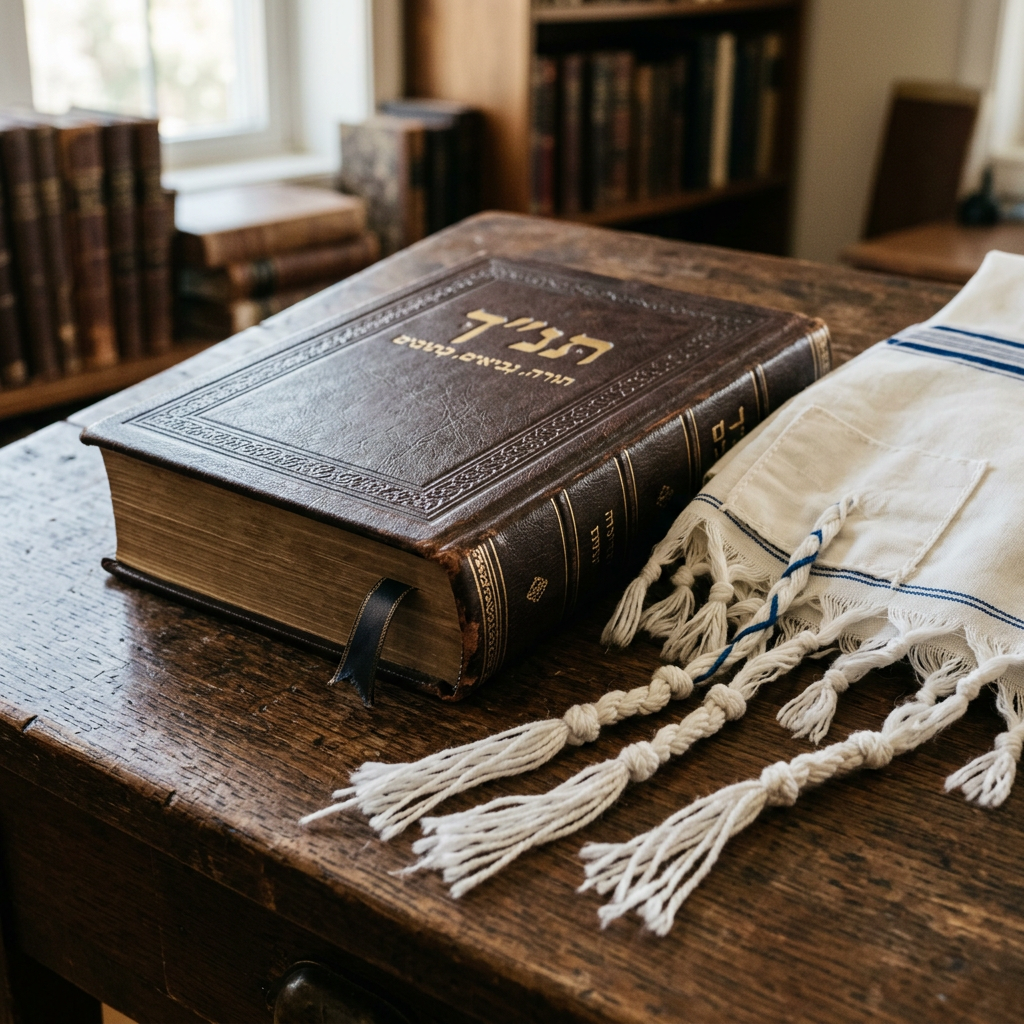

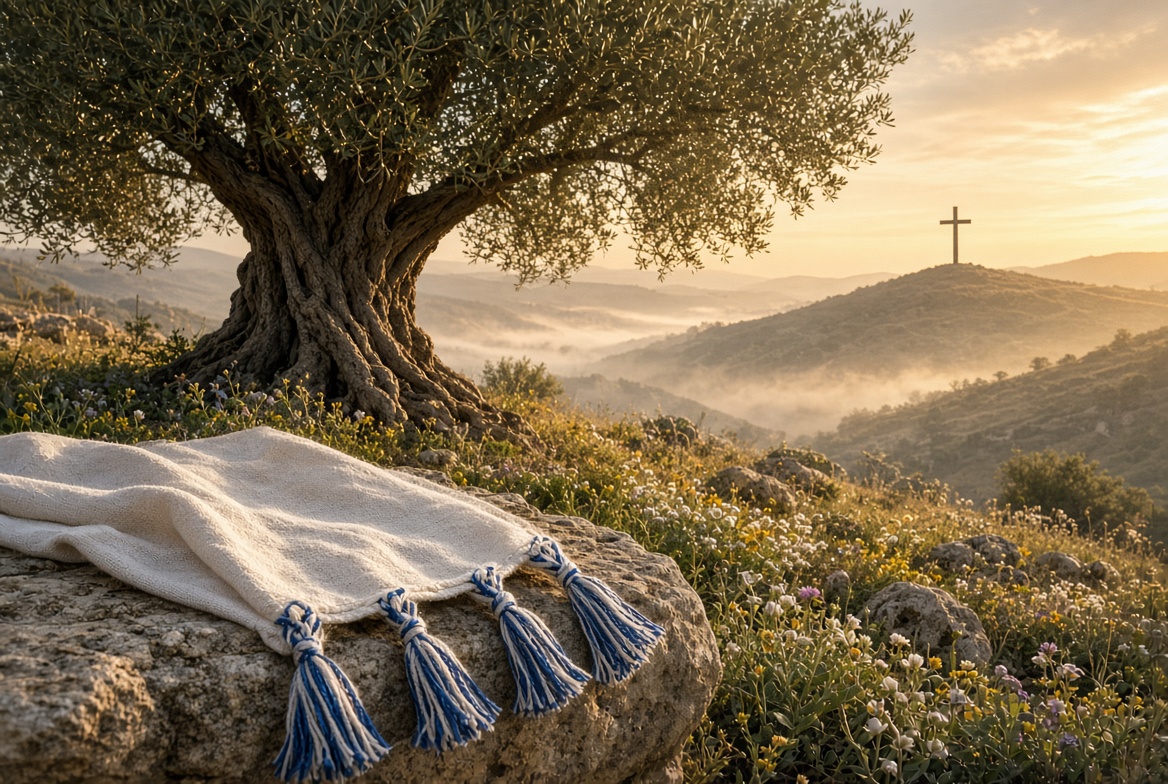
Tzitzit (ציצת) were twisted cords (gedil – Deut 22:12, patiyl – Num 15:38) on the four corners of Old Covenant believers’ garments. The Hebrew word for corners, kanaph, is the same word for wings — they pointed to being carried on eagles’ wings as a kingdom of priests (Ex 19:4-6) and to the Sun of Righteousness with healing in His wings (Mal 4:2).
Tzitzit point to the heavens, tabernacle, and lamb:
Tallit from tal — covering; tayil = firmament (raqiya), heavens as garment
Lamb taleh — covered/spotted, like stars as spots on heaven’s garment and light spots in a tent
Four corners of garment = four corners of heavens (Isa 11:12) = four corners of tent. Tent pegs/nails = nails in Messiah’s hands/feet
Kar — hollow hand, wellspring/fountain, and lamb — hands carved with Israel (Isa 49:16) link to 12 walls of New Jerusalem
ציצת ‘tsitsit’ were physical reminders to keep the commandments of God in the Old Covenant. Is there a New Covenant equivalent. Based upon looking at the meanings of the ציצת ‘tsitsit’ it seems this would point to the cross, and the sign of the cross.
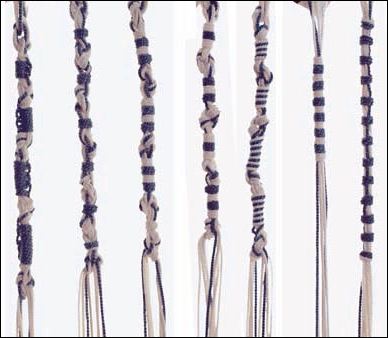
ציצת ‘tsîytsith’ are twisted threads (גּדל ‘gedil’) that were to remind Israel of the commandments of God that they might do them (bear fruit, shine light). They were a physical reminder of the Torah/Tree of life. The ציצת ‘tsitsit’ were also to remind believers not to go whoring after their our own hearts (the tree of knowledge of good and evil).
The word for ציצת ‘tsitsit’ comes from the root צוּץ ‘tsûts’ which means to blossom, flourish, shine. The ציצת ‘tsitsit’ were to remind believers to bear fruit, and to let their lights shine by walking in the Torah. Good works are likened to the bearing of fruit and the shining of lights. This is especially seen in Matthew 5:15-16 & the parable of the sower in Luke 8:11-15, it is no coincidence that in verse 16 of Luke 8, Messiah makes reference to shining light from the menorah after the parable of the good seed bearing abundant fruit.
The menorah is a beautiful picture of the body of the Messiah, as well as the Tree of Life/the Word. He is the vine, we are the branches (John 15:1)… The Menorah shines forth light, the Torah is light…Torah is wisdom, the Tree of Life is wisdom…the fruit of the righteous is a tree of life.
The root word for ציצת ‘tsitsit,’ צוּץ ‘tsuts,’ is translated as flowers, as in the flowers that were carved into the Temple in 1 Kings 6:18, 29 etc.. The body of Messiah is the Temple of God.
This word צוּץ ‘tsûts’ is translated as plate in Exodus 28:35-36 speaking of the plate which had Holiness to the LORD engraved on it. His Name is His Word according to Revelation 19:13. His Name is His character. His character is embodied in the Torah. When we remember and do the commandments of God, we are bearing the fruit that comes forth from His seed, we are shining forth the light that comes forth from Him which is proclaiming His name/character to the world. It is interesting to note that the plate was held up by a lace/ribband which is the Hebrew word פתיל ‘patiyl’ which is linked to the ציצת ‘tsitsit’ (Numbers 15:38).
Perhaps this is why the word צוּץ ‘tsuts’ is translated in the Song of Songs chapter 2 verse 9 as “peering, or showing” speaking of the Messiah peering through the lattice. By remembering and doing the commandments, we are showing forth the Messiah to the world.
Perhaps the following prophecies will take on a little more meaning after seeing how the ציצת ‘tsitsit’ are connected with the Tree of Life.
Zec 8:23 So says Jehovah of Hosts: In those days ten men out of all languages of the nations shall take hold, and will seize the skirt of a man, a Jew, saying, Let us go with you, for we have heard that God is with you.
Pro 3:18 She is a tree of life to the ones who lay hold on her, and happy are the ones holding her fast.
Mal 4:2 But to you who fear My name, the Sun of Righteousness shall rise up, and healing will be on His wings. And you shall go out and frisk like calves of the stall.
Rev 22:2 In the midst of its street and of the river, from here and from there, was a tree of life producing twelve fruits: according to one month each yielding its fruit. And the leaves of the tree were for healing of the nations.
Pro 11:30 The fruit of the righteous is a tree of life; and he that winneth souls is wise.
Joh 15:1 I am the true vine, and my Father is the husbandman.
Joh 15:2 Every branch in me that beareth not fruit he taketh away: and every branch that beareth fruit, he purgeth it, that it may bring forth more fruit.
Joh 15:3 Now ye are clean through the word which I have spoken unto you.
Joh 15:4 Abide in me, and I in you. As the branch cannot bear fruit of itself, except it abide in the vine; no more can ye, except ye abide in me.
Joh 15:5 I am the vine, ye are the branches: He that abideth in me, and I in him, the same bringeth forth much fruit: for without me ye can do nothing.
Joh 15:6 If a man abide not in me, he is cast forth as a branch, and is withered; and men gather them, and cast them into the fire, and they are burned.
Joh 15:7 If ye abide in me, and my words abide in you, ye shall ask what ye will, and it shall be done unto you.
Joh 15:8 Herein is my Father glorified, that ye bear much fruit; so shall ye be my disciples.
Joh 15:9 As the Father hath loved me, so have I loved you: continue ye in my love.
Joh 15:10 If ye keep my commandments, ye shall abide in my love; even as I have kept my Father’s commandments, and abide in his love.
Joh 15:11 These things have I spoken unto you, that my joy might remain in you, and that your joy might be full.
Joh 15:12 This is my commandment, That ye love one another, as I have loved you.
Joh 15:13 Greater love hath no man than this, that a man lay down his life for his friends.
Joh 15:14 Ye are my friends, if ye do whatsoever I command you.
Joh 15:15 Henceforth I call you not servants; for the servant knoweth not what his lord doeth: but I have called you friends; for all things that I have heard of my Father I have made known unto you.
Joh 15:16 Ye have not chosen me, but I have chosen you, and ordained you, that ye should go and bring forth fruit, and that your fruit should remain: that whatsoever ye shall ask of the Father in my name, he may give it you.
Some traditions made the wraps in the tsîytsith to “spell out” יהוה ‘YHWH.’ There are 4 letters in the Sacred Name, just as their are 4 letters in our DNA. ציצת are twisted threads according to Deuteronomy 22:12 just like our DNA.
Twisted Cords
Num 15:37 And Jehovah spoke to Moses, saying,
Num 15:38 Speak to the sons of Israel and you shall say to them that they shall make themselves fringes on the corners of their garments, for their generations. And they shall put a thread (פּתיל ‘patiyl’-twisted cord) of blue with the fringe of each corner.
Num 15:39 And it shall be to you for a fringe, that you may look on it and remember all the commandments of Jehovah, and do them; and that you do not go about after your own heart and your own eyes after which you fornicate;
Num 15:40 that you may remember and do all My commandments, and be holy to your God.
Num 15:41 I am Jehovah your God who brought you out of the land of Egypt, to be your God. I am Jehovah your God.
Deu 22:12 You shall make for yourself tassels (גּדל ‘gediyl’ – twisted cords) on the four corners of your cloak with which you cover.
These twisted cords were to remind believers of His Word. This is pointing to DNA in the physical, and the Word in the Spiritual.
Tzitzit
“One of the threads, of the tzitzith, should be the color of tekhelet, which is a blue-green dye made from a specific aquatic animal, the Chalizon.
The commentators call the Chalizon a `fish’ since it lives in the water. It appears, though, that the Chalizon is not a normal `fish,’ but has a shell and is actually a type of snail.”
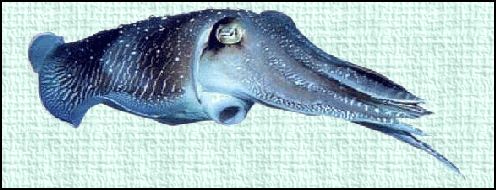
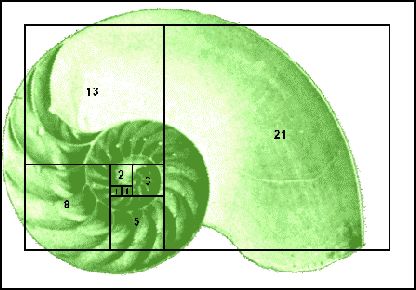
Notice that the shell of the ‘chalizon’ is in the Fibonacci sequence. This also links to DNA. More on this below.
“Menachoth 43b It was taught: R. Meir used to say, Why is blue specified from all the other colours [for this precept]? Because blue resembles the color of the sea, and the sea resembles the color of the sky, and the sky resembles the color of [a sapphire, and a sapphire resembles the color of] the Throne of Glory, as it is said, And there was under his feet as it were a paved work of sapphire stone, and it is also written, The likeness of a throne as the appearance of a sapphire stone.
Menachoth 44a ‘The Chalizon resembles the sea in its color, and in shape it resembles a fish; it appears once in seventy years, and with its blood one dyes the blue thread; and therefore it is so expensive.
The Torah tells us that the tzitzith are to be on the four corners:
Deu 22:12 Thou shalt make thee fringes upon the four quarters of thy vesture, wherewith thou coverest thyself.
What is interesting is that the Hebrew word for corners, (כנפת ‘kanafot’), is the same Hebrew word translated as wings in Exodus 19:
Exo 19:4 Ye have seen what I did unto the Egyptians, and how I bare you on eagles’ wings (כנף ‘kanaph’), and brought you unto myself.
Exo 19:5 Now therefore, if ye will obey my voice indeed, and keep my covenant, then ye shall be a peculiar treasure unto me above all people: for all the earth is mine:
Exo 19:6 And ye shall be unto me a kingdom of priests, and an holy nation. These are the words which thou shalt speak unto the children of Israel.
Tzitzit were a reminder to walk in His Word, physically displayed as a part of the garments of His kingdom of priests.
1Pe 2:5 Ye also, as lively stones, are built up a spiritual house, an holy priesthood, to offer up spiritual sacrifices, acceptable to God by Jesus Christ.
These tassels were a part of the garments of the King.
Mal 4:2 But unto you that fear my name shall the Sun of righteousness arise with healing in his wings; and ye shall go forth, and grow up as calves of the stall.
Grabbing the “tzitzit” of Messiah’s garment completes us/perfects us. The four corners of the earth/four corners of His garment…
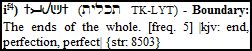
The above word is spelled exactly the same as תכלת ‘tekhelet’ with the addition of a י ‘yod.’ The letter י ‘yod’ represents the hand, so it can be seen that the hand grabbing the tzitzit of His garment brings perfection/completion. This connects again to the cross. On the cross, the last words of Messiah were ‘it is finished’. In Hebrew, the word for finished/complete is also the same as the word for bride. Where does the bride dwell? Under the shadow of the wings of her husband (Ruth 3:9).
Zec 8:23 So says Jehovah of Hosts: In those days ten men out of all languages of the nations shall take hold, and will seize the skirt of a man, a Jew, saying, Let us go with you, for we have heard that God is with you.
We are to take a hold of Messiah’s garments. Not Judaism. The above verse is not a prophecy of the gentiles turning to Judaism, but a prophecy linking back to Malachi 4 and the Sun of Righteousness. We are to talk hold of the Word, fulfilled in Christ at the Cross.
Tzitzit, Lamb, Dew, Heavens connection
The four corners of the heavens from which God will gather all Israel (Isaiah 11:12; Jeremiah 49:36; Matthew 24:31) are pictured by the corners of the טלית ‘tallit.’ The word טלית ‘tallit’ is not used in the Scriptures, it is a Jewish tradition, but traces back to the word טל ‘tal’ which means a covering.

Notice the connection to the heavens, which is described as a garment.
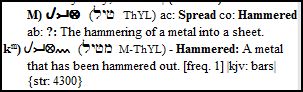
טיל ‘tayil’ has the exact same meaning as רקיע ‘raqiya’ (expanse/firmament)
Rev 7:14 And I said to him, Sir, you know. And he said to me, These are those coming out of the great tribulation; and they washed their robes and whitened them in the blood of the Lamb.
Rev 7:15 Because of this they are before the throne of God, and serve Him day and night in His sanctuary. And He sitting on the throne will spread His tabernacle over them.
Notice the above connection between the garments of the righteous being washed in the blood of the Lamb and being those who dwell under the shadow of His wings.
One of the Hebrew words for lamb is טלה ‘taleh’ which means to be covered (in spots), which links to the טלית ‘tallit’ (covered).
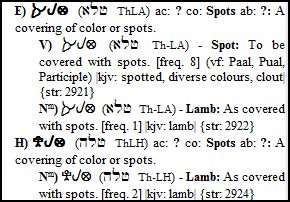
Looking at the spotted hide of the lamb connects to the stars of the ‘garment’ of heaven and the spots of light inside the ancient nomad’s tent. The four corners of the heavens that link to the four corners of ancient Jewish garments and the tzitzit that hang therefrom, connect to the four corners of the tent. The nails in the four corners of the tent connect to the nails that pierced the hands and feet of the Messiah where the blood came forth linking to the living waters as seen above in the Hebrew word כר ‘kar’. Amazingly, the word כר ‘kar,’ from whence the word for wellspring/fountain derives, means a ‘hollow hand’ which is also another word for lamb.
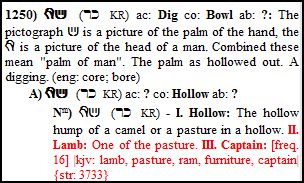
Furthermore, the hands of Messiah are linked to the four corners of the heavens through the walls of New Jerusalem. Isaiah 49:15-16 says that Israel is carved on the palms of his hands which links to the 12 walls of New Jerusalem, Revelation 21:12-27. The lines of the human hands where the fingers bend show these 12 walls. In the Temple during Solomon’s days, flowers were carved into the walls of the Temple. The Hebrew word for these flowers is צץ ‘tsuts’ which is the root of ציצת ‘tzitzit’ (1Kings 6:18).
The word blue is from two Hebrew words. תכלת ‘tekhelet’ and כחל ‘kachal’ Both words come from the root כל ‘kol’ meaning something complete or whole.

Col 2:10 And ye are complete in him, which is the head of all principality and power:
Col 2:11 In whom also ye are circumcised with the circumcision made without hands, in putting off the body of the sins of the flesh by the circumcision of Christ:
Col 2:12 Buried with him in baptism, wherein also ye are risen with him through the faith of the operation of God, who hath raised him from the dead.
Col 2:13 And you, being dead in your sins and the uncircumcision of your flesh, hath he quickened together with him, having forgiven you all trespasses;
Col 2:14 Blotting out the handwriting of ordinances that was against us, which was contrary to us, and took it out of the way, nailing it to his cross;
The English word cell comes from this same Hebrew word כל ‘kol.’ The human cell is designed just as the Tabernacle/Temple. DNA, in the nucleus of the cell is the blueprint for life & the flesh. It corresponds to the 10 commandments and the Torah in the Holy of Holies of the Tabernacle. DNA is formed in the Fibonacci pattern.
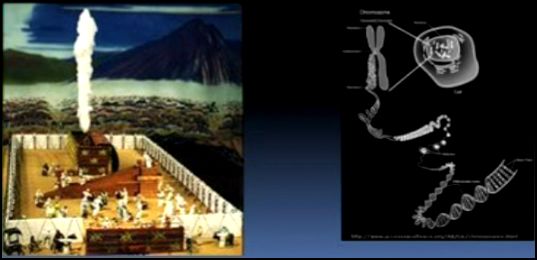
Cell -early 12c., “small room,” from L. cella “small room, store room, hut,” related to L. celare “to hide, conceal,” from PIE base *kel- “conceal”
Shapes, Numbers, Patterns, And The Divine Proportion In God’s Creation
“When we realize that the information to produce these spirals and numbers in living things is stored in the DNA, should we then be surprised to find that the DNA molecule is 21 angstroms in width and the length of one full turn in its spiral is 34 angstroms, both Fibonacci numbers? The DNA molecule is literally one long stack of golden rectangles.”

The DNA spiral is a Golden Section
The DNA molecule, the program for all life, is based on the golden section. It measures 34 angstroms long by 21 angstroms wide for each full cycle of its double helix spiral.
34 and 21, of course, are numbers in the Fibonacci series and their ratio, 1.6190476 closely approximates phi, 1.6180339.
B-DNA has spirals in phi proportions
DNA in the cell appears as a double-stranded helix referred to as B-DNA.
This form of DNA has a two groove in its spirals, with a ratio of phi in the proportion of the major groove to the minor groove, or roughly 21 angstroms to 13 angstroms.
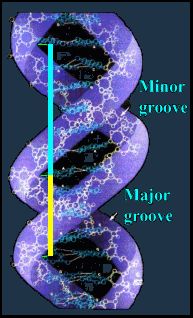
The Hebrew word for Temple (הכל ‘heykal’) comes from the same root as cell, food and bride (כל ‘kol’).

This corresponds perfectly to the Temple/Tabernacle of God and the word cell means hidden.
Eze 7:22 I also will turn My face from them, and they shall defile My hidden place. And violent ones shall enter into it and defile it.
Our bodies are His Temple (Ephesians 2:21-22; 5:30; 1 Corinthians 6:19) which are intimately linked to the Fibonacci sequence & the number 5 (the 5th day).
DNA is a perfect picture of the Word in the physical realm.
The Bible is also linked to the Fibonacci sequence. Click the following picture for more on the Fibonacci sequence and the Bible.
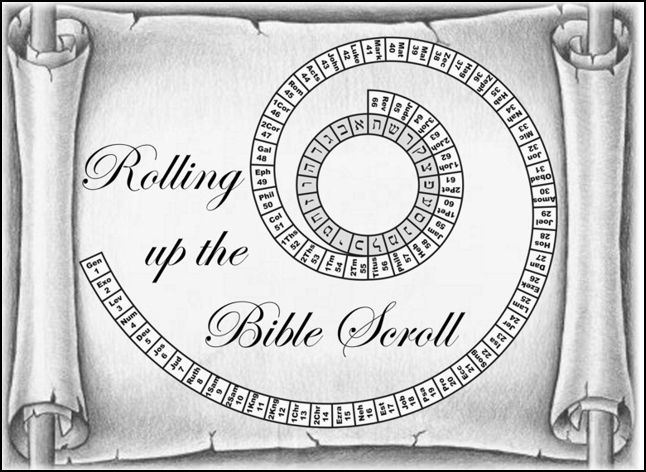
http://www.biblewheel.com/wheel/intro.asp
The Cross
ציצת ‘tsitsit’ were physical reminders to keep the commandments of God in the Old Covenant. Is there a New Covenant equivalent. Based upon looking at the meanings of the ציצת ‘tsitsit’ it seems this would point to the cross, and the sign of the cross.
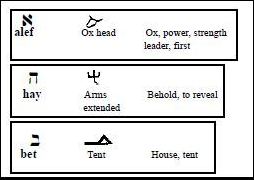
The cross reveals God’s name/character of love revealed through the life of Christ. The Hebrew word for name is שם ‘shem’ which literally means one’s breathe or character. What is the character of the Almighty? Love (1 John 4:8). The Hebrew word for love is אהב ‘ahav’ which is consists of the letters אב ‘av’ which means father and the middle letter ה ‘heh’ which has the meaning of revelation. The Father revealed. In ancient Hebrew, the letter ה ‘heh’ was depicted as a man with outstretched arms, like unto Messiah on the cross. How was the love of the Father revealed? Through the giving of His only begotten Son on the cross as an atonement for the sins of mankind (John 3:16).
Joh 17:6 I have manifested thy name unto the men which thou gavest me out of the world: thine they were, and thou gavest them me; and they have kept thy word.
Love & the cross
Messiah triumphed over the adversary by His work on the cross.
Col 2:15 And having spoiled principalities and powers, he made a shew of them openly, triumphing over them in it.
Messiah on the cross is the revelation of God’s love.
The Father revealed what true love is when He gave His only begotten Son, who came from His bosom (John 1:18), as an atonement for the sins of mankind. The most common Hebrew word for love אהבה ‘ahavah,’ literally means to give.
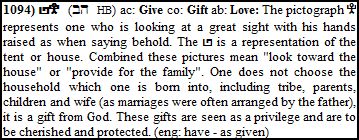
What is the ultimate definition of love? Giving one’s life for another
Joh 3:16 For God so loved the world that He gave His only begotten Son, that everyone believing into Him should not perish, but have everlasting life.
Joh 15:13 Greater love than this has no one, that anyone should lay down his soul for his friends.
The pictograph meaning of אהב ‘ahav’ displays this concept even further.
The Sacred Name of God was revealed on the cross.
Joh 8:28 Then Jesus said to them, When you lift up the Son of Man, then you will know that I AM; and from Myself I do nothing; but as My Father taught Me, these things I speak.
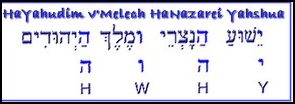
Joh 19:19 And Pilate also wrote a title and put it on the cross. And having been written, it was: JESUS THE NAZARENE, THE KING OF THE JEWS.
Joh 12:32 And I, if I be lifted up from the earth, I will draw all to Myself (John 8:28 Messiah states this is how they will know He is ‘I AM’).
Joh 12:33 But He said this, signifying by what kind of death He was about to die.
Rev 7:3 Saying, Hurt not the earth, neither the sea, nor the trees, till we have sealed the servants of our God in their foreheads.
Rev 14:1 And I looked, and, lo, a Lamb stood on the mount Sion, and with him an hundred forty and four thousand, having his Father’s name written in their foreheads.
See: Daily Tidbits 6/10/26 – Sign of the Cross
littleguyintheeye@gmail.com