

Aloha is more than a greeting of hello, goodbye, or welcome. It carries the profound spirit of love, compassion, mercy, breath of life, and interconnectedness with God, people, and creation. This tidbit connects Hawaiian culture with biblical truth: the sharing of breath in Honi, the divine power of Mana, the welcoming Shaka, and the sacred feast of the Lū‘au — all pointing to the ultimate revelation of God’s love in Jesus Christ, the Rock (Eloah), who stretched out His arms on the cross to give us life and breath. True Aloha flows from the heart of the Father who gave His Son so we might live through Him.

Aloha is the Hawaiian word for welcome, hello and goodbye but it carries the sense of love, affection, compassion, mercy, kindness, peace, sympathy, and pity. It embodies the cultural and spiritual value of the “Aloha Spirit,” a philosophy of respect, harmony and interconnectedness with people, nature and life itself.
It is believed that aloha traces back to the Proto-Polynesian word ‘qarofa’ or ‘qalofa’ which means love, pity, compassion or affection. This word is said to be the source of the Samoan and Tuvaluan words ‘alofa,’ the Māori word ‘aroha,’ and the Tongan word ‘ofa.’ All of these words carry the sense of love and compassion.
Some linguists trace it even further back to Proto-Oceanic and ultimately Proto-Austronesian roots connected to concepts of beckoning, waving, or reaching out — suggesting an idea of extending love or compassion toward someone.
Honi

Some breakdown the word Aloha into ‘alo’ meaning face or presence and ‘ha’ meaning breath. This is interesting to note as a traditional greeting in Hawaiian culture is called “Honi.” Honi is the gesture of pressing foreheads and noses together and exchanging breath “ha” (the sacred breath of life). Honi means to kiss or to smell.
Honi is the physical act that embodies Aloha. ‘Alo’ face, presence. ‘Hā,’ breath, life force, spirit.
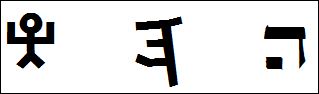
The Hebrew letter ה ‘heh’ {spelled הה} is the picture of a person looking at a great sight causing that person to take a deep breath. This word is used in Ezekiel 30:2 translated as ‘woe.’ היה ‘hayah’ which means to exist comes from this root word as our existence is dependent upon our breath. היה ‘hayah’ is the Hebrew source for “I AM” or “I Exist” (Exodus 3:14). Messiah Jesus is “I AM” (John 8:24, 28, 56-58; 13:18-19; 18:7-9; Mark 14:61-62).
The Letter ‘heh’ is linked to breath, and therefore to life. The pronunciation of the letter heh is the exhaling of breath. This is where life comes from (Genesis 2:7; 7:22). This breath comes from Messiah (Psalm 33:6; John 1:2-4; Lamentations 4:20).
The pictograph of the letter ה ‘heh’ is of a man with his arms stretched out. It was through the cross, where Messiah had is arms stretched out, that He revealed that He is “I AM”. In Genesis 22:7, YHWH God literally told Abraham that He would provide Himself as the lamb for sacrifice. In John 8:28, Jesus declared that we would see that He is the “I AM” on the cross.
Joh 8:28 Then Jesus said to them, When you lift up the Son of Man, then you will know that I AM; and from Myself I do nothing; but as My Father taught Me, these things I speak.
The cross reveals the name/character of God
Breath – Character – Name
The breath of God that gave Adam life is נשה ‘neshama’ which comes from the root word שם ‘shem’ which means “name.”

The Hebrew word for name is שם ‘shem’ which literally means one’s breathe or character.
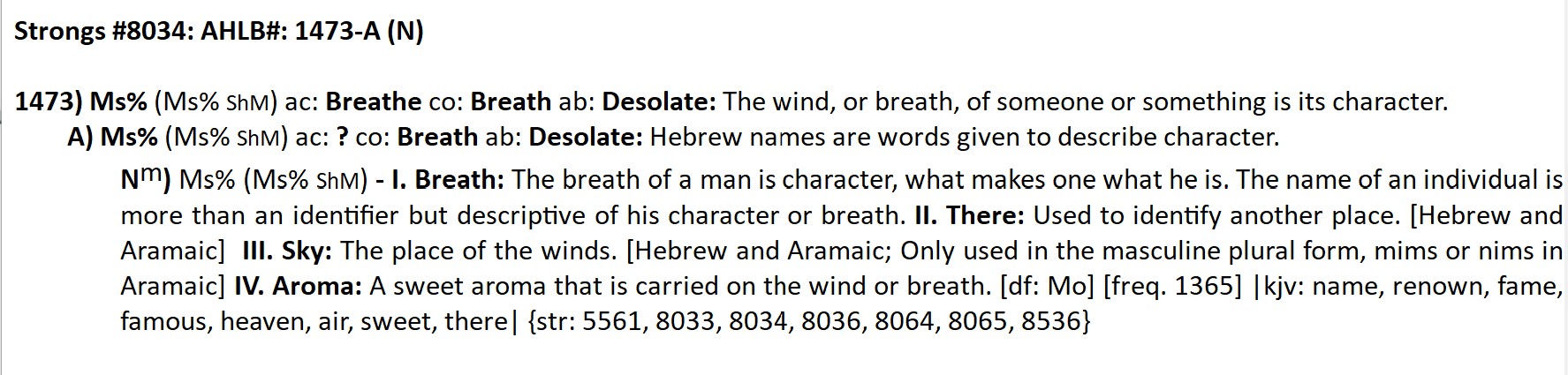
The cross reveals God’s name/character of love revealed through the life of Christ. The Hebrew word for name is שם ‘shem’ which literally means one’s breathe or character. What is the character of the Almighty? Love (1 John 4:8). The Hebrew word for love is אהב ‘ahav’ which is consists of the letters אב ‘av’ which means father and the middle letter ה ‘heh’ which has the meaning of revelation. The Father revealed. In ancient Hebrew, the letter ה ‘heh’ was depicted as a man with outstretched arms, like unto Messiah on the cross. How was the love of the Father revealed? Through the giving of His only begotten Son on the cross as an atonement for the sins of mankind (John 3:16).
Joh 17:6 I have manifested thy name unto the men which thou gavest me out of the world: thine they were, and thou gavest them me; and they have kept thy word.
Love & the cross
Christ triumphed over the adversary by His work on the cross.
Col 2:15 And having spoiled principalities and powers, he made a shew of them openly, triumphing over them in it.
Christ on the cross is the revelation of God’s love.
The Father revealed what true love is when He gave His only begotten Son, who came from His bosom (John 1:18), as an atonement for the sins of mankind. The most common Hebrew word for love אהבה ‘ahavah,’ literally means to give. It is interesting to note that Aloha also gives the sense of reaching out to others, giving and love of the family.
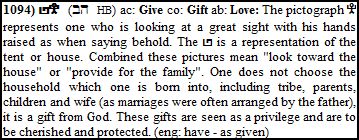
What is the ultimate definition of love? Giving one’s life for another
Joh 3:16 For God so loved the world that He gave His only begotten Son, that everyone believing into Him should not perish, but have everlasting life.
Joh 15:13 Greater love than this has no one, that anyone should lay down his soul for his friends.
“Honi” is called the Hawaiian “kiss.”
In the Scriptures we are called to greet one another with a “holy kiss” (φίλημα ‘philema’).
Rom_16:16 Salute one another with an holy kiss. The churches of Christ salute you.
1Co_16:20 All the brethren greet you. Greet ye one another with an holy kiss.
2Co_13:12 Greet one another with an holy kiss.
1Th_5:26 Greet all the brethren with an holy kiss.
1Pe_5:14 Greet ye one another with a kiss of charity. Peace be with you all that are in Christ Jesus. Amen.
The Hebrew word for kissing is נשק ‘nashaq’ which means to connect or touch.
Psa_2:12 Kiss the Son, lest he be angry, and ye perish from the way, when his wrath is kindled but a little. Blessed are all they that put their trust in him.
Aloha – God connection
Some trace Aloha back to the Hebrew word אֱלוֹהַּ ‘Eloah.’ Some argue against this but the connection is strong through the concept of love. God is love.
1Jn 4:7 Beloved, let us love one another: for love is of God; and every one that loveth is born of God, and knoweth God.
1Jn 4:8 He that loveth not knoweth not God; for God is love.
1Jn 4:9 In this was manifested the love of God toward us, because that God sent his only begotten Son into the world, that we might live through him.
1Jn 4:16 And we have known and believed the love that God hath to us. God is love; and he that dwelleth in love dwelleth in God, and God in him.
God – The Rock
In Hebrew, a singular form of God (אלהים ‘Elohim’) is אֱלוֹהַּ ‘Eloah.’ Moses used אֱלוֹהַּ ‘Eloah’ to distinguish between the true God and false gods.
Deu 32:15 But Jeshurun waxed fat, and kicked: thou art waxen fat, thou art grown thick, thou art covered with fatness; then he forsook God (אלוה ‘Eloah’) which made him, and lightly esteemed the Rock of his salvation.
Deu 32:16 They provoked him to jealousy with strange gods, with abominations provoked they him to anger.
Deu 32:17 They sacrificed unto devils, not to God (אלוה ‘Eloah); to gods (אלהים ‘Elohim’) whom they knew not, to new gods that came newly up, whom your fathers feared not.
Deu 32:18 Of the Rock that begat thee thou art unmindful, and hast forgotten God (אל ‘El’) that formed thee.
Isaiah also uses the אלוה ‘Eloah’ – Rock imagery
Isa 44:8 Fear ye not, neither be afraid: have not I told thee from that time, and have declared it? ye are even my witnesses. Is there a God (אלוה ‘Eloah’) beside me? yea, there is no God (צור ‘tsur’ – Rock); I know not any.
Christ the Rock
1Co 10:4 And did all drink the same spiritual drink: for they drank of that spiritual Rock that followed them: and that Rock was Christ.
This God – Rock connection is interesting as in Hawaiian culture, rocks “Pōhaku” are deeply revered and seen as living and sacred. The mountain Mauna Kea is revered as the first-born mountain son of the sky father Wākea.
This points to Christ Jesus, the first begotten of God.
It is through the resurrection that the Son was “begotten”
Rev 1:5 And from Jesus Christ, who is the faithful witness, and the first begotten of the dead, and the prince of the kings of the earth. Unto him that loved us, and washed us from our sins in his own blood,
Rom 1:4 And declared to be the Son of God with power, according to the spirit of holiness, by the resurrection from the dead:
Act 13:33 God hath fulfilled the same unto us their children, in that he hath raised up Jesus again; as it is also written in the second psalm, Thou art my Son, this day have I begotten thee.
Psa 2:6 Yet have I set my king upon my holy hill of Zion.
Psa 2:7 I will declare the decree: the LORD hath said unto me, Thou art my Son; this day have I begotten thee.
1Jn 5:1 Whosoever believeth that Jesus is the Christ is born of God: and every one that loveth him that begat loveth him also that is begotten of him.
1Jn 5:2 By this we know that we love the children of God, when we love God, and keep his commandments.
1Jn 5:3 For this is the love of God, that we keep his commandments: and his commandments are not grievous.
1Jn 5:4 For whatsoever is born of God overcometh the world: and this is the victory that overcometh the world, even our faith.
1Jn 5:5 Who is he that overcometh the world, but he that believeth that Jesus is the Son of God?
1Jn 5:6 This is he that came by water and blood, even Jesus Christ; not by water only, but by water and blood. And it is the Spirit that beareth witness, because the Spirit is truth.
1Jn 5:7 For there are three that bear record in heaven, the Father, the Word, and the Holy Ghost: and these three are one.
1Jn 5:8 And there are three that bear witness in earth, the Spirit, and the water, and the blood: and these three agree in one.
1Jn 5:9 If we receive the witness of men, the witness of God is greater: for this is the witness of God which he hath testified of his Son.
Joh 1:1 In the beginning was the Word, and the Word was with God, and the Word was God.
Joh 1:2 The same was in the beginning with God.
Joh 1:3 All things were made by him; and without him was not any thing made that was made.
Col 1:15 Who is the image of the invisible God, the firstborn of every creature:
Col 1:16 For by him were all things created, that are in heaven, and that are in earth, visible and invisible, whether they be thrones, or dominions, or principalities, or powers: all things were created by him, and for him:
Col 1:17 And he is before all things, and by him all things consist.
Rom 8:29 For whom he did foreknow, he also did predestinate to be conformed to the image of his Son, that he might be the firstborn among many brethren.
As mentioned before, the Sky Father in Hawaiian culture is named Wākea. Wākea breaks down to Wā meaning space, expanse or time and Kea which means white, light, or bright. His “first born son” is the mountain Mauna Kea which means White Mountain. Here the imagery is the presence of the Sky Father (Kea -white) physically manifesting on earth. This mountain is usually snow-capped displaying this “white” character.
Snow is a beautiful shadow picture of Christ Jesus. It points to atonement and righteousness in Christ and the Word/manna.
Shaka

The word אלוה ‘Eloah’ is only used 56 times in Scripture, mostly in the book of Job. Habakkuk uses this word in reference to God and is mentioned here with the connection to “horns” of His Hand.
Hab 3:3 God came from Teman, and the Holy One from mount Paran. Selah. His glory covered the heavens, and the earth was full of his praise.
Hab 3:4 And his brightness was as the light; he had horns coming out of his hand: and there was the hiding of his power.
In sign language, the phrase “I love you” is displayed by the “hook em horns” hand gesture which has been corrupted by Satan the counterfeiter to point to himself. In sign language, the thumb is extended whereas in the “devil” gesture the thumb is held in. In Italian culture, the “horn” gesture is used to ward off evil (the evil) eye it is called Mano cornuta. The shaka hand gesture in Hawaii is the thumb and pinky finger extended.
Christ is the Right arm/hand of God
Isa 48:13 Mine hand also hath laid the foundation of the earth, and my right hand hath spanned the heavens: when I call unto them, they stand up together.
Isa 63:5 And I looked, and there was none to help; and I wondered that there was none to uphold: therefore mine own arm brought salvation unto me; and my fury, it upheld me.
Psa 44:3 For they got not the land in possession by their own sword, neither did their own arm save them: but thy right hand, and thine arm, and the light of thy countenance, because thou hadst a favour unto them.
Psa 98:1 O sing unto the LORD a new song; for he hath done marvellous things: his right hand, and his holy arm, hath gotten him the victory (ישׁע ‘yasha’).
Psa 98:2 The LORD hath made known his salvation (יְשׁוּעָה ‘yeshuah’ ): his righteousness hath he openly shewed in the sight of the heathen.
ישׁע ‘yasha’ is the root of the name Jesus. יְשׁוּעָה ‘yeshuah’ the source of the name Jesus.
Isa 52:10 The LORD hath made bare his holy arm in the eyes of all the nations; and all the ends of the earth shall see the salvation of our God.
Isa 53:1 Who hath believed our report? and to whom is the arm of the LORD revealed?
Psa 77:15 You have redeemed Your people with Your arm, the sons of Jacob and Joseph. Selah.
Psa 17:7 Shew thy marvellous lovingkindness, O thou that savest by thy right hand them which put their trust in thee from those that rise up against them.
Act 5:31 Him hath God exalted with his right hand to be a Prince and a Saviour, for to give repentance to Israel, and forgiveness of sins.
This horned hand points to Christ, the Right Hand of God…the Horn of our Salvation.
Luk 1:68 Blessed be the Lord, the God of Israel, because He visited and worked redemption for His people.
Luk 1:69 And He raised up a Horn of salvation for us in the house of His servant David;
Luk 1:70 even as He spoke through the mouth of His holy prophets from the age before:
Luk 1:71 Salvation from ones hostile to us, and from the hand of all the ones hostile to us,
Luk 1:72 to execute mercy with our fathers, and to remember His holy covenant,
Luk 1:73 the oath which He swore to our father Abraham,
Luk 1:74 to give to us, that we being delivered out of the hand of those hostile to us, in order to serve Him without fear,
Luk 1:75 in consecration and righteousness before Him all the days of our life.
Luk 1:76 And you, child, will be called Prophet of the Most High, for you will go before the face of the Lord to prepare His ways, Mal. 3:1
Luk 1:77 to give a knowledge of salvation to His people by remission of their sins,
Luk 1:78 through the tender heart of mercy of our God, in which the Dayspring from on high will visit us,
Luk 1:79 to appear to those sitting in darkness and in shadow of death, to direct our feet into the way of peace. Isa. 9:2
The shaka hand gesture is said to trace back to Hamana Kalili who lost his three middle fingers in a Sugar Mill in the early 1900s. He would later work as a security guard and wave with his remaining thumb and pinky to signal “all clear.” Over time it came to represent the Aloha Spirit of love and goodwill.
The shaka hand gesture in Hawaii is the thumb and pinky finger extended.
In Hebrew, the word for thumb is בֹּהֶן ‘bohen’ which comes from the root בן ‘ben’ which means son. Interestingly, the Hebrew word for white (mentioned in connection with Mauna Kea) is לבן ‘lavan’ which is an adopted root of בן
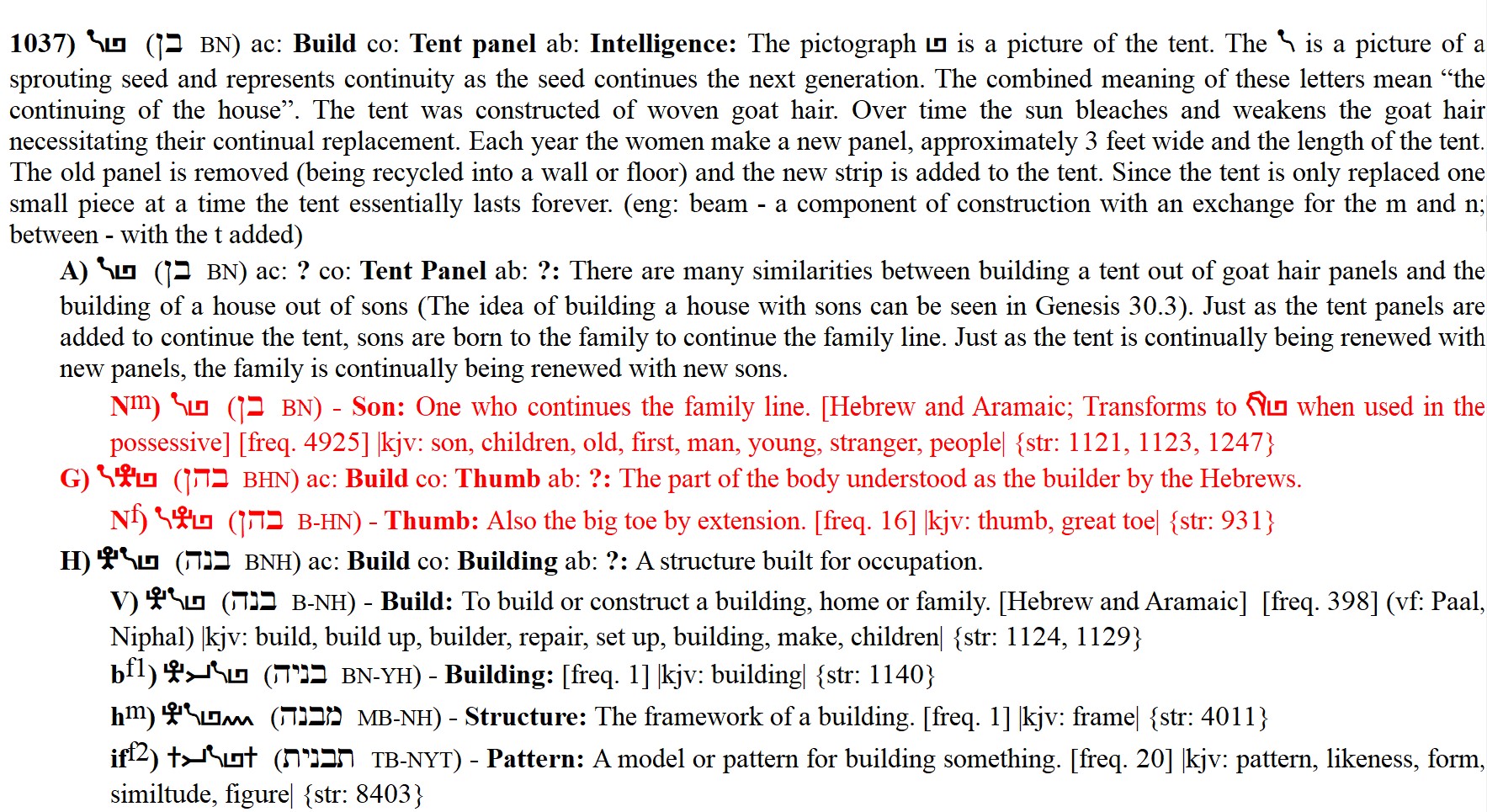
In Hebrew the word for pinky is זֶרֶת ‘zeret.’ This word is usually translated as “span” as a span is the distance between the thumb and pinky. Scripture declares that the heavens were measured by a span of God’s hand (Isaiah 40:12).
Isa 40:12 He who has measured in His hand the waters and the heavens by a span meted out; and enclosed in the measure the dust of the earth, and weighed in the balance the mountains, and the hills in the scales,
The Hebrew word translated as ‘span’ literally means the spreading out of the hand for the use of measuring.
The hand has been used for thousands of years to measure degrees in the heavens/expanse. Each person’s hand will measure the same distances when the arm is stretched out, no matter how large your hand, or what your age.
You can tell how long until the sun will set by measuring its distance from the horizon. The sun moves about 15 degrees across the sky in an hour. Moving 15 degrees an hour for 24 hours would equal 360 degrees, or a full day from sunset to sunset. This measuring of the hours points us to Messiah who describes Himself as the Light of the world (John 8:12; 9:5; 12:46).
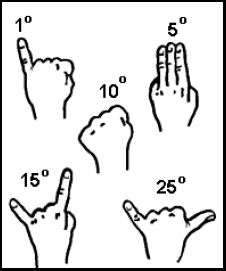
Joh 11:9 Jesus answered, Are there not twelve hours in the day? If anyone walks in the day, he does not stumble because he sees the light of the world.
Messiah is the light of the world, the Right Hand of the Father.
Isa 48:13 Mine hand also hath laid the foundation of the earth, and my right hand hath spanned the heavens: when I call unto them, they stand up together.
Joh 8:12 Then spake Jesus again unto them, saying, I am the light of the world: he that followeth me shall not walk in darkness, but shall have the light of life.
Joh 9:5 As long as I am in the world, I am the light of the world.
Psa 118:14 The LORD is my strength and song, and is become my salvation.
Psa 118:15 The voice of rejoicing and salvation is in the tabernacles of the righteous: the right hand of the LORD doeth valiantly.
Psa 118:16 The right hand of the LORD is exalted: the right hand of the LORD doeth valiantly.
Act 5:31 Him hath God exalted with his right hand to be a Prince and a Saviour, for to give repentance to Israel, and forgiveness of sins.
The Hebrew word ידי ‘yadi,’ which means “my hand,” is equivalent to the number 24, the number of hours in a day. Yet another connection to the hand and time is the ‘hour hand’ of the clock. When the first mechanical clocks were made to ring bells signifying the hours of prayer, the hour ‘hand’ was first introduced.
Isa 40:10 Behold, the Lord Jehovah will come with strength, and His arm {Isaiah 53 – His Arm is the Lamb} rules for Him. Behold, His reward is with Him, and His wage before Him.
Clock ‘hands’ move ‘clockwise’ in imitation of sundials which have a gnomon which casts a shadow marking the time that moves in a ‘clockwise’ direction. The word ‘gnomon’ is a Greek/Latin word which means ‘one who discerns’ from the word γνῶσις ‘gnosis’ which means to know or knowledge. It is interesting to note that the knowledge of the Most High is linked to the Messiah and light in the Scriptures.
2Co_4:6 For God, who commanded the light to shine out of darkness, hath shined in our hearts, to give the light of the knowledge of the glory of God in the face of Jesus Christ.
Luk 1:77 To give knowledge of salvation unto his people by the remission of their sins,
Luk 1:78 Through the tender mercy of our God; whereby the dayspring from on high hath visited us,
Luk 1:79 To give light to them that sit in darkness and in the shadow of death, to guide our feet into the way of peace.
Jesus, the Right Hand of the Lord is the Face/פנים ‘paniym’ of God.
Psa 44:3 For they did not inherit the land with their own sword; yea, their own arm did not save them. But it was Your right hand and Your arm and the light of Your face, because You favored them.
Psa 42:5 O my soul, why are you cast down and moan within me? Hope in God, for I shall yet thank Him for the salvation of His presence {ישׁועות פניו ‘yeshuot panahv’ – salvation of His Face}.
Psa 42:5 (42:6) מה־תשׁתוחחי נפשׁי ותהמי עלי הוחילי לאלהים כי־עוד אודנו ישׁועות פניו׃
Heb 1:1 God, who at sundry times and in divers manners spake in time past unto the fathers by the prophets,
Heb 1:2 Hath in these last days spoken unto us by his Son, whom he hath appointed heir of all things, by whom also he made the worlds;
Heb 1:3 Who being the brightness of his glory, and the express image of his person, and upholding all things by the word of his power, when he had by himself purged our sins, sat down on the right hand of the Majesty on high;
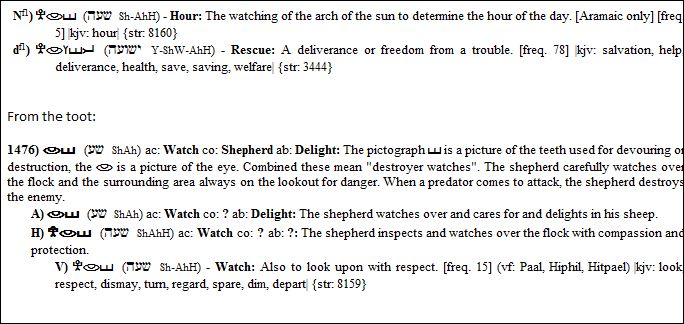
The Hebrew word for hour is שעה ‘sha’ah’ which is a cognate of the word ישועה ‘yeshuah’ which means salvation. ישועה ‘yeshuah’ is the source of the name Jesus. The name Jesus comes from the Hebrew יהושׁע or יהושׁוּע ‘Yehoshua’ or Yahushua’ . The shortened form in Hebrew is ישׁוּע ‘Yeshua.’ Both שעה ‘sha’ah,’ which means hour and ישועה ‘yeshuah,’ which means salvation come from the root word שע which pictures a shepherd tending to his flock.
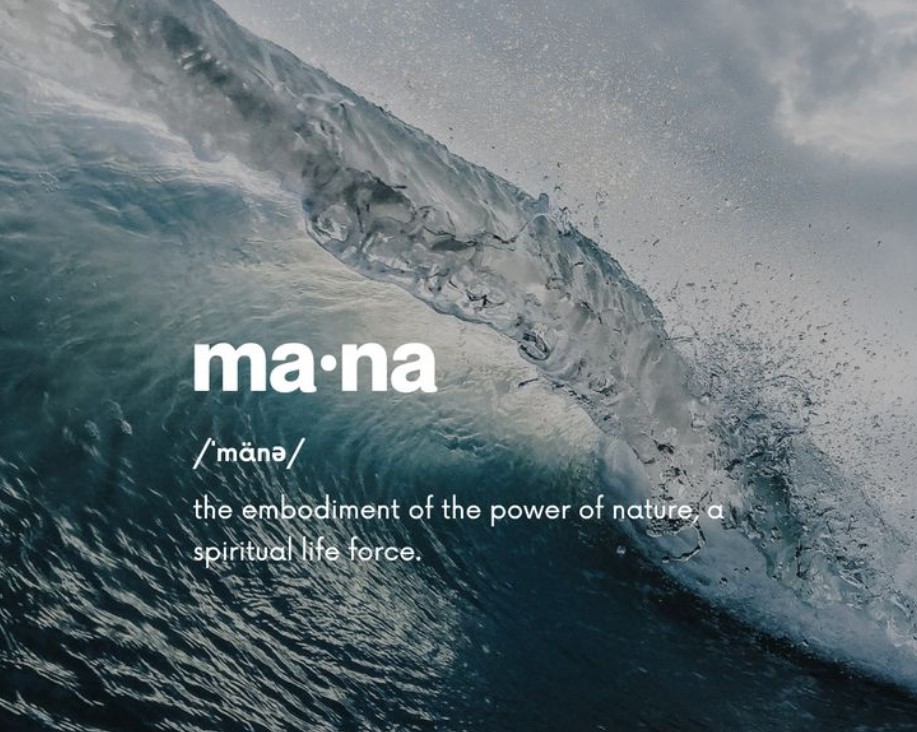
Mana
Honi ihu (“nose kiss” or “nose greeting”) is the full traditional term for pressing noses/foreheads together while inhaling, sharing hā (breath of life, life force, or spiritual essence). This act symbolized deep respect, connection, exchanging mana (spiritual power), and recognizing each other’s humanity and presence.
Mana means spiritual power, divine energy, authority, prestige, or supernatural efficacy—an invisible force or life energy that permeates people, places, objects, and natural phenomena. It can be inherited through lineage, acquired through deeds, skills, or rituals, and cultivated or lost based on behavior and respect for traditions.
In Hebrew the word מן ‘man’ has similar connotations.
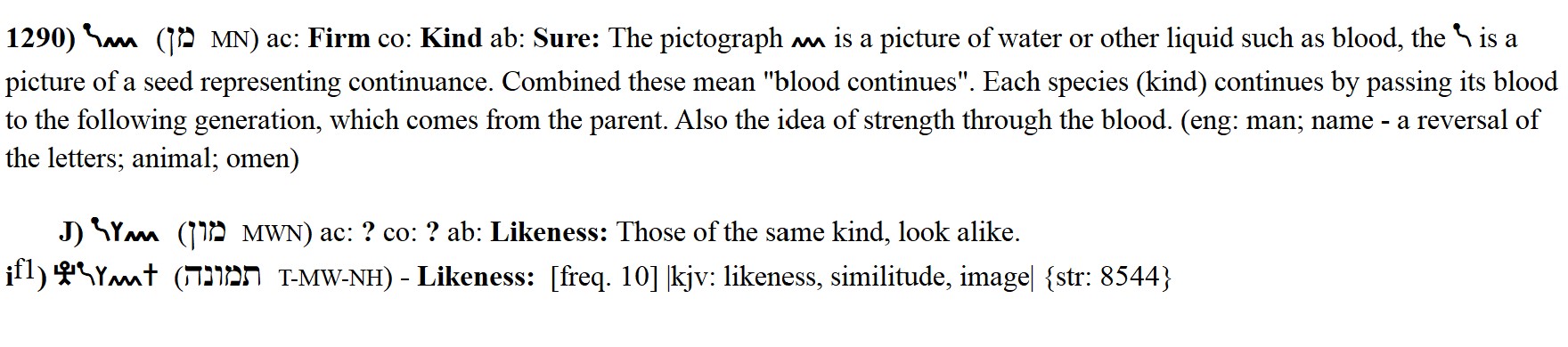
The Hebrew word for right hand is ימין ‘yamiyn’ (from the root מן ‘man’) points back to the idea of “likeness” as seen in the name Benjamin (son of the right hand Genesis 35:18). This connects with the shaka gesture embodying the Aloha Spirit, connected to “mana.”
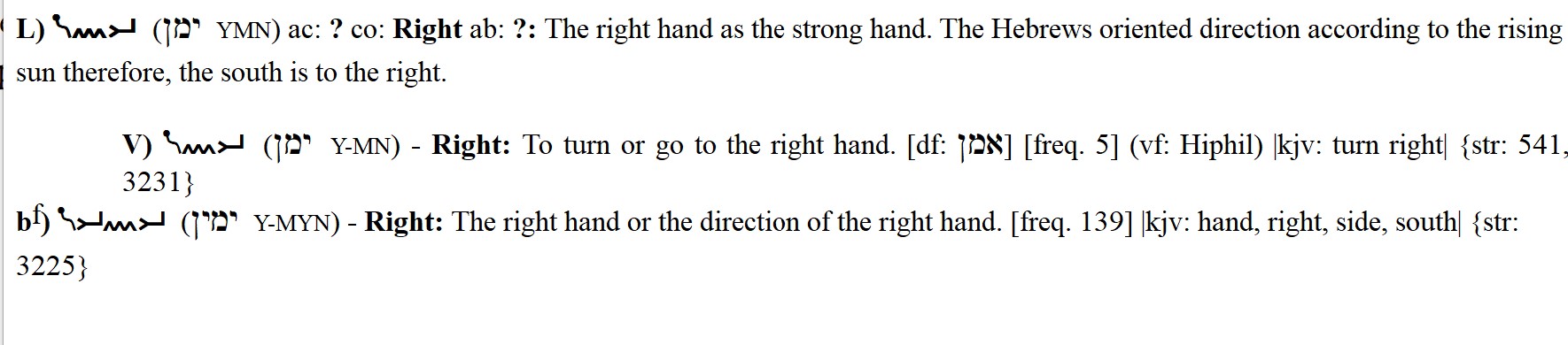
Another word in Hebrew connected to this study from the root מן ‘man’ is תימן ‘teman’ which means the south, pointing back to the shaka – Habakkuk reference made earlier.
Hab 3:3 God came from Teman, and the Holy One from mount Paran. Selah. His glory covered the heavens, and the earth was full of his praise.
Hab 3:4 And his brightness was as the light; he had horns coming out of his hand: and there was the hiding of his power.
Manna comes from the Hebrew word מן ‘man.’
Exo 16:15 And when the children of Israel saw it, they said one to another, It is manna: for they wist not what it was. And Moses said unto them, This is the bread which the LORD hath given you to eat.

Christ is the true manna from heaven
Joh 6:47 Verily, verily, I say unto you, He that believeth on me hath everlasting life.
Joh 6:48 I am that bread of life.
Joh 6:49 Your fathers did eat manna in the wilderness, and are dead.
Joh 6:50 This is the bread which cometh down from heaven, that a man may eat thereof, and not die.
Joh 6:51 I am the living bread which came down from heaven: if any man eat of this bread, he shall live for ever: and the bread that I will give is my flesh, which I will give for the life of the world.
Joh 6:52 The Jews therefore strove among themselves, saying, How can this man give us his flesh to eat?
Joh 6:53 Then Jesus said unto them, Verily, verily, I say unto you, Except ye eat the flesh of the Son of man, and drink his blood, ye have no life in you.
Joh 6:54 Whoso eateth my flesh, and drinketh my blood, hath eternal life; and I will raise him up at the last day.
Joh 6:55 For my flesh is meat indeed, and my blood is drink indeed.
Joh 6:56 He that eateth my flesh, and drinketh my blood, dwelleth in me, and I in him.
Joh 6:57 As the living Father hath sent me, and I live by the Father: so he that eateth me, even he shall live by me.
Joh 6:58 This is that bread which came down from heaven: not as your fathers did eat manna, and are dead: he that eateth of this bread shall live for ever.
Christ is the manna, which is partaken in communion which parallels the meaning of Aloha.
1Co 10:16 The cup of blessing which we bless, is it not the communion of the blood of Christ? The bread which we break, is it not the communion of the body of Christ?
1Co 10:17 For we being many are one bread, and one body: for we are all partakers of that one bread.
Communion is from the Greek word κοινωνία ‘koinonia’ which has the meaning of unity and fellowship.
1Jn 1:3 That which we have seen and heard declare we unto you, that ye also may have fellowship with us: and truly our fellowship (κοινωνία ‘koinonia’) is with the Father, and with his Son Jesus Christ.
We have communion with the Holy Spirit, pointing to “honi.”
2Co 13:14 The grace of the Lord Jesus Christ, and the love of God, and the communion of the Holy Ghost, be with you all. Amen.
Communion is also called the Eucharist which comes from the Greek εὐχαριστέω ‘eucharisteō’ which means to give thanks.
1Co 11:23 For I have received of the Lord that which also I delivered unto you, That the Lord Jesus the same night in which he was betrayed took bread:
1Co 11:24 And when he had given thanks (εὐχαριστέω ‘eucharisteō’), he brake it, and said, Take, eat: this is my body, which is broken for you: this do in remembrance of me.
1Co 11:25 After the same manner also he took the cup, when he had supped, saying, This cup is the new testament in my blood: this do ye, as oft as ye drink it, in remembrance of me.
1Co 11:26 For as often as ye eat this bread, and drink this cup, ye do shew the Lord’s death till he come.
The Lord’s table
1Co 10:16 The cup of blessing which we bless, is it not the communion of the blood of Christ? The bread which we break, is it not the communion of the body of Christ?
1Co 10:17 For we being many are one bread, and one body: for we are all partakers of that one bread.
1Co 10:21 Ye cannot drink the cup of the Lord, and the cup of devils: ye cannot be partakers of the Lord’s table, and of the table of devils.
In Hawaiian culture, Aloha is not just a greeting but a way of life (Acts 5:20; 9:2; 24:14, 22). It is expressed through ho‘okipa which means hospitality. One of the highest expressions of ho‘okipa is sharing food and welcoming people to your table as if they were family (‘ohana).
Hawaiians traditionally show love, respect, and care by feeding people. Saying “Come eat!” or inviting someone to the table is a practical, heartfelt way of extending Aloha. It’s common to hear “E komo mai, e ‘ai!” (“Come in, come eat!”) when visiting a Hawaiian home.
Isa 55:1 Ho, every one that thirsteth, come ye to the waters, and he that hath no money; come ye, buy, and eat; yea, come, buy wine and milk without money and without price.
Rev 22:16 I Jesus have sent mine angel to testify unto you these things in the churches. I am the root and the offspring of David, and the bright and morning star.
Rev 22:17 And the Spirit and the bride say, Come. And let him that heareth say, Come. And let him that is athirst come. And whosoever will, let him take the water of life freely.

The lū‘au is the ultimate cultural expression of Aloha at the table. It is a communal feast where people gather to celebrate life events, honor guests, and strengthen community bonds. Food is prepared in abundance, shared freely, and enjoyed together. The lū‘au embodies the Aloha Spirit through generosity, unity, and joy.

Some believe that the Hawaiian word mana traces back to the Proto-Oceanic word mana which has the meaning of powerful forces of nature. Thunder, storm winds, lightning…awe-inspiring natural phenomenon. In Hawaiian Dictionaries mana is defined as “Supernatural or divine power; miraculous power; authority; prestige; to give mana to.”
It also has extended senses like “branch” as in a limb or offshoot linked to power flowing outward. Christ is the Branch. The Branch is the Son
Psa 80:15 And the vineyard which thy right hand hath planted, and the branch (בן ‘ben’ – son) that thou madest strong for thyself.
Isa 4:2 In that day shall the branch of the LORD be beautiful and glorious, and the fruit of the earth shall be excellent and comely for them that are escaped of Israel.
Jer 23:5 Behold, the days come, saith the LORD, that I will raise unto David a righteous Branch, and a King shall reign and prosper, and shall execute judgment and justice in the earth.
Jer 33:15 In those days, and at that time, will I cause the Branch of righteousness to grow up unto David; and he shall execute judgment and righteousness in the land.
Zec 3:8 Hear now, O Joshua the high priest, thou, and thy fellows that sit before thee: for they are men wondered at: for, behold, I will bring forth my servant the BRANCH.
Zec 6:12 And speak unto him, saying, Thus speaketh the LORD of hosts, saying, Behold the man whose name is The BRANCH; and he shall grow up out of his place, and he shall build the temple of the LORD:
Luk 1:78 through the tender heart of mercy of our God, in which the Dayspring (ἀνατολή ‘anatole’) from on high will visit us,
ἀνατολή ‘anatole’ is used to translate the word צמח ‘tsemach’ (branch) in the Septuagint.
Rev 22:16 I, Jesus, sent My angel to testify these things to you over the assemblies. I am the Root and Offspring of David, the bright and morning Star.
Related Studies:
Shadows of Messiah – Clock Chimes
littleguyintheeye@gmail.com


