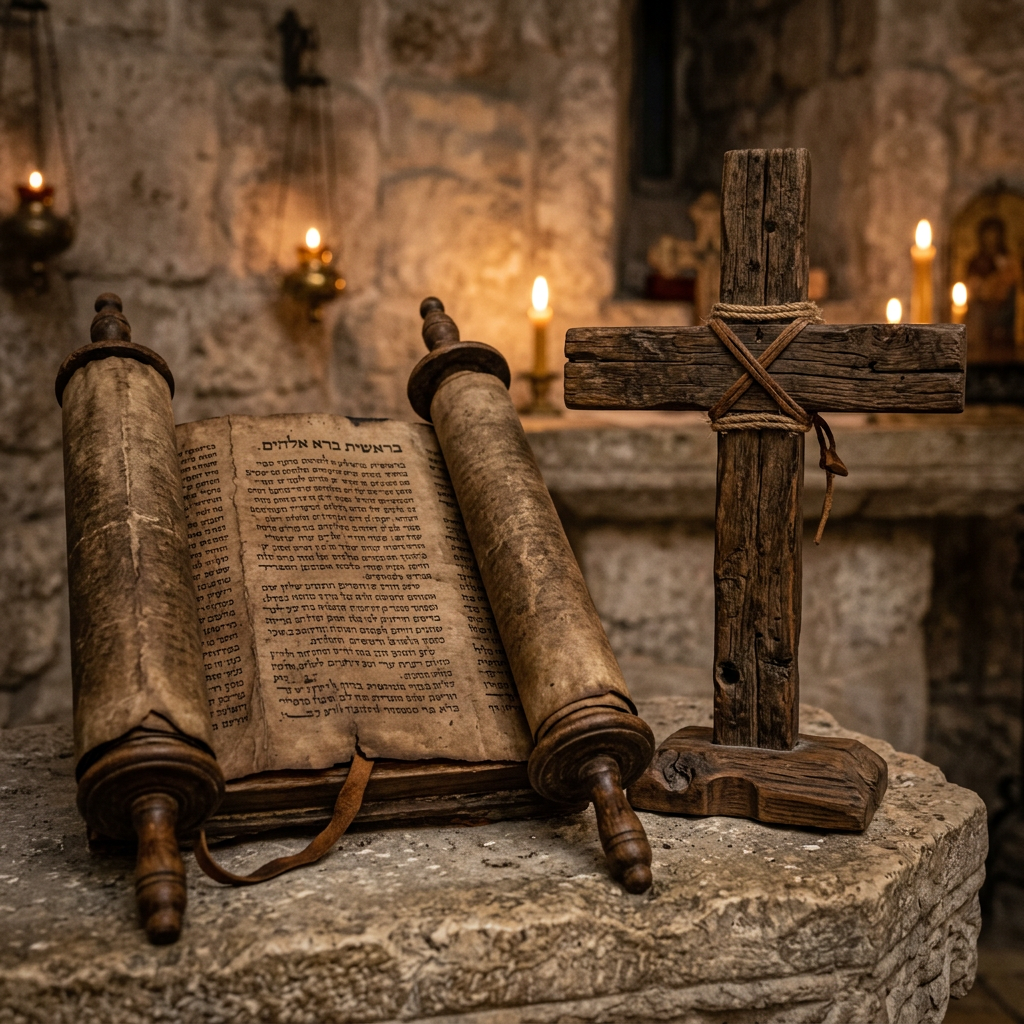

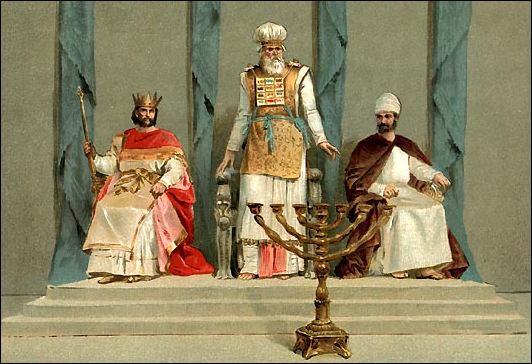
Ancient Jewish texts, including the Targum and rabbinic commentaries on Zechariah 6:11-13, declare that the Messiah — called “The Branch” — would be both King and Priest, sitting on His throne as a priest after the order of Melchizedek (Psalm 110). These sources affirm that the coming Redeemer would unite the royal and priestly offices in one person — a concept fulfilled in Jesus of Nazareth, long anticipated in Jewish expectation.
Ancient Jewish writings agree that Messiah is both Priest and King.
Zec 3:8 Hear now, O Joshua the high priest, thou, and thy fellows that sit before thee: for they are men wondered at: for, behold, I will bring forth my servant the BRANCH.
Zec 3:9 For behold the stone that I have laid before Joshua; upon one stone shall be seven eyes: behold, I will engrave the graving thereof, saith the LORD of hosts, and I will remove the iniquity of that land in one day.
Here we see the High Priest Joshua as a shadow picture of the Messiah (The Branch), who would bear the same name (Jesus is the same as Joshua).
Zec 6:9 And the word of the LORD came unto me, saying,
Zec 6:10 Take of them of the captivity, even of Heldai, of Tobijah, and of Jedaiah, which are come from Babylon, and come thou the same day, and go into the house of Josiah the son of Zephaniah;
Zec 6:11 Then take silver and gold, and make crowns, and set them upon the head of Joshua the son of Josedech, the high priest;
Zec 6:12 And speak unto him, saying, Thus speaketh the LORD of hosts, saying, Behold the man whose name is The BRANCH; and he shall grow up out of his place, and he shall build the temple of the LORD:
Zec 6:13 Even he shall build the temple of the LORD; and he shall bear the glory, and shall sit and rule upon his throne; and he shall be a priest upon his throne: and the counsel of peace shall be between them both.
Another Scripture indicating that the Messiah would be both priest and king is Psalm 110:1, 4:
Psa 110:1 A Psalm of David. The LORD said unto my Lord, Sit thou at my right hand, until I make thine enemies thy footstool.
Psa 110:2 The LORD shall send the rod of thy strength out of Zion: rule thou in the midst of thine enemies.
Psa 110:3 Thy people shall be willing in the day of thy power, in the beauties of holiness from the womb of the morning: thou hast the dew of thy youth.
Psa 110:4 The LORD hath sworn, and will not repent, Thou art a priest for ever after the order of Melchizedek.
John Gill commentary on Zechariah 6:12
“thus speaketh the Lord of hosts, saying, behold the man whose name is The BRANCH; which is not to be understood of Zerubbabel, as some Jewish writers interpret it; for he was not “the Branch”, by way of eminency, much less that righteous Branch of David, called the Lord our righteousness, Jer_23:5 the same that is here meant; besides, he was already grown up out of his place; nor did he build a temple, from which he had great glory; nor was he either king or priest, only governor of Judah; and, however, not both, as this person is represented to be; and who is no other than the Messiah; and so the Targum paraphrases the words,
“behold the man Messiah is his name;”
and Jarchi owns that some of their Rabbins interpret the words of the King Messiah. The “Branch” is a name by which the Messiah goes in the Talmud (k), and in other Jewish writings. It is asked (l), what is the name of the King Messiah? it is answered, among others, his name is the “Branch”; as it is said, “behold the man whose name is the Branch; he shall grow up out of his place”: elsewhere (m) they speak of five letters doubled, which are the foundation of deliverance to certain persons, or point thereat. The first four, they observe, were accomplished in the deliverance of Abraham from Ur of the Chaldees, of Isaac from the Philistines, of Jacob from Esau, and of the Israelites from Egypt; and the fifth, which is the letter צ, the first letter of “Tzemach”, the Branch, by it they say the holy blessed God will redeem Israel at the end of the four monarchies; as it is said, “behold the man whose name is the Branch”, &c.; Philo the Jew (n) interprets this passage of a divine Person, the Son of God, by whom no other than the Messiah is meant,
“we have heard (says he) one of the friends of Moses, i. e. Zechariah, saying thus, behold the man “whose name is the east”, or rising sun (so the Greek version renders the words); a new appellation, if you can think it said of one consisting of soul and body; but if of that incorporeal one, bearing the divine image, you will own that the name is fitly given him, the ancient Sun, the Father of beings will cause to arise; whom otherwise he names the first begotten, and who, being begotten, imitates the ways of his Father; and looking at his archetypal exemplars, forms the same.”
Abendana (o), a modern Jew, observes, that
“it is right that the Targum interprets it of the Messiah, for of him it is spoken; therefore it is written, “and he shall grow up out of his place”; for he shall go forth from him, and shall be of the seed of Zerubbabel,–and the King Messiah shall bear the glory of the kingdom, and he shall rule upon the throne of his kingdom;”
(k) T. Hieros. Beracot, fol. 5. 1. (l) Echa Rabbati, fol. 50. 1. (m) Pirke Eliezer, c. 48. fol. 58. 1. Bemidbar Rabba, sect. 18. fol. 223. 2. (n) De Confus. Ling. p. 329. (o) Not. in Miclol Yophi in loc.
littleguyintheeye@gmail.com


