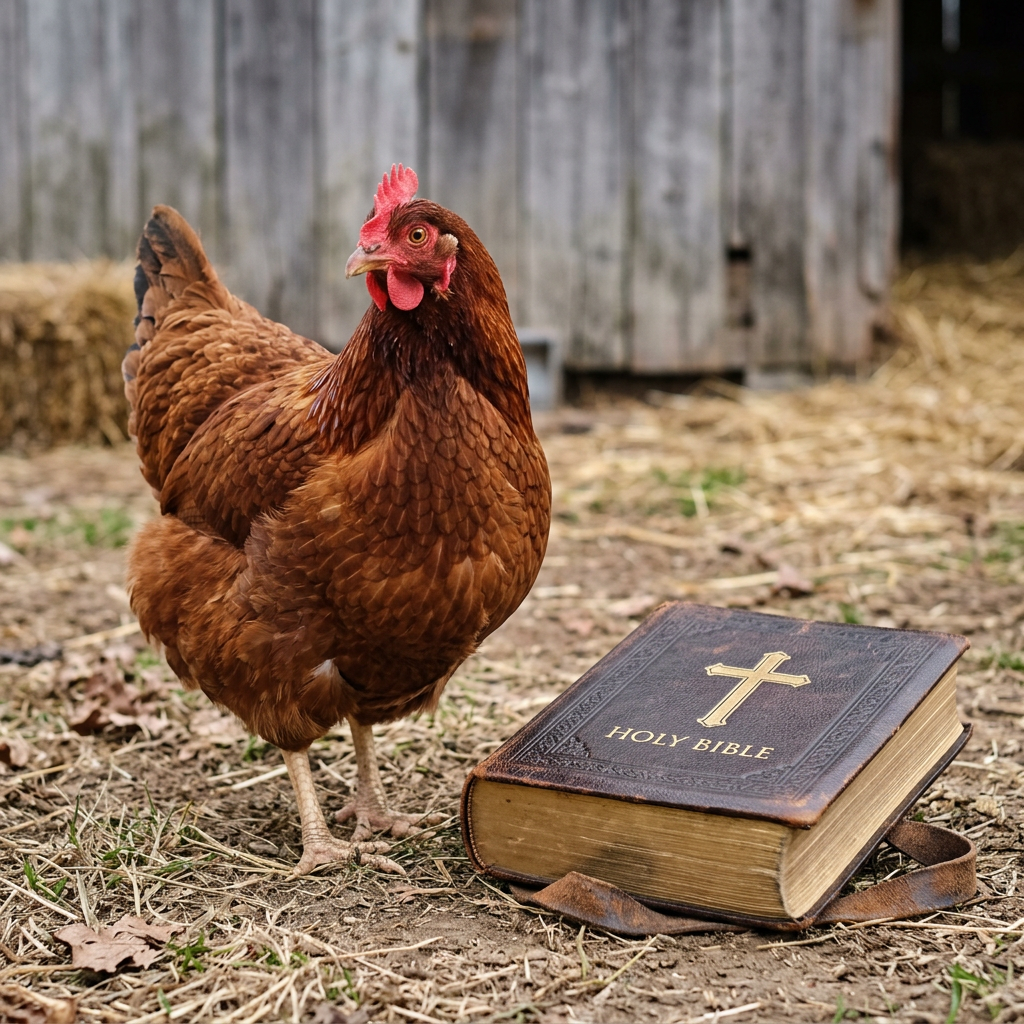

The word “chicken” originally referred to the young chicks abiding under the protective wings of the hen. This beautiful picture shadows the born-again believer, converted as a little child (Matthew 18:3-4), gathered under the wings of Messiah as the “little guy in His Eye” (Psalm 17:8).
As the hen sacrifices herself for her brood, so Christ spread forth His arms on the cross — covering us with His feathers, atoning for us through His blood, and calling us into intimate covenant relationship. From the egg of new birth and resurrection hope, to the rooster crowing at dawn, all point to Jesus who gathers His own, protects His hidden ones, and brings us forth from death to life, abiding under the shadow of His wings.
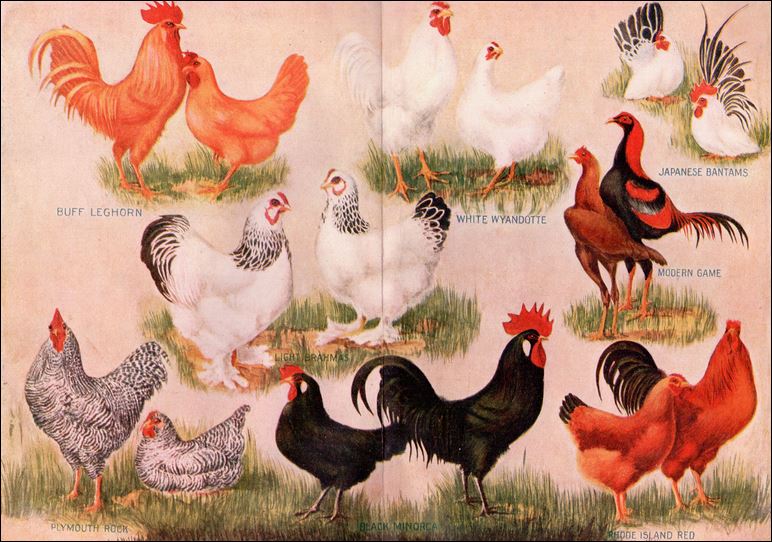
Originally, the word “chicken” referred to chicks and not the species itself as it does today. The chicken as a species was simply called the fowl. The word ‘chicken’ further displays this as the etymology traces back to the Old English ‘cicen’ which meant “young fowl”. The picture displayed in this aspect of the chicken shadow picture is that of chicks abiding under the wings of their mother, of being born again and converted as children (Matthew 18:3-4) abiding under the wings of Messiah as the “little guy in His Eye” (Psalm 17:8).
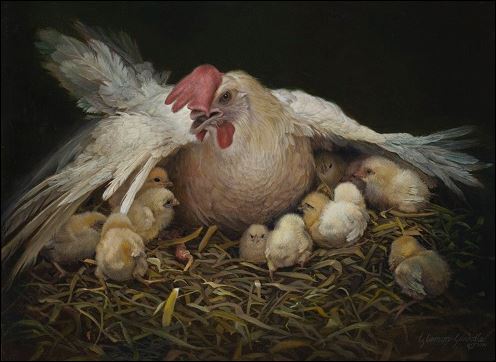
Mat_23:37 O Jerusalem, Jerusalem, thou that killest the prophets, and stonest them which are sent unto thee, how often would I have gathered thy children together, even as a hen gathereth her chickens under her wings, and ye would not!
The word for chickens in Matthew 23:37 is νοσσίον ‘nossion’ which comes from the root νεοσσός ‘neossos’ which means a “young creature”. νοσσίον ‘nossion’ is used in the Septuagint to translate the Hebrew word אפרה ‘ephroach’ which means both chicken and young/youth.

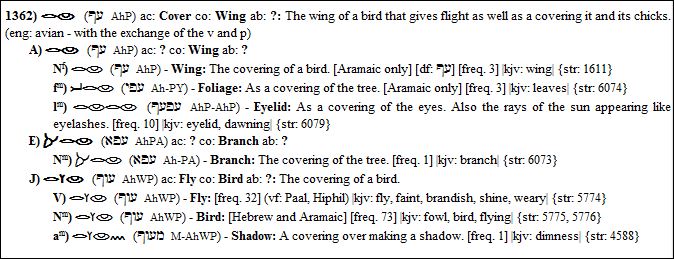
The word for fowl in Hebrew is עוף ‘oph’ which means a winged creature from the root עף ‘aph’ which literally means the covering of the wings.
The hen is known for its incredible motherly instincts, known to sacrifice its life for the sake of its chicks.
The Sacrifice of the White Hen
These stories of hens sacrificing their lives for the sake of the brood are excellent examples of the love of God for mankind.
The Hebrew word for כיפור ‘kippur,’ as in atonement (Romans 5:11), comes from the root word חף ‘chaph’ which means to cover.
Rom 5:8 But God commendeth his love toward us, in that, while we were yet sinners, Christ died for us.
Rom 5:9 Much more then, being now justified by his blood, we shall be saved from wrath through him.
Rom 5:10 For if, when we were enemies, we were reconciled to God by the death of his Son, much more, being reconciled, we shall be saved by his life.
Rom 5:11 And not only so, but we also joy in God through our Lord Jesus Christ, by whom we have now received the atonement.

חף ‘chaph’ – ‘one who enters a tent and is protected by the owner.’ A place of protection. One who is innocent, as in one whose actions are covered.
Messiah is the Door that we enter in order to abide in His ‘House’ (John 10:7) it is through Him that we are covered/hidden. This is the definition of who the Israel of God is (Galatians 6:16)…His hidden ones (Psalm 83:3). It is by the covenant cut in Messiah (Daniel 9:26; Isaiah 42:6), by His sacrifice on the cross that we are covered (1 John 1:7).
On the cross, Messiah gathered all mankind unto Him under His outstretched Arms as a hen gathers her chicks (John 12:32; Matthew 23:37). Amazingly, the Hebrew word for this spreading forth of the wings of a hen to gather her chicks or an eagle gathering her chicks under her wings is רחף ‘rachaph’ which also comes form the root word חף ‘chaph.’
It is through His Outstretched Arms (wings) that Messiah is calling us (John 3:14; 12:32) and gathering us together as a Shepherd does His flock (John 10:14-16). This is how we enter the Door into the House, this is how we are declared innocent and pure in His eyes. This is how we become His friends and enter into His tents in an intimate relationship.
When one has an intimate relationship with another, they appear as a ‘little guy in the eye‘ or as the ‘apple of the eye.’
Deu 32:10 He found him in a desert land, and in the waste howling wilderness; he led him about, he instructed him, he kept him as the apple of his eye.
Deu 32:11 As an eagle stirreth up her nest, fluttereth over her young, spreadeth abroad her wings, taketh them, beareth them on her wings:
Abiding in the Shadow of His wings means we are protected from adversity.
Psa 91:1 He that dwelleth in the secret place of the most High shall abide under the shadow of the Almighty.
Psa 91:2 I will say of the LORD, He is my refuge and my fortress: my God; in him will I trust.
Psa 91:3 Surely he shall deliver thee from the snare of the fowler, and from the noisome pestilence.
Psa 91:4 He shall cover thee with his feathers, and under his wings shalt thou trust: his truth shall be thy shield and buckler.
Psa 91:14 Because he hath set his love upon me, therefore will I deliver him: I will set him on high, because he hath known my name.
Psa 91:15 He shall call upon me, and I will answer him: I will be with him in trouble; I will deliver him, and honour him.
Psa 91:16 With long life will I satisfy him, and shew him my salvation.
The Hebrew word for salvation in Psalm 91:16 is ישועה ‘yeshuah’ from whence comes the name Yeshua…or Jesus.
This intimate relationship of appearing as a little guy in the Eye of the Creator, and abiding under the shadow of His Wings is accomplished in the work of Messiah on the cross.
John Gill commentary on Matthew 23:37
How often would I have gathered thy children together, as a hen gathereth her chickens under her wings, and ye would not! Christ here speaks as a man, and the minister of the circumcision, and expresses an human affection for the inhabitants of Jerusalem, and an human wish, and will for their temporal good; which he very aptly signifies by the hen, which is a very affectionate creature to its young, and which it endeavours to screen from danger, by covering with its wings. So the “Shekinah” with the Jews is called, צפרא קדישא, “the holy bird” (m); and that phrase, לחסות תחת כנפי השכינח, “to betake one’s self, or to come to trust under the wings of the Shekinah”, is often used (n) for to become a proselyte to the true religion, and worship of God, as Jethro, and Ruth the Moabitess did. An expression much like to this here is used by an apocryphal writer of 2 Esdras:
“I gathered you together, as a hen gathereth her chickens under her wings: but now, what shall I do unto you? I will cast you out from my face.” (2 Esdras 1:30).
Luk 13:34 O Jerusalem, Jerusalem, which killest the prophets, and stonest them that are sent unto thee; how often would I have gathered thy children together, as a hen doth gather her brood {νοσσιά ‘nossia’} under her wings, and ye would not!
The Greek word for brood in Luke 13:34 is νοσσιά ‘nossia’ which means a nest or brood of birds. The Hebrew equivalent is קן ‘qen.’ This word pictures the nest of a bird where the eggs are gathered and protected by the hen.
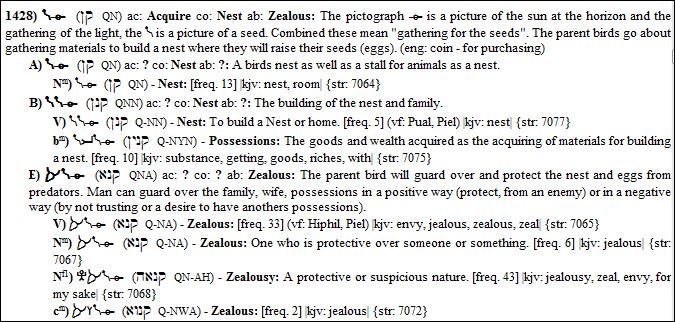
The Hebrew word for zeal displays a beautiful picture of the Most High, who is zealous over His people (Zion…His House). The Hebrew word for zealous is קנא ‘qana’ which is pictured in the natural in a parent bird guarding and protecting its nest and eggs from predators. A bird protecting, overshadowing, its brood is one of the most beautiful pictures of God’s love for His people.
Mankind is at enmity with God, we can only enter His ‘nest’ through the sacrifice of Messiah (Ephesians 2:1-22). It was the zealous love of God for mankind that He sent His only begotten Son (John 3:16).
Isa 9:6 For unto us a child is born, unto us a son is given: and the government shall be upon his shoulder: and his name shall be called Wonderful, Counsellor, The mighty God, The everlasting Father, The Prince of Peace.
Isa 9:7 Of the increase of his government and peace there shall be no end, upon the throne of David, and upon his kingdom, to order it, and to establish it with judgment and with justice from henceforth even for ever. The zeal of the LORD of hosts will perform this.
Isa 59:16 And he saw that there was no man, and wondered that there was no intercessor: therefore his arm brought salvation unto him; and his righteousness, it sustained him.
Isa 59:17 For he put on righteousness as a breastplate, and an helmet of salvation upon his head; and he put on the garments of vengeance for clothing, and was clad with zeal as a cloke.
Zeal for His house sent Messiah to the cross to bear the sins/reproaches of mankind.
Psa 69:9 For the zeal of thine house hath eaten me up; and the reproaches of them that reproached thee are fallen upon me.
Psa 89:50 Remember, Lord, the reproach of thy servants; how I do bear in my bosom the reproach of all the mighty people;
Psa 89:51 Wherewith thine enemies have reproached, O LORD; wherewith they have reproached the footsteps of thine anointed.
Rom 15:3 For even Christ pleased not himself; but, as it is written, The reproaches of them that reproached thee fell on me.
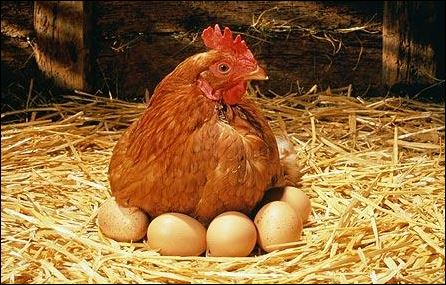
Scientists have found that hens talk to their chicks while still in the eggs. Born again believers are like chicks in the egg. To be born again literally means to be conceived from above (John 3:3) with the Word implanted in our hearts (1 Peter 1:23; James 1:18, 21) . We are still waiting on our born again bodies however (2 Corinthians 5:1-2). While in this body, God still talks to us…in many cases through dreams (Numbers 12:6; Genesis 46:2) which has an interesting connection to the egg.
Job 6:6 Can that which is unsavoury be eaten without salt? or is there any taste in the white of an egg?
The word for egg in Job 6:6 is חלמות ‘chalamut’ which comes from the root חלם ‘chalam’ which means to dream from the parent root חל ‘chal’ which means to pass through or change. This is what the purpose of the egg is, a transitional home for the chick.
White is the color of resurrection. The white garments designed for the priests were a shadow picture of the resurrected believers who are clothed in white, likened unto snow. Being clothed with His righteousness is linked with the earth springing forth plants.
Isa 61:10 Rejoicing I will rejoice in Jehovah. My soul shall be joyful in my God. For He clothed me with garments of salvation; He put on me the robe of righteousness, even as a bridegroom dons as a priest his head-dress, and as a bride wears her ornaments.
Isa 61:11 For as the earth comes out with her buds, and as a garden causes that which is sown to grow, so the Lord Jehovah will make righteousness and praise to grow before all the nations.
Psa 132:9 Let Your priests be clothed with righteousness, and let Your saints shout for joy.
Psa 132:16 And I will clothe her priests with salvation; and her saints shall surely shout.
The fine linen that the priests wore (Exodus 28:5, 8, 15 etc.) is from the following Hebrew word {שש ‘shesh’} which means white & the number 6:
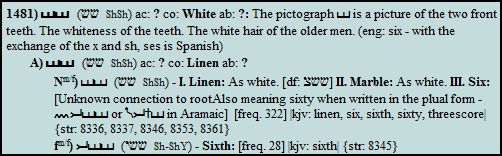
The garments of the priest were worn to display that iniquity was not upon them (Exodus 28:43). The white linen is the righteousness of the saints (Revelation 19:7-9). What is Righteousness? It is the Word/Messiah.
It is interesting to note that the Hebrew word for winter, חרף ‘charaph,’ comes from the same root as egg (חלמות ‘chalamut’), חל ‘chal.’ The egg is linked to Spring, which is a picture of passing from death to life. Winter is a picture of death, Spring a picture of life & resurrection.
The Hebrew word for egg is ביצה ‘beytsah’ which comes from the root בץ meaning mud. Mud is mixture of water and earth, pointing back to Genesis 1:9-13 and the earth ‘rising’ out of the waters which is a picture of the resurrection. The dividing of water and dirt and it’s connection to the resurrection is also seen in mud.

Deliverance is linked to being pulled up out of the mire.
Psa 40:2 And He drew me up from the pit of tumult, out of the miry clay; He lifted my feet on a rock; He directed my steps.
Interestingly, one of the Hebrew words for fine linen (Revelation 19:8, 14) comes from this root.

The breaking forth of a chick from the egg further links to the resurrection. The word for this bursting forth is פרח ‘parach,’ the root of אפרח ‘ephroach’ which means chick/chicken.
Psa 72:7 In his days shall the righteous flourish {פרח ‘parach}; and abundance of peace so long as the moon endureth (־בלי ירח ‘b`li yareach’ – literally “when there is no moon”).
“When there is no moon” points to the twinkling of the eye at the resurrection.
1Co 15:52 In a moment, in a glance of an eye, at the last trumpet; for a trumpet will sound, and the dead will be raised incorruptible, and we shall all be changed.
Rooster
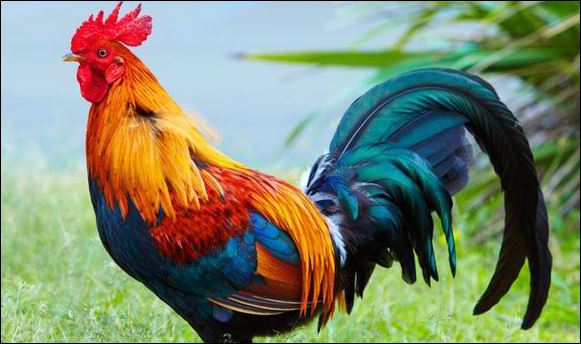
The Greek word for rooster is ἀλέκτωρ ‘alektōr’ which is used in the Septuagint to translate the Hebrew word זרזיר ‘zarziyr.’ זרזיר ‘zarziyr’ is translated as ‘greyhound’ in most English versions (Proverbs 30:31) but commentators admit that it is unknown exactly what animal is being spoken of. זרזיר ‘zarziyr’ comes from the root זר ‘zar’ which means to spread out as in the opened heads of grain which were thrown into the wind to have the wind blow away the chaff and let the seeds fall to the ground where they would be gathered.
There are a few connections which support זרזיר ‘zarziyr’ as the rooster or at least a word that can be applied to the rooster. זר ‘zar’ is translated as “crown” 10 times in Scripture, referring to the “crown” around the ark of the covenant (Exodus 25:11; Exodus 37:2), the table of shewbread (Exodus 25:24-25; 37:11-12) and the altar of incense (Exodus 30:3-4; 37:26-27). The rooster wears a “crown” which is called the comb or crest. The English words ‘crown’ and ‘crest’ both trace back to the Hebrew word קרן ‘qeren’ which means horn, signifying power and the reason the crowns of the ancients had ‘horns’ (1 Samuel 2:1, 10).
1Sa 2:10 The adversaries of the LORD shall be broken to pieces; out of heaven shall he thunder upon them: the LORD shall judge the ends of the earth; and he shall give strength unto his king, and exalt the horn of his anointed.
John Gill commentary on 1 Samuel 2:10
and exalt the horn of his anointed; and so the Targum paraphrases the words,”he shall give strength to his king and enlarge the kingdom of his Messiah.”with which Kimchi agrees, and says, the thing is doubled or repeated, for the King is the Messiah; and to him the words are applied by other Jewish writers (p), ancient and modern.
(p) Zohar in Gen. fol. 58. 4. Midrash Echa Rabbati, fol. 53. 3. R. Saadiah Gaon, Comment. in Dan. vii. 13.
The rooster is also connected to King Messiah through the Hebrew word for rooster which is תרנגול ‘tarnegol.’ This word is not from the Bible but came about at a later time. It is said תרנגול ‘tarnegol’ comes from the Sumerian word ‘tar lugal’ which means “kings fowl”. {Roots and Patterns: Hebrew Morpho-syntax – Maya Arad pg 34}
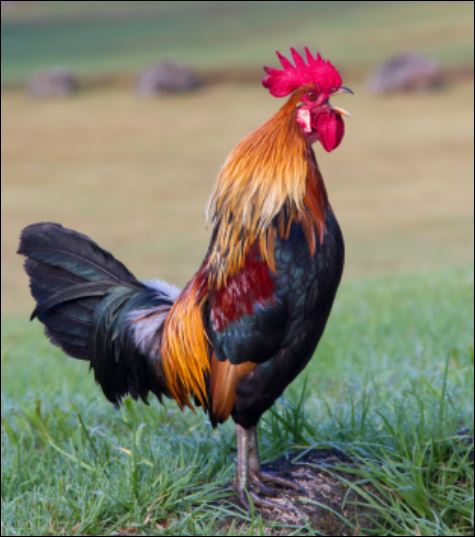
Another connection to זרזיר ‘zarziyr’ and the rooster is the word זהר ‘zahar’ which is a cognate זרזיר ‘zarziyr’ and means to warn as in the crowing of a rooster to warn the flock. זהר ‘zahar’ also means to shine (Daniel 12:3) as in the light of the sun, another cause for the rooster to crow.
Further connecting the rooster to זרזיר ‘zarziyr’ are the words זרם ‘zerem’ which speaks of the spreading of seed through intercourse and זרע ‘zera’ which means to spread seed through plowing. The rooster is known for its sexual promiscuity.
The Jay P. Green Literal version connects זרזיר ‘zarziyr’ to this concept as well:
Pro 30:31 one girded in loins, and a he goat, and a king — there is no rising up with him.
Yet another connection is that the rooster used to be commonly called a cock as seen in the first English versions of the Bible (Matthew 26:34, 27-75; Mark 14:30, 68, 72; Luke 22:34, 60-61; John 13:38; 18:27) but has since gone out of common usage due to the connection to the later more vulgar sense of the word.
LXX
Pro 30:31 καὶ ἀλέκτωρ ἐμπεριπατῶν θηλείαις εὔψυχος καὶ τράγος ἡγούμενος αἰπολίου καὶ βασιλεὺς δημηγορῶν ἐν ἔθνει.
Pro 30:31 and a rooster walking in boldly among the hens, and the goat leading the herd; and a king publicly speaking before a nation.
As mentioned before, in the past the chicken (both rooster and hen) were called simply called fowl. This word in Hebrew is עוף ‘oph’ which comes from the root word עף ‘aph’ which means the covering of the wings. The word for eyelid in Hebrew is עפעף ‘aphaph’ as the eyelid covers the eye. עפעף ‘aphaph’ also means the dawn (Job 3:9) as the rays of the sun appear like eyelashes. The rooster and the dawn are intimately connected as the rooster innately crows to welcome the rising of the sun.
Scientists have found that roosters have been created with an internal circadian rhythm which keeps them crowing on schedule even when deprived of light.
Tidbitting
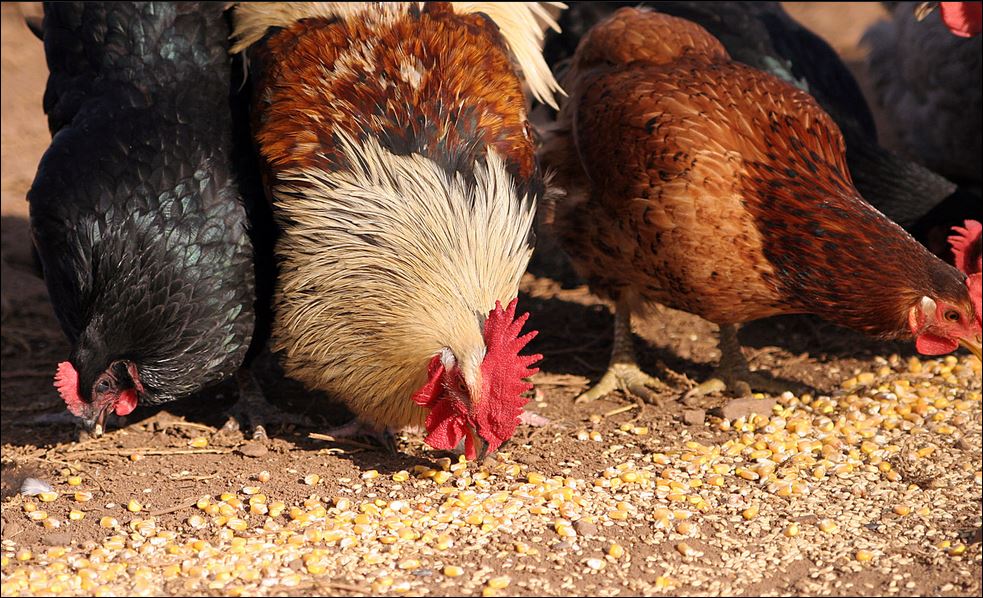
A rooster announces to the flock that he’s found food with a “took, took, took” and performs a dance called ‘tidbitting’ in which he make sounds (food calls) and move their head up and down, picking up and dropping a bit of food.
God gives ‘tidbits‘ to His flock as well (Isaiah 28:9-13). The English word tidbit comes from the word ‘tid’ meaning ‘fond, tender’ and ‘bit’ which means a ‘morsel.’
Isa 28:9 To whom shall He teach knowledge? And to whom shall He explain the message? Those weaned from milk, those moving from breasts?
Isa 28:10 For precept must be on precept, precept on precept; line on line, line on line; here a little, there a little.
Isa 28:11 For with stammering lip and other languages, He will speak to this people;
Isa 28:12 to whom He said, This is the rest; cause the weary to rest. Also, This is the repose. But they willed not to hear.
Isa 28:13 Yet the Word of Jehovah was to them, precept on precept, precept on precept; line on line, line on line; here a little, there a little; that they might go, and stumble, and be broken, and snared, and taken.
Isaiah 28 is further connected to 2 Peter 2 through the concept of those who stumble and fall.
1Pe 2:4 to whom having drawn near, a living Stone, indeed having been rejected by men, but chosen by God, precious;
1Pe 2:5 you also as living stones are being built a spiritual house, a holy priesthood, to offer spiritual sacrifices acceptable to God through Jesus Christ.
1Pe 2:6 Because of this, it is also contained in the Scripture: “Behold,” I lay in Zion” an elect, “precious Stone,” “a Corner-foundation;” “and the one believing in Him shall not be ashamed, never!” Isa. 28:16
1Pe 2:7 Then to you who believe belongs the preciousness. But to disobeying ones, He is the “Stone which those building rejected; this One became the Head of the Corner,” Psa. 118:22
1Pe 2:8 and a Stone-of-stumbling, and a Rock-of-offense” to the ones stumbling, being disobedient to the Word, to which they were also appointed. Isa. 8:14
1Pe 2:9 But you are “an elect race,” “a royal priesthood,” “a holy nation,” “a people for possession,” so that “you may openly speak of the virtues” of the One who has called you out of darkness into His marvelous light; LXX-Ex. 23:22; MT-Ex. 19:5, 6
1Pe 2:10 you who then were “not a people, but now are the people” of God; “the one not pitied then but now pitied.” Hos. 1:6, 9 2:1, 23
This elect race or chosen people is linked to bread through Romans 8.
Rom 8:28 And we know that all things work together for good to them that love God, to them who are the called according to his purpose.
Rom 8:29 For whom he did foreknow, he also did predestinate to be conformed to the image of his Son, that he might be the firstborn among many brethren.
The following comes from a conversation with Noreen Jacks in regards to Romans 8:28:
“…for those who are called: kletos, also means “invited” (to a banquet!)
according: kata, also means “toward”)
to His purpose: prothesis “the setting forth of a thing, shewbread, Bread of His Presence”
pro = “before” – tithemi = “to place” (to place before His Presence)
shew: deiknumi = “to show by way of proving, exhibit”
deixis: “pointing, indicating, reference”
shew and deixis = similar meanings, exhibiting and pointing (emphatic ?)
And we know that He causes all things to work together for those who love God, to those who are invited to the Bread of His Presence [His banqueting table]. Rom 8:26
Yeshua’s purpose is to call us to His banqueting table and feed us the sacred Bread of His Presence, allowing the redeemed to know both faces (panim) or natures of God, the human and the divine!!! The twelve tribes – twelve loaves (Bread of His Presence) demonstrate extraordinary unity, even closer than a marriage!”
Deu 8:3 And He has humbled you, and caused you to hunger, and caused you to eat the manna, which you had not known, and your fathers had not known, in order to cause you to know that man shall not live by bread alone, but man shall live by every Word that proceeds {מוצא ‘motsa’} from the mouth of Jehovah.
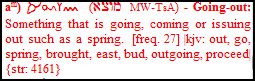
This word מוצא has an interesting connection to the rooster as one of its meanings is the rising of the sun in the East (Psalm 19:6; 75:6). As mentioned before, the rising of the sun is linked to the crowing of the rooster.
Chicken Memory
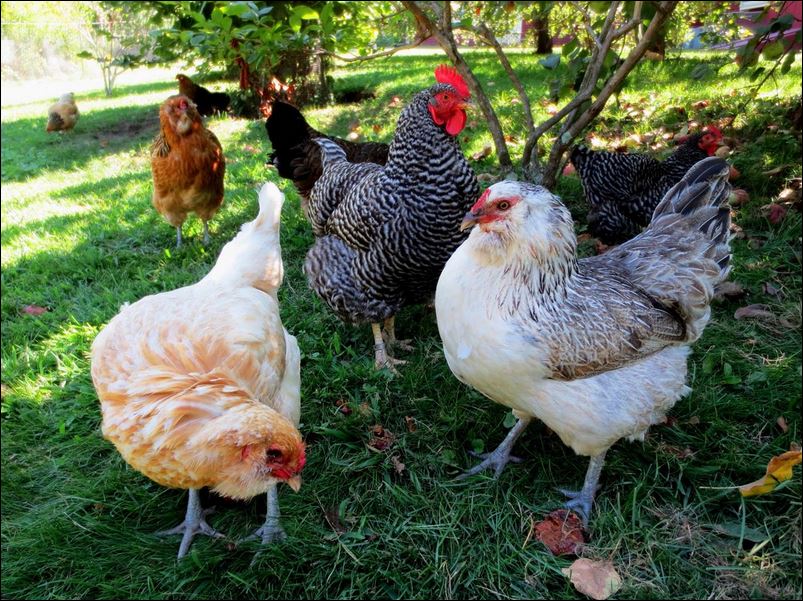
Scientists have also found that chickens have an incredible memory. It is believed that chickens can distinguish between more than 100 faces of their own species and humans.
The word ‘memory’ came about in the 13th century and had the meaning of “awareness, consciousness, recollection” but also “fame, renown and reputation”. The corresponding word in Hebrew which means “fame, renown and reputation” is שם ‘shem’ which is most commonly translated as “name“.
Isaac Mozeson traces the English word ‘memory’ back to the Hebrew word שמור ‘shamor’ which means a guard or watchman. שמור ‘shamor’ comes from the root שמר ‘shamar’ which pictures a shepherd watching/guarding constructing a corral to protect his flock at night.
שמר ‘shamar’ is most commonly translated as “keep” as in the “keeping” of thoughts in the mind. שמר ‘shamar’ can also be broken down as שם ‘shem’ (one of the meanings of memory) and ר ‘resh’ which is the picture of the human head.
In Hebrew, there is another word which corresponds with שמר ‘shamar,’ having almost an identical meaning. This word is נצר ‘natsar.’ נצר ‘natsar’ is the source of Greek word Ναζωραῖος ‘Nazoraios’ or Nazarene (Matthew 2:23). The original name given to followers of Messiah were Nazarenes (נצרים ‘netsarim’ – Acts 24:5).
Nazarenes (נצרים ‘netsarim’) are the “branches” of THE Nazarene (Matthew 2:23).
Joh 15:5 I am the vine, ye are the branches: He that abideth in me, and I in him, the same bringeth forth much fruit: for without me ye can do nothing.
Isa 11:1 And there shall come forth a rod out of the stem of Jesse, and a Branch {נצר ‘nêtser’} shall grow out of his roots:
נצרים ‘netsarim’ means branches.
Isa 60:21 Thy people also shall be all righteous: they shall inherit the land for ever, the branch {נצר ‘nêtser’} of my planting, the work of my hands, that I may be glorified.
Isa 49:6 And he said, It is a light thing that thou shouldest be my servant to raise up the tribes of Jacob, and to restore the preserved {נצר ‘nêtser’} of Israel: I will also give thee for a light to the Gentiles, that thou mayest be my salvation unto the end of the earth.
It is interesting to note that scientists have found that the memories in the brain are formed by “tree-like nerve cell structures” making connections which have been named “menorahs”.
The Menorah is a symbol of the Messiah & The Torah/Word.
The Menorah/lampstand/candlestick=Light (Exodus 35:14; Leviticus 24:2); God is a Light to us (2 Samuel 22:29; Micah 7:8; Psalm 27:1; Isaiah 60:19; Revelation 22:5); The Messiah is the Light (John 1:9; 9:5); the Word is Light (Psalm 119:105) ; The law/Torah is light (Proverbs 6:23).
We are to be lights in the world, reflecting His light: (Matthew 5:14; Philippians 2:15; 2 Corinthians 4:6; Luke 12:31-35; Ephesians 6:14).
The Torah and the Word of the LORD will go forth out of Zion (Isaiah 2:3) ; Zion is a people (Isaiah 51:15-16); We are the branches of the menorah (John 15:1).
His disciples have the testimony of Messiah (Light) and keep His commandments/Torah (Light) (Isaiah 8:16, 20; Revelation 14:12).
In Zechariah, two olive trees are linked to the Menorah (Zechariah 4:1-5, 11-14) and are described as the two ‘anointed ones’ sent to bear His witnesses to the world (Revelation 11:3-4; Isaiah 43:10-11; 44:8).
Zec 4:14 Then said he, These are the two anointed ones {בני־היצהר ‘benay ha`yitshar’}, that stand by the Lord of the whole earth.
בני־היצהר ‘benay ha`yitshar’ literally means sons of light that comes from the oil of pressed olives.
יצהר ‘yitshar’ comes from צהר ‘tsahar’ which literally pictures the light of the sun, again connecting to the crows of the rooster.
In Revelation, His body is depicted as seven candlesticks/menorot (Revelation 1:20), yet are one (Ephesians 5:30) as the menorah in the Temple.
The נצרים ‘netsarim’/ναζωραιων ‘nazoraion’ (Nazarenes) were later given the name Christians which means anointed ones (Zechariah 4:14).
Act 11:26 And when he had found him, he brought him unto Antioch. And it came to pass, that a whole year they assembled themselves with the church, and taught much people. And the disciples were called Christians first in Antioch.
A Christian {Χριστιανός ‘Christianos’} means one who is anointed by God through Christ (1 John 2:20; 2 Corinthians 1:21). A Christian is one who has been ‘marked’ by God, who is to be a king and priest unto Him.
Rev 1:6 And hath made us kings and priests unto God and his Father; to him be glory and dominion for ever and ever. Amen.
Christ comes from the Greek word Χριστός ‘christos’ which is the Greek translation of the Hebrew word משיח ‘mashiach.’ Messiah in Hebrew literally means an anointed one, as in a king (1 Samuel 24:6, 10), prophet (1 Kings 19:16) or priest (Leviticus 4:3, 5, 16; 6:22). The term is used in reference to His people as well (Psalm 105:15; 1 Chronicles 16:22).
The duty of Christians as kings and priests is to bring God’s remembrance to the world. To proclaim His name among the nations.
1Pe 2:9 But ye are a chosen generation, a royal priesthood, an holy nation, a peculiar people; that ye should shew forth the praises of him who hath called you out of darkness into his marvellous light:
1Pe 2:10 Which in time past were not a people, but are now the people of God: which had not obtained mercy, but now have obtained mercy.
In ancient times, the chicken was a symbol of Christianity. For example, in the 6th century Pope Gregory I declared the rooster as the emblem of Christianity and in the 9th century Pope Nicholas I ordered the figure of roosters to be placed on every church steeple.
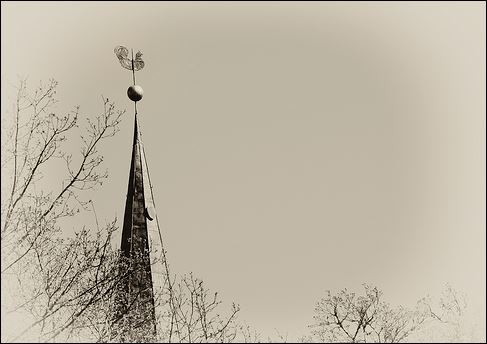
The rooster awakes the dawn crowing as the sun rises. The rising of the sun is a daily reminder of the resurrection of Messiah so in this sense the chicken is a herald of the Gospel.
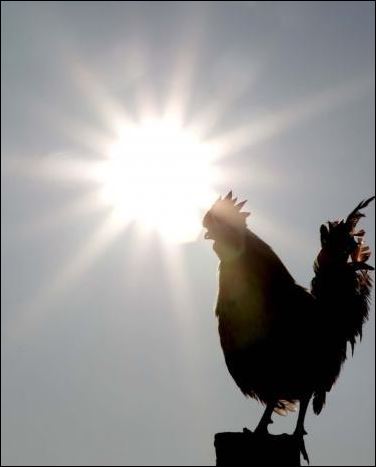
The word for the crowing of a rooster in Hebrew is קרקור ‘qiyqur’ and the word for the cluck of a chicken is קרקר ‘qiyqar.’ These words come from the Hebrew word קר ‘qar’ which means to call a meeting, literally a ‘gathering of the heads.’ The Scriptures define the Biblical feasts/sabbaths as מקרא קדש ‘miqra qodesh’ or holy gatherings. מקרא ‘miqra’ comes from the word קר which literally means ‘gather the men.’ It is at these feasts that the Name of God is ‘called’ upon. The word here for ‘call’ is קרא ‘qara’ from the קר ‘qar’ root. קרא ‘qara’ means to gather to a meeting to hear the Word read from a scroll.
The English word ‘rooster’ comes from the verb ‘roost’ as chickens are known for their roosting instinct. To roost is to “return home”. This is the message of the Bible, “repent and believe ye the Gospel” (Mark 1:15; 2 Timothy 2:25-26; Revelation 22:17). Repent in Hebrew is שוב ‘shuv’ which literally means to return to the house. As mentioned before, this return comes through Messiah (Luke 19:10; Acts 2:37-39). Isaac Mozeson traces the words roost/rooster back to the Hebrew word עצר ‘atsar’ which means to stop or restrain, it is the root of the word עצרה ‘atsarah’ which means an assembly which gathers during a day of restraint, or a sabbath.
The English word for crow comes from the Old English word ‘crawian’ which means to “make a loud noise” to “exult in triumph”.
2Co_2:14 Now thanks be unto God, which always causeth us to triumph in Christ, and maketh manifest the savour of his knowledge by us in every place.
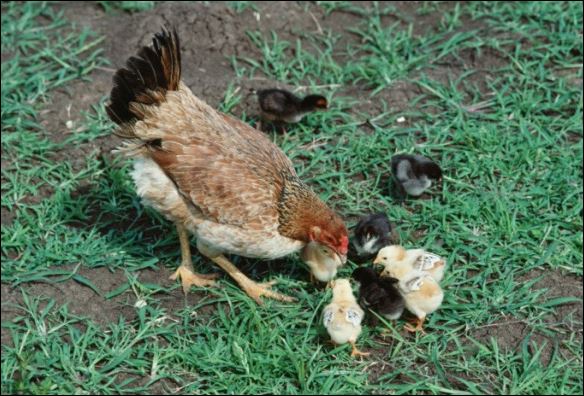
Further connecting chickens to the body of Messiah is that chickens feel empathy for each other.
Heb 13:3 Remember them that are in bonds, as bound with them; and them which suffer adversity, as being yourselves also in the body.
Rom 12:15 Rejoice with them that do rejoice, and weep with them that weep.
1Co 12:26 And whether one member suffer, all the members suffer with it; or one member be honoured, all the members rejoice with it.
Gal 6:1 Brethren, if a man be overtaken in a fault, ye which are spiritual, restore such an one in the spirit of meekness; considering thyself, lest thou also be tempted.
Gal 6:2 Bear ye one another’s burdens, and so fulfil the law of Christ.
Dust bathes
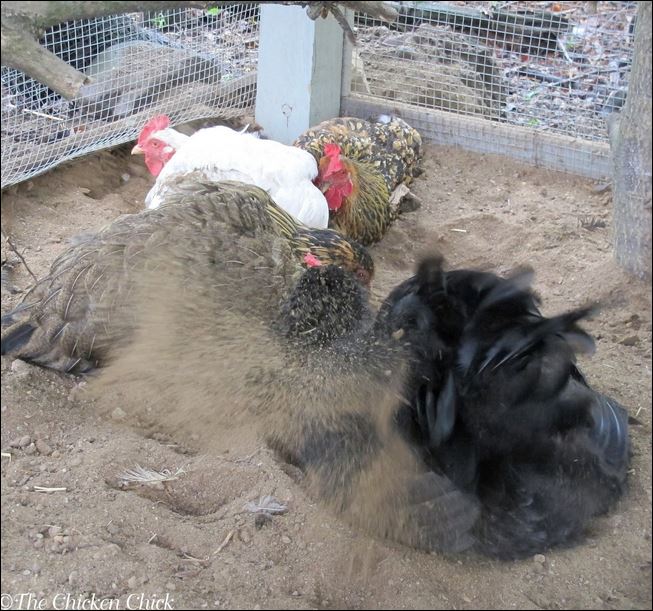
Chickens are known for their love of “dust baths”.
Isa 26:19 Thy dead men shall live, together with my dead body shall they arise. Awake and sing, ye that dwell in dust: for thy dew is as the dew of herbs, and the earth shall cast out the dead.
The Hebrew word for ‘dwell’ in Isaiah 26:19 is שכן ‘shakan’ which comes from the root סך ‘suk’ which means a covering. The dead are ‘covered’ in the dust as a chicken after a dust bath.
But the dead who dwell/sleep in the dust shall rise again (Daniel 12:2) just as the sun rises each morning following the crow of the rooster.
littleguyintheeye@gmail.com


