
Four lines of Scripture and history — the course of Abijah, the early church, the signs in the heavens — all put December 25 somewhere in the story: conception, birth, or the coming of the Magi. Haggai means my feast. Consider from the four and twentieth day of the ninth month… I will shake the heavens and the earth… I will take thee, O Zerubbabel, and will make thee as a signet (Hag 2:18-23). The old interpreters said Zerubbabel there is a name for Messiah. The Desire of all nations shall come, and I will fill this house with glory (Hag 2:7).
Coma, decan of Virgo, is the Desired One — a young woman nourishing an infant the ancients called Ihesu. The charge that December 25 was borrowed from pagans in Constantine’s day does not hold the record. The early church kept the day of His birth. The counterfeit came after, to answer the Gospel, not to invent it.
A Child is born; a Son is given; His name is Wonderful, Counselor — יעץ yaats, from עץ ets, tree (Isa 9:6). The Branch stands in winter when other trees are bare. Instead of the thorn, the fir; instead of the brier, the myrtle — an everlasting sign (Isa 55:13). The glory of Lebanon, the fir and the pine, to beautify — פאר paar, to decorate — the place of My sanctuary (Isa 60:13). The righteous flourish like the cedar in the house of the LORD (Psa 92:12-13). Paradise plays told the same tale: the tree of knowledge answered by the tree of life.
Whether the night is His birth, His conception in the days of Dedication, or the star standing over the Child — the date is not mute. It is a sign. The Desire of nations is Christ Jesus.
December 25th

There are four scenarios/theories I’ve seen about the birth of Christ which use the Bible (priestly course of Abijah) and history (early Church writings or signs in the heavens) which make compelling cases for the correct date of the birth of Jesus.
All four have either December 25 (winter solstice) as the conception, birth or visit of the Magi on December 25.
The Scriptures allude to this date as well in reference to the coming of Christ in Haggai 2:18-23. It is interesting to note that Haggai means ‘my feast or festival.’
Hag 2:18 Consider now from this day and upward, from the four and twentieth day of the ninth month, even from the day that the foundation of the LORD’S temple was laid, consider it.
Hag 2:21 Speak to Zerubbabel, governor of Judah, saying, I will shake the heavens and the earth;
Hag 2:22 And I will overthrow the throne of kingdoms, and I will destroy the strength of the kingdoms of the heathen; and I will overthrow the chariots, and those that ride in them; and the horses and their riders shall come down, every one by the sword of his brother.
Hag 2:23 In that day, saith the LORD of hosts, will I take thee, O Zerubbabel, my servant, the son of Shealtiel, saith the LORD, and will make thee as a signet: for I have chosen thee, saith the LORD of hosts.
It was interpreted in ancient times that Zerubbabel in this prophecy is a “code” name for Christ.
John Gill commentary
will I take thee, O Zerubbabel my servant, the son of Shealtiel, saith the Lord; that is, the Messiah, as is owned by Abarbinel; who says (x),
“the King Messiah shall come, who is of the seed of Zerubbabel; and he shall be the seal of the structure, and the end of the kingdoms; as it is said, “I will make thee as a signet, for I have chosen thee, saith the Lord of hosts”; for this no doubt is said concerning the days of the Messiah:”
and another Jewish writer (y), quoting the above author for the sense of this passage, and Eze_37:25, adds,
“for the King Messiah he will be David, and he will be Zerubbabel, that he may be a rod going out of their stem;”
and another (z) on these words observes,
“without doubt this is said concerning the expected Messiah, who will be of the seed of Zerubbabel; and therefore this promise was not at all fulfilled in him; for in the time of this prophecy he was but governor of Judah, and he never rose to greater dignity than what he then had:” (x) Mayene Jeshuah, fol. 13. 4. Vid. & Mashmiah Jeshuah, fol. 67. 2. (y) Abendana in Miclol Yophi in loc. (z) R. Isaac, Chizzuk Emunah, par. 1. c. 34. p. 289, 290.
Going back to verse 7 in Haggai’s prophecy is the reference to the “desired” of all nations who is Christ.
Hag 2:7 And I will shake all nations, and the desire of all nations shall come: and I will fill this house with glory, saith the LORD of hosts.
The constellation Coma (desired one) is a picture of a woman with child. It is a ‘decan’ constellation of Virgo the Virgin. According to an 8th century Arabic astronomer named Albumazer, the Persians, Chaldeans and Egyptians said this was a young woman, which is the same as saying virgin in Hebrew (עלמה ‘alma’) nourishing an infant boy which has a Hebrew name ‘Ihesu”…
For many years I held to the belief that Christ was born in Autumn during the Fall Feasts of the Lord based heavily upon the work of Ernest Martin and Fred Coulter. If Christ was born in the Fall then His conception would have been around the winter solstice, during the holiday of Hanukkah.
Others believe Christ was born in the Spring and that the Star of Bethlehem stopped over Bethlehem on December 25th when the Magi visited Messiah.
In this article I am going to share some of the information I’ve learned which points to December 25th as the actual birth date of Christ Jesus.
The date of December 25th as the birth of Christ is based upon ancient Christian belief, not upon pagans.
Perhaps the strongest foundation of those opposed to Christmas is the idea that the date of December 25th for the birthday of Christ was adopted from pagans. It is said that this date was chosen in the fourth century around the time of Constantine to appease pagans into adopting Christianity. History however points to the early church celebrating the birth of Christ during this time and the pagans adopted this date to counter the message of the Gospel.
As mentioned before, there are four scenarios/theories I’ve seen about the birth of Messiah which have Biblical and historical backup and all four have either December 25 as the conception, birth or visit of the Magi on December 25 (winter solstice).
I’ve come to the belief that Christ was indeed born on December 25th based upon ancient writings and the Word of God.
“All the available information supports a birth date for Jesus of Nazareth on about December 25/January 6th, 3/2BC, with the beginning of His ministry when He was thirty years old in 28AD and His death during the Passover of 30AD.” {DATING THE BIRTH OF JESUS OF NAZARETH}
Jesus promised the apostles the Holy Spirit would guide them “into all truth,” revealing to them things He had not spoken to them directly (John 16:12-15). So, then, did the Spirit design the Christmas season as we know it, and did He put Christ in Christmas? If He did, we must accept His word and “keep Christ in Christmas,” for to reject the Spirit is to reject God (I Corinthians 2:10-13; I Thessalonians 1:5; 2:13; 5:19; Cf. Acts 5:3,4,9). Has the Spirit revealed that He is the one who put Christ in Christmas and Christmas in the church?
To reject the word of the apostles is to reject the word of Christ and God (Luke 10:16; I Corinthians 14:37; I Thessalonians 4:1, 2, 8). The “apostles’ doctrine” is “the doctrine of the Lord” (Acts 2:42; 13:12).
Thus, if we can find the apostles putting and keeping Christ in Christmas, we may do likewise with the approval of heaven. Do we read of disciples who, at the behest of the apostles, observed the Christmas tradition, or who noted the birth of Jesus in any manner? Is that what we find?
Again, to reject the word of the apostles is to reject the word of Christ and God (Luke 10:16; I Corinthians 14:37; I Thessalonians 4:1, 2, 8). The “apostles’ doctrine” is “the doctrine of the Lord” (Acts 2:42; 13:12). Thus, if we find the early Church writings referencing the doctrine of the Apostles and these things agreeing with the writings of the New Testament we are not to reject them.
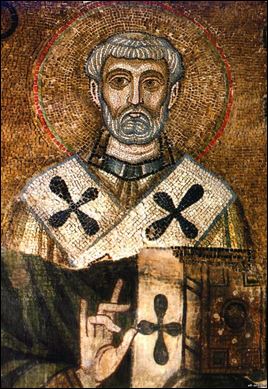
Clement of Rome d. AD 99
“For Clement, a glorious Martyr of Christ Jesus, (whom S. Paul reckons amongst his fellow laborers in the Gospel, whose names are in the book of life Phillipians 4:3) writes thus unto the Christian Church; Brethren, keep diligently Feast days, and truly in the FIRST place the day of Christ’s birth. Clement Constitutions Apostolic lib. 5 ch. 10.12 {Feasts of Feasts pg 11-12 Edward Fisher A.D. 1644}
“When the blessed apostles had founded and built up the Church, they handed over the ministry of the episcopate to Linus. Paul mentions this Linus in his Epistles to Timothy. Anencletus succeeded him. After him Clement received the lot of the episcopate in the third place from the apostles. He had seen the apostles and associated with them, and still had their preaching sounding in his ears and their tradition before his eyes — and not he alone, for there were many still left in his time who had been taught by the apostles.” {Irenaeus – Adversus Haereses}
12 Apostles
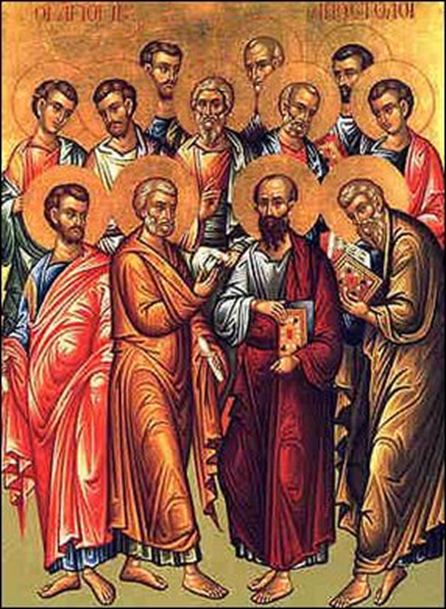
In the Apostolic Constitutions we see an ancient witness to the birth of Christ on December 25th. The Apostolic Constitutions are a compilation, whose material is derived from sources differing in age. Early writers were inclined to assign them to the apostolic age, and to Clement of Rome. They are now generally assigned to the second or third century. In the Fifth book, Sec. III, we find:
“Brethren, observe the festival days; and first of all the birthday which you are to celebrate on the twenty-fifth of the ninth month.” {Apostolic Constitutions – Circa A.D. 70-250}
The ninth month counting from Nisan (April) is Kislev (December) in the Jewish calendar. Transferred to our Roman calendar, the ninth month answers to December.
Theophilus, Bishop of Caesarea (A.D. 115-abt 195) – Theophilus lived in the time of Emperor Commodus; he lived within 100 years of the apostles, and was bishop of Caesarea in Palestine, the very fount whence sprang our faith.
“We ought to celebrate the birth-day of our Lord on what day soever the 25th of December shall happen.” (Magdeburgenses, Cent. 2. c. 6. Hospinian, de orign Festorum Chirstianorum)
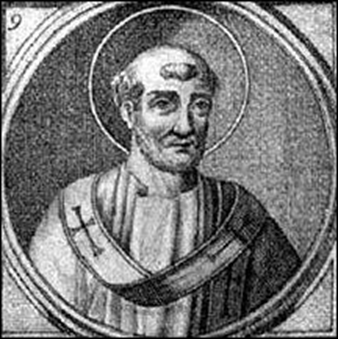
Saint Telesphorus
Telesphorus died about 137 AD.
The tradition of Christmas Midnight Masses, the celebration of Easter on Sundays, the keeping of a seven-week Lent before Easter and the singing of the Gloria are usually attributed to the Telesphorus who was the Roman Bishop between 126-137 AD.
“He established that on Christmas eve priests could say three masses and he introduced the Gloria in excelsis Deo, which he himself may have composed, at the beginning of the mass” {The lives of the pontiffs through 2000 years of history – Antonino Lopes pg 3}
Telesphorus – Decretum de Ieiunio Septem Ebdomadarum ante Pascha
“But the holy masses to celebrate the nativity of the Lord and Saviour, and the angelic hymn in them sing it, the same night, that was announced by the angel, just as truth itself testifies, saying: in the same country shepherds watching, and keeping the night watches over his flock, behold, an angel of the Lord came upon them, and they feared a great fear. And the angel said to them: Do not be afraid, for behold, I bring you good news which shall be to all the people, because he is born to you a Saviour, who is Christ the Lord, in the city of David. And this shall be a sign all we shall find the babe wrapped in swaddling clothes, lying in a manger. And at what instant there was with the angel a multitude of the heavenly host, praising God, and saying: Glory to God in the highest, and on earth peace to men of good will..”
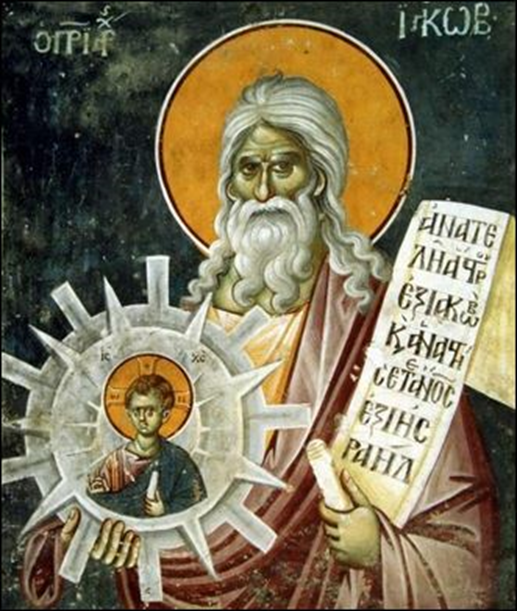
Hippolytus of Rome
Hippolytus of Rome – A.D. 170-240
Hippolytus of Rome speaks of December 25 as the birth of Christ in his commentary on Daniel. Chrysostom says that the Feast of the Nativity was kept “from the beginning” by those in the west, and we find corroboration of this in Hippolytus:
“The first coming of our Lord, that in the flesh, in which he was born at Bethlehem, took place eight days before the calends of January, a Wednesday, in the forty-second year of the reign of Augustus, 5500 years from Adam.” (Commentary on Daniel 4:23) The eighth before the calends of January is the twenty-fifth day of December, and the forty-second year of Augustus was 3/2 BC.
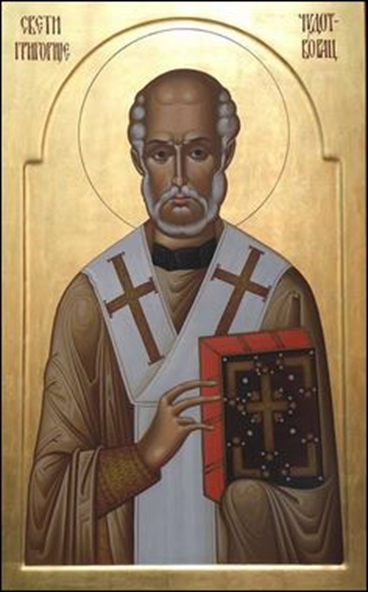
Gregory Thaumaturgus or Gregory the Miracle-Worker AD 213 – 270
“Gregory Thaumaturgus (A.D. 205-265) was born to pagan parents, and was a native of Neo-Caesarea, the first city of Pontus. He became a student of Origen in Palestinian Caesarea, where he was instructed in logic, geometry, physics, philosophy, and ancient literature. Under Origen’s influence, Gregory soon converted to the faith. After about five years of remaining with Origen, Gregory returned to his native Neo-Caesarea, where he became bishop and served with great distinction. The passage in question has to do with the annunciation and conception, which Gregory places at Passover, which occurs at the full moon in the month of Nisan (Abib). Since Gregory almost certainly equated Passover the year Christ was conceived with March 25th, the nativity nine months later would have been December 25th, making this one of the earliest evidences of the traditional date of Christ’s birth:
“‘And in the sixth month the angel Gabriel was sent to a virgin espoused to a man whose name was Joseph, of the house and lineage of David; and the virgin’s name was Mary;’ and so forth. And this was the first month to the holy Virgin. Even as Scripture says in the book of the law: ‘This month shall be unto you the beginning of months: it shall be the first month among the months of the year to you.’ ‘Keep ye the feast of the holy Passover to the Lord in all your generations.’ It was also the sixth month to Zacharias”[1]
The passage is from the second of four sermons delivered at the feast commemorating the Annunciation. The sermons come down to us in Gregory’s name, but were judged by 18th century patristic scholars of doubtful or unknown (“spurious”) authorship, and continue under the cloud of that aspersion until today. The objection to Gregory’s authorship is that the date of March 25th for the annunciation was allegedly derived from the December 25th nativity, which (it is argued) was not celebrated in the east until introduced there by Chrysostom in A.D. 386, so that the feast of the annunciation must originate later still. Also, the sermons make repeated use of the phrase “mother of God” in reference to Mary, which is asserted to be an anachronism belonging to a later time.
Against these objections it may be observed that scholars believe the March 25th—December 25th—March 25th triad of conception—nativity—passion/resurrection was already extant in Gregory’s day, as evidenced by the writings of Julius Africanus and others. Africanus, who was hugely influential as the earliest Christian chronographer, was a contemporary of Origen and corresponded with him, so it is unlikely that Gregory should fail to have been exposed to Africanus’ views. Moreover, the March 25th passion is based upon the so-called “short chronology” of Jesus’ ministry of one year and several months, which early writers saw in the synoptic gospels. Jesus was baptized in the fall of A.D. 29, the fifteenth year of Tiberius; the short chronology would place his crucifixion in the spring of A.D. 31 when Passover was on March 25th. Since Origen and Origen’s teacher, Clement Alexandria, were both adherents of the short chronology,[2] there is good cause to believe Gregory would have held to it also. And if he held to this part of the triad, why may we not conclude he embraced the remainder of it as well? And even if the December 25th nativity was not received in Antioch until the time of Chrysostom, there is nothing to prevent Gregory from having preached the sermons in question in Neo-Caesarea. Indeed, Chrysostom states that the December 25th celebration of Christ’s nativity was kept from “the beginning” in Thrace, which was a close neighbor to Pontus, so that its late arrival in Antioch offers no objection to its early arrival elsewhere.[3] That the feast of the annunciation may find its origins this early finds confirmation in the fact that the feast of the Purification was celebrated very little afterward (about 60 years) as witnessed by Methodius (A.D. 260-312) in his Oration Concerning Simeon and Anna, where we encounter repeated occurrence of the phrase “mother of God” in reference to Mary, so that this objection comes to nothing also.[4] As to which is more likely to have been celebrated earlier, the annunciation and conception, or purification and presentment, surely the former has the stronger claim, for without it there could never have been the latter. On the whole then, there is no good reason to reject history’s witness attributing the subject homilies to Gregory, or the conclusion that he subscribed to the March 25th—December 25th—March 25th triad already current in his day.”
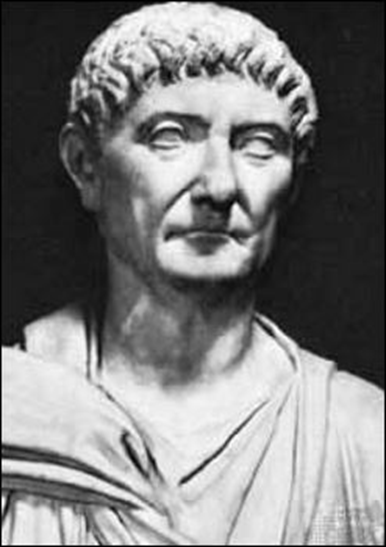
Diocletian A.D. 244-311
Nicephorus wrote an ecclesiastical history in which he reports Diocletian’s destruction of a church on Dec. 25th, filled with worshippers celebrating the Lord’s Nativity:
“At Nicomedia (a city of Bethenia) when the festival of Christ’s birth-day came, and a multitude of Christians in all ages had assembled together in the temple to celebrate that birth-day. Diocletian the tyrant, having gotten an advantageous occasion whereby he might accomplish his madness and fury, sent men thither to enclose the temple, and to set it on fire round about, and so consumed them all to ashes, even twenty thousand persons.”
This event is usually dated to A.D. 302. Selden (Theanthropos, pp. 33, 34) confirms Nicephorus’ report, saying that in ancient Greek and Roman martyrologies this event is dated to Dec. 25th.”
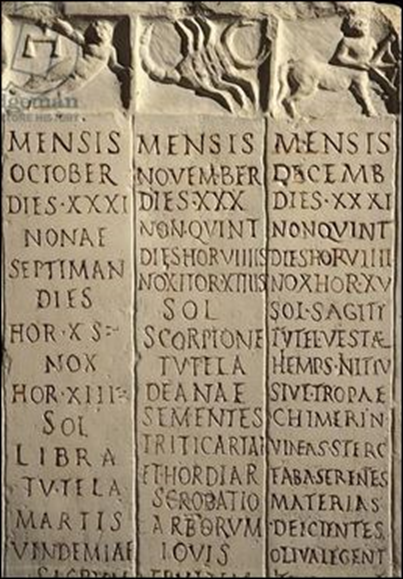
Roman City Calendar A.D. 336
Further evidence for December 25th is found in the Roman city calendar for the year 354. This calendar lists burial places of the martyrs (Depositio martyrum) arranged in the order of the days of the year on which festivals were held in their honor. It is believed by some that the calendar first dated to 336, but was later revised and extended to the year 354. The sequence of festivals in the church year begins with the item:
“VIII Kal. Ian. Natus Christus in Betleem Judeae”
The eighth day before the calends of January is December 25th. Thus, in the year AD 336, the festival of the birth of Christ was held on Dec. 25.
We note that in each of these cases the tradition that Jesus was born on December 25th stands upon scripture or the received testimony of earlier ages and nowhere upon the “Christianization” of the pagan solstice or festival of the “unconquered sun” (sol invictus) as is so often suggested. The circumstance that Jesus was born at the time of the solstice should no more disturb us than his resurrection at the vernal equinox when pagans celebrated the rebirth of the earth following the pall of winter death. To the contrary, we should glory at the appropriateness and poetic beauty of a winter birth when the dark of sin and death began to recede before the Sun of Righteousness (Mal. 4:2) and light of salvation.
Conclusion
The evidence for the December 25th birth of Christ is as conclusive as the nature of the case will allow: The chronology of Christ’s Presentment at the temple and Herod’s last illness, Luke’s and John’s chronology of Jesus baptism and first disciples, the testimony of Jewish tradition and Josephus regarding the destruction of the temple and the priestly courses, and the voice of the church fathers all combine to affirm that the traditional date for the Savior’s birth is scripturally based and scripturally sound. May God bless you and your family at Christmas as you pause to remember the day when the Christ-child was born in Bethlehem.
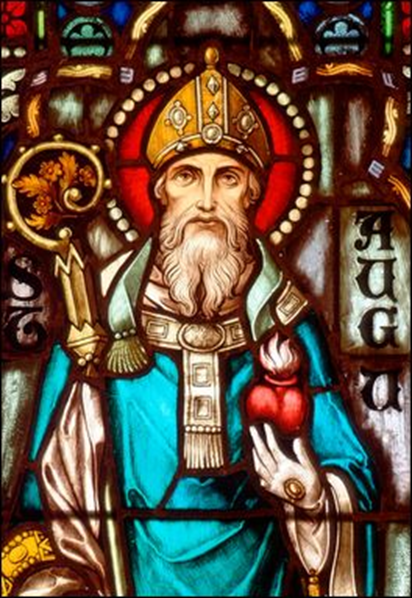
St. Augustine – A.D. 354-430
Augustine was bishop of Hippo and one of the most influential writers of the early church; his imprint remains even to this day. Augustine is not the earliest source for the Dec. 25th birth of Christ, but he announces a principle regarding the universal practice of the church that is important at the outset, so we will take his evidence first. In his 118 Epistle to Jannuarius, speaking of the yearly feasts then observed, Augustine states:
“Those feasts concerning which we have no express scripture, but only traditions, which are now observed all the world over; we ought to know that the keeping of them was commended unto us, and instituted (or commanded) either by the apostles themselves, or general councils, of which there is a most wholesome use in the church of God; such are the feast of our Lord’s Passion, Resurrection and Ascension into heaven, and the coming down of the Holy Ghost, which are now kept holy with a yearly solemnity.”
In the following epistle (119), Augustine then says:
“It chiefly behooves us that upon the day of our Lord’s nativity, we should receive the sacrament in remembrance of him that was born upon it, and upon the return of the year to celebrate the very day with a feasting devotion.”
“The return of the year” appears to signify the winter solstice, when the days begin to grow longer. However, the point we should consider here is Augustine’s statement that whatever was practiced universally throughout the church in the whole world was presumably set in place by the apostles or by a general church council. But as no council established the Feast of the Nativity, it exists by tradition, and this presumably from either “word or epistle” (II Thess. 2:15; 3:6; I Cor. 11:2, 23) handed down from the time of the apostles. Although ordaining no set form of commemoration for the Nativity, yet certainly the apostles would have known the date of Christ’s birth, as would his mother and brethren, all of whom were active in the primitive church. Therefore it should not stretch our credulity to believe that the Dec.25th birth of our Lord was set in the church by those early sources and has been handed down without interruption ever since. Concerning the date of Christ’s birth, Augustine states:
“He was born, according to tradition, upon December the twenty-fifth.” (On the Trinity, 4.5, Post Nicene Fathers 3.74)
Regarding the Baptist’s June birth, Augustine said:
“John came into this world at the season of the year when the length of the day decreases; Jesus was born in the season when the length of the day increases.” (Sermon In Natali Domini xi).
Thus, Augustine places John’s birth at the summer solstice and Jesus’ birth upon Dec. 25th, at the season of the winter solstice.
Much of the above information came from the following article: Objections to Christmas and the Dec. 25th Birth of Christ Answered. Here is the article in full for those interested.
In this article, we answer common objections to the celebration of Christmas and the Dec. 25th birth of Christ, including allegations it was
Invented by the Catholic Church,
Is of pagan origin,
Takes its date from the Saturnalia, Sol Invictus, and solstice,
The shepherds would not have been in the field in December, and that
Jesus was probably born in September.
Objection: The Dec. 25th birth of Christ invented by the Catholic Church in the 4th century.
Answer: There is no evidence supporting any part of this allegation. The Nativity has been celebrated from at least as early as the second century, hundreds of years before the Catholic Church even existed.
The Catholic Church and Papacy as we know them today did not grow up until the 6th and 7th centuries. Boniface III, in 607, was the first Bishop to actually use the term Pope. Prior to this, there was no centralized authority in the church to institute observance of the Nativity. Not even the emperor Constantine (AD 242-337), who is sometimes associated with the beginnings of Catholicism and a centralized power in the church, ever addressed the issue of the Nativity.
Objection: If there was no Catholic Church or Papacy prior to the 6th or 7th centuries responsible for instituting celebration of Christ’s birth Dec. 25th, what about an ecumenical council?
Answer: Here again there is no evidence supporting this supposition.
The first ecumenical council was the Council of Nicea in AD 325, long after the Nativity was already being celebrated. This council took up the question of the uniform celebration of the Pasche (Easter), but history is silent about it or any other council instituting the Feast of the Nativity. So far as may be authoritatively shown, if not set in the church by the apostles, celebration of the Nativity grew up spontaneously as a way of commemorating important events in sacred history, like the miracle at Cana, the Passion, Resurrection, and Ascension. In the East, January 6th (Epiphany) was kept as the date of Christ’s birth until late in the fourth century, (though the same date was supposed by others to commemorate Jesus’ baptism, the arrival of the Magi, or the miracle at Cana). In the West, the Nativity was celebrated Dec. 25th for as long as history remembers. The fact that the Nativity was celebrated differently in differnt places proves that no pope or council established the Feast of the Nativity, for if that were the case there would be no place for this difference to have grown up. Among the earliest testimonies to celebration the Nativity include the following:
Theophilus, Bishop of Caesarea (A.D. 115-181) – Theophilus lived in the time of Emperor Commodus; he lived within 100 years of the apostles, and was bishop of Caesarea in Palestine, the very fount whence sprang our faith.
We ought to celebrate the birth-day of our Lord on what day soever the 25th of December shall happen.” (Magdeburgenses, Cent. 2. c. 6. Hospinian, de orign Festorum Chirstianorum)
Clement of Alexandria (AD 153-217) – In the second century, Alexandria became the intellectual center of Christianity, beginning with Clement, followed by his student, Origen.
“And there are those who have determined not only the year of our Lord’s birth, but also the day; and they say that it took place in the twenty-eighth year of Augustus, and in the twenty-fifth day of Pachon.” (Stromata, I, xxi)
Counting from the death of Antony in 30 B.C., the 28th year of Augustus would have been 2 B.C. The first month of the Egyptian calendar was Thoth, answering to late August (Thoth 1 = August 29). The ninth month was Pachon. The 25th of Pachon answers to the 20th of May. However, this is usually explained by the fact that the months originally took their names from where they occurred in the year. Hence, October, November and December were the eighth, ninth, and tenth months counting from March in the original Roman calendar, which had only ten months. But the Greek Fathers frequently took April, instead of March, for the first month of the year, as we see expressly in St. Chrysostom, in Anastasius Patriarch of Antioch, the Apostolic Constitutions, in Macarius, Stephanus, Gobarus, and other of the ancients. This would make December the ninth counting from April. Supposing therefore that some were informed Christ was born the 25th day of ninth month, who then transferred it to the Egyptian calendar, the 25th of Pachon would be the result. This is the belief of John Selden and Johannes Keppler.
Hippolytus of Rome (A.D. 170-240) – Hippolytus of Rome provides one of the earliest known references to the December 25 birth of Christ in his commentary on Daniel. Chrysostom says that the Feast of the Nativity was kept “from the beginning” by those in the west, and we find corroboration of this in Hippolytus:
“The first coming of our Lord, that in the flesh, in which he was born at Bethlehem, took place eight days before the calends of January, a Wednesday, in the forty-second year of the reign of Augustus, 5500 years from Adam.” (Commentary on Daniel 4:23)
The eighth before the calends of January is the twenty-fifth day of December, and the forty-second year of Augustus counting from the death of Julius Caesar was 2 BC.
Apostolic Constitutions (circa A.D. 70-250) – The Apostolic Constitutions are a compilation, whose material is derived from sources differing in age. Early writers were inclined to assign them to the apostolic age and to Clement Romanus (A.D. 70), but they are now generally assigned to the second or third century. In the Fifth book, Sec. III, we find:
“Brethren, observe the festival days; and first of all the birthday which you are to celebrate on the twenty-fifth of the ninth month.
The ninth month counting from Nisan (April) is Casleu in the Jewish calendar. Transferred to our Roman calendar, the ninth month answers to December.
Diocletian (A.D. 303-304) – Nicephorus wrote an ecclesiastical history in which he reports Diocletian’s destruction of a church on Dec. 25th, filled with worshippers celebrating the Lord’s Nativity:
“At Nicomedia (a city of Bithynia) when the festival of Christ’s birth-day came, and a multitude of Christians in all ages had assembled together in the temple to celebrate that birth-day. Diocletian the tyrant, having gotten an advantageous occasion whereby he might accomplish his madness and fury, sent men thither to enclose the temple, and to set it on fire round about, and so consumed them all to ashes, even twenty thousand persons.”
John Selden in his monumental work, Theanthropos (1661, pp. 33, 34), confirms Nicephorus’ report, saying that ancient Greek and Roman martyrologies date this event to Dec. 25th. It is probable that this occurred in A.D. 303-304.
Objection: Dec. 25th was assigned for celebration of Christ’s birth to Christianize the pagan solstice, Saturnalia, Feast of the Unconquered Sun, and other pagan festivals.
Answer: Not one word from antiquity has ever been produced supporting this assertion. The whole notion is supposition at best, or deliberate slander at worst. The church fathers never spoke of Dec. 25th in connection with Christ’s birth except as the traditional, received date of the Nativity.
Saturnalia – The Saturnalia was originally celebrated on only one day, the fourteenth Kalends of January (Dec. 17). With the Julian reform of the calendar, two days were added to December, causing the festival to fall on the sixteenth Kalends of January. Macrobius reports that the addition of two days to December caused the festival to be celebrated more days than one, which, coupled with the Sigarillaria, came to be celebrated a full week, or Dec. 17-23.
“I judge that I’ve now abundantly demonstrated that the Saturnalia used to be celebrated on one day only, the fourteenth before the Kalends, but that it was later extended to three, first as a result of the days that Caesar added to the month, and then by the edict of Augustus in which he assigned to the Saturnialia a three day holiday. As a result, they begin on the sixteenth day before the Kalends and end on the fourteenth, when the one day observance was formerly held. But the addition of the Sigillaria extends the public bustle and religious celebration to seven days.” Saturnalia I.10.23, 24
Thus, the Saturnalia reached only as far as Dec. 23rd and therefore cannot account for Christmas occurring Dec. 25th.
Solstice – It is true that pagan peoples throughout the ancient world had various celebrations at the major turning points of the calendar, including the winter solstice, and that this anciently fell upon Dec. 25th. However, due to defects in the Roman calendar, by the time of Jesus’ birth the winter solstice anticipated Dec. 25th by about two days. By the Council of Nicea in A.D. 325, the astronomical event anticipated the calendar by four days.
Therefore, to correct this deficiency and provide for the uniform observance of the Pasche (Easter), the council set the vernal equinox, which anciently fell on March 25th, to March 21st, moving it four days. But in correcting the civil date of the vernal equinox to correspond with the astronomical event, the winter solstice was also necessarily corrected, for the two stand in fixed relation one to another. Hence, the solstice now falls on Dec. 21st. However, the coincidence that the Nativity is celebrated on the day the solstice anciently occurred in the civil calendar is no more evidence that the date is contrived than the coincidence that Christ’s passion and resurrection occurred near the vernal equinox. Indeed, might not God have chosen man’s salvation to come about precisely this way because of its poetic symbolism and value? Malachi associated Christ with the sun over 400 years before his birth, saying, “the Sun of Righteousness shall arise with healing in his wings” (Mal. 4:2). New Testament writers make similar use of the metaphor (Lk. 1:78; Jn. 1:4, 9; 2 Pet. 1:19). Thus, it is altogether fitting that Christ should come into the world in the dark of winter, bringing spiritual light and salvation, and be raised from the dead in the spring when the earth is reborn after the pall of sin and winter death.
Sol Invictus – This is a facet of the winter solstice, but we treat it here separately. In A.D. 274 following his victories in the east, the emperor Aurelius built a temple and instituted quadrennial games in behalf of Sol Invictus, a pagan sun god to whom he attributed his victories. An illuminated codex manuscript produced for a wealthy Christian named Valentinus contains, in part six, a calendar for the year 354 (the Chronography of 354). (The Codex is available on-line here) This calendar bears the following inscription for Dec. 25th: “N INVICTI CM XXX”. N = Natalis (“birthday/nativity”). INVICTI = “Of the Unconquered one”. CM = Circenses missus (“games ordered”). XXX = 30. Thus, for birthday of the “unconquered one” that year, thirty games were ordered. Many believe this refers to Sol Invictus and the “birthday” of the sun god worshipped by the Roman Emperor Aurelius. Although this has been questioned and others believe the games instituted by Aurelius were kept in October, we may accept as true for present purposes that Sol Invictus was honored Dec. 25th.
The same codex, in part 12, contains reference to the birth of Christ in the first entry under a section devoted to annual commemoration of the martyrs:
ITEM DEPOSITIO MARTIRVM
VIII kal. Ian. natus Christus in Betleem Iudeae
Eight days before the Kalends of January is Dec. 25th. It is generally agreed that the Item Depositio Martirum originally dates to A.D. 336, but was updated to A.D. 354 for inclusion in the codex. (The Codex is available on-line here) Based upon the codex of Valentinus, the following observations are in order:
1) By A.D. 336, the Nativity was already so well established as to obtain a permanent place at the head of the ecclesiastical year. Since this was true at a time when there was neither papacy nor Catholic Church, and no ecumenical council had addressed the issue, we may conclude that it attained its place at the head of the ecclesiastical year by popular assent to received tradition, presumably from the apostles and first disciples.
2) Hippolytus’ commentary on Daniel (A.D. 170-240) and numerous other early witnesses give Dec. 25th as the birth of Christ considerably earlier than Aurelius instituted his games, giving lie to the argument that Sol Invictus was the source of this date.
3) The fact that reference to Sol Invictus and the Nativity occur in the same codex argues against the latter being derived from the former. If the intention was to Christianize the festival Sol Invictus by replacing it with the Nativity, we would not expect both to occur in the same codex; we would expect reference to Sol Invictus to be suppressed. However, that both in fact appear shows that the owner who commissioned the codex felt there was nothing to hide by the coincidence of these occurring on the same day, thus arguing for a separate providence of the Nativity.
4) The erection of a temple and celebration of quadrennial games at Rome cannot account for annual celebration of Christ’s nativity in such diverse and remote places as Egypt, Syria, Bithynia, Cadiz and Thrace.
Other than the mere coincidence that the civil date of the solstice occurred on Dec. 25th, there is no evidence Christians elected to celebrate of the birth of Christ on this date owing to pagan custom.”
Objection: Shepherds would not have been in the field keeping watch over sheep in winter.
Answer: This argument assumes that weather conditions in Jerusalem and Judea are similar to those of Europe and other northern climes. However, Judea is a desert climate. Its average high temperature in December is 57.2° Fahrenheit; its average low is 47.1°. Its record high in December is 79°. The Bible fully confirms the ability of shepherds to be in the fields, keeping watch over their flocks in December. Abraham, Isaac, and Jacob lived year round in tents their whole lives (Heb. 11:9; cf. Gen. 128; 13:3, 18; 18:1, 9), as did many of the Jews for centuries after conquering Canaan (Jud. 4:18; Jer. 35:7, 10). Moreover, scripture specifically relates that Jacob kept watch over Laban’s flocks by winter frost at night (Gen. 31:40). The pictures below were taken in Bethlehem at Christmas 1890 and 2006. As may be seen, the climate is perfectly suitable for being out of doors. Hence, there is simply no basis to this objection.
Objection: Jesus was probably born in September.
Answer: The usual method used as proof Jesus was born in September is the priestly courses. A second method is an interpretation of Rev. 12:1-5 vis-à-vis astronomical events. Both are wrong.
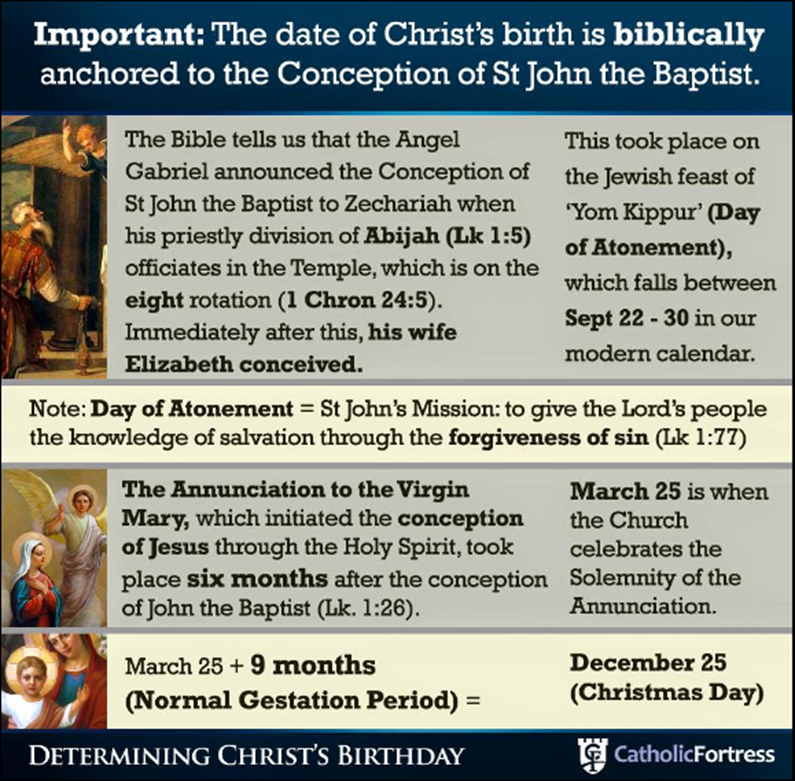
Priestly Courses: We know that Zechariah, the father of John the Baptist, was a priest and was executing his priestly office when told that his wife, Elizabeth, would conceive a son (Lk. 1:5, 9). John was conceived six months before our Lord (Lk. 1:24, 26, 36). If it can be determined when John was conceived, it can be identified when Jesus was born some fifteen months later. There were twenty-four courses of priests (I Chron. 24:18). Zechariah was a member of the course of Abijah, the eighth course (Lk. 1:5; I Chron. 24:10). If it is assumed that the courses began their ministration in the spring on Nisan 1, the course of Abijah would have been serving the week of Jyar 20-26 (the eight weeks are as follows: Nisan 1-7, 8-14, 15-21, 22-28, 29-5 Jyar, 6-12, 13-19, 20-26). This is sometimes extended a week based upon the assumption that the normal progression of the course was interrupted by Passover Nisan 14. If so, Zechariah would then have been serving the week of 27 Jyar – 4 Sivan. Working from this latter date, and assuming John was conceived the first week Zechariah returned home, a normal 38 week gestation would place John’s birth the week of Shebat 29- Adar 5. Jesus’ birth 6 months (26 weeks) later would thus fall on Elul 4-10. If it is then assumed that Nisan 1 answers to April 1, Elul would then translate into September 4-10, for it is the fifth month from Nisan. In this way, therefore, it is argued that Jesus was born in September. However, there are several errors and oversights in this approach that render it untenable.
First, postponing of the normal service of Abijah in the eighth week cannot be justified. Although the Mishna indicates all the courses served at the three great feasts of the year (Passover, Pentecost, and Tabernacles) (Finegan, p. 133, § 241), there is no basis for assuming that the normal rotation of the courses was suspended, rather then merely supplemented. The extra work associated with the great feasts might require additional courses to serve, but the regular evening and morning sacrifices and other priestly duties still had to be made throughout the remainder of the week. Hence, we would expect this responsibility to fall to the course whose duty it was to minister that week. The better view therefore is that the course whose turn it was to serve received assistance of other courses, not that the normal rotation was entirely suspended. Second, there were twenty-four courses of priests, but about 51 1/2 weeks in the Jewish lunar year of 354 days (about 54 3/4 weeks in leap years of 384 days). Each course therefore served twice annually, plus such additional weeks as necessary to fill out the year (e.g., some courses served a third time). The model above assumes Zechariah was serving in the first weekly ministration and does not allow for the possibility he was serving six months later, which would place Jesus’ birth in March. Third, and most important, the best scholarship agrees that the priestly courses began their annual rotations in the fall on Tishri 1, not in the spring on Nisan 1 as proposed by the model above (Finegan, p. 134 § 243). It was the seventh month when the temple was dedicated by Solomon for which the courses were created in the first place, and the seventh month when the sacrifices resumed again under Ezra after the Babylonian captivity (I Kn. 8:2; Ezra 3:6). Hence, Tishri is the correct point for the annual rotation to begin, not Nisan. The most basic assumption underlying September birth model is therefore false. On the other hand, we have shown in our tables of priestly courses that, working from 1 Tishri and constructing the courses in twenty-four year cycles from A.D. 70 backward to 21 B.C., it is fully possible that John was conceived in the fall and born in June, placing Jesus’ birth six months later in December.
Rev. 12:1-5: Another method of placing Jesus’ birth in September was proposed by Ernest L. Martin in his book, The Star that Astonished the World (ASK Publications, 1996). Therein, Martin asserts that Rev. 12:1-5 provides an exact time for the birth of Christ, right down to the day and hour. Martin is able to do this by interpreting the woman as the constellation Virgo. He then urges that her being “clothed with the sun” signifies that the sun was midway in the constellation, thus clothing her. For Martin, the key is the moon beneath her feet, which he says could only happen within a 90 minute window one day in the year 3 BC. Thus, according to Martin, we have the precise means of dating Jesus’ birth:
“The Moon has to be positioned somewhere under that 7 degree arc to satisfy the description of Revelation 12. But the Moon also has to be in that exact location when the Sun is mid-bodied to Virgo. In the year 3 B.C.E., these two factors came to precise agreement for about an hour and a half, as observed from Palestine or Patmos, in the twilight period of September 11th The relationship began about 6:15 p.m. (sunset), and lasted until around 7:45 p.m. (moonset). This is the only day in the whole year that the astronomical phenomenon described in the twelfth chapter of Revelation could take place.”
Of course, at the critical moment that the moon is allegedly in position the sun has set, so it difficult to see how Martin can argue for the literalness of the vision. Moreover, the constellation Draco does not answer the description of the dragon in Revelation, nor for that matter does Virgo match the description of the woman (Virgo does not have a crown of twelve stars and Draco does not have seven heads and ten horns). Hence, Martin insists upon the literalness of the vision only when it suits him and not at all points. However, by far the most glaring discrepancy between Martin’s account and scripture is the year of Jesus’ birth. Luke is emphatic that Jesus was 29 going on 30 at his baptism in the fall of 15th of Tiberius (A.D. 29). This would place Jesus’ birth in 2 B.C. Thus, Martin’s interpretation of Rev. 12:1-5 is contradicted by God’s inspired word. (For a full refutation of Martin, click here).
The Biblical Case for the December 25th Birth of Christ
“We often hear it said that Jesus was not “really” born December 25th; that this date is a mere fiction, surreptitiously appropriated by church authorities in an attempt to off-set and Christianize the pagan solstice; that, in fact, Jesus was probably born in September, 6 or 7 B.C. However, such charges are relatively recent. For most of church history, December 25th was received as the actual date of Christ’s birth, handed down from earliest times. Questions regarding Christmas were first raised during the Reformation by Puritans and Scottish Presbyterians, who attempted to outlaw its celebration in England, Scotland the Colonies, and other places where they came into political power. The objections we hear today to Christmas are echoes of these ghosts from the past.
However, the evidence from scripture and sacred history supporting the December 25th, 2 B.C., birth of Christ is actually very substantial. In fact, as we shall see, not just the season but the very month, week, and day of Dec. 25th all freely emerge from the record, by straightforward chronological reconstruction from the gospels and other available sources. The evidence from scripture and sacred history may be summarized as follows:
1) The Presentment f the Christ-child and Chronology of Herod’s Final Illness
2) The Baptism, Wilderness Temptation, and First Disciples of Christ
3) The Priestly Courses and Nativity of John the Baptist
For more on this see: “Unto You Is Born This Day”
How December 25 Became Christmas – Biblical Archaeology Society
“There are two theories today: one extremely popular, the other less often heard outside scholarly circles (though far more ancient).
The most loudly touted theory about the origins of the Christmas date(s) is that it was borrowed from pagan celebrations. The Romans had their mid-winter Saturnalia festival in late December; barbarian peoples of northern and western Europe kept holidays at similar times. To top it off, in 274 C.E., the Roman emperor Aurelian established a feast of the birth of Sol Invictus (the Unconquered Sun), on December 25. Christmas, the argument goes, is really a spin-off from these pagan solar festivals. According to this theory, early Christians deliberately chose these dates to encourage the spread of Christmas and Christianity throughout the Roman world: If Christmas looked like a pagan holiday, more pagans would be open to both the holiday and the God whose birth it celebrated.
Despite its popularity today, this theory of Christmas’s origins has its problems. It is not found in any ancient Christian writings, for one thing. Christian authors of the time do note a connection between the solstice and Jesus’ birth: The church father Ambrose (c. 339–397), for example, described Christ as the true sun, who outshone the fallen gods of the old order. But early Christian writers never hint at any recent calendrical engineering; they clearly don’t think the date was chosen by the church. Rather they see the coincidence as a providential sign, as natural proof that God had selected Jesus over the false pagan gods.
It’s not until the 12th century that we find the first suggestion that Jesus’ birth celebration was deliberately set at the time of pagan feasts. A marginal note on a manuscript of the writings of the Syriac biblical commentator Dionysius bar-Salibi states that in ancient times the Christmas holiday was actually shifted from January 6 to December 25 so that it fell on the same date as the pagan Sol Invictus holiday. 5 In the 18th and 19th centuries, Bible scholars spurred on by the new study of comparative religions latched on to this idea.6 They claimed that because the early Christians didn’t know when Jesus was born, they simply assimilated the pagan solstice festival for their own purposes, claiming it as the time of the Messiah’s birth and celebrating it accordingly.
More recent studies have shown that many of the holiday’s modern trappings do reflect pagan customs borrowed much later, as Christianity expanded into northern and western Europe. The Christmas tree, for example, has been linked with late medieval druidic practices. This has only encouraged modern audiences to assume that the date, too, must be pagan.
There are problems with this popular theory, however, as many scholars recognize. Most significantly, the first mention of a date for Christmas (c. 200) and the earliest celebrations that we know about (c. 250–300) come in a period when Christians were not borrowing heavily from pagan traditions of such an obvious character.
Granted, Christian belief and practice were not formed in isolation. Many early elements of Christian worship—including eucharistic meals, meals honoring martyrs and much early Christian funerary art—would have been quite comprehensible to pagan observers. Yet, in the first few centuries C.E., the persecuted Christian minority was greatly concerned with distancing itself from the larger, public pagan religious observances, such as sacrifices, games and holidays. This was still true as late as the violent persecutions of the Christians conducted by the Roman emperor Diocletian between 303 and 312 C.E.
This would change only after Constantine converted to Christianity. From the mid-fourth century on, we do find Christians deliberately adapting and Christianizing pagan festivals. A famous proponent of this practice was Pope Gregory the Great, who, in a letter written in 601 C.E. to a Christian missionary in Britain, recommended that local pagan temples not be destroyed but be converted into churches, and that pagan festivals be celebrated as feasts of Christian martyrs. At this late point, Christmas may well have acquired some pagan trappings. But we don’t have evidence of Christians adopting pagan festivals in the third century, at which point dates for Christmas were established. Thus, it seems unlikely that the date was simply selected to correspond with pagan solar festivals.
The December 25 feast seems to have existed before 312—before Constantine and his conversion, at least. As we have seen, the Donatist Christians in North Africa seem to have known it from before that time. Furthermore, in the mid- to late fourth century, church leaders in the eastern Empire concerned themselves not with introducing a celebration of Jesus’ birthday, but with the addition of the December date to their traditional celebration on January 6.
There is another way to account for the origins of Christmas on December 25: Strange as it may seem, the key to dating Jesus’ birth may lie in the dating of Jesus’ death at Passover. This view was first suggested to the modern world by French scholar Louis Duchesne in the early 20th century and fully developed by American Thomas Talley in more recent years. But they were certainly not the first to note a connection between the traditional date of Jesus’ death and his birth.
Around 200 C.E. Tertullian of Carthage reported the calculation that the 14th of Nisan (the day of the crucifixion according to the Gospel of John) in the year Jesus diedc was equivalent to March 25 in the Roman (solar) calendar. March 25 is, of course, nine months before December 25; it was later recognized as the Feast of the Annunciation—the commemoration of Jesus’ conception.10 Thus, Jesus was believed to have been conceived and crucified on the same day of the year. Exactly nine months later, Jesus was born, on December 25.
This idea appears in an anonymous Christian treatise titled On Solstices and Equinoxes, which appears to come from fourth-century North Africa. The treatise states: “Therefore our Lord was conceived on the eighth of the kalends of April in the month of March [March 25], which is the day of the passion of the Lord and of his conception. For on that day he was conceived on the same he suffered.” Based on this, the treatise dates Jesus’ birth to the winter solstice.
Augustine, too, was familiar with this association. In On the Trinity (c. 399–419) he writes: “For he [Jesus] is believed to have been conceived on the 25th of March, upon which day also he suffered; so the womb of the Virgin, in which he was conceived, where no one of mortals was begotten, corresponds to the new grave in which he was buried, wherein was never man laid, neither before him nor since. But he was born, according to tradition, upon December the 25th.”
In the East, too, the dates of Jesus’ conception and death were linked. But instead of working from the 14th of Nisan in the Hebrew calendar, the easterners used the 14th of the first spring month (Artemisios) in their local Greek calendar—April 6 to us. April 6 is, of course, exactly nine months before January 6—the eastern date for Christmas. In the East, too, we have evidence that April was associated with Jesus’ conception and crucifixion. Bishop Epiphanius of Salamis writes that on April 6, “The lamb was shut up in the spotless womb of the holy virgin, he who took away and takes away in perpetual sacrifice the sins of the world.” Even today, the Armenian Church celebrates the Annunciation in early April (on the 7th, not the 6th) and Christmas on January 6.e
Thus, we have Christians in two parts of the world calculating Jesus’ birth on the basis that his death and conception took place on the same day (March 25 or April 6) and coming up with two close but different results (December 25 and January 6).
Connecting Jesus’ conception and death in this way will certainly seem odd to modern readers, but it reflects ancient and medieval understandings of the whole of salvation being bound up together. One of the most poignant expressions of this belief is found in Christian art. In numerous paintings of the angel’s Annunciation to Mary—the moment of Jesus’ conception—the baby Jesus is shown gliding down from heaven on or with a small cross (see photo above of detail from Master Bertram’s Annunciation scene); a visual reminder that the conception brings the promise of salvation through Jesus’ death.
The notion that creation and redemption should occur at the same time of year is also reflected in ancient Jewish tradition, recorded in the Talmud. The Babylonian Talmud preserves a dispute between two early-second-century C.E. rabbis who share this view, but disagree on the date: Rabbi Eliezer states: “In Nisan the world was created; in Nisan the Patriarchs were born; on Passover Isaac was born … and in Nisan they [our ancestors] will be redeemed in time to come.” (The other rabbi, Joshua, dates these same events to the following month, Tishri.) Thus, the dates of Christmas and Epiphany may well have resulted from Christian theological reflection on such chronologies: Jesus would have been conceived on the same date he died, and born nine months later.
In the end we are left with a question: How did December 25 become Christmas? We cannot be entirely sure. Elements of the festival that developed from the fourth century until modern times may well derive from pagan traditions. Yet the actual date might really derive more from Judaism—from Jesus’ death at Passover, and from the rabbinic notion that great things might be expected, again and again, at the same time of the year—than from paganism. Then again, in this notion of cycles and the return of God’s redemption, we may perhaps also be touching upon something that the pagan Romans who celebrated Sol Invictus, and many other peoples since, would have understood and claimed for their own, too.”
Christmas and Paganism Part 1: December 25th was not an Ancient Pagan Holiday
According to popular myth, Christmas was an ancient Pagan Holiday. As a result of the wide range of belief in this myth Christmas has become an extremely touchy and controversial subject not only between Atheists and Christians, but sadly even among fellow believers in Christ. It is common around Christmas to hear, read or see protests by Atheists calling for the removal of Christ from the holiday. But in the last few years opponents of Christmas from within Christianity have steadily risen beyond the historical minority cults/sects into mainstream Christianity. Some follow Atheists seeking to remove Christ from Christmas stating that “He was never in it in the first place” and others advocate that Christians shouldn’t observe this holiday at all.
>As the myth goes, Christmas is linked to ancient pagan celebrations either for the false deities Mithras, Sol Invictus or the winter solstice celebration of Saturnalia. Constantine and his emerging Roman Catholic Church installed one of these three celebrations in place as Jesus’ birth date to counteract paganism, therefore, historically December 25th had nothing to do with Christianity or Christ.
Historically no one related Christmas to paganism until the 12th century when a Syrian bishop named Jacob Bar-Salibi wrote this in reference to the nativity being moved from January 6th to December 25th:
It was a custom of the Pagans to celebrate on the same 25 December the birthday of the Sun, at which they kindled lights in token of festivity. In these solemnities and revelries the Christians also took part. Accordingly when the doctors of the Church perceived that the Christians had a leaning to this festival, they took counsel and resolved that the true Nativity should be solemnised on that day.[1]
Sadly, many people believe that ancient proof exists to support these claims, but, in reality, there are only two pagan sources linked to December 25th. Both, however, postdate the Christian sources. The first is from 274 A.D. when Emperor Aurelian installed the games of Sol. The problem with this source is that these games took place in August, October, and December; it was December 11th, though, not the 25th when these games took place.
This leaves us with the second source—the Chronography of 354 A.D.—which lists Natalis Invicti on December 25th, as the one, sole source:
…on December 25 “N·INVICTI·CM·XXX” = “Birthday of the unconquered, games ordered, thirty races”[2]
As mentioned above, the Chronography is predated by the early Church writings which point to December 25th as the birth date of Christ. Furthermore, Scholars do not know for certain if Natalis Invicti was or was not used in reference to Christ as some Roman Christians called Jesus the Unconquered as well.
Alexander Hislop and Hermann Usener are two of the most frequently cited sources for the December 25th-is-pagan myth. Many people simply trust their research, yet few realize that their research was not based on the actual ancient texts from the cults of Sol, Mithras, and the festival of Saturnalia. During the 18th and 19th centuries authors like Hislop and Usener assumed that Sol and Mithras were the same deity. Therefore, if the Chronography of 354 listed an observance for Sol on December 25th, these authors presumed that there must have been an observance for Mithras long before this time on December 25th. This idea would, of course, predate the early Church, but nothing has ever been found to prove this presumption correct.
Many modern encyclopedias, including the Encyclopedia Britannica, reflect this fact in their updated works:
This view presumes—as does the view associating the origin of Christmas on December 25 with pagan celebrations of the winter equinox—that Christians appropriated pagan names and holidays for their highest festivals. Given the determination with which Christians combated all forms of paganism, this appears a rather dubious presumption.[3]
If ancient texts using the December 25th date that predate Christianity do not exist, then the myth is proven to be fictitious. And that is exactly what Scholars have discovered today, but the popularity of the pagan Christmas myth still persists:
And indeed, ever since Usener’s studies of the feast of Christmas, the idea that December 25 was chosen as Christ’s birthday to counteract this important pagan festival has received wide acceptance.[4]
Fortunately that widespread acceptance is dying out among historians and scholarship as true historical data is being researched. Historians and Scholars now report that there isn’t any evidence in any original ancient text giving proof that December 25th is related to pagan festivals prior to the Chronography listed above:
The idea, particularly popular in the 18th and 19th centuries, that the date of 25 December for Christmas was selected in order to correspond with the Roman festival of Dies Natalis Solis Invicti, or “Birthday of the Unconquered Sun”, is challenged today.[5]
In point of fact, the evidence for a religious festival of any kind for the sun god on December 25 is not only meager but also exceptionally late, as it dates to the second half of the fourth century AD. In fact, it postdates our earliest evidence for the celebration of Christmas.[6]
In short, we have no firm evidence for a festival for Sol on December 25 until Julian wrote his hymn to Helios in December of 362.[7]
The contention that December 25th was an especially popular festival for Sol in late antiquity is equally unfounded.[8]
There is no evidence that a religious celebration of Sol on that day antedated the celebration of Christmas … The traditional feast days of Sol, as recorded in the early imperial fasti, were August 8 and/or August 9 , possibly August 28 , and December 11. These are all dates that are unrelated to any important celestial alignment of Sol, such as the solstices and equinoxes.[9]
This means that in the early fourth century, when Christmas was established by the church on December 25, anyone surveying the calendar of festivities in honour of Sol would identify the period from October 19 to October 22 as far more important than December 25, and the festival of August 28 as far older. If the aim was to “neutralize” the cult of Sol by “taking over” its major festival, December 25th seems the least likely choice.[10]
So Christians did not borrow the birth date of Sol or Mithras for Jesus, but instead Jesus’ birth date was literally stolen beginning with Aurelian in 274:
There is quite simply not one iota of explicit evidence for a major festival of Sol on December 25th prior to the establishment of Christmas, nor is there any circumstantial evidencethat there was likely to have been one.'[11]
The specific nature of the relation of Christmas to the then-contemporary feast of the birth of the sun, Natalis Solis Invicti, has up to now not been conclusively proven from extant texts, no matter how much some sort of causal relation might make perfect sense.[12]
Mithras
As far as Mithras (who is considered to be the same deity as Sol by some Scholars), history is absent of any connection to December 25th as well:
‘There is no evidence of any kind, not even a hint, from within the cult that this, or any other winter day, was important in the Mithraic calendar. Although three seasonal zodiacal signs are singled out in the iconography (Taurus, Leo and Scorpius), Aquarius, the sign that would correspond to notional mid-winter, being diametrically opposite to Leo, is never paid special attention. No Mithraic votive is dated 25th December(VIII A.D. KAL. IAN.). Nor is there any mention among the dipinti in the mithraeum of S. Prisca of Mithras’ birthday, though the first line of a zodiacal poem was written up on the wall, starting, quite unconventionally, with Aries, the first sign of Spring.[13]
Of the mystery cult of Sol Invictus Mithras we know little with certainty, and even if we leave aside the problem of the relationship between the Mithraic mysteries and the public cult of Sol, the notion that Mithraists celebrated December 25th in some fashion is a modern invention for which there is simply no evidence.[14]
Polemicists (and The Da Vinci Code) frequently state that 25 December was Mithras’ birthday, yet the renowned Mithraic scholar, Dr. Richard Gordon has corresponded to me that he is unaware of ‘a single date on a Mithraic inscription that falls in the winter, let alone late in December… We know nothing about the cycle of rituals in the cult…’ So, Christmas owes nothing to Mithraism.[15]
Even those who claim that December 25th was the birth date of Mithras or Sol admit there is no evidence to prove it:
That an important Mithraic feast also fell on December 25th can hardly be doubted, although there is no direct evidence of the fact.[16]
Both the sun and Christ were said to be born anew on December 25. But while the solar associations with the birth of Christ created powerful metaphors, the surviving evidence does not support such direct association with the Roman solar festivals. The earliest documentary evidence for the feast of Christmas makes no mention of the coincidence with the winter solstice. Thomas Talley has shown that, although the Emperor Aurelian’s dedication of a temple to the sun god in the Campus Martius probably took place on the ‘Birthday of the Invincible Sun’ on December 25, the cult of the sun in pagan Rome ironically did not celebrate the winter solstice nor any of the other quarter-tense days, as one might expect. The origins of Christmas, then, may not be expressly rooted in the Roman festival.[17]
Since Sol is linked to Mithras and Mithras to Tammuz of Ancient Babylon, those who claim that Christmas began in Babylon have nothing to prove their claims. Remember the only semi-pagan source using the December 25th date is from 354 A.D.
Saturnalia
Another pagan festival is often cited as the precursor to Christmas. This celebration of the winter solstice was called Saturnalia. However, history and Scholarship once again prove that Saturnalia was not celebrated on December 25th, thus debunking the myth that Christians adopted this pagan holiday as the birthday of Christ:
But all our surviving calendars that preserve the month of December mark 17 December as the date for the Saturnalia. In his discussion of the origins of the Saturnalia, Macrobius explains that the Saturnalia was often celebrated over three days from 14 to 17 December, since the former was the date given by the Numan calendar, the latter the date given by the Julian calendar after Caesar added two days to the month[18]
The Saturnalia occupy a position exactly between the Consualia of the 15th and the Opalia of the 19th of December.[19]
Saturnalia was not a festival held on December 25th. Not even in the latter times of this festival when it was moved to December 17th through the 23rd:
Eventually, the carnival expanded to a full seven days, December 17 to 23.[20]
Although Saturnalia was close to December 25th, it was never on the same day. Thus Christmas is a distinct date from that of Saturnalia.
With the given information, we learn that Christmas was not historically pagan. The problem arises from the fact that people have been so indoctrinated with this myth, they simply believe it as a widely known fact without researching the actual evidence themselves.
The cults of Sol or Mithras and the festival of Saturnalia did not historically have any association with December 25th. The myth has been based on nothing more than presumption which scholarship and historical information have proven to be fictitious. It is clear the early Church observed this date prior to the other pagan groups. If there is any resemblance between the two, one must have to admit that it is the pagans who copied the Christians not vice versa. As a result modern scholarship has proven Christmas to be an entirely Christian holiday.
Christmas and Paganism Part 3: The Winter Birth
According to modern Scholarship and historical evidence, Jesus’ birth date is not related to paganism. In the last two articles we showed that December 25th is an historically Christian date based on historical evidence and the ancient Hebrew theory of Integral Age. We debunked the myth that Christians hijacked the pagan festivals for Sol, Mithras, and Saturnalia as history and Scholarship proves that these festivals were either not celebrated on December 25th or at anytime in history prior to the 4th century A.D.
In this article, we will look into the remaining myths that Jesus could not have been born in the winter as Shepherds were not in the fields during that time of the year, and that He was born during Sukkot.
These myths have many problems. The first being that there is no proof for any of this in the Bible. It would be virtually impossible for Jesus to have been born during Sukkot since the Bible clearly says that Joseph and Mary were going to Bethlehem, not Jerusalem, for a census not a feast. Most feasts required a journey to the Temple, including Sukkot. The Bible never mentions any such journey. If this had been the case, it would seem that this information would have been mentioned.
Additionally, the Bible states that Joseph and Mary were seeking shelter at an inn. If, however, they had been traveling to the feast of Sukkot they would have made shelter in a booth, not sought shelter in an inn or manger. The inns would not have been full as others would have been making shelter in booths as well. Therefore, the idea that Jesus was born during a feast is based on pure speculation and zero Biblical evidence. Instead the Bible refutes this theory.
Added in support of this myth is the theory that shepherds would not have their flocks outside during the winter. This is extremely popular as well, although it was debunked at least forty years ago by Bible Scholars. It is in fact not uncommon for modern Israelis to keep livestock out in the fields during the winter. The truth is winter is rather mild in Israel with the average temperature around 50 degrees. Furthermore, we have proof in the Bible that shepherds did watch their flocks during the winter.
Genesis 31:38-40:
38 These twenty years have I been with you; your sheep, and your female goats have not failed in bearing; and I have not eaten the rams of your cattle. 39 That which was torn of beasts I did not bring to you; I made good of myself the thefts of the day, and the thefts of the night. 40 I was parched with heat by day, and chilled with frost by night, and my sleep departed from my eyes
Here we see that Jacob kept watch over livestock during the winter.
Further proof that this was a common practice in Israel during Jesus’ time can be found in the writings of Canon H.B Tristram (author and traveler) who visited Palestine frequently and is well known for his writings of Palestine and other Middle Eastern areas:
A little knoll of olive trees surrounding a group of ruins marks the traditional site of the angels’ appearance to the shepherds, Migdol Eder, ‘the tower of the flock’. But the place where the first ‘Gloria in excelsis’ was sung was probably further east, where the bare hills of the wilderness begin, and a large tract is claimed by the Bethlehemites as a common pasturage. Here the sheep would be too far off to be led into the town at night; and exposed to the attacks of wild beasts from the eastern ravines, where the wolf and the jackal still prowl, and where of old the yet more formidable lion and bear had their covert, they needed the shepherds’ watchful care during the winter and spring months, when alone pasturage is to be found on these bleak uplands. (Emphasis Added). Picturesque Palestine Vol 1 page 124
Migdol Eder is by local tradition the historical sight of the angels appearance to the shepherds. As stated in the excerpt above, this site is where the flocks were kept outside during the winter, because the winter rains allowed for the growth of grass, something that the flocks did not get to have during the Summer months. It makes sense that shepherds would allow Passover lambs out in the fields during the winter to fatten them on the green grass. It further makes sense that the lambs would be kept out at night, since the distance back to town would have been to far to bring them back and forth daily. Also note this excerpt from Messianic Jewish Scholars Alfred Edersheim:
That the Messiah was born in Bethlehem was a settled conviction. Equally so, was the belief that He was to be revealed from Migdal Eder, the tower of the flock.
This Migdal Eder, was not the watch tower for ordinary flocks which pastured on the barren sheep ground beyond Bethlehem, but lay close to town, on the road to Jerusalem. A passage in the Mishnah leads to the conclusion that the flocks which pastured there were destined for Temple Sacrifices, and accordingly that the Shepherds who watched over them were, no ordinary Shepherds. The latter were under the ban of Rabbinism on the account of their necessary isolation from religious ordinances, and their manner of life, which rendered strict legal observances unlikely, if not absolutely impossible.
The same Mishnic also leads us to infer, that these flocks lay out all year round , since they are spoken of as in the fields thirty days before Passover- that is, in the month of February, when in Palestine the average rainfall is nearly greatest. Thus Jewish traditions in some dim manner apprehended the first revelation of the Messiah from Migdal Eder, where Shepherds watched the Temple flocks all year round. Of the deep symbolic significance of such a coincidence, it is needless to speak –The Life and Times of Jesus the Messiah By Alfred Edersheim
Another bit of evidence for a winter birth is from a calendar found in the Dead Sea Scrolls which provides the sacerdotal courses for the Temple. Zacharias, the father of John the Baptist served during the course of Abijah. The Dead Sea Scrolls prove that this period was in September. John was conceived shortly after this course proving the traditional date of his birth, June 24th, was possible. Thus the annunciation date of March 25th for Mary’s pregnancy with Jesus would be accurate as well and place the birth in December:
Note on the date of Christmas, from 30 Days, an Italian publication:
December 25 is explained as the ‘Christianization’ of a pagan feast, ‘birth of the Sol Invictus’; or as the symmetrical balance, an aesthetic balance between the winter solstice (Dec. 21-22) and the spring equinox (March 23-24). But a discovery of recent years has shed definitive light on the date of the Lord’s birth. As long ago as 1958, the Israeli scholar Shemaryahu Talmon published an in-depth study on the calendar of the Qumran sect [Ed. based , in part, on Parchment Number 321 — 4 Q 321 — of the Qumran Dead Sea Scrolls], and he reconstructed without the shadow of doubt the order of the sacerdotal rota system for the temple of Jerusalem (1 Paralipomenon/Chronicles 24, 7-18) in New Testament times. Here the family of Abijah, of which Zechariah (Zachary) was a descendant, father of John the herald and forerunner (Luke 1, 5), was required to officiate twice a year, on the days 8-14 of the third month, and on the days 24-30 of the eighth month. This latter period fell at about the end of September. It is not without reason that the Byzantine calendar celebrated ‘John’s conception’ on September 23 and his birth nine months later, on June 24. The ‘six months’ after the Annunciation established as a liturgical feast on March 25, comes three months before the forerunner’s birth, prelude to the nine months in December: December 25 is a date of history.
While the quote above is Roman Catholic in origin, it’s irrelevant as the study of the calendar was conducted by an Israeli Scholar, Shemaryahu Talmon. This time frame is supported by the Infancy Gospel of James (136 A.D.) which states that Zacharias served during the Day of Atonement and John was conceived just after this period. Further research by Josef Heinrich Friedlieb established that the first priestly course of Jojarib would have been on duty during the destruction of Jerusalem on the ninth day of the month of Av. Thus the course of Jojarib was serving during the second week of Av and the course of Abijah would have been during the second week of the month of Tishri or the week of the Day of Atonement.
John Chrysostom, although writing after the time of Constantine, wrote of the temple roster and the birth date of Jesus, which by Chrysostom’s calculations was in December:
His third argument follows the approach of the De solstitiis in using the Lucan chronology and the assumption that Zacharia was High Priest during the feast of Tabernacles in the year John the Baptist was conceived. Chrysostom counts off the months of Elizabeth’s pregnancy, and dates Mary’s conception from the sixth month of Elizabeth’s, Xanthikos on the Macedonian calendar, then counts off another nine months to arrive at the birthdate of Christ. -Sunsan K Roll {2} , ‘Toward the Origins of Christmas’, pp. 100-101 (1995).
Conclusion
While no one can say for certain when Jesus was born. The evidence of the early Church, the Integral Age theory of ancient Judaism, the Temple Roster of the Dead Sea Scrolls and the timing of the birth of John the Baptist all point to a winter birth. Coupled against this evidence, there is absolutely nothing that proves the theory that Jesus was born during Sukkot. This theory is based on nothing more than speculation by those who seek to persecute the probable true date of our Savior’s birth on December 25th.
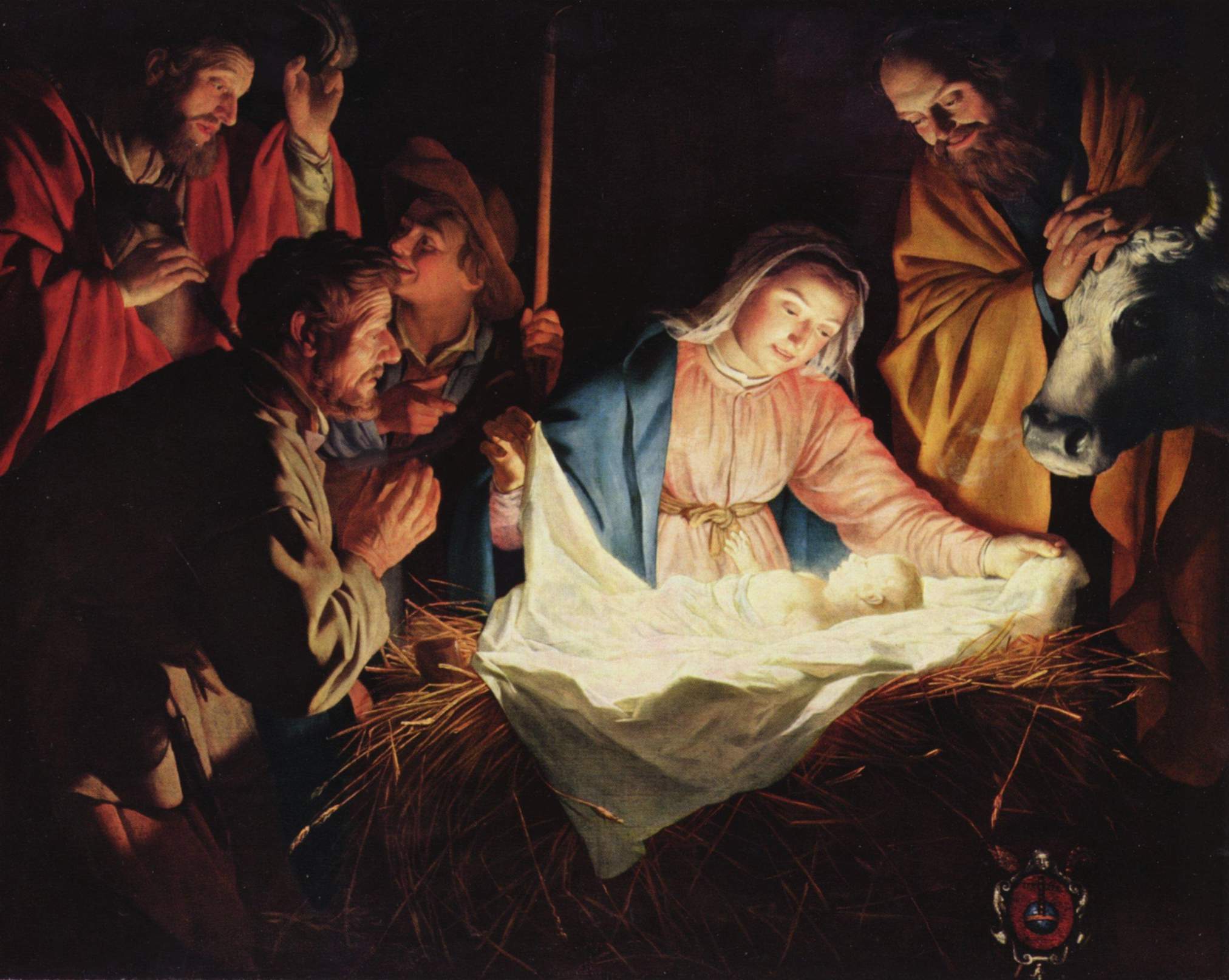
Christmas is a holiday which reminds mankind of the birth of our Savior and displays the “little guy in the Eye” imagery to the world as the world remembers Christ as an infant. The English word ‘baby’ comes from the Hebrew בבה ‘baba’ which means the pupil, the apple of one’s eyes. Interestingly, the English word hug (as in holding a baby in your arms) traces back to the Hebrew word חג ‘chag’ which is translated as feast/holiday but literally means to encircle as in the embrace of two people in a hug.
When we hold our children in our arms at the bosom, it is the perfect distance to see our faces in their pupils. This is the relationship our Heavenly Father desires to have with us (Psalm 17:8; Zechariah 2:8; Psalm 27:8). God associates redeeming His people from Egypt as gathering them under the shadow of His Wings where they appeared as the “little guy in His Eye” (Deuteronomy 32:9-11). The Egyptian redemption was a type/shadow of the redemption of mankind through Christ which was proclaimed at His birth (Luke 1:69-75; 2:10-11, 25-32).
Psalm 17:7-8 also links the salvation that comes through God’s Right Hand (Christ – Isaiah 63:5-8; 52:10; 53:1; Psalm 44:3; 98:1-3; 118:14-16) to this state of being a little guy in His Eye (Psalm 17:7-8).
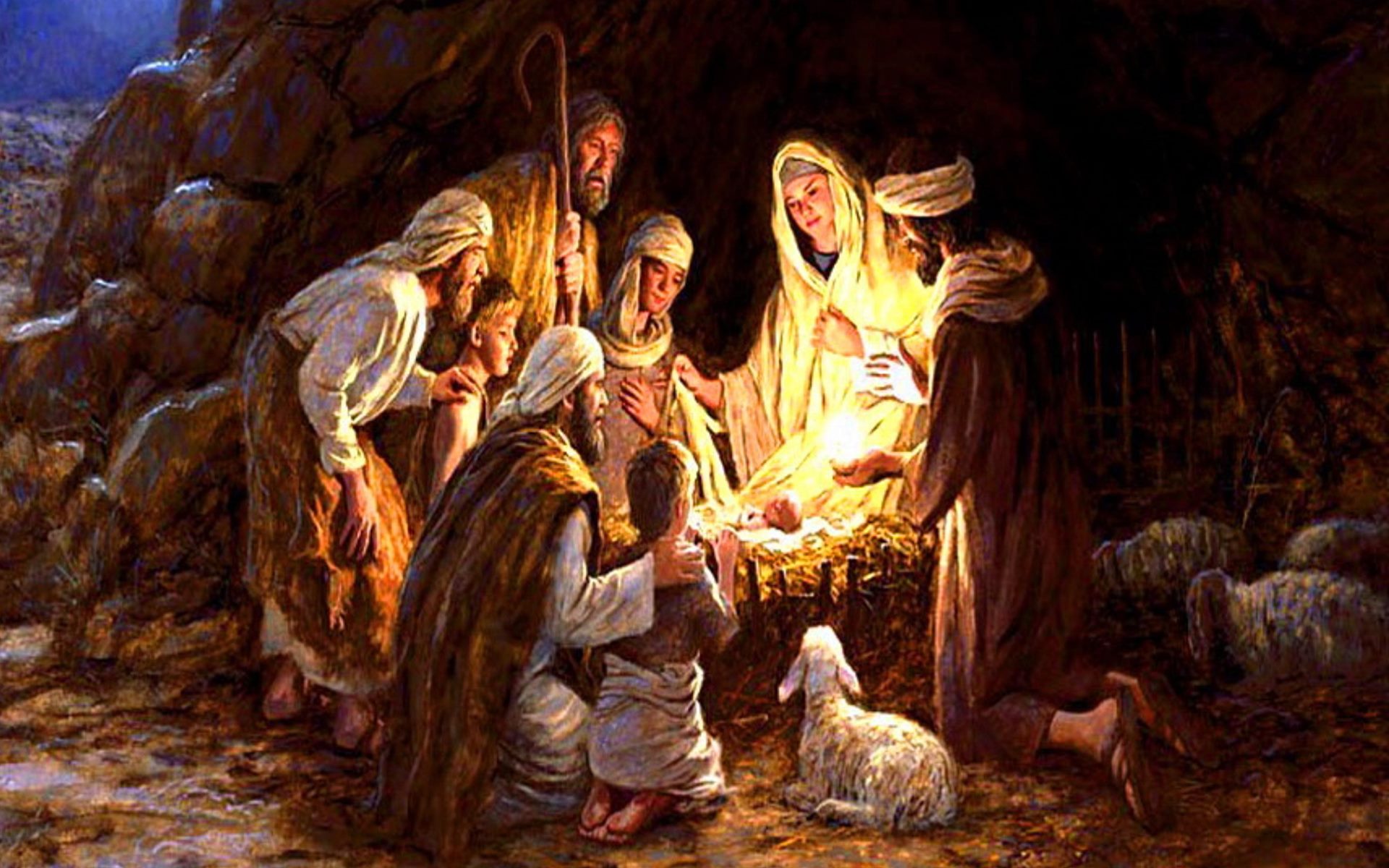
Christmas celebrates the birth of the Lord and recalls the shepherds and wise men who came to seek His face as well as the imagery of the infant Christ being held in the arms of His parents. They came to seek the face of the Lord their Savior which we are to do as well (1 Chronicles 16:11; John 6:40; Hebrews 12:2).
Joh 6:40 And this is the will of him that sent me, that every one which seeth the Son, and believeth on him, may have everlasting life: and I will raise him up at the last day.
The imagery of the infant Christ in the arms of His parents reminds us of the love we feel for our children when we hold them in our arms. It is a taste of the love of God that He desires us to walk in.
Seeking the Face of God (Jesus) leads us to love as He does (John 15:12). This is the essence of being a “little guy in the Eye”. Love. Walking in close relationship with God who is love (1 John 4:8) and extending that love to our fellow man (1 John 4:12). Its not about religion or doctrine, its about relationship with the Most High. Each one of us must work out our own salvation with fear and trembling as God works through us according to His good pleasure (Philippians 2:12-13). If we keep focused on Him and not on religion He will be able to transform us from glory to glory (2 Corinthians 3:18) until we are formed into the image of His Son (Romans 8:29).
The Holy Scriptures speak of the Word of God being the apple of our eye (Proverbs 7:2). When we look into the “eyes of God” we see ourselves, when He looks into our eyes He sees the Word, Himself. The ultimate goal of walking with God is that at the end of our journey we will look into His eyes and see the Word as well, His image being formed in and through us. To accomplish this, our eyes should be on Jesus, the Word made flesh (John 1:1)…the Author and Finisher of our faith (Hebrews 12:2).Heb 12:2 Looking {ἀφοράω ‘aphoraō’ – fix eyes upon} unto Jesus the author and finisher of our faith; who for the joy that was set before him endured the cross, despising the shame, and is set down at the right hand of the throne of God.
Scripture speaks of Jesus as the “Face” of God, His Image (Psalm 44:3; 42:5; Hebrews 1:1-3; John 14:7-9; 2 Corinthians 4:4-6; Colossians 1:12-20; John 17:21-23). To be a little guy in the Eye of God is to look unto Jesus.
God loves us (John 3:16) and wants us to reciprocate that love to Him and to our fellow man (Matthew 22:37-40). Its very simple (2 Corinthians 11:3), yet impossible to realize in our carnal flesh (Romans 7:18). As a result, we must rely completely and totally on faith in Jesus Christ (Luke 14:26, 33; Philippians 3:7-8). Each person must make the choice to come to Him in sincerity/simplicity of heart (2 Corinthians 11:3; 2 Corinthians 1:12) with complete faith/reliance in Him, forsaking our knowledge, power and positions in life. To be a little guy/little girl in the Eye of God, one must be converted as a child (Matthew 18:3), likened to a babe in the bosom of their parents.
Eph 5:1 Be ye therefore followers of God, as dear children;
Eph 5:2 And walk in love, as Christ also hath loved us, and hath given himself for us an offering and a sacrifice to God for a sweetsmelling savour.
Christmas Trees & the Bible
In the previous article it was displayed that applying Jeremiah chapter 10 to Christmas trees is not sound Bible interpretation. Does the Bible speak of or allude to Christmas trees in any other portions of the text? I believe the answer is yes.
Isaiah 55:13 speaks of evergreen trees as an everlasting sign of God’s name. Isaiah declares that instead of the curse/death (tree of knowledge) there will be blessing & life (tree of life). This is the story of the Christmas tree which came forth from the Paradise plays depicting Jesus Christ’s victory over the tree of knowledge (sin & death) through the cross (tree of life). The cross/Christmas tree reveals God’s name/character of love revealed through the life of Christ.
The Hebrew word for name is שם ‘shem’ which literally means one’s breathe or character. What is the character of the Almighty? Love (1 John 4:8). The Hebrew word for love is אהב ‘ahav’ which is consists of the letters אב ‘av’ which means father and the middle letter ה ‘heh’ which has the meaning of revelation. The Father revealed. In ancient Hebrew, the letter ה ‘heh’ was depicted as a man with outstretched arms, like unto Messiah on the cross. How was the love of the Father revealed? Through the giving of His only begotten Son on the cross as an atonement for the sins of mankind (John 3:16).
The book of Revelation speaks of God’s name in the forehead of believers (Revelation 14:1; 22:4) which can be linked to Ezekiel 9:4 which speaks of a mark (תו ‘tav’ – which was displayed in ancient times as a cross) being put on the foreheads of true believers. What is the symbol for Christ? An X (a cross), for the letter Χ ‘Chi,’ the first letter in Χριστός ‘Christos.’ We see this in Xmas as an abbreviation of Christmas.
Isaiah chapter 60, connects this imagery with the wise men who came to worship the newborn King. Hosea 14:5-8; Song of Songs 5:18 speak of Christ in evergreen imagery and Messiah is spoken of as the BRANCH in Isaiah 4:2; Jeremiah 23:5, 33:15; Zechariah 6:12. The promise of the Branch coming to defeat the enemy is linked to the time of winter. Evergreens are conspicuous during the winter due to deciduous trees casting forth their leaves and as a result portray life amidst death. The Promised Seed/Branch portrays this same imagery (1 John 3:5,8; Colossians 2:15; Hebrews 2:14) and as a result, evergreen trees have become representatives of the BRANCH, the One who would bring victory over death.
The temple, which is a picture of Messiah (John 2:21), was also built from cedars of Lebanon (1Kings 5:5-6; Zechariah 11:1). The appearance of Christ is likened unto Lebanon which is the land of the evergreen (Song of Songs 5:15). The ‘smell’ of Christ is linked to the Temple which was built from cedars and the smell linked thereto (Psalm 45:7 – Numbers 24:6).
Isa 55:13 Instead of the thorn shall come up the fir tree, and instead of the brier shall come up the myrtle tree: and it shall be to the LORD for a name, for an everlasting sign {אות ‘oht’} that shall not be cut off.
The evergreen is a sign, just as the Virgin birth.
Isa 7:14 Therefore the Lord himself shall give you a sign {אות ‘oht’}; Behold, a virgin shall conceive, and bear a son, and shall call his name Immanuel.
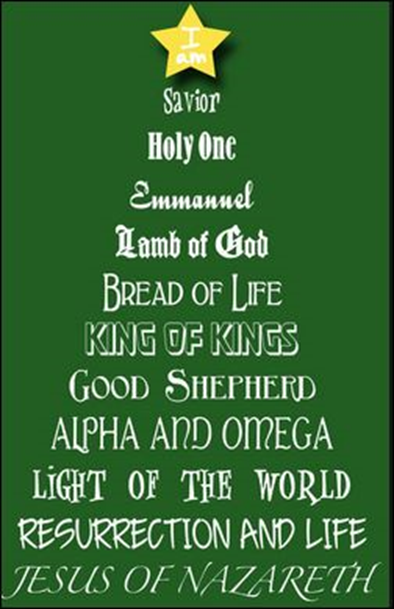
Isa 55:13 Instead of the thorn shall come up the fir tree, and instead of the brier shall come up the myrtle tree: and it shall be to the LORD for a name, for an everlasting sign that shall not be cut off.
Isaiah 55:13 is a part of a prophecy of the coming of the Messiah. Advent is the name for the Christmas season and literally means the “coming” of Christ.
Isa 55:1 Ho, every one that thirsteth, come ye to the waters, and he that hath no money; come ye, buy, and eat; yea, come, buy wine and milk without money and without price.
Isa 55:2 Wherefore do ye spend money for that which is not bread? and your labour for that which satisfieth not? hearken diligently unto me, and eat ye that which is good, and let your soul delight itself in fatness.
Isa 55:3 Incline your ear, and come unto me: hear, and your soul shall live; and I will make an everlasting covenant with you, even the sure mercies of David.
Isa 55:4 Behold, I have given him for a witness to the people, a leader and commander to the people.
Isa 55:5 Behold, thou shalt call a nation that thou knowest not, and nations that knew not thee shall run unto thee because of the LORD thy God, and for the Holy One of Israel; for he hath glorified thee.
Isa 55:6 Seek ye the LORD while he may be found, call ye upon him while he is near:
Isa 55:7 Let the wicked forsake his way, and the unrighteous man his thoughts: and let him return unto the LORD, and he will have mercy upon him; and to our God, for he will abundantly pardon.
Isa 55:8 For my thoughts are not your thoughts, neither are your ways my ways, saith the LORD.
Isa 55:9 For as the heavens are higher than the earth, so are my ways higher than your ways, and my thoughts than your thoughts.
Isa 55:10 For as the rain cometh down, and the snow from heaven, and returneth not thither, but watereth the earth, and maketh it bring forth and bud, that it may give seed to the sower, and bread to the eater:
Isa 55:11 So shall my word be that goeth forth out of my mouth: it shall not return unto me void, but it shall accomplish that which I please, and it shall prosper in the thing whereto I sent it.
Isa 55:12 For ye shall go out with joy, and be led forth with peace: the mountains and the hills shall break forth before you into singing, and all the trees of the field shall clap their hands.
Isa 55:13 Instead of the thorn shall come up the fir tree, and instead of the brier shall come up the myrtle tree: and it shall be to the LORD for a name, for an everlasting sign that shall not be cut off. {The fir and myrtle are both evergreen}
The Hebrew word for fir tree is ברוש ‘berosh’ which comes from the root בר ‘bar’ which is the Hebrew word for ‘my son’ (Psalm 2:12).
Hos 14:8 Ephraim shall say, What have I to do any more with idols? I have heard him, and observed him: I am like a green fir tree {ברוש ‘berosh’}. From me is thy fruit found.
The word here for green is רען ‘ra`an’ which means a green flourishing field. רען ‘ra’an’ comes from the root רע ‘ra’ which means shepherd, as one who leads his flock to these green pastures. The link to Messiah here is obvious (John 10:11).
The temple was built from cedars of Lebanon (1Kings 5:5-6; Zechariah 11:1) which is a picture of Messiah (John 2:21). Christ is likened unto Lebanon which is the land of the evergreen.
Son 5:15 His legs are as pillars of marble, set upon sockets of fine gold: his countenance (מראה ‘mareh’ – appearance) is as Lebanon (white), excellent (בחר ‘bachar’ – chosen) as the cedars.
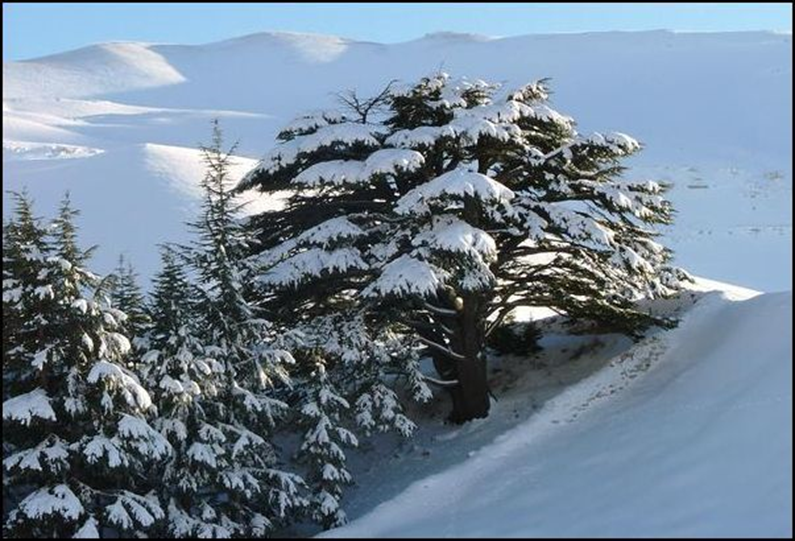
It is interesting to note that the smell of the garments of Messiah are linked to the smell of the Temple which was built from cedars and the smell linked thereto (Psalm 45:7 – Numbers 24:6).
Hos 14:5 I will be as the dew to Israel; he shall blossom as the lily and cast out his roots like Lebanon.
Hos 14:6 His branches shall go out, and his beauty shall be like the olive tree, and his scent as Lebanon to him.
Son 4:11 Your lips, My spouse, drip like the honeycomb; honey and milk are under your tongue. And the scent of your garments is like the scent of Lebanon.
John Gill commentary
such are Christ’s robe of righteousness, and garments of salvation, which are said to “smell of myrrh, aloes, and cassia”; with which the saints being arrayed, the smell of their raiment is as “the smell of a field the Lord has blessed”, and so like the smell of Lebanon, a mountain abounding with odoriferous trees and plants; see Psa_45:8.

Isaiah 55:13 speaks of the fir tree as an everlasting sign of God’s name. Isaiah chapter 60, connects this imagery with the wise men who came to worship the newborn King.
Isa 60:1 Arise {קום ‘qum’}, shine; for thy light is come, and the glory of the LORD is risen upon thee.
Isa 60:2 For, behold, the darkness shall cover the earth, and gross darkness the people: but the LORD shall arise upon thee, and his glory shall be seen upon thee.
Isa 60:3 And the Gentiles shall come to thy light, and kings to the brightness of thy rising.
Isa 60:4 Lift up thine eyes round about, and see: all they gather themselves together, they come to thee: thy sons shall come from far, and thy daughters shall be nursed at thy side.
Isa 60:5 Then thou shalt see, and flow together, and thine heart shall fear, and be enlarged; because the abundance of the sea shall be converted unto thee, the forces of the Gentiles shall come unto thee.
Isa 60:6 The multitude of camels shall cover thee, the dromedaries of Midian and Ephah; all they from Sheba shall come: they shall bring gold and incense; and they shall shew forth the praises of the LORD.
Isa 60:7 All the flocks of Kedar shall be gathered together unto thee, the rams of Nebaioth shall minister unto thee: they shall come up with acceptance on mine altar, and I will glorify the house of my glory.
Isa 60:8 Who are these that fly as a cloud, and as the doves to their windows?
Isa 60:9 Surely the isles shall wait for me, and the ships of Tarshish first, to bring thy sons from far, their silver and their gold with them, unto the name of the LORD thy God, and to the Holy One of Israel, because he hath glorified thee.
Isa 60:13 The glory of Lebanon shall come unto thee, the fir tree, the pine tree, and the box together, to beautify the place of my sanctuary; and I will make the place of my feet glorious.
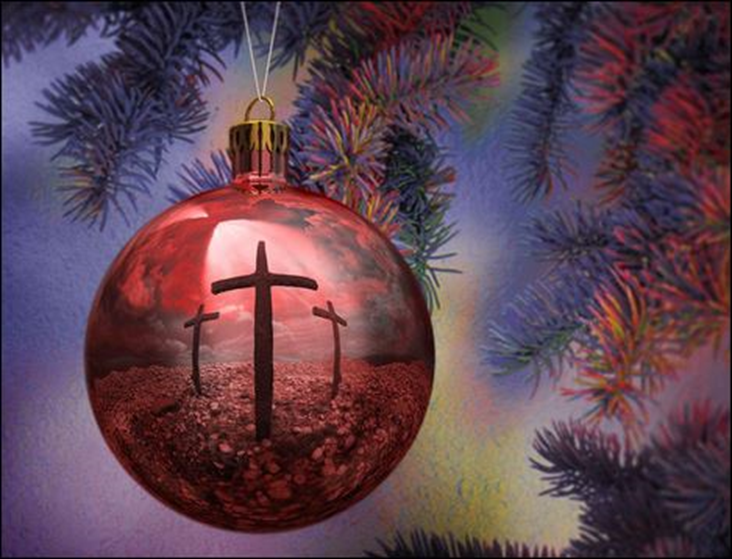
The origin of the Christmas tree traces back to the Paradise plays of the middle ages which centered around the tree of knowledge of good and evil in which the first Adam brought death to the world but victory over sin and death came on another tree, where the Last Adam, Jesus Christ brought everlasting life on the cross.
Hence, the Christmas tree is a representation of the cross. Isaiah 55:13 speaks of evergreens being a sign of God’s name. The cross reveals the name of God.
The Hebrew word for name is שם ‘shem’ which literally means one’s breathe or character. What is the character of the Almighty? Love (1 John 4:8).

The Hebrew word for love is אהב ‘ahav’ which is consists of the letters אב ‘av’ which means father and the middle letter ה ‘heh’ which has the meaning of revelation. The Father revealed. In ancient Hebrew, the letter ה ‘heh’ was depicted as a man with outstretched arms, like unto Messiah on the cross. How was the love of the Father revealed? Through the giving of His only begotten Son on the cross as an atonement for the sins of mankind (John 3:16).
The book of Revelation speaks of God’s name in the forehead of believers (Revelation 14:1; 22:4) which can be linked to Ezekiel 9:4 which speaks of a mark (תו ‘tav’ – which was displayed in ancient times as a cross) being put on the foreheads of true believers. What is the symbol for Christ? An X (a cross), for the letter Χ ‘Chi,’ the first letter in Χριστός ‘Christos.’ We see this in Xmas as an abbreviation of Christmas.

The Scriptures associate Messiah with the smell of the evergreens of Lebanon (Hosea 14:6; Song of Songs 5:15).
Hos 14:6 His branches shall spread, and his beauty shall be as the olive tree, and his smell as Lebanon.
Son 5:15 His legs are as pillars of marble, set upon sockets of fine gold: his countenance is as Lebanon, excellent as the cedars.
In Hosea 14:6 this association with the evergreen tree likens His beauty to the olive tree which links to the menorah as olives were used to make the oil for the light (Exodus 25:6). The prophet Zechariah further displays this imagery (Zechariah 4:11-14).
The word Christmas comes from the Old English word ‘Cristes mæsse’ which means “Christ’s Mass”. Mass comes from the Latin word ‘missa’ which means to “send abroad” as in the message of a missionary with the Gospel which makes Jesus known to the world. Believers are said to “make known the knowledge of Him” as a “sweet smell”. The Christmas tree displays this Gospel message and “sweet smell” in concrete form.
2Co 2:14 But thanks be to God, the One always leading us in triumph in Christ, and the One revealing through us the odor of the knowledge of Him in every place.
2Co 2:15 For we are a sweet smell to God because of Christ in those being saved, and in those being lost;
2Co 2:16 to the one, an odor of death unto death, and to the other, an odor of life unto life. And who is sufficient for these things?
2Co 2:17 For we are not as the many, peddling the Word of God; but as of sincerity, but as of God. We speak in Christ, in the sight of God.
The word Christ comes from the Hebrew word meaning to anoint with oil. This anointing is related to the Hebrew word רקח ‘raqach’ which means to rub an ointment bringing forth a perfume. The “smell” of Christmas with the evergreen tree in the home points to the love of God in Christ.
Eph 5:2 and walk in love, even as Christ also loved us and gave Himself for us, an offering and a sacrifice to God for an odor of a sweet smell.
The Hebrew word for name is שם ‘shem’ which literally means the “breath” or “aroma” of a person, referring to the breath of man being his character, or what makes him what he is. The character of God is love, revealed in the work of Christ on the cross (John 3:16).

The Christmas tree is a representation of the ‘Light of the World’ which traces back to both the Tree of Life and the tree of knowledge and the serpent in the Garden of Eden (in Hebrew the word for serpent is נחש ‘nachash’ which means the shining one, ie. Lucifer the ‘light bringer’). Christ Jesus took upon Himself the ‘serpent on a tree’ imagery to destroy the works of the devil where His death could bring life to the world (John 3:14; Colossians 2:15; 1 John 3:8).
The Christmas tree is a great tool to preach the Gospel. Sin and death (darkness of winter) entered the world through a tree and sin and death was conquered on a tree (light). The Christmas tree points back to the tree of knowledge, as does the cross. Yet, in the cross the Messiah triumphed over His enemies, as the Tree of Life (Colossians 2:14-15).
Col 1:16 For by him were all things created, that are in heaven, and that are in earth, visible and invisible, whether they be thrones, or dominions, or principalities, or powers: all things were created by him, and for him:
The Christmas tree displays the victory of the Seed of the woman over the seed of the serpent prophesied in the beginning. The birth of Christ in winter is appropriate as the winter season pictures this ancient prophecy.
Winter in Hebrew is חרף ‘charaph’ which has the meaning of piercing, as in the piercing cold winds of this time of year. This word is linked to the promise in the Garden of the LORD to Eve that her Seed would defeat the serpent.
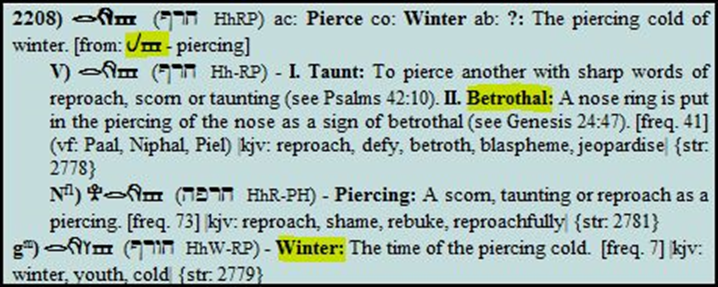
Psalm 89 links this prophecy with the Messiah, in specific verse 51.
Psa 89:19 Then You spoke in a vision to Your holy one; and You said, I have laid help on a mighty one. I have exalted a chosen one from the people.
Psa 89:20 I have found My servant David; I have anointed him with My holy oil.
Psa 89:22 An enemy will not exact against him; nor the son of iniquity afflict him.
Psa 89:23 And I will beat down his foes before him, and plague those hating him.
Psa 89:24 But My faithfulness and My mercy is with him; and his horn shall be exalted in My name.
Psa 89:25 And I will set his hand in the sea, and his right hand in the rivers.
Psa 89:26 He shall cry to Me, My Father, You are my God, and the rock of my salvation.
Psa 89:27 And I will make Him My first-born, higher than the kings of the earth.
Psa 89:28 I will keep My mercy for him forever, and My covenant shall hold fast with him.
Psa 89:29 And I have established his Seed forever, and His throne as the days of the heavens.
Psa 89:35 Once I have sworn by My holiness; I will not lie to David.
Psa 89:36 His Seed shall be forever, and his throne as the sun before Me.
Psa 89:37 Like the moon, it shall be forever; and a faithful witness in the sky. Selah.
Psa 89:50 Remember, O Lord, the reproach of Your servants, my bearing in my bosom the insults of the many peoples (This is in reference to Messiah carrying the sins of mankind Isaiah 53; Romans 15:3)
Psa 89:51 with which Your enemies have cursed (חרף ‘charaph’), O Jehovah; with which they have cursed (חרף ‘charaph’- pierced) the footsteps (עקב ‘aqav’ – heel) of Your anointed ( משיח ‘mashiyach’ – Messiah/Christ/Anointed).
The word translated ‘cursed’ above is from the Hebrew חרף ‘charaph’ which means to pierce, referring back to Genesis 3 and the piercing of the heel of the Seed of the woman.
The word חרף ‘charaph’ comes from the root word חל ‘chal’ which means a twisting in pain. This word is used in reference to the piercing of Messiah in Isaiah 53.
Isa 53:5 But He was wounded (חלל ‘chalal’) for our transgressions; He was bruised for our iniquities; the chastisement of our peace was upon Him; and with His wounds we ourselves are healed.
At the last supper Messiah offered the cup of the covenant which was offered to the bride and also spoke of His death (Matthew 26:68; 1 Corinthians 11:25-26). Amazingly, חרף ‘charaph’ ‘winter’, the time of darkness and death and a picture of the piercing of Messiah is also the word in Hebrew for betrothal.
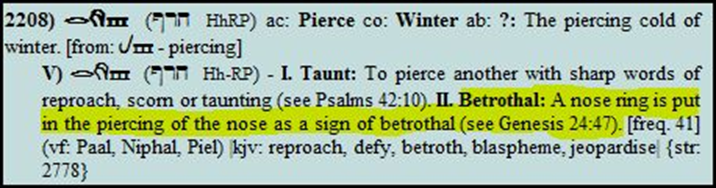
Interestingly, the English word ‘hibernate’ comes from חרף ‘charaph’ as well. Winter is a time where animals go into their dens for 3 months and sleep until spring. This is a picture of Messiah in the earth for 3 days and 3 nights where He resurrects during the Spring season. Further linking winter and hibernation is the Latin word for winter which is ‘hiberna’ from whence comes the French word for winter ‘hiver’ and Spanish ‘invierno.’
In English, the word winter traces back to the Celtic word ‘vindo’ which means white. This is linked to the white snow on the ground as snow and winter are related terms in many languages. It is interesting to note that the bride, the betrothed one, is dressed in white (Revelation 19:8). The English word ‘snow’ comes from the Hebrew word צנה ‘tsinah’ which means a piercing thorn translated in Proverbs 25:13 as cold. צנה ‘tsinah’ is also translated as buckler as seen in the following verses.
Psa 5:11 But let all who put their trust in You rejoice; let them shout for joy forever, because You cover them. And let those who love Your name be joyful in You.
Psa 5:12 For You, O Jehovah, will bless the righteous; You will surround him with favor, as with a shield.
His grace/favor is linked with His צנה ‘tsinah’. His grace is linked with salvation through Messiah (Ephesians 2:5-8).
Psa 35:2 Take hold of a shield and buckler (צנה ‘tsinah’), and arise as my help.
Psa 35:3 Draw out the spear (חנית ‘chaniyt’ from the same Hebrew root word as Hanukkah) and close ranks to meet my pursuers; say to my soul, I am your salvation {ישועה ‘yeshuah’ – source of the name Jesus}.
Psa 91:4 With His feathers He will cover you, and under His wings you shall seek refuge; His truth is a shield and buckler (צנה ‘tsinah’). His truth is linked with His צנה ‘tsinah.’ His truth is His Word.

The Temple (God’s House) was decorated with trees
Isa 60:13 The glory of Lebanon shall come unto thee, the fir tree, the pine tree, and the box together, to beautify {פּאר pa’ar’ – decorate} the place of my sanctuary; and I will make the place of my feet glorious.
Isa 61:3 To appoint unto them that mourn in Zion, to give unto them beauty for ashes, the oil of joy for mourning, the garment of praise for the spirit of heaviness; that they might be called trees of righteousness, the planting of the LORD, that he might be glorified.
The Hebrew word for “beautify” in Isaiah 60:13 is פּאר pa’ar’ which literally means to decorate. In Isaiah 61:10, פּאר pa’ar’ is translated as “ornament”. Strong’s Concordance defines in part this word as “going over the boughs”. In other words, decorating trees is the essence of this word.
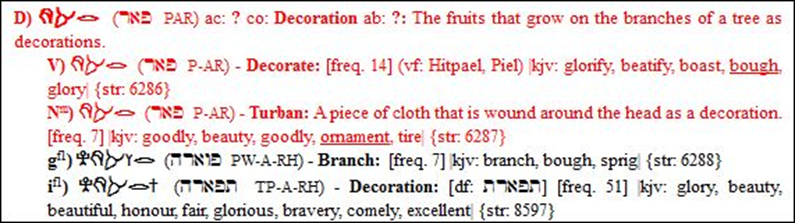
Strongs
H6286
פּאר
pâ’ar
paw-ar’
A primitive root; to gleam, that is, (causatively) embellish; figuratively to boast; also to explain (that is, make clear) oneself; denominatively from H6288, to shake a tree: – beautify, boast self, go over the boughs, glorify (self), glory, vaunt self.
Isaiah declares that instead of the curse/death (tree of knowledge) there will be blessing & life (tree of life). This is the story of the Christmas tree which came forth from the Paradise plays depicting Jesus Christ’s victory over the tree of knowledge (sin & death) through the cross (tree of life).
Isa 55:13 Instead of the thorn shall come up the fir tree, and instead of the brier shall come up the myrtle tree: and it shall be to the LORD for a name, for an everlasting sign that shall not be cut off.
Isa 61:3 To appoint unto them that mourn in Zion, to give unto them beauty for ashes, the oil of joy for mourning, the garment of praise for the spirit of heaviness; that they might be called trees of righteousness, the planting of the LORD, that he might be glorified.
Christ’s work on the cross fulfilled the sabbath which depicted man’s life in the Garden before sin entered the world. The Sabbath Psalm (Psalm 92) speaks of the imagery of righteous like unto evergreens planted in God’s house. It is interesting to note that in the Aramaic Targum’s, this Psalm is attributed to Adam. Recall that the true origin of the Christmas tree is the “Feast of Adam and Eve” on Christmas Eve in the Middle Ages.
Psa 92:12 The righteous shall flourish like the palm tree: he shall grow like a cedar in Lebanon.
Psa 92:13 Those that be planted in the house of the LORD shall flourish in the courts of our God.

The promise of the Branch coming to defeat the enemy is linked to the time of winter. Evergreens are conspicuous during the winter due to deciduous trees casting forth their leaves and as a result portray life amidst death. The Promised Seed/Branch portrays this same imagery (1 John 3:5,8; Colossians 2:15; Hebrews 2:14) and as a result, evergreen trees have become representatives of the BRANCH, the One who would bring victory over death.
The prophecy of Isaiah of the Son being given further connects this tree imagery. The Hebrew word for Counselor in Isaiah 9:6 is יעץ ‘yâ‛ats’ which comes from the root word עץ ‘ets’ which means tree.
Isa 9:6 For a Child is born; to us a Son is given; and the government is on His shoulder; and His name is called Wonderful, Counselor {יעץ ‘yâ‛ats’ from the root word עץ ‘ets’ which means tree}, The Mighty God, The Everlasting Father, The Prince of Peace.
The coming Messiah being spoken of as “The Branch” connects to the “Gospel in the Stars”.
The constellation of Virgo (the Virgin) is a picture of the prophecy of the virgin who shall give birth to Emmanuel (Isaiah 7:14; Matthew 1:23).
She holds in her hand an ear of corn, with 5 stars which represents the 5 mentions of THE BRANCH in the Scriptures (Isaiah 4:2; Jeremiah 23:5, 33:15; Zechariah 6:12).
The Branch = the Son
Psa 80:15 And the vineyard which thy right hand hath planted, and the branch (בן ‘ben’ = son) that thou madest strong for thyself.
Psa 80:17 Let thy hand be upon the man of thy right hand, upon the son of man whom thou madest strong for thyself.
The Branch is the LORD our Righteousness (Jeremiah 23:5; 33:15). In Zechariah 3:8, the Branch is Servant from whence iniquity removed in one day. This is speaking of the Servant of Isaiah 53. In Zechariah 6:12 the name of the BRANCH is Jesus who shall be a king & priest (Psalm 110).
Spica is the star in the hand of the constellation Virgo and corresponds to the Hebrew word צמח ‘tsemach’ (the BRANCH Isaiah 4:2; Jeremiah 23:5,6; Zechariah 3:8; 6:12). צמח ‘tsemach has the meaning of a sprouting plant. The Messiah is likened to a plant rising from the ground (Isaiah 11:1, 10; 53:1-2).
Zec 6:12 And speak to him, saying, So says Jehovah of Hosts, saying, Behold! The Man {Joshua – Hebrew origin of the name Jesus} whose name is THE BRANCH! And He shall spring up out of His place, and He shall build the temple of Jehovah.
The Branch is capitalized in most English versions of the Scriptures because it is a direct reference to the Messiah. The word used here is צמח ‘tsemach and is used 5 times in reference to the Messiah in Scripture.

Isa 4:2 In that day the Branch of Jehovah will be beautiful and glorious, and the fruit of the earth for pride and for glory for the survivors of Israel.
Jer 23:5 Behold, the days come, says Jehovah, that I will raise to David a righteous Branch, and a King shall reign and act wisely, and He shall do justice and righteousness in the earth.
Jer 23:6 In His days Judah shall be saved, and Israel shall dwell safely. And this is His name by which He shall be called, Jehovah our Righteousness.
Jer 33:15 In those days, and at that time, I will cause a Branch of Righteousness to grow up to David. And He shall do judgment and righteousness in the land.
Jer 33:16 In those days Judah shall be saved, and Jerusalem shall dwell in safety. And this is the name that shall be called on her: JEHOVAH OUR RIGHTEOUSNESS.
Zec 3:9 For, behold, I will bring forth My Servant, the BRANCH. For behold, the stone which I have given before Joshua, on the one stone are seven eyes. I will engrave its engraving, says Jehovah of Hosts, and I will remove the iniquity of that land in one day.
The New Testament further links the BRANCH (צמח ‘tsemach) to the heavenly bodies.
Luk 1:78 through the tender heart of mercy of our God, in which the Dayspring from on high will visit us,
Dayspring in this verse is translated from the Greek word ἀνατολη ‘anatolē’ which is the same word used for BRANCH/צמח ‘tsemach’ in the Septuagint.
Al Mureddin, another star in Virgo, has the meaning of ‘the branch that cometh.’
The first ‘decan’ constellation of Virgo is Coma which is a picture of a woman with a child on her lap. The name coma means the ‘desire of all nations’ (Haggai 2:7).
Albumazer, an Arabic astronomer of the 8th century, said that the Persians, Chaldeans and Egyptians said this was a young woman, which is the same as saying virgin in Hebrew (עלמה ‘alma’) nourishing an infant boy which has a Hebrew name ‘Ihesu” which in Greek is called Christos.
Now, going back to the “Counselor” (יעץ ‘yâ‛ats’) of Isaiah 9:6 we see a fascinating connection to this constellation of Virgo and the Branch she holds in her hands. Recall יעץ ‘yâ‛ats’ (counselor) comes from the root word עץ ‘ets’ which means tree. How does a “counselor” connect to a tree?
The Hebrew word for tree is עץ ‘ets’:
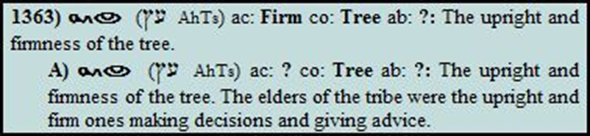
Elders, or those who give counsel, are likened to trees. The Hebrew word for elder is עצה ‘etsah’ which is also translated as tree.
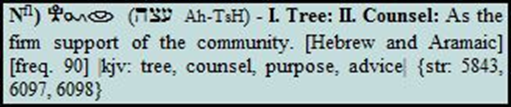
עצה ‘etsah’ is also translated as “spine” in modern Hebrew as the spine of the human body is like a tree. The English word spine comes from the Latin word ‘spica’ which is the name of the stars in the hand of Virgo. In the hand of the Virgin is a sheaf of wheat with 5 stars, 5 stars corresponding with the 5 mentions of “The Branch” in Scripture. Spica is the more modern name of this star, the old name was the Arabic “Al Zimach” which trace back to the Hebrew word צמח ‘tsemach,’ the word translated as “BRANCH.”
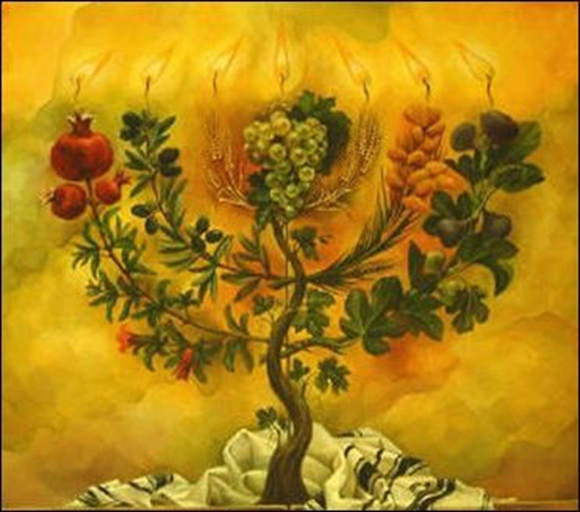
The main reason for this ‘Festival of Light’ is to proclaim the Light of the world. The Christmas tree is a representation of the “Light of the World” which traces back to the tree of life and tree of knowledge and the serpent, (in Hebrew the word for serpent is נחש ‘nachash’ which means the shining one, ie. Lucifer the ‘light bringer’). Messiah took upon Himself the ‘serpent on a tree’ imagery to destroy the works of the devil where His death could bring life to the world (John 3:14; Colossians 2:15; 1 John 3:8). The Christmas tree then is a picture of the cross, the tree of life.
Joh 3:14 And as Moses lifted up the serpent in the wilderness, even so must the Son of man be lifted up:
Joh 3:15 That whosoever believeth in him should not perish, but have eternal life.
Col 2:13 And you, being dead in your sins and the uncircumcision of your flesh, hath he quickened together with him, having forgiven you all trespasses;
Col 2:14 Blotting out the handwriting of ordinances that was against us, which was contrary to us, and took it out of the way, nailing it to his cross;
Col 2:15 And having spoiled principalities and powers, he made a shew of them openly, triumphing over them in it.
Col 2:16 Let no man therefore judge you in meat, or in drink, or in respect of an holyday, or of the new moon, or of the sabbath days:
Col 2:17 Which are a shadow of things to come; but the body is of Christ.
1Jn 3:8 He that committeth sin is of the devil; for the devil sinneth from the beginning. For this purpose the Son of God was manifested, that he might destroy the works of the devil.
In the Scriptures the Lord is likened to an evergreen tree which displays why this custom originated (Hosea 14:8).
Hos 14:8 Ephraim shall say, What have I to do any more with idols? I have heard him, and observed him: I am like a green fir tree. From me is thy fruit found.
The Hebrew word for fir tree is ברוש ‘berosh’ which comes from the root בר ‘bar’ which is the Hebrew word for ‘my son’ (Psalm 2:12).
Psa 2:12 Kiss the Son {בר ‘bar’}, lest he be angry, and ye perish from the way, when his wrath is kindled but a little. Blessed are all they that put their trust in him.
The word Christmas comes from the Old English word ‘Cristes mæsse’ which means “Christ’s Mass”. Mass comes from the Latin word ‘missa’ which means to “send abroad” as in the message of a missionary with the Gospel which makes Him known to the world. Believers are said to “make known the knowledge of Him” as a “sweet smell”.
2Co 2:14 But thanks be to God, the One always leading us in triumph in Christ, and the One revealing through us the odor of the knowledge of Him in every place.
2Co 2:15 For we are a sweet smell to God because of Christ in those being saved, and in those being lost;
2Co 2:16 to the one, an odor of death unto death, and to the other, an odor of life unto life. And who is sufficient for these things?
2Co 2:17 For we are not as the many, peddling the Word of God; but as of sincerity, but as of God. We speak in Christ, in the sight of God.
Christ comes from the Hebrew word meaning to anoint with oil. This anointing is related to the Hebrew word רקח ‘raqach’ which means to rub an ointment bringing forth a perfume. The “smell” of Christmas with the evergreen tree in the home points to the love of God in Christ.
Eph 5:2 and walk in love, even as Christ also loved us and gave Himself for us, an offering and a sacrifice to God for an odor of a sweet smell.
The Hebrew word for name is שם ‘shem’ which literally means the “breath” or “aroma” of a person, referring to the breath of man being is character, or what makes him what he is. The character of God is love, revealed in the work of Christ on the cross.
The Scriptures associate Messiah with the smell of the evergreens of Lebanon (Hosea 14:6; Song of Songs 5:15).
Hos 14:6 His branches shall spread, and his beauty shall be as the olive tree, and his smell as Lebanon.
Son 5:15 His legs are as pillars of marble, set upon sockets of fine gold: his countenance is as Lebanon, excellent as the cedars.
In Hosea 14:6 this association with the evergreen tree likens His beauty to the olive tree which further links to the menorah as olives were used to make the oil for the light (Exodus 25:6).
Exo 25:6 Oil for the light, spices for anointing oil, and for sweet incense,
Zec 4:2 And said unto me, What seest thou? And I said, I have looked, and behold a candlestick all of gold, with a bowl upon the top of it, and his seven lamps thereon, and seven pipes to the seven lamps, which are upon the top thereof:
Zec 4:3 And two olive trees by it, one upon the right side of the bowl, and the other upon the left side thereof.
Zec 4:11 Then answered I, and said unto him, What are these two olive trees upon the right side of the candlestick and upon the left side thereof?
Zec 4:12 And I answered again, and said unto him, What be these two olive branches which through the two golden pipes empty the golden oil out of themselves?
Zec 4:13 And he answered me and said, Knowest thou not what these be? And I said, No, my lord.
Zec 4:14 Then said he, These are the two anointed ones, that stand by the Lord of the whole earth.
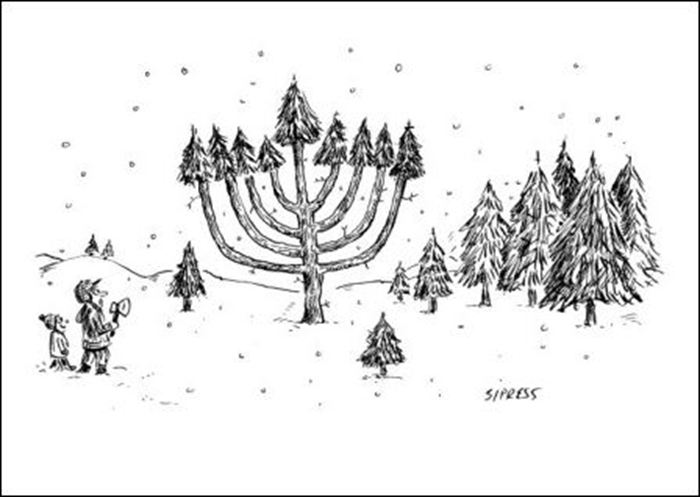
It is during winter that Hanukkah is celebrated in which the imagery of the menorah is prominent. The Christmas tree and its meaning connects back to the menorah as well. Both the Christmas tree and the Hanukkiah are proclamations of the Light of the world. As both symbols have identical meanings, it is important for believers not to judge others for their usage of these symbols (Romans 2:22).
Rom 2:22 Thou that sayest a man should not commit adultery, dost thou commit adultery? thou that abhorrest idols, dost thou commit sacrilege?
Those who have quit setting up Christmas trees in their homes should not be pointing the finger in judgment if they are celebrating Hanukkah and lighting Hanukkiahs.
Walking in the love of God dictates that we should be patient and understanding of our brethren who may not see or understand exactly was we do in certain aspects of our walks. The love of God also dictates that we should be praying for other believers to grow in the Lord and that their ignorance be pardoned/covered (Proverbs 10:12; 17:9; 1 Peter 4:1-2, 8).
Pro 10:12 Hatred stirreth up strifes: but love covereth all sins.
Pro 17:9 He that covereth a transgression seeketh love; but he that repeateth a matter separateth very friends.
1Pe 4:1 Forasmuch then as Christ hath suffered for us in the flesh, arm yourselves likewise with the same mind: for he that hath suffered in the flesh hath ceased from sin;
1Pe 4:2 That he no longer should live the rest of his time in the flesh to the lusts of men, but to the will of God.
1Pe 4:3 For the time past of our life may suffice us to have wrought the will of the Gentiles, when we walked in lasciviousness, lusts, excess of wine, revellings, banquetings, and abominable idolatries:
1Pe 4:4 Wherein they think it strange that ye run not with them to the same excess of riot, speaking evil of you:
1Pe 4:5 Who shall give account to him that is ready to judge the quick and the dead.
1Pe 4:6 For for this cause was the gospel preached also to them that are dead, that they might be judged according to men in the flesh, but live according to God in the spirit.
1Pe 4:7 But the end of all things is at hand: be ye therefore sober, and watch unto prayer.
1Pe 4:8 And above all things have fervent charity among yourselves: for charity shall cover the multitude of sins.
Christmas Temple House
The modern custom of celebrating Christmas displays a type of “reinactment” of worship in God’s Temple.
To begin, the Scriptures speak of the LORD’s house being decorated with trees, in particular evergreens.
Isa 60:13 The glory of Lebanon shall come unto thee, the fir tree, the pine tree, and the box together, to beautify the place of my sanctuary; and I will make the place of my feet glorious.
Isa 61:3 To appoint unto them that mourn in Zion, to give unto them beauty for ashes, the oil of joy for mourning, the garment of praise for the spirit of heaviness; that they might be called trees of righteousness, the planting of the LORD, that he might be glorified.
Psa 92:12 The righteous shall flourish like the palm tree: he shall grow like a cedar in Lebanon.
Psa 92:13 Those that be planted in the house of the LORD shall flourish in the courts of our God.
The Hebrew word for “beautify” in Isaiah 60:13 is פּאר pa’ar’ which literally means to decorate. In Isaiah 61:10, פּאר pa’ar’ is translated as “ornament”. Strong’s defines in part this word as “going over the boughs”.
In other words, decorating trees is the essence of this word.
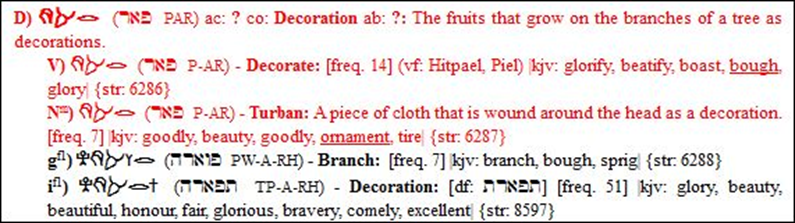
Strongs
H6286
פּאר
pâ’ar
paw-ar’
A primitive root; to gleam, that is, (causatively) embellish; figuratively to boast; also to explain (that is, make clear) oneself; denominatively from H6288, to shake a tree: – beautify, boast self, go over the boughs, glorify (self), glory, vaunt self.
The the etymology of the word ‘decorations,’ links back to the Temple as well.
To decorate something comes the Hebrew word עדה ‘edah’ which is translated as ‘ornaments’ in Exodus 33:5.
עדה ‘edah’ comes from the root עד ‘ed’ which means a witness as ‘ornaments’ were used to witness to the rank of an individual. עדה ‘edah’ is also the word used for the Tabernacle of Witness (Numbers 17:7-8).
Literally, עד ‘ed’ means to ‘see the door.’ Who is the door? Messiah (John 10:9).
Joh 10:9 I am the door: by me if any man enter in, he shall be saved, and shall go in and out, and find pasture.
עד ‘ed’ is the root of the word מועד ‘moed’ which means feast or holiday which is witness to others.
Going further is the word ‘bauble’ which is a small decoration used during the winter holidays. This word traces back to the Hebrew word בבה ‘babah’ which means the pupil of the eye. The pupil of the eye is associated with a close relationship with another, as in being the ‘apple of God’s Eye’ or the ‘little guy in His Eye.’
Christmas displays the concept of “little guy in the Eye” of God. Christmas – Little Guy in the Eye.
The articles in the Tabernacle/Temple are portrayed in shadow picture form in the customs ofChristmas. This time of year is when people seek to escape the cold and darkness by congregating at a tent/home.
When a priest would enter God’s tabernacle, he would enter a tent without natural light, the menorah would be the only source of light. This is pictured in the Christmas tree. The temple itself was made of evergreen trees (1Kings 5:5-6; Zechariah 11:1) and the smell therein is linked to the smell of evergreens (Psalm 92:12-13; Hosea 14:6; Song of Songs 4:11; Psalm 45:8), frankincense and myrrh (Song of Songs 4:6) which are used traditionally during Christmas as a remembrance of the gifts brought to Christ by the wise men (Matthew 2:11).
The priest wore bells round about the hem of his garment so when he walked in the tabernacle ‘sleigh bells’ would have been heard (Exodus 28:34; 39:26).
The smell of an open fire would have been continuous at the tabernacle/temple (Leviticus 6:12) which is linked to the traditional setting of the fireplace warming the home during Christmas.
Opposite the menorah was the table of shewbread. The etymology of Christmas is linked to the twelve loaves of bread which sat upon this table. Is it any surprise that “holydays of Christmas” last twelve days?
The word Christmas traces back to the Latin word ‘massa’ which is speaking of bread and the Latin word ‘missa’ which means to ‘send abroad.’
Jesus sent His Apostles with the Gospel message of this gift of salvation to the world. In Hebrew, the word for gospel is בסורה ‘besorah’ which has the meaning of a feast which is prepared when good news is brought. The ‘food’ that the Apostles were to take to the world is the message that Jesus is the bread of life, whose flesh brings life (John 4:32-34; 6:51).
The Hebrew word for apostle is שוליח ‘sholiach’ which comes from the word שילוח ‘shiluach’ which means to send something as in a gift. Jesus was the ‘Sent One’ or ‘Apostle’ of the Father (Hebrews 3:1; John 6:29; 7:29; 8:42; 17:3, 18-21) who came with the gift of salvation.
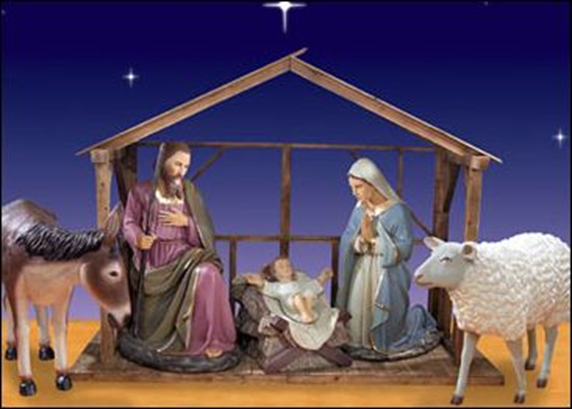
The word for a Christmas nativity display is ‘creche’ from the Old French word ‘cresche’ meaning a crib. This word traces back to the Hebrew word ערש ‘eres’ which means a crib or bed. In Numbers 15:20 it is speaking of a kneading trough which is interesting as Bethlehem, which means house of bread in Hebrew, is where Messiah, the Bread from Heaven (John 6) was born. עריסה ‘ariysah,’ which is a cognate of ערש ‘eres,’ means dough (Numbers 15:20-21) and is linked to firstfruits (Ezekiel 44:30).
Rom 8:29 because whom He foreknew, He also predestinated to be conformed to the image of His Son, for Him to be the First-born among many brothers.
1Co 15:20 But now Christ has been raised from the dead; He became the firstfruit of those having fallen asleep.
1Co 15:23 But each in his own order: Christ, the firstfruit; afterward those of Christ at His coming.
Rom 11:16 Now if the firstfruit is holy, so also the lump. And if the root is holy, so also the branches.
Notice the connection between the firstfruits, the lump (bread-dough) and the Olive of Israel (tree).
The English word ‘manger’ comes from the Old French word ‘mangeure’ which means ‘to eat,’ linking to Numbers 15:20 (kneading trough).
The Gospel being taken to the world by Apostles is likened unto taking the bread of life to the world. As mentioned before, the etymology of the word Christmas traces back to the Latin word ‘massa’ which is speaking of bread and the Latin word ‘missa’ which means to ‘send abroad.’ A missionary is one who is sent forth and comes from this word.
The word apostle comes from the Hebrew word שליח ‘sholiach’ which means the sent one. שלח ‘shalach’ also means to send as in a gift שילוח ‘shiluach’ by the hand of a messenger/apostle שוליח ‘sholiach.’ Jesus was the ‘Sent One’ or ‘Apostle’ of the Father (Hebrews 3:1; John 5:28; 6:29; 7:29; 8:42; 17:3, 18-21) who came with the gift of salvation.
Jesus would then send His Apostles with the message of this gift of salvation to the world. In Hebrew the word for gospel is בסורה ‘besorah’ which has the meaning of a feast which is prepared when good news is brought. The ‘food’ that the Apostles were to take to the world is the message that Jesus is the bread of life, whose flesh brings life (John 4:32-34; 6:51).
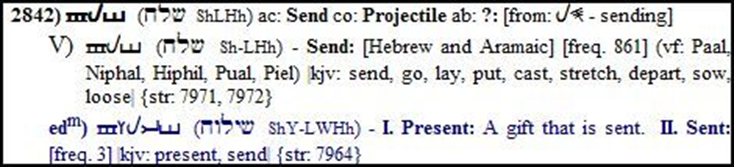
Who is THE Sent one/Apostle? Messiah (Hebrews 3:1; John 5:38; 6:29; 7:29; 8:42; 17:3, 18-21).
Eph 4:7 But to each one of us was given grace according to the measure of the gift of Christ.
Eph 4:8 Because of this, He says, “Having gone up on high, He led captivity captive,” and gave “gifts to men.” Psa. 68:18
The concept of the apostles bringing the gift of the message of the Gospel/Bread of Life is further seen in the word תנה ‘tanah’ which is translated as ‘rehearse’ in the English (Judges 5:10-11).
Joh 3:34 For the One whom God sent speaks the Words of God, for God does not give the Spirit by measure.
The link between gifts and eating is further seen in the Hebrew word ברה ‘barah’ which also traces back to the word for ‘my Son’ mentioned earlier: בר ‘bar.’ A related word is ברות ‘berot’ which means meat and ברית ‘briyt’ which means covenant.
Joh 6:48 I am the Bread of life.
Joh 6:49 Your fathers ate the manna in the wilderness and died.
Joh 6:50 This is the Bread coming down out of Heaven, that anyone may eat of it and not die.
Joh 6:51 I am the Living Bread that came down from Heaven. If anyone eats of this Bread, he will live forever. And indeed the bread which I will give is My flesh, which I will give for the life of the world.
Isa 42:6 I the LORD have called thee in righteousness, and will hold thine hand, and will keep thee, and give thee for a covenant of the people, for a light of the Gentiles;
Isa 49:8 Thus saith the LORD, In an acceptable time have I heard thee, and in a day of salvation have I helped thee: and I will preserve thee, and give thee for a covenant of the people, to establish the earth, to cause to inherit the desolate heritages;
Another word for give is הב ‘hav’ which is linked to the sacrifice of Messiah on the cross.
Joh 3:16 For God so loved the world that He gave His only begotten Son, that everyone believing into Him should not perish, but have everlasting life.
Joh 15:13 Greater love than this has no one, that anyone should lay down his soul for his friends.
The pictograph meaning of love:
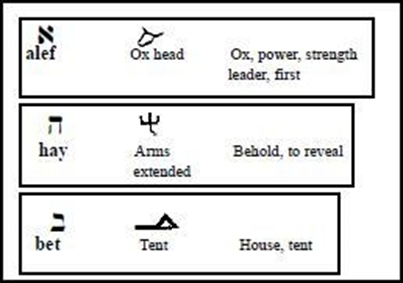
The first and last letters spell out the word for Father (אב ‘ab’) and the middle letter is a picture of a man with outstretched arms. The Love of the Father is revealed through the Messiah on the tree, gathering all mankind back to their Creator.
Further linking Messiah as the gift from the Father to mankind is the word נסאת ‘nasat’ which means a gift from the root נס which literally means a banner lifted up. Who is the Banner? Messiah. (John 3:14; 12:32; Isaiah 11:10-12)
Giving is linked with trees. The Hebrew word for giving counsel is יעץ ‘ya’ats.’
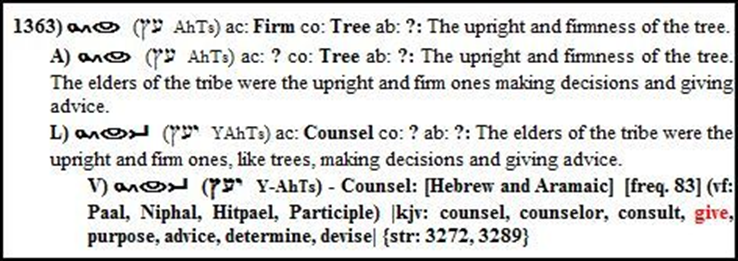
The English word ‘gift’ comes from the Old Norse word ‘gift/gipt’ meaning gift or good luck and is linked to the Germanic word ‘mitgift’ meaning dowry. In the tidbit on the winter, it is seen that betrothal is linked to to the winter and is associated with the crucifixion of Messiah which is the gift of the Father to mankind of redemption. The Old English word ‘gift’ also meant bride price or marriage gift. Isaac Mozeson traces the English word ‘gift’ back to the Indo European root ‘ghabh’ which means to give or receive and the Anglo-Saxon word ‘gifan’ all the way back to the Hebrew word הב which was described above in reference to the love of the Father revealed in giving His Son as a propitiation for our sins.
Giving gifts to children is said to be done because the Magi gave gifts to the baby Jesus when they arrived in Bethlehem. This does have some connection.
In Matthew 25:31-46 Messiah states that when we give to the ‘least’ of our brethren, we are giving it to Him. The Greek word for least is ἐλάχιστος ‘elachistos’ which can also be translated as small children. The Hebrew word קטן ‘qatan’ means the least, small one, or child (Genesis 44:12, 20).
The Babylon Connection? pg 65
The Jerusalem Temple included a molten sea “ten cubits from brim to brim, round in compass…under it was the similitude of oxen (2 Chronicles 4:2,3). Had this been featured in a temple at Babylon, instead, Hislop would have undoubtedly condemned this “round” molten sea as being pagan. And the oxen beneath it, what could they be but symbols of Isiris, the Egyptian Nimrod!”
Oxen and garlands are mentioned in connection with the pagan worship of Jupiter (Acts 14:13). A “garland” or “wreath” is round. Augustine tells about a pagan ceremony in which a wreath was placed on a phallic replica: “During the festival of Liber, this obscene member…was carried with great honor…and brouth to rest in its own place; on which unseemly member it was necessary that the most honorable matron should place a wreath in the presence of all the people.” Based upon such things, some have supposed every use of a wreath is wrong. They especially target a “Christmas wreath” as being evil! But an idolatrous use of a wreath and a wreath used as a decoration, are two different things! The proof is simple – and Biblical! The two pillars in front of the Temple of God each had a “wreath” (2 Chronicles 4:12, 13), and were also decorated with round pomegranates (1 Kings 7:20)! These things were not displeasing to God, for when the Temple was dedicated, He chose to fil it with such glory that the priests could not stand to minister! (2 Chronicles 5:14). He did not consider the round wreaths, round pomegranates, and round molten sea as symbols of Baal!”

In the Bible, wreath and bulb imagery was on pillars at the Temple.
2Ch 3:15 Also he made before the house two pillars of thirty and five cubits high, and the chapiter that was on the top of each of them was five cubits.
2Ch 3:16 And he made chains, as in the oracle, and put them on the heads of the pillars; and made an hundred pomegranates, and put them on the chains {שׁרשׁרה ‘sharsherâh’}
H8333
שׁרשׁרה
sharsherâh
shar-sher-aw’
From H8327 (compare H8331); a chain; (architecturally) probably a garland: – chain..
Like the Christmas tree, wreaths are connected to the tree of life.
Pro 3:18 She is a tree of life to them that lay hold upon her: and happy is every one that retaineth her.
Pro 3:19 The LORD by wisdom hath founded the earth; by understanding hath he established the heavens.
Pro 3:20 By his knowledge the depths are broken up, and the clouds drop down the dew.
Pro 3:21 My son, let not them depart from thine eyes: keep sound wisdom and discretion:
Pro 3:22 So shall they be life unto thy soul, and grace to thy neck.
Proverbs 3:22 corresponds to Proverbs 1:9 & 4:9 which speaks of an ornament (wreath לויה ‘livyah’) of grace.
Pro 1:9 For they shall be an ornament {לויה ‘livyah’ – wreath} of grace unto thy head, and chains about thy neck.
Pro 4:8 Exalt her, and she shall promote thee: she shall bring thee to honour, when thou dost embrace her.
Pro 4:9 She shall give to thine head an ornament {לויה ‘livyah’ – wreath} of grace: a crown of glory shall she deliver to thee.
Wreaths (לויה ‘levyah’) were also designed into the bases of brazen lavers in Solomon’s temple (1 Kings 7:29-30, 36).
The word Christmas comes from the Old English word ‘Cristes mזsse’ which means “Christ’s Mass”. Mass comes from the Latin word ‘missa’ which means to “send abroad” as in the message of a missionary with the Gospel which makes Him known to the world. Believers are said to “make known the knowledge of Him” as a “sweet smell”.
2Co 2:14 But thanks be to God, the One always leading us in triumph in Christ, and the One revealing through us the odor of the knowledge of Him in every place.
2Co 2:15 For we are a sweet smell to God because of Christ in those being saved, and in those being lost;
2Co 2:16 to the one, an odor of death unto death, and to the other, an odor of life unto life. And who is sufficient for these things?
2Co 2:17 For we are not as the many, peddling the Word of God; but as of sincerity, but as of God. We speak in Christ, in the sight of God.
Christ comes from the Hebrew word meaning to anoint with oil. This anointing is related to the Hebrew word רקח ‘raqach’ which means to rub an ointment bringing forth a perfume. The “smell” of Christmas with the evergreen tree in the home points to the love of God in Christ.
Eph 5:2 and walk in love, even as Christ also loved us and gave Himself for us, an offering and a sacrifice to God for an odor of a sweet smell.
The Hebrew word for name is שם ‘shem’ which literally means the “breath” or “aroma” of a person, referring to the breath of man being is character, or what makes him what he is. The character of God is love, revealed in the work of Christ on the cross.
The Scriptures associate Messiah with the smell of the evergreens of Lebanon (Hosea 14:6; Song of Songs 5:15).
Hos 14:6 His branches shall spread, and his beauty shall be as the olive tree, and his smell as Lebanon.
Son 5:15 His legs are as pillars of marble, set upon sockets of fine gold: his countenance is as Lebanon, excellent as the cedars.
In Hosea 14:6 this association with the evergreen tree likens His beauty to the olive tree which further links to the menorah as olives were used to make the oil for the light (Exodus 25:6).
Exo 25:6 Oil for the light, spices for anointing oil, and for sweet incense,
Zec 4:2 And said unto me, What seest thou? And I said, I have looked, and behold a candlestick all of gold, with a bowl upon the top of it, and his seven lamps thereon, and seven pipes to the seven lamps, which are upon the top thereof:
Zec 4:3 And two olive trees by it, one upon the right side of the bowl, and the other upon the left side thereof.
Zec 4:11 Then answered I, and said unto him, What are these two olive trees upon the right side of the candlestick and upon the left side thereof?
Zec 4:12 And I answered again, and said unto him, What be these two olive branches which through the two golden pipes empty the golden oil out of themselves?
Zec 4:13 And he answered me and said, Knowest thou not what these be? And I said, No, my lord.
Zec 4:14 Then said he, These are the two anointed ones, that stand by the Lord of the whole earth.
Related articles:
IN DEFENSE OF CHRISTMAS
Christmas – Little Guy in the Eye
YES! Evidence Indicates Jesus Really Was Born December 25th – Kurt Simmons
“Unto You is Born this Day” – Kurt Simmons
John the Baptist Six Months Older than our Lord – Kurt Simmons
The Nativity of Christ & Death of Herod the Great – Kurt Simmons
Star of Bethlehem or Nazareth? – Kurt Simmons
Objections to Christmas and the Dec. 25th Birth of Christ Answered – Kurt Simmons
Refutation of Ernest Martin’s “The Star that Astonished the World” – Kurt Simmons
Dating the Birth of Jesus of Nazareth – Michal E. Hunt
How December 25 Became Christmas – Biblical Archaeology Society
Calculating Christmas: The Story Behind December 25 – William J. Tighe
Christmas – Throwback Christianity
Is Christmas Lawful, or Is It Pagan? – Kurt Simmons
Presbyterian & Puritanial Curmudeons and the War Against Christmas – Kurt Simmons
Christmas Was Never a Pagan Holiday – Marian T. Horvat
Is Christmas Really a Pagan Holiday? – Come Reason Ministries
Christmas: Pagan Festival or Christian Celebration? – Dr. Anthony McRoy
On Nimrod and Christmas Trees – “As Bereans Did”