

Winter in Hebrew is חרף (charaf) which means “to pierce,” the same root connected to the piercing of Messiah’s heel (Genesis 3:15) and His crucifixion wounds. This season of cold, darkness, and apparent death beautifully shadows the betrothal of the Bride, the white garments of righteousness, and the hope of resurrection.
From winter’s piercing winds, snow like wool, hoarfrost (kaphor – linked to atonement), hibernation as a picture of three days in the earth, and snow as the purifying Word all point to Jesus. From sins washed white as snow (Isaiah 1:18) to the Bride clothed in fine linen, clean and white, every detail pictures the Messiah who was pierced for our transgressions yet brings life from the dead.

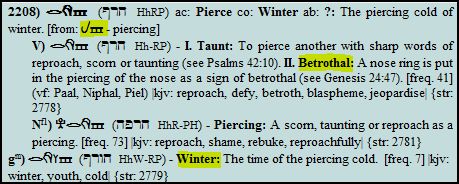
Winter in Hebrew is חרף ‘charaf’ which has the meaning of piercing, as in the piercing cold winds of this time of year. This word is linked to the promise in the Garden of God to Eve that her Seed would defeat the serpent.
The Promised Seed
Gen 3:15 And I will put enmity between thee and the woman, and between thy seed and her seed; it shall bruise thy head, and thou shalt bruise his heel.
Psalm 89 links this prophecy with the Messiah, in specific verse 51.
Psa 89:19 Then You spoke in a vision to Your holy one; and You said, I have laid help on a mighty one. I have exalted a chosen one from the people.
Psa 89:20 I have found My servant David; I have anointed him with My holy oil.
Psa 89:21 With whom my hand shall be established: mine arm also shall strengthen him.
Psa 89:22 An enemy will not exact against him; nor the son of iniquity afflict him.
Psa 89:23 And I will beat down his foes before him, and plague those hating him.
Psa 89:24 But My faithfulness and My mercy is with him; and his horn shall be exalted in My name.
Psa 89:25 And I will set his hand in the sea, and his right hand in the rivers.
Psa 89:26 He shall cry to Me, My Father, You are my God, and the rock of my salvation.
Psa 89:27 And I will make Him My first-born, higher than the kings of the earth.
Psa 89:28 I will keep My mercy for him forever, and My covenant shall hold fast with him.
Psa 89:29 And I have established his Seed forever, and His throne as the days of the heavens. Psa 89:35 Once I have sworn by My holiness; I will not lie to David.
Psa 89:36 His Seed shall be forever, and his throne as the sun before Me.
Psa 89:37 Like the moon, it shall be forever; and a faithful witness in the sky. Selah.
Psa 89:50 Remember, O Lord, the reproach of Your servants, my bearing in my bosom the insults of the many peoples (This is in reference to Messiah carrying the sins of mankind: Isaiah 53; Romans 15:3)
Psa 89:51 with which Your enemies have cursed ( חרף ‘charaph’), O LORD; with which they have cursed ( חרף – pierced) the footsteps ( עקב – ‘aqav’ heel) of Your anointed ( משיח ‘mashiyach’ Messiah/Christ).
*The word translated ‘cursed’ above is from the Hebrew חרף ‘charaph’ which means to pierce, referring back to Genesis 3 and the piercing of the heel of the Seed of the woman.
The word חרף ‘charaph’ comes from the root word חל ‘chol’/ חלל ‘chalal’ which means a twisting in pain. This word is used in reference to the piercing of Messiah in Isaiah 53.
Isa 53:5 But He was wounded ( חלל chalal) for our transgressions; He was bruised for our iniquities; the chastisement of our peace was upon Him; and with His wounds we ourselves are healed.
At the last supper Messiah offered the cup of the covenant which was offered to the bride and also spoke of His death (Matthew 26:68; 1 Corinthians 11:25-26). Amazingly, חרף ‘winter’, the time of darkness and death and a picture of the piercing of Messiah is also the word in Hebrew for betrothal.
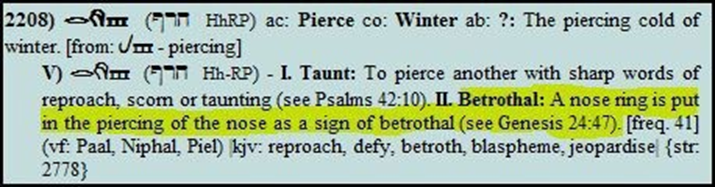
The piercing of Messiah and winter is further connected in Psalm 22:6 (crucifixion Psalm) where Messiah is said to be a ‘reproach’ to mankind. The word translated as ‘reproach’ is חרפה ‘cherpah’ which comes from the root word חרף ‘charaph’ (winter).
Psa 22:6 But I am a worm, and no man; a reproach { חרפה ‘cherpah’} of mankind, and despised by the people.
Psalm 69 is another Messianic Psalm which connects these two words together.
Psa 69:9 For the zeal of Your house has consumed Me; and the reproaches { חרפה ‘cherpah’} of the ones who reproach { חרף ‘charaph’} You have fallen on Me.
Interestingly, the English word ‘hibernate’ comes from חרף ‘charaph’ as well. Hibernation is a time where animals go into their dens for 3 months and sleep until spring. This is a picture of Messiah in the earth for 3 days and 3 nights where He resurrects during the Spring season. Further linking winter and hibernation is the Latin word for winter which is ‘hiberna’ from whence comes the French word for winter ‘hiver’ and Spanish ‘invierno.’
In English, the word winter traces back to the Celtic word ‘vindo’ which means white. This is linked to the white snow on the ground as snow and winter are related terms in many languages. It is interesting to note that the bride, the betrothed one, is dressed in white (Revelation 19:8). The English word ‘snow’ comes from the Hebrew word צנה ‘tsinah’ which means a piercing thorn translated in Proverbs 25:13 as cold. צנה ‘tsinah’ is also translated as buckler as seen in the following verses.
Psa 5:11 But let all who put their trust in You rejoice; let them shout for joy forever, because You cover them. And let those who love Your name be joyful in You.
Psa 5:12 For You, O LORD, will bless the righteous; You will surround him with favor, as with a shield.
His grace/favor is linked with His צנה ‘tsinah’. His grace is linked with salvation through Messiah (Ephesians 2:5-8).
Psa 35:2 Take hold of a shield and buckler (צנה), and arise as my help.
Psa 35:3 Draw out the spear ( חנית ‘chaniyt’) and close ranks to meet my pursuers; say to my soul, I am your salvation { ישועה yeshuah}.
Psa 91:4 With His feathers He will cover you, and under His wings you shall seek refuge; His truth is a shield and buckler ( צנה ‘tsinah’). His truth is linked with His צנה ‘tsinah.’ His truth is His Word.
Snow

Snow is likened unto His Word.
Isa 55:10 For as the rain and the snow comes down from the heavens and do not return there, except it waters the earth and make it bring forth and bud, and give seed to the sower and bread to the eater,
Isa 55:11 so shall My Word be, which goes out of My mouth; it shall not return to Me void, but it shall accomplish that which I please, and it shall prosper in what I sent it to do!
Snow is also linked to His Word in numerous places in Scripture.
Psa 147:15 He sends His command out on the earth; His Word runs very swiftly;
Psa 147:16 He gives snow like wool; He scatters the white frost like ashes;
Job 37:5 God thunders wondrously with His voice; He does great things, and we do not know.
Job 37:6 For He says to the snow, Fall on the earth; also to the shower of rain, and the shower of heavy rains.
Psa 148:8 fire and hail, snow and smoke, stormy wind fulfilling His Word,
Job 37:10 Ice is given by God’s breath, and the expanse of waters is frozen.
The word for white frost/hoar frost in Psalm 147:16 is כפור ‘kaphor.’

From the root:

Who is our atonement? Messiah Jesus (2 Corinthians 5:21; Leviticus 16:2; Hebrews 9:7-8,12-14).
Yom Kippur – Ransom From Heaven
Yom Kippur – Under the Shadow of His Wings
Hoar frost is further linked to the Word through the manna given to Israel in the wilderness.
Exo 16:13 And it happened in the evening: the quail came up and covered the camp. And in the morning a layer of dew was around the camp.
Exo 16:14 And the layer of dew went up, and, behold, something small was on the face of the wilderness, scalelike, small like the hoarfrost ( כפור ‘kaphor’) on the earth.
Exo 16:15 And the sons of Israel looked. And they said, each one to his brother, What is that? For they did not know what it was. And Moses said to them, That is the bread which the LORD has given to you for food.
Messiah Jesus likens this manna to Himself.
Joh 6:30 Then they said to Him, Then what miraculous sign do You do that we may see and may believe You? What do You work?
Joh 6:31 Our fathers ate the manna in the wilderness, as it is written “He gave them bread out of Heaven to eat.” LXX-Psa. 77:24; MT-Psa. 78:24
Joh 6:32 Then Jesus said to them, Truly, truly, I say to you, Moses has not given you the bread out of Heaven, but My Father gives you the true bread out of Heaven.
Joh 6:33 For the bread of God is He coming down out of Heaven and giving life to the world. Joh 6:34 Then they said to Him, Lord, always give us this bread.
Joh 6:35 Jesus said to them, I am the Bread of life; the one coming to Me will not at all hunger, and the one believing into Me will not thirst, never!
Joh 6:36 But I said to you that you also have seen Me and did not believe.
Joh 6:37 All that the Father gives to Me shall come to Me, and the one coming to Me I will in no way cast out.
Joh 6:38 For I have come down out of Heaven, not that I should do My will, but the will of Him who sent Me.
Joh 6:39 And this is the will of the Father sending Me, that of all that He has given Me, I shall not lose any of it, but shall raise it up in the last day.
Joh 6:40 And this is the will of the One sending Me, that everyone seeing the Son and believing into Him should have everlasting life; and I will raise him up at the last day.
Joh 6:41 Then the Jews murmured about Him, because He said, I am the Bread coming down out of Heaven.
Joh 6:42 And they said, Is this not Jesus the son of Joseph, of whom we know the father and the mother? How does this One now say, I have come down out of Heaven?
Joh 6:43 Then Jesus answered and said to them, Do not murmur with one another.
Joh 6:44 No one is able to come to Me unless the Father who sent Me draws him, and I will raise him up in the last day.
Joh 6:45 It has been written in the Prophets, They “shall” all “be taught of God.” So then everyone who hears and learns from the Father comes to Me; Isa. 54:13
Joh 6:46 not that anyone has seen the Father, except the One being from God, He has seen the Father.
Joh 6:47 Truly, truly, I say to you, The one believing into Me has everlasting life.
Joh 6:48 I am the Bread of life.
Joh 6:49 Your fathers ate the manna in the wilderness and died.
Joh 6:50 This is the Bread coming down out of Heaven, that anyone may eat of it and not die.
Joh 6:51 I am the Living Bread that came down from Heaven. If anyone eats of this Bread, he will live forever. And indeed the bread which I will give is My flesh, which I will give for the life of the world.
Joh 6:52 Then the Jews argued with one another, saying, How can this One give us his flesh to eat?
Joh 6:53 Then Jesus said to them, Truly, truly, I say to you, Except you eat the flesh of the Son of Man, and drink His blood, you do not have life in yourselves.
Joh 6:54 The one partaking of My flesh and drinking of My blood has everlasting life, and I will raise him up at the last day.
Joh 6:55 For My flesh is truly food, and My blood is truly drink.
Joh 6:56 The one partaking of My flesh and drinking of My blood abides in Me, and I in him. Joh 6:57 Even as the living Father sent Me, and I live through the Father; also the one partaking Me, even that one will live through Me.
Joh 6:58 This is the Bread which came down out of Heaven, not as your fathers ate the manna and died; the one partaking of this Bread will live forever.
Joh 6:59 He said these things teaching in a synagogue in Capernaum.
Joh 6:60 Then many of His disciples having heard, they said, This Word is hard; who is able to hear it?
Joh 6:61 But knowing in Himself that His disciples were murmuring about this, Jesus said to them, Does this offend you?
Joh 6:62 Then what if you see the Son of Man going up where He was at first?
Joh 6:63 It is the Spirit that gives life. The flesh does not profit, nothing! The Words which I speak to you are spirit and are life.
Exo 16:4 And the LORD said to Moses, Behold, I AM! Bread will rain from the heavens for you. And the people shall go out and gather the matter { דבר ‘davar’ – Word} of a day in its day, so that I may test them, whether they will walk in My Law or not.
Exo 16:4 ויאמר יהוה אל־משׁה הנני ממטיר לכם לחם מן־השׁמים ויצא העם ולקטו דבר־יום ביומו למען אנסנו הילך בתורתי אם־לא׃
Further connecting manna (hoarfrost) to the Word is seen in the following two Scriptures:
Deu 8:3 And He has humbled you, and caused you to hunger, and caused you to eat the manna, which you had not known, and your fathers had not known, in order to cause you to know that man shall not live by bread alone, but man shall live by every Word that proceeds from the mouth of the Lord.
Mat 4:2 And having fasted forty days and forty nights, afterwards He hungered.
Mat 4:3 And coming near to Him, the Tempter said, If You are the Son of God, speak that these stones may become loaves.
Mat 4:4 But answering, He said, It has been written: “Man shall not live by bread alone, but on every Word going out of the mouth of God.” Deut. 8:3
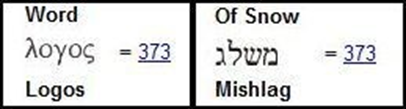
It is interesting to note that the Greek word for ‘Word’ and the Hebrew phrase ‘from snow’ has the numerical equivalent of 373.
Snow is linked to forgiveness.
Psa 51:7 Purge me with hyssop, and I shall be clean; wash me, and I shall be whiter than snow. Isa 1:16 Wash yourselves, purify yourselves. Put away the evil of your doings from My sight; stop doing evil.
Isa 1:17 Learn to do good, seek justice, straighten the oppressor, judge the orphan, strive for the widow.
Isa 1:18 Come now and let us reason together, says Jehovah: Though your sins are as scarlet, they shall be white as snow; though they are red as the crimson, they shall be like wool.
Recall that the word for ‘hoarfrost’ is כפור ‘kaphor’ which comes from the root word כפר ‘kaphar’ which means forgiveness/atonement.
Snow is also a picture of the resurrection of believers into the image of Messiah/the Word. The Garments of Messiah are linked to snow.
Dan 7:9 I was looking until the thrones were cast down, and the Ancient of Days sat, whose robe was white as snow and the hair of His head like pure wool. His throne was like flames of fire, its wheels like burning fire.
Dan 7:10 A stream of fire went out and came out from before Him. A thousand thousands served Him, and a myriad myriads stood before Him. The judgment was set and the books were opened. Rev 1:14 And the hairs of His head were white as white wool, as snow, and His eyes as a flame of fire;
Rev 1:15 and His feet like burnished brass having been fired in a furnace; and His voice as a sound of many waters;
The transfiguration & the resurrection.
Mar 9:2 And after six days Jesus takes along Peter and James and John, and leads them into a high mount apart, alone. And He was transfigured before them.
Mar 9:3 And His garments became shining, very white like snow, such as a fuller on earth is not able to whiten.
Mar 9:4 And Elijah with Moses was seen by them, and they were speaking with Jesus.
Mar 9:5 And answering, Peter said to Jesus, Rabbi, it is good for us to be here; and, Let us make three tents, one for You, and one for Moses, and one for Elijah.
Mar 9:6 For he did not know what to say, for they were very fearful.
Mar 9:7 And a cloud was overshadowing them, and a voice came out of the cloud, saying, “This is My Son,” the Beloved; hear Him. Psa. 2:7; Gen. 22:2; Deut. 18:15
Mar 9:8 And suddenly, having looked around, they saw no one any longer, but Jesus alone with themselves.
Mar 9:9 And as they were coming down from the mount, He commanded them that they should tell no one what they saw, except when the Son of Man should rise from the dead.
Mar 9:10 And they held the word to themselves, debating what it is to rise from the dead.
Mat 28:2 And, behold! A great earthquake occurred! For descending from Heaven and coming near, an angel of the Lord rolled away the stone from the door and was sitting on it.
Mat 28:3 And his face was as lightning and his clothing white as snow.
Mat 28:4 And those keeping guard were shaken from the fear of him, and they became as dead. Mat 28:5 But answering, the angel said to the women, You must not fear, for I know that you seek Jesus who has been crucified.
Mat 28:6 He is not here, for He was raised, as He said. Come, see the place where the Lord was lying.
Isa 55:10 For as the rain and the snow comes down from the heavens and do not return there, except it waters the earth and make it bring forth and bud, and give seed to the sower and bread to the eater,
The garments designed for the priests were a shadow picture of the resurrected believers who are clothed in white, likened unto snow. Being clothed with His righteousness is linked with the earth springing forth plants.
Isa 61:10 Rejoicing I will rejoice in Jehovah. My soul shall be joyful in my God. For He clothed me with garments of salvation; He put on me the robe of righteousness, even as a bridegroom dons as a priest his head-dress, and as a bride wears her ornaments.
Isa 61:11 For as the earth comes out with her buds, and as a garden causes that which is sown to grow, so the Lord Jehovah will make righteousness and praise to grow before all the nations.
Psa 132:9 Let Your priests be clothed with righteousness, and let Your saints shout for joy.
Psa 132:16 And I will clothe her priests with salvation; and her saints shall surely shout.
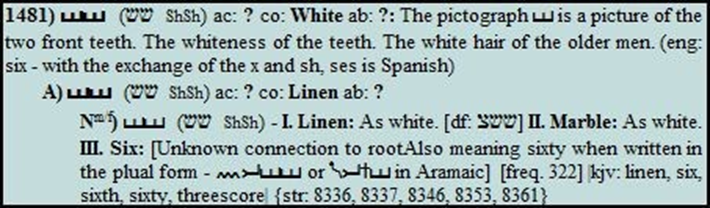
The fine linen that the priests wore (Exodus 28:5, 8, 15 etc.) is from the following Hebrew word which means white & the number 6:
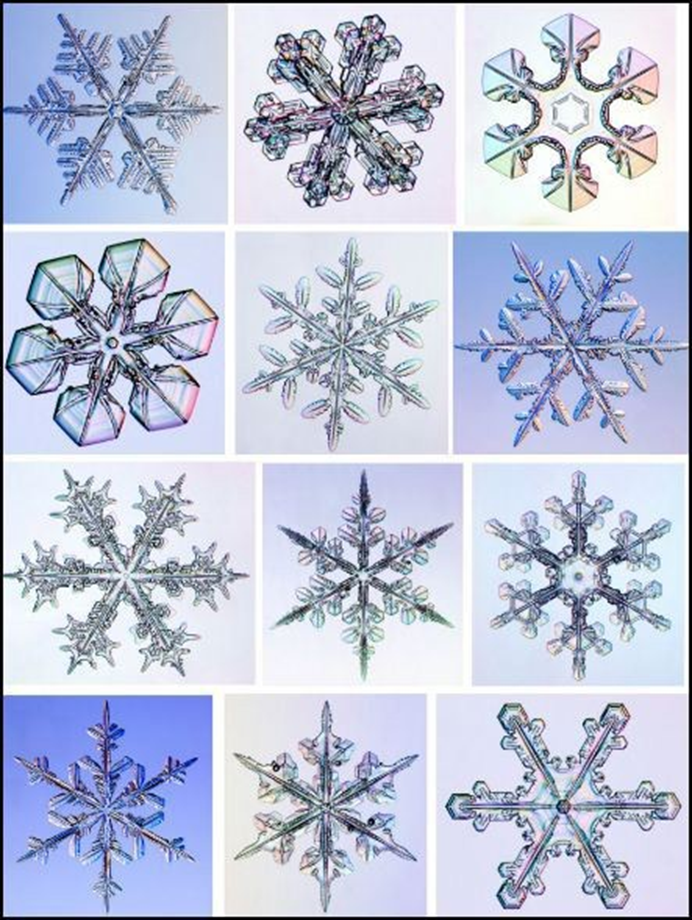
Snow is white and in a hexagonal shape.
The garments of the priest were worn to display that iniquity was not upon them (Exodus 28:43). The white linen is the righteousness of the saints (Revelation 19:7-9). What is Righteousness? It is the Word/Messiah.
Psa 119:172 My tongue shall speak of thy word: for all thy commandments are righteousness. Isa 51:7 Hear Me, those knowing righteousness, the people of My Law in their heart; do not fear the reproach of man, and do not be bowed from their blasphemings.
2Pe 2:21 For it was better for them not to have recognized the way of righteousness than having recognized it to turn from the holy commandment delivered to them.
1Jn 2:1 My little children, I write these things to you so that you do not sin. And if anyone sins, we have an Advocate with the Father, Jesus Christ the righteous.
His body is clothed in garments of righteousness.
Isa 61:10 I will greatly rejoice in the LORD, my soul shall be joyful in my God; for he hath clothed me with the garments of salvation ( ישע ‘yesha’ – root of the name Yeshua/Jesus), he hath covered me with the robe of righteousness, as a bridegroom decketh himself with ornaments, and as a bride adorneth herself with her jewels.
Rom 13:14 But put ye on the Lord Jesus Christ, and make not provision for the flesh, to fulfil the lusts thereof.
Gal 3:27 For as many of you as have been baptized into Christ have put on Christ.
Psa 71:15 My mouth shall tell of Your righteousness and Your salvation all the day; for I do not know the numbers.
Psa 71:16 I will come in the strength of the Lord Jehovah; I will speak of Your righteousness, of Yours alone.
Rom 10:4 For Christ is the end of Law for righteousness to everyone that believes.
1Jn 2:29 If you know that He is righteous, know that everyone doing righteousness has been generated from Him.
Eph 4:24 and to put on the new man, which according to God was created in righteousness and true holiness.
Eph 4:25 Therefore, putting off the false, “speak truth each with his neighbor,” because we are members of one another. Zech. 8:16
WE ARE MADE RIGHTEOUS IN HIM.
2Co 5:21 For he hath made him to be sin for us, who knew no sin; that we might be made the righteousness of God in him.
Rev 7:13 And one of the elders answered, saying unto me, What are these which are arrayed in white robes? and whence came they?
Rev 7:14 And I said unto him, Sir, thou knowest. And he said to me, These are they which came out of great tribulation, and have washed their robes, and made them white in the blood of the Lamb.
Rev 19:7 Let us be glad and rejoice, and give honour to him: for the marriage of the Lamb is come, and his wife hath made herself ready.
Rev 19:8 And to her was granted that she should be arrayed in fine linen, clean and white: for the fine linen is the righteousness of saints.
How is the bride made ready? With the washing of water by the word, just as snow that falls from heaven ‘washes’ the earth during winter.
Eph 5:26 That he might sanctify and cleanse it with the washing of water by the word,
Eph 5:27 That he might present it to himself a glorious church, not having spot, or wrinkle, or any such thing; but that it should be holy and without blemish.
Isa 1:16 Wash yourselves, purify yourselves. Put away the evil of your doings from My sight; stop doing evil.
Isa 1:17 Learn to do good, seek justice, straighten the oppressor, judge the orphan, strive for the widow.
Isa 1:18 Come now and let us reason together, says Jehovah: Though your sins are as scarlet, they shall be white as snow; though they are red as the crimson, they shall be like wool.
Being clean and sanctified = being made righteous.
1Co 6:11 And such were some of you: but ye are washed, but ye are sanctified, but ye are justified (righteous) in the name of the Lord Jesus, and by the Spirit of our God.
Tit 2:13 Looking for that blessed hope, and the glorious appearing of the great God and our Saviour Jesus Christ;
Tit 2:14 Who gave himself for us, that he might redeem us from all iniquity, and purify unto himself a peculiar people*, zealous of good works.
*His priesthood, clothed in the garments of Yeshua/His righteousness (Psalm 132:16; Isaiah 61:10; Romans 13:14; Galatians 3:27))
Isa 60:21 And your people shall all be righteous; they shall possess the earth forever, a branch of My planting, a work of My hands, to beautify Myself.
Interestingly, the Greek word for snow is χιων ‘chion’ which comes from a combination of two words. χασμα ‘chasma’ which means a gulf or gapening opening (as in the ground opening up to give up the dead Matthew 27:53-54) and χειμων ‘cheimon’ which means winter or rainy season.
His priesthood are those who are born again, resurrected into His Image which is the Word.
1Pe 2:9 But ye are a chosen generation*, a royal priesthood, an holy nation, a peculiar people; that ye should shew forth the praises of him who hath called you out of darkness into his marvellous light:
*Being born again=chosen/elect. We are born again by the Word being implanted into our hearts and watered until it brings forth life, fruit. The connection between those who are born again and those who are the chosen people is so strong that it can not be denied. The word translated into English as elect or chosen is a Greek word ἐκλεκτος ‘eklektos’ which when broken down to its root {ἐκ – from λεγω – the Word} means “by or from the Word”.
Cold
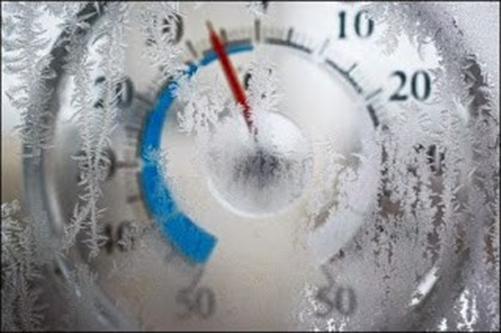
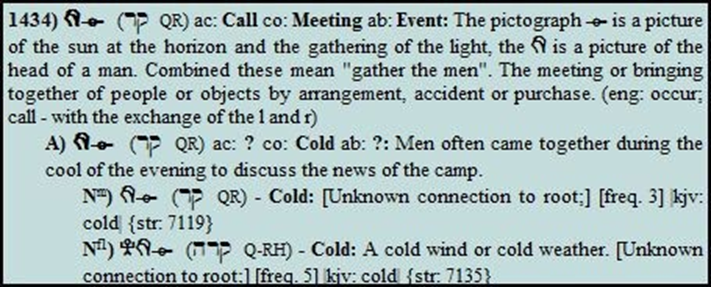
The word for cold in Hebrew is קר ‘qar’ which has the meaning of men gathering to the home to escape the cold.
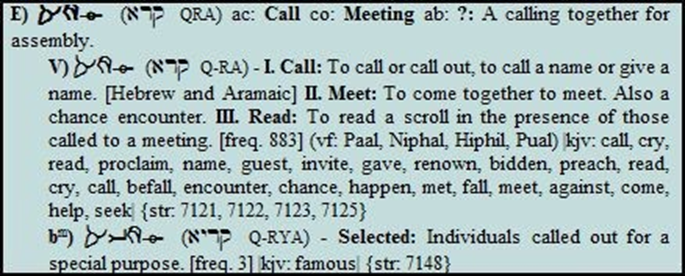
Winter is the time of the early rains in the Mideast. This is the time of cold where men gather in homes to קרא ‘qara’ read scrolls and teach ‘dedicate’ their children.
The Hebrew word for “call” is קרא ‘qara’ which is defined as calling out a name or reading a scroll. These concepts are linked together as the name of the Lord is His Word (Revelation 19:13; Matthew 12:18-21 – Isaiah 42:1-4; Revelation 14:1; 22:4; Deuteronomy 6:6-8).

The Word of God is His “physical manifestation” on earth. When God “qara’d” He physically manifested Himself, and proclaimed who/what He is. This is what the reading of the Word does. The
Word proclaims the Name of the Holy One, as it is said in Revelation 19, His Name ( שם ‘shem’-character) is the Word.
Calling on His Name brings salvation and is associated with the physical manifestation of the Most High (Matthew 25:53; Jeremiah 29:10-14; Psalm 91:14-16; 86:7-9; 50:15,23; 18:3; 55:16; Romans 10:12-13; Acts 2:21; 22:14-16; Joel 2:32; 1 Corinthians 1:2).
Jesus (the physical manifestation of the Lord on the earth, the Word made flesh) came to reveal and make known the name of the Lord.
Joh 17:6 I revealed Your name to the men whom You gave to Me out of the world. They were Yours, and You gave them to Me; and they have kept Your Word.
The Greek word for revealed in John 17:6 is φανεροω ‘phaneroo’ which means to make something manifest, visible or known which had previously been hidden. φανεροω ‘phaneroo’ is used in the
Septuagint to translate the Hebrew word גלה ‘galah’ (Genesis 35:7; Isaiah 40:5; 56:1; 98:2). גלה ‘galah’ means to make something bare which is related to the Hebrew word for ice/frost which is קרח ‘qarach’ which also means bare or bald. קרח ‘qarach’ comes from the root word קר ‘qar’ which, as seen above, means cold.
Another Greek word which means ‘manifestation’ or appearance is ἐπιφάνεια ‘epiphaneia’ from whence comes the holiday of Epiphany. In classical Greek it was used of the appearance of dawn, of an enemy in war, or of a manifestation of a god. As seen in this study, all of these themes are associated with the shadow pictures embedded in winter. In the Septuagint the word is used for a manifestation of the God of Israel (2 Maccabees 15:27). In the New Testament the word is used in 2 Timothy 1:10 to refer either to the birth of Christ or to his appearance after his resurrection, and five times to refer to the Second Coming.
It is interesting to note that ἐπιφανεια ‘epiphaneia’ is used in the Septuagint to translate the Hebrew word ירא ‘yare.’ A related Hebrew word is used {יראה} in Genesis 22 speaking of the day when
God shall be seen (Genesis 22:11-14). ירא ‘yare’ comes from the root ירה ‘yarah’ which is speaking of rain. The early rains (winter time in the mid-East) also mean ‘teaching’ which is fascinating. As mentioned before, winter time is when men gather in their homes to read and teach their children.
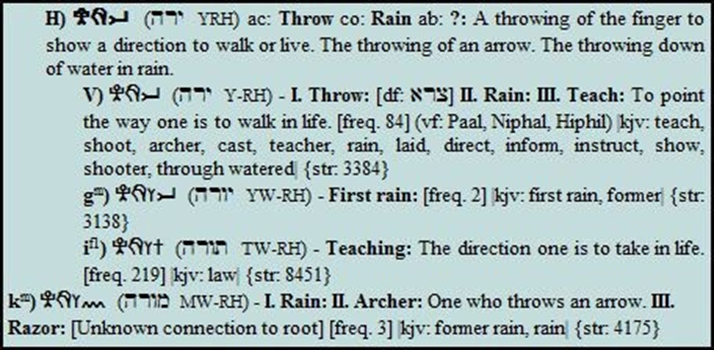
Joe 2:23 Then be glad, sons of Zion, and rejoice in Jehovah your God. For He has given to you the early rain ( מורה ‘morah’) according to righteousness, and He will cause the rain to come down for you, the early rain ( מורה ‘morah’) and the latter rain in the first month.
The Targum is, “in the Word of the Lord your God;”
Heavy rains in Hebrew is the word סגריר ‘sagriyr’ which comes from the word סגר ‘sagar’ which means to be closed in from the root word סך which is the origin of the word סוכה ‘sukkah.’ Recall that Hanukkah, the midst of which will always occur on the first of Tevet, is just a replay of Sukkot. The word ‘Hanukkah’ in Hebrew means dedication, as in teaching.
Recall that winter is a portrayal of Messiah’s piercing/death on the cross. It is through the cross that all the families of the earth are gathered together.
Messiah triumphed over the adversary by His work on the cross.
Col 2:15 And having spoiled principalities and powers, he made a shew of them openly, triumphing over them in it.
Messiah on the cross is the revelation of God’s love.
The Father revealed what true love is when He gave His only begotten Son, who came from His bosom (John 1:18), as an atonement for the sins of mankind. The most common Hebrew word for love, אהבה ‘ahavah,’ literally means to give.
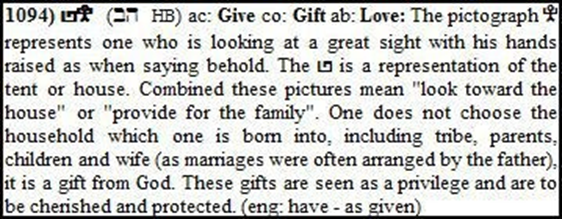

What is the ultimate definition of love? Giving one’s life for another
Joh 3:16 For God so loved the world that He gave His only begotten Son, that everyone believing into Him should not perish, but have everlasting life.
Joh 15:13 Greater love than this has no one, that anyone should lay down his soul for his friends.
The pictograph meaning of אהב ‘ahav’ displays this concept even further.
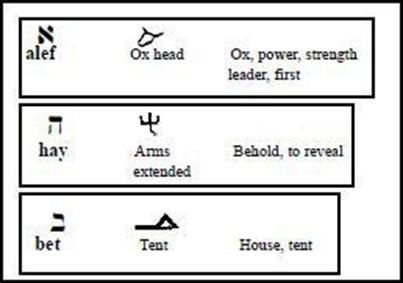
The first and last letters spell out the word for Father ( אב ‘ab’) and the middle letter is a picture of a man with outstretched arms. The Love of the Father is revealed through the Messiah on the tree, gathering all mankind back to their Creator.
Joh 12:32 And I, if I be lifted up from the earth, I will draw all to Myself.
The word for family in Hebrew is משפחה ‘mishpochah’ which comes from the root word שפח ‘shaphach.’ This word is related to ספח ‘saphach’ which means to gather and bloodshed. The English word ‘crucifixion‘ derives from both these Hebrew words.
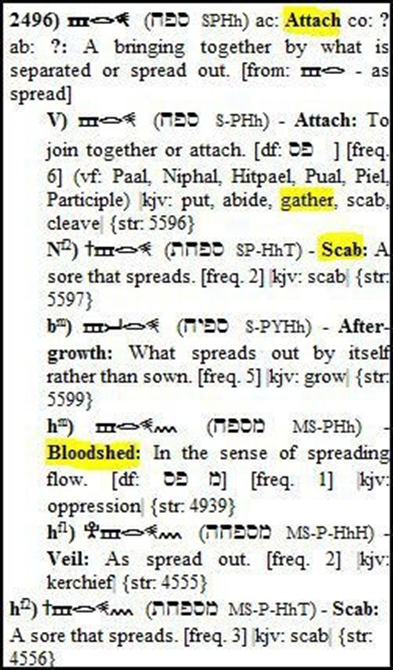
Messiah gathers His people through the cross.
Joh 10:11 I am the Good Shepherd! The Good Shepherd lays down His life on behalf of the sheep.
Joh 10:14 I am the Good Shepherd, and I know those that are Mine, and I am known by the ones that are Mine.
Joh 10:15 Even as the Father knows Me, I also know the Father; and I lay down My life for the sheep.
Joh 10:16 And I have other sheep which are not of this fold. I must also lead those, and they will hear My voice; and there will be one flock, one Shepherd.
Joh 10:17 For this reason My Father loves Me, because I lay down My life, that I may take it again.
Eph 2:11 Because of this, remember that you, the nations, were then in the flesh (those having been called Uncircumcision by those having been called Circumcision in the flesh made by hands)
Eph 2:12 that at that time you were without Christ, alienated from the commonwealth of Israel and strangers of the covenants of promise, having no hope and without God in the world.
Eph 2:13 But now, in Christ Jesus you who then were afar off, came to be near by the blood of Christ.
Eph 2:14 For He is our peace, He making us both one, and breaking down the middle wall of partition,
Eph 2:15 in His flesh causing to cease the enmity, the Law of the commandments in decrees, that He might in Himself create the two into one new man, making peace,
Eph 2:16 and might reconcile both in one body to God through the cross, slaying the enmity in Himself.
Eph 2:17 And coming, He proclaimed “peace to you, the ones afar off, and to the ones near.” Isa. 57:19
Eph 2:18 For through Him we both have access by one Spirit to the Father.
Eph 2:19 So, then, you are no longer strangers and tenants, but you are fellow citizens of the saints and of the family of God,
Eph 2:20 being built up on the foundation of the apostles and prophets, Jesus Christ Himself being the cornerstone,
Eph 2:21 in whom all the building being fitted together grows into a holy temple in the Lord,
Eph 2:22 in whom you also are being built together into a dwelling place of God in the Spirit.
Isaiah prophesies of this exact occurrence which comes forth from the crucifixion of Messiah. Amazingly, the word for ‘cleave’ is Isaiah 14 where this is prophesied of is ספח which is the origin of the word crucifixion.
Isa 14:1 For the LORD will have mercy on Jacob, and will yet choose Israel, and set them in their own land: and the strangers shall be joined with them, and they shall cleave to the house of Jacob.
The end of the exile is likened to wounds being bound up (scabbing מספחת ‘mispachat’).
Psa 147:2 Jehovah builds up Jerusalem; He gathers the outcasts of Israel.
Psa 147:3 He heals the broken-hearted and binds up their sorrows.
The word for sorrow here is עצבת ‘atsevet’ which is what is used in reference to the punishment of Adam and Eve in Genesis 3. The word for bind is חבש ‘chavash’ which comes from the root חב ‘chav’ which means to bind or join together. It is also the root of the word ‘stripes’ which the Messiah received so that mankind may be healed.
Isa 53:5 But He was wounded for our transgressions; He was bruised for our iniquities; the chastisement of our peace was upon Him; and with His wounds we ourselves are healed.
1Pe 2:24 who “Himself carried up in His body our sins” onto the tree; that dying to sins, we might live to righteousness, of whom “by His wound you were healed.”
1Pe 2:25 For you were “as sheep going astray,” but now you turned back to the Shepherd and Overseer of your souls. Isa. 53:4-6
The Greek word for family is πατρια ‘patria’ which comes from the word πατηρ ‘pater’ which means father. The Hebrew word for father is אב which is spelled ‘aleph’ ‘bet’…
Father
אב ‘av’ has the meaning of a pole:
In English, the word ‘pole’ comes from the Old English ‘pal’ which traces back to the Latin ‘palus,’ which literally means a stake. The English word ‘pale’ derives from this word. ‘Pale’ means to fix or fasten and is related to the English word ‘pact.’ A pact is an agreement, treaty, compact which comes from the Latin word ‘pactum’ which means a contract/covenant. A covenant through a pole/stake…
Here we see אב ‘av,’ the first word of the Hebrew language pointing to the most important event in human history. The crucifixion of Messiah Jesus, and the New Covenant (Isaiah 42:6; Matthew 26:28) in His blood which restores mankind back to the Father.
The concrete meaning of the word אב is the pole/pillar of the house/tent. This traces back to another Hebrew word for family בת ‘bet.’
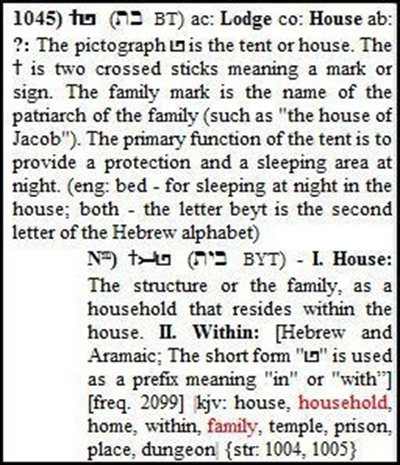
Literally, the word בת ‘bet’ means the ‘mark of the house.’ This was seen in ancient times in the flag or banner placed in front of the tent with the name or symbol of the family.
Isa 11:10 And it shall be in that day, the Root of Jesse stands as a banner of peoples; nations shall seek to Him; and His resting place shall be glory.
Psa 20:5 We will rejoice ( רנן ranan shout for joy, sing, triumph) in thy salvation( ישועה yeshu‛ah), and in the name of our Elohim we will set up our banner ( דגל dagal raise a flag, conspicuously)
Ps 60:4: “Thou hast given a banner to them that fear thee, that it may be displayed ( נוס nus lift up a standard) because of the truth. Selah.”
Joh 3:14 And even as Moses lifted up the serpent in the wilderness, so must the Son of Man be lifted up,
Joh 3:15 that everyone believing into Him should not perish, but have everlasting life.
The word father is a great example of all languages tracing back to Edenic Hebrew. Father in Hebrew is אב ‘aleph bet.’
א aleph ב bet are the first two letters of the ‘aleph-bet’ from whence comes the English alpha-bet. All of creation comes forth from the Word according to Psalm 33:6. Words are made up of letters (the Aleph-Bet) which points to Messiah who is the Alpha & Omega/Aleph-Tav which is a term meaning totality, as in the complete Alpha-Beta of the Greek or Aleph-Bet of the Hebrew.
Interestingly, the word ‘Bible’ in English comes from the Hebrew word אבוב ‘avoov’ which means a pipe and is also the source of the word papyrus which ancient Bibles were written upon. The word for booby and baba comes from אבוב ‘avoov’ as well. Again this traces back to אב who is the source of the milk of the Word (1Peter 2:2). Peter was quoting from Psalm 34:8 which speaks of ‘tasting’ and seeing that the Lord is good and blessed are those who ‘trust’ in Him. The word ‘trust’ comes from חסה ‘chasah’ which means a firm support, again tracing back to the meaning of אב father which literally means the strong one/support of the house.
The father is the strength of the house. The teacher, the guide of the family. The letter ב ‘bet’ represents the house/family consisting of male and female as the ancient nomadic tent was made of two parts, one for the male and the other for the female. Man was made in the image ofGod , male and female (Genesis 1:27). אב ‘AB’ is the word for the source. This passes into Latin as ‘ab’ and Greek
as απο ‘apo’ which is portrayed in the Hebrew as מ mem. The letter Mem is a pictograph for water and the womb. The waters in the beginning and the womb of the mother. Again the Father’s character consists of both ‘male’ and ‘female.’ This is further seen in that father means one who provides food, which is seen in the female breasts. This word in Hebrew is דוד ‘dod’ which is the source of the English word dad.
Fruit on a pole is another translation of אב. This again points to the source of the next generation. The word fruit comes from the Old English meaning a brook which links again to water. The Old English word for fruit also means joy, eat, and cohabit, again tracing back to אב. Joy links to love who is God (1 John 4:16). This is seen in the tent in the Hebrew word חשק chashaq. חשק ‘chashaq’ has the meaning of being knit together in love (Deuteronomy 7:7; Psalm 91:14) and is used in Exodus 38:17, 28 for the joining together of the Tabernacle.
The English word father comes from πατηρ ‘pater’ in Greek which traces back to פטר ‘pater’ in Hebrew which means the breaking forth of something such as a child being born, or the seed in fruit to continue the next generation. פר ‘par’ means fruit, and the breaking open of the heads of grain to reveal the seed inside.
נב ‘nav’ is another word for fruit and carries this same meaning, the fruit inside. It is no surprise that the first and last letters of the Bible (Genesis-Revelation) consist of these two letters. The reverse is בן ‘ben’ which means son. The son is the seed of the father that continues the house.
The father is the protector of the family and is seen in איב ‘oyev’ the point of a tent pole used to protect the family against enemies. This can also be seen in the spear which is used to protect, defend or to kill and eat.
Dad comes from דוד ‘dod’ which means the breasts, the source of food, life – milk. Interestingly, milk contains protein which comes forth from 22 amino acids linking to the 22 letters of the Hebrew aleph-bet…taste and see that He is good { טוב ‘tov’} (Psalm 34:8).
Winter begins in the 10th month of the Biblical calendar, is known as טבת ‘tevet’ (Esther 2:16). טבת ‘tevet’ comes from the word טב ‘tov’ which means good. טב ‘tov’ literally means to ‘surround the house’ but interestingly is translated on some occasions as ‘merry.’

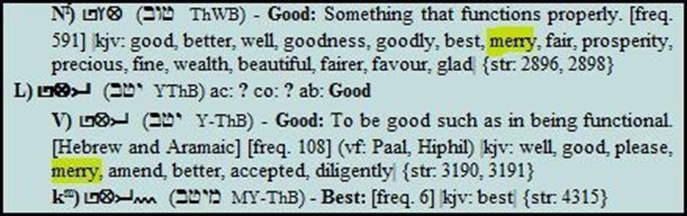
Recall that the word for cold in Hebrew is קר ‘qar’ which has the meaning of men gathering to the home to escape the cold. This is associated with טב ‘tov’ which literally means to ‘surround the house.’
Winter Solstice
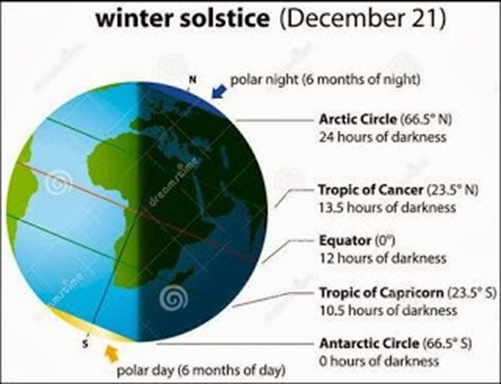
The English word solstice comes from the Hebrew word צהל ‘tsahal’ which means to shine (Psalm 104:15) but also has the meaning of a neighing of a horse (Jeremiah 5:8). This is interesting to note because the winter solstice is linked to pagan gods riding through the skies in chariots carried by horses. This comes from the truth of the Hebrew language. Scripture likens the sun to this same imagery.
Psa 19:5 and he comes forth like a bridegroom from his canopy. He rejoices like a hero to run a race;
The word for ‘rejoices’ in Psalm 19:5 is שוש ‘sus’ which means to rejoice as in turning around in joy, but is also the Hebrew word for a horse as a horse turns around in play.
צהל ‘tsahal’ is also translated as ‘shout’ as in the rejoicing of His people when He comes to save them. This salvation is linked to Him riding upon chariots in the sky.
Deu 33:26 None is like the God of Jeshurun, riding the heavens for your help, and the clouds in His majesty.
Psa 18:10 and He rode on a cherub, and He flew; yea He soared on the wings of the wind;
Psa 68:3 But the righteous are glad; they shout for joy before God; yea, they exult with gladness.
Psa 68:4 Sing to God, sing praise to His name; lift up a song for Him who rides in the deserts, by His name Yah; yea, exult in His presence.
Psa 68:32 Sing to God, kingdoms of the earth, praises to the Lord. Selah.
Psa 68:33 To Him who rides on the heavens of heavens of old; lo, He gives forth His voice, a mighty voice.
Hab 3:8 Did Jehovah burn against rivers? Or was Your anger against the rivers? Or Your fury against the sea? For You ride on horses; Your chariots of salvation.
שוש ‘sus’ and סוס ‘sus’ both mean horse and rejoice in Hebrew. This connection to the Lord riding upon horses and chariot in relation to saving His people can be seen in Isaiah 35:1 where the dry land (dead) rejoices ‘soos’ when the desert blooms (resurrection). ‘soos’ שוש comes from שש which means white, as in the two front teeth. שש ‘sus’ is also the word for linen, as in the white linen garments given to the righteous who are resurrected (Isaiah 61:10-11; Revelation 19:14). Recall the connection to snow and the garments of the Levitical priesthood.
Rev 19:11 And I saw Heaven being opened. And, behold! A white horse, and He sitting on it having been called Faithful and True. And He judges and wars in righteousness.
Rev 19:12 And His eyes were as a flame of fire, and on His head many diadems, having a name that had been written, which no one knows except Himself;
Rev 19:13 and having been clothed in a garment which had been dipped in blood. And His name is called The Word of God.
Rev 19:14 And the armies in Heaven followed Him on white horses, being dressed in fine linen, white and pure.
Rev 19:15 And out of His mouth goes forth a sharp sword, that with it He might smite the nations. And He will shepherd them with an iron rod. And He treads the winepress of the wine of the anger and of the wrath of God Almighty.
Rev 19:16 And He has on His garment and on His thigh a name having been written: KING OF KINGS AND LORD OF LORDS.
Notice in Psalm 68 the association with singing. Is it any surprise that winter time is known for singing/carols?
The word carol traces back to the Latin word ‘choraula’ which means to “dance to the flute”. This word traces even further back to the Hebrew word חלל ‘chalal,’ which as mentioned before is the root of the word חרף ‘charaph’ which means winter.
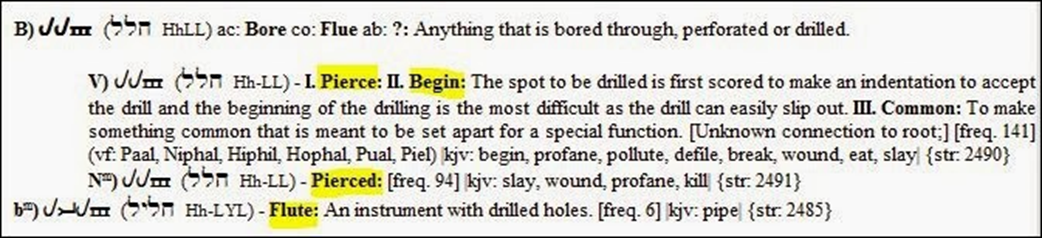
Notice the connections in this word to the prophecy in Genesis 3:15 of which winter portrays. חלל ‘chalal’ is translated as ‘begin’ as in the birth of the Promised Seed but also ‘wound,’ ‘pierced,’ ‘kill,’ referring to the piercing of the heel of the Promised Seed mentioned before. Notice also that חלל ‘chalal’ is translated as ‘profane’ and ‘pollute.’ The time of winter and in particular the winter solstice is a time in which the heathen took the Shadows of Messiah in nature and used it in reference to their sun gods.
The Hebrew word for solstice is היפוך ‘heypook’ which comes from the root word חףך ‘chapakh’ which means to overturn but is also translated as pervert as in an ‘overturning’ of truth. As mentioned previously, the Hebrew word for winter is חרף ‘choreph’ which is translated as reproach, scorn and
blaspheme. Winter is a portrayal of the war between the Seed of the woman and the seed of the serpent in Genesis 3:15 which culminated at the cross. It is at the cross that Messiah triumphed over His enemies, those who corrupted/perverted the winter/winter solstice in blasphemy against the Most High.
Col 2:13 And you, being dead in your sins and the uncircumcision of your flesh, hath he quickened together with him, having forgiven you all trespasses;
Col 2:14 Blotting out the handwriting of ordinances that was against us, which was contrary to us, and took it out of the way, nailing it to his cross;
Col 2:15 And having spoiled principalities and powers, he made a shew of them openly, triumphing over them in it.
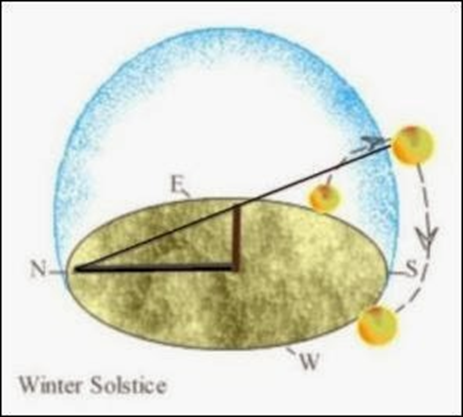
צהל ‘tsahal’ comes from the root word צל ‘tsel’ which means shade or shadow. This also connects to the solstices as in the winter the shadows are the longest, in the summer the shortest.
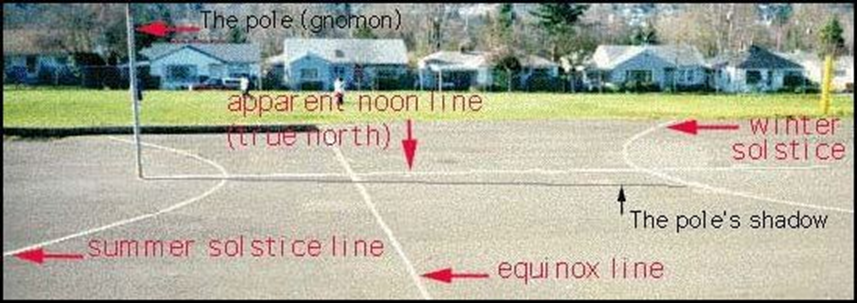
The shadows of the four seasons can be seen in the following image:
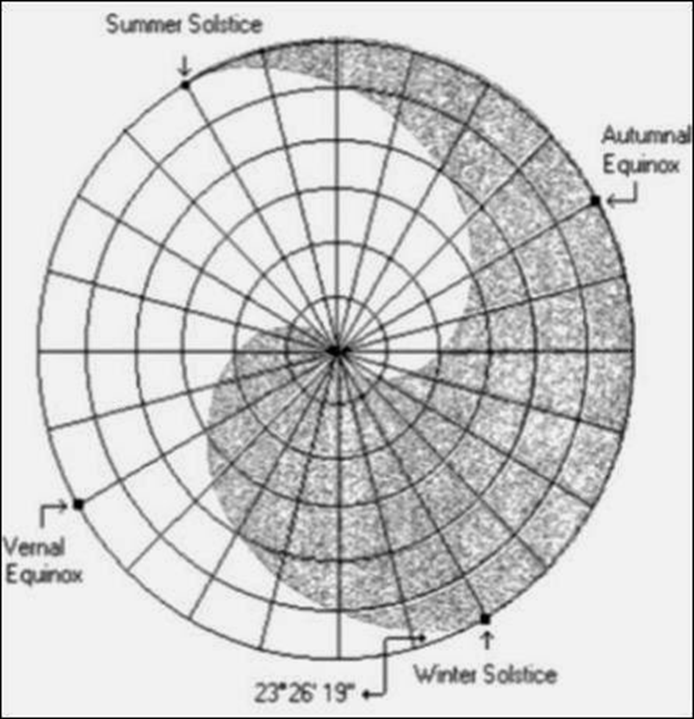
It is from this phenomenon in nature that the ‘Yin Yang‘ symbol was created. The ‘Yin Yang‘ symbol is also portrayed as the ‘Oroboros’ which is a figure of a serpent or dragon eating its own tail which is
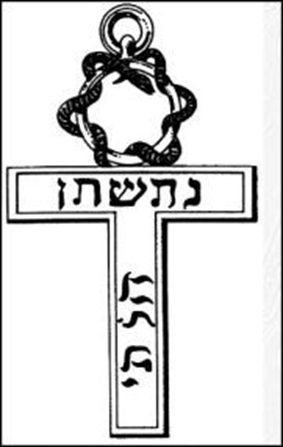
supposed to represent eternity or infinity. The figure itself is a portrayal of the Hebrew word לויתן ‘leviathan.’ ‘Leviathan’ is a combination of two Hebrew words. לוי ‘leviy’ which means joined together, like a wreath. תן ‘tan’ is the word for dragon or serpent mentioned in a previous study. Below is a jewel of the 25th degree in the Scottish Rite of Freemasonry which displays the concept of Leviathan & the idol ‘nechushtan’ which is a picture of sin, the sin which Messiah took upon Himself when He became the serpent on the tree (John 3:14; 2 Corinthians 5:21).
The Oroboros is a corruption of the ‘analemma’ figure which the sun makes as it moves through the sky each year. The ‘analemma’ is a figure eight.
The word for 8 in Hebrew is:
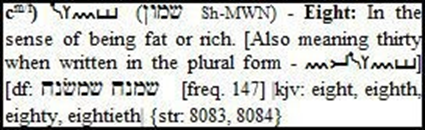
This comes from the root:

The root of 8 comes from שם ‘shem’ (name/character) which is the same root as sun שמש ‘shemesh.’ Further connecting the sun & the number eight is the word oil. The Holy Spirit is likened to oil (1Samuel 16:13; Zechariah 4:2-3; Revelation 4:5).
This connection to the Spirit/wind is interesting as the Hebrew origin of the word ‘winter’ is נפה ‘nafah’ which means to move back and forth as in a fan. נפה ‘nafah’ is related to the Hebrew word נפח ‘naphach’ which means to breath or blow. The Greek word for spirit/wind is πνευμα ‘pneuma’ which traces back to both of these Hebrew words.
Interestingly, the Hebrew word כנף ‘kanaf’ is also related to נפה ‘nafah’ and נפח ‘naphach.’ כנף ‘kanaf’ is a consists of two parts. The beginning letter כ ‘kaf’ which has the meaning of ‘like’ and נף ‘naf’ which has the meaning of movement which causes wind. ‘Like the wind.’ כנף ‘kanaf’ has the meaning of a wing, in particular a bird wing, which performs this very action of ‘making wind.’ כנף ‘kanaf’ is also used in reference to the borders/wings of ancient garments such as Messiah, the Sun of Righteousness, wore.
Mal 4:2 But unto you that fear my name shall the Sun of righteousness arise with healing in his wings; and ye shall go forth, and grow up as calves of the stall.
The sun moves upon the spirit/wind (Ecclesiastes 1:5-6).

רח ‘rach’ is the root of the word רוח ‘ruach’, the Spirit. The sun’s cycle makes an interesting form when it moves throughout the sky during the year. This phenomenon is known as the ‘analemma.’ If you photographed the sun once a week at the same time of day for an entire year, you would have a photo of the analemma, the sun’s apparent path on the sky over the course of a year, which looks like a figure-eight.
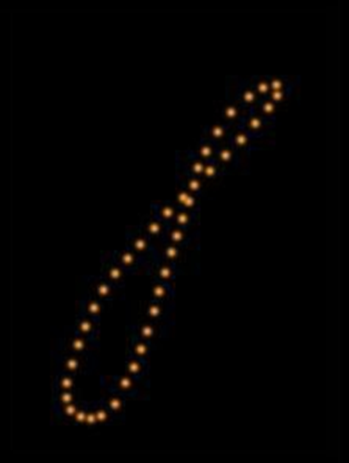
The Sun is moving in a continual ‘figure eight’ path.

Could this be why the infinity symbol is portrayed as the number 8 on its side? Is this where the image of the ‘Ouroboros’ (serpent eating its tail) comes from? The heathen mystery religions are a counterfeit of the Truth of the Holy Scriptures, perverting the heavenly bodies and their meanings. The Mazzaroth (Constellations) teach of the Gospel of Messiah. His birth, death and resurrection. So what is seen in the mystery religions? Stories of Christ figures born of virgins, dying as atonement for mankind, and resurrecting etc. The Almighty allowed these religions (Deuteronomy 4:19) in order to give unregenerate man a taste of the Truth so that when the time came for them to return to Him, their minds would already be somewhat prepared and so that no man can have an excuse because He has been calling to us to repent from the beginning (Psalm 19; Rom 1:19; 10:18).
The Covenant
When the Lord cut the covenant with Abraham on Passover, He walked between the pieces of the sacrificed animals as a burning torch. In ancient times when a covenant was cut, the two covenant partners walked through the halves of the split animal(s) in a ‘figure eight’. They would lay each half to the side of each other and stand in between the two bloody halves of flesh, with their backs to each other. Then they would walk right through the bloody halves, making a figure eight, and come back to a stop facing each other.
Gen 15:17 And it happened, the sun had gone down, and it was dark. Behold! A smoking furnace and a torch of fire that passed between those pieces!
The number 8 points to the Sun of Righteousness
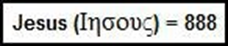
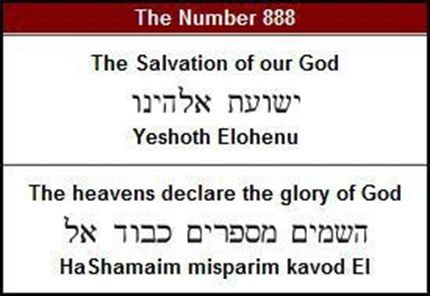
The movement of the sun through the skies is like the figure eight. This has been corrupted into the image of the Oroboros.
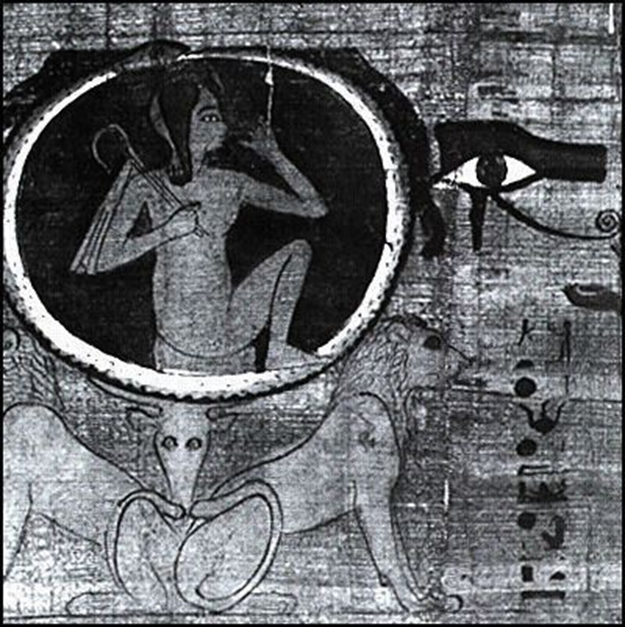
Papyrus of Dama Heroub, Egypt, 21st Dynasty
http://www.crystalinks.com/ouroboros.html
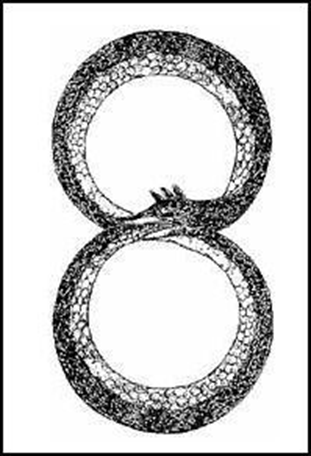
“The zodiac as a tail-eating snake (Ouroboros) symbolizes the eternity of Time and the boundary of the universe. Below it, the double lion Routi (‘Yesterday and Tomorrow’), the agency of resurrection, supporting the newborn Sun God.”
The ‘sacred pole’ brings forth another connection to the Oroboros which is the symbol of the yin and yang.
“In some versions of the Ouroboros, the body is half light and half dark, alluding in this way to the successive counterbalancing of opposing principles as illustrated in the Chinese Yin-Yang symbol for instance.”
The Yin Yang is linked to the calendar through the gnomen which can be used to find the tequfot (equinoxes & solstices). The first month of the year is known as Abib.
Exo 23:15 You shall keep the Feast of Unleavened Bread. Seven days you shall eat unleavened bread, as I have commanded you, at the set time of the month of Abib. For in it you came out from Egypt, and they shall not appear before Me empty.
Deu 16:1 Observe the month Abib, and perform the Passover to Jehovah your God. For in the month of Abib Jehovah your God brought you out of Egypt by night.

Here we see that abib means something new, which continues the next generation. Aviv comes from root אב ‘av’:

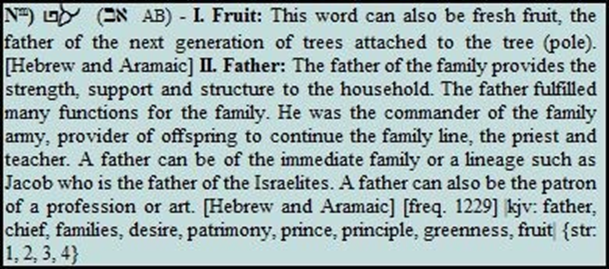
Here again we see that the word aviv is tracing back to something new or fresh and something that continues. This is connected to the calendar in that Spring is the new/fresh start of the year, continuing the cycle of the years anew. Just as the word indicates. Interesting, the pictograph means a pole. In order to find the equinoxes in ancient times a pole was used.
Pages 73-74 of Pannekoek state, “The Babylonians, according to Greek testimony, used a vertical pole for measuring shadow length; thus they could determine the moments of solstice and, as medium points
between the solstices, the moments of vernal and autumnal equinoxes.”
http://www.astro.uu.nl/~strous/AA/en/antwoorden/zonpositie.html
“At the meridian transit of the Sun,
- the Sun is due north or due south (depending on your location), so the shadow of a vertical pole points straight south or north. If you mark a line from the bottom of the pole that goes straight north or south, then the meridian transit occurs when the shadow of the pole falls on that line.
- the Sun is highest in the sky, so a vertical pole casts the shortest shadow. When the shadow is shortest, then the meridian transit is there.”
Here we see both the Oroboros and Yin Yang symbols, which are from the Mysteries, deriving from the truth of the Word. All things point back to Messiah as can be seen by the tidbits this week from Chinese culture which on the surface level is anti-christ. The dragon/crocodile/alligator is a picture of death, yet portrays the Gospel as Messiah took upon Himself sin & death. The constellation Draco encircles the sheepfold of the Good Shepherd in the sky, yet also displays the promise that the Seed of the woman will defeat the adversary. The Chinese language reveals the story of Genesis and the Gospel as it traces back to the Tower of Babel and is only one step removed from the Hebrew language. The Yin Yang symbol which is used to represent the antichrist concept of ‘as above so below’ in reality traces back to the Messiah and the promise of the King from Heaven coming to earth.
The word ‘aviv’ is translated as ‘ear’ in two verses of the Scripture (Exodus 9:31; Leviticus 2:14). This word in English comes from the Old English ‘ear’ which means a ‘spike, ear of grain.’ It traces back to Greek word ‘akoste’ which means barley.
There is another interesting connection between Aviv on earth and Aviv in heaven in the star Spica. Spica is a Latin word which means ‘ear of grain’ and corresponds to the Greek word ‘stakhys.’ This is the origin of the English word ‘spike’ which is related to the English word ‘ear’ mentioned above.
Spica is the star in the hand of the constellation Bethulah (Virgo) and corresponds to the Hebrew word צמח ‘tsemach’ (the BRANCH Isaiah 4:2; Jeremiah 23:5,6; Zechariah 3:8; 6:12). צמח ‘tsemach’ has the meaning of a sprouting plant.
The constellation of Virgo (the Virgin) is a picture of the prophecy of the virgin who shall give birth to Emmanuel:
Isa 7:14 Therefore the Lord himself shall give you a sign; Behold, a virgin shall conceive, and bear a son, and shall call his name Immanuel.
Mat 1:23 “Behold! The virgin will conceive in her womb and will bear a son, and they will call His name Emmanuel” (which translated is, God with us).
She holds in her hand an ear of corn, with 5 stars which represents the 5 mentions of THE BRANCH in the Scriptures (Isaiah 4:2; Jeremiah 23:5, 33:15; Zechariah 6:12).
The Branch = the Son
Psa 80:15 And the vineyard which thy right hand hath planted, and the branch ( בן ‘ben’ = son) that thou madest strong for thyself.
Psa 80:17 Let thy hand be upon the man of thy right hand, upon the son of man whom thou madest strong for thyself.
The Branch is the LORD our Righteousness (Jeremiah 23:5; 33:15). In Zechariah 3:8, the Branch is Servant from whence iniquity removed in one day. This is speaking of the Servant of Isaiah 53. In Zechariah 6:12 the name of the BRANCH is Jesus who shall be a king & priest (Psalm 110).
Spica is the star in the hand of the constellation Bethulah (Virgo) and corresponds to the Hebrew word צמח ‘tsemach’ (the BRANCH Isaiah 4:2; Jeremiah 23:5,6; Zechariah 3:8; 6:12). צמח ‘tsemach’ has the meaning of a sprouting plant.
The Messiah is likened to a plant rising from the ground.
Isa 11:1 And a Shoot goes out from the stump of Jesse, and a Branch will bear fruit out of his roots. Isa 11:10 And it shall be in that day, the Root of Jesse stands as a banner of peoples; nations shall seek to Him; and His resting place shall be glory.
Isa 53:1 Who has believed our report? And to whom is the arm of Jehovah revealed?
Isa 53:2 For He comes up before Him as a tender plant, and as a root out of dry ground. He has no form nor magnificence that we should see Him; nor form that we should desire Him.
Zec 6:12 And speak to him, saying, So says Jehovah of Hosts, saying, Behold! The Man {Yehoshua} whose name is THE BRANCH*! And He shall spring up out of His place, and He shall build the temple of Jehovah.
*This is capitalized in most English versions of the Scriptures because it is a direct reference to the Messiah. The word used here is צמח ‘tsemach’ and is used 5 times in reference to the Messiah in Scripture.

Isa 4:2 In that day the Branch of Jehovah will be beautiful and glorious, and the fruit of the earth for pride and for glory for the survivors of Israel.
Jer 23:5 Behold, the days come, says Jehovah, that I will raise to David a righteous Branch, and a King shall reign and act wisely, and He shall do justice and righteousness in the earth.
Jer 23:6 In His days Judah shall be saved, and Israel shall dwell safely. And this is His name by which He shall be called, Jehovah our Righteousness.
Jer 33:15 In those days, and at that time, I will cause a Branch of Righteousness to grow up to David. And He shall do judgment and righteousness in the land.
Jer 33:16 In those days Judah shall be saved, and Jerusalem shall dwell in safety. And this is the name that shall be called on her: Jehovah OUR RIGHTEOUSNESS.
Zec 3:9 For, behold, I will bring forth My Servant, the BRANCH. For behold, the stone which I have given before Joshua, on the one stone are seven eyes. I will engrave its engraving, says Jehovah of Hosts, and I will remove the iniquity of that land in one day.
The New Testament further links the BRANCH ( צמח ‘tsemach’) to the heavenly bodies.
Luk 1:78 through the tender heart of mercy of our God, in which the Dayspring from on high will visit us,
Dayspring is from the Greek word ανατολη ‘anatole’ which is the same word used for BRANCH/ צמח ‘tsemach’ in the Septuagint.
Al Mureddin, another star in Virgo, has the meaning of ‘the branch that cometh.’
The first ‘decan’ constellation of Virgo is Coma which is a picture of a woman with a child on her lap. The name coma means the ‘desire of all nations’ (Haggai 2:7).
Hag 2:7 And I will shake all the nations; and the desire of all nations shall come. And I will fill this house with glory, says Jehovah of Hosts.
Albumazer, an Arabic astronomer of the 8th century, said that the Persians, Chaldeans and Egyptians said this was a young woman, which is the same as saying virgin in Hebrew ( עלמה ‘alma’) nourishing an infant boy which has a Hebrew name ‘Ihesu” which in Greek is called Christos.
The next decan constellation is the Centaur which is half man and half horse, said to indicate the two natures of Messiah. In Hebrew the name is ‘beza’ which means the despised.
Isa 53:3 He is despised ( בזה ‘beza’) and abandoned of men, a Man of pains, and acquainted with sickness. And as it were hiding our faces from Him, He being despised, and we did not value Him.
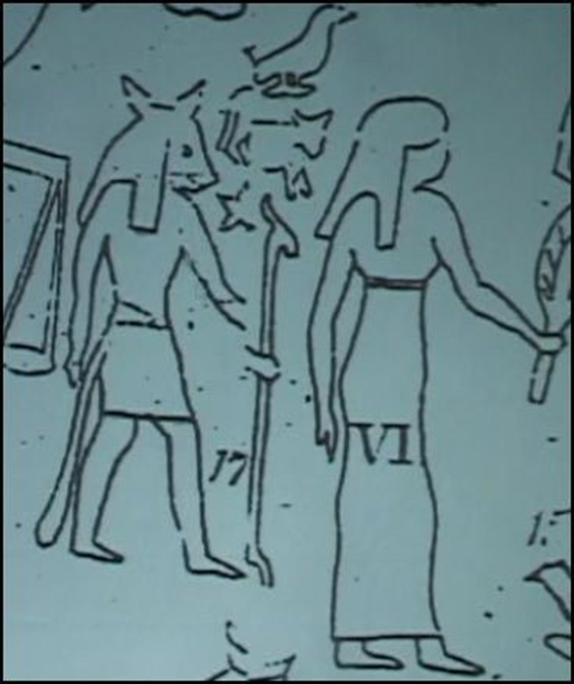
Centaurus – Temple of Denderah
Here in the Temple of Denderah a picture of a human with the head of a calf and tail is seen. The tail represents the one ‘cometh’ and the head of the calf or lamb of sacrifice. In Egyptian the name was ‘knemu’ which meant the one appointed to die or be bruised.
Gen 3:15 And I will put enmity between you and the woman, and between your seed and her Seed; He will bruise your head, and you shall bruise His heel.
Joh 1:29 On the morrow, John sees Jesus coming toward him and said, Behold! The Lamb of God, taking away the sin of the world!
Joh 1:36 And looking at Jesus walking, he said, Behold, the Lamb of God!
The last decan constellation is Bootes which is a picture of a man with a spear and sickle (Revelation 14:15-16) whose name means ‘the Coming One.’
Psa 96:13 before Jehovah; for He comes; for He comes to judge the earth; He shall judge the world with righteousness, and the people with His faithfulness.
Rev 14:14 And I saw; and behold, a white cloud and on the cloud One sitting like the Son of Man, having on His head a golden crown, and in His hand a sharp sickle.
Rev 14:15 And another angel went forth out of the temple, crying in a great voice to the One sitting on the cloud, Send Your sickle and reap, because Your hour to reap came, because the harvest of the earth was dried.
Rev 14:16 And the One sitting on the cloud thrust His sickle onto the earth, and the earth was reaped.
The Shepherd staff & sickle…Messiah gathers us by His sacrifice
Joh 10:11 I am the Good Shepherd! The Good Shepherd lays down His life on behalf of the sheep.
The Year is measured from Tequfah to Tequfah (Spring to Spring… Exodus 12:2). It is a continuous cycle of the sun rising directly over the Eastern horizon at the spring tequfah (‘equinox’) and proceeds to the North till it reaches its farthest point, the summer solstice, then travels back again where it rises again directly East on the fall tequfah and proceeds South to it’s farthest point at the winter solstice and then back again making a ‘figure eight’.
The Spring tequfah occurs when the sun has completed its cycle through the constellations.

תקופה ‘tequfah’ comes from the root קף ‘qaf’ which literally means the ‘sun speaks.’
The Hebrew words used in reference to time further reveal that time is linked to the movement of the heavenly bodies.

עת ‘et’ which pictographically means to ‘see the cross’, and in ancient Hebrew thinking meant to ‘see the mark.’ What is this ‘mark’? It is the sun setting (death) and rising (resurrection) above the horizon.
Psa 19:6 his (the sun) going forth from the end of the heavens, and his orbit (tequfah) to their ends; and nothing is hidden from his heat.
Gen 1:14 And God said, Let luminaries be in the expanse of the heavens, to divide between the day and the night. And let them be for signs and for seasons, and for days and years.
The signs of the heavens are a mark/reminder of the covenant with His people.
Jer 33:25 So says Jehovah, If My covenant is not with day and night, and if I have not appointed the ordinances of the heavens and earth,
Jer 33:26 then I also will reject the seed of Jacob, and My servant David, not to take of his seed to be rulers over the seed of Abraham, Isaac and Jacob. For I will bring back their captivity and have pity on them.
Psa 147:4 He appoints the number** of the stars; He calls to them all by names.
**The Hebrew word for number here is מספר ‘mispar’ from the root ספר ‘saphar’ which means a record/scroll. Brown Driver Briggs Hebrew dictionary defines מספר ‘mispar’ as a number or tale. A tale is an account telling a story. This is what the number of the stars does. It tells the story of the Gospel.
Rom 10:17 Then faith is of hearing, and hearing through the Word of God.
Rom 10:18 But I say, Did they not hear? Yes, rather, “into all the earth their voice went out, and to the ends of the world their words.”
In Romans 10, Paul is referring back to Psalm 19 which is speaking of the path of the sun and its orbit
{ תקופה ‘tequfah’}.
Psa 19:1 To the chief musician. A Psalm of David. The heavens are recounting the glory of God, and the expanse proclaiming His handiwork.
Psa 19:2 Day by day they pour forth speech, and night to night reveals knowledge.
Psa 19:3 There is no speech, nor are there words where their voice is not heard.
Psa 19:4 Their measuring line has gone out through all the earth, and their words to the end of the world; in them He has set up a dwelling-place for the sun,
Psa 19:5 and he comes forth like a bridegroom from his canopy. He rejoices like a hero to run a race;
Psa 19:6 his going forth from the end of the heavens, and his orbit to their ends; and nothing is hidden from his heat.
Recall that the solstice comes from the Hebrew word צהל ‘tsahal’ which means to shine (Psalm 104:15) but also has the meaning of a neighing of a horse (Jeremiah 5:8). The horse is further connected to the sun, time and the תקופה ‘tequfah’ through its hoof.
The word for the galloping of a horse in Hebrew is דהר ‘dahar’ which comes from the root דר ‘dar’ which means the cycles of time and life as a horse galloping makes a rhythmic sound such as the rhythm of time.
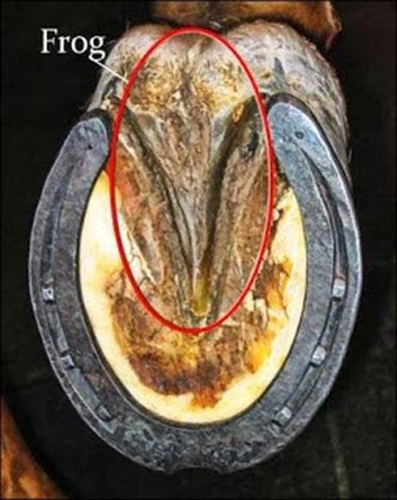
On the hoof of a horse is a part called the ‘frog’ which is used as a shock absorber but also plays an important role in the horse’s circulatory system as each ‘beat’ of the hoof pumps blood up the horse’s leg.
The Hebrew word for this ‘beating’ of the hoof is פעם ‘pa’am’ which also is translated as time. As seen in previous studies, the sun is integral in the calculation of time.
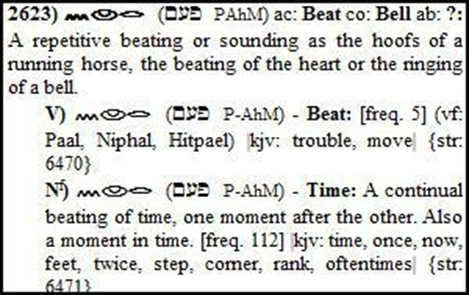
How does the rhythmic beating of a drum relate to the sun? The human heartbeat. At sunrise the sky appears red.
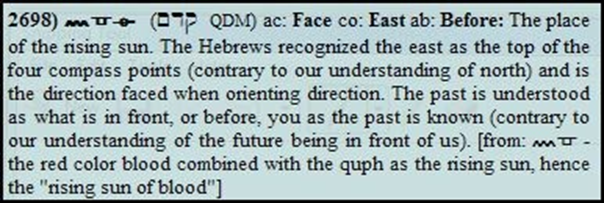
This word comes from דם ‘dam’ meaning blood.
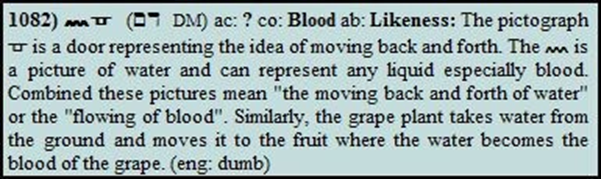
דם ‘dam’ literally means waters from the door, as in the living waters that come forth from the Temple, or the living waters of blood that come forth from the heart. The sun moving through the zodiac is also a picture of this. Psalm 19 speaks of the sun following the path of the zodiac and coming forth from ‘his canopy’ representing the Temple. A healthy heart pumps on average 72 times a minute, the sun moves a degree through the ecliptic every 72 years. It seems that the beating of the human heart corresponds with the movement of the sun through the ecliptic.
http://davidpratt.info/pattern1.htm#p1
“The ‘circle’ traced by the earth’s axis around the north ecliptic pole is not smooth but wavy, as the moon’s gravitational pull causes the earth to ‘nod’ about once every 18 years (currently 18.6 years), a movement known as nutation. The circle therefore contains about 1440 waves, since 18 x 1440 = 25,920. Note that the average human heartbeat is equal to 72 beats a minute, and on average we breathe about 18 times a minute. 72 years (= 6+60+6 or 6×12) is said to be the ‘ideal’ lifespan of a human being, during which time the sun moves through one degree of the zodiac in the precessional cycle. A human breathes 72 times in 4 minutes, the time required for the earth to turn 1 degree on its axis. In 24 hours (86,400 seconds) we breathe 18 x 1440 = 25,920 times, equal to the number of years in the precessional cycle.”
According to the National Geographic’s ‘Incredible Human Machine’ it takes 72 muscles for man to speak. The Hebrew word for time, עת, means to see the mark. What is the mark? It is when the sun rises directly east ( קדם ‘qedem’ ‘sun of blood’) at the time of the tequphah which literally means the ‘sun speaks.’
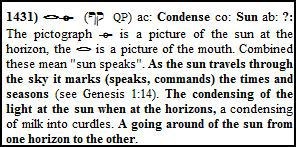
According to Ecclesiastes 1:5-6, the sun moves upon the wind/ruach again linking to the blood which flows through the human body and the living waters which flow forth from the throne of God.
Blood/DNA is further linked to the sun through the equinoxes (tequphot). The word for ‘equinox’ in Hebrew is tequphah. It literally means the mark of the sun. At the Spring tequfah the sun is at 23 degrees in the Tropic of Cancer. At the Autumn tequfah the sun is at 23 degrees in the Tropic of Capricorn. 23 +23 = 46. 46 is the number of chromosomes in the human body that stores our DNA. The chromosome is also in the shape of a cross/tav.
The analemma connection Uriel’s Machine pg 286-287
“Some desk research had shown that the meaning of the spiral had been found by Charles Ross, who had demonstrated it to be the path traced by the shadow of the sun over a quarter of a year. This connected with our observations, because the only essential pieces of equipment for building an Uriel machine are two straight sticks to align the equinoctial shadows and mark out the centre and the sunrise/sunset. If those same two sticks are placed in the ground a few feet apart, the sun will cast some very interesting shadows over the year. As the sun moves outward from the spring equinox to the summer solstice it will trace a spiral on the ground, then it will retrace itself back to the starting point for the autumn equinox. Then it moves out in the opposite direction to create a spiral in the other direction, before winding backwards again to its starting point.”
This double helix analemma is further linked through the degrees of the sun at the equinoxes.
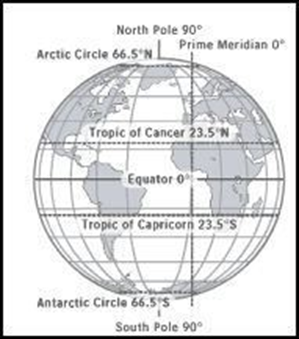
To recapitulate:
The word for ‘equinox’ in Hebrew is tequphah. It literally means the mark of the sun. At the Spring tequfah the sun is at 23 degrees in the Tropic of Cancer. At the Autumn tequfah the sun is at 23 degrees in the Tropic of Capricorn. 23 +23 = 46. 46 is the number of chromosomes in the human body that stores our DNA. The chromosome is also in the shape of a cross/tav.
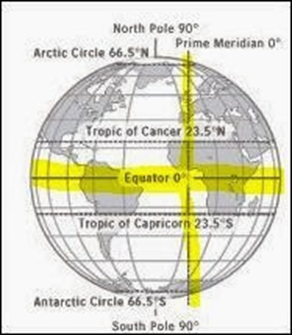
As the sun moves through its course in the sky it will rise directly East at the spring and fall equinoxes, making a cross in the sky each year.
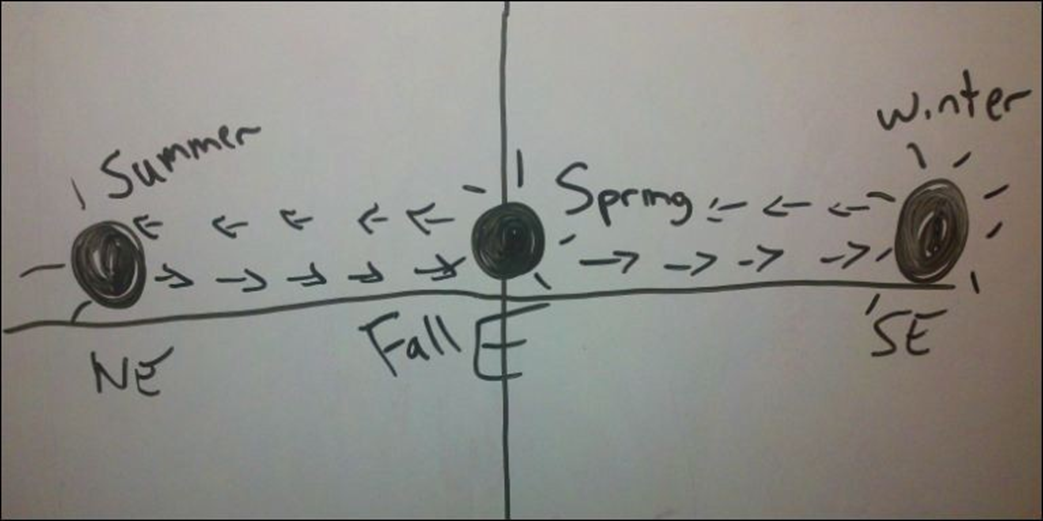
The are multiple words for time in Hebrew, the most used is עת ‘et’ which pictographically means to ‘see the cross’, and in ancient Hebrew thinking meant to ‘see the mark.’ What is this ‘mark’? It is the sun setting (death) and rising (resurrection) above the horizon.
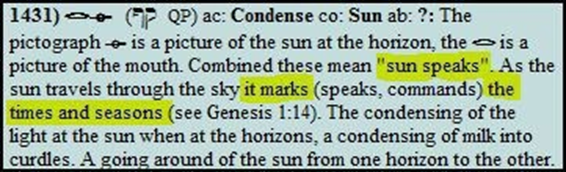
עת ‘et’ corresponds to the Greek word καιρος ‘kairos’ through comparing Daniel 7:25 & Revelation 12:6, 14.
In the Septuagint, καιρος ‘kairos’ is used to translate numerous words but one of which is very interesting. The word תר ‘tor’ due to its relation to the concept of ‘the mark.’
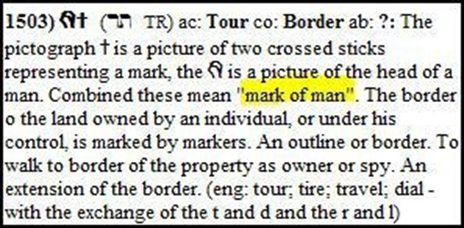
From this root we get תאר ‘ta’ar’ and תואר ‘to’ar.’ These words mean form, outline or border.
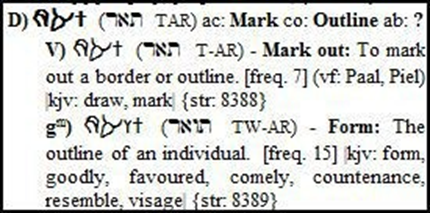
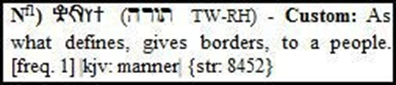
תואר ‘toar’ is from the same root תר‘tor’ as תורה ‘torah.’
The sun and time. The word for hour (among others – see the link) is related to the sun:

This comes from the root שע ‘sha’ which is a picture of a shepherd watching over his flock. שע ‘sha’ is also the root of the word ישועה ‘yeshuah,’ the origin of the name Jesus.
Going back to the frog (as in the frog of the horse hoof) is the etymology of the word frog. The word frog comes from Germanic word ‘frosc’ which means to hop. Their are numerous words in Hebrew for hop, but for the purpose of this study the word קפץ ‘qafats’ brings forth a fascinating connection.
קפץ ‘qafats’ means to draw close, translated as ‘skipping’ or ‘hopping’ in Song of Songs.
Son 2:8 The voice of my Beloved! Behold, He comes leaping on the mountains, skipping { קפץ ‘qafats’} on the hills.
קפץ ‘qafats’ comes from the root קף ‘qaf.’ קף ‘qaf,’ as mentioned before, is pointing to the sun at the horizon, which occurs at evening and morning when the birds and frogs sing their songs of praise unto the Most High. There are a number of other connections to the themes of winter seen in the frog.
Darkness
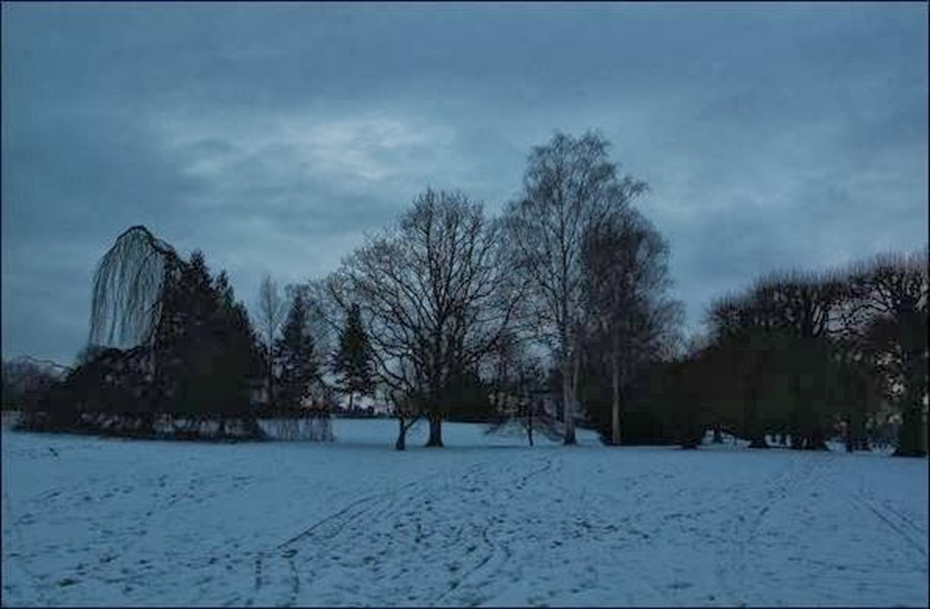
Winter is a time of darkness. The Hebrew word for darkness is חשך ‘chashakh’ which means a dark place/night from the root word שח ‘shach’ which means a pit. This connects darkness with death, which is equated in Scripture to the pit (Numbers 16:30; Psalm 88:3-12; Job 17:16). Scripture associates the coming of the Messiah as the Dayspring which ‘defeats’ the darkness (Luke 1:78). This keeps in theme with winter and the portrayal of the Seed of the woman defeating the seed of the serpent.
Luk 1:78 Through the tender mercy of our God; whereby the dayspring from on high hath visited us,
Luk 1:79 To give light to them that sit in darkness and in the shadow of death, to guide our feet into the way of peace.
The Greek word for ‘dayspring’ in Luke 1:78 is ανατολή ‘anatole’ which, as mentioned before, is the same word used for BRANCH/ צמח in the Septuagint. This points back to the constellation Virgo and the Branch in her hand, the Promised Seed of Genesis 3:15.
Luke 1:78-79 refers back to prophecies of the Messiah spoken of by Isaiah.
Isa 9:2 The people that walked in darkness have seen a great light: they that dwell in the land of the shadow of death, upon them hath the light shined.
Isa 9:6 For unto us a child is born, unto us a son is given: and the government shall be upon his shoulder: and his name shall be called Wonderful, Counsellor, The mighty God, The everlasting Father, The Prince of Peace.
Isa 9:7 Of the increase of his government and peace there shall be no end, upon the throne of David, and upon his kingdom, to order it, and to establish it with judgment and with justice from henceforth even for ever. The zeal of the LORD of hosts will perform this.
Isa 42:1 Behold my servant, whom I uphold; mine elect, in whom my soul delighteth; I have put my spirit upon him: he shall bring forth judgment to the Gentiles.
Isa 42:2 He shall not cry, nor lift up, nor cause his voice to be heard in the street.
Isa 42:3 A bruised reed shall he not break, and the smoking flax shall he not quench: he shall bring forth judgment unto truth.
Isa 42:4 He shall not fail nor be discouraged, till he have set judgment in the earth: and the isles shall wait for his law.
Isa 42:5 Thus saith God the LORD, he that created the heavens, and stretched them out; he that spread forth the earth, and that which cometh out of it; he that giveth breath unto the people upon it, and spirit to them that walk therein:
Isa 42:6 I the LORD have called thee in righteousness, and will hold thine hand, and will keep thee, and give thee for a covenant of the people, for a light of the Gentiles;
Isa 42:7 To open the blind eyes, to bring out the prisoners from the prison, and them that sit in darkness out of the prison house.
Isa 42:8 I am the LORD: that is my name: and my glory will I not give to another, neither my praise to graven images.
Evergreen Trees
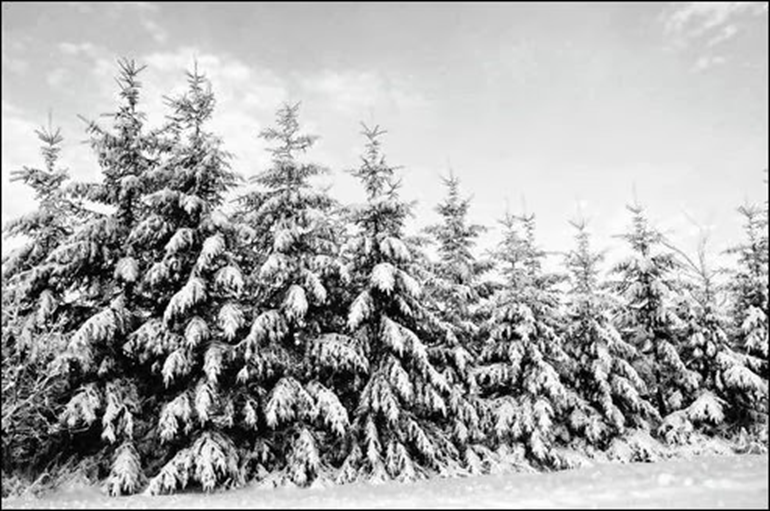
As seen previously, the promise of the Branch coming to defeat the enemy is linked to the time of winter. Evergreens are conspicuous during the winter due to deciduous trees casting forth their leaves and as a result portray life amidst death. The Promised Seed/Branch portrays this same imagery (1 John 3:5,8; Colossians 2:15; Hebrews 2:14) and as a result, evergreen trees have become representatives of the BRANCH, the One who would bring victory over death. The prophecy of Isaiah of the Son being given further connects this tree imagery. The Hebrew word for tree, עצה ‘estah’ is translated as ‘Counselor‘ in this portion of Scripture.
Isa 9:6 For a Child is born; to us a Son is given; and the government is on His shoulder; and His name is called Wonderful, Counselor { עצה ‘etsah’}, The Mighty God, The Everlasting Father, The Prince of Peace.
As the evergreen tree is connected with the Branch, the Seed of the woman it makes sense that the heathen incorporated this tree symbology into their Mysteries. This symbol has passed down into the customs of Christmas/Noel/Yule.
Digging deeper into the etymology of the word ‘yule’ traces to the Old French word ‘jolif’ which means festive, merry, pretty. ‘Jolif’ corresponds to the modern French word ‘joli’ meaning pretty or nice and the English word ‘jolly.’ ‘Jolif’ and jolly trace back further to the Hebrew word גילה ‘geelah’ which means joy and rejoicing, literally dancing in a circle. Recall that dancing in a circle is also associated with carols and the Hebrew word חלל ‘chalal’ which is the root of the Hebrew word for winter, חרף ‘charaph.’
The words ‘jolly’ and especially ‘jovial’ link back to the Latin word ‘Jovis’ (aka Jupiter). Jove was the chief deity of the Indo-European pantheon of the gods. Jove is said to be a combination of ‘dyeh-pater’
which means ‘god-father.’ Jove is a corruption of Jehovah, and in Latin can actually be pronounced as Yahweh. The heathens actually applied the Sacred Name to their idols and gods in numerous situations which I believe the Most High allowed in order to give them that glimmer of light mentioned above.
Yule and jolly trace back to the Hebrew word גילה ‘giylah’ which comes from the root גל ‘gal.’ It is interesting to note that the word for idol גלול ‘galul’, of which this holiday became, is from the same root. Even more interesting is that the words for infant גול ‘gol’ and redeemer גאל ‘goel’and scroll מגילה ‘megilah’ is also from גל ‘gal’ where Messiah, the Word made flesh redeemed man from His sins at a place called גלגלת ‘golgolet’ which too comes from גל ‘gal.’ Recall that גלה ‘galah’ means to make something bare which is related to the Hebrew word for ice/frost which is קרח ‘qarach.’ גלה ‘galah’ is translated in the Septuagint as the word φανεροω ‘phaneroo’ which means to make something manifest, as in the coming of the Messiah.
1Jn 3:5 And ye know that he was manifested {φανεροω ‘phaneroo’} to take away our sins; and in him is no sin.
1Jn 3:8 He that committeth sin is of the devil; for the devil sinneth from the beginning. For this purpose the Son of God was manifested {φανεροω ‘phaneroo’}, that he might destroy the works of the devil.
Heb 9:26 since He must often have suffered from the foundation of the world. But now once for all, at the completion of the ages, He has been manifested {φανεροω ‘phaneroo’} for putting away of sin through the sacrifice of Himself.
גל ‘gal’ has the numerical equivalent of 33. This number ties into the yule log custom as it is linked to the belief in the Kundalini spirit rising up the 33 bones of the spine to open up the pineal gland/’third eye’ to bring enlightenment to man and making him a ‘god.’ Interestingly, scientists state that the human spine is made up of 26 bones, which is equivalent to the number of יהוה ‘Yahweh.’ Here we see the two trees in the Garden. The tree of Life represented by 26 vs. the tree of knowledge of good and evil represented by 33. It is no surprise that the Hebrew word for tree עץ ‘ets’ is the root of the Hebrew word for spine עצה ‘etsah.’
The English word spine comes from the Latin word ‘spica.’ Spica points directly to the Messiah as seen in the constellation of Virgo. In the hand of the Virgin is a sheaf of wheat with 5 stars. A virgin (Isaiah 7:14) holding a branch (Jeremiah 23:5-6) and an ear of corn. Corn = seed (Latin Spica, the modern name of this bright star. Old name was Arabic ‘Al Zimach’ which means seed). The star ‘Zavijaveh’ in this constellation means “gloriously beautiful” (Isaiah 4:2). ‘Zimach’ in Arabic refers back to the Hebrew צמח ‘tsemach’, which is used 5 times in Scripture reference to the Messiah (Isaiah 4:2; Jeremiah 23:5; 33:15; Zechariah 3:8; 6:12).
Evergreen trees are linked to Messiah and His coming.
Isa 55:1 Ho, everyone who thirsts, come to the water; and he who has no silver, come buy grain and eat. Yes, come buy grain, wine and milk without silver and with no price.
Isa 55:2 Why do you weigh out silver for that which is not bread, and your labor for what never satisfies? Listen carefully to Me and eat the good; and let your soul delight itself in fatness.
Isa 55:3 Bend your ear and come to Me; hear, and your soul shall live; and I will cut an everlasting covenant with you, the faithful mercies of David.
Isa 55:4 Behold, I gave Him a Witness to peoples, a Leader and Commander of peoples.
Isa 55:10 For as the rain and the snow comes down from the heavens and do not return there, except it waters the earth and make it bring forth and bud, and give seed to the sower and bread to the eater,
Isa 55:11 so shall My Word be, which goes out of My mouth; it shall not return to Me void, but it shall accomplish that which I please, and it shall prosper in what I sent it to do!
Isa 55:12 For you shall go out with joy and be led out with peace. The mountains and the hills shall break out into song before you, and all the trees of the field shall clap the hand.
Isa 55:13 Instead of the thornbush, the fir tree shall come up; instead of the brier, the myrtle shall come up; and it shall be for a name to Jehovah, for an everlasting sign that shall not be cut off. {the fir and myrtle are both evergreen}
The Hebrew word for fir tree is ברוש ‘berosh’ which comes from the root בר ‘bar’ which is the Hebrew word for ‘my son’ (Psalm 2:12).
Hos 14:8 Ephraim shall say, What have I to do any more with idols? I have heard him, and observed him: I am like a green fir tree {ברוש}. From me is thy fruit found.
The word here for green is רען ‘raan’ which means a green flourishing field. רען ‘ra’an’ comes from the root רע ‘ra’ which means shepherd, as one who leads his flock to these green pastures. The link to Messiah here is obvious (John 10:11). Is it any surprise then that Scripture links the counterfeit antichrist (Zechariah 11:16-17; John 10:1, 5, 8, 10) to a shepherd and in the winter solstice celebration a tree?
The temple was built from cedars of Lebanon (1Kings 5:5-6; Zechariah 11:1) which is a picture of Messiah (John 2:21). Messiah is likened unto Lebanon which is the land of the evergreen.
Son 5:15 His legs are as pillars of marble, set upon sockets of fine gold: his countenance ( מראה ‘mareh’ – appearance) is as Lebanon (white), excellent ( בחר ‘bachar’ – chosen) as the cedars.
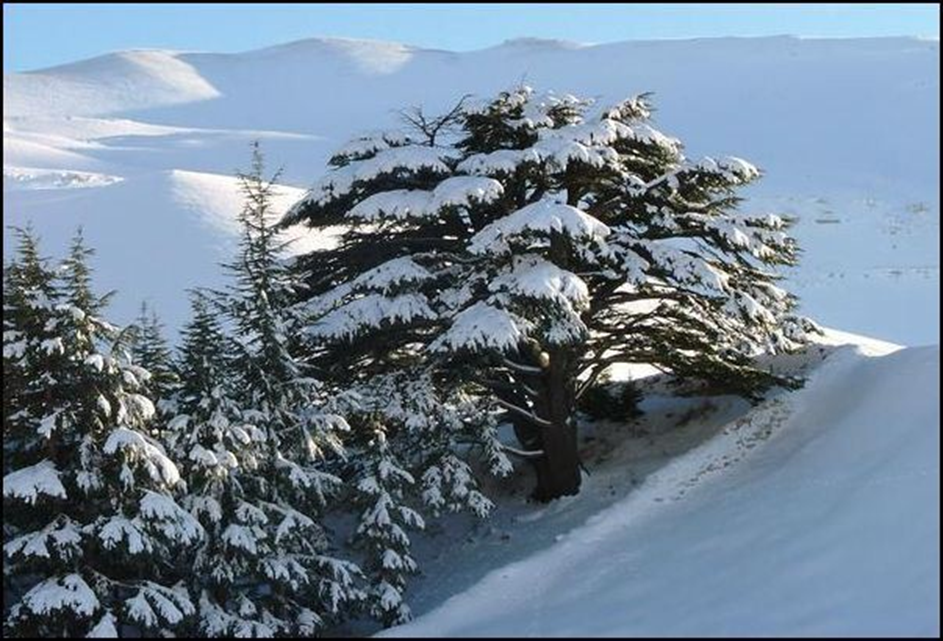
It is interesting to note that the smell of the garments of Messiah is linked to the smell of the Temple which was built from cedars and the smell linked thereto (Psalm 45:7 – Numbers 24:6).
Hos 14:5 I will be as the dew to Israel; he shall blossom as the lily and cast out his roots like Lebanon.
Hos 14:6 His branches shall go out, and his beauty shall be like the olive tree, and his scent as Lebanon to him.
Son 4:11 Your lips, My spouse, drip like the honeycomb; honey and milk are under your tongue. And the scent of your garments is like the scent of Lebanon.
John Gill commentary
such are Christ’s robe of righteousness, and garments of salvation, which are said to “smell of myrrh, aloes, and cassia”; with which the saints being arrayed, the smell of their raiment is as “the smell of a field the Lord has blessed”, and so like the smell of Lebanon, a mountain abounding with odoriferous trees and plants; see Psa_45:8.
Following are a few studies already published which discuss the winter holidays and the shadow pictures of Messiah which are displayed therein. As a result, some information may be repeated. This information is shared because of the importance of these holidays in the lives of believers during the winter season. When I wrote these articles I still held to the belief that Christmas had pagan origins and was “baptised” by the Catholic Church. After a lot of research I found that claim to be false. I share my findings in this study : In Defense of Christmas
Everything we experience in this life is a Shadow picture or parable that points us back to the Word of God, the Image of the Father (Hebrews 1:3; 8:5; 9:24; 10:1; 2 Corinthians 4:4; Colossians 1:15-16; 2:16-17; 3:11).
Heb 1:3 Who being the brightness of his glory, and the express image of his person, and upholding all things by the word of his power, when he had by himself purged our sins, sat down on the right hand of the Majesty on high;
Heb 8:5 Who serve unto the example and shadow of heavenly things, as Moses was admonished of God when he was about to make the tabernacle: for, See, saith he, that thou make all things according to the pattern shewed to thee in the mount.
Heb 9:24 For Christ is not entered into the holy places made with hands, which are the figures of the true; but into heaven itself, now to appear in the presence of God for us:
Heb 10:1 For the law having a shadow of good things to come, and not the very image of the things, can never with those sacrifices which they offered year by year continually make the comers thereunto perfect.
2Co 4:4 In whom the god of this world hath blinded the minds of them which believe not, lest the light of the glorious gospel of Christ, who is the image of God, should shine unto them.
Col 1:15 Who is the image of the invisible God, the firstborn of every creature:
Col 1:16 For by him were all things created, that are in heaven, and that are in earth, visible and invisible, whether they be thrones, or dominions, or principalities, or powers: all things were created by him, and for him:
Col 2:16 Let no man therefore judge you in meat, or in drink, or in respect of an holyday, or of the new moon, or of the sabbath days:
Col 2:17 Which are a shadow of things to come; but the body is of Christ.
Col 3:10 And have put on the new man, which is renewed in knowledge after the image of him that created him:
Col 3:11 Where there is neither Greek nor Jew, circumcision nor uncircumcision, Barbarian, Scythian, bond nor free: but Christ is all, and in all.
He is in control of all things and thus, His Hand is seen in all things. Even the very Word is a shadow pointing to Him (Hebrews 10:1).
Heb 10:1 For the law having a shadow of good things to come, and not the very image of the things, can never with those sacrifices which they offered year by year continually make the comers thereunto perfect.
Thus, we are not to judge one another on how we worship Him (Colossians 2:16-17), we are to work out our salvation with fear and trembling (Philippians 2:12-13).
Col 2:16 Let no man therefore judge you in meat, or in drink, or in respect of an holyday, or of the new moon, or of the sabbath days:
Col 2:17 Which are a shadow of things to come; but the body is of Christ.
Php 2:12 Wherefore, my beloved, as ye have always obeyed, not as in my presence only, but now much more in my absence, work out your own salvation with fear and trembling.
Php 2:13 For it is God which worketh in you both to will and to do of his good pleasure.
There is nothing wrong with admonishing one another and correcting one another in love (2 Timothy 4:2; Ephesians 4:15), but ultimately each person has to find out what His will is by seeking His Face and being transformed from within (Romans 12:2; Hebrews 13:21).
2Ti 4:2 Preach the word; be instant in season, out of season; reprove, rebuke, exhort with all longsuffering and doctrine.
Eph 4:15 But speaking the truth in love, may grow up into him in all things, which is the head, even Christ:
Rom 12:2 And be not conformed to this world: but be ye transformed by the renewing of your mind, that ye may prove what is that good, and acceptable, and perfect, will of God.
Heb 13:20 Now the God of peace, that brought again from the dead our Lord Jesus, that great shepherd of the sheep, through the blood of the everlasting covenant,
Heb 13:21 Make you perfect in every good work to do his will, working in you that which is wellpleasing in his sight, through Jesus Christ; to whom be glory for ever and ever. Amen.
Arguing, fighting, debating, pointing the finger at one another is not going to lead people to truth (Romans 1:29; Isaiah 58:4), it only engenders strife and division (1 Corinthians 1:12-13; 3:3-4; Philippians 2:3).
Rom 1:28 And even as they did not like to retain God in their knowledge, God gave them over to a reprobate mind, to do those things which are not convenient;
Rom 1:29 Being filled with all unrighteousness, fornication, wickedness, covetousness, maliciousness; full of envy, murder, debate, deceit, malignity; whisperers,
Isa 58:4 Behold, ye fast for strife and debate, and to smite with the fist of wickedness: ye shall not fast as ye do this day, to make your voice to be heard on high.
1Co 1:12 Now this I say, that every one of you saith, I am of Paul; and I of Apollos; and I of Cephas; and I of Christ.
1Co 1:13 Is Christ divided? was Paul crucified for you? or were ye baptized in the name of Paul?
1Co 3:3 For ye are yet carnal: for whereas there is among you envying, and strife, and divisions, are ye not carnal, and walk as men?
1Co 3:4 For while one saith, I am of Paul; and another, I am of Apollos; are ye not carnal?
Php 2:3 Let nothing be done through strife or vainglory; but in lowliness of mind let each esteem other better than themselves.
Php 2:4 Look not every man on his own things, but every man also on the things of others.
Unity does not mean that we all have to agree with one another on all doctrine. Unity comes through covenant relationship with God through Messiah (Psalm 50:5; Isaiah 49:3-9; Hebrews 2:11; 13:20-21; Jeremiah 50:5; Ephesians 2:15; Colossians 1:20; 2:1-11).
Psa 50:4 He shall call to the heavens from above, and to the earth, that he may judge his people.
Psa 50:5 Gather my saints together unto me; those that have made a covenant with me by sacrifice.
Psa 50:6 And the heavens shall declare his righteousness: for God is judge himself. Selah.
Isa 49:3 And said unto me, Thou art my servant, O Israel, in whom I will be glorified.
Isa 49:4 Then I said, I have laboured in vain, I have spent my strength for nought, and in vain: yet surely my judgment is with the LORD, and my work with my God.
Isa 49:5 And now, saith the LORD that formed me from the womb to be his servant, to bring Jacob again to him, Though Israel be not gathered, yet shall I be glorious in the eyes of the LORD, and my God shall be my strength.
Isa 49:6 And he said, It is a light thing that thou shouldest be my servant to raise up the tribes of Jacob, and to restore the preserved of Israel: I will also give thee for a light to the Gentiles, that thou mayest be my salvation unto the end of the earth.
Isa 49:7 Thus saith the LORD, the Redeemer of Israel, and his Holy One, to him whom man despiseth, to him whom the nation abhorreth, to a servant of rulers, Kings shall see and arise, princes also shall worship, because of the LORD that is faithful, and the Holy One of Israel, and he shall choose thee.
Isa 49:8 Thus saith the LORD, In an acceptable time have I heard thee, and in a day of salvation have I helped thee: and I will preserve thee, and give thee for a covenant of the people, to establish the earth, to cause to inherit the desolate heritages;
Isa 49:9 That thou mayest say to the prisoners, Go forth; to them that are in darkness, Shew yourselves. They shall feed in the ways, and their pastures shall be in all high places.
Isa 49:10 They shall not hunger nor thirst; neither shall the heat nor sun smite them: for he that hath mercy on them shall lead them, even by the springs of water shall he guide them.
Isa 49:11 And I will make all my mountains a way, and my highways shall be exalted.
Isa 49:12 Behold, these shall come from far: and, lo, these from the north and from the west; and these from the land of Sinim.
Isa 49:13 Sing, O heavens; and be joyful, O earth; and break forth into singing, O mountains: for the LORD hath comforted his people, and will have mercy upon his afflicted.
Heb 2:11 For both he that sanctifieth and they who are sanctified are all of one: for which cause he is not ashamed to call them brethren,
Heb 13:20 Now the God of peace, that brought again from the dead our Lord Jesus, that great shepherd of the sheep, through the blood of the everlasting covenant,
Heb 13:21 Make you perfect in every good work to do his will, working in you that which is wellpleasing in his sight, through Jesus Christ; to whom be glory for ever and ever. Amen.
Jer 50:4 In those days, and in that time, saith the LORD, the children of Israel shall come, they and the children of Judah together, going and weeping: they shall go, and seek the LORD their God.
Jer 50:5 They shall ask the way to Zion with their faces thitherward, saying, Come, and let us join ourselves to the LORD in a perpetual covenant that shall not be forgotten.
Eph 2:13 But now in Christ Jesus ye who sometimes were far off are made nigh by the blood of Christ.
Eph 2:14 For he is our peace, who hath made both one, and hath broken down the middle wall of partition between us;
Eph 2:15 Having abolished in his flesh the enmity, even the law of commandments contained in ordinances; for to make in himself of twain one new man, so making peace;
Eph 2:16 And that he might reconcile both unto God in one body by the cross, having slain the enmity thereby:
Eph 2:17 And came and preached peace to you which were afar off, and to them that were nigh.
Eph 2:18 For through him we both have access by one Spirit unto the Father.
Eph 2:19 Now therefore ye are no more strangers and foreigners, but fellowcitizens with the saints, and of the household of God;
Eph 2:20 And are built upon the foundation of the apostles and prophets, Jesus Christ himself being the chief corner stone;
Eph 2:21 In whom all the building fitly framed together groweth unto an holy temple in the Lord:
Eph 2:22 In whom ye also are builded together for an habitation of God through the Spirit.
Col 1:20 And, having made peace through the blood of his cross, by him to reconcile all things unto himself; by him, I say, whether they be things in earth, or things in heaven.
Col 1:21 And you, that were sometime alienated and enemies in your mind by wicked works, yet now hath he reconciled
Col 1:22 In the body of his flesh through death, to present you holy and unblameable and unreproveable in his sight:
Col 1:23 If ye continue in the faith grounded and settled, and be not moved away from the hope of the gospel, which ye have heard, and which was preached to every creature which is under heaven; whereof I Paul am made a minister;
Col 2:1 For I would that ye knew what great conflict I have for you, and for them at Laodicea, and for as many as have not seen my face in the flesh;
Col 2:2 That their hearts might be comforted, being knit together in love, and unto all riches of the full assurance of understanding, to the acknowledgement of the mystery of God, and of the Father, and of Christ;
Col 2:3 In whom are hid all the treasures of wisdom and knowledge.
Col 2:4 And this I say, lest any man should beguile you with enticing words.
Col 2:5 For though I be absent in the flesh, yet am I with you in the spirit, joying and beholding your order, and the stedfastness of your faith in Christ.
Col 2:6 As ye have therefore received Christ Jesus the Lord, so walk ye in him:
Col 2:7 Rooted and built up in him, and stablished in the faith, as ye have been taught, abounding therein with thanksgiving.
Col 2:8 Beware lest any man spoil you through philosophy and vain deceit, after the tradition of men, after the rudiments of the world, and not after Christ.
Col 2:9 For in him dwelleth all the fulness of the Godhead bodily.
Col 2:10 And ye are complete in him, which is the head of all principality and power:
Col 2:11 In whom also ye are circumcised with the circumcision made without hands, in putting off the body of the sins of the flesh by the circumcision of Christ:
Although all things are shadows, not all things are pleasing to Him as corruption entered creation at the time of the tree of knowledge being eaten by Adam (Romans 5:12; 1 Corinthians 15:22).
Rom 5:12 Wherefore, as by one man sin entered into the world, and death by sin; and so death passed upon all men, for that all have sinned:
1Co 15:22 For as in Adam all die, even so in Christ shall all be made alive.
Thus, all have fallen short of His glory (Romans 3:23) and all have corrupted His image in our actions and in our religious practices.
Rom 3:23 For all have sinned, and come short of the glory of God;
As believers, we are called to ‘come out of’ of the corruptions of this world and walk in the purity of His Word (2 Corinthians 6:17; Revelation 18:4), growing in grace and knowledge (2 Peter 3:18), transforming into His image, from ‘glory to glory’ (2 Corinthians 3:18).
2Co 6:17 Wherefore come out from among them, and be ye separate, saith the Lord, and touch not the unclean thing; and I will receive you,
2Co 6:18 And will be a Father unto you, and ye shall be my sons and daughters, saith the Lord Almighty.
Rev 18:4 And I heard another voice from heaven, saying, Come out of her, my people, that ye be not partakers of her sins, and that ye receive not of her plagues.
2Pe 3:18 But grow in grace, and in the knowledge of our Lord and Saviour Jesus Christ. To him be glory both now and for ever. Amen.
2Co 3:18 But we all, with open face beholding as in a glass the glory of the Lord, are changed into the same image from glory to glory, even as by the Spirit of the Lord.
So while many aspects of religion and customs of the world point us to the Almighty, religion in and of itself is not the path to truth and salvation. The path to truth and salvation is in covenant relationship with the Lord (John 14:6), the Word who was made flesh.
Joh 14:6 Jesus saith unto him, I am the way, the truth, and the life: no man cometh unto the Father, but by me.
As we all see through a glass darkly, we must be patient with one another and walk in His love for this is the essence of the Almighty (1 Corinthians 13:12-13; 1 John 4:7-18).
1Co 13:12 For now we see through a glass, darkly; but then face to face: now I know in part; but then shall I know even as also I am known.
1Co 13:13 And now abideth faith, hope, charity, these three; but the greatest of these is charity.
1Jn 4:7 Beloved, let us love one another: for love is of God; and every one that loveth is born of God, and knoweth God.
1Jn 4:8 He that loveth not knoweth not God; for God is love.
1Jn 4:9 In this was manifested the love of God toward us, because that God sent his only begotten Son into the world, that we might live through him.
1Jn 4:10 Herein is love, not that we loved God, but that he loved us, and sent his Son to be the propitiation for our sins.
1Jn 4:11 Beloved, if God so loved us, we ought also to love one another.
1Jn 4:12 No man hath seen God at any time. If we love one another, God dwelleth in us, and his love is perfected in us.
1Jn 4:13 Hereby know we that we dwell in him, and he in us, because he hath given us of his Spirit. 1Jn 4:14 And we have seen and do testify that the Father sent the Son to be the Saviour of the world.
1Jn 4:15 Whosoever shall confess that Jesus is the Son of God, God dwelleth in him, and he in God.
1Jn 4:16 And we have known and believed the love that God hath to us. God is love; and he that dwelleth in love dwelleth in God, and God in him.
1Jn 4:17 Herein is our love made perfect, that we may have boldness in the day of judgment: because as he is, so are we in this world.
1Jn 4:18 There is no fear in love; but perfect love casteth out fear: because fear hath torment. He that feareth is not made perfect in love.
It is only through the example of God’s patience and forbearance that men can be led to repentance (Romans 2:4).
Rom 2:4 Or despisest thou the riches of his goodness and forbearance and longsuffering; not knowing that the goodness of God leadeth thee to repentance?
People are not led to true repentance through convincing arguments (1 Corinthians 2:1-5), they are led to the truth through the power of God (1 Corinthians 2:5).
1Co 2:1 And I, brethren, when I came to you, came not with excellency of speech or of wisdom, declaring unto you the testimony of God.
1Co 2:2 For I determined not to know any thing among you, save Jesus Christ, and him crucified. 1Co 2:3 And I was with you in weakness, and in fear, and in much trembling.
1Co 2:4 And my speech and my preaching was not with enticing words of man’s wisdom, but in demonstration of the Spirit and of power:
1Co 2:5 That your faith should not stand in the wisdom of1 men, but in the power of God.
He desires the salvation of man, not their condemnation (Ezekiel 18:23; 2 Peter 3:9; 1 Timothy 2:4).
Eze 18:23 Have I any pleasure at all that the wicked should die? saith the Lord GOD: and not that he should return from his ways, and live?
2Pe 3:9 The Lord is not slack concerning his promise, as some men count slackness; but is longsuffering to us-ward, not willing that any should perish, but that all should come to repentance.
1Ti 2:4 Who will have all men to be saved, and to come unto the knowledge of the truth.
1Ti 2:5 For there is one God, and one mediator between God and men, the man Christ Jesus;
1Ti 2:6 Who gave himself a ransom for all, to be testified in due time.
His power is His love in Messiah (Ephesians 3:16-17) who died for ALL mankind (John 3:16).
Eph 3:16 That he would grant you, according to the riches of his glory, to be strengthened with might by his Spirit in the inner man;
Eph 3:17 That Christ may dwell in your hearts by faith; that ye, being rooted and grounded in love,
Eph 3:18 May be able to comprehend with all saints what is the breadth, and length, and depth, and height;
Eph 3:19 And to know the love of Christ, which passeth knowledge, that ye might be filled with all the fulness of God.
Joh 3:15 That whosoever believeth in him should not perish, but have eternal life.
Joh 3:16 For God so loved the world, that he gave his only begotten Son, that whosoever believeth in him should not perish, but have everlasting life.
Joh 3:17 For God sent not his Son into the world to condemn the world; but that the world through him might be saved.
Joh 3:18 He that believeth on him is not condemned: but he that believeth not is condemned already, because he hath not believed in the name of the only begotten Son of God.
We come to faith in Him, not through doctrine or works, but by His grace (Ephesians 2:8-9).
Eph 2:8 For by grace are ye saved through faith; and that not of yourselves: it is the gift of God:
Eph 2:9 Not of works, lest any man should boast.
If we are to have the mind of Messiah (Philippians 2:5) we need to have His love (Ephesians 5:2).
Php 2:5 Let this mind be in you, which was also in Christ Jesus:
Php 2:6 Who, being in the form of God, thought it not robbery to be equal with God:
Php 2:7 But made himself of no reputation, and took upon him the form of a servant, and was made in the likeness of men:
Php 2:8 And being found in fashion as a man, he humbled himself, and became obedient unto death, even the death of the cross.
Eph 5:1 Be ye therefore followers of God, as dear children;
Eph 5:2 And walk in love, as Christ also hath loved us, and hath given himself for us an offering and a sacrifice to God for a sweetsmelling savour.
Love does not condemn but seeks to cover over sin and lead to truth (Proverbs 10:12; 17:9; 1 Corinthians 13:4; James 5:20; 1 Peter 4:8).
Pro 10:12 Hatred stirreth up strifes: but love covereth all sins.
Pro 17:9 He that covereth a transgression seeketh love; but he that repeateth a matter separateth very friends.
1Co 13:4 Charity suffereth long, and is kind; charity envieth not; charity vaunteth not itself, is not puffed up,
Jas 5:19 Brethren, if any of you do err from the truth, and one convert him;
Jas 5:20 Let him know, that he which converteth the sinner from the error of his way shall save a soul from death, and shall hide a multitude of sins.
1Pe 4:8 And above all things have fervent charity among yourselves: for charity shall cover the multitude of sins.
As a result, we are given the ministry of reconciliation and not of condemnation (2 Corinthians 2:10-11; 5:14-21; Ephesians 4:27).
2Co 2:10 To whom ye forgive any thing, I forgive also: for if I forgave any thing, to whom I forgave it, for your sakes forgave I it in the person of Christ;
2Co 2:11 Lest Satan should get an advantage of us: for we are not ignorant of his devices.
2Co 5:14 For the love of Christ constraineth us; because we thus judge, that if one died for all, then were all dead:
2Co 5:15 And that he died for all, that they which live should not henceforth live unto themselves, but unto him which died for them, and rose again.
2Co 5:16 Wherefore henceforth know we no man after the flesh: yea, though we have known Christ after the flesh, yet now henceforth know we him no more.
2Co 5:17 Therefore if any man be in Christ, he is a new creature: old things are passed away; behold, all things are become new.
2Co 5:18 And all things are of God, who hath reconciled us to himself by Jesus Christ, and hath given to us the ministry of reconciliation;
2Co 5:19 To wit, that God was in Christ, reconciling the world unto himself, not imputing their trespasses unto them; and hath committed unto us the word of reconciliation.
2Co 5:20 Now then we are ambassadors for Christ, as though God did beseech you by us: we pray you in Christ’s stead, be ye reconciled to God.
2Co 5:21 For he hath made him to be sin for us, who knew no sin; that we might be made the righteousness of God in him.
Eph 4:22 That ye put off concerning the former conversation the old man, which is corrupt according to the deceitful lusts;
Eph 4:23 And be renewed in the spirit of your mind;
Eph 4:24 And that ye put on the new man, which after God is created in righteousness and true holiness.
Eph 4:25 Wherefore putting away lying, speak every man truth with his neighbour: for we are members one of another.
Eph 4:26 Be ye angry, and sin not: let not the sun go down upon your wrath:
Eph 4:27 Neither give place to the devil.
As He died for all, we should no longer judge others after the flesh but look upon them as the Lord sees them (2 Corinthians 5:14-21).
He loves all (John 3:16) and desires that all come to salvation (2 Peter 3:9; 1 Timothy 2:4) and uses holidays such as Christmas and Hanukkah and draw men unto Himself. It is His love that draws mankind (John 12:32; Isaiah 54:7-13; John 6:44-45) not doctrine, nor our understanding of His Word.
Joh 12:32 And I, if I be lifted up from the earth, will draw all men unto me.
Isa 54:7 For a small moment have I forsaken thee; but with great mercies will I gather thee.
Isa 54:8 In a little wrath I hid my face from thee for a moment; but with everlasting kindness will I have mercy on thee, saith the LORD thy Redeemer.
Isa 54:9 For this is as the waters of Noah unto me: for as I have sworn that the waters of Noah should no more go over the earth; so have I sworn that I would not be wroth with thee, nor rebuke thee.
Isa 54:10 For the mountains shall depart, and the hills be removed; but my kindness shall not depart from thee, neither shall the covenant of my peace be removed, saith the LORD that hath mercy on thee.
Isa 54:11 O thou afflicted, tossed with tempest, and not comforted, behold, I will lay thy stones with fair colours, and lay thy foundations with sapphires.
Isa 54:12 And I will make thy windows of agates, and thy gates of carbuncles, and all thy borders of pleasant stones.
Isa 54:13 And all thy children shall be taught of the LORD; and great shall be the peace of thy children.
Joh 6:44 No man can come to me, except the Father which hath sent me draw him: and I will raise him up at the last day.
Joh 6:45 It is written in the prophets, And they shall be all taught of God. Every man therefore that hath heard, and hath learned of the Father, cometh unto me.
All of creation was corrupted, yet all of creation still points to Jesus, the One who reconciles creation back to the Father (Colossians 1:14-20; Ephesians 2:16; 2 Corinthians 5:18-21; Romans 5:10).
Col 1:14 In whom we have redemption through his blood, even the forgiveness of sins:
Col 1:15 Who is the image of the invisible God, the firstborn of every creature:
Col 1:16 For by him were all things created, that are in heaven, and that are in earth, visible and invisible, whether they be thrones, or dominions, or principalities, or powers: all things were created by him, and for him:
Col 1:17 And he is before all things, and by him all things consist.
Col 1:18 And he is the head of the body, the church: who is the beginning, the firstborn from the dead; that in all things he might have the preeminence.
Col 1:19 For it pleased the Father that in him should all fulness dwell;
Col 1:20 And, having made peace through the blood of his cross, by him to reconcile all things unto himself; by him, I say, whether they be things in earth, or things in heaven.
Eph 2:16 And that he might reconcile both unto God in one body by the cross, having slain the enmity thereby:
2Co 5:18 And all things are of God, who hath reconciled us to himself by Jesus Christ, and hath given to us the ministry of reconciliation;
2Co 5:19 To wit, that God was in Christ, reconciling the world unto himself, not imputing their trespasses unto them; and hath committed unto us the word of reconciliation.
2Co 5:20 Now then we are ambassadors for Christ, as though God did beseech you by us: we pray you in Christ’s stead, be ye reconciled to God.
2Co 5:21 For he hath made him to be sin for us, who knew no sin; that we might be made the righteousness of God in him.
Rom 5:10 For if, when we were enemies, we were reconciled to God by the death of his Son, much more, being reconciled, we shall be saved by his life.
His grace is seen in all things, yet when one receives His forgiveness and grace they are called to ‘go and sin no more’ (John 5:14; 8:11).
Joh 5:14 Afterward Jesus findeth him in the temple, and said unto him, Behold, thou art made whole: sin no more, lest a worse thing come unto thee.
Joh 8:10 When Jesus had lifted up himself, and saw none but the woman, he said unto her, Woman, where are those thine accusers? hath no man condemned thee?
Joh 8:11 She said, No man, Lord. And Jesus said unto her, Neither do I condemn thee: go, and sin no more.
Joh 8:12 Then spake Jesus again unto them, saying, I am the light of the world: he that followeth me shall not walk in darkness, but shall have the light of life.
We are to seek the purity of His Word (Psalm 12:6), to walk before Him and be perfect (Matthew 5:48).
Psa 12:6 The words of the LORD are pure words: as silver tried in a furnace of earth, purified seven times.
Psa 12:7 Thou shalt keep them, O LORD, thou shalt preserve them from this generation for ever. Mat 5:48 Be ye therefore perfect, even as your Father which is in heaven is perfect.
So, while many things which we believe and do have many good aspects, they are not pure in light of His Word. This is not to condemn these things in entirety, but there comes a time when the Father calls us to grow in maturity and leave off these ‘childish’ things (1 Corinthians 13:11).
1Co 13:11 When I was a child, I spake as a child, I understood as a child, I thought as a child: but when I became a man, I put away childish things.
1Co 13:12 For now we see through a glass, darkly; but then face to face: now I know in part; but then shall I know even as also I am known.
1Co 13:13 And now abideth faith, hope, charity, these three; but the greatest of these is charity.
It is in this spirit that I share this study. It is a message I believe I have been shown in the past few years that the winter holidays have been used for much good in calling the masses, through the example of His love, to Him. Yet, some customs in these holidays are not entirely pure and as such believers need to test all things and hold fast to that which is true (1 John 4:1; 1 Thessalonians 5:21).
1Jn 4:1 Beloved, believe not every spirit, but try the spirits whether they are of God: because many false prophets are gone out into the world.
1Th 5:21 Prove all things; hold fast that which is good.
These principals can be applied to most subjects which we encounter. The winter holidays are a a good example. Both Christmas and Hanukkah are shadow pictures which lead men to the Messiah, yet they also have corruptions within them. Winter itself points to the death and resurrection of Messiah, the Gospel.
The traditions and customs which we see during this time of year point to the Messiah, albeit some in corrupted form. Christmas and Hanukkah are imperfect holidays which spread the message of the perfect Gospel to imperfect people. Winter is a time of darkness in which people desire light. These holidays give this to them as they point mankind to the Light of the World (John 8:12).
Joh 8:12 Then spake Jesus again unto them, saying, I am the light of the world: he that followeth me shall not walk in darkness, but shall have the light of life.
These holidays are not the Light, they are conduits to lead men to the Light (Colossians 2:17).
Col 2:17 Which are a shadow of things to come; but the body is of Christ.
As these holidays are not the Light but mere shadows, as we walk with the Lord and grow closer to the goal set before us (Philippians 3:14), we should be leaving off with the childish things and growing unto maturity (1 Corinthians 13:11; 14:20).
Php 3:13 Brethren, I count not myself to have apprehended: but this one thing I do, forgetting those things which are behind, and reaching forth unto those things which are before,
Php 3:14 I press toward the mark for the prize of the high calling of God in Christ Jesus.
1Co 13:11 When I was a child, I spake as a child, I understood as a child, I thought as a child: but when I became a man, I put away childish things.
1Co 13:12 For now we see through a glass, darkly; but then face to face: now I know in part; but then shall I know even as also I am known.
1Co 13:13 And now abideth faith, hope, charity, these three; but the greatest of these is charity. 1Co 14:20 Brethren, be not children in understanding: howbeit in malice be ye children, but in understanding be men.
As mentioned previously, Shadows of Messiah are seen in all creation which includes man and his holidays. Man was created in the image of God (Genesis 1:26-27).
Gen 1:26 And God said, Let us make man in our image, after our likeness: and let them have dominion over the fish of the sea, and over the fowl of the air, and over the cattle, and over all the earth, and over every creeping thing that creepeth upon the earth.
Gen 1:27 So God created man in his own image, in the image of God created he him; male and female created he them.
Hence, more than any other part of creation, shadow pictures of Messiah are seen in relation to mankind. One major aspect of man is his religious ceremonies/holidays. As I’ve studied ancient history and religions, a repeating theme is seen. Truth mixed with error. All religions of the world have some truth which traces back to the Holy Scriptures and ultimately the Tree of Life. However, they are mixed with lies which reveals that they are producing fruit from the tree of knowledge which is a counterfeit of the Tree of Life.
Nonetheless, no matter how far removed from the truth a particular religion is, there is still some truth within, a glimmer of light which calls man to His Creator, through Messiah Jesus. All religions have some truth which is a gift of grace to all of mankind to draw us back to the Most High (2 Peter 3:9; 1 Timothy 2:4; 4:10), for He is the God of all.
2Pe 3:9 The Lord is not slack concerning his promise, as some men count slackness; but is longsuffering to us-ward, not willing that any should perish, but that all should come to repentance.
1Ti 2:4 Who will have all men to be saved, and to come unto the knowledge of the truth.
1Ti 4:10 For therefore we both labour and suffer reproach, because we trust in the living God, who is the Saviour of all men, specially of those that believe.
Rom 3:29 Or is He the God of Jews only, and not also of the nations? Yes, of the nations also,
Jer 32:27 Behold, I am Jehovah, the God of all flesh. Is anything too difficult for Me?
Joh 1:9 He was the true Light; He enlightens every man coming into the world.
Isa 19:24 In that day Israel shall be the third with Egypt and with Assyria, a blessing in the midst of the earth,
Isa 19:25 whom Jehovah of Hosts shall bless, saying, Blessed be My people Egypt, and Assyria, the work of My hands, and Israel My inheritance.
Num 16:22 And they fell on their faces, and said, O God, God of the spirits of all flesh; shall one man sin, and will You be angry with all the congregation?
Num 27:16 Let Jehovah, the God of the spirits of all flesh, appoint a man over the congregation Job 12:10 in whose hand is the soul of every living thing, and the breath of all flesh, even of man? Ecc 12:7 then the dust shall return to the earth as it was, and the spirit shall return to God who gave it.
Isa 64:8 But now, Jehovah, You are our Father. We are the clay, and You are our Former; yea, we all are Your handiwork.
There is a Biblical principle of Jehovah God sifting believers to draw them closer to Himself (Psalm 139:3).
Psa 139:1 To the chief Musician, A Psalm of David. O LORD, thou hast searched me, and known me.
Psa 139:2 Thou knowest my downsitting and mine uprising, thou understandest my thought afar off.
Psa 139:3 Thou compassest my path and my lying down, and art acquainted with all my ways. Psa 139:4 For there is not a word in my tongue, but, lo, O LORD, thou knowest it altogether.
Many times He allows the adversary to do this, such as in the case of Peter (Luke 22:31-32) and Job (Job 1:12; 2:6).
Luk 22:31 And the Lord said, Simon, Simon, behold, Satan hath desired to have you, that he may sift you as wheat:
Luk 22:32 But I have prayed for thee, that thy faith fail not: and when thou art converted, strengthen thy brethren.
Job 1:12 And the LORD said unto Satan, Behold, all that he hath is in thy power; only upon himself put not forth thine hand. So Satan went forth from the presence of the LORD.
Job 2:6 And the LORD said unto Satan, Behold, he is in thine hand; but save his life.
In the end this sifting was done for the betterment of both Peter and Job (Luke 22:32; Job 42:12).
Luk 22:32 But I have prayed for thee, that thy faith fail not: and when thou art converted, strengthen thy brethren.
Job 42:12 So the LORD blessed the latter end of Job more than his beginning: for he had fourteen thousand sheep, and six thousand camels, and a thousand yoke of oxen, and a thousand she asses.
Other times the customs of the heathen are allowed to remain in our midst in order to test believers (Judges 2:2-3, 20-23), but at the same time there are traces of truth that are within them in order to draw man unto their Savior (Psalm 138:6-8; 34:17-19), again for the betterment of man.
Jdg 2:2 And ye shall make no league with the inhabitants of this land; ye shall throw down their altars: but ye have not obeyed my voice: why have ye done this?
Jdg 2:3 Wherefore I also said, I will not drive them out from before you; but they shall be as thorns in your sides, and their gods shall be a snare unto you.
Jdg 2:20 And the anger of the LORD was hot against Israel; and he said, Because that this people hath transgressed my covenant which I commanded their fathers, and have not hearkened unto my voice;
Jdg 2:21 I also will not henceforth drive out any from before them of the nations which Joshua left when he died:
Jdg 2:22 That through them I may prove Israel, whether they will keep the way of the LORD to walk therein, as their fathers did keep it, or not.
Jdg 2:23 Therefore the LORD left those nations, without driving them out hastily; neither delivered he them into the hand of Joshua.
Psa 138:6 Though the LORD be high, yet hath he respect unto the lowly: but the proud he knoweth afar off.
Psa 138:7 Though I walk in the midst of trouble, thou wilt revive me: thou shalt stretch forth thine hand against the wrath of mine enemies, and thy right hand shall save me.
Psa 138:8 The LORD will perfect that which concerneth me: thy mercy, O LORD, endureth for ever: forsake not the works of thine own hands.
Psa 34:17 The righteous cry, and the LORD heareth, and delivereth them out of all their troubles.
Psa 34:18 The LORD is nigh unto them that are of a broken heart; and saveth such as be of a contrite spirit.
Psa 34:19 Many are the afflictions of the righteous: but the LORD delivereth him out of them all.
Eph 3:4 Whereby, when ye read, ye may understand my knowledge in the mystery of Christ)
Eph 3:5 Which in other ages was not made known unto the sons of men, as it is now revealed unto his holy apostles and prophets by the Spirit;
Eph 3:6 That the Gentiles should be fellowheirs, and of the same body, and partakers of his promise in Christ by the gospel:
Eph 1:9 Having made known unto us the mystery of his will, according to his good pleasure which he hath purposed in himself:
Eph 1:10 That in the dispensation of the fulness of times he might gather together in one all things in Christ, both which are in heaven, and which are on earth; even in him:
Eph 1:17 That the God of our Lord Jesus Christ, the Father of glory, may give unto you the spirit of wisdom and revelation in the knowledge of him:
Eph 1:18 The eyes of your understanding being enlightened; that ye may know what is the hope of his calling, and what the riches of the glory of his inheritance in the saints,
Eph 1:19 And what is the exceeding greatness of his power to us-ward who believe, according to the working of his mighty power,
Eph 1:20 Which he wrought in Christ, when he raised him from the dead, and set him at his own right hand in the heavenly places,
Eph 1:21 Far above all principality, and power, and might, and dominion, and every name that is named, not only in this world, but also in that which is to come:
Eph 1:22 And hath put all things under his feet, and gave him to be the head over all things to the church,
Eph 1:23 Which is his body, the fulness of him that filleth all in all.
With that being said, we need to patient with one another and walk in love in consideration of the beliefs of each other in regards to the winter holidays. There is good in secularized Christmas and Hanukkah which can be used to draw people to Messiah. This is the main desire of our Creator (John 6:29; 1 John 3:23).
Joh 6:29 Jesus answered and said unto them, This is the work of God, that ye believe on him whom he hath sent.
1Jn 3:23 And this is his commandment, That we should believe on the name of his Son Jesus Christ, and love one another, as he gave us commandment.
As a result, we should not impede His work by condemning and judging one another but use these holidays as He intends (Ezekiel 18:23; 2 Peter 3:9; 1 Timothy 2:4).
Eze 18:23 Have I any pleasure at all that the wicked should die? saith the Lord GOD: and not that he should return from his ways, and live?
2Pe 3:9 The Lord is not slack concerning his promise, as some men count slackness; but is longsuffering to us-ward, not willing that any should perish, but that all should come to repentance.
1Ti 2:4 Who will have all men to be saved, and to come unto the knowledge of the truth.
1Ti 2:5 For there is one God, and one mediator between God and men, the man Christ Jesus;
1Ti 2:6 Who gave himself a ransom for all, to be testified in due time.
The old adage, ‘don’t throw out the baby with the bathwater’ certainly applies to these holidays. When Paul walked in the midst of Mars’ hill, he used the beliefs of the Greeks to teach them about the truth of the Word (Acts 17:22-32), he didn’t condemn them for their beliefs.
Act 17:22 Then Paul stood in the midst of Mars’ hill, and said, Ye men of Athens, I perceive that in all things ye are too superstitious.
Act 17:23 For as I passed by, and beheld your devotions, I found an altar with this inscription, TO THE UNKNOWN GOD. Whom therefore ye ignorantly worship, him declare I unto you.
Act 17:24 God that made the world and all things therein, seeing that he is Lord of heaven and earth, dwelleth not in temples made with hands;
Act 17:25 Neither is worshipped with men’s hands, as though he needed any thing, seeing he giveth to all life, and breath, and all things;
Act 17:26 And hath made of one blood all nations of men for to dwell on all the face of the earth, and hath determined the times before appointed, and the bounds of their habitation;
Act 17:27 That they should seek the Lord, if haply they might feel after him, and find him, though he be not far from every one of us:
Act 17:28 For in him we live, and move, and have our being; as certain also of your own poets have said, For we are also his offspring.
Act 17:29 Forasmuch then as we are the offspring of God, we ought not to think that the Godhead is like unto gold, or silver, or stone, graven by art and man’s device.
Act 17:30 And the times of this ignorance God winked at; but now commandeth all men every where to repent:
Act 17:31 Because he hath appointed a day, in the which he will judge the world in righteousness by that man whom he hath ordained; whereof he hath given assurance unto all men, in that he hath raised him from the dead.
Act 17:32 And when they heard of the resurrection of the dead, some mocked: and others said, We will hear thee again of this matter.
These holidays can be used to lead others to the more perfect way of the Lord (Acts 18:24-28).
Act 18:24 And a certain Jew named Apollos, born at Alexandria, an eloquent man, and mighty in the scriptures, came to Ephesus.
Act 18:25 This man was instructed in the way of the Lord; and being fervent in the spirit, he spake and taught diligently the things of the Lord, knowing only the baptism of John.
Act 18:26 And he began to speak boldly in the synagogue: whom when Aquila and Priscilla had heard, they took him unto them, and expounded unto him the way of God more perfectly.
Act 18:27 And when he was disposed to pass into Achaia, the brethren wrote, exhorting the disciples to receive him: who, when he was come, helped them much which had believed through grace:
Act 18:28 For he mightily convinced the Jews, and that publickly, shewing by the scriptures that Jesus was Christ.
With that being said, I hope to show a few aspects of these winter holidays which reveal that which has just been proclaimed. I hope to give a balanced view of these holidays using equal weights and measures in accordance with the Word (Leviticus 19:35-36).
Lev 19:35 Ye shall do no unrighteousness in judgment, in meteyard, in weight, or in measure.
Lev 19:36 Just balances, just weights, a just ephah, and a just hin, shall ye have: I am the LORD your God, which brought you out of the land of Egypt.
One of the fruits of the Spirit is temperance which also means moderation or ‘balance’ (Galatians 5:23).
Gal 5:22 But the fruit of the Spirit is love, joy, peace, longsuffering, gentleness, goodness, faith,
Gal 5:23 Meekness, temperance: against such there is no law.
Hopefully the information found in this study will help the body of Messiah gain a more balanced view of the ‘reason for the season.’
Festival of Lights
The winter holidays celebrated by believers today are known as Festivals of Light. Both Christmas and Hanukkah are celebrated in winter, which is a time of darkness and death, as shadow pictures which declare the Light of the world who gives life/light to mankind (John 1:4-5, 9; 12:46).
Joh 1:4 In him was life; and the life was the light of men.
Joh 1:5 And the light shineth in darkness; and the darkness comprehended it not.
Joh 1:5 And the light shineth in darkness; and the darkness comprehended it not.
Joh 1:6 There was a man sent from God, whose name was John.
Joh 1:7 The same came for a witness, to bear witness of the Light, that all men through him might believe.
Joh 1:8 He was not that Light, but was sent to bear witness of that Light.
Joh 1:9 That was the true Light, which lighteth every man that cometh into the world.
Joh 1:10 He was in the world, and the world was made by him, and the world knew him not.
Joh 1:11 He came unto his own, and his own received him not.
Joh 1:12 But as many as received him, to them gave he power to become the sons of God, even to them that believe on his name:
Joh 1:13 Which were born, not of blood, nor of the will of the flesh, nor of the will of man, but of God.
Joh 1:14 And the Word was made flesh, and dwelt among us, (and we beheld his glory, the glory as of the only begotten of the Father,) full of grace and truth.
Joh 12:44 Jesus cried and said, He that believeth on me, believeth not on me, but on him that sent me.
Joh 12:45 And he that seeth me seeth him that sent me.
Joh 12:46 I am come a light into the world, that whosoever believeth on me should not abide in darkness.
As mentioned previously, the season of winter portrays the age old prophecy of the death and resurrection of the Seed of the woman to defeat the enemy of mankind (Genesis 3:15). This time of year was also celebrated by the heathen for the same reasons.
The ancient winter solstices were also known as ‘Festivals of Light.’ It was a time in which the sun, the ‘light of the world,’ was believed to have ‘died’ and ‘resurrected.’ The heathens celebrated this time as a victory of the ‘unconquerable sun.’ This was a foreshadow, albeit in corrupted form, of the coming of the Messiah, the Light of the world who would die and three days later resurrect to bring life to mankind (Malachi 4:2; John 8:12; 9:4).
Mal 4:2 But unto you that fear my name shall the Sun of righteousness arise with healing in his wings; and ye shall go forth, and grow up as calves of the stall.
Joh 8:12 Then spake Jesus again unto them, saying, I am the light of the world: he that followeth me shall not walk in darkness, but shall have the light of life.
Joh 9:4 I must work the works of him that sent me, while it is day: the night cometh, when no man can work.
Joh 9:5 As long as I am in the world, I am the light of the world.
The religions of the heathens incorporated different aspects of the work of the Messiah in their religions because they knew the ancient prophecy concerning the Messiah to come (Genesis 3:15) and saw this prophecy displayed in parable form in nature.
Gen 3:15 And I will put enmity between thee and the woman, and between thy seed and her seed; it shall bruise thy head, and thou shalt bruise his heel.
The adversary knew since the garden that the Seed of the woman was going to come to crush his head and sought to pervert the picture of this Seed to lead mankind astray. The perversion of the picture of the Word of God revealed in nature is at the core of what was wrong with the Mystery religions. So while they were ‘proclaiming’ in part the coming of the true Messiah through their winter solstice festivals, they were at the same time proclaiming false Christs who were created to lead mankind astray from seeing the truth of the Gospel (2 Corinthians 4:4).
2Co 4:3 But if our gospel be hid, it is hid to them that are lost:
2Co 4:4 In whom the god of this world hath blinded the minds of them which believe not, lest the light of the glorious gospel of Christ, who is the image of God, should shine unto them.
Hanukkah is a holiday instituted by the Maccabees as a declaration of victory over the aforementioned perversions of the heathen as the Maccabees rededicated the altar at the temple on the exact day it was defiled 3 years earlier. The 25th of Kislev was chosen by Antiochus to sacrifice to his god in accordance with the winter solstice festival. The Maccabees were in essence attempting to ‘sanctify’ the winter solstice festival to the Lord. The Maccabees rededicated the altar for eight days (1 Maccabees 4:56-59) with ‘mirth and gladness.’ At this time of year, the heathens were also celebrating with ‘mirth and gladness’ for eight days as well, a custom which traced back to the week long dedication of the temple of Ningirsu/Saturn. Saturnalia came forth from this dedication.
As a result of the Maccabees and early church ‘sanctifying’ the winter solstice to the Lord, the message of the Gospel has been declared to the masses of mankind. The Light of the world has come and overcome the darkness (John 1:1-14).
This, I believe, is in accordance with the will of God (John 3:17; Isaiah 49:6; 2 Peter 3:9; 1 Timothy 2:4; 1 Corinthians 9:19-23).
Joh 3:13 And no man hath ascended up to heaven, but he that came down from heaven, even the Son of man which is in heaven.
Joh 3:14 And as Moses lifted up the serpent in the wilderness, even so must the Son of man be lifted up:
Joh 3:15 That whosoever believeth in him should not perish, but have eternal life.
Joh 3:16 For God so loved the world, that he gave his only begotten Son, that whosoever believeth in him should not perish, but have everlasting life.
Joh 3:17 For God sent not his Son into the world to condemn the world; but that the world through him might be saved.
Joh 3:18 He that believeth on him is not condemned: but he that believeth not is condemned already, because he hath not believed in the name of the only begotten Son of God.
Joh 3:19 And this is the condemnation, that light is come into the world, and men loved darkness rather than light, because their deeds were evil.
Joh 3:20 For every one that doeth evil hateth the light, neither cometh to the light, lest his deeds should be reproved.
Joh 3:21 But he that doeth truth cometh to the light, that his deeds may be made manifest, that they are wrought in God.
Isa 49:6 And he said, It is a light thing that thou shouldest be my servant to raise up the tribes of Jacob, and to restore the preserved of Israel: I will also give thee for a light to the Gentiles, that thou mayest be my salvation unto the end of the earth.
Isa 49:7 Thus saith the LORD, the Redeemer of Israel, and his Holy One, to him whom man despiseth, to him whom the nation abhorreth, to a servant of rulers, Kings shall see and arise, princes also shall worship, because of the LORD that is faithful, and the Holy One of Israel, and he shall choose thee.
Isa 49:8 Thus saith the LORD, In an acceptable time have I heard thee, and in a day of salvation have I helped thee: and I will preserve thee, and give thee for a covenant of the people, to establish the earth, to cause to inherit the desolate heritages;
Isa 49:9 That thou mayest say to the prisoners, Go forth; to them that are in darkness, Shew yourselves. They shall feed in the ways, and their pastures shall be in all high places.
2Pe 3:9 The Lord is not slack concerning his promise, as some men count slackness; but is longsuffering to us-ward, not willing that any should perish, but that all should come to repentance.
1Ti 2:1 I exhort therefore, that, first of all, supplications, prayers, intercessions, and giving of thanks, be made for all men;
1Ti 2:2 For kings, and for all that are in authority; that we may lead a quiet and peaceable life in all godliness and honesty.
1Ti 2:3 For this is good and acceptable in the sight of God our Saviour;
1Ti 2:4 Who will have all men to be saved, and to come unto the knowledge of the truth.
1Ti 2:5 For there is one God, and one mediator between God and men, the man Christ Jesus;
1Ti 2:6 Who gave himself a ransom for all, to be testified in due time.
1Co 9:19 For though I be free from all men, yet have I made myself servant unto all, that I might gain the more.
1Co 9:20 And unto the Jews I became as a Jew, that I might gain the Jews; to them that are under the law, as under the law, that I might gain them that are under the law;
1Co 9:21 To them that are without law, as without law, (being not without law to God, but under the law to Christ,) that I might gain them that are without law.
1Co 9:22 To the weak became I as weak, that I might gain the weak: I am made all things to all men, that I might by all means save some.
1Co 9:23 And this I do for the gospel’s sake, that I might be partaker thereof with you.
Yet, I believe, some of the customs celebrated during this time are not in accordance with His will (Deuteronomy 4:14-20; Jeremiah 10:2; Leviticus 18:3-5; Deuteronomy 12:30-32; 18:9; Ezekiel 20:31-34; Ephesians 4:17-18).
Deu 4:14 And the LORD commanded me at that time to teach you statutes and judgments, that ye might do them in the land whither ye go over to possess it.
Deu 4:15 Take ye therefore good heed unto yourselves; for ye saw no manner of similitude on the day that the LORD spake unto you in Horeb out of the midst of the fire:
Deu 4:16 Lest ye corrupt yourselves, and make you a graven image, the similitude of any figure, the likeness of male or female,
Deu 4:17 The likeness of any beast that is on the earth, the likeness of any winged fowl that flieth in the air,
Deu 4:18 The likeness of any thing that creepeth on the ground, the likeness of any fish that is in the waters beneath the earth:
Deu 4:19 And lest thou lift up thine eyes unto heaven, and when thou seest the sun, and the moon, and the stars, even all the host of heaven, shouldest be driven to worship them, and serve them, which the LORD thy God hath divided unto all nations under the whole heaven.
Deu 4:20 But the LORD hath taken you, and brought you forth out of the iron furnace, even out of Egypt, to be unto him a people of inheritance, as ye are this day.
Lev 18:3 After the doings of the land of Egypt, wherein ye dwelt, shall ye not do: and after the doings of the land of Canaan, whither I bring you, shall ye not do: neither shall ye walk in their ordinances.
Lev 18:4 Ye shall do my judgments, and keep mine ordinances, to walk therein: I am the LORD your God.
Lev 18:5 Ye shall therefore keep my statutes, and my judgments: which if a man do, he shall live in them: I am the LORD.
Deu 12:30 Take heed to thyself that thou be not snared by following them, after that they be destroyed from before thee; and that thou enquire not after their gods, saying, How did these nations serve their gods? even so will I do likewise.
Deu 12:31 Thou shalt not do so unto the LORD thy God: for every abomination to the LORD, which he hateth, have they done unto their gods; for even their sons and their daughters they have burnt in the fire to their gods.
Deu 12:32 What thing soever I command you, observe to do it: thou shalt not add thereto, nor diminish from it.
Eze 20:32 And that which cometh into your mind shall not be at all, that ye say, We will be as the heathen, as the families of the countries, to serve wood and stone.
Eze 20:33 As I live, saith the Lord GOD, surely with a mighty hand, and with a stretched out arm, and with fury poured out, will I rule over you:
Eze 20:34 And I will bring you out from the people, and will gather you out of the countries wherein ye are scattered, with a mighty hand, and with a stretched out arm, and with fury poured out.
Eph 4:17 This I say therefore, and testify in the Lord, that ye henceforth walk not as other Gentiles walk, in the vanity of their mind,
Eph 4:18 Having the understanding darkened, being alienated from the life of God through the ignorance that is in them, because of the blindness of their heart:
In the larger scheme of things, holidays have been used by God to draw mankind unto Himself. On an individual basis however, Scripture leads me to believe that His will is for believers to leave off of these customs as they grow in maturity in Him (2 Peter 3:18; Ephesians 4:15).
2Pe 3:18 But grow in grace, and in the knowledge of our Lord and Saviour Jesus Christ. To him be glory both now and for ever. Amen.
Eph 4:15 But speaking the truth in love, may grow up into him in all things, which is the head, even Christ:
Eph 4:16 From whom the whole body fitly joined together and compacted by that which every joint supplieth, according to the effectual working in the measure of every part, maketh increase of the body unto the edifying of itself in love.
Eph 4:17 This I say therefore, and testify in the Lord, that ye henceforth walk not as other Gentiles walk, in the vanity of their mind,
Eph 4:18 Having the understanding darkened, being alienated from the life of God through the ignorance that is in them, because of the blindness of their heart:
Eph 4:19 Who being past feeling have given themselves over unto lasciviousness, to work all uncleanness with greediness.
Eph 4:20 But ye have not so learned Christ;
Eph 4:21 If so be that ye have heard him, and have been taught by him, as the truth is in Jesus:
Eph 4:22 That ye put off concerning the former conversation the old man, which is corrupt according to the deceitful lusts;
Eph 4:23 And be renewed in the spirit of your mind;
Eph 4:24 And that ye put on the new man, which after God is created in righteousness and true holiness.
Light of the world
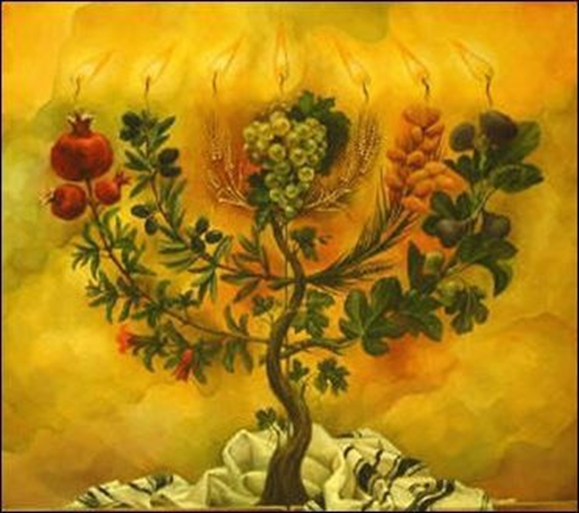
The main reason for these ‘Festivals of Light’ is to proclaim the Light of the world. In the Mysteries,
this was portrayed in their sun-worship rituals. The sun is in reality a shadow picture created by the Almighty to point mankind to His Son, the true Light of the world. Again, the mysteries corrupted the true ‘meaning of the season.’
Both the Christmas tree and the Hanukkiah are proclamations of the Light of the world. The Christmas tree is a representation of the ‘Light of the World’ which traces back to the tree of knowledge in and the serpent, (in Hebrew the word for serpent is נחש ‘nachash’ which means the shining one, ie. Lucifer the ‘light bringer’). The tree of knowledge was a counterfeit of the Tree of Life, whose fruit comes from the Messiah, the Light of the World. Messiah took upon Himself the ‘serpent on a tree’ imagery to destroy the works of the devil where His death could bring life to the world (John 3:14; Colossians 2:15; 1 John 3:8).
Joh 3:14 And as Moses lifted up the serpent in the wilderness, even so must the Son of man be lifted up:
Joh 3:15 That whosoever believeth in him should not perish, but have eternal life.
Col 2:13 And you, being dead in your sins and the uncircumcision of your flesh, hath he quickened together with him, having forgiven you all trespasses;
Col 2:14 Blotting out the handwriting of ordinances that was against us, which was contrary to us, and took it out of the way, nailing it to his cross;
Col 2:15 And having spoiled principalities and powers, he made a shew of them openly, triumphing over them in it.
Col 2:16 Let no man therefore judge you in meat, or in drink, or in respect of an holyday, or of the new moon, or of the sabbath days:
Col 2:17 Which are a shadow of things to come; but the body is of Christ.
1Jn 3:8 He that committeth sin is of the devil; for the devil sinneth from the beginning. For this purpose the Son of God was manifested, that he might destroy the works of the devil.
The Light of the world died and dwelt in darkness for 3 days, only resurrect to life. This is what the heathens had been celebrating for millenia in their winter solstice festivals. The ‘death’ and ‘resurrection’ of the sun.
In the Scriptures the Lord is even likened to an evergreen tree which further displays why this custom originated (Hosea 14:8).
Hos 14:8 Ephraim shall say, What have I to do any more with idols? I have heard him, and observed him: I am like a green fir tree. From me is thy fruit found.
The Hebrew word for fir tree is ברוש ‘berosh’ which comes from the root בר ‘bar’ which is the Hebrew word for ‘my son’ (Psalm 2:12).
Psa 2:12 Kiss the Son { בר ‘bar’}, lest he be angry, and ye perish from the way, when his wrath is kindled but a little. Blessed are all they that put their trust in him.
The Hanukkiah is a corruption of the Menorah. The menorah is a picture of Messiah and His body as well as the Tree of Life. The Hanukkiah has 9 branches instead of 7 which displays an ‘adding to the Word’ which is forbidden by the Almighty (Deuteronomy 4:2).
Deu 4:2 Ye shall not add unto the word which I command you, neither shall ye diminish ought from it, that ye may keep the commandments of the LORD your God which I command you.
Yet, the Hanukkiah still proclaims the Light of the world as it is a form of the menorah.
Christmas trees and Hanukkiahs are customs which proclaim Jesus as the Light of the world, but they can also be seen as corruptions of the Word. As such, believers are called to work out their own salvation in regards to such matters, not judging one another for their understand.
Php 2:12 Wherefore, my beloved, as ye have always obeyed, not as in my presence only, but now much more in my absence, work out your own salvation with fear and trembling.
As both symbols have identical meanings, it is important for believers not to judge others for their usage of these symbols (Romans 2:22).
Rom 2:22 Thou that sayest a man should not commit adultery, dost thou commit adultery? thou that abhorrest idols, dost thou commit sacrilege?
Those who have left Christmas because of its perceived corruptions should not be pointing the finger in judgment if they are celebrating Hanukkah and lighting Hanukkiahs. Walking in the love of God dictates that we should be patient and understanding of our brethren who may not yet see with the clarity that we do in certain aspects of our walks. The love of God also dictates that we should be praying for them to grow in the Lord and that their ignorance be pardoned/covered (Proverbs 10:12; 17:9; 1 Peter 4:1-2, 8).
Pro 10:12 Hatred stirreth up strifes: but love covereth all sins.
Pro 17:9 He that covereth a transgression seeketh love; but he that repeateth a matter separateth very friends.
1Pe 4:1 Forasmuch then as Christ hath suffered for us in the flesh, arm yourselves likewise with the same mind: for he that hath suffered in the flesh hath ceased from sin;
1Pe 4:2 That he no longer should live the rest of his time in the flesh to the lusts of men, but to the will of God.
1Pe 4:3 For the time past of our life may suffice us to have wrought the will of the Gentiles, when we walked in lasciviousness, lusts, excess of wine, revellings, banquetings, and abominable idolatries:
1Pe 4:4 Wherein they think it strange that ye run not with them to the same excess of riot, speaking evil of you:
1Pe 4:5 Who shall give account to him that is ready to judge the quick and the dead.
1Pe 4:6 For for this cause was the gospel preached also to them that are dead, that they might be judged according to men in the flesh, but live according to God in the spirit.
1Pe 4:7 But the end of all things is at hand: be ye therefore sober, and watch unto prayer.
1Pe 4:8 And above all things have fervent charity among yourselves: for charity shall cover the multitude of sins.
Some believe the word Christmas means the ‘mass of Christ.’ This is not accurate (see In Defense of Christmas) but even if this were true the truth of Christ comes forth. Christ comes from the Hebrew word meaning to anoint with oil. This anointing is related to the Hebrew word רקח ‘raqach’ which means to rub an ointment bringing forth a perfume. The ‘smell’ of Christmas with the evergreen tree in the home is in reality pointing to Messiah.
The Scriptures associate Messiah with the smell of the evergreens of Lebanon (Hosea 14:6; Song of Songs 5:15).
Hos 14:6 His branches shall spread, and his beauty shall be as the olive tree, and his smell as Lebanon.
Son 5:15 His legs are as pillars of marble, set upon sockets of fine gold: his countenance is as Lebanon, excellent as the cedars.
In Hosea 14:6 this association with the evergreen tree likens His beauty to the olive tree which further links to the menorah as olives were used to make the oil for the light (Exodus 25:6).
Exo 25:6 Oil for the light, spices for anointing oil, and for sweet incense,
Zec 4:2 And said unto me, What seest thou? And I said, I have looked, and behold a candlestick all of gold, with a bowl upon the top of it, and his seven lamps thereon, and seven pipes to the seven lamps, which are upon the top thereof:
Zec 4:3 And two olive trees by it, one upon the right side of the bowl, and the other upon the left side thereof.
Zec 4:11 Then answered I, and said unto him, What are these two olive trees upon the right side of the candlestick and upon the left side thereof?
Zec 4:12 And I answered again, and said unto him, What be these two olive branches which through the two golden pipes empty the golden oil out of themselves?
Zec 4:13 And he answered me and said, Knowest thou not what these be? And I said, No, my lord.
Zec 4:14 Then said he, These are the two anointed ones, that stand by the Lord of the whole earth.
Birth of the Christ
Scripture does not declare when Messiah was born. The best we can do is speculate based on various calculations. Some believe that the winter solstice was chosen to celebrate the birth of Messiah because this was the time that the Mystery religions celebrated the ‘birth’ of their Christ in correspondence with the sun’s movements. It is said that early Christians chose to ‘sanctify’ the customs surrounding the winter solstice celebrations of old. Evidence shows that this claim is not accurate but even if it was, this is what the Maccabees did during the institution of the holiday of Hanukkah as well. See December 25th
Antiochus Epiphanes sacrificed a pig on the altar of God, defiling it on the 25th of Kislev (25th day of the 9th month) in honor of the sun god (1 Maccabees 1:47,59).
1Ma 1:41 Moreover king Antiochus wrote to his whole kingdom, that all should be one people, 1Ma 1:42 And every one should leave his laws: so all the heathen agreed according to the commandment of the king.
1Ma 1:43 Yea, many also of the Israelites consented to his religion, and sacrificed unto idols, and profaned the sabbath.
1Ma 1:44 For the king had sent letters by messengers unto Jerusalem and the cities of Juda that they should follow the strange laws of the land,
1Ma 1:45 And forbid burnt offerings, and sacrifice, and drink offerings, in the temple; and that they should profane the sabbaths and festival days:
1Ma 1:46 And pollute the sanctuary and holy people:
1Ma 1:47 Set up altars, and groves, and chapels of idols, and sacrifice swine’s flesh, and unclean beasts:
1Ma 1:48 That they should also leave their children uncircumcised, and make their souls abominable with all manner of uncleanness and profanation:
1Ma 1:49 To the end they might forget the law, and change all the ordinances.
1Ma 1:50 And whosoever would not do according to the commandment of the king, he said, he should die.
1Ma 1:51 In the selfsame manner wrote he to his whole kingdom, and appointed overseers over all the people, commanding the cities of Juda to sacrifice, city by city.
1Ma 1:52 Then many of the people were gathered unto them, to wit every one that forsook the law; and so they committed evils in the land;
1Ma 1:53 And drove the Israelites into secret places, even wheresoever they could flee for succour.
1Ma 1:54 Now the fifteenth day of the month Casleu, in the hundred forty and fifth year, they set up the abomination of desolation upon the altar, and builded idol altars throughout the cities of Juda on every side;
1Ma 1:55 And burnt incense at the doors of their houses, and in the streets.
1Ma 1:56 And when they had rent in pieces the books of the law which they found, they burnt them with fire.
1Ma 1:57 And whosoever was found with any the book of the testament, or if any committed to the law, the king’s commandment was, that they should put him to death.
1Ma 1:58 Thus did they by their authority unto the Israelites every month, to as many as were found in the cities.
1Ma 1:59 Now the five and twentieth day of the month they did sacrifice upon the idol altar, which was upon the altar of God.
1Ma 1:60 At which time according to the commandment they put to death certain women, that had caused their children to be circumcised.
1Ma 1:61 And they hanged the infants about their necks, and rifled their houses, and slew them that had circumcised them.
1Ma 1:62 Howbeit many in Israel were fully resolved and confirmed in themselves not to eat any unclean thing.
1Ma 1:63 Wherefore the rather to die, that they might not be defiled with meats, and that they might not profane the holy covenant: so then they died.
1Ma 1:64 And there was very great wrath upon Israel.
The Maccabees, after obtaining victory over Antiochus, re-dedicated the altar to God on the exact same day 3 years later (1 Maccabees 4:52). They dedicated the altar for 8 days which correspondeded with the time period that the heathen would celebrate their winter solstice festival. The Maccabees rededicated the altar for eight days (1 Maccabees 4:56-59) with ‘mirth and gladness’ and ‘decorated’ the Temple.
1Ma 4:52 Now on the five and twentieth day of the ninth month, which is called the month Casleu, in the hundred forty and eighth year, they rose up betimes in the morning,
1Ma 4:53 And offered sacrifice according to the law upon the new altar of burnt offerings, which they had made.
1Ma 4:54 Look, at what time and what day the heathen had profaned it, even in that was it dedicated with songs, and citherns, and harps, and cymbals.
1Ma 4:55 Then all the people fell upon their faces, worshipping and praising the God of heaven, who had given them good success.
1Ma 4:56 And so they kept the dedication of the altar eight days and offered burnt offerings with gladness, and sacrificed the sacrifice of deliverance and praise.
1Ma 4:57 They decked also the forefront of the temple with crowns of gold, and with shields; and the gates and the chambers they renewed, and hanged doors upon them.
1Ma 4:58 Thus was there very great gladness among the people, for that the reproach of the heathen was put away.
1Ma 4:59 Moreover Judas and his brethren with the whole congregation of Israel ordained, that the days of the dedication of the altar should be kept in their season from year to year by the space of eight days, from the five and twentieth day of the month Casleu, with mirth and gladness.
At this time of year, the heathens were also celebrating with ‘mirth and gladness’ for eight days as well, a custom which traced back to the week long dedication of the temple of Ningirsu/Saturn. Saturnalia came forth from this dedication. This festival traced back to the dedication of the temple of Ningirsu (Saturn) millenia before. The Maccabees ‘sanctified’ the season.
Some believe that Messiah was born during the season of the Fall festivals of the Lord God. This is based upon calculations on the course of Abia mentioned in Luke 1, however this cannot be proven beyond doubt. The same method can be used to show that Christ was indeed born on December 25th. If, however, this was the time in which Jesus was born, He would have been conceived by the Holy Spirit during the season of Hanukkah & the winter solstice festivals nine months earlier. If this is the case then the heathen, who had been celebrating the birth of the sun god for thousands of years would have saw the actual fulfillment of the conception of the Sun of Righteousness (Malachi 4:2) during this time.
Mal 4:2 But unto you that fear my name shall the Sun of righteousness arise with healing in his wings; and ye shall go forth, and grow up as calves of the stall.
Further connecting the winter holidays to the birth/conception of Messiah is that Hanukkah was to be a ‘replay’ of Sukkot (2 Maccabees 1:9), which according to the above theory, would have been the season when Messiah was born.
2Ma 1:9 And now see that ye keep the feast of tabernacles in the month Casleu.
Yet another connection is the shadow picture of Messiah seen in the actual birthing process. The creation of a child begins when man and woman become one or אחד ‘echad.’ The Hebrew word for the male privy is ארך ‘arak’ which is the same word for the shaft of the Menorah. On a deeper level this shows that light going into darkness is when חד ‘chad’ (root of אחד ‘echad’) takes place.
Further proving this is the word menorah. It comes from the Hebrew word נר ‘ner’ which literally means the act of farmers plowing their fields in order to plant seed. The ground that is broken up is saturated with water and the light that reflects from the sun is what נר ‘ner’ means. Again light comes forth from darkness as is seen in Genesis 1:2. The seed is then planted in the earth, which is likened to a womb according to David in Psalm 139:15.
Gen 1:1 In the beginning God created the heavens and the earth;
Gen 1:2 and the earth being without form and empty, and darkness on the face of the deep, and the Spirit of God moving gently on the face of the waters,
Psa 139:13 For thou hast possessed my reins: thou hast covered me in my mother’s womb.
Psa 139:14 I will praise thee; for I am fearfully and wonderfully made: marvellous are thy works; and that my soul knoweth right well.
Psa 139:15 My substance was not hid from thee, when I was made in secret, and curiously wrought in the lowest parts of the earth.
A replay of this was seen when the virgin Mary conceived and brought forth the Messiah…the Light of the world. The Spirit hovered over her ‘waters/womb’, the Seed (the Word) was implanted and she brought forth the Tree of Life (Luke 8:11; 1 Peter 1:23; 1 John 3:9; James 1:18, 21).
Luk 1:35 And answering, the angel said to her, The Holy Spirit will come upon you, and the power of the Most High will overshadow you, and for this reason that Holy One being born of you will be called Son of God.
Luk 8:11 Now the parable is this: The seed is the word of God.
1Pe 1:23 Being born again, not of corruptible seed, but of incorruptible, by the word of God, which liveth and abideth for ever.
1Jn 3:9 Whosoever is born of God doth not commit sin; for his seed remaineth in him: and he cannot sin, because he is born of God.
Jas 1:18 Of his own will begat he us with the word of truth, that we should be a kind of firstfruits of his creatures.
Jas 1:19 Wherefore, my beloved brethren, let every man be swift to hear, slow to speak, slow to wrath:
Jas 1:20 For the wrath of man worketh not the righteousness of God.
Jas 1:21 Wherefore lay apart all filthiness and superfluity of naughtiness, and receive with meekness the engrafted word, which is able to save your souls.
The heathens had been rehearsing this conception of the true Messiah, in a corrupted way, for millenia. If Christmas was indeed chosen to be celebrated at this time to ‘sanctify’ the winter solstice and ‘rededicate’ it back to God, it glorifies God nonetheless.
Rom 8:28 And we know that all things work together for good to them that love God, to them who are the called according to his purpose.
Col 1:16 For by him were all things created, that are in heaven, and that are in earth, visible and invisible, whether they be thrones, or dominions, or principalities, or powers: all things were created by him, and for him:
The Pagan solstice festivals are shadow pictures created by the Lord to reveal His Son in parable form. I have come to the conclusion that the heathen corrupted the true meaning of the winter solstice and the natural inclinations of man during this time of year (seeking light, warmth and desiring life to return from death etc.). Yet, Scripture is clear that we are not to worship the Almighty like the heathens worshiped their gods (Deuteronomy 12:29-31; 2 Corinthians 6:14-18).
Deu 12:29 When the LORD thy God shall cut off the nations from before thee, whither thou goest to possess them, and thou succeedest them, and dwellest in their land;
Deu 12:30 Take heed to thyself that thou be not snared by following them, after that they be destroyed from before thee; and that thou enquire not after their gods, saying, How did these nations serve their gods? even so will I do likewise.
Deu 12:31 Thou shalt not do so unto the LORD thy God: for every abomination to the LORD, which he hateth, have they done unto their gods; for even their sons and their daughters they have burnt in the fire to their gods.
2Co 6:14 Be ye not unequally yoked together with unbelievers: for what fellowship hath righteousness with unrighteousness? and what communion hath light with darkness?
2Co 6:15 And what concord hath Christ with Belial? or what part hath he that believeth with an infidel?
2Co 6:16 And what agreement hath the temple of God with idols? for ye are the temple of the living God; as God hath said, I will dwell in them, and walk in them; and I will be their God, and they shall be my people.
2Co 6:17 Wherefore come out from among them, and be ye separate, saith the Lord, and touch not the unclean thing; and I will receive you,
2Co 6:18 And will be a Father unto you, and ye shall be my sons and daughters, saith the Lord Almighty.
Family Gatherings
Both Christmas and Hanukkah are a time in which families gather together in fellowship. This desire to gather together during this time of year is engrained within the souls of man by their Creator. This is the time of year when the weather is dark and cold. The Hebrew word for cold is קר ‘qar’ which literally means ‘the gathering together of heads’ as in people gathering together in their homes to escape the cold weather.
Winter is the time of the early rains in the mideast. This is the time of cold where men gather in homes to קרא ‘qara’ read scrolls and teach or ‘dedicate’ their children. Hanukkah means dedicate and comes from the root word חנך ‘chanak’ which means to train up or dedicate a child (Proverbs 22:6).
Pro 22:6 Train up a child in the way he should go: and when he is old, he will not depart from it.
The early rains ( יורה ‘yorah’) also mean ‘teaching.’ Winter is the time of year to spend in doors teaching children the ways of the Lord. The Hebrew word for read and ‘call upon’ the Lord is קרא ‘qara’ which comes from the word for cold, קר ‘qar.’
Both Christmas and Hanukkah ‘proclaim the Word’ as both are shadow pictures pointing to the Light of the World, Jesus. Yet, both modern versions corrupt this message in varying degrees. The extent to which believers desire to join in these holidays will correspond to the extent to which they wish to proclaim the purity of the Word.
As this is a time to dedicate and teach children, it is no surprise that the winter holidays are focused upon children. However, should we be teaching them to mix the holy and the profane? Scripture is clear that causing a child to stumble is a very grievous sin (Matthew 18:6).
Mat 18:3 And said, Verily I say unto you, Except ye be converted, and become as little children, ye shall not enter into the kingdom of heaven.
Mat 18:4 Whosoever therefore shall humble himself as this little child, the same is greatest in the kingdom of heaven.
Mat 18:5 And whoso shall receive one such little child in my name receiveth me.
Mat 18:6 But whoso shall offend one of these little ones which believe in me, it were better for him that a millstone were hanged about his neck, and that he were drowned in the depth of the sea.Season of Joy, Merriment
Season of Joy, Merriment
Just as winter is a time in which people desire to gather together, it is also a time of joy. This too was engrained in the souls of men by their Creator.
The 10th month of the Biblical calendar, which occurs during the winter holidays, is known as טבת ‘tevet’ (Esther 2:16).
Est 2:16 So Esther was taken unto king Ahasuerus into his house royal in the tenth month, which is the month Tebeth, in the seventh year of his reign.
טבת ‘tevet’ comes from the word טב ‘tov’ which means good. טב ‘tov’ literally means to ‘surround the house’ as in people gathering together during the cold of the year. This word is also translated on some occasions as ‘merry’ (Judges 16:25; 1 Samuel 25:36; 2 Samuel 13:28; Esther 1:10; Proverbs 15:15) and as joyful (Ecclesiastes 7:14; Isaiah 65:14).
Jdg 16:25 And it came to pass, when their hearts were merry { טב ‘tov’}, that they said, Call for Samson, that he may make us sport. And they called for Samson out of the prison house; and he made them sport: and they set him between the pillars.
1Sa 25:36 And Abigail came to Nabal; and, behold, he held a feast in his house, like the feast of a king; and Nabal’s heart was merry { טב ‘tov’} within him, for he was very drunken: wherefore she told him nothing, less or more, until the morning light.
2Sa 13:28 Now Absalom had commanded his servants, saying, Mark ye now when Amnon’s heart is merry { טב ‘tov’} with wine, and when I say unto you, Smite Amnon; then kill him, fear not: have not I commanded you? be courageous, and be valiant.
Est 1:10 On the seventh day, when the heart of the king was merry { טב ‘tov’} with wine, he commanded Mehuman, Biztha, Harbona, Bigtha, and Abagtha, Zethar, and Carcas, the seven chamberlains that served in the presence of Ahasuerus the king,
Pro 15:15 All the days of the afflicted are evil: but he that is of a merry { טב ‘tov’} heart hath a continual feast.
Ecc 7:14 In the day of prosperity be joyful { טב ‘tov’}, but in the day of adversity consider: God also hath set the one over against the other, to the end that man should find nothing after him.
Isa 65:14 Behold, my servants shall sing for joy { טב ‘tov’} of heart, but ye shall cry for sorrow of heart, and shall howl for vexation of spirit.
The word merry is also translated from the Hebrew word הילול ‘heylool’ which also means to give praise. הילול ‘heylool’ comes from the root הל ‘hal’ which literally depicts a traveler moving in the direction of his home and the joy and desire in which that person has in coming home after a long journey. The traveler would use the stars as his directional guide to get home. As an ancient traveler would draw near to his home, he would see the light of the tent shining in the distance which would bring joy and praise. This is what the ‘wise men’ experienced as they traveled to meet the King of Heaven (Matthew 2:9-10).
Mat 2:9 When they had heard the king, they departed; and, lo, the star, which they saw in the east, went before them, till it came and stood over where the young child was.
Mat 2:10 When they saw the star, they rejoiced with exceeding great joy.
הלל ‘halal’ which comes from this root הל means to give praise as in הללויה ‘halleluYah’ (praise ye the LORD). This word הלל ‘halal’ also means to shine, to celebrate and to give thanks to another.
This is origin of giving gifts during this time of year. As mentioned previously, winter was a time which people gathered together and it has always been a custom of people to bring gifts to those they are visiting (Genesis 43:11; 1 Samuel 25:27; Proverbs 19:6).
Gen 43:11 And their father Israel said unto them, If it must be so now, do this; take of the best fruits in the land in your vessels, and carry down the man a present, a little balm, and a little honey, spices, and myrrh, nuts, and almonds:
1Sa 25:27 And now this blessing which thine handmaid hath brought unto my lord, let it even be given unto the young men that follow my lord.
Pro 19:6 Many will intreat the favour of the prince: and every man is a friend to him that giveth gifts.
This custom of bringing a gift to one who you are visiting is seen in a number of Hebrew words. The first is תשורה ‘teshurah’ which is speaking of a present brought by a traveler, in specific a traveler who is a part of a caravan. This word comes from the root שור ‘shur’ which is speaking of a caravan whose loads are pulled by an ox ( שור ‘shor’). This word and the cognates of it have fascinating connections to the customs of the winter holidays.
The first connection is the ‘Christmas tree’ which some claim traces back to the אשרה ‘asherah’ of old. אשרה ‘asherah’ or ‘grove’ comes from the root שר ‘shar’ which has the meaning of a cord tied together. אשרה ‘asherah’ is speaking of an upright tree as a cord pulled tight is straight or ‘upright.’ אשר ‘asher’ means happy as one who lives their life ‘straightly’ is happy and content. אשר ‘asher’ is also speaking of a traveler who walks in a straight path.
The Hebrew word for relative שאר ‘shaar’ also comes from the aforementioned root word. The Hebrew word for singing is שיר ‘shir’ which links back to the cords of a stringed instrument. Here then in this family of Hebrew words is seen the custom of family members traveling to meet one another during the winter season, a time of joy and singing. On a deeper level, the word שגר ‘shagar’ is also in this family of words going back to the two letter root שר ‘shar.’ שגר ‘shagar’ means to give birth, further connecting the family concept.
The English word ‘gift’ comes from the Old Norse word ‘gift/gipt’ meaning gift or good luck and is linked to the Germanic word ‘mitgift’ meaning dowry. In the shadow pictures of the winter solstice, it is seen that betrothal is linked to to the winter and is associated with the crucifixion of Messiah which is the gift of the Father to mankind of redemption. The Old English word ‘gift’ also meant bride price or marriage gift. Isaac Mozeson traces the English word ‘gift’ back to the Indo European root ‘ghabh’ which means to give or receive and the Anglo-Saxon word ‘gifan.’ These words trace all the way back to the Hebrew word הב ‘hav’ which means love, as in the love of the Father revealed in giving His Son as a propitiation for our sins (John 3:16).
Joh 3:16 For God so loved the world, that he gave his only begotten Son, that whosoever believeth in him should not perish, but have everlasting life.
It is through this gift that all the families of the earth are gathered together (John 3:14; 12:32; Ephesians 2:8-19).
Joh 3:14 And as Moses lifted up the serpent in the wilderness, even so must the Son of man be lifted up:
Joh 3:15 That whosoever believeth in him should not perish, but have eternal life. Joh 12:32 And I, if I be lifted up from the earth, will draw all men unto me.
Eph 2:8 For by grace are ye saved through faith; and that not of yourselves: it is the gift of God: Eph 2:9 Not of works, lest any man should boast.
Eph 2:10 For we are his workmanship, created in Christ Jesus unto good works, which God hath before ordained that we should walk in them.
Eph 2:11 Wherefore remember, that ye being in time past Gentiles in the flesh, who are called Uncircumcision by that which is called the Circumcision in the flesh made by hands;
Eph 2:12 That at that time ye were without Christ, being aliens from the commonwealth of Israel, and strangers from the covenants of promise, having no hope, and without God in the world:
Eph 2:13 But now in Christ Jesus ye who sometimes were far off are made nigh by the blood of Christ.
Eph 2:14 For he is our peace, who hath made both one, and hath broken down the middle wall of partition between us;
Eph 2:15 Having abolished in his flesh the enmity, even the law of commandments contained in ordinances; for to make in himself of twain one new man, so making peace;
Eph 2:16 And that he might reconcile both unto God in one body by the cross, having slain the enmity thereby:
Eph 2:17 And came and preached peace to you which were afar off, and to them that were nigh. Eph 2:18 For through him we both have access by one Spirit unto the Father.
Eph 2:19 Now therefore ye are no more strangers and foreigners, but fellowcitizens with the saints, and of the household of God;
Recall that the Christmas tree portrays the tree of which Messiah gave His life to gather mankind back to the Father. The gathering of families to Christmas trees where gifts are located is a shadow picture of this event, yet in corrupted form.
It is interesting to note that the Hallelujah chorus is traditionally sung during this time of year. Recall that הלל ‘halal’ means to shine, to celebrate, to give thanks to another. The word Hallelujah is associated with unity and the love of God.
Yet another word which links travelers and gift giving is שלח ‘shalach’ which means to send as in a gift, שילוח ‘shiluach,’ by the hand of a messenger/apostle שוליח ‘sholiach.’ Jesus was the ‘Sent One’ or ‘Apostle’ of the Father (Hebrews 3:1; John 6:29; 7:29; 8:42; 17:3, 18-21) who came with the gift of salvation.
Heb 3:1 Wherefore, holy brethren, partakers of the heavenly calling, consider the Apostle and High Priest of our profession, Christ Jesus;
Joh 6:29 Jesus answered and said unto them, This is the work of God, that ye believe on him whom he hath sent.
Joh 7:29 But I know him: for I am from him, and he hath sent me.
Joh 8:42 Jesus said unto them, If God were your Father, ye would love me: for I proceeded forth and came from God; neither came I of myself, but he sent me.
Joh 17:3 And this is life eternal, that they might know thee the only true God, and Jesus Christ, whom thou hast sent.
Joh 17:18 As thou hast sent me into the world, even so have I also sent them into the world.
Joh 17:19 And for their sakes I sanctify myself, that they also might be sanctified through the truth. Joh 17:20 Neither pray I for these alone, but for them also which shall believe on me through their word;
Joh 17:21 That they all may be one; as thou, Father, art in me, and I in thee, that they also may be one in us: that the world may believe that thou hast sent me.
Jesus would then send His Apostles with the Gospel message of this gift of salvation to the world. In Hebrew the word for gospel is בסורה ‘besorah’ which has the meaning of a feast which is prepared when good news is brought. The ‘food’ that the Apostles were to take to the world is the message that Jesus is the bread of life, whose flesh brings life (John 4:32-34; 6:51).
Joh 4:32 But he said unto them, I have meat to eat that ye know not of.
Joh 4:33 Therefore said the disciples one to another, Hath any man brought him ought to eat?
Joh 4:34 Jesus saith unto them, My meat is to do the will of him that sent me, and to finish his work.
Joh 6:51 I am the living bread which came down from heaven: if any man eat of this bread, he shall live for ever: and the bread that I will give is my flesh, which I will give for the life of the world.
Interestingly, the etymology of the word Christmas traces back to the Latin word ‘massa’ which is speaking of bread and the Latin word ‘missa’ which means to ‘send abroad.’ A missionary is one who is sent forth and comes from this word.
The Winter Holidays & the Tabernacle/Temple
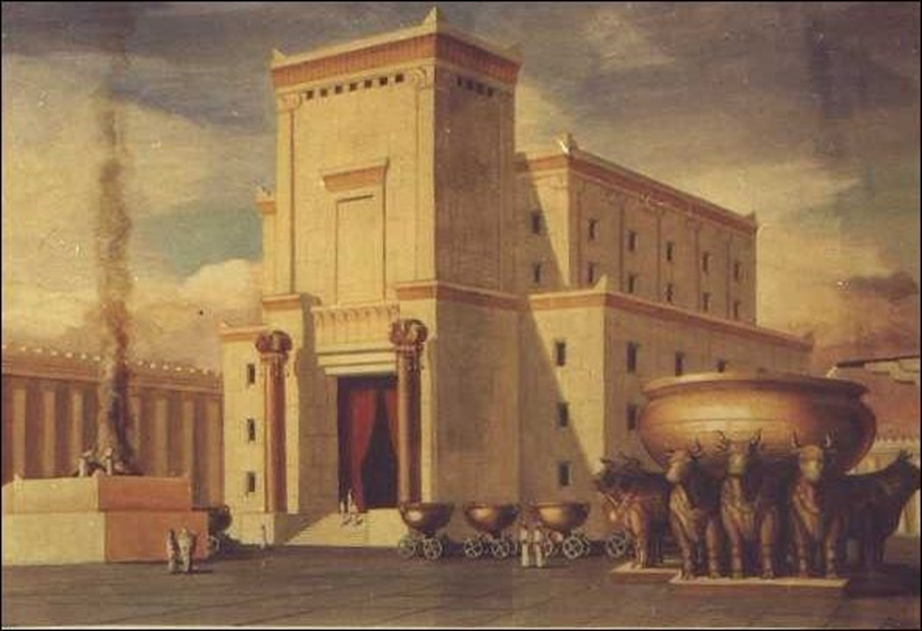
Continuing with this concept of the message of the bread of life is the connection between the winter holidays and the Temple.
To begin, the etymology of the word ‘decorations,’ which is a strong focus of both Christmas and Hanukkah, links back to the Temple.
To decorate something comes the Hebrew word עדה ‘edah’ which is translated as ‘ornaments’ in Exodus 33:5.
Exo 33:5 For the LORD had said unto Moses, Say unto the children of Israel, Ye are a stiffnecked people: I will come up into the midst of thee in a moment, and consume thee: therefore now put off thy ornaments from thee, that I may know what to do unto thee.
עדה ‘edah’ comes from the root עד ‘ed’ which means a witness as ‘ornaments’ were used to witness to the rank of an individual. עדה ‘edah’ is also the words used for the Tabernacle of witness (Numbers 17:7-8).
Num 17:7 And Moses laid up the rods before the LORD in the tabernacle of witness.
Num 17:8 And it came to pass, that on the morrow Moses went into the tabernacle of witness; and, behold, the rod of Aaron for the house of Levi was budded, and brought forth buds, and bloomed blossoms, and yielded almonds.
Literally, עד ‘ed’ means to ‘see the door.’ Who is the door? Messiah (John 10:9).
Joh 10:9 I am the door: by me if any man enter in, he shall be saved, and shall go in and out, and find pasture.
עד ‘ed’ is the root of the word מועד ‘moed’ which means feast or holiday which is witness to the God you serve.
Going further is the word ‘bauble’ which is a small decoration used during the winter holidays. This word traces back to the Hebrew word בבה ‘babah’ which means the pupil of the eye. The pupil of the eye is associated with a close relationship with another, as in being the ‘apple of God’s Eye’ or the ‘little guy in His Eye.’
The articles in the Tabernacle/Temple are portrayed in shadow picture form in the customs of the winter solstice. As mentioned before, this time of year is when people seek to escape the cold and darkness by congregating at a tent/home. When a priest would enter God’s tabernacle, he would enter a tent without natural light, the menorah would be the only source of light. This is pictured in the Hanukkiah as well as the Christmas tree as mentioned before. The temple itself was made of evergreen trees (1Kings 5:5-6; Zechariah 11:1) and the smell therein is linked to the smell of evergreens (Psalm 92:12-13; Hosea 14:6; Song of Songs 4:11; Psalm 45:8), frankincense and myrrh (Song of Songs 4:6) which used in traditionally during Christmas.
1Ki 5:5 And, behold, I purpose to build an house unto the name of the LORD my God, as the LORD spake unto David my father, saying, Thy son, whom I will set upon thy throne in thy room, he shall build an house unto my name.
1Ki 5:6 Now therefore command thou that they hew me cedar trees out of Lebanon; and my servants shall be with thy servants: and unto thee will I give hire for thy servants according to all that thou shalt appoint: for thou knowest that there is not among us any that can skill to hew timber like unto the Sidonians.
Zec 11:1 Open thy doors, O Lebanon, that the fire may devour thy cedars.
Psa 92:12 The righteous shall flourish like the palm tree: he shall grow like a cedar in Lebanon.
Psa 92:13 Those that be planted in the house of the LORD shall flourish in the courts of our God. Hos 14:6 His branches shall spread, and his beauty shall be as the olive tree, and his smell as Lebanon.
Son 4:11 Thy lips, O my spouse, drop as the honeycomb: honey and milk are under thy tongue; and the smell of thy garments is like the smell of Lebanon.
Psa 45:8 All thy garments smell of myrrh, and aloes, and cassia, out of the ivory palaces, whereby they have made thee glad.
Son 4:6 Until the day break, and the shadows flee away, I will get me to the mountain of myrrh, and to the hill of frankincense.
The priest wore bells round about the hem of his garment so when he walked in the tabernacle ‘sleigh bells’ would have been heard (Exodus 28:34; 39:26).
Exo 28:33 And beneath upon the hem of it thou shalt make pomegranates of blue, and of purple, and of scarlet, round about the hem thereof; and bells of gold between them round about:
Exo 28:34 A golden bell and a pomegranate, a golden bell and a pomegranate, upon the hem of the robe round about.
Exo 28:35 And it shall be upon Aaron to minister: and his sound shall be heard when he goeth in unto the holy place before the LORD, and when he cometh out, that he die not.
Exo 39:22 And he made the robe of the ephod of woven work, all of blue.
Exo 39:23 And there was an hole in the midst of the robe, as the hole of an habergeon, with a band round about the hole, that it should not rend.
Exo 39:24 And they made upon the hems of the robe pomegranates of blue, and purple, and scarlet, and twined linen.
Exo 39:25 And they made bells of pure gold, and put the bells between the pomegranates upon the hem of the robe, round about between the pomegranates;
Exo 39:26 A bell and a pomegranate, a bell and a pomegranate, round about the hem of the robe to minister in; as the LORD commanded Moses.
The smell of an open fire would have been continuous at the tabernacle/temple (Leviticus 6:12) which is also linked to the open fires of Christmas (ie the yulelog).
Lev 6:12 And the fire upon the altar shall be burning in it; it shall not be put out: and the priest shall burn wood on it every morning, and lay the burnt offering in order upon it; and he shall burn thereon the fat of the peace offerings.
Opposite the menorah was the table of shewbread. As mentioned previously, the etymology of Christmas is linked to the twelves loaves of bread which sat upon this table. Is it any surprise that Christmas lasts twelve days?
These things are shared to show why there is such a deep seated desire for people to keep these traditions during this time of year.
Psa 26:6 I will wash mine hands in innocency: so will I compass thine altar, O LORD:
Psa 26:7 That I may publish with the voice of thanksgiving, and tell of all thy wondrous works.
Psa 26:8 LORD, I have loved the habitation of thy house, and the place where thine honour dwelleth.
Psa 27:4 One thing have I desired of the LORD, that will I seek after; that I may dwell in the house of the LORD all the days of my life, to behold the beauty of the LORD, and to enquire in his temple.
Psa 65:4 Blessed is the man whom thou choosest, and causest to approach unto thee, that he may dwell in thy courts: we shall be satisfied with the goodness of thy house, even of thy holy temple.
Psa 84:10 For a day in thy courts is better than a thousand. I had rather be a doorkeeper in the house of my God, than to dwell in the tents of wickedness.
2Co 6:14 Be ye not unequally yoked together with unbelievers: for what fellowship hath righteousness with unrighteousness? and what communion hath light with darkness?
2Co 6:15 And what concord hath Christ with Belial? or what part hath he that believeth with an infidel?
2Co 6:16 And what agreement hath the temple of God with idols? for ye are the temple of the living God; as God hath said, I will dwell in them, and walk in them; and I will be their God, and they shall be my people.
2Co 6:17 Wherefore come out from among them, and be ye separate, saith the Lord, and touch not the unclean thing; and I will receive you,
2Co 6:18 And will be a Father unto you, and ye shall be my sons and daughters, saith the Lord Almighty.
Daily Tidbits 12/25/11 – Shadows of Messiah: Christmas
I wrote this article when I was still in the belief that Christmas was “pagan.” My heart softened through looking at the message embedded and my understanding grew. This led me to really dig into the historical evidence on Christmas and came to find that Christmas is Biblically based and Christian, not pagan. For those interested I shared my findings in the series on In Defense of Christmas
Shadows of Messiah are seen in all creation which includes man and his holidays. Man was created in the image of God (Genesis 1:26-27). Hence, more than any other part of creation, shadow pictures of Messiah are seen in relation to mankind. One aspect of man is his religions and religious ceremonies and holidays. As I’ve studied ancient history and religions, a repeating theme is seen.
Truth mixed with error. All religions of the world have some truth which traces back to the Holy Scriptures and ultimately the Tree of Life. However, they are mixed with lies that reveals that they are producing fruit from the tree of knowledge which is a counterfeit of the Tree of Life. No matter how far removed from the truth a particular religion is, there is still some truth within. A glimmer of light which calls man to His Creator, through Messiah. All religions have some truth which is a gift of grace to all of mankind to draw us back to the Most High (2 Peter 3:9; 1 Timothy 2:4; 4:10).
There is a Biblical principle of God sifting believers to draw them closer to Himself (Psalm 139:3). Many times He allows the adversary to do this, such as in the case of Peter (Luke 22:31-32) and Job (Job 1:12; 2:6). In the end this sifting was done for the betterment of both Peter and Job (Luke 22:32; Job 42:12). Other times the customs of the heathen are allowed to remain in our midst in order to test believers (Judges 2:2-3, 20-23), but at the same time there are traces of truth that are within them in order to draw man unto their Savior (Psalm 138:6-8; 34:17-19), again for the betterment of man.
Eph 3:5 Which in other ages was not made known unto the sons of men, as it is now revealed unto his holy apostles and prophets by the Spirit;
Eph 3:6 That the Gentiles should be fellowheirs, and of the same body, and partakers of his promise in Christ by the gospel:
This is why so many pagan religions have dying and rising Messiah figures. The adversary knows that the Almighty gives shadow pictures of His great plan in His creation and the adversary seeks to pervert this picture to lead mankind astray. The sun, moon and stars are specifically used to teach of His glory.
Psa 19:1 To the chief musician. A Psalm of David. The heavens are recounting* the glory of God, and the expanse proclaiming His handiwork.
* מספרים ‘m’sepharim’- literally from, or out of the books. When looking at the constellations and the path of the sun we are seeing another witness to the Holy Scriptures.
Psa 19:2 Day by day they pour forth speech, and night to night reveals knowledge. Psa 19:3 There is no speech, nor are there words where their voice is not heard.
Psa 19:4 Their measuring line has gone out through all the earth, and their words to the end of the world; in them He has set up a dwelling-place for the sun,
Psa 19:5 and he comes forth like a bridegroom from his canopy. He rejoices like a hero to run a race;
Psa 19:6 his going forth from the end of the heavens, and his orbit to their ends; and nothing is hidden from his heat.
The religions of the heathens incorporate different aspects of the work of the Messiah in their religions because they knew what the zodiac taught concerning the Messiah to come. The adversary knew since the garden that the Seed of the woman was going to come to crush his head and sought to pervert the picture of this Seed to lead mankind astray.
The adversary counterfeits the Most High
Isa 14:14 I will rise over the heights of the clouds; I will be compared* to the Most High.
*The adversary wants to appear just like the Messiah. This is a key to understanding what the mark of the beast is and who the antichrist is. The word used by Isaiah is דמה ‘damah’ meaning the resemblance of a son to his father which is passed down through blood (DNA).
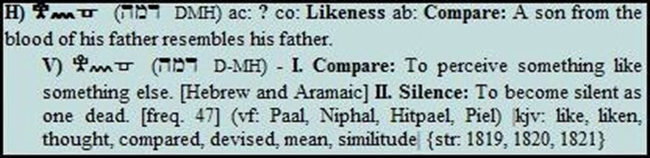
The English word solstice comes from the Hebrew word צהל ‘tsahal’ which means to shine (Psalm 104:15) but also has the meaning of a neighing of a horse (Jeremiah 5:8). This is interesting to note because the winter solstice is linked to pagan gods riding through the skies in chariots carried by horses. This comes from the truth of the Hebrew language. Scripture likens the sun to this same imagery.
Psa 19:5 and he comes forth like a bridegroom from his canopy. He rejoices like a hero to run a race;
The word for rejoices in Psalm 19:5 is שוש ‘sus’ which means to rejoice as in turning around in joy, but is also the Hebrew word for a horse as a horse turns around in play.
צהל is also translated as ‘shout’ as in the rejoicing of His people when He comes to save them. This salvation is linked to Him riding upon chariots in the sky.
Deu 33:26 None is like the God of Jeshurun, riding the heavens for your help, and the clouds in His majesty.
Psa 18:10 and He rode on a cherub, and He flew; yea He soared on the wings of the wind;
Psa 68:3 But the righteous are glad; they shout for joy before God; yea, they exult with gladness. Psa 68:4 Sing to God, sing praise to His name; lift up a song for Him who rides in the deserts, by His name Yah; yea, exult in His presence.
Psa 68:32 Sing to God, kingdoms of the earth, praises to the Lord. Selah.
Psa 68:33 To Him who rides on the heavens of heavens of old; lo, He gives forth His voice, a mighty voice.
Hab 3:8 Did Jehovah burn against rivers? Or was Your anger against the rivers? Or Your fury against the sea? For You ride on horses; Your chariots of salvation.
שוש ‘sus’ and סוס ‘sus’ both mean horse and rejoice in Hebrew. This connection to God riding upon horses and chariot in relation to saving His people can be seen in Isaiah 35:1 where the dry land (dead) rejoices ‘soos’ when the desert blooms (resurrection). שוש ‘soos’ comes from שש ‘shesh’ which means white, as in the two front teeth. שש is also the word for linen, as in the white linen garments given to the righteous who are resurrected (Isaiah 61:10-11; Revelation 19:14).
Rev 19:11 And I saw Heaven being opened. And, behold! A white horse, and He sitting on it having been called Faithful and True. And He judges and wars in righteousness.
Rev 19:12 And His eyes were as a flame of fire, and on His head many diadems, having a name that had been written, which no one knows except Himself;
Rev 19:13 and having been clothed in a garment which had been dipped in blood. And His name is called The Word of God.
Rev 19:14 And the armies in Heaven followed Him on white horses, being dressed in fine linen, white and pure.
Rev 19:15 And out of His mouth goes forth a sharp sword, that with it He might smite the nations. And He will shepherd them with an iron rod. And He treads the winepress of the wine of the anger and of the wrath of God Almighty.
Rev 19:16 And He has on His garment and on His thigh a name having been written: KING OF KINGS AND LORD OF LORDS.
Further linking the horse and the sun in Hebrew are words related to time. The movement of the heavenly bodies through the heavens, in particular the sun, is how we are to reckon time Biblically. The word for the galloping of a horse in Hebrew is דהר ‘dahar’ which comes from the root דר which means the cycles of time and life as a horse galloping makes a rhythmic sound such as the rhythm of time. The actual sound of the horse hoofs is פעם ‘pa’am’ which literally means a ‘continual beating of time.’
Noel comes from the Latin word ‘natalis’ from ‘natus’ which is a past participle of the word ‘nasci’ which means to be born. This word has the same etymology as the word ‘nature’ which was discussed in a previous study. Both words are related to the word ‘genus.’

‘Genesis’ comes from this same English word

The study of nature leads us back to Genesis. Back to the beginning when Light shone out of the darkness, a theme of winter. The study of nature leads us back to creation. Back to the Creator.
Jas 1:23 Because if anyone is a hearer of the Word, and not a doer, this one is like a man studying his natural (γενεσις ‘genesis’) face in a mirror;{Mirrors are associated with the 4th Dimension}
Mat 1:1 The Book of the genealogy (γενεσις ‘genesis’) of Jesus Christ the Son of David, the son of Abraham:
Jas 3:6 And the tongue is a fire, the world of iniquity. So the tongue is set among our members, spotting all the body, and inflaming the course of nature (γενεσις ‘genesis’), and being inflamed by Hell.
Gen 1:1 In the beginning God created the heavens and the earth:

The first word of the Scriptures is בראשית ‘bereshiyt’ (In the Beginning). It has the numerical equivalent of 913. God the Father in Greek has an exact numerical equivalent. In Hebrew the first word of the language is father אב.
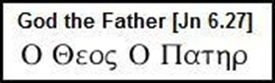
Interestingly, 913 also is associated with His House. The first letter of the Scriptures is an enlarged bet. The bet in Hebrew means the house. As seen above, the definition of good ( טוב tov) is that which surrounds or protects the house. Nature means to see or behold that which is good, He is surrounds/protects/cares for His house.
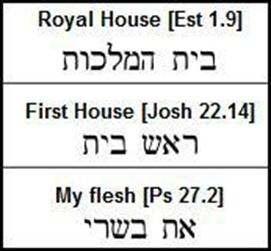
Messiah Jesus connects the house to His flesh.
Joh 2:19 Jesus said to them, Destroy this sanctuary, and in three days I will raise it up.
Joh 2:20 Then the Jews said, This sanctuary was forty six years being built, and do You raise it up in three days?
Joh 2:21 But He spoke about the sanctuary of His body.
Interestingly, another word in English traces back to Genesis:

DNA is a fascinating shadow of Messiah. It is a picture of the book of Life which is the blueprint of the human body just as the Torah is the ‘blueprint’ of the Messiah who is the Torah/Word made flesh.
Another connection is the word ‘newel’ which traces back to the Old French word ‘noel.’ ‘Newel’ means a “pillar from which steps of a winding staircase radiate,” which is a fascinating connection as this points to DNA.
Going deeper, this DNA – House of God connection is seen in Genesis 28 in Jacob’s vision of the ladder that ascended into heaven. This connection as has a counterfeit in the Mystery religions which is fascinating in light of the winter holidays.
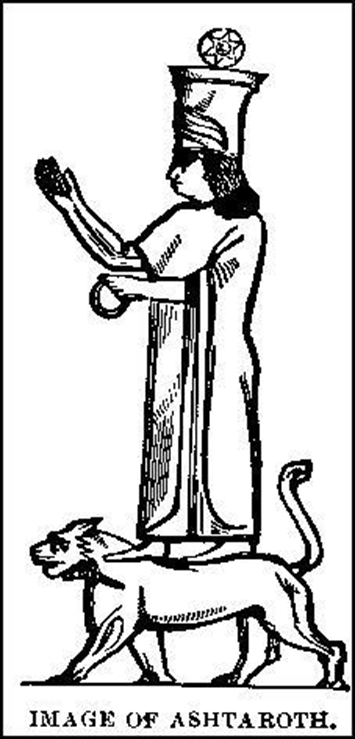
International Standard Bible Encyclopedia Ashtoreth
The moon goddess of the Phoenicians, representing the passive principle in nature, their principal female deity; frequently associated with the name of Baal, the sun-god, their chief male deity (Jdg_10:6; 1Sa_7:4; 1Sa_12:10). These names often occur in the plural (Ashtaroth, Baalim), probably as indicating either different statues or different modifications of the deities. This deity is spoken of as Ashtoreth of the Zidonians. She was the Ishtar of the Accadians and the Astarte of the Greeks (Jer_44:17; 1Ki_11:5, 1Ki_11:33; 2Ki_23:13). There was a temple of this goddess among the Philistines in the time of Saul (1Sa_31:10). Under the name of Ishtar, she was one of the great deities of the Assyrians. The Phoenicians called her Astarte. Solomon introduced the worship of this idol (1Ki_11:33). Jezebel’s 400 priests were probably employed in its service (1Ki_18:19). It was called the “queen of heaven” (Jer_44:25).
John Gill
the star of your god {hexagram/Talisman of Saturn/seal of Solomon/’star of David’}, which ye made to yourselves; or the star “your god” (q); meaning the same with Chiun or Saturn; perhaps the same with the star that fell from the air or sky*, mentioned by Sanchoniatho (r); which Astarte, the wife of Chronus or Saturn, is said to take and consecrate in Tyre; this they made for themselves, and worshipped as a deity.
Astarte was the wife of Saturn. Otherwise known as the wife of Nimrod. Please notice in the image above that the hexagram was her symbol as well.
ISBE (International Standard Bible Encyclopedia)
In Assyrian asirtu, which appears also under the forms asratu, esreti (plural) and asru, had the further signification of “sanctuary.” Originally Asirtu, the wife of Asir, and asirtu, “sanctuary,” seem to have had no connection with one another, but the identity in the pronunciation of the two words caused them to be identified in signification, and as the tree-trunk or cone of stone which symbolized Asherah was regarded as a Beth-el or “house of the deity*,” wherein the goddess was immanent, the word Asirtu, Asherah, came to denote the symbol of the goddess. The trunk of the tree was often provided with branches, and assumed the form of the tree of life*. It was as a trunk, however, that it was forbidden to be erected by the side of “the altar of Yahweh” (Deu_16:21; see Jdg_6:25, Jdg_6:28, Jdg_6:30; 2Ki_23:6). Accordingly the symbol made for Asherah by his mother was “cut down” by Asa (1Ki_15:13). So, too, we hear of Asherim or symbols of the goddess being set up on the high places under the shade of a green tree (Jer_17:2; see 2Ki_17:10). Manasseh introduced one into the temple at Jerusalem (2Ki_21:3, 2Ki_21:7).
This connection between this tree and the House of God (Bethel) and the tree of Life is important to note. The Asherah is a counterfeit tree of life which is really the tree of knowledge of good and evil. The tree of life represents the Messiah who is pictured by the menorah and the Christmas tree. The tree of knowledge represents the adversary who is pictured by the Asherah.
Exo 23:24 You shall not bow down to their gods, and you shall not serve them. And you shall not do according to their works. But tearing you shall tear them down, and smashing you shall smash their pillars.
H4676 מצבה matstsêbah BDB Definition:
1) pillar, mastaba, stump
1a) pillar
1a1) as monument, personal memorial 1a2) with an altar
1b) (Hophal) stock, stump (of tree)*
*This is the word used in Genesis referring to the stone that Jacob anointed and proclaimed as Bethel.
Gen 28:18 And Jacob rose up early in the morning, and took the stone that he had put for his pillows, and set it up for a pillar { מצבה ‘matstsêbah’}, and poured oil upon the top of it.
Gen 28:19 And he called the name of that place Bethel { בית־אל ‘beyth’el’ – house of God}:: but the name of that city was called Luz at the first.
Gen 35:14 And Jacob set up a pillar( מצבה ‘matstsêbah’) in the place where he talked with him,even a pillar of stone: and he poured a drink offering thereon, and he poured oil thereon {This is a strong reference to the Messiah, which means anointed one.}.
Gen 35:15 And Jacob called the name of the place where God spake with him, Bethel { בית־אל ‘beyth’el’ – house of God} Messiah is the image of God
2Co 4:4 in whom the god of this age has blinded the thoughts of the unbelieving, so that the brightness of the gospel of the glory of Christ who is the image of God, should not dawn on them.
The congregation of believers are to be the “image” of Messiah
Rom 8:29 because whom He foreknew, He also predestinated to be conformed to the image of His Son, for Him to be the First-born among many brothers.
2Co 3:18 But we all with our face having been unveiled, having beheld the glory of the Lord in a mirror, are being changed into the same image from glory to glory, as from the Lord Spirit.
Here we see that the pillar that Jacob anointed is to be the house of God . His house are His people (Hebrews 3:6), His body, pictured by the menorah, the tree of Life. The counterfeit is a pillar/Asherah which is called Bethel.
God is likened to an evergreen.
Hos 14:8 Ephraim shall say, What have I to do any more with idols? I have heard him, and observed him: I am like a green fir tree. From me is thy fruit found.
Son 5:15 His legs are as pillars of marble, set upon sockets of fine gold: his countenance is as Lebanon, excellent as the cedars.
The temple was built from cedars of Lebanon.
1Ki 5:5 And, behold, I purpose to build an house unto the name of the LORD my God, as the LORD spake unto David my father, saying, Thy son, whom I will set upon thy throne in thy room, he shall build an house unto my name.
1Ki 5:6 Now therefore command thou that they hew me cedar trees out of Lebanon; and my servants shall be with thy servants: and unto thee will I give hire for thy servants according to all that thou shalt appoint: for thou knowest that there is not among us any that can skill to hew timber like unto the Sidonians.
Zec 11:1 Open thy doors, O Lebanon, that the fire may devour thy cedars.
Planted by the Lord.
Psa 104:16 The trees of the LORD are full of sap; the cedars of Lebanon, which he hath planted;
Isa 60:21 Thy people also shall be all righteous: they shall inherit the land for ever, the branch of my planting, the work of my hands, that I may be glorified. (ISA 43:7)
The people (temple) of the Lord.
Psa 92:12 The righteous shall flourish like the palm tree: he shall grow like a cedar in Lebanon.
Psa 92:13 Those that be planted in the house of the LORD shall flourish in the courts of our God.
Hos 14:5 I will be as the dew unto Israel: he shall grow as the lily, and cast forth his roots as Lebanon.
Hos 14:6 His branches shall spread, and his beauty shall be as the olive tree, and his smell as Lebanon.
Hos 14:7 They that dwell under his shadow shall return; they shall revive as the corn, and grow as the vine: the scent thereof shall be as the wine of Lebanon.
Hos 14:8 Ephraim shall say, What have I to do any more with idols? I have heard him, and observed him: I am like a green fir tree. From me is thy fruit found.
Son 4:7 Thou art all fair, my love; there is no spot in thee.
Son 4:8 Come with me from Lebanon, my spouse, with me from Lebanon: look from the top of Amana, from the top of Shenir and Hermon, from the lions’ dens, from the mountains of the leopards.
Son 4:11 Thy lips, O my spouse, drop as the honeycomb: honey and milk are under thy tongue; and the smell of thy garments is like the smell of Lebanon.
The Asherah that comes from pagan cultures is a counterfeit, much like their entire religion. It is supposed to represent the tree of life, however it really represents the tree of the knowledge of good and evil which the heathen cultures believed was the “true” tree of life.
The Christmas tree points to the cross. In the cross the Messiah triumphed over His enemies, as the Tree of Life (Colossians 2:14-15). The heathen had used tree symbols for millenia as representations of the ‘tree of life’ but were in reality the tree of knowledge. At the cross, Christ took on the sin which came from the tree of knowledge and brought forth the tree of life.
Yule {Eol} in Chaldee means infant. Digging deeper into the etymology of the word ‘yule’ traces to the Old French word ‘jolif’ which means festive, merry, pretty. ‘Jolif’ corresponds to the modern French word ‘joli’ meaning pretty or nice and the English word ‘jolly.’ ‘Jolif’ and jolly trace back further to the Hebrew word גילה ‘geelah’ which means joy and rejoicing, literally dancing in a circle. The words ‘jolly’ and especially ‘jovial’ link back to the Latin word ‘Jovis’ (aka Jupiter). Jove was the chief deity of the Indo-European pantheon of the gods. Jove is said to be a combination of ‘dyeh-pater’ which means ‘god-father.’ Jove is a corruption of Yahweh, and in Latin can actually be pronounced as Yahweh. The heathens actually applied the Sacred Name to their idols and gods in numerous situations which I believe the Most High allowed in order to give them that glimmer of light mentioned above.
Yule and jolly trace back to the Hebrew word גילה ‘giylah’ which comes from the root גל. It is interesting to note that the word for idol גלול ‘galul’, is from the same root. Even more interesting is that the words for infant גול ‘gol’ and redeemer גאל ‘goel’ and scroll מגילה ‘megillah’ is also from גל ‘gal’ where Messiah, the Word made flesh redeemed man from His sins at a place called גלגלת ‘golgolet’ which too comes from גל.
גל has the numerical equivalent of 33. This number ties into the yule log custom as it is linked to the belief in the Kundalini spirit rising up the 33 bones of the spine to open up the pineal gland/’third eye’ to bring enlightenment to man and making him a ‘god.’ Interestingly, scientists state that the human spine is made up of 26 bones, which is equivalent to the number of יהוה ‘Yahweh.’ Here we see the two trees in the Garden. The tree of Life represented by 26 vs. the tree of knowledge of good and evil represented by 33. It is no surprise that the Hebrew word for tree עץ ‘ets’ is the root of the Hebrew word for spine עצה ‘etsah.’
Going further we see this word עצה ‘etsah’ used in Isaiah 9:6, speaking of the promised Seed who would be born of a virgin.
Isa 9:6 For a Child is born; to us a Son is given; and the government is on His shoulder; and His name is called Wonderful, Counselor { עצה ‘etsah’ }, The Mighty God, The Everlasting Father, The Prince of Peace.
The English word spine comes from the Latin word ‘spica.’ Spica points directly to the Messiah as seen in the constellation of Virgo. In the hand of the Virgin is a sheaf of wheat with 5 stars. A virgin (Isaiah 7:14) holding a branch (Jeremiah 23:5-6) and an ear of corn. Corn = seed (Latin Spica, the modern name of this bright star. Old name was Arabic ‘Al Zimach’ which means seed). The star ‘Zavijaveh’ in this constellation means “gloriously beautiful” (Isaiah 4:2). ‘Zimach’ in Arabic refers back to the Hebrew צמח ‘tsemach’, which is used 5 times in Scripture reference to the Messiah (Isaiah 4:2; Jeremiah 23:5; 33:15; Zechariah 3:8; 6:12).
Evergreen trees are linked to Messiah and His coming
Isa 55:1 Ho, everyone who thirsts, come to the water; and he who has no silver, come buy grain and eat. Yes, come buy grain, wine and milk without silver and with no price.
Isa 55:2 Why do you weigh out silver for that which is not bread, and your labor for what never satisfies? Listen carefully to Me and eat the good; and let your soul delight itself in fatness.
Isa 55:3 Bend your ear and come to Me; hear, and your soul shall live; and I will cut an everlasting covenant with you, the faithful mercies of David.
Isa 55:4 Behold, I gave Him a Witness to peoples, a Leader and Commander of peoples.
Isa 55:10 For as the rain and the snow comes down from the heavens and do not return there, except it waters the earth and make it bring forth and bud, and give seed to the sower and bread to the eater,
Isa 55:11 so shall My Word be, which goes out of My mouth; it shall not return to Me void, but it shall accomplish that which I please, and it shall prosper in what I sent it to do!
Isa 55:12 For you shall go out with joy and be led out with peace. The mountains and the hills shall break out into song before you, and all the trees of the field shall clap the hand.
Isa 55:13 Instead of the thornbush, the fir tree shall come up; instead of the brier, the myrtle shall come up; and it shall be for a name to Jehovah, for an everlasting sign that shall not be cut off. {the fir and myrtle are both evergreen}
The Hebrew word for fir tree is ברוש ‘berosh’ which comes from the root בר ‘bar’ which is the Hebrew word for ‘my son’ (Psalm 2:12).
Hos 14:8 Ephraim shall say, What have I to do any more with idols? I have heard him, and observed him: I am like a green fir tree {ברוש}. From me is thy fruit found.
The word here for green is רען ‘raan’ which means a green flourishing field. ‘Ra’an’ comes from the root רע which means shepherd, as one who leads his flock to these green pastures. The link to Messiah here is obvious (John 10:11). Is it any surprise then that Scripture links the counterfeit antichrist (Zechariah 11:16-17; John 10:1, 5, 8, 10) to a shepherd and in the winter solstice celebration a tree?
The temple was built from cedars of Lebanon (1Kings 5:5-6; Zechariah 11:1) which is a picture of Messiah (John 2:21). Messiah is likened unto Lebanon which is the land of the evergreen.
Son 5:15 His legs are as pillars of marble, set upon sockets of fine gold: his countenance ( מראה ‘mareh’ – appearance) is as Lebanon (white), excellent ( בחר ‘bachar’ – chosen) as the cedars.
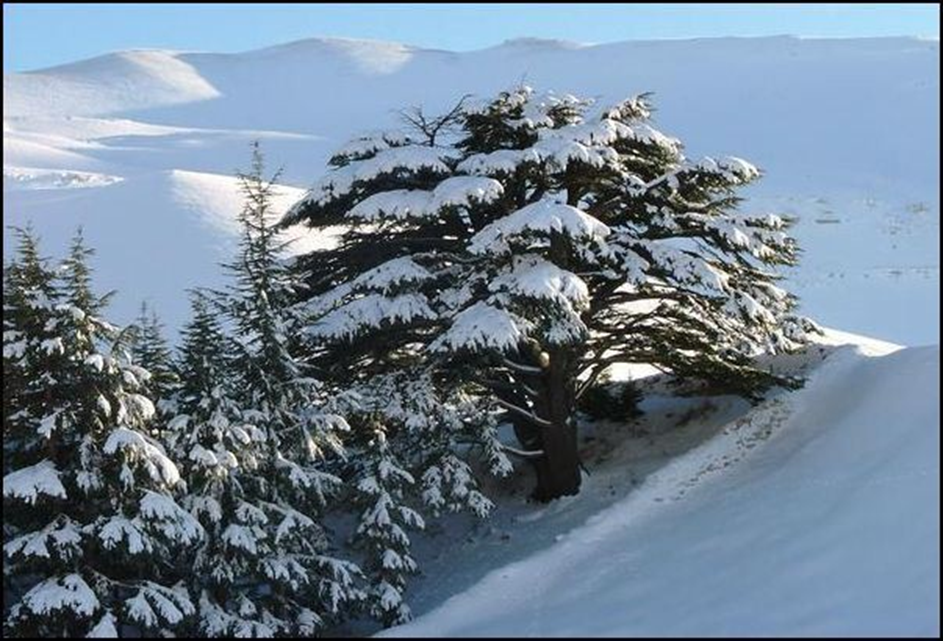
It is interesting to note that the smell of the garments of Messiah is linked to the smell of the Temple which was built from cedars and the smell linked thereto (Psalm 45:7 – Numbers 24:6).
Hos 14:5 I will be as the dew to Israel; he shall blossom as the lily and cast out his roots like Lebanon.
Hos 14:6 His branches shall go out, and his beauty shall be like the olive tree, and his scent as Lebanon to him.
Son 4:11 Your lips, My spouse, drip like the honeycomb; honey and milk are under your tongue. And the scent of your garments is like the scent of Lebanon.
John Gill commentary
such are Christ’s robe of righteousness, and garments of salvation, which are said to “smell of myrrh, aloes, and cassia”; with which the saints being arrayed, the smell of their raiment is as “the smell of a field the Lord has blessed”, and so like the smell of Lebanon, a mountain abounding with odoriferous trees and plants; see Psa_45:8.
Bethlehem & the manger
The word for a Christmas nativity display is ‘creche’ from the Old French word ‘cresche’ meaning a crib. This word traces back to the Hebrew word ערש ‘eres’ which means a crib or bed. In Numbers 15:20 it is speaking of a kneading trough which is interesting as Bethlehem, which means house of bread in Hebrew, is where Messiah, the Bread from Heaven (John 6) was born. עריסה which is a cognate of ערש means dough (Numbers 15:20-21) and is linked to firstfruits (Ezekiel 44:30).
Rom 8:29 because whom He foreknew, He also predestinated to be conformed to the image of His Son, for Him to be the First-born among many brothers.
1Co 15:20 But now Christ has been raised from the dead; He became the firstfruit of those having fallen asleep.
1Co 15:23 But each in his own order: Christ, the firstfruit; afterward those of Christ at His coming. Rom 11:16 Now if the firstfruit is holy, so also the lump. And if the root is holy, so also the branches.
Notice the connection between the firstfruits, the lump (bread-dough) and the Olive of Israel (tree).
The English word ‘manger’ comes from the Old French word ‘mangeure’ which means ‘to eat,’ linking to Numbers 15:20 (kneading trough).
As seen in the Shadows of Messiah Tidbit study, the Gospel being taken to the world by Apostles is likened unto taking the bread of life to the world. Interestingly, the etymology of the word Christmas traces back to the Latin word ‘massa’ which is speaking of bread and the Latin word ‘missa’ which means to ‘send abroad.’ A missionary is one who is sent forth and comes from this word.
The word apostle comes from the Hebrew word שליח ‘sholiach’ which means the sent one. שלח ‘shalach’ also means to send as in a gift שילוח ‘shiluach’ by the hand of a messenger/apostle שוליח ‘sholiach.’ Jesus was the ‘Sent One’ or ‘Apostle’ of the Father (Hebrews 3:1; John 5:28; 6:29; 7:29; 8:42; 17:3, 18-21) who came with the gift of salvation. Jesus would then send His Apostles with the message of this gift of salvation to the world. In Hebrew the word for gospel is
בסורה ‘besorah’ which has the meaning of a feast which is prepared when good news is brought. The ‘food’ that the Apostles were to take to the world is the message that Jesus is the bread of life, whose flesh brings life (John 4:32-34; 6:51).
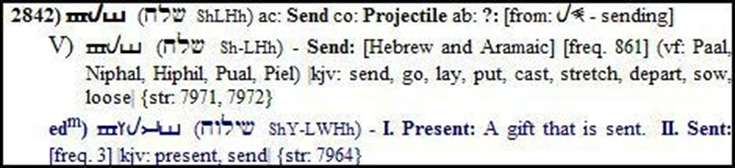
Who is THE Sent one/Apostle? Messiah (Hebrews 3:1; John 5:38; 6:29; 7:29; 8:42; 17:3, 18-21).
Eph 4:7 But to each one of us was given grace according to the measure of the gift of Christ. Eph 4:8 Because of this, He says, “Having gone up on high, He led captivity captive,” and gave “gifts to men.” Psa. 68:18
The concept of the apostles bringing the gift of the message of the Gospel/Bread of Life is further seen in the word תנה ‘tanah’ which is translated as ‘rehearse’ in the English (Judges 5:10-11).
Joh 3:34 For the One whom God sent speaks the Words of God, for God does not give the Spirit by measure.
The link between gifts and eating is further seen in the Hebrew word ברה ‘barah’ which also traces back to the word for ‘my Son’ mentioned earlier: בר. A related word is ברות which means meat and ברית which means covenant.
Joh 6:48 I am the Bread of life.
Joh 6:49 Your fathers ate the manna in the wilderness and died.
Joh 6:50 This is the Bread coming down out of Heaven, that anyone may eat of it and not die.
Joh 6:51 I am the Living Bread that came down from Heaven. If anyone eats of this Bread, he will live forever. And indeed the bread which I will give is My flesh, which I will give for the life of the world.
Isa 42:6 I the LORD have called thee in righteousness, and will hold thine hand, and will keep thee, and give thee for a covenant of the people, for a light of the Gentiles;
Isa 49:8 Thus saith the LORD, In an acceptable time have I heard thee, and in a day of salvation have I helped thee: and I will preserve thee, and give thee for a covenant of the people, to establish the earth, to cause to inherit the desolate heritages;
Another word for give is הב which is linked to the sacrifice of Messiah on the cross.
Joh 3:16 For God so loved the world that He gave His only begotten Son, that everyone believing into Him should not perish, but have everlasting life.
Joh 15:13 Greater love than this has no one, that anyone should lay down his soul for his friends.

from the root:
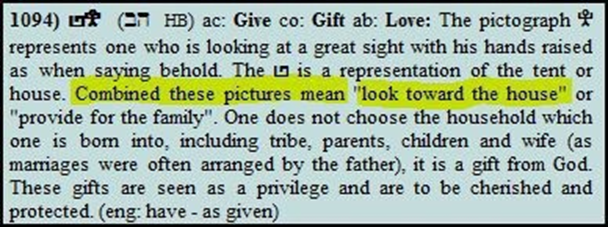
The pictograph meaning of love:
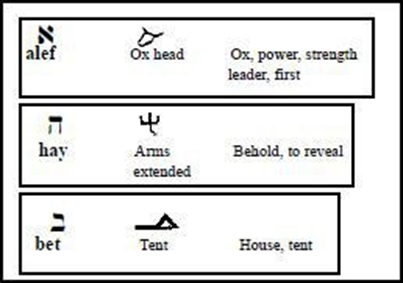
The first and last letters spell out the word for Father (ab) and the middle letter is a picture of a man with outstretched arms. The Love of the Father is revealed through the Messiah on the tree, gathering all mankind back to their Creator.
Further linking Messiah as the gift from the Father to mankind is the word נסאת ‘nasat’ which means a gift from the root נס which literally means a banner lifted up. Who is the Banner? Messiah.(John 3:14; 12:32; Isaiah 11:10-12)
Interestingly, giving is linked with trees. The Hebrew word for giving counsel is יעץ ‘ya’ats.’
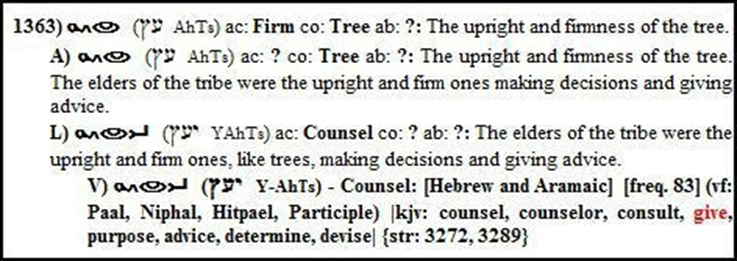
The English word ‘gift’ comes from the Old Norse word ‘gift/gipt’ meaning gift or good luck and is linked to the Germanic word ‘mitgift’ meaning dowry. In the tidbit on the winter, it is seen that betrothal is linked to to the winter and is associated with the crucifixion of Messiah which is the gift of the Father to mankind of redemption. The Old English word ‘gift’ also meant bride price or marriage gift. Isaac Mozeson traces the English word ‘gift’ back to the Indo European root ‘ghabh’ which means to give or receive and the Anglo-Saxon word ‘gifan’ all the way back to the Hebrew word הב which was described above in reference to the love of the Father revealed in giving His Son as a propitation for our sins.
Giving gifts to children is said to be done because the Magi gave gifts to the baby Jesus when they arrived in Bethlehem. In Matthew 25:31-46 Messiah states that when we give to the ‘least’ of our brethren, we are giving it to Him. The Greek word for least is ἐλαχιστος ‘elachistos’ which can also be translated as small children. The Hebrew word קטן ‘qatan’ means the least, small one, or child (Genesis 44:12, 20). These shadow pictures of Messiah were placed within the winter solstice celebrations of the heathen as a way to draw mankind to the Most High when the set time had come.
Act 17:22 Then Paul stood in the midst of Mars’ hill, and said, Ye men of Athens, I perceive that in all things ye are too superstitious.
Act 17:23 For as I passed by, and beheld your devotions, I found an altar with this inscription, TO THE UNKNOWN GOD. Whom therefore ye ignorantly worship, him declare I unto you.
Act 17:24 God that made the world and all things therein, seeing that he is Lord of heaven and earth, dwelleth not in temples made with hands;
Act 17:25 Neither is worshipped with men’s hands, as though he needed any thing, seeing he giveth to all life, and breath, and all things;
Act 17:26 And hath made of one blood all nations of men for to dwell on all the face of the earth, and hath determined the times before appointed, and the bounds of their habitation;
Act 17:27 That they should seek the Lord, if haply they might feel after him, and find him, though he be not far from every one of us:
Act 17:28 For in him we live, and move, and have our being; as certain also of your own poets have said, For we are also his offspring.
Act 17:29 Forasmuch then as we are the offspring of God, we ought not to think that the Godhead is like unto gold, or silver, or stone, graven by art and man’s device.
Act 17:30 And the times of this ignorance God winked at; but now commandeth all men every where to repent:
Act 17:31 Because he hath appointed a day, in the which he will judge the world in righteousness by that man whom he hath ordained; whereof he hath given assurance unto all men, in that he hath raised him from the dead.
As believers, we are called to grow in grace and knowledge of the Most High (2 Peter 3:18) and depart from the corruption of the Mysteries(Revelation 18:4; Isaiah 52:11; 51:45; 2 Corinthians 6:17; Deuteronomy 12:30-32; 18:9; Ezekiel 20:32-34; Ephesians 4:17-18). Yet, at the same time, due to the synchretism the secular world hears the Gospel of the Savior at least once a year.
While those of us who understand that aspects of Christmas are a perversion of the Gospel and are a thorn in His body that is painful and making us weak (ασθενεια ‘astheneia’ = weak, pain, sickness), yet at the same time His power is seen. Through the shadow pictures He is drawing a larger portion of mankind unto Himself. The Wicked intends to do evil by corrupting the shadow pictures of Messiah in creation but God will use these things for the good (Psalm 36:1-12).
His power is His love in Messiah (Ephesians 3:16-17) who died for ALL mankind (John 3:16). We come to faith in Him, not through doctrine or works, but by His grace. If we are to have the mind of Messiah (Philippians 2:5) we need to have His love. Love does not condemn but seeks to cover over sin and lead to truth (Proverbs 10:12; 17:9; 1 Corinthians 13:4; James 5:20; 1 Peter 4:8).
We must speak the truth in love to our brethren in Messiah. We can’t condemn them and call them pagans because this is not true. A believer who ignorantly partakes of pagan customs does not disqualify them from being believers. It corrupts the purity of the faith and purity of the body of Messiah, but those who put their faith in Messiah are in covenant with Him regardless of their ignorance. Paul, in Acts 17, didn’t condemn the Greeks as devil worshiping heathens, but used their beliefs as a bridge to lead them to the truth in LOVE, reminding them that all men are from one blood and are saved by the blood of one, who is Messiah.
2Jn 1:3 Grace, mercy, peace will be with you from God the Father and from the Lord Jesus Christ, the Son of the Father, in truth and love.
2Jn 1:4 I rejoiced greatly because I found your children walking in truth, as we received command from the Father.
Eph 4:11 And indeed He gave some to be apostles; and some prophets; and some evangelists; and some pastors and teachers;
Eph 4:12 with a view to the perfecting of the saints for the work of the ministry, for the building up of the body of Christ,
Eph 4:13 until we all may come to the unity of the faith and of the full knowledge of the Son of God, to a full-grown man, to the measure of the stature of the fullness of Christ,
Eph 4:14 so that we may no longer be infants, being blown and carried about by every wind of doctrine, in the sleight of men, in craftiness to the deceit of error,
Eph 4:15 but speaking the truth in love, we may grow up into Him in all things, who is the Head, the Christ,
Eph 4:16 from whom all the body, having been fitted and compacted together through every assisting bond, according to the effectual working of one measure in each part, produces the growth of the body to the building up of itself in love.
Eph 4:17 Therefore, I say this, and testify in the Lord, that you no longer walk even as also the rest of the nations walk, in the vanity of their mind,
Eph 4:18 having been darkened in the intellect, being alienated from the life of God through the ignorance which is in them because of the hardness of their heart,
Eph 4:19 who, having cast off all feeling, gave themselves up to lust, to the working of all uncleanness with greediness.
Eph 4:20 But you have not so learned Christ,
Eph 4:21 if indeed you heard Him and were taught in Him, as the truth is in Jesus.
Eph 4:22 For you have put off the old man, as regards the former behavior, having been corrupted according to the deceitful lusts,
Eph 4:23 and to be renewed in the spirit of your mind,
Eph 4:24 and to put on the new man, which according to God was created in righteousness and true holiness.
Eph 4:25 Therefore, putting off the false, “speak truth each with his neighbor,” because we are members of one another. Zech. 8:16


