


Valentine’s Day began as a remembrance of saint Valentine (Valentinus) who was a Christian priest who lived and was martyred in the 3rd century.
“Because so many records were destroyed, details of Saint Valentine’s life are scant. What little is known was passed down and finally printed in the year 1260 in Legenda Sanctorum by Jacobus de Voragine, and in the Nuremberg Chronicle, 1493.
Saint Valentine was either a priest in Rome or a bishop in Terni, central Italy. He risked the Emperor’s wrath by standing up for traditional marriage, secretly marrying soldiers to their young brides. When Emperor Claudius demanded that Christians deny their consciences and worship pagan idols, Saint Valentine refused. Saint Valentine was arrested, dragged before the Prefect of Rome, and condemned him to die.
While awaiting execution, his jailer, Asterius, asked Saint Valentine to pray for his blind daughter. When she miraculously regained her sight, the jailer converted and was baptized, along with many others. Right before his execution, Saint Valentine wrote a note to the jailer’s daughter, signing it, “from your Valentine.”
Saint Valentine was beaten with clubs and stones, and when that failed to kill him, he was beheaded outside the Flaminian Gate on FEBRUARY 14, 269AD. In 496 AD, Pope Gelasius designated FEBRUARY 14th as “Saint Valentine’s Day.”
In the High Middle Ages, Geoffrey Chaucer, called the father of English literature, wrote Parliament of Foules (c.1393) that birds chose their mates in mid-February:
“For this was Saint Valentine’s day, when every bird of every kind that men can imagine comes to this place to choose his mate.”
After Chaucer, literature began associating Saint Valentine’s day with courtly love.” {American Minute with Bill Federer FEB. 14 – ST. VALENTINE’S DAY – X O X O X O}
Today, Valentine’s day is celebrated as a day of romance, love and courtship devoid of the man in whom the holiday was named. Many of the modern traditions of this holiday trace back to the heathen festival of Lupercalia which was an ancient fertility rite, a perversion of love. The fertility rites were done for ‘purification‘ and for fertility of the land and people. This is a corruption of the Biblical principle of being kings and priests who are purified from the corruption of this world, called to spread the Word (the Seed – Luke 8:11) to all nations (Psalm 125:5-6).
Lupercalia occurred during the ides of February, a month which literally means purification.
February comes from the Latin ‘februarius mensis’ which means ‘month of purification.’ ‘Februa’ means ‘purification.’ Purity and purification are associated with the Word (Proverbs 30:5; Psalm 12:6; 19:8-9; 119:140).
The English words ‘pure’ and ‘February’ trace back to the Hebrew word בר ‘bar’ which means pure.
Psa 19:8 The precepts of Jehovah are right, rejoicing the heart. The commands of Jehovah are pure, giving light to the eyes.

Psa 2:12 Kiss the Son (בר ‘bar’), lest He be angry, and you perish from the way, when His wrath is kindled but a little. Oh the blessings of all those who flee to Him for refuge!
Pro 30:4 Who has gone up to Heaven, and come down? Who has gathered the wind in His fists? Who has bound the waters in His garments? Who has made all the ends of the earth to rise? What is His name, and what is His Son’s (בר ‘bar’) name? Surely you know.
Pro 30:5 Every Word of God is refined (צרף ‘tsaraph’ pure), He is a shield to those who seek refuge in Him.
בר ‘bar’ also refers to corn/grain/wheat (Genesis 41:35, 49; 42:3, 25; Psalm 65:13; 72:16).
Joh 12:23 But Jesus answered them, saying, The hour has come that the Son of Man should be glorified.
Joh 12:24 Truly, truly, I say to you, If the grain of wheat that falls into the earth does not die, it remains alone. But if it dies, it bears much fruit.
Joh 12:25 The one who loves his life loses it, and the one who hates his life in this world will keep it to everlasting life.
In the heathen custom, the land was purified by youths who traversed the land carrying skins of the goats and dogs that were sacrificed, dipped in blood and milk. The youths would strike the people of the land which was supposed to give them fertility. This is a corruption of the milk of the Word (Psalm 34:8; 1 Peter 2:2-3) and blood of Messiah (Revelation 1:5-6) which purifies His people (Ephesians 5:26).
Purification of the bride.
Eph 5:25 Husbands, love your wives, even as Christ also loved the assembly and gave Himself up on its behalf,
Eph 5:26 that He might sanctify it, cleansing it by the washing of the water in the Word,
Eph 5:27 that He might present it to Himself as the glorious assembly, not having spot or wrinkle, or any such things, but that it be holy and without blemish.
Eph 5:28 So, husbands ought to love their wives as their own bodies, (he loving his wife loves himself),
Eph 5:29 for then no one hated his own flesh, but nourishes and cherishes it, even as also the Lord the assembly.
Eph 5:30 For we are members of His body, of His flesh, and of His bones.
Eph 5:31 “For this, a man shall leave his father and mother, and shall be joined to his wife, and the two shall be one flesh.” Gen. 2:24
Eph 5:32 The mystery is great, but I speak as to Christ and as to the assembly.
Eph 5:33 However, you also, everyone, let each one love his wife as himself, and the wife, that she give deference to the husband.
1Jn 1:7 But if we walk in the light, as He is in the light, we have fellowship with one another, and the blood of His Son Jesus Christ cleanses us from all sin.
“In ancient Rome, February was the official beginning of spring and was considered a time for purification. Houses were ritually cleansed by sweeping them out and then sprinkling salt and a type of wheat called spelt throughout their interiors. Lupercalia, which began at the ides of February, February 15, was a fertility festival dedicated to Faunus, the Roman god of agriculture, as well as to the Roman founders Romulus and Remus.”
“To begin the festival, members of the Luperci, an order of Roman priests, would gather at the sacred cave where the infants Romulus and Remus, the founders of Rome, were believed to have been cared for by a she-wolf or lupa. The priests would then sacrifice a goat, for fertility, and a dog, for purification.” {History.com}
In Roman lore, Romulus and Remus were raised up by the wolf and given sustenance from its breast.
As seen in the study on the puppy (the ‘tamed wolf’), the dog/puppy represents the love of God, in particular the first love man experiences after coming to know the love of the Father in sending His Son to die for His sins. The word puppy comes from the Hebrew word בבה ‘baba’ which is intimately linked to a baby sucking milk from the breasts of its mother.
In Hebrew, love is associated with the father and mother and being held in their bosom. אם ‘em’ (mother) is the source of the Latin ‘amare,’ the French ‘amitie’ and the English ‘amity’ which mean love. One of the Hebrew words for love is דד ‘dud/dad’ which means both love and breasts/bosom and is the source of the English word ‘dad.’ Interestingly, the English word ‘baby’ comes from the Hebrew בבה ‘baba’ which is related to the word אבוב ‘aboob’ the root of which is אב ‘av’ which means father but also means a pipe, as in the breast of the mother whose milk flows to give sustenance to the baby. בבה ‘baba’ in Hebrew means the pupil, the apple of one’s eyes. As any parent has held their baby in their arms against their bosom they recognize that this is the epitome of love and intimate relationship (apple of the eye/little guy in the eye).
Lupercus was the ‘god of shepherds’ and Romulus and Remus were known as the ‘kings of shepherds.’ This further is also a corruption of the dog/wolf Shepherd connection seen in a previous study on the dog.
In Biblical times, the dog was the companion of the shepherd who clung to him in love, whose job was to help guard the sheep (Job 30:1). Who is the Shepherd? Messiah (Psalm 23:1; 80:1; Ezekiel 34:11; 37:24; John 10:11-14) . The Hebrew name of the Messiah יהושוע ‘Yehoshua’ comes from the root meaning to keep watch over the flock. The root of יהושוע ‘Yehoshua’ is שע ‘sha,’ the Shepherd who watches over His flock.

The Hebrew word for dog, כלב ‘kelev,’ is a combination of two words. כל ‘kol’ meaning ‘all’ and לב ‘lev’ meaning ‘heart.’ The dog is ‘all love.’
Cupid

Cupid comes from the Latin word ‘cupido’ which means desire. ‘Cupido’ traces back further to the Hebrew word חפץ ‘chaphets’ which means will or desire. What is the will/desire of the Most High? For His Word to be in our hearts.
Psa 40:7 Then said I, Lo, I come: in the volume of the book it is written of me,
Psa 40:8 I delight to do thy will, O my God: yea, thy law is within my heart.
His desire is our salvation, abiding in His love
Joh 6:40 And this is the will of him that sent me, that every one which seeth the Son, and believeth on him, may have everlasting life: and I will raise him up at the last day.
1Jn 3:23 And this is his commandment, That we should believe on the name of his Son Jesus Christ, and love one another, as he gave us commandment.
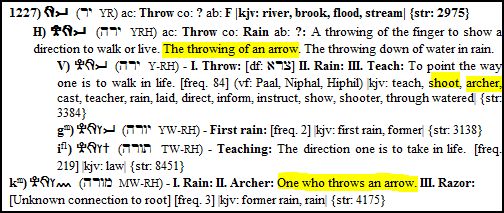
His Word is His Love. The counterfeit is the fleshly eroticism of cupid in the hearts of fleshly man. Interestingly, the root of the word תורה ‘torah’ is יר ‘yar’ which has the meaning of an arrow being thrown.

Cupid’s Greek name is Eros which means love. This word traces back to the Hebrew word ארש/ארס ‘eros’ which means to betroth, literally to request or seek a bride. This points to Christ who seeks out His bride.
Psa 27:8 My heart said to You, Seek my face; Your face, O Jehovah, I will seek.
Eze 34:11 For so says the Lord Jehovah: Behold, I Myself will search for My sheep, and seek them out.
Isa 40:9 O Zion, that bringest good tidings, get thee up into the high mountain; O Jerusalem, that bringest good tidings, lift up thy voice with strength; lift it up, be not afraid; say unto the cities of Judah, Behold your God!
Isa 40:10 Behold, the Lord GOD will come with strong hand, and his arm shall rule for him: behold, his reward is with him, and his work before him.
Isa 40:11 He shall feed his flock like a shepherd: he shall gather the lambs with his arm, and carry them in his bosom, and shall gently lead those that are with young.
Luk 19:10 For the Son of man is come to seek and to save that which was lost.
Eph 5:25 Husbands, love your wives, even as Christ also loved the church, and gave himself for it;
Eph 5:26 That he might sanctify and cleanse it with the washing of water by the word,
Eph 5:27 That he might present it to himself a glorious church, not having spot, or wrinkle, or any such thing; but that it should be holy and without blemish.
Eph 5:28 So ought men to love their wives as their own bodies. He that loveth his wife loveth himself.
Eph 5:29 For no man ever yet hated his own flesh; but nourisheth and cherisheth it, even as the Lord the church:
Eph 5:30 For we are members of his body, of his flesh, and of his bones.
Eph 5:31 For this cause shall a man leave his father and mother, and shall be joined unto his wife, and they two shall be one flesh.
Eph 5:32 This is a great mystery: but I speak concerning Christ and the church.
Eph 5:33 Nevertheless let every one of you in particular so love his wife even as himself; and the wife see that she reverence her husband.
As mentioned before, the origin of Valentine’s Day is the saint Valentinus and is connected to love and marriage through the testimony his life. Valentinus was a Roman Priest during the reign of Claudius who persecuted the church and issued an edict that prohibited the marriage of young people in order to keep young men single in order to be better soldiers. Valentinus secretly married young people but was caught, imprisoned, tortured and eventually martyred.
Desire – Heart connection
Another word for desire in Hebrew is אבה ‘aveh’ which comes from the root אב ‘av’ which means father.

The English word desire, comes from the Old French ‘desirrer’, which means to wish, desire, long for. It’s original sense is linked to looking at the stars. Interestingly, this is also linked to אבה ‘aveh.’ As mentioned above, אב ‘av’ means father, and the letter ה means to behold or look at something. The pictograph of the letter ה is a man with outstretched arms, looking toward something. That thing, in ancient Hebrew culture, was the North star. This is what the nomads used for guidance and direction. When one looks at the North star what is seen?
The constellation Cepheus (the enthroned king) is located directly above the North star in the night sky.

Desire is related to the English word ‘consider.’ Consider comes from the Old French ‘considerer’, which means to reflect on, study, consider. Literally, it is referring to ‘observing the stars.’
Connecting back to the book of Job. God asked the adversary if he had ‘considered’ Job.
Job 1:8 And Jehovah said to Satan, Have you set your heart (KJV consider) on My servant Job because there is none like him in the earth, a perfect and upright man, fearing God and turning away from evil?
This phrase in Hebrew is השמת לבך ‘hasamta leebcha.’ Consider is linked to the heart. Consider means to look upon, referring back to the throne seen above in the stars. The heart is also a picture of the throne of God. More on this below.
This is the desire of the Father…for mankind to look to His throne, to come to salvation through the One who sits thereon (Revelation 5:9-14).
1Ti 2:3 For this is good and acceptable before God our Savior,
1Ti 2:4 who desires all men to be saved and to come to a full knowledge of truth.
Cupid, like Dionysus , was sometimes referred to as Eleutherios, “the liberator”. Again, this is a counterfeit of Messiah.
Joh 8:36 Therefore, if the Son sets you free, you are free indeed.
Cupid & the Heart

Just as the arrows in the hand of cupid display a corrupted picture of the Torah of God, so too does the imagery of the heart.
The Hebrew word תורה ‘torah’ is commonly translated as ‘law’ but is more properly defined as God’s will or heart/mind, His message to mankind…His ‘love letter.’
The first letter of the Torah is ב ‘bet,’ the last letter of the Torah is ל ‘lamed,’ the last letter of the TaNaKH is also ל ‘lamed.’ Both forwards (בל ‘bal’) and in reverse (לב ‘lev’) the word for heart is seen.

H1079
בּל (Aramaic)
bâl
BDB Definition:
1) mind, heart
The Bible is the ‘heart’ of God which He desires to form in our heart (Psalm 119:32; Isaiah 51:7; Philippians 2:8).
Psa 119:32 I will run the way of thy commandments, when thou shalt enlarge my heart.
Isa 51:7 Hearken unto me, ye that know righteousness, the people in whose heart is my law; fear ye not the reproach of men, neither be ye afraid of their revilings.
Php 2:5 Let this mind be in you, which was also in Christ Jesus:
Php 2:13 For it is God which worketh in you both to will and to do of his good pleasure.
The English word love is related Etymologically to the Hebrew word לב ‘lev’ which means the heart. Scripture declares that out of the abundance of the heart, the mouth speaks (Matthew 12:34-35). If one reads this portion of Scripture, it is seen that the subject of blasphemy is directly related to the words which one speaks dependent upon the state of their heart (Matthew 12:24-37). Messiah declares that the origin of blasphemy comes from the heart (Mark 7:20-23). What is the remedy to overcome this? The Love of God (Colossians 3:8-14). We are to sanctify the name of God in our hearts (1 Peter 3:15) by abiding in His love (Romans 11:16; John 15:1-10).
This connection is further seen in the book of Song of Songs:
Son 8:6 Set me as a seal upon thine heart, as a seal upon thine arm: for love is strong as death; jealousy is cruel as the grave: the coals thereof are coals of fire, which hath a most vehement flame.
Son 8:6 שׂימני כחותם על־לבך כחותם על־זרועך כי־עזה כמות אהבה קשׁה כשׁאול קנאה רשׁפיה רשׁפי אשׁ שׁלהבתיה׃
This word שלהנתיה ‘shalhebetyah’ is a combination of the words שׁלהבת ‘shalhebeth’ and יה ‘Yah,’ the Sacred Name of God. שׁלהבת ‘shalhebeth’ means flame or shine, from the 3 letter root להב ‘lahav’ which means the same and goes back further to the two letter root לב ‘lev’ which means heart.
Scripture associates the ‘vehement flame’ of coals with purification, a theme of Valentine’s Day.
Isa 6:6 Then one of the seraphs flew to me with a live coal in his hand, snatched with tongs from the altar.
Isa 6:7 And he touched it on my mouth, and said, See, this has touched your lips; and your iniquity is taken away, and your sin is covered.
“The Syriac fathers regarded the burning coal as the symbol of the incarnate Son of God, who is often designated in poetry as the “live or burning coal” {Keil & Delitzsch Commentary on the Old Testament – Isaiah 6:6-7}
The heart represents the throne of God. The Temple of God was a representation of the human body, where the human heart corresponds to the ark of the covenant.
Our bodies are His Temple (Ephesians 2:21-22; 5:30; 1 Corinthians 6:19) in which the eternal organs in our bodies are a shadow picture of the Kingdom of heaven. In the book of Revelation (Chapter 4) John is shown a vision of the Throne of God which is displayed in our bodies in parable form. Around His throne are 4 living creatures (Revelation 4:6) which represents the 4 chambers of the human heart. Around the throne and the 4 living creatures are 24 elders (Revelation 4:4) representing the 24 ribs surrounding the human heart. The Hebrew word for heart is לב ‘lev’ which literally means the “authority inside” as the heart is the ‘throne’ of man’s mind. When our hearts are circumcised (Deuteronomy 10:15; 30:6; Jeremiah 32:39-40; Ezekiel 11:19-20, Colossians 2:11-13; Hebrews 4:11-14; Luke 24:31-32) God is enthroned (Romans 10:8-10).
Another depiction of the heart being a throne are the coronary vessels which surround the heart, resembling a crown of thorns. The word coronary means a crown.
Rev 4:1 After this I looked, and, behold, a door was opened in heaven: and the first voice which I heard was as it were of a trumpet talking with me; which said, Come up hither, and I will shew thee things which must be hereafter.
Rev 4:2 And immediately I was in the spirit: and, behold, a throne was set in heaven, and one sat on the throne.
Rev 4:3 And he that sat was to look upon like a jasper and a sardine stone: and there was a rainbow round about the throne, in sight like unto an emerald.
Rev 4:4 And round about the throne were four and twenty seats: and upon the seats I saw four and twenty elders sitting, clothed in white raiment; and they had on their heads crowns of gold.
Rev 4:5 And out of the throne proceeded lightnings and thunderings and voices: and there were seven lamps of fire burning before the throne, which are the seven Spirits of God.
Rev 4:6 And before the throne there was a sea of glass like unto crystal: and in the midst of the throne, and round about the throne, were four beasts full of eyes before and behind.
Rev 4:7 And the first beast was like a lion, and the second beast like a calf, and the third beast had a face as a man, and the fourth beast was like a flying eagle.
Rev 4:8 And the four beasts had each of them six wings about him; and they were full of eyes within: and they rest not day and night, saying, Holy, holy, holy, Lord God Almighty, which was, and is, and is to come.
Rev 4:9 And when those beasts give glory and honour and thanks to him that sat on the throne, who liveth for ever and ever,
Rev 4:10 The four and twenty elders fall down before him that sat on the throne, and worship him that liveth for ever and ever, and cast their crowns before the throne, saying,
Rev 4:11 Thou art worthy, O Lord, to receive glory and honour and power: for thou hast created all things, and for thy pleasure they are and were created.
From the heart blood is pumped to the Lungs. The etymology of the English word ‘Lung’ traces back to the meaning of Light. In our bodies our lungs have 7 vascular bundles called nodes. These correspond to the 7 Spirits of God (Revelation 4:5; Isaiah 11:1-3) before the throne. These 7 Spirits are pictured in the earthly Tabernacle/Temple by the Menorah. The Menorah is a picture of the Tree of Life, the Light of the world which sat before the throne of God in the Tabernacle/Temple.
Rev 4:5 And out of the throne come forth lightnings and thunders and voices. And seven lamps of fire are burning before the throne, which are the seven Spirits of God;
The lightning corresponds to the electrical activity of the heart. The thunderings are the ‘Lub Dub‘ of the heart. This imagery connects with storms and whirlwinds which has an interesting connection to the concept of God’s Torah being put in the heart of man.
Psa 40:7 Then said I, Lo, I come: in the volume of the book it is written of me,
Psa 40:8 I delight to do thy will, O my God: yea, thy law {תורה ‘torah’} is within my heart.
The root of the word תורה ‘torah’ is יר ‘yar’ which has the meaning of an arrow being thrown as lightning in thunderstorm.
Valentine Cards

Valentine cards trace back the story of Valentine praying for the blind daughter of her jailor and her miraculous healing. It is said that before his execution, Valentine sent a letter to the daughter signing it, “from your Valentine.”
“People often sign Valentine cards with X’s and O’s. The Greek name for Christ, Χριστό, begins with the letter “X” which in Greek is called “Chi.” “X” became a common abbreviation for the name Christ. This is why Christ-mas is abbreviated as X-mas.
In Medieval times, the “X” was called the Christ’s Cross, or “Criss-Cross.” The Christ’s Cross was a form of a written oath. Similar to the ancient practice of swearing upon a Bible, saying “so help me God,” then kissing the Bible, people would sign a document with or next to the Christ’s Cross to swear before God they would keep the agreement, then kiss it to show sincerity. This practice has come down to us as “sign at the X”, or saying “I swear, cross my heart.”
This is the origin of signing a Valentines’ card with an “X” to express a pledge before God to be faithful, and an “O” to seal the pledge with a kiss of sincerity. {American Minute with Bill Federer FEB. 14 – ST. VALENTINE’S DAY – X O X O X O}
God has a love letter that He has sent to mankind, the Holy Bible. This letter is sealed in our hearts through the work of Jesus on the cross, revealing God’s love which is shed abroad in our hearts by the Holy Spirit.
Rom_5:5 And hope maketh not ashamed; because the love of God is shed abroad in our hearts by the Holy Ghost which is given unto us.
Eph_1:13 In whom ye also trusted, after that ye heard the word of truth, the gospel of your salvation: in whom also after that ye believed, ye were sealed with that holy Spirit of promise,
Eph_4:30 And grieve not the holy Spirit of God, whereby ye are sealed unto the day of redemption.
Rev_7:3 Saying, Hurt not the earth, neither the sea, nor the trees, till we have sealed the servants of our God in their foreheads.
Eze 9:4 And Jehovah said to him, Pass through in the midst of the city, in the midst of Jerusalem, and mark (תוה ‘tavah’) a mark (תו ‘tav’) on the foreheads of the men who are groaning and are mourning over all the abominations that are done in her midst.
The Hebrew letter ת ‘tav’ is a picture of two crossed sticks:

The Hebrew word for name is שם ‘shem’ which literally means one’s breathe or character. What is the character of the Almighty? Love (1 John 4:8).
The Hebrew word for love is אהב ‘ahav’ which is consists of the letters אב ‘av’ which means father and the middle letter ה ‘heh’ which has the meaning of revelation. The Father revealed. In ancient Hebrew, the letter ה ‘heh’ was depicted as a man with outstretched arms, like unto Messiah on the cross. How was the love of the Father revealed? Through the giving of His only begotten Son on the cross as an atonement for the sins of mankind (John 3:16).
It is God’s name/character of love that is written in the heads of His redeemed people (Revelation 22:4). The prophet Ezekiel was shown that His mark is depicted in the letter ת ‘tav’ which was written in ancient times as the image of the cross (Ezekiel 9:4).
The word תורה ‘torah’ also pictographically displays Messiah on the cross, revealing the love of God.
ת – cross
ו – nail
ר – head, leader
ה – man with outstretched arms
Jesus’ declaration of God’s love was manifest on the cross.
Psa 22:22 I will declare thy name unto my brethren: in the midst of the congregation will I praise thee.
Heb 2:10 For it became him, for whom are all things, and by whom are all things, in bringing many sons unto glory, to make the captain of their salvation perfect through sufferings.
Heb 2:11 For both he that sanctifieth and they who are sanctified are all of one: for which cause he is not ashamed to call them brethren,
Heb 2:12 Saying, I will declare thy name unto my brethren, in the midst of the church will I sing praise unto thee.

The name Valentine comes from the Latin word ‘valens’ which means “strong, vigourous, healthy.”
Latin Vulgate
Jos_14:11 sic valens ut eo valebam tempore quando ad explorandum missus sum illius in me temporis fortitudo usque hodie perseverat tam ad bellandum quam ad gradiendum
Jos 14:11 As strong {חזק ‘chazaq’} as I was at that time when I was sent to view the land: the strength of that time continueth in me until this day, as well to fight as to march.
Jesus is the Strength of God
1Co 1:24 But unto them which are called, both Jews and Greeks, Christ the power of God, and the wisdom of God.
God’s power is His love in Christ (Ephesians 3:16-17) who died for ALL mankind (John 3:16). We come to faith in Him, not through doctrine or works, but by His grace. If we are to have the mind of Messiah (Philippians 2:5) we need to have His love. Love does not condemn but seeks to cover over sin and lead to truth (Proverbs 10:12; 17:9; 1 Corinthians 13:4; James 5:20; 1 Peter 4:8).
Eph 3:16 that He may give you, according to the riches of His glory, by His power to become mighty in the inward man through His Spirit,
Eph 3:17 that through faith Christ may dwell in your hearts, having been rooted and founded in love,
Eph 3:18 that you may be given strength to grasp, with all the saints, what is the breadth and length and depth and height,
Eph 3:19 and to know the surpassing knowledge and love of Christ, that you may be filled to all the fullness of God.
Eph 3:20 Now to Him being able to do exceedingly above all that we ask or think, according to the power working in us,
Eph 3:21 to Him be the glory in the assembly in Christ Jesus, to all the generations of the age of the ages. Amen.
2Ti 1:7 For God hath not given us the spirit of fear; but of power, and of love, and of a sound mind.

Related Studies:
Musings – The Father’s Love Letter
Daily Tidbits 2/18 – Love & the 4th Dimension
Hebrew Origins of English – Love
littleguyintheeye@gmail.com


