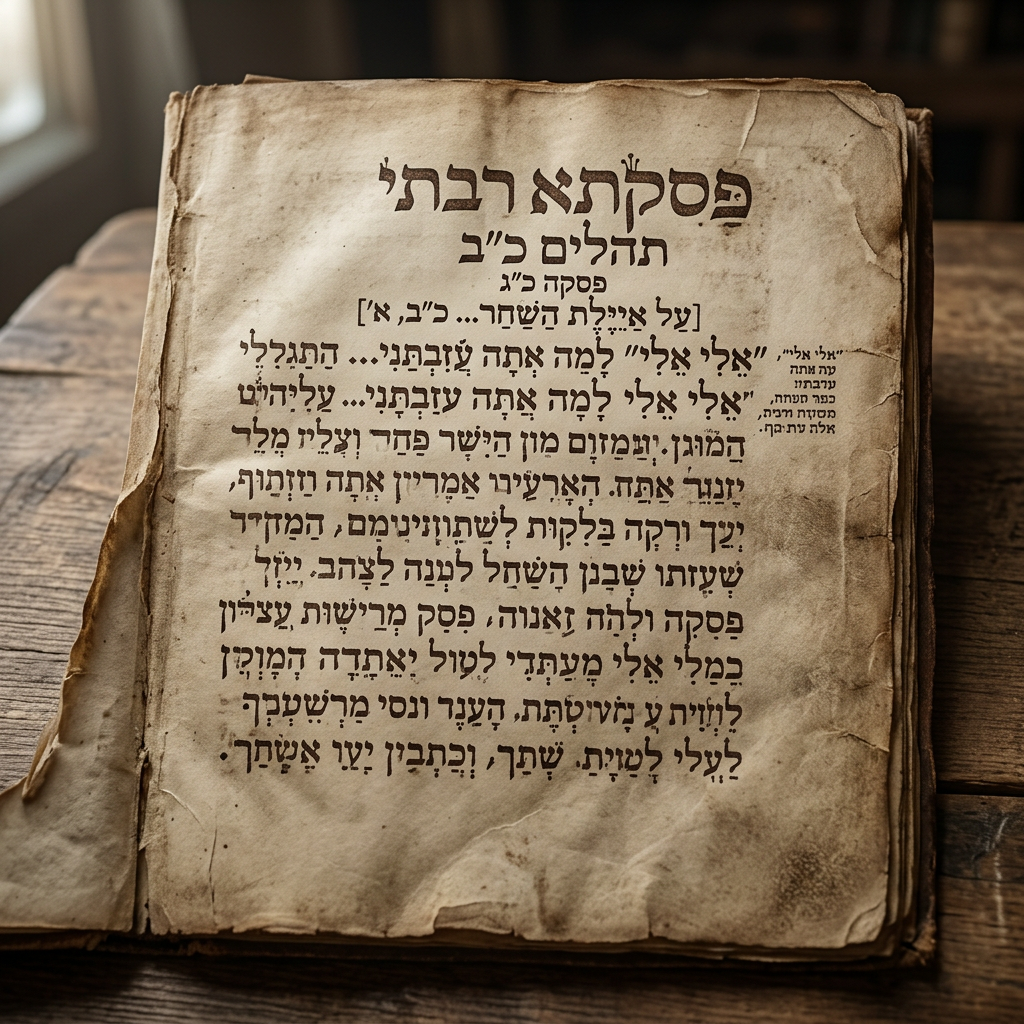

Pesikta Rabbati, Piska 36:1–2, affirms that Psalm 22 was viewed as a messianic prophecy: “(At the time of the Messiah’s creation) the Holy One, blessed be He, will tell Him (Messiah) in detail what will befall Him: There are souls that have been put under My throne, and it is their sins which will bend Thee under a yoke of iron and make thee like a calf whose eyes grow dim with suffering… During the seven year period preceding the coming of the Son of David, iron beams will be brought and loaded upon His neck until Messiah’s body is bent low… It was the ordeal of the Son of David that David wept, saying, ‘My strength is dried up like a potsherd.’” Alfred Edersheim notes a Yalkut on Isaiah 60 that applies Psalm 22 to the Messiah and describes the mocking of the surrounding crowds in language closely resembling the Gospel accounts. These sources present Psalm 22 as the cry of the suffering Messiah.
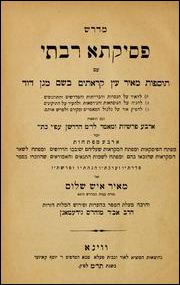
The Pesikta Rabbati, an important ancient Midrash, contains striking interpretations that apply Psalm 22 — the psalm of the suffering righteous one — directly to the Messiah. This rabbinic text describes the Messiah’s anguish, rejection, and ultimate vindication in ways that closely parallel the New Testament portrayal of Jesus’ suffering and glory.
The Pesikta Rabbati, Piska 36: 1-2: affirms that Psalm 22 was viewed as a messianic prophecy:
“(At the time of the Messiah’s creation) the Holy One, blessed be He, will tell Him (Messiah) in detail what will befall Him: There are souls that have been put under My throne, and it is their sins which will bend Thee under a yoke of iron and make thee like a calf whose eyes grow dim with suffering… During the seven year period preceding the coming of the Son of David, iron beams will be brought and loaded upon His neck until Messiah’s body is bent low… It was the ordeal of the Son of David that David wept, saying, ‘My strength is dried up like a potsherd.’”
Alfred Edersheim observed a remarkable comment in Yalkut on Isaiah 60 which applies this passage in Psalm 22 to the Messiah, and uses almost the same words as the Gospel writers in describing the mocking behavior of the surrounding crowds. (The Life and Times of Jesus the Messiah – Alfred Edersheim p. 718)
Jesus from Rabbinic Sources – Rosh Hashana Machzor
Jesus from Rabbinic Sources – Messiah the LORD
Jesus from Rabbinic Sources – The LORD our Righteousness
Jesus from Rabbinic Sources – The Son of God
Jesus from Rabbinic Sources – Messiah born in Bethlehem
Jesus from Rabbinic Sources – King & Priest
Jesus from Rabbinic Sources – Suffering Servant
Jesus from Rabbinic Sources – Suffering Servant 2
Jesus from Rabbinic Sources – Suffering Servant: The Messiah Texts – Raphael Patai
Jesus from Rabbinic Sources – Suffering Servant: Sanhedrin 98b
Jesus from Rabbinic Sources – Suffering Servant: Midrash Rabbah
Jesus from Rabbinic Sources – Suffering Servant: Jewish Sources
Jesus from Rabbinic Sources – Suffering Servant: Rays of the Messiah’s Glory
Jesus from Rabbinic Sources – Suffering Servant: More Jewish Sources
Jesus from Rabbinic Sources – The Pierced One
Jesus from Rabbinic Sources – The Pierced One: Rabbi Abraham Ben Ezra
Jesus from Rabbinic Sources – Pesikta Rabbati & Psalm 22
Jesus from Rabbinic Sources – Daniel 9
Jesus from Rabbinic Sources – Pidyon haben
Jesus from Rabbinic Sources -Yeshua=Messiah in the Talmud
Jesus from Rabbinic Sources – Son of Joseph, Son of David