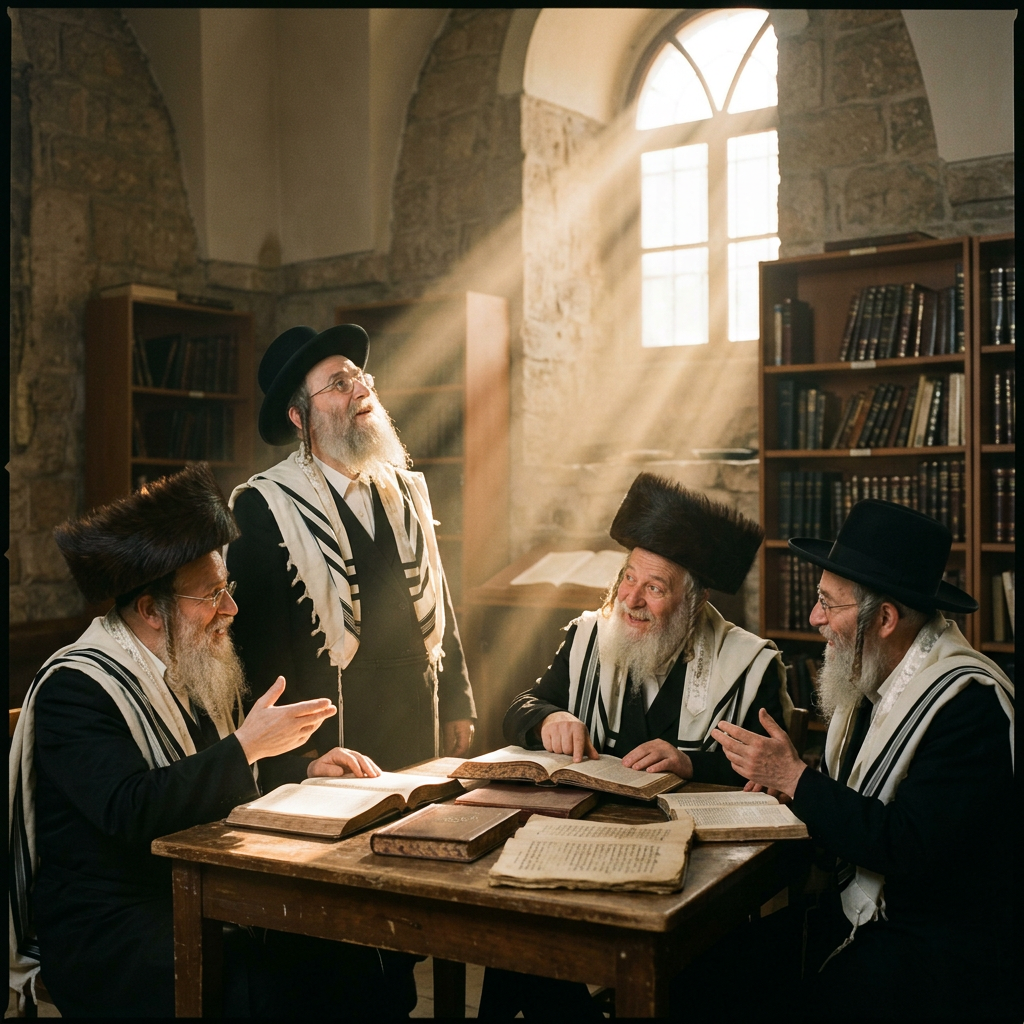

Jewish sources cited by David Baron declare that the Suffering Servant of Isaiah 53 is the Messiah who bears the sins of His people and is afterward exalted higher than the patriarchs and the angels.
David Baron’s work Rays of the Messiah’s Glory shows that ancient Jewish sources connect the Suffering Servant of Isaiah 53 with the Messiah’s ultimate glory. While many rabbinic texts emphasize the Messiah’s suffering, they also speak of the great glory that follows—the “rays of the Messiah’s glory” that shine forth after His afflictions. These sources paint a picture of One who suffers first and is later exalted.
Rabbi Elijah de Vidas declares that because the Messiah bears the iniquities of the people, “whoever will not admit that the Messiah suffers for our iniquities must endure and suffer for themselves.” The ninth-century poet Eliezer Hakkalir paraphrases Isaiah 53 in a Yom Kippur prayer: “Our iniquities and the yoke of our transgressions He will bear, for He was wounded for our transgressions… and by his stripes we are healed.” Midrash Tanhuma and the Yalkut on Isaiah 52:13 state that the Messiah shall be “more exalted than Abraham… more extolled than Moses… and be very high; that is higher than the ministering angels.” Baron notes that until Rashi, the Messianic interpretation of Isaiah 53 was almost universally adopted by Jewish writers, as seen in the Targum, Talmud, and Zohar.
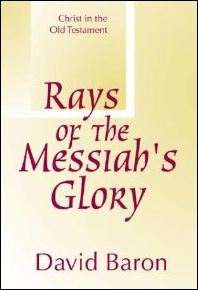
David Baron, in his book “Rays of the Messiah’s Glory”, gives more evidence of Jewish writers interpreting the Suffering Servant as the Messiah.
Rabbi R. Elyyah de Vidas sights, “The meaning of ‘he was wounded for our transgressions, … bruised for our iniquities’ is, that since the Messiah bears our iniquities, which produce the effect of His being bruised, it follows that whoever will not admit that the Messiah suffers for our iniquities must endure and suffer for themselves.” {Rays of Messiah’s Glory – David Baron pg 225}
Ninth century poet, Eliazer Hakalir, paraphrases Isaiah 53 in a prayer that comprises a part of some Jewish sects’ traditional liturgical prayers recited on Yom Kippur (the Jewish Day of Atonement). The prayer begins: “We are shrunk up in our misery even until now! Our Rock hath not come nigh to us; Messiah our righteousness, hath turned from us; we are in terror, and there is none to justify us! Our iniquities and the yoke of our transgressions He will bear, for He was wounded for our transgressions; He will carry our sins upon His shoulder, that we may find forgiveness for our iniquities; and by his strips we are healed …” {Rays of Messiah’s Glory – David Baron}
Midrash Tanhuma and Yalkut, vol. 2, par. 338 on Isaiah 52:13 states that the expressions “exalted, and extolled and be very high” indicates that, “Messiah shall be more exalted than Abraham… more extolled than Moses… and be very high; that is higher than the ministering angels…”
This again demonstrates that Isaiah 52:13-53:12 was viewed by rabbis as a messianic prophecy.
Also: “… the weight of Jewish authority preponderates in favor of the Messianic interpretation of this chapter… that until recent times this prophecy has been almost universally received by Jews as referring to Messiah is evident from Targum Jonathan who introduces Messiah by name in chp. LII.13; from the Talmud (Sanhedrin vol. 98b); and from the Zohar… In fact, until Rabbi Rashi [Rabbi Solomon Izaak (1040-1105)], considered the originator of the modern school of Jewish interpretation], who applied it to the Jewish nation, the Messianic interpretation of this chapter was almost universally adopted by Jews…” {Rays of Messiah’s Glory – David Baron}
littleguyintheeye@gmail.com
Jesus from Rabbinic Sources – Rosh Hashana Machzor
Jesus from Rabbinic Sources – Messiah the LORD
Jesus from Rabbinic Sources – The LORD our Righteousness
Jesus from Rabbinic Sources – The Son of God
Jesus from Rabbinic Sources – Messiah born in Bethlehem
Jesus from Rabbinic Sources – King & Priest
Jesus from Rabbinic Sources – Suffering Servant
Jesus from Rabbinic Sources – Suffering Servant 2
Jesus from Rabbinic Sources – Suffering Servant: The Messiah Texts – Raphael Patai
Jesus from Rabbinic Sources – Suffering Servant: Sanhedrin 98b
Jesus from Rabbinic Sources – Suffering Servant: Midrash Rabbah
Jesus from Rabbinic Sources – Suffering Servant: Jewish Sources
Jesus from Rabbinic Sources – Suffering Servant: Rays of the Messiah’s Glory
Jesus from Rabbinic Sources – Suffering Servant: More Jewish Sources
Jesus from Rabbinic Sources – The Pierced One
Jesus from Rabbinic Sources – The Pierced One: Rabbi Abraham Ben Ezra
Jesus from Rabbinic Sources – Pesikta Rabbati & Psalm 22
Jesus from Rabbinic Sources – Daniel 9
Jesus from Rabbinic Sources – Pidyon haben
Jesus from Rabbinic Sources -Yeshua=Messiah in the Talmud
Jesus from Rabbinic Sources – Son of Joseph, Son of David