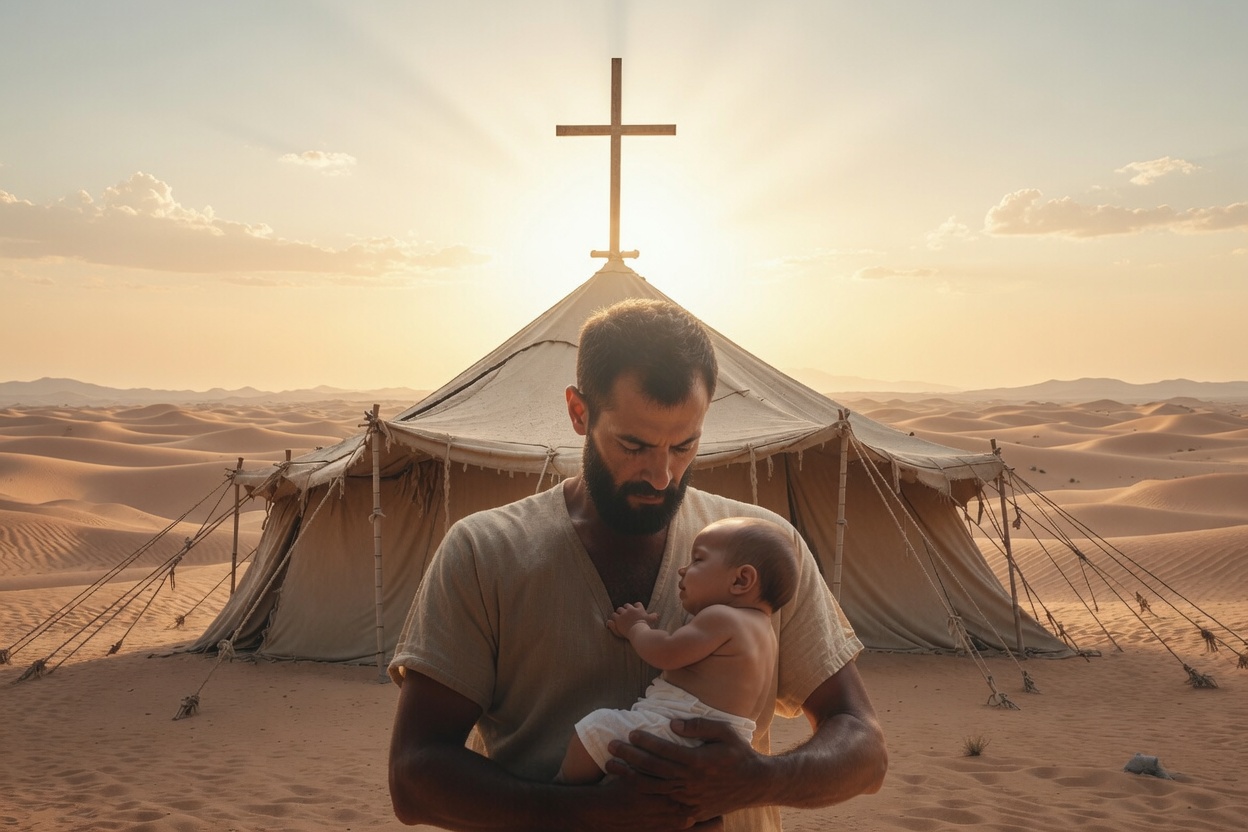
Father’s Day began in the church, just like Mother’s Day. But the earthly family it honors is far more than a holiday tradition — it is a living picture of the Heavenly Father and His great plan of redemption. From the Hebrew word אב (‘av’) — the pole that holds up the tent — to the bosom where love flows, to the cross (the ultimate gathering place of the family of God), everything points back to Christ who brings many sons to glory. On Father’s Day we honor our earthly fathers while lifting our eyes to the Everlasting Father who calls us into His household through the blood of the cross.
It is recognized that Father’s Day came about after Sonora Smart Dodd was inspired by Anna Jarvis and the idea of Mother’s Day after a Mother’s Day church service in 1909. The first “unofficial” Father’s Day happened on the third Sunday in June (6/19/1910) in Spokane, Washington with Dodd convincing the Spokane Ministerial Association and the YMCA to celebrate fathers.
Mother’s Day was officially instituted in 1914 but it took a lot longer for Father’s Day to be accepted. Dodd founded the Father’s Day Association to lobby for the holiday with Presidents Woodrow Wilson and Calvin Coolidge endorsing the holiday. Lyndon Johnson issued a proclamation for Father’s Day in 1966 but it wasn’t until 1972 that Richard Nixon signed into law Father’s Day as a national holiday.
Both Mother’s Day and Father’s Day began as church services to honor parents.
Exo 20:12 Honour thy father and thy mother: that thy days may be long upon the land which the LORD thy God giveth thee.
Eph 6:1 Children, obey your parents in the Lord: for this is right.
Eph 6:2 Honour thy father and mother; (which is the first commandment with promise;)
Eph 6:3 That it may be well with thee, and thou mayest live long on the earth.
Col 3:20 Children, obey your parents in all things: for this is well pleasing unto the Lord.
Honoring and fearing one’s parents is associated with the fear of the Lord and celebrating Him.
Pro 1:7 The fear of the LORD is the beginning of knowledge: but fools despise wisdom and instruction.
Pro 1:8 My son, hear the instruction of thy father, and forsake not the law of thy mother:
Pro 1:9 For they shall be an ornament of grace unto thy head, and chains about thy neck.
Lev 19:2 Speak unto all the congregation of the children of Israel, and say unto them, Ye shall be holy: for I the LORD your God am holy.
Lev 19:3 Ye shall fear every man his mother, and his father, and keep my sabbaths: I am the LORD your God.
The sabbaths were feasts/appointed times. In Hebrew, מועדים ‘moedim’ which come from the root עד ‘ad’ which literally means “see the door” as they were gatherings at the door of the Tabernacle/Temple.

The word for feast itself in Hebrew is חג ‘chag’ which has the meaning of “outside gathering.” Gathering and celebrating at the tent. Interestingly, חגא ‘chaga,’ which means fear or terror comes from this root word חג ‘chag.’ This fear, joy connection seen with parents and God is seen in more detail in: Daily Tidbits 6/11/26 – Toddler
The Family
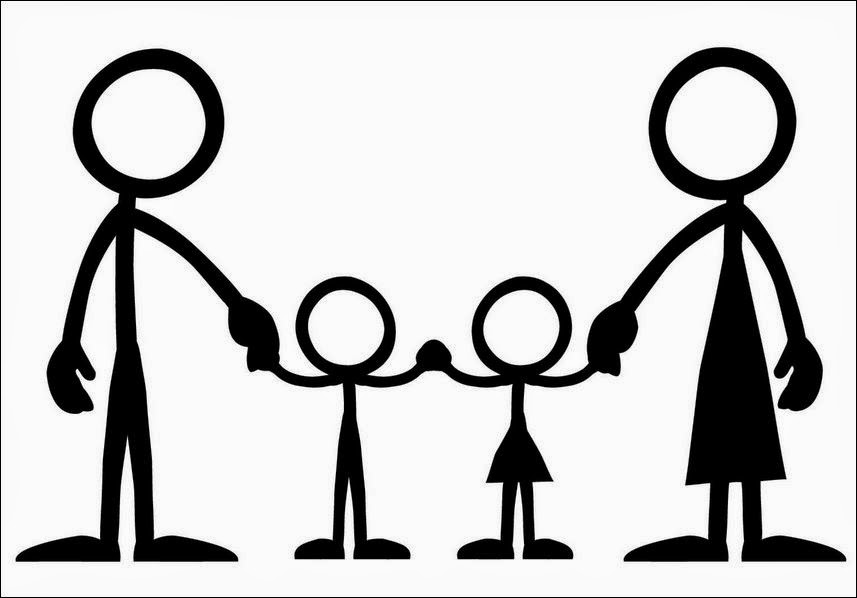
The family structure points to Christ. A man joins his wife to become one to produce children (Genesis 1:22, 28; 2:24). This points to the Messiah who left Heaven, to come to earth to bring forth many children to glory.
Heb 2:9 but we do see Jesus crowned with glory and honor because of the suffering of death was made a little less than the angels, so that by the grace of God He might taste of death for all.
Heb 2:10 For it was fitting for Him, because of whom are all things, and through whom are all things, having brought many sons to glory, to perfect Him as the Author of their salvation through sufferings.
Messiah is called the everlasting Father
Isa 9:6 For unto us a child is born, unto us a son is given: and the government shall be upon his shoulder: and his name shall be called Wonderful, Counsellor, The mighty God, The everlasting Father, The Prince of Peace.
Heb 2:13 And again, “I will be trusting on Him.” Isa. 8:17 And again, “Behold, I and the children whom God gave to Me.” Isa. 8:18
He is also likened to a mother. The function of the mother is to display the loving (John 15:9; 1 John 3:1), caring (1 Peter 5:7), gentle (Psalm 18:35; 2 Corinthians 10:1), healing (Exodus 15:26; Psalm 103:3), teaching (Matthew 23:10) character of God.
The mother is to be a picture of God’s love. אם ‘em’ (mother) is the source of the Latin ‘amare,’ the French ‘amitie’ and the English ‘amity’ which mean love. One of the Hebrew words for love is דד ‘dud/dad’ which means both love and breasts/bosom. Interestingly, the English word ‘baby’ comes from the Hebrew בבה ‘baba’ which is related to the word אבוב ‘aboob’ the root of which is אב ‘ab’ which means father but also means a pipe, as in the breast of the mother whose milk flows to give sustenance to the baby. בבה ‘baba’ in Hebrew means the pupil, the apple of one’s eyes. As any parent has held their baby in their arms against their bosom they recognize this is the epitome of love and intimate relationship (apple of the eye/”little guy in the eye“).
The love of a parent, holding their child in her arms was designed to reveal God’s love. Scripture declares that Messiah came from the bosom of the Father (John 1:18) who gathers (John 12:32) and then carries mankind to His bosom (Isaiah 40:10-11).
He is likened to siblings
Heb 2:11 For both the One sanctifying and the ones being sanctified are all of one; for which cause He is not ashamed to call them brothers,
Heb 2:12 saying, “I will announce Your name to My brothers; I will hymn to You in the midst of the assembly.” Psa. 22:22
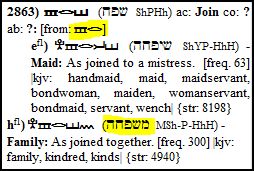
It is amazing to note that the Hebrew word for family (משפחה ‘mishpochah’) comes from the same root as ספח ‘saphach’ which is the origin of the English word crucifixion. The Greek word for family is πατρια ‘patria’ which comes from the word πατηρ ‘patēr’ which means father. The Hebrew word for father is אב ‘av’ which is אב aleph bet.
א aleph ב bet are the first two letters of the ‘aleph-bet’ from whence comes the English alpha-bet.
All of creation comes forth from the Word according to Psalm 33:6. Words are made up of letters (the Aleph-Bet) which points to Messiah who is the Alpha & Omega/Aleph-Tav which is a term meaning totality, as in the complete Alpha-Beta of the Greek or Aleph-Bet of the Hebrew. The Father is the Source of all things.
אב ‘av’ The Source of All Things
The word אב ‘av’ means the ‘source’ pictured by a tent pole which holds up the tent/house. It is no surprise that the Latin word for source/out from is ‘ab’ and the Greek word for out from/source ‘apo.’
In German ‘ab’ means ‘from then on’ linking back to the beginning source. In Slavic the ‘ab’ root meaning is ‘origin, father, progenitor, source.’ Names such as Kruschev and Gorbachov mean that the family is OF a certain location. The English word ‘of’ traces directly back to אב ‘av.’ In Irish, the O suffix in front of a name such as O’Hara traces back to ‘ab’ as well (E-Word – Isaac Mozeson pg 15).
Interestingly, the word ‘Bible’ in English comes from the Hebrew word אבוב ‘avoov’ (from the root אב ‘av’ ) which means a pipe and is also the source of the word papyrus which ancient Bibles were written upon. The word for booby and baba comes from אבוב ‘avoov’ as well. Again this traces back to אב ‘av’ who is the source of the milk of the Word (1Peter 2:2). Peter was quoting from Psalm 34:8 which speaks of ‘tasting’ and seeing that the Lord is good and blessed are those who ‘trust’ in Him. The word ‘trust’ comes from חסה ‘chasah’ which means a firm support, again tracing back to the meaning of אב ‘av’ father.
Father
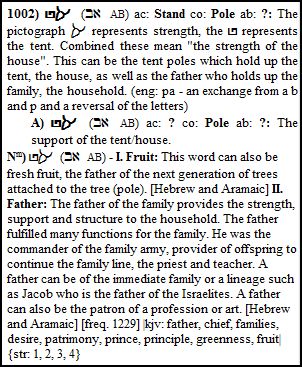
The father is the strength of the house. The teacher, the guide of the family. The letter ב ‘bet’ represents the house/family consisting of male and female as the ancient nomadic tent was made of two parts, one for the male and the other for the female. Man was made in the image of God, male and female (Genesis 1:27). אב ‘av’ is the word for the source. This passes into Latin as ‘ab’ and Greek as απο ‘apo’ which is portrayed in the Hebrew as מ mem. The letter Mem is a pictograph for water and the womb. The waters in the beginning and the womb of the mother. Again the Father’s character consists of both ‘male’ and ‘female.’ This is further seen in that father means one who provides food, which is seen in the female breasts. This word in Hebrew is דוד dod which is the source of the English word dad.
Fruit on a pole is another translation of אב. This again points to the source of the next generation. The word fruit comes from the Old English meaning a brook which links again to water. The Old English word for fruit also means joy, eat, and cohabit, again tracing back to אב. Joy links to love who is God (1 John 4:16). This is seen in the tent in the Hebrew word חשק chashaq. חשק ‘chashaq’ has the meaning of being knit together in love (Deuteronomy 7:7; Psalm 91:14) and is used in Exodus 38:17, 28 for the joining together of the Tabernacle.
The English word father comes from πατηρ ‘pater’ in Greek which traces back to פטר ‘pater’ in Hebrew which means the breaking forth of something such as a child being born, or the seed in fruit to continue the next generation. פר ‘par’ means fruit, and the breaking open of the heads of grain to reveal the seed inside.
נב ‘nav’ is another word for fruit and carries this same meaning, the fruit inside. It is no surprise that the first and last letters of the Bible (Genesis-Revelation) consist of these two letters. The reverse is בן ‘ben’ which means son. The son is the seed of the father that continues the house.
The father is the protector of the family and is seen in איב ‘oyev’ the point of a tent pole used to protect the family against enemies. This can also be seen in the spear which is used to protect, defend or to kill and eat.
Dad comes from דוד ‘dod’ which means the breasts, the source of food, life – milk. Interestingly, milk contains protein which comes forth from 22 amino acids linking to the 22 letters of the Hebrew aleph-bet…taste and see that He is good (Psalm 34:8).
אב ‘av’ (father)has the meaning of a pole:
In English, the word ‘pole’ comes from the Old English pal which traces back to the Latin palus, which literally means a stake. The English word ‘pale’ derives from this word. ‘Pale’ means to fix or fasten and is related to the English word ‘pact.’ A pact is an agreement, treaty, compact which comes from the Latin word pactum which means a contract/covenant. A covenant through a pole/stake… Here we see אב ‘av,’ the first word of the Hebrew alphabet pointing to the most important event in human history. The crucifixion of Christ Jesus, and the New Covenant (Isaiah 42:6; Matthew 26:28) in His blood which restores mankind back to the Father.
The concrete meaning of the word אב ‘av’ is the pole/pillar of the house/tent. This traces back to another Hebrew word for family בת ‘bet.’
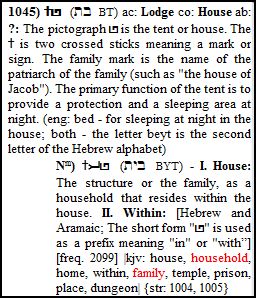
This idea of a family mark is seen in the banners that were set up for each house of the children of Israel in the wilderness (Numbers 2). Who is our banner? It is Christ (Psalm 20:5; 60:4; Isaiah 11:10-12; 62:10-11).
Literally, the word בת ‘bet’ means the ‘mark of the house.’ This was seen in ancient times in the flag or banner placed in front of the tent with the name or symbol of the family.
Isa 11:10 And it shall be in that day, the Root of Jesse stands as a banner of peoples; nations shall seek to Him; and His resting place shall be glory.
Psa 20:5 We will rejoice (רנן ‘ranan’ – shout for joy, sing, triumph) in thy salvation(ישׁוּעה ‘yeshuah’ – source of the name Jesus), and in the name of our God we will set up our banner (דּגל ‘dagal’ – raise a flag, conspicuously)
Ps 60:4: “Thou hast given a banner to them that fear thee, that it may be displayed (נוּס ‘nus’ – lift up a standard) because of the truth. Selah.”
Joh 3:14 And even as Moses lifted up the serpent in the wilderness, so must the Son of Man be lifted up,
Joh 3:15 that everyone believing into Him should not perish, but have everlasting life. It is through the cross that we enter into God’s family/house.
Eph 2:11 Because of this, remember that you, the nations, were then in the flesh (those having been called Uncircumcision by those having been called Circumcision in the flesh made by hands)
Eph 2:12 that at that time you were without Christ, alienated from the commonwealth of Israel and strangers of the covenants of promise, having no hope and without God in the world.
Eph 2:13 But now, in Christ Jesus you who then were afar off, came to be near by the blood of Christ.
Eph 2:14 For He is our peace, He making us both one, and breaking down the middle wall of partition,
Eph 2:15 in His flesh causing to cease the enmity, the Law of the commandments in decrees, that He might in Himself create the two into one new man, making peace,
Eph 2:16 and might reconcile both in one body to God through the cross, slaying the enmity in Himself.
Eph 2:17 And coming, He proclaimed “peace to you, the ones afar off, and to the ones near.” Isa. 57:19
Eph 2:18 For through Him we both have access by one Spirit to the Father.
Eph 2:19 So, then, you are no longer strangers and tenants, but you are fellow citizens of the saints and of the family of God,
Eph 2:20 being built up on the foundation of the apostles and prophets, Jesus Christ Himself being the cornerstone,
Eph 2:21 in whom all the building being fitted together grows into a holy temple in the Lord,
Eph 2:22 in whom you also are being built together into a dwelling place of God in the Spirit.
The Hebrew word for mother, also means an arm. How was the Arm of the LORD revealed? Through the cross (Isaiah 53:1), when all of mankind was gathered (John 12:32) to His bosom (Isaiah 40:10-11), revealing God’s love.
As mentioned previously, the family structure points to Messiah. A man joins his wife to become one to produce children (Genesis 1:22, 28; 2:24). This points to the Messiah who left Heaven, to come to earth to bring forth many children to glory.
Heb 2:9 but we do see Jesus crowned with glory and honor because of the suffering of death was made a little less than the angels, so that by the grace of God He might taste of death for all.
Heb 2:10 For it was fitting for Him, because of whom are all things, and through whom are all things, having brought many sons to glory, to perfect Him as the Author of their salvation through sufferings.
The love of a mother who “holds the family together” is an integral part in revealing God’s nature to mankind. The Hebrew word for family is משפחה ‘mishpochah’ which means to be joined together. משפחה ‘mishpochah’ comes from the root word ספח ‘saphach’ which has the same meaning of a joining together of two things and is the origin of the English word crucifixion. Again, this is where Christ joined together mankind into the family of God (Ephesians 3:15). The Hebrew word for maidservant or womanservant is שיפחה ‘shiphchah’ which is a cognate of משפחה ‘mishpochah.’ The loving service of parents to their family reveals the love of God as Messiah humbled Himself to become a servant, revealing God’s love.
Php 2:5 Let this mind be in you, which was also in Christ Jesus:
Php 2:6 Who, being in the form of God, thought it not robbery to be equal with God:
Php 2:7 But made himself of no reputation, and took upon him the form of a servant, and was made in the likeness of men:
Php 2:8 And being found in fashion as a man, he humbled himself, and became obedient unto death, even the death of the cross.
Php 2:9 Wherefore God also hath highly exalted him, and given him a name which is above every name:
Php 2:10 That at the name of Jesus every knee should bow, of things in heaven, and things in earth, and things under the earth;
Php 2:11 And that every tongue should confess that Jesus Christ is Lord, to the glory of God the Father.
The concrete meaning of the word אב ‘av’ is the pole/pillar of the house/tent. Who is the pillar? It is Christ Jesus.
Gen 28:17 And he was afraid, and said, How fearful is this place! This is nothing except the house of God, and this is the door to Heaven.
Gen 28:18 And Jacob started up early in the morning and took the stone which he had placed at his head, and he placed it as a pillar; and he poured oil on the top of it.
The Hebrew word for Messiah comes from this concept of anointing
Gen 28:19 And he called the name of that place, The House of God. And yet the name of the city was at first Luz.
Gen 28:20 And Jacob vowed a vow, saying, If God is with me and keeps me in this way which I am going, and gives to me bread to eat and clothing to wear,
Gen 28:21 and I return in peace to the house of my father, then Jehovah shall be my God,
Gen 28:22 and this stone which I have placed as a memorial pillar shall become the house of God; and all which You shall give to me, I will tithe the tenth to You.
Messiah (His body) is the House of God (Bethel)
Gen 35:14 And Jacob set up a pillar(H4678 matstsebeth) in the place where he talked with him, even a pillar of stone: and he poured a drink offering thereon, and he poured oil thereon.
Gen 35:15 And Jacob called the name of the place where God spake with him, Bethel {H1008 בּית־אל ‘bethel’ – house of God}
H4676 מצּבה matstsêbâh mats-tsay-baw’
Feminine (causative) participle of H5324; something stationed, that is, a column or (memorial stone); by analogy an idol: – garrison, (standing) image, pillar.
Messiah is the image of God
2Co 4:4 in whom the god of this age has blinded the thoughts of the unbelieving, so that the brightness of the gospel of the glory of Christ who is the image of God, should not dawn on them.
The congregation of believers are to be the “image” of Messiah
Rom 8:29 because whom He foreknew, He also predestinated to be conformed to the image of His Son, for Him to be the First-born among many brothers.
2Co 3:18 But we all with our face having been unveiled, having beheld the glory of the Lord in a mirror, are being changed into the same image from glory to glory, as from the Lord Spirit.
BETHEL
Mat 16:18 And I say also unto thee, That thou art Peter, and upon this rock I will build my church; and the gates of hell shall not prevail against it.
1Ti 3:15 But if I tarry long, that thou mayest know how thou oughtest to behave thyself in the house of God, which is the church of the living God, the pillar and ground of the truth.
1Ti 3:16 And without controversy great is the mystery of godliness: God was manifest in the flesh, justified in the Spirit, seen of angels, preached unto the Gentiles, believed on in the world, received up into glory.
Heb 3:1 Wherefore, holy brethren, partakers of the heavenly calling, consider the Apostle and High Priest of our profession, Christ Jesus;
Heb 3:2 Who was faithful to him that appointed him, as also Moses was faithful in all his house.
Heb 3:3 For this man was counted worthy of more glory than Moses, inasmuch as he who hath builded the house hath more honour than the house.
Heb 3:4 For every house is builded by some man; but he that built all things is God.
Heb 3:5 And Moses verily was faithful in all his house, as a servant, for a testimony of those things which were to be spoken after;
Heb 3:6 But Christ as a son over his own house; whose house are we, if we hold fast the confidence and the rejoicing of the hope firm unto the end.
1Pe 2:4 To whom coming, as unto a living stone, disallowed indeed of men, but chosen of God, and precious,
1Pe 2:5 Ye also, as lively stones, are built up a spiritual house, an holy priesthood, to offer up spiritual sacrifices, acceptable to God by Jesus Christ.
Eph 2:11 Wherefore remember, that ye being in time past Gentiles in the flesh, who are called Uncircumcision by that which is called the Circumcision in the flesh made by hands;
Eph 2:12 That at that time ye were without Christ, being aliens from the commonwealth of Israel, and strangers from the covenants of promise, having no hope, and without God in the world:
Eph 2:13 But now in Christ Jesus ye who sometimes were far off are made nigh by the blood of Christ.
Eph 2:14 For he is our peace, who hath made both one, and hath broken down the middle wall of partition between us;
Eph 2:15 Having abolished in his flesh the enmity, even the law of commandments contained in ordinances; for to make in himself of twain one new man, so making peace;
Eph 2:16 And that he might reconcile both unto God in one body by the cross, having slain the enmity thereby:
Eph 2:17 And came and preached peace to you which were afar off, and to them that were nigh.
Eph 2:18 For through him we both have access by one Spirit unto the Father.
Eph 2:19 Now therefore ye are no more strangers and foreigners, but fellowcitizens with the saints, and of the household of God;
Eph 2:20 And are built upon the foundation of the apostles and prophets, Jesus Christ himself being the chief corner stone;
Eph 2:21 In whom all the building fitly framed together groweth unto an holy temple in the Lord:
Eph 2:22 In whom ye also are builded together for an habitation of God through the Spirit.
1Co 6:19 What? know ye not that your body is the temple of the Holy Ghost which is in you, which ye have of God, and ye are not your own?
1Co 6:20 For ye are bought with a price: therefore glorify God in your body, and in your spirit, which are God’s.
The Olive Tree
אב ‘av’ also means fruit that is attached to the tree (pole).
Joh 15:1 I am the True Vine, and My Father is the Vinedresser.
Joh 15:2 Every branch in Me not bearing fruit, He takes it away; and each one bearing fruit, He prunes, so that it may bear more fruit.
Joh 15:3 You are already pruned because of the Word which I have spoken to you.
Joh 15:4 Remain in Me, and I in you. As the branch is not able to bear fruit of itself, unless it remain in the vine, so neither can you unless you remain in Me.
Joh 15:5 I am the Vine; you are the branches. The one abiding in Me, and I in him, this one bears much fruit, because apart from Me you are not able to execute, nothing.
Joh 15:6 Unless one remains in Me, he is cast out as the branch and is dried up; and they gather and throw them into a fire, and they are burned.
Joh 15:7 If you remain in Me, and My Words remain in you, whatever you desire you will ask, and it shall happen to you.
Joh 15:8 In this My Father is glorified, that you should bear much fruit; and you will be disciples to Me.
Joh 15:9 As the Father loved Me, I also loved you; continue in My love.
Joh 15:10 If you keep My commandments you will continue in My love, as I have kept My Father’s commandments and continue in His love.
The Pillar is linked to the Root
Isa 6:13 But yet in it shall be a tenth, and it shall return, and shall be eaten: as a teil tree, and as an oak, whose substance{H4678matstsebeth a monumental stone; also the stock of a tree: – pillar, substance.} is in them, when they cast their leaves: so the holy seed(Gal 3:16) shall be the substance(H4678 ROOT) thereof.
Rom 11:16 Now if the firstfruit is holy, so also the lump. And if the root is holy, so also the branches.
The English word fruit has the meaning of to use, enjoy, to produce or profit. Etymologically, it traces back to the Old English word ‘brook.’ OE Brook has the meaning of to use, enjoy, possess, eat, cohabit with (to produce more fruit). It is interesting that Messiah links bearing fruit with joy in John 15 mentioned above.
Joh 15:10 If you keep My commandments you will continue in My love, as I have kept My Father’s commandments and continue in His love.
Joh 15:11 I have spoken these things to you that My joy may abide in you, and your joy may be full.
אב ‘av’ means Father
The Son is called the Everlasting Father
Isa 9:6 For unto us a child is born, unto us a son is given: and the government shall be upon his shoulder: and his name shall be called Wonderful, Counsellor, The mighty God, The everlasting Father, The Prince of Peace.
Rev 21:6 And he said unto me, It is done. I am Alpha and Omega, the beginning and the end. I will give unto him that is athirst of the fountain of the water of life freely.
Rev 21:7 He that overcometh shall inherit all things; and I will be his God, and he shall be my son.
Isa 8:18 Behold, I and the children whom the LORD hath given me are for signs and for wonders in Israel from the LORD of hosts, which dwelleth in mount Zion.
Etymology of the English word Father

As seen above in the Ancient Hebrew definition of אב, pa is derives from ‘ab.’

‘Pere’ has an interesting link back to אב ‘av.’ In Hebrew one of the words for fruit is פר ‘par’ which may be the origin of the French word ‘pere.’ ‘Par’ also means a bull or ox which in ancient times represented God.
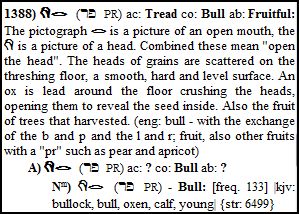
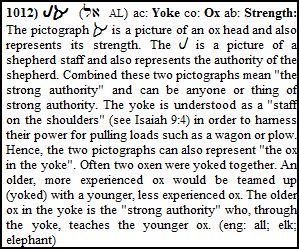
The English word ‘father’ comes from the Greek word ‘pater.’ This word comes from the Hebrew word פטר ‘patar’ which has the meaning of something breaking forth, pictured by the birth of a child. The source of this word is פר ‘par’ which means fruit. The connection to the word ‘av’ through the concepts of fruit and the source of a thing.




If dad was rendered into Hebrew letters it would be דד (dalet dalet). This word means the bosom.
Joh 1:18 No one has seen God at any time; the only begotten Son, who is in the bosom of the Father, that One declares Him.
Here is a list of the words for father in numerous languages. Notice the links back to the above words
Afrikaans : vader
Albanian : baba ; atë
Apalai (Amazon) : papa
Arabic : babba ; yebba ; abbi (classical)
Aragones : pai
Asturian : pá
Aymara : awki
Bangla : Baba ; Abba
Basque : aita
Bergamasco : pàder
Bolognese : pèder
Bosnian : otac
Brazilian Portuguese : pai
Bresciano : bubà ; pàder
Breton : tad
Calabrese : patre ; patri ; pa ; papà ; papallu ; patra
Caló : batú ; bato ; batico ; dadá
Catalan : pare
Catanese : pattri ; opà
Chechen (Caucasus) : daa
Chechen : da
Cree (Canada) : -papa
Croatian : otac
Czech : táta, otec
Dakota (USA) : ate
Dutch : vader ; papa ; pappie
Dzoratâi : pére
East African : baba
English : father ; dad ; daddy ; pop ; poppa ; papa
Esperanto : patro
Estonian : isa
Faeroese : faðir
Faeroese : faðir
Filipino : tatay, itay, tay ; ama
Finnish : isä
Flemish : vader
French : papa
Frisian : heit
Galician : pai
German : banketi, Papi
Griko Salentino : ciúri
Greek : pater (the -ter is pronounced “tare” and the e should have a macron over it)
Guaran : túva ; ru
Hebrew : abba(h)
Hindi : Papa ; Pita-ji
Hungarian : apa
Hungarian : apa ; apu ; papa ; édesapa
Icelandic : pabbi ; faðir
Indonesian : bapa ; ayah ; pak
Irish : athair ; daidí
Italian : babbo
Japanese : otosan, papa
Judeo-Spanish : padre ; baba ; babu
Kikuyu : baba
Kiswahili : Baba
Kobon (New Guinea) : bap
Kurdish Kurmanji : bav
Ladin : pere
Latin : pater ; papa ; atta
Latvian : tevs
Leonese : pai
Ligurian : paire
Limburgian : vader ; vajer ; pap
Lingala : tata
Lithuanian : tevas ; pradininkas ; protevis
Lombardo Occidentale : bubà
Lunfardo : viejo
Luo (Kenya) : baba
Maasai : papa ; paapa ; olaiiu
Malagasy : ray
Malay : bapa
Maltese : missier
Mandarin : bà ; bàba (informal)
Mandarin Chinese : baba
Mantuan : upà ; papà ; babbo
Maori : haakoro ; kohake
Mapunzugun : chaw ; chao
Modern Greek : babbas
Moravian : tata
Mudnés : pèder
Modern English : father, daddy
Middle English : fader
Nadsat : Pee
Nahuatl (Mexico) : ta’
Napulitano : pate
Nepali : buwa
Norwegian : pappa ; far
Occitan : paire
Old English : faeder (the ‘ae’ is the short a sound in cat)
Parmigiano : päder
Persian/Farsi : pedar, pitar ; simply Baabaa
Piemontese : pare
Pipil (El Salvador) : tatah
Polish : tata ; ojciec
Portuguese : pai
Quechua (Ecuador) : tayta
Quechua : tata ; churiyaqe
Rapanui : koro ; matu’a ; matu’a tane
Reggiano : peder
Romagnolo : bà
Romani : dad
Romanian : tata
Romanian : tata ; parinte ; taica
Romansh : bab
Russian : papa
Saami : áhcci
Samoan : tama
Sango : baba
Sanskrit : tàtah ; janak
Sardinian (Limba Sarda Unificada) : babu
Sardinian Campidanesu : babbu
Sardinian Logudoresu : babbu
Shona : baba
Sicilian : patri
Slovak : otec
Slovenian : ôèe
Spanish : papá ; viejo ; tata
Spanish,Latin : padre
Swahili : baba ; mzazi
Swedish, Norwegian, and Danish : fadar
Swedish : pappa
Swiss German : Vatter
Tagalog : tatay ; ama
Triestino : pare
Turkish : baba
Turkmen : däde ; kaka
Urdu : Abbu ; Abbu-ji ; Abbu-jan ; bap
Valencian : pare
Venetian : pare ; popà ; ‘opà ; pupà ; papà
Viestano : attèn’
Wallon : pére
Welsh : tad
Xhosa (South Africa) : -tata
Yiddish : tatti ; tay ; foter ; tateh
Zeneize : poæ
The Bosom, the Family and Gathering at the Cross
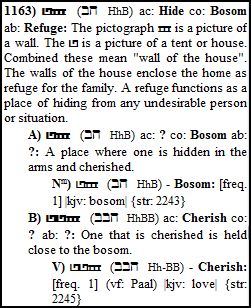
The word father in Hebrew is associated with love, so too is the word mother. אם ’em’ (mother) is the source of the Latin ‘amare,’ the French ‘amitie’ and the English ‘amity,’ all of which mean love. One of the Hebrew words for love is דד ‘dud/dad’ which means both love and breasts/bosom. Interestingly, the English word ‘baby’ comes from the Hebrew בבה ‘baba’ which is related to the word אבוב ‘aboob’ the root of which is אב ‘av’ which means father but also means a pipe, as in the breast of the mother whose milk flows to give sustenance to the baby. בבה ‘baba’ in Hebrew means the pupil, the apple of one’s eyes. As any parent has held their baby in their arms against their bosom they recognize this is the epitome of love and intimate relationship (apple of the eye/little guy in the eye).
The Hebrew word for family is משפחה ‘mishpocha’ which comes from the root שפח ‘shapach’. שפח ‘shaphach’ is the source of the English word crucifixion from whence all the family of the earth is gathered (John 12:32). The bosom, which represents the love of the family, also links to the crucifixion.
Messiah came from the bosom of the Father.
Joh 1:18 No one has seen God at any time; the only begotten Son, who is in the bosom of the Father, that One declares Him.
He gathers and then carries in His bosom His people, linking to the crucifixion. It is through the work of Messiah on the cross that mankind is brought into His family.
Isa 40:10 Behold, the Lord GOD will come with strong hand, and his arm shall rule for him: behold, his reward is with him, and his work before him.
Isa 40:11 He shall feed his flock like a shepherd: he shall gather the lambs with his arm, and carry them in his bosom, and shall gently lead those that are with young.
Eph 2:8 For by grace are ye saved through faith; and that not of yourselves: it is the gift of God:
Eph 2:9 Not of works, lest any man should boast.
Eph 2:10 For we are his workmanship, created in Christ Jesus unto good works, which God hath before ordained that we should walk in them.
Eph 2:11 Wherefore remember, that ye being in time past Gentiles in the flesh, who are called Uncircumcision by that which is called the Circumcision in the flesh made by hands;
Eph 2:12 That at that time ye were without Christ, being aliens from the commonwealth of Israel, and strangers from the covenants of promise, having no hope, and without God in the world:
Eph 2:13 But now in Christ Jesus ye who sometimes were far off are made nigh by the blood of Christ.
Eph 2:14 For he is our peace, who hath made both one, and hath broken down the middle wall of partition between us;
Eph 2:15 Having abolished in his flesh the enmity, even the law of commandments contained in ordinances; for to make in himself of twain one new man, so making peace;
Eph 2:16 And that he might reconcile both unto God in one body by the cross, having slain the enmity thereby:
Eph 2:17 And came and preached peace to you which were afar off, and to them that were nigh.
Eph 2:18 For through him we both have access by one Spirit unto the Father.
Eph 2:19 Now therefore ye are no more strangers and foreigners, but fellowcitizens with the saints, and of the household of God;
Eph 2:20 And are built upon the foundation of the apostles and prophets, Jesus Christ himself being the chief corner stone;
Eph 2:21 In whom all the building fitly framed together groweth unto an holy temple in the Lord:
Eph 2:22 In whom ye also are builded together for an habitation of God through the Spirit.
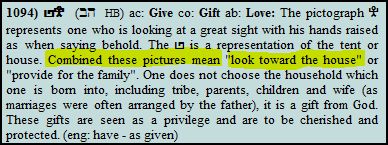
There are multiple words in Hebrew for love, all linking back to the bosom. The most common is אהב ‘ahav’ which has the meaning of a gift and the expressions and actions of one towards the family. The pictograph meaning displays the gift of the Father to mankind of His only begotten Son. Again linking the bosom, the family and the crucifixion.
Joh 3:16 For God so loved the world that He gave His only begotten Son, that everyone believing into Him should not perish, but have everlasting life.
Joh 15:13 Greater love than this has no one, that anyone should lay down his soul for his friends.

From the root:
The Pictograph meaning of Love:
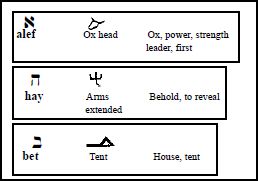
The first and last letters spell out the word for Father (אב ‘av’) and the middle letter is a picture of a man with outstretched arms (ה ‘heh’). The Love of the Father is revealed through the Messiah on the tree, gathering all mankind back to their Creator.
Another word for love is חשק ‘chashaq’ which has the meaning of being knit together in love. חשק ‘chashaq’ is related to the word חב ‘chav’ which means the bosom. חשק ‘chashaq is the word used in reference to the joining together of the Tabernacle, which is a shadow picture of the body of Messiah. It is no surprise that this joining together involved nails, just as in the nails used in the crucifixion (Exodus 38:17, 28; Deuteronomy 7:7; Colossians 2:2, 19; Ephesians 4:15-16).
חשק ‘chashaq’ also can be traced back to the word חק ‘choq’
H2436
חוק / חק / חיק
chêyq / chêq / chôq
BDB Definition:
1) bosom, hollow, bottom, midst
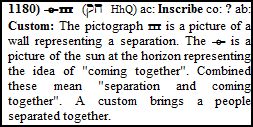
חק ‘chuq’ is the root of חקק ‘chaqaq’ and חקה ‘chaqah’ which means to inscribe a decree or custom. It is used in reference to the Torah/Word. It is no surprise that the New Covenant, cut at Calvary is associated with the inscribing of the Word on our hearts which is contained in our bosoms (Jeremiah 31:31).
There are two more words in Hebrew which are translated as bosom. One is חצן ‘chatsan’ which comes from חץ ‘chets’ which literally means a tent wall, as in an enclosing. The second is the word צלחת ‘tsalachat’ which also means a bowl, as in the bowls used in the Tabernacle. צלחת ‘tsalachat’ comes from the root צלח ‘tsalach’ which traces back further to צל ‘tsel’ which means a shadow…as under the shadow of His wings, the little guy in His Eye.
Recall that the word in Hebrew for pupil is בבה ‘baba’ which is the source of the English word ‘baby.’ Interestingly, the English word ‘shade’ comes from the Hebrew word שד ‘shad’ which means the breast/bosom. שד ‘shad’ is the root of the word שדי ‘shaddai’ which is translated as ‘the Almighty.’ שד ‘shad’ literally means to return to the door, again linking with the feasts and the Tabernacle mentioned above.
Finally, the word דוד ‘dod’ means love. דד ‘dod’ literally means the breasts. The letter ‘dalet’ is the picture of a door, or flap of a tent which opens the way inside. The tabernacle consisted of two doors/veils which דד displays. What is the veil of the Tabernacle a picture of? The body/flesh of Messiah.
Heb 10:20 By a new and living way, which he hath consecrated for us, through the veil, that is to say, his flesh;
The above portion of Scripture is in context of the New Covenant which was cut at Calvary where Messiah gathered mankind into His bosom (Isaiah 40:11; Psalm 89:50).
Bosom & Faith
Num 11:12 I, have I conceived all this people? I, have I begotten it, that You say to me, Carry it in your bosom as the foster father (אמן ‘aman’) bears the suckling, to the land which You have sworn to its fathers?
Num 11:12 Have I conceived all this people? have I begotten them, that thou shouldest say unto me, Carry them in thy bosom, as a nursing father (אמן ‘aman’) beareth the sucking child, unto the land which thou swarest unto their fathers?
The word used above for foster father/nursing father is אמן ‘aman’ which means faith. Faith comes from the same root as truth (etymology) in Hebrew מן ‘man.’
Faith and Truth are related
Faith (אמונה ’emunah’) and Truth (אמת ’emet’) come from the same root word in Hebrew.
Ancient Hebrew Definition
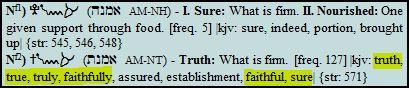
אמונה ’emunah’ comes from the 3 letter root אמן ‘aman’
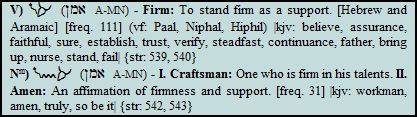
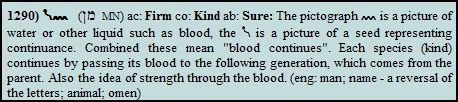
‘אמן ‘aman’ means truly, a sure foundation and support. This is why Messiah is spoken of as the ‘Amen’ (Revelation 3:14). He is the firm foundation represented by the Tree of Life/the Word. The other tree in midst the Garden was the tree of knowledge which represents unfaithfulness/lawlessness. Man must choose between the two. The choice that one makes determines which seed/tree he will be a part of. Interestingly, the parent root for the word ‘emunah’ is מן which means ‘the blood continues.’ It is the word used in Genesis 1 for ‘kind’ or species. Recall that this is the origin of the word ‘etymology’ as well.
Faith is Biblically defined as walking in Truth who is the Word/Messiah. Faith traces back to the Garden of Eden and the two trees in the midst of the Garden. The Tree of Life which represents truth/faith and the tree of knowledge which represents unfaithfulness/lawlessness and man’s own will as to what is good or evil.
The English word faith comes from the Old French word ‘foi’ which means faith, belief, trust which traces back further to the Latin word ‘fides’ which has the same meaning. ‘Fides’ traces back to the Hebrew word בטח ’batach.’ ‘Batach’ is also the source for the English word ‘trust.’ בטח ’batach’ means to cling to someone or something. It is pictured in the natural realm in a melon which clings to the vine. Here again the picture of the Tree of Life and the tree of knowledge is seen. Man can have faith in God and cling to Him or man can choose his own way and cling to the tree of knowledge. This concept of clinging to the vine is discussed in more detail in the Biblical definition of the Olive tree and the word אב ‘av’ (Father).
Related studies:
Shadows of Messiah – Mother’s Day
Christ in the Hebrew Dictionary – אב ‘av’ – Father, fruit, pole
Christ in the Latin Dictionary – Ab – From, away
Musings – The Father’s Love Letter
Daily Tidbits 5/11 – Shadows of Messiah: Mother
Daily Tidbits 5/17 – The Bosom
Daily Tidbits 6/11/26 – Toddler
littleguyintheeye@gmail.com