Ancient rabbinic liturgy itself invokes Yeshua as High Priest of the inner chamber, revealing that core messianic hopes fulfilled in Jesus were already present in Jewish sources.
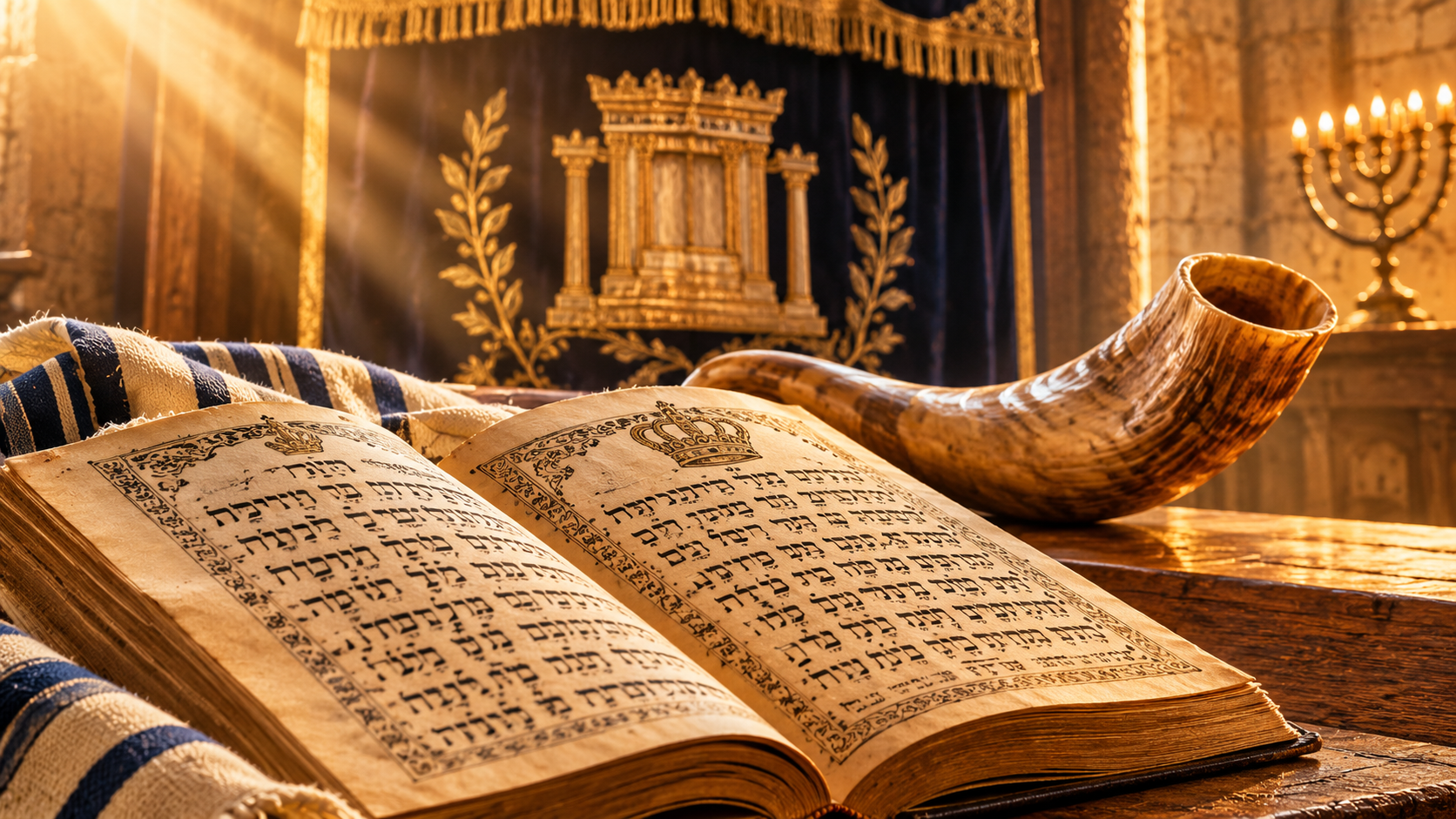
During the blowing of the shofar on Rosh Hashanah, the Orthodox Union Machzor prays: “Yeshua (the kohen hagadol) minister of the inner chamber and the ministering Malach, and may you be filled with mercy upon us.” This invocation of Yeshua as High Priest of the inner chamber is recited in traditional liturgy and echoes the ancient expectation of a priestly Redeemer who intercedes before God. Such texts demonstrate that belief in a Messiah who serves as High Priest and mediator was part of Jewish prayer and expectation, not a later Christian invention.

This will be the first in a series of quotes from ancient Jewish and rabbinic sources on the Messiah.
The reason for such is that many of those who follow Judaism today claim that Jesus came to start a new religion that was totally foreign to Jews of His day and that Christianity is totally incompatible with the TaNaKH. These writings will be shared to reveal that many of the ancient beliefs of Jews in regards to who the Messiah would be and what He would do were fulfilled by Jesus of Nazareth.
I will be quoting from Rabbinic sources but this is by no means an endorsement of these writings as there is much that I disagree with as many of the beliefs in Judaism are in contradiction to the Word of God.
Belief that Jesus the Messiah is the LORD in the flesh, the Son of God, our Redeemer who would suffer for the sins of mankind are rejected in Judaism today, yet in ancient Rabbinic writings all of these doctrines are found.

“May it be your will that the Tekiah-Shevarim-Teruah-Tekiah blasts that we sound be embroidered into the heavenly curtain by the appointed Malach, just as you accepted the prayers of Eliyahu, who is remembered for good. Yeshua (the kohen hagadol) minister of the inner chamber and the ministering Malach, and may you be filled with mercy upon us. Blessed are you Master of Mercies.” (Orthodox Union Rosh Hashanah Machzor page 449)
For those who seen Simcha Pearlmutter’s testimony on being a Jew who believes in Messiah and the “underground” movement of rabbis through the centuries who have held this faith, the above picture is what he is talking about at the end of his testimony. For those who haven’t seen his testimony, here is the link so you can do so if you wish.
Rabbi Simcha Pearlmutter talks about Yeshua his Messiah 1/9
While I am not a supporter of some of Mr. Pearlmutter’s teaching/beliefs, this interview is a good source to see that the writings of the New Testament are not full of foreign concepts to ancient Jewish belief.
For those not familiar, the machzor is a prayer book used by Jews on High holy days such as Rosh Hashanah and Yom Kippur. This portion of the machzor is recited during the blowing of the shofar on ‘Rosh Hashanah.’
Jesus from Rabbinic Sources – Rosh Hashana Machzor
Jesus from Rabbinic Sources – Messiah the LORD
Jesus from Rabbinic Sources – The LORD our Righteousness
Jesus from Rabbinic Sources – The Son of God
Jesus from Rabbinic Sources – Messiah born in Bethlehem
Jesus from Rabbinic Sources – King & Priest
Jesus from Rabbinic Sources – Suffering Servant
Jesus from Rabbinic Sources – Suffering Servant 2
Jesus from Rabbinic Sources – Suffering Servant: The Messiah Texts – Raphael Patai
Jesus from Rabbinic Sources – Suffering Servant: Sanhedrin 98b
Jesus from Rabbinic Sources – Suffering Servant: Midrash Rabbah
Jesus from Rabbinic Sources – Suffering Servant: Jewish Sources
Jesus from Rabbinic Sources – Suffering Servant: Rays of the Messiah’s Glory
Jesus from Rabbinic Sources – Suffering Servant: More Jewish Sources
Jesus from Rabbinic Sources – The Pierced One
Jesus from Rabbinic Sources – The Pierced One: Rabbi Abraham Ben Ezra
Jesus from Rabbinic Sources – Pesikta Rabbati & Psalm 22
Jesus from Rabbinic Sources – Daniel 9
Jesus from Rabbinic Sources – Pidyon haben
Jesus from Rabbinic Sources -Yeshua=Messiah in the Talmud
Jesus from Rabbinic Sources – Son of Joseph, Son of David