
The Midrash Rabbah and Midrash Tanhuma declare that the Suffering Servant of Isaiah 53 is the King Messiah who is wounded for the transgressions of His people.
Midrash Rabbah on Ruth 2:14 declares: “He is speaking of the King Messiah: ‘Come hither’ draw near to the throne and ‘dip thy morsel in the vinegar,’ this relates to the chastisements as it is said, ‘But he was wounded for our transgressions, bruised for our iniquities.’” Midrash Tanhuma identifies the “great mountain” of Zechariah 4:7 as the King Messiah, who is “greater than the patriarchs” and higher than the ministering angels, citing Isaiah 52:13: “My servant shall be high, and lifted up, and lofty exceedingly.” These sources affirm that the Servant of Isaiah 53 is the Messiah who suffers for Israel.
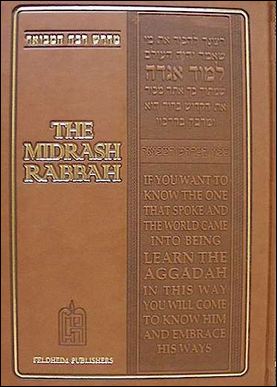
The Midrash Rabbah proclaims the Suffering Servant is Messiah.
Midrash Rabbah on Ruth 2:14: He is speaking of the King Messiah: “Come hither” draw near to the throne and “dip thy morsel in the vinegar,” this relates to the chastisements as it is said, “But he was wounded for our transgressions, bruised for our iniquities.”
Midrash Tanhuma, Parasha Toldot, (end of section), states: “Who art thou, O great mountain?” (Zech. 4:7) This refers to King Messiah. And why does he call him the “great mountain?” Because he is greater than the patriarchs, as it is said, “My servant shall be high, and lifted up, and lofty exceedingly.” He will be higher than Abraham who said, “I raise high my hand unto the Lord” (Gen. 14:22), lifted up above Moses, to whom it is said, “Lift it up into thy bosom” (Num. 11:12), loftier than the ministering angels, of whom it is written, “Their wheels were lofty and terrible” (Ezek. 1:18). And out of whom does he come forth? Out of David.
Jewish educator Herz Homberg (1749-1841) states: According to Ibn Ezra, it relates to Israel at the end of their captivity. But if so, what can be the meaning of the passage, “He was wounded for our transgressions?” Who was wounded? Who are the transgressors? Who carried out the sickness and borne the pain? The fact is that it refers to the King Messiah.
littleguyintheeye@gmail.com
Jesus from Rabbinic Sources – Rosh Hashana Machzor
Jesus from Rabbinic Sources – Messiah the LORD
Jesus from Rabbinic Sources – The LORD our Righteousness
Jesus from Rabbinic Sources – The Son of God
Jesus from Rabbinic Sources – Messiah born in Bethlehem
Jesus from Rabbinic Sources – King & Priest
Jesus from Rabbinic Sources – Suffering Servant
Jesus from Rabbinic Sources – Suffering Servant 2
Jesus from Rabbinic Sources – Suffering Servant: The Messiah Texts – Raphael Patai
Jesus from Rabbinic Sources – Suffering Servant: Sanhedrin 98b
Jesus from Rabbinic Sources – Suffering Servant: Midrash Rabbah
Jesus from Rabbinic Sources – Suffering Servant: Jewish Sources
Jesus from Rabbinic Sources – Suffering Servant: Rays of the Messiah’s Glory
Jesus from Rabbinic Sources – Suffering Servant: More Jewish Sources
Jesus from Rabbinic Sources – The Pierced One
Jesus from Rabbinic Sources – The Pierced One: Rabbi Abraham Ben Ezra
Jesus from Rabbinic Sources – Pesikta Rabbati & Psalm 22
Jesus from Rabbinic Sources – Daniel 9
Jesus from Rabbinic Sources – Pidyon haben
Jesus from Rabbinic Sources -Yeshua=Messiah in the Talmud
Jesus from Rabbinic Sources – Son of Joseph, Son of David